What’s next around here?

stokes-convention-1-s

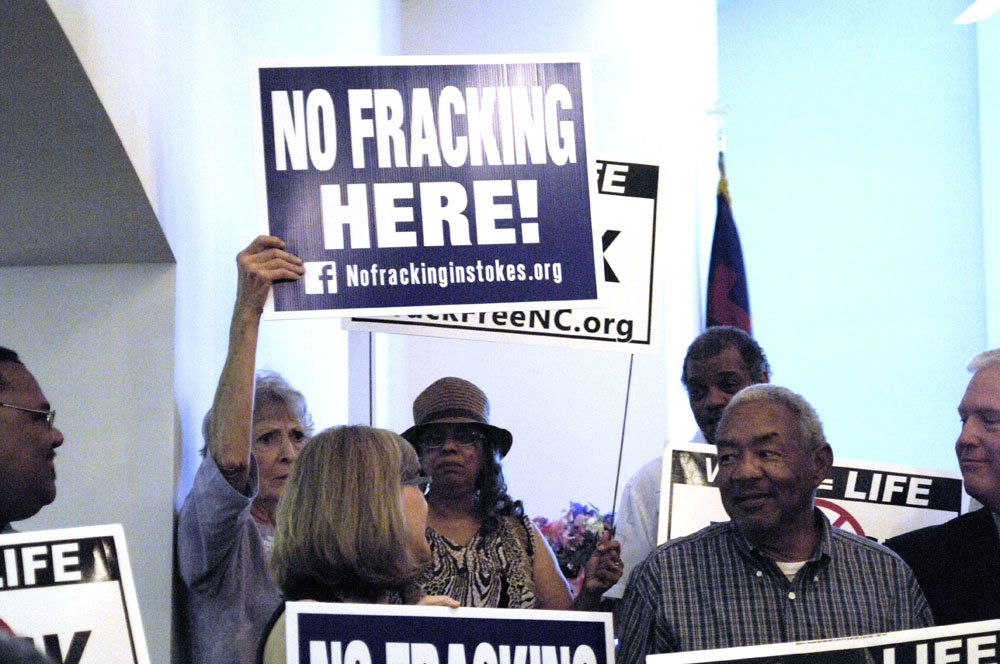
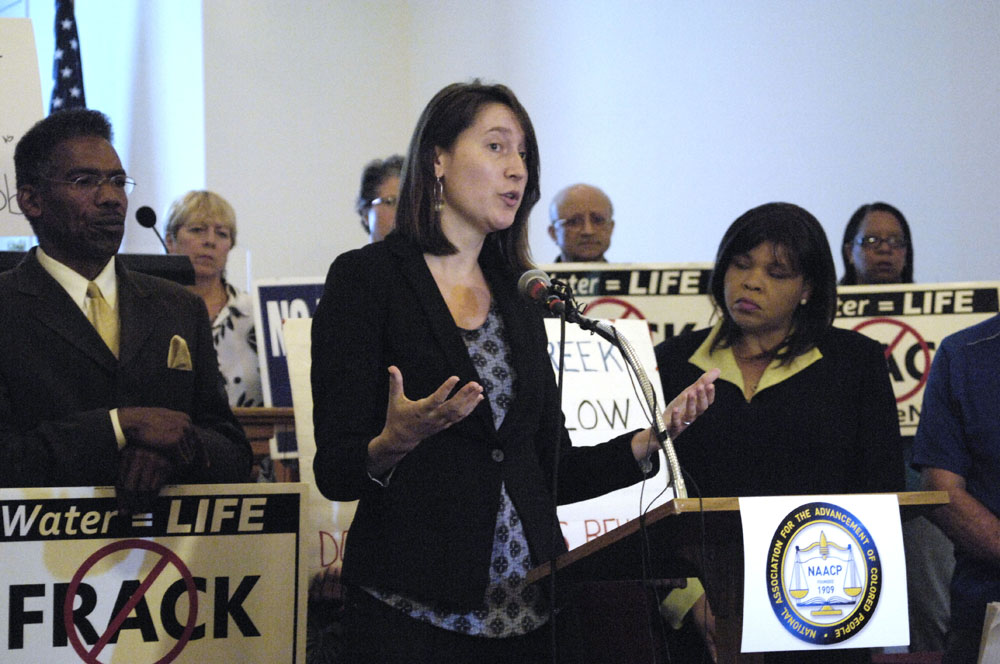
The county convention of the Stokes County Democratic Party, April 21


In July, this blog will be eight years old. Soon I’ll reach the 1,000th post. Any blog that has been around this long is bound to go through changes and fallow periods. But I’m not going away. I’m just trying to get clear on what comes next.

One of the things I’ve had to figure out is just how much involvement I want to have in local politics. I learned during last fall’s political campaign just how exhausting local politics can be, especially when you lose. It took all winter to recover from the burnout. It’s tempting to stay hidden in the woods. I also think that local politics doesn’t make very good blog material, except insofar as the political drama here in Stokes County echoes what’s happening in other places.

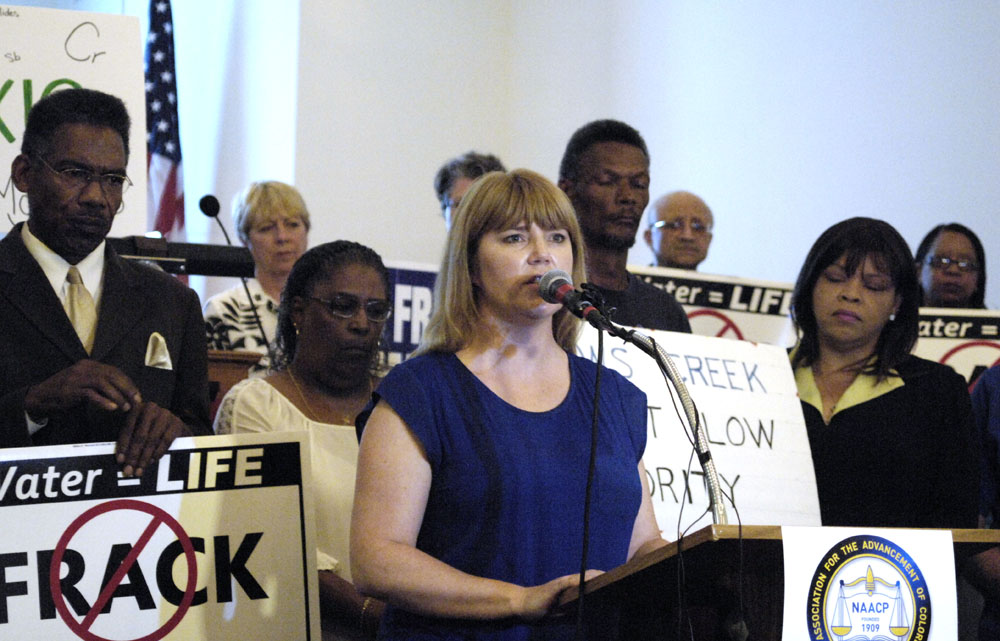
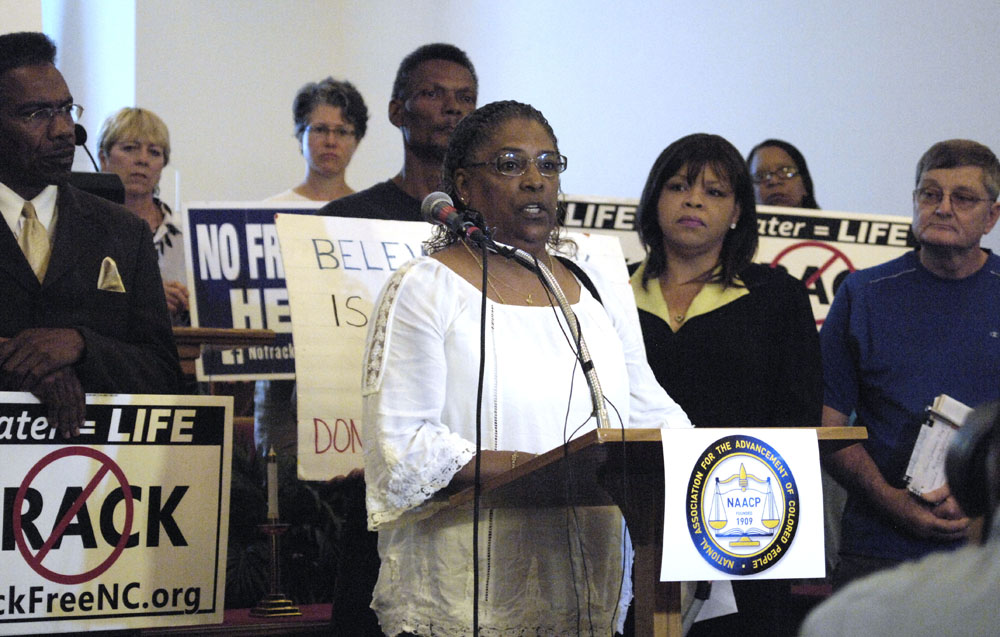
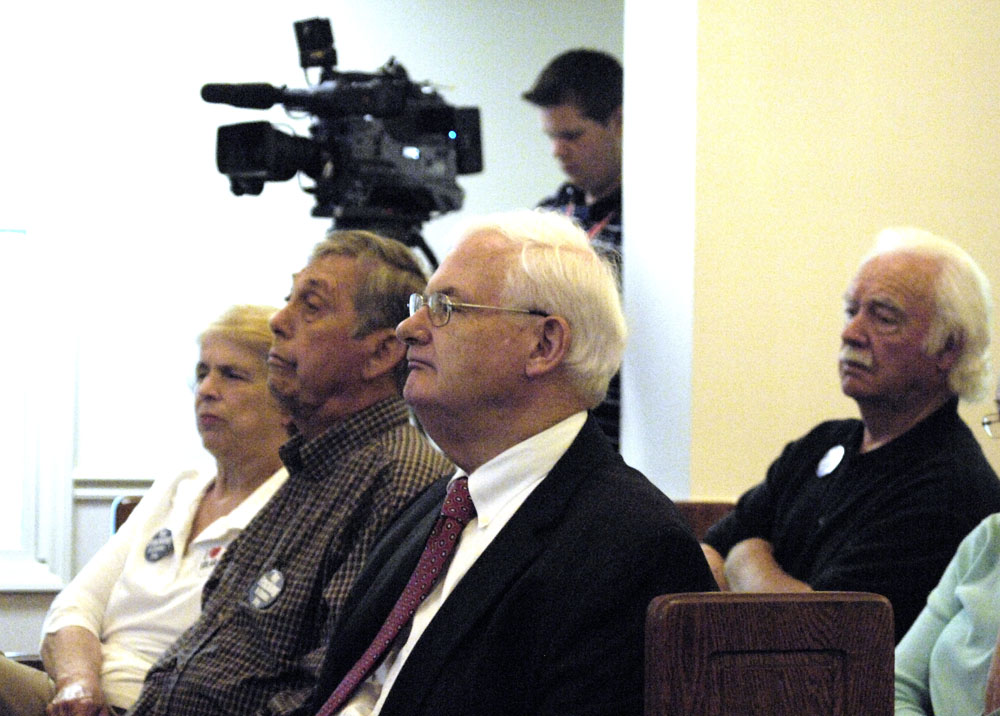
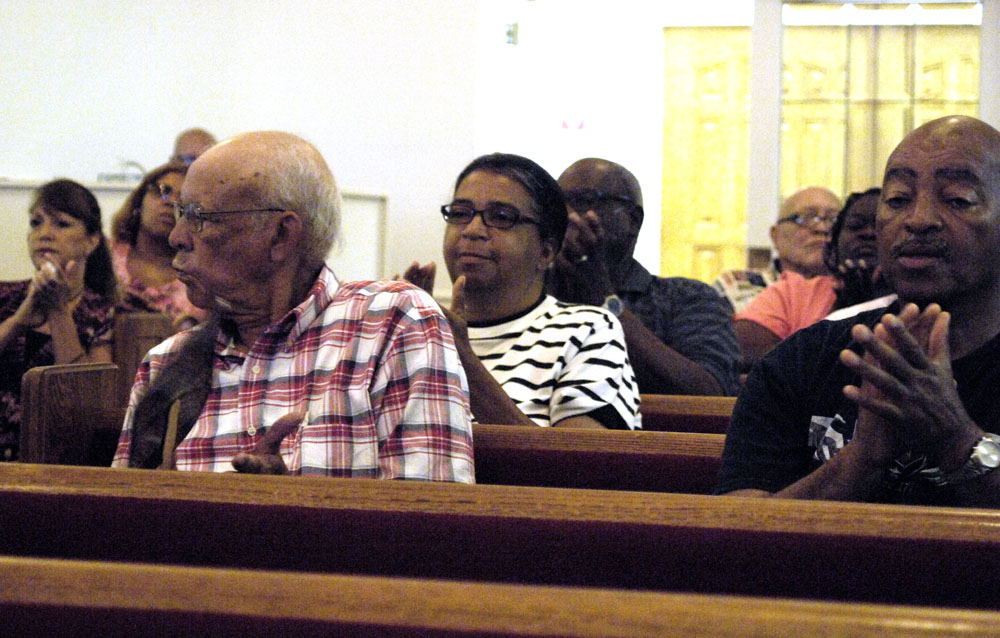
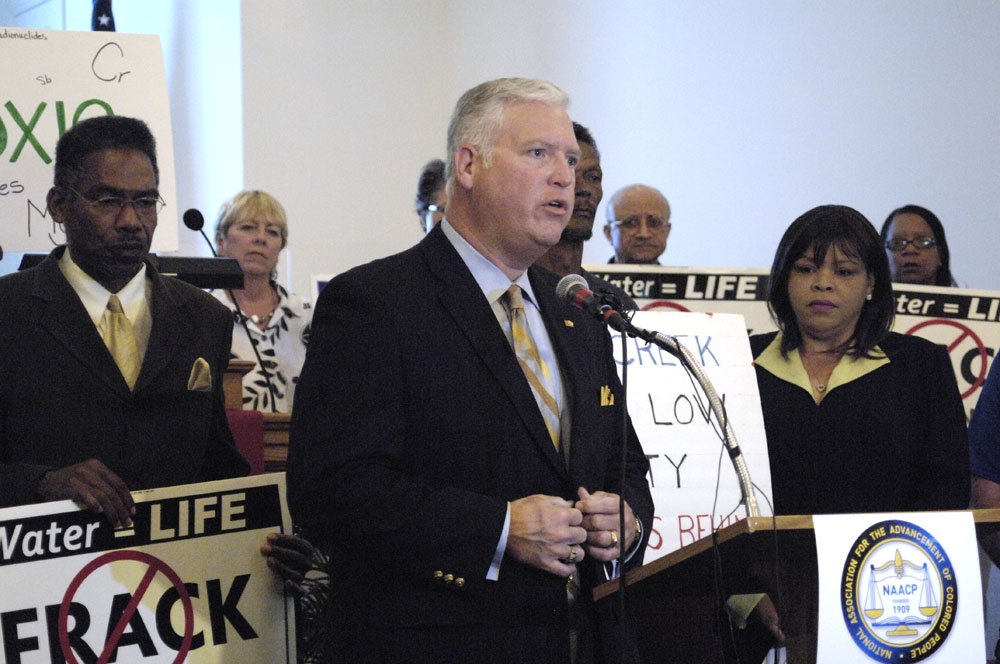
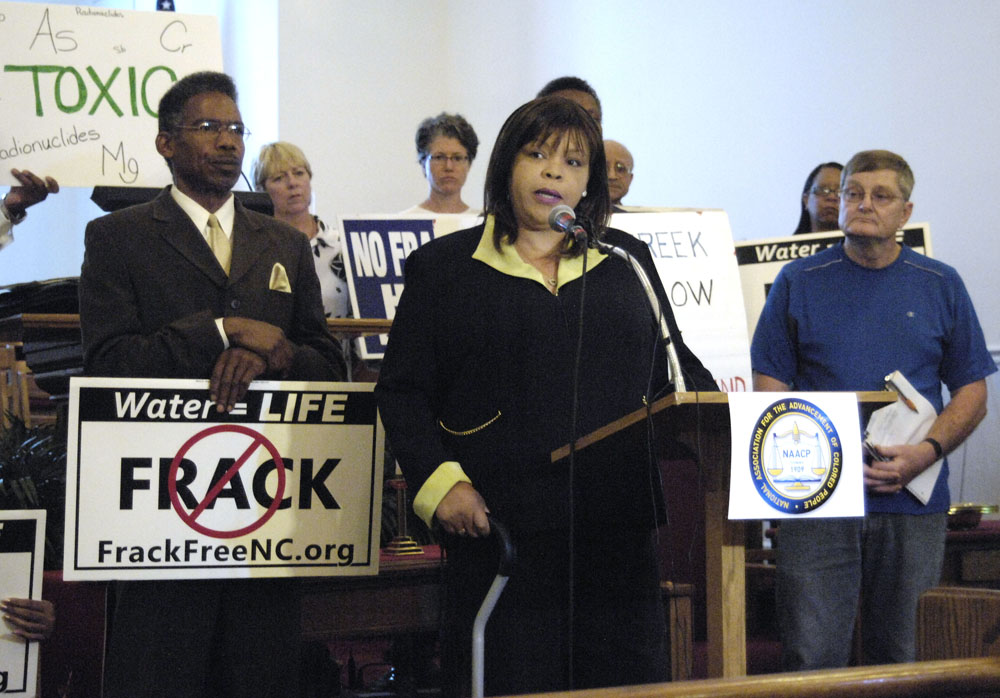
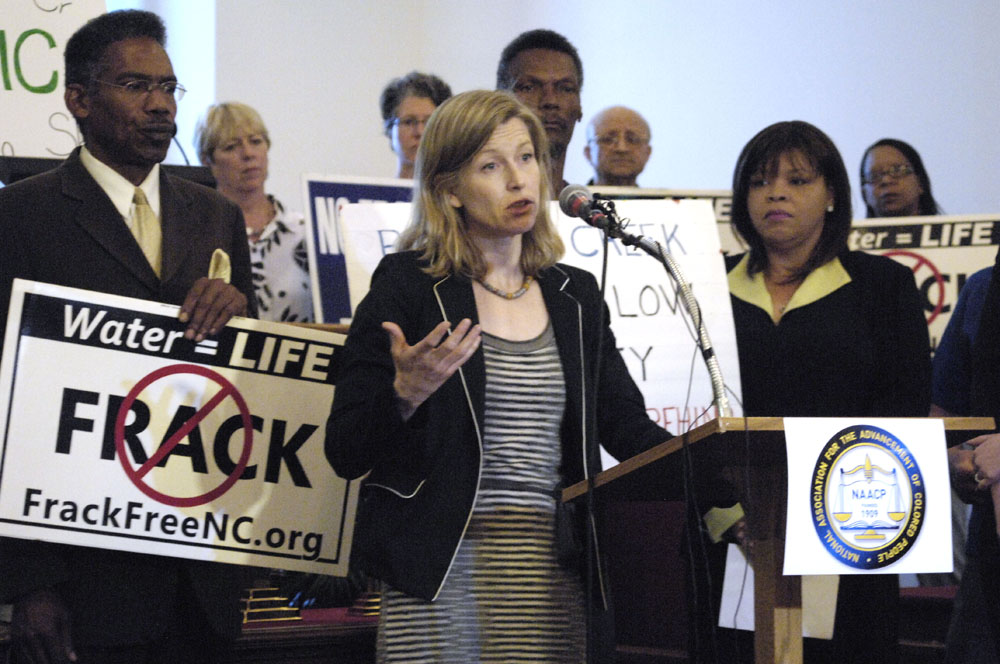
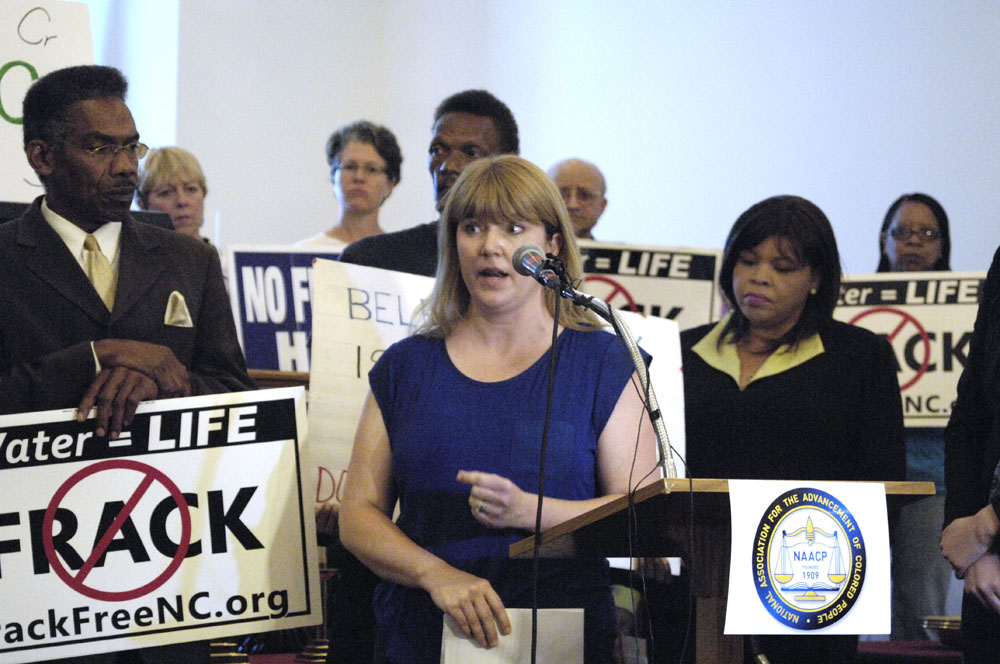
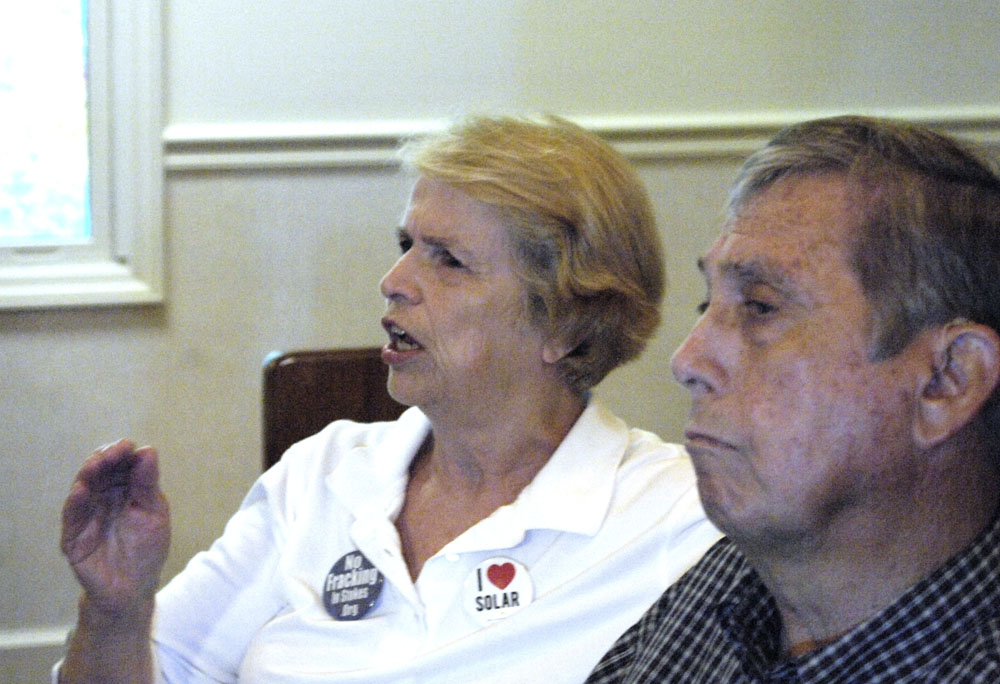
I have rolled up my sleeves and decided to stay involved in local politics. Earlier this week, at the county convention of the Stokes County Democratic Party, I was elected county chairman for a two-year term. I also will continue to be involved with No Fracking in Stokes.

Rural counties like this one are in trouble. We are losing population. Our young people leave us because of the lack of jobs and lack of anything to do. Increasingly, jobs don’t pay living wages. Our social services and health departments are overwhelmed. Our schools are begging for help. Even worse here in Stokes County, it is thought that some frackable gas reserves might exist in our river basin, the Dan River basin. Conservatives and progressives have very different views on what needs to be done. Conservatives think that fracking is economic development. As a progressive, I can’t think of a quicker way to ruin and impoverish our county than to let fracking in. Our other assets, such as our state park (the most popular park in the state), our river, and our unspoiled rural beauty, have far greater economic value, economic value that would be ruined by fracking. But conservatives are suspicious of tourism, because it invites people into the county who will never vote Republican.

Conservatives want to fiddle while Rome burns and measure their performance by how low the tax rate is. The burning political issue in this county at the moment (other than a county budget that is not going to balance without a tax increase) is whether emblazoning “In God We Trust” on the side of the county courthouse requires that the county similarly emblazon “In Reason We Trust.” This comes on the heels of a drawn-out and divisive fight in the town of King about flying the Christian flag at a veterans’ memorial. It led to a lawsuit, which conservatives predictably lost. Conservatives somehow convince themselves that symbolic and sentimental issues like these are the things that matter most and around which our futures turn. Meanwhile, Republicans in Raleigh are busy selling off the state to the highest bidder. A test well to look for frackable gas is going to be drilled soon in the little Stokes County town of Walnut Cove. Our own state tax dollars will be paying for the drilling.

Our work is cut out for us.

commissioners-s

An all-Republican board of county commissioners hears about “In Reason We Trust.”

The new painting is on the wall

abbey-in-frame-s

Some months ago, Ken commissioned a painting of Acorn Abbey from Frank Duncan, a local artist. The painting is now hanging on the wall at the abbey. It’s a large piece — 56 inches wide. We put a lot of thought into the painting, and we chose to submerge the house into the woods and emphasize the fecundity of the setting. There are lots of little details hidden in the painting — a black cat on the front porch and lots of little animals hidden in the foliage.

I still intend to write a book about the building of Acorn Abbey, and I’ll use this painting for the book’s cover. But the sequel to Fugue in Ursa Major, now in progress, must come first.

Fracking video wins award

Screen Shot 2015-04-25 at 8.58.24 AM

Last year, No Fracking in Stokes produced a video, aimed at our rural constituents, to help them see how fracking would threaten their rural lifestyles by turning rural areas into industrial zones. This week, that video won first place and audience favorite at the Sustainability Shorts Film Festival at the University of North Carolina at Greensboro.

You can watch the video on Youtube through this link.

In search of Buffalo Mountain — and some darkness

A-buffalo-01
Buffalo Mountain seen from the Blue Ridge Parkway

Today I did two things that I’ve planned to do for a long time: Find and climb Buffalo Mountain in southwestern Virginia, and do some reconnaissance for stargazing in the remote dark-sky area that Buffalo Mountain lies in.

Find a mountain? It can be harder than you think, even with GPS, and even in a half-civilized state like Virginia. I had no GPS address or lat/long coordinates with which to specify my destination and find a way in. Plus the mountain is deep in the backwoods, accessible only by muddy dirt roads, poorly marked, that GPS mappers don’t know much about. I had to stop twice and ask the locals for help.

Many years ago when I was a student pilot making solo cross-country flights (not completely solo — my dog was always with me), Buffalo Mountain helped me navigate, though of course I had avionics. It’s an easily recognized prominence (3,971 feet) that can be seen for many miles. The scariest experience of my brief flying career, actually, was when I got too close to a thunderstorm front over Buffalo Mountain and scared myself pretty badly. But that’s another story…

Anyway, I learned a year or so ago that Buffalo Mountain is now a Virginia wilderness area overseen by the Department of Conservation and Recreation. It’s in a very primitive state, and I don’t really know what plans there might be, if any, to improve its trails or make access easier. The road in is rough and muddy. My Smart car handled it OK, but some cars might founder in the ruts and mud, especially in bad weather. I would have been much more comfortable taking the Jeep to Buffalo Mountain, and, next time, I will.

There is a small parking area at an altitude of 3,421 feet. The trail up is along a shoulder of the mountain that faces southeast. It is rough, steep, and barely visible in places. I did not make it to the summit today. I was foolish and didn’t prepare for a hike that long — no water, no extra clothing, etc. The temperature was 49 degrees — a perfect hiking temperature. But I knew that the temperature would start dropping soon and that my light fleece jacket was sorry outfitting for someone alone and not exactly young in a wild area in January. I turned back at an altitude of 3,813 feet, not knowing at the time the altitude of the summit. If I had known I was so close, I’d have kept going, but I could not see the summit through the trees.

As a stargazing spot, being up there after dark probably is not allowed. Also, lugging a telescope up there would be a llama’s work, and I don’t have a llama. For stargazing in the area, probably the best plan would be to find a quiet spot with a clear view of the sky around Milepost 170 on the Blue Ridge Parkway. Did I mention that the Blue Ridge Parkway cuts through this dark-sky area?

It’s an interesting part of Virginia, really, and an interesting part of the Blue Ridge Mountains. The little town of Floyd, Virginia, is not too far away. Floyd has put itself on the map as a country-music destination. The Chateau Morrisette winery also is not far away. That’s a very civilized place to eat. Rocky Knob park and Mabry Mill are in the dark-sky area. Tuggle’s Gap Restaurant is not far. So there are plenty of other things to do in the area and plenty of places to eat and camp. But do your research — most places close during the winter. And winter, of course, is the best time for stargazing.

There is very little information online about public access to Buffalo Mountain, so I hope this post helps others find it. I’ll post again in the future after I get up to the summit. Here’s a link to the page on Buffalo Mountain on the web site of the Virginia Department of Conservation and Recreation.

If you’re looking for a GPS address to find Buffalo Mountain, try this: Moles Rd SW, Willis, VA 24380. However, there are two ends of Moles Road, and one end is completely impassible. One of the images below contains the lat/long coordinates of the parking area at Buffalo Mountain.

I plan to go back soon, better prepared, and with my telescope.

A-buffalo-02
A view of some of the dark-sky area from the Blue Ridge Parkway

A-buffalo-03
Looking toward the summit from the parking area

A-buffalo-04
The parking area and the road in

A-buffalo-05
Looking through the trees on the climb up

A-buffalo-06

A-buffalo-07

A-buffalo-08
Mark Cox, a stone mason who gave me directions when I was lost

A-buffalo-09
This might help folks find the way in

A-buffalo-10
A cow on the Blue Ridge Parkway

A-buffalo-11
On Highway 8 near Woolwine, Virginia

A-buffalo-12
An eatery just off the Blue Ridge Parkway on Highway 8

A-buffalo-13
The motel beside Tuggle’s Gap Restaurant

A-buffalo-14
Mabry Mill on the Blue Ridge Parkway. It’s in the dark-sky area.

A-buffalo-15
Typical scenery on the backroads

A-buffalo-16
A doorknob in the old house that Mark Cox was helping to restore

dark-sky-1
Light-pollution map, Washington to Atlanta. The blue areas are pretty dark.

dark-sky-2
The blue spot is the dark-sky area closest to the abbey — about 50 miles north. Buffalo Mountain is inside the blue area.

buffalo-mountain-coordinates
iPhone screen capture shows lat/long coordinates of the parking area at Buffalo Mountain

Into the Woods: a review

INTO THE WOODS

Like many people, I have been waiting nervously to see what Disney Studios would do with Stephen Sondheim’s wonderful musical, “Into the Woods.” I saw this show on Broadway with the original cast, so I was braced for a disappointment.

But I was not disappointed. It is lush, it is beautiful, and not only was Meryl Streep absolutely stunning as the witch, she easily outsings Bernadette Peters, the witch in the original Broadway cast. I believe this film is destined to be a classic.

It would quibbling to try to find any fault with the production. The visuals are gorgeous. The snappy editing holds our attention. The special effects support the magic but never go overboard. I will quibble some about the singing.

Meryl Streep was flawless. To me, the high point of the film is her version of “Stay With Me.” I still believe that Daniel Huttlestone is a little too young for the role of Jack, but he sang Jack superbly. Lilla Crawford as Little Red Riding Hood was very disappointing and comes nowhere close to Danielle Ferland’s performance with the original cast. Tracey Ullman as Jack’s mother was a disappointment, compared with Barbara Byrne with the original cast. Johnny Depp surprised me. He was a perfectly fine wolf. Chris Pine was a little over the top as Cinderella’s prince, but at least he was clearly having a good time.

The last few movies I’ve gone out to see have all been in IMAX. “Into the Woods” was not released in IMAX. The sound seemed thin by comparison. Even compared with my home stereo system, the sound seemed thin. The orchestra did not sound as lush and Stephen Sondheim said it would in some promotional videos.

It puzzles me why people take children to see “Into the Woods.” It’s a fairy tale for adults. Both the music and the tales will go over the heads of most children, though children who are musically gifted will probably think they’re in heaven. Sondheim requires some musical sophistication.

Some readers might wonder whether this musical inspired the name of this blog. Not really. I named the blog “Into the Woods” for the same reason Sondheim chose the name — because it’s such a powerful metaphor for bravely facing our existential predicaments. Some people think the answers to their existential questions are to be found, say, in a church. Screw church, and the warhorse it rode in on. Brave folks go into the woods. After dark. Alone.

Ancient astronomy

A-ptolemy2
An illustration from James Evans’ book on ancient astronomy


I’ve mentioned that the sequel to Fugue in Ursa Major is going to involve time travel. The plot requires that I have an understanding of the state of the science of astronomy around 48 B.C. As a source for that, I am reading James Evans’ The History and Practice of Ancient Astronomy, which was published by the Oxford University Press in 1998. This is a beautiful, well-illustrated, and fairly expensive book. It has left me greatly impressed at just how much the ancients knew.

We generally assume that modern astronomy began with Copernicus and Galileo as the Dark Ages were coming to a close. In 1633, the church convicted Galileo for following Copernicus in saying that earth is not at the center of the universe. But some of the ancient Greek astronomers figured out that the earth moves around the sun, though it was not a mainstream idea in ancient times. Aristotle knew that the earth is a sphere. Heraclides of Pontos, a student of Plato, taught as early as 350 B.C. that the earth rotates and that the stars are fixed. Greek astronomers were able to make pretty good estimates of the size of the earth and moon, though their estimates of the size and distance of the sun were less accurate. The Greeks understood trigonometry. They had a pretty accurate theory of the motion of the planets. Even before the Greeks, the ancient Babylonians were excellent astronomers who made detailed star charts and kept accurate astronomical records. Babylon’s knowledge was passed down to the Greeks. The Greeks built on Babylonian astronomy, especially during the golden years of Alexandria, culminating with Ptolemy’s Almagest around 150 A.D. After Ptolemy, the Dark Ages began in the West, so Ptolemy remained authoritative for hundreds of years.

So, it’s not really true that, to the ancients, the science of astronomy was barely distinguishable from the myths of astrology. They knew a lot.

So how did they use what they knew?

For one, they wanted better calendars. The daily cycle, the lunar cycle, and the annual solar cycle don’t fit together in tidy ratios, so there is no perfect calendar. Our own Gregorian calendar, an antique which is a refinement of the ancients’ Julian calendar, requires all sorts of adjustments including leap seconds and leap years. In its essentials, our calendar today is the Roman calendar, which relied heavily on Greek astronomy.

Astronomy is critical to agriculture — when to plow, when to plant. This remains true today, and I still subscribe to an almanac, as did my grandparents. Benjamin Franklin’s Poor Richard’s Almanac was a bestseller in the American colonies. People planted by it.

Astronomy also is critical to navigation, surveying, and mapmaking. Ancient sailors knew how to navigate by the stars. One of the reasons I chose Ursa Major as part of a book title was its importance to the ancients. The constellation of Ursa Major is visible for the entire year in most of the northern hemisphere. Ursa Major includes some easily identified “pointer stars” (the Big Dipper) that make it easy to locate the polar star and therefore true north. An ancient sailor who wanted to sail east at night would keep Ursa Major up to his left. We know that the ancient Celts had excellent seafaring skills and excellent ships and that the Celts also used Ursa Major for navigation.

How about astrology? It would be easy enough to accuse the ancients of being superstitious because they tried to use the stars to predict the future and to make generalizations about human nature and human fate. But we moderns are just as guilty, since horoscopes remain important in the lives of lots of people.

It’s easy enough to reproduce the astronomical observations of the ancients with some simple instruments. A gnomon (which is what a sundial is) will allow you to deduce and measure all sorts of information if you trace the sun’s shadow for a year. If you trace the sun’s shadow for a single day, you can very precisely locate true north. If you have a protractor or an astrolabe and measure the angle of the sun above the horizon on the summer solstice, you’ll know your latitude. Looking through tubes attached to a tripod will let you measure an object’s motion from hour to hour. You’ll need some star charts. And if you want to get fancy, you’ll need to brush up on what you learned about tangents, sines, and cosines in trigonometry class.

Even today, with an astrolabe, a watch, and a view of Ursa Major, you could throw away your GPS.

How would you do that? Measuring the angle of Polaris, the north star, above the horizon will tell you your latitude. That’s easy. Longitude is more difficult, and longitude bedeviled the ancients. But if you can determine your local time by getting a precise fix on noon (with the gnomon of a sundial, say, or the shadow of a stick stuck in the ground), and if you know what time it is at some distant place with a known longitude (Greenwich is handy for that), then you can calculate your longitude. At night, you can get a pretty good fix on the time by measuring the position of a known star.

To clarify the concept of longitude, keep in mind that the British navy carried accurate clocks on their ships (chronometers) not because they cared about the local time wherever they might be. Rather, the chronometer always said what time it was back in Greenwich. If you determine your local time from the sun or a star, then the difference between your local time and Greenwich time tells you how far you are east or west of Greenwich. After accurate clocks were available for ships, marine navigation greatly improved. This is why Britain’s Royal Observatory at Greenwich was commissioned by King Charles II in 1675. In the U.S., the Naval Observatory is one of the oldest scientific organizations in the country. The Naval Observatory was responsible for the “master clock” that the navy used for navigation. The observatory still is responsible for the master clock! The time used by GPS satellites is determined by the U.S. Naval Observatory.

But before GPS, if you were a ship at sea carrying Thomas Jefferson from Virginia to Calais, you’d needed a star to figure out the local time. The stars most convenient for that are in Ursa Major.

I like to think of it this way: The stars are still up there, raining information down on us day and night. All we have to do is just look up, and measure.

The abbey in oil: a work in progress

S-frank-at-work-1
Frank at work

Several months ago, Ken commissioned a painting of Acorn Abbey from a local artist, Frank Duncan. Frank is a celebrity in these parts. He’s also a neighbor. We asked Frank to unapologetically get in touch with his inner Thomas Kinkade and do interesting things with light and imagination. The painting will go in a rather large and very empty space above the mantel. The painting is coming along nicely.

S-water-color-sketch
The watercolor “sketch,” which is a kind of blueprint for the oil painting. We chose a composition that emphasizes life and exuberance by putting the garden and orchard in the foreground and letting the house risk getting lost in the woods. Lots of little animals will be hidden here and there in the painting, like Easter eggs.

S-starting-photograph
The photograph that was used to lay in the painting’s composition and perspective

A-frank-duncan-painting
A Frank Duncan painting

The theory and practice of the calca

anathem-calca

This is not a review of Neal Stephenson’s Anathem, which was published in 2008 and which I very much enjoyed reading. Rather, this is about the concept of the “calca,” a term created by Stephenson in Anathem.

Stephenson made up a lot of language for Anathem, which is a thousand-page tome about a very erudite order of monks, and he helpfully includes a glossary in the back of the book. This is how he defines calca:

An explanation, definition, or lesson that is instrumental in developing some larger theme, but that has been moved aside from the main body of the dialog and encapsulated in a footnote or appendix.

The monks of Acorn Abbey instantly saw the usefulness of this concept, though we might define it a little differently. Instead of being moved aside from the main body of the dialog, the calca can embedded in the dialogue. The concept of the calca is important to me, because I am highly inclined to write calcas, and I put a considerable amount of research into them.

Calcas can be either magnificent, boring, or somewhere in between, depending on the reader’s interest and the writer’s skill. But one thing is guaranteed. If a reader disagrees with, or is offended by, the content of the calca, then the writer will be accused of sermonizing, pontificating, or speechifying, and a bad review is guaranteed.

For example, here is a link to a very long and erudite review of Anathem with the title “Why Anathem Sucks.” The reviewer says, among other things, “In all of these cases, the math is rushed over in order to get to some speechifying.” Ooof. The reviewer and the writer do not belong to the same school in the philosophy of mathematics.

To my taste as a nerd, calcas are some of the best elements of literature. Isaac Asimov wrote wonderful calcas, which were spoken by his characters as part of the dialogue. The Foundation series would amount to nothing without calcas. Robert Heinlein took some criticism for his fondness for libertarian calcas. Ayn Rand wrote calcas, though of course I see her calcas as sermonizing and pontificating because I disagree with her.

A style of writing that includes calcas is not to everyone’s taste. Many readers would like to just get on with the action. On the other hand, when we like characters in a story, and when we are in accord with the author’s ideas, we generally enjoy a nice conversation with the characters and a calca or two. Yoda is calca-izing, for example, when he says:

Fear is the path to the dark side. Fear leads to anger. Anger leads to hate. Hate leads to suffering.

I’ll leave you with a couple of mean-ass calcas in dialogue from a science fiction writer, Richard K. Morgan:

I have no excuses, least of all for God. Like all tyrants, he is not worthy of the spit you would waste on negotiations. The deal we have is infinitely simpler – I don’t call him to account, and he extends me the same courtesy.

The personal, as everyone’s so fucking fond of saying, is political. So if some idiot politician, some power player tries to execute policies that harm you or those you care about, take it personally. Get angry. The Machinery of Justice will not serve you here — it is slow and cold, and it is theirs, hardware and soft. Only the little people suffer at the hands of Justice; the creatures of power slide out from under with a wink and a grin. If you want justice, you will have to claw it from them. Make it personal. Do as much damage as you can. Get your message across. That way you stand a far better chance of being taken seriously next time. Of being considered dangerous. And make no mistake about this: being taken seriously, being considered dangerous, marks the difference — the only difference in their eyes — between players and little people. Players they will make deals with. Little people, they liquidate. And time and again they cream your liquidation, your displacement, your torture and brutal execution with the ultimate insult that it’s just business, it’s politics, it’s the way of the world, it’s a tough life, and that it’s nothing personal. Well, fuck them. Make it personal.

Time travel? Warp jumps? Let’s go …

time-travel-schema-2-revised

My schematic, based on a sketch kindly provided by an alien visitor


For several months now, I have been at work on the sequel to Fugue in Ursa Major, which for now I just call Fugue II. I’ll give it a real title later. Fugue II is a much more demanding novel involving much more science fiction. There also is a historical element that is critical to the plot. It has required a great deal of research, most of it in thick tomes published by university presses. I sometimes think that I should include notes and a bibliography with Fugue II, just to show that my radical ideas don’t always come out of thin air.

There will be time travel in Fugue II. This technology belongs to aliens, who will allow earthlings to use it to help get earth out of the nasty predicament that I left earth in at the end of Fugue in Ursa Major. I think I’ll not say just yet where (and to what time) Jake and a few other earthlings will be going. But, when they get there, a deep stack of scholarly tomes will discipline my imagination in describing what they find and what they do. I am completely out of bookshelves, and there are many stacks of books in my room, some of them three feet high.

With our current understanding of physics, is time travel possible? How about faster-than-light travel? The opinions of physicists differ. But, if time travel or warp jumps are possible, then we can say a great deal about the conditions necessary to do it. To try to understand the physics of these conditions, I have relied heavily on Roger Penrose, a mathematician and physicist who is now an emeritus professor at Oxford. I have read a number of Penrose’s books. His mind is simply magnificent. I don’t have the math to truly follow him everywhere he goes, but I get the gist of it. A 10-year-old tome of his (1,100 pages long) has been my guide for the physics involved in the plot of Fugue II. The book is The Road to Reality: A Complete Guide to the Laws of the Universe.

But back to time travel and warp jumps. As I see it, to travel in time you’d have to be able to control a seriously powerful source of gravity. OK. A black hole could provide that. You’d also have to be able to control a source of negative energy density. Never mind what negative energy density might be. It’s enough to know that you won’t find it in many places. But one place where you will find it (we think) is in the ergosphere of a rotating black hole. If you read the Wikipedia article, you’ll find that it was Penrose himself who first described this, back in 1969. But again, you don’t have to worry too much about the physics. The key point is that rotating black holes generate the forces we need, if time travel and warp jumping are possible.

I’ve left it to the aliens to do the necessary engineering. It involves an enormous piece of machinery — a tubular helix (or spiral) big enough to allow a rotating black hole to pass through it. The travelers go winding through the hollow helix tube while the rotating black hole is passing through the helix. You enter one end of the tube in the here and now, and you come out the other end somewhere or sometime else. The machine can take you back in time, except that it can’t take you back to a time earlier than the time the machine was built. Alas, it cannot take you to the future, because of some complications related to the Second Law of Thermodynamics. It can, however, return you to the present after you’ve traveled to the past. The same device can be used for interstellar travel with no time tweaking, depending on how you manipulate quantum fields inside the helix. (Don’t ask — it’s an alien proprietary secret.) As a travel machine, it can fling you across space faster than light, depending on how fast the helix is rotating. The axis of the rotating helix (the direction in which it’s pointing) determines the direction in which you jump. And sure, you can jump through the middle of a star or a galaxy if you want, because you went straight from point A to point B in an instant, and you were never at any points in between. But if you fling yourself to some far-off galaxy, take care that you know how you’re going to get back, because you were traveling in an ordinary spaceship, and the jump machinery was left behind.

How did the aliens solve this problem? They made multiple jumps to the same location (always near a suitable black hole), sending along the necessary materials, and built new jump machines at points of interest all over the galaxy and beyond. So space travel involves slower-than-light transport for relatively short distances and a network of those enormous jump machines for faster-than-light interstellar travel.

As I understand the science, I cannot imagine a warp engine that could be built into a space ship. Far too much mass (and therefore gravity) is required, and the gravitational and tidal forces involved are exceedingly dangerous. These forces would rip human beings and machines apart. Therefore, as I see it, a warp engine would be more like a catapult. The catapult would remain where it is, but it would push you and your space ship through a worm hole as long as the travelers and their space ship were far enough away from the tremendous gravitational and tidal forces involved in opening a worm hole.

Faster-than-light travel is a minor element of Fugue II‘s story. It’s a story about people, really. But where the plot involves science (or history), I want all the i’s dotted and all the t’s crossed. I’m a radical and a heretic, but I rarely just make stuff up. What really drives my imagination is dreaming about how we might get out of the awful times we live in, and what we might do about the fact that the wrong people are running the world and have run the world for a long time.