Decorporatizing your life


Fritz Lang’s “Metropolis”

One of the many puzzling things about today’s political environment is why so many of the people who distrust government think that corporations can do no wrong. My view is that out-of-control, anti-democracy corporations are far more dangerous than government.

Mind you, I don’t want to totally demonize corporations the way some people totally demonize government. Corporations, if they are reasonably regulated, can do lots of good things — make iPads, for example. But as corporations get richer and more powerful, they want a weak government. They will use their resources, if they can, to take over the government. They will use propaganda to demonize government and keep lots of people from seeing what they’re up to. That is what is happening in the United States today. Corporations are well along in their plan to weaken our government and our democracy and bring about their vision of a dog-eat-dog, corporatized, free-market utopia.

If corporations get their way — and increasingly they are getting their way — government will be powerless to stop them. Already our democracy is too weak to restrain corporations. The Congress regularly passes bills that the majority of Americans clearly don’t want. Instead, Congress passes the bills that corporate lobbyists and big-buck campaign donors want.

What can we do, on our own, to get back at corporations when our democracy fails us?

Here are some suggestions.

1. Get out of debt as quickly as possible, and stay out of debt. Not only will corporations bleed you dry on the costs of servicing your debt, debt limits your choices. It keeps you on the treadmill. It forces you to remain a slave indentured to corporate power. Your debt lets them treat you like a dog, while you are powerless as long as you owe them.

2. Don’t sign contracts. Contracts with corporations these days rarely benefit the little guy. They benefit the corporations. Consider your cell phone contract, for example. You got just a cheap phone out of the deal. The corporation locked you into a long money stream and prevented you from taking advantage of competition.

3. Build up your savings. We need savings to get through unexpected crises, such as loss of a job, or a costly illness. Many people lose their homes to foreclosure, for example, after losing their job or getting sick. With no savings, they are at the mercy of every corporation that has a claim on them. And corporations have no mercy.

4. Spend your money as close to home as possible. Corporations suck money out of our neighborhoods, where it ends up as profits for Wall Street to be invested abroad. If you eat at a chain restaurant, for example, the money goes to Wall Street. But if you eat in a neighborhood restaurant, the money stays in your neighborhood, with your neighbors. Support your local farmers and farmers markets!

5. Cut your consumption. Most Americans buy all kinds of junk that they don’t need. See the Story of Stuff. Buying useless stuff is a waste of your money. It ends up as just more trash in our landfills. And it makes corporations fatter.

6. Don’t let them snoop on you. Corporations see the Internet as a wonderful new way to snoop on, and brainwash, consumers. They’ll track everything you do on the Internet, if you let them. You’ll find articles here and elsewhere on what you can do to prevent this.

7. Don’t let them scam you. Increasingly, diluted regulations and lack of government oversight let corporations scam you, legally or not. There are all kinds of scams, particularly having to do with borrowing or investing money. Half of the junk mail I get has a whiff of scam about it. The housing bubble and bust came about largely because of scams, some of which are actually legal in our deregulated business environment.

8. Don’t let them push you around. Is your bank pushing you around with high fees? Did the dealer try to tack on hidden fees when you bought a car? In how many ways is your credit card lender abusing you? When they try to pull a fast one on you, be smart and push back. Don’t let them take you for even so much as a penny. It’s a matter of principle.

9. Don’t believe their advertising and public relations. Corporations spend billions of dollars to make us think they’re nice. Oil companies, for example, love to make commercials about how “green” they are. It’s all bunk.

10. Cut off the propaganda. Virtually everything on radio, television, and cable these days is propaganda. At the very best, it’s low-grade information or mere infotainment. Those people who get their “news” by watching television are guaranteed to be ill-informed and besotted with propaganda. Not only that, but people like Rupert Murdoch make billions of dollars selling propaganda to people on his cable networks. Americans actually pay for their propaganda! Cut off your cable or satellite TV. The only way to be well-informed is to read, not to watch.

11. Don’t outsource to corporate America what you can do for yourself. Every time you take a ready-made supper dish out of your freezer and pop it in your microwave, you’ve outsourced your cooking to a corporation. Your supper cost you five or ten times as much as it should have. You ate all kinds of chemicals and cheap ingredients. A corporation got the profit.

12. Remember co-ops? Back in the 1970s, when health food stores were less common and before chains such as Whole Foods existed, there were many food co-ops. People got together, bought foods in bulk, and distributed the food, at cost, to the members of the co-op. I would love to see a resurgence of co-ops. Meanwhile, remember that credit unions are co-ops and are an alternative to banks. The Farm Bureau is a non-profit co-op, and it sells insurance. Look around for co-ops and non-profits that you might be able to shift your business to.

13. Support regulation and fight the corporate agenda. Don’t believe the corporate propaganda about the evils of regulation. In the real world, as opposed to the imaginary free-market utopia imagined by idealogues, it’s obvious that, if unregulated, corporations rapidly move toward predation, monopoly, and, eventually, oligarchy — which is pretty much where we are already in the United States. Corporations will always do everything they can to privatize profits and socialize costs. They don’t want their profits and sky-high executive salaries messed with, but they love bailouts. In Ireland, corrupt, corporatized politicians actually shifted the entire cost of the Irish bank bailout to Irish taxpayers. In the U.S., at least we mostly lent the bailout money to the banks. In Ireland they actually gave it to the banks. Corporatists, emboldened and empowered by the 2010 election, are pushing a nasty agenda: Rolling back environmental regulations, weakening unions and pushing wages down, continuing the takeover of public assets, continuing to shift the tax burden away from corporations and the rich to working people, weakening and starving the public school system, and so on. They’re winning, even though the public don’t support these things.

14. Rethink your career plans. If you’re young, how you make your living for the next 20 or 30 years can make a huge difference. Can you start your own business? Might you be able to work for a non-profit? I learned that there were many benefits for working for a private corporation rather than a corporation owned by Wall Street. Private corporations often take better care of their employees, because they don’t have to play games every quarter to try to keep Wall Street happy. Where you make your money is as important as where you spend it. Granted, working people in today’s post-industrial economy don’t have a lot of choices. But if you do have choices, go for it.

15. Roll back the clock. I would never argue that corporations have not improved our lives. In some ways, they have. That, after all, is why corporations exist — to supply some human need, something that can be done only with the combined effort of lots of people and specialized knowledge (like building airplanes, for example). But the problems occur when we, without thinking, let things go too far. So spend some time thinking about how corporations have brought you benefits but how they’ve also caused you harm. Did you buy tobacco from them? I hope not. Are you overweight because you eat too much corporate food? Have you become so dependent on television that you no longer know how to entertain yourself or your children? Have you failed to learn basic human skills, skills that your parents and grandparents once had, because you’ve become too dependent on corporations? How can you, in your life, roll back the clock to the time before corporations were out of control?

I leave you with a famous quote by Robert A. Heinlein. It’s from Time Enough for Love:

“A human being should be able to change a diaper, plan an invasion, butcher a hog, conn a ship, design a building, write a sonnet, balance accounts, build a wall, set a bone, comfort the dying, take orders, give orders, cooperate, act alone, solve equations, analyze a new problem, pitch manure, program a computer, cook a tasty meal, fight efficiently, die gallantly. Specialization is for insects.”

Heinlein is considered to have been a libertarian. But it wasn’t just government that helped us lose all this knowledge and give up so many choices. It was corporations.

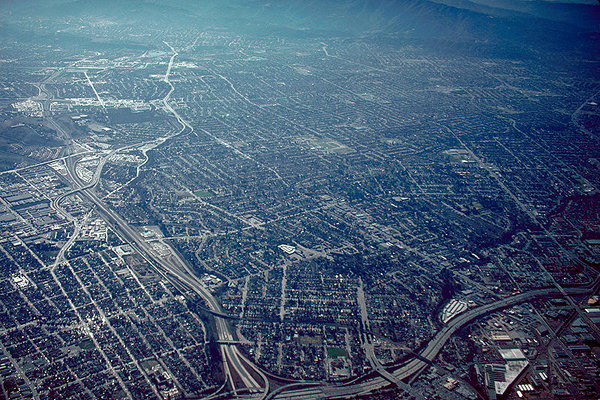
Population growth? Run for your life…

Sometimes I have survivor’s guilt. I got in my Jeep, I drove and drove and drove, and I escaped the corporate life. Not only that, but many people struggling to get closer to the troughs in the corporate feedlots tried to eat my lunch back then, but I beat them back. It was self-defense, but my hands are stained.

I even cleverly managed to keep Wall Street from tricking me out of the secret stash I’d hoarded while in the feedlots. With that stash I built my little refuge in the woods. I had gotten too old to fight anymore. I am as far as I can afford to be from everything that is corporate, where the top dogs rake it in and leave the rest of us to fight over the scraps.

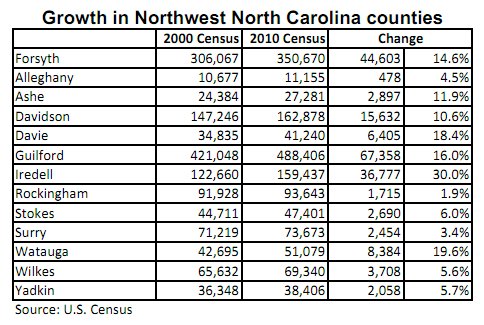
The U.S. Census bureau released numbers yesterday for population growth in North Carolina for the 10 years between the 2000 census and the 2010 census. The population of the Raleigh area grew by a horrifying 43.5 percent. Stokes County’s population grew by 6 percent.

Why do I use the word horrifying? Everything looks different when you’re no longer a poor hunk of pork getting the life rendered out of you in today’s pressure-cooker economy. Once upon a time when I was of working age, I too had to go somewhere where the money was, and I went to San Francisco. But that was then, and this is now. When you finally get to step off the corporate treadmill, you want to be as far from the corporate feedlots and kitchens as you can possibly get.

I have not been to Raleigh in decades, but I have been to Charlotte. What 43.5 percent growth has done to Raleigh can only be worse than what 32.2 percent growth has done to Charlotte. Charlotte is hideously ugly. It has no focus, no center, no charm, no style. It has sprawl, traffic jams, and people who, having gone where the growth is, are always in a hurry. Charlotte seems unaware of what has happened to it. The story in today’s Charlotte Observer is self-congratulatory and cheers this population growth, taking for granted that it’s a good thing. But to my eyes, what growth has done to America’s regional inland cities is as horrifying, ugly, and unhealthy as what steam-driven industrialization did to 19th-century England.

As I see it, the dog-eat-dog dynamic of today’s working environment is only going to get worse. There’s a story going around the blogosphere. It’s about David Koch, one of the billionaire oilmen who have financed the tea parties and the “think tanks” that produce the right-wing propaganda that Fox News disseminates. The story has many variations, but it goes like this:

David Koch and a tea partier are sitting at a table. On the table is a plate with a dozen cookies. Koch grabs 11 cookies, then looks at the tea partier and says, “Watch out for that union guy. He wants a piece of your cookie.”

Recent polls indicate that working Americans support Wisconsin’s unions more than they support Wisconsin’s union-busting governor, who takes money — and phone calls — from David Koch.

Maybe Americans are finally starting to figure out who it is who is eating their lunch (and their cookies). And does anyone (other than those who live in the fog of Fox News lies) think that corporate America cares any more about workers in general than it cares about unionized workers like teachers and firemen? The effectiveness of the propaganda on Fox News is really quite terrifying. It can cause Red State Americans of very modest means, and who would be hard up but for Social Security and Medicare, to vilify government and not only vote for, but also cheer for, the interests of the rich.

For those of you who are still working, I hope you’ve found one of those rare safe spots in this globalized Brave New World that Wall Street is creating.

And I hope that someday you too will be able to find a place where the growth is not.

The preparedness dilemma


I can guess what this retired Stokes County farm tool was doing in 1935.

What is the right amount of preparedness? The official position of the American government is that every family should have at least a three-day supply of food, water, and necessities. The assumption is that, in a regional disaster, help can be expected to come within three days. But that didn’t work too well, did it, for the people of New Orleans during Hurricane Katrina? Some churches ask their members to maintain a year’s supply of food and essentials.

When we ask ourselves just how much preparedness is enough preparedness, we also must ask ourselves how prepared we can be without creating waste. Food won’t store forever. Do those people who store a year’s worth of supplies have a system for rotating and using those supplies? If they don’t, then it’s all wasted. If they do rotate their supplies, then they’re always eating food that’s old and will soon go bad. And of course preparedness is not only about food. Some “preppers,” as they’re often called, also seem to think that they need huge stocks of guns, ammunition, gasoline, and so on. Is that a good investment?

The December 20 & 27, 2010, issue of The New Yorker contains an article titled “The Efficiency Dilemma: If our machines use less energy, will we just use them more?” The article is here, subscription required. The article describes a problem that befuddles economists and environmentalists. That’s the fact that the benefits of increased efficiency generally don’t lead to less consumption. An example is refrigeration. The efficiency of refrigerators has increased many times over since the electricity-guzzling refrigerators of the 1950s, and yet the total per-capita cost of refrigeration has risen steeply since the 1950s, because we refrigerate more things. The article quotes James McWilliams, the author of Just Food, on an American habit of which I am very guilty:

“Refrigeration and packaging convey to the consumer a sense that what we buy will last longer than it does. Thus, we buy enough stuff to fill our capacious Sub-Zeros and, before we know it, a third of it is past its due date and we toss it.”

Yep. And my own freezer needs cleaning out even as we speak. The article quotes Jonathan Bloom, author of American Wasteland, on a disturbing statistic: Since the 1970s, per-capita food waste in the United States has increased by half, and we now throw away 40 percent of our food!

What this means for a preparedness strategy is that, unless our strategy is prudent, we are just generating more waste.

I marvel sometimes at the survivalists who gather at www.SurvivalBlog.com. These folks, right-wingers who see themselves as libertarians, think that stashing food is not enough. They also believe in having lots and lots of guns (including assault weapons), reinforced bunkers, elaborate surveillance equipment including night vision scopes and trip wires, big generators with a lot of stored fuel, etc. I can’t help but ask myself: Is that a good investment?

An old friend of mine, Jonathan Rauch, published a book in 1993 titled Kindly Inquisitors: The New Attacks on Free Thought. In the book, Rauch talks about the mindsets of certain people who think they have a direct channel to the truth. “Fundamentalism,” Rauch writes, “is the strong disinclination to take seriously the possibility that you might be wrong.”

If we have a well-considered model of the world, we can make some educated guesses about the future. But no one can know for sure what the future will bring. Shouldn’t we hedge our bets, then, and do what we can to prepare for possible hard times without creating yet more waste? If “the end of the world as we know it,” or TEOTWAWKI, as it is called at SurvivalBlog, never happens, then what good were those huge arsenals of guns, those huge stashes of ammunition, those costly concrete bunkers, those perimeter-surveillance systems? They were a huge waste. They cost a fortune. They did not improve anyone’s quality of life, now or in the future. Those tripwires and No Trespassing signs weakened, rather than strengthened, a community.

Before buying those arsenals and building those bunkers, did those people ask themselves: What if I’m wrong?

So how much preparedness is enough, and how do we hedge our bets? We all have to make our own calls, based on our own situation and our own guesses about what we think the future will be like. I can speak only for myself.

My own view is that, though horrendous events such as a meteor strike or a total economic collapse could happen, the odds are against it. What I think is highly probable, though, is that hard times are not yet over and that Americans are going to have to adapt to a reduced or static standard of living. I also believe that Americans consume too much and waste too much. I will do what I can to prepare for what I think is highly probable. But I am nowhere near rich enough to prepare for all the kinds of bad things that could happen but for which the probabilities are too low to even estimate. This outlook is what shapes my view of the right level of preparedness.

So I ask myself, before I spend money on, say, a 400-foot deer fence around my little orchard and garden and henhouse, “Is this the right thing to do, no matter what happens?” In the case of the deer fence, I decided that it was the right thing to do, because even if I won the lottery I still would want to produce as much of my own food as possible, and around here that requires deer protection. Every expenditure for preparedness is an exercise in cost-benefit, priorities, and risk assessment. I’d like to have a generator, for example, but I see that as less important than, say, a good tiller. I bought the tiller. The generator must wait.

How much food should we store? We must all decide for ourselves. But the more of our own food we can produce, the less we have to store, and so I’m emphasizing production rather than storage. Even so, I have several milk crates full of canned foods in my storage closet, and the expiration date on much of it is coming up in 2011. I don’t really use much canned food, so one of the chores I must do soon is sort through that food and give most of it away before it expires. I’ve also got to clean my freezer and be smarter about how I use the freezer from now on.

How many guns do we need? My answer to that is about the same as one of my grandfather’s: a .22 rifle and a shotgun. A deer hunter would need more. An arsenal of automatic weapons, to my lights, would be a hobby at best and a paranoid obsession at worst. Nor can I imagine justifying the cost of such a hobby.

Again and again, as I reflect on the question of preparedness and sustainability, I think of 1935. Those were hard times in America. Industrialization had not yet reached the point at which many Americans don’t want to even cook for themselves and thus outsource their cooking to corporations by buying processed foods or eating at chain restaurants. Suburbanization had not yet happened. Outside the cities, most Americans still produced most of their own food. Communities were strong. Neighbors helped each other out rather than putting up No Trespassing signs and hoarding machine guns. As they said a few years after 1935, during World War II, “Use it up, wear it out, make it do, or do without.”

Maybe this is a sentimental, unarmed (or lightly armed) Norman Rockwell view of hard times. But it certainly is more appealing than a Road Warrior view of hard times — guns and raids and slaughter. It’s also a level of preparedness that most of us can afford — those of us with jobs, at least. And even if 2011 turns out to be morning in America, a preparedness that emphasizes producing more for ourselves and doing more for ourselves while buying less is a good investment, good times or bad.

Hard times: How would we respond?

farming-in-cuba.jpg
Wikipedia: a sugar plantation in Cuba

Though I try not to be too gloomy, I, like many others, am afraid that there’s a significant chance that there may be hard times in our not-too-distant future. In fact, I’m afraid we may be in for a double whammy. Whammy No. 1 would be a long period with a weak economy. Whammy No. 2 would be the end of cheap oil.

As for the economy, Steven Pearlstein, a columnist at the Washington Post, summarizes it pretty well today in Enough with the economic recovery: It’s time to pay up. Pearlstein says: “The controlling reality is that the global economic system is rebalancing itself after years in which the United States was not only allowed but encouraged to live beyond its means, consuming more than it produced and investing more than it saved. Now the bill for that is finally coming due — all the clever and seemingly painless ways for postponing that day of reckoning have pretty much been played out. The only question now is what form that payment is going to take. Will it be an extended period of subpar growth and high unemployment, inflation that erodes the purchasing power of our income and the value of our assets, a deflationary spiral that grinds down wages and salaries and increases our debt burden — or, as I suspect, some combination of all three?”

As for the end of cheap oil, Jörg Friedrichs, a social scientist at Oxford, has an article in the August issue of Energy Policy about possible responses to the end of cheap oil. Miller-McClune Online also has an interview with Friedrichs.

Friedrichs sees three likely responses, two of them quite negative, and one of them positive:

1. Attempts by nations to take oil by military predation, as Japan did from 1918 to 1945.

2. Attempts by elites to preserve their rich lifestyles at the expense of the rest of the populaton, as North Korea did during the 1990s.

3. Socioeconomic adaptation, which is what happened in Cuba after the fall of the Soviet Union, when Cuba’s fuel imports dropped by an estimated 71 percent. Cubans adapted by turning their apartment terraces and urban vacant lots into gardens, and by helping each other out. Because Cuba has never been a rich country, traditional knowledge (of such things as farming) was still common. Family and community networks were still strong.

As much as I loved my 17 years in San Francisco, I certainly would not want to be in any city during hard times. I’d rather be in farmland, places where people still have barns and pastures, places where people remember the skills that supported their parents and grandparents.

What can we learn from small newspapers?

a-stokes-news-10101-1.JPG
My local newspaper, the Stokes News

While big newspapers are foundering and shrinking, small local newspapers are holding their own, or even thriving. Is there a useful economic lesson in this for relocalization?

Oceans of ink have been spilled in attempts to analyze why larger newspapers are dying. It boils down to two things: both readers and advertising are leaving the larger newspapers at a fast rate.

Since local newspapers are holding on, then clearly local newspapers are holding on both to readers and advertisers. I understand that my local newspaper, the Stokes News, is doing well and making money. Let’s take a look at the Stokes News and see if we can make some guesses about why.

On the front of this week’s issue are profiles of the race for county sheriff. Each candidate gets about 20 column inches — a lot of space. There is a story on a new campaign to market Stokes County as a country-music destination. That story is 42 column inches long — huge. Inside is a lot of community news, including columnists from different communities who write about who is sick and who is visiting whom. The cooking column, “Cat’s Kitchen” by Cathy Long, is far more solid and enlightened than the quirky-trendy food writing I see in the larger Winston-Salem Journal. And besides those quirky trends are stale by the time they arrive in Winston-Salem. The Stokes News has a huge sports section, with detailed coverage of high school sports and lots of stuff on hunting, fishing, and golfing.

In short, the Stokes News contains hyper-local information that people want, and there isn’t anywhere else to get that information in one place.

Let’s take a look at the advertising. Inside the paper are ads for local merchants and services. For example, lawn mower ads from local hardware stores. Even small businesses like pet-grooming and handyman services can afford the small ads.

But I’m sure the real money-makers are the preprinted inserts. These include inserts from three grocery store chains: Lowe’s, Food Lion, and Ingles. There’s also an insert for CVS pharmacies, and Wal-Mart. Those are the stores that capture most of the routine weekly spending by people in Stokes County (though you have to go outside Stokes County to find a Wal-Mart).

People spend a big chunk of their money close to home, at places within driving distance. That, I believe, is the key to why small newspapers are doing well.

With a population of about 44,000 people and a per capita income of about $18,000, total Stokes County household income is something over $800 million a year. That’s a lot of money, enough to support a lot of businesses, and much of that money is spent close to home.

Corporations are capturing most of that money — grocery and drug store chains, Wal-Mart, etc. How long did it take corporations to figure out how to capture so much local income?

The number of family farms in the United States peaked in 1935. I think it’s safe to say that corporations didn’t get a big percentage of local income in 1935. But probably the year of the turning point was 1945, the end of World War II. That was when the trends began that turned the United States from an agrarian economy to what it is today — corporatized and suburbanized. In less than 65 years, corporations ultimately responsible to Wall Street have come to soak up most of the spending of people even in small, rural counties such as Stokes County.

Relocalization is about reversing that process. If more of that $800 million a year stayed in Stokes County, just think of the jobs it would produce. Many of those jobs, to be sure, would be agrarian jobs similar to what people here did in 1935. Do people still want to do those kinds of jobs? I don’t know. But one thing is clear, as local newspapers prove: There’s a lot of money in local economies, so much money that Wall Street wants it. Grocery stores get the biggest chunk of it.

Local folks who figure out how to reverse those postwar trends and sell (particularly food) into the local market will find that the money is there. And every dollar that stays inside the county makes the county better off.

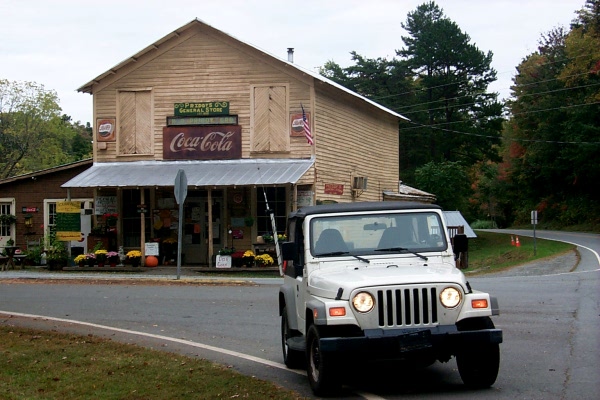
Priddy's store was hopping today…

alu-ron-taylor.JPG
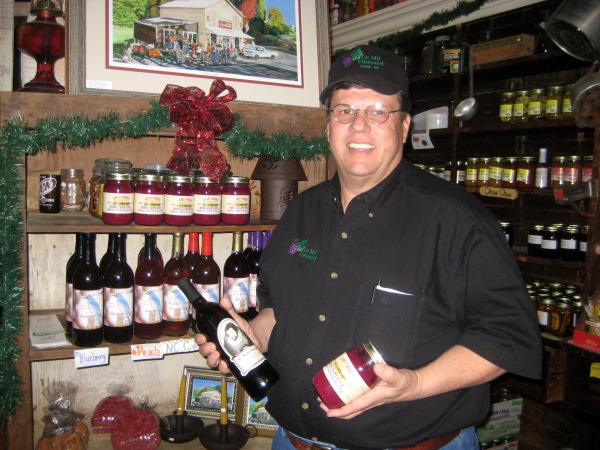
Ron Taylor in Priddy’s store with some of his products that Priddy’s sells

Coming home from the post office at Danbury, I stopped at Priddy’s General Store today to pick up a few things. There were a lot of customers, but in between ringing up customers Jane Priddy still found time to talk with me about local issues, as we often do when I’m in the store. We were discussing the local farmers and local products and ways to better connect customers like me with the people who have local produce and products to sell. Jane was telling me about a man in Eastern North Carolina whose business has expanded to help get local products on the market. For example, he produces and cans the sweet potato butter made from the Stokes Purple sweet potatoes.

By the strangest of coincidences, a man in the store who had overheard much of our conversation let us know that he was that very man. He was on a business trip to this part of the state, and he had stopped in to have a look at Priddy’s store, which he had never seen before.

People like Ron Taylor and Jane Priddy are the kind of people who have done much to help rural North Carolina find its way to a new kind of local, sustainable economy. Ron is the president of Taylor Manufacturing, which has made equipment for tobacco farmers for many years but which expanded to make make equipment for winemakers. Ron has also started a vineyard, Lu Mil Vineyard. He served in the state legislature for several years, and he has served on a number of boards having to do with economic development and agricultural tourism.

Ron gave Jane and me bottles of his new muscadine wine. I can’t wait to try it.

alu-lu-mil-wines-1.JPG
On the left is an alcohol-free juice made from the native muscadine grapes. On the right is a new muscadine wine that Ron is now producing.

a-over-3.JPG
Priddy’s General Store

Ruralpolitans?

ruralpolitans-1.jpg
Wall Street Journal

I have often wondered why we weren’t seeing more signs of a dropout movement, or a back-to-the-land movement, during this economic downturn. Maybe it’s happening. The Wall Street Journal had a piece this week about migration to rural areas, calling these back-to-the-landers “ruralpolitans.” It’s a rational thing to do. And yes, having the Internet makes it easier and diminishes the feeling of isolation.

Toward more frugal homes

g-washing-machine.JPG
My new washer

—————————————–

nyt-appliances.jpg

One of the nice things about new construction is that, largely because of tighter and smarter regulations, new homes and new appliances are more efficient and more frugal. My windows, with a U-factor of .31, are pretty darn snug, though no window is as efficient as a well-insulated wall. Local builders complain that Stokes County’s requirement for ceiling insulation is R-38, the same as in much of Canada, even though surrounding counties require only R-30. My Trane heat pump is far more efficient than heat pumps from the 1980s. Refrigerators have gotten much more efficient. Even my big iMac consumes far less energy than the computer it replaced.

For the month of July, with my cooling system running as needed all day and all night all month with thermostats set to 77 or 78, I used 604 kilowatt hours at a cost of $71.80. For September, with no heating and cooling needed, I’m expecting an electric bill of $35 to $40. My house is not a MacMansion. It’s 1250 square feet. [My electric company, Energy United, which is a rural electric cooperative, charges .0802 cents per kilowatt hour during the summer, meaning that my per-kilowatt charges were $48.44 for July. The rest of the bill is from taxes, fees, and fixed monthly charges.]

It has been fascinating to watch my new LG front-loading washing machine, which is Energy Star compliant. It’s astonishing how little water it uses. It’s very quiet. It spins at a very high speed to reduce dryer costs. Its behavior is very complex, controlled by a computer. Older washers with mechanical controllers were much more limited in how their wash cycles were set up.

The New York Times has a piece today on the patterns of energy consumption in the home and how they are changing.