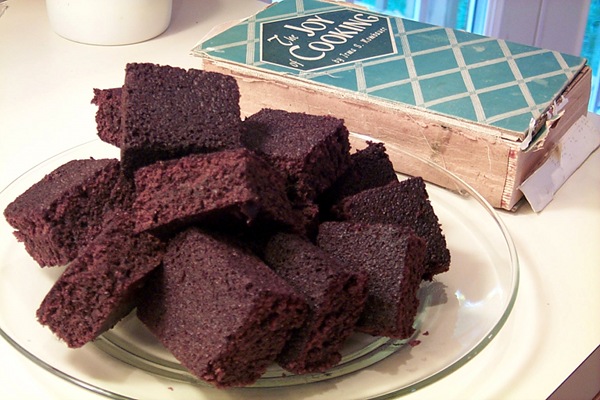
I had a chocolate fit this evening, and I thought of brownies. If I’ve ever made brownies before, I don’t remember it. As usual, I turned to the 1943 edition of Irma Rombauer’s Joy of Cooking. She has a recipe for brownies that uses molasses mixed with the sugar. I substituted olive oil for the melted butter, and I used whole wheat flour. Not that much can be done to lessen the crime of making brownies.
Category: Food
La saison de la soupe est ouverte!
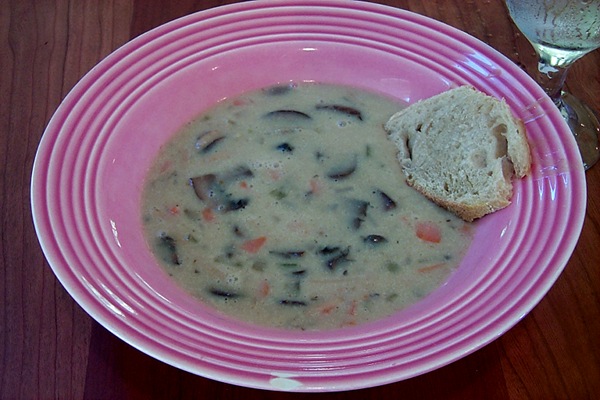
The low temperature last night was about 50 degrees, and today at noon we were up to only 72. So I decided that today is the official start of soup season.
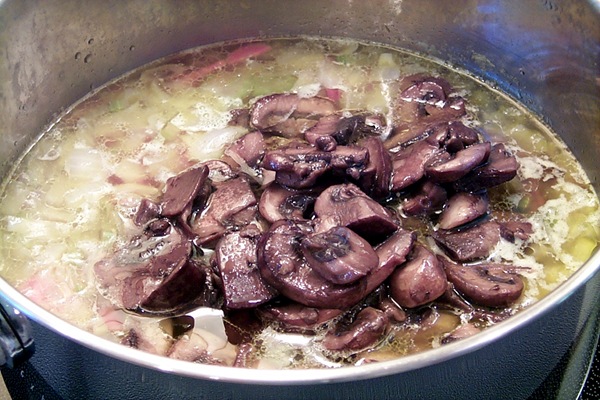
This was a vegan soup made with mushrooms, minced onions, celery, and carrots. All that was sautéed in olive oil. I thickened the stock with a little whole wheat flour. I added some broken linguini to the stock to make the soup heartier, and I creamed it with soybean milk.
Now if it would only rain.
My mother has been visiting at Acorn Abbey this week, and not much work got done outdoors. Next week I’m planning to shop for a tiller and start on the fall gardening chores.
Shiitake mushroom garden
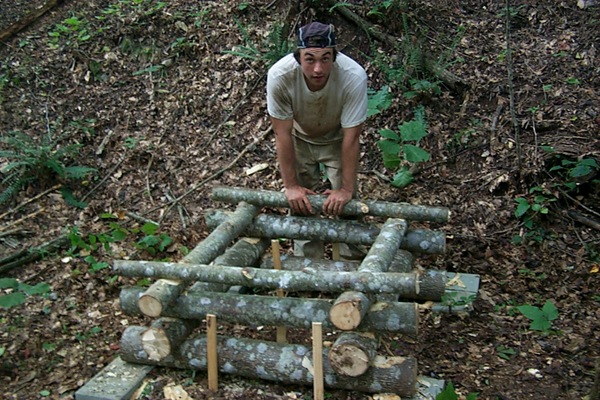
Ken Ilgunas with the mushroom logs — all done except for the deer protection
Acorn Abbey has only five acres. But on those five acres, it’s amazing how many microclimates there are. Only an acre is open to the sun. That’s where the house and garden are. There are four acres of woods, with a small stream flowing between two steep ridges. Now what can we grow down in the bottom where the two little streams meet, where the sun never shines and where it’s always damp? Shiitake mushrooms, of course.
We bought our shiitake spawn plugs, by the way, from Oyster Creek Mushroom Company in Maine. If you’re interested in starting a mushroom garden of your own, Google for instructions. You’ll also find some videos on YouTube.
This is the first experience either of us has had with mushrooms, so we were following instructions that came with the spawn. We regard this as more of an experiment, or pilot project. We made some compromises. Most instructions for doing this recommend cutting the trees in the winter. We wanted to get started, so we took our chances with late summer. Most instructions for shiitake mushrooms say that oak logs are preferred. I can’t bring myself to sacrifice an oak for mushrooms. We used poplar, of which I have a surplus. Poplar also is nice and straight, so the logs stack well. Most instructions say that any hardwood tree will do. Another mistake we made is that we ordered our spawn a little too soon. It waited in the refrigerator a bit longer than we would have liked. Still, we’re hoping that the process is forgiving and that the mushroom growth is exuberant enough to make up for our compromises. Also, I’m hoping for a boost in that the mushroom environment in Acorn Abbey’s little branch bottom seems close to ideal.
Ken did all the work. Here are photos of the process.
Above: Ken cuts a poplar tree. We used only one tree for this starter project. We don’t have any power saws. Ken used an axe to fell the tree.
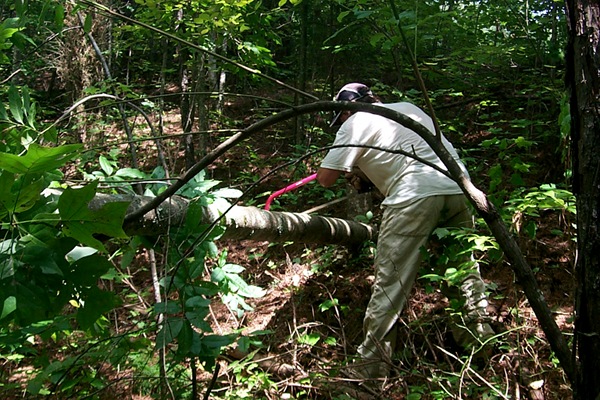
Above: Ken saws the tree into four-foot logs.
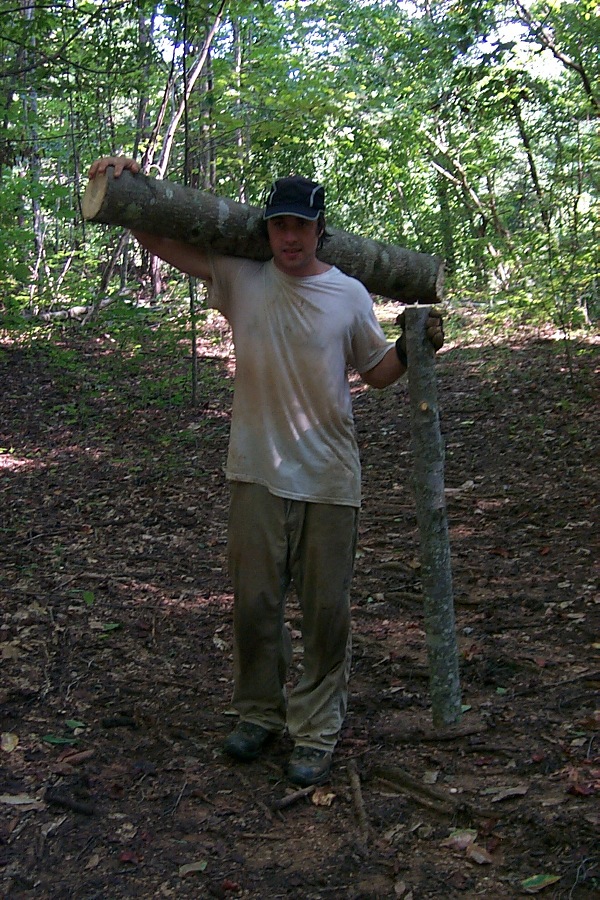
Above: The tree made 10 logs.
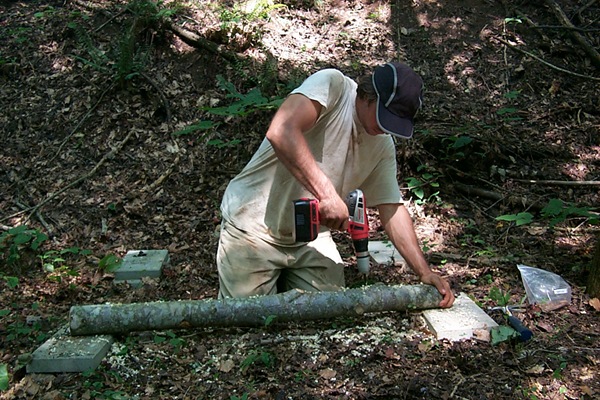
Above: Ken drills holes for the spawn plugs. The plugs are just pieces of wooden dowel, about three-quarters of an inch long. The plugs have been treated with mushroom spawn.
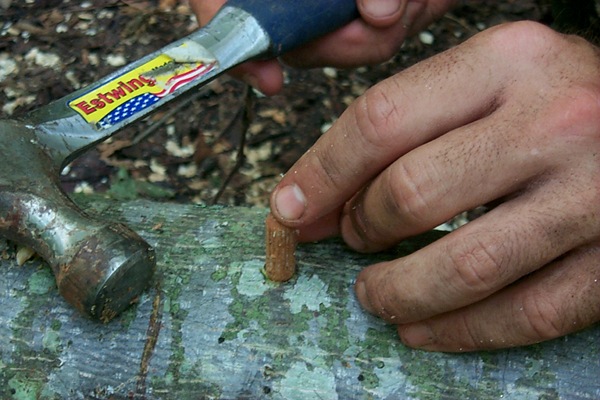
Above: Ken hammers the plugs into the holes in the log.
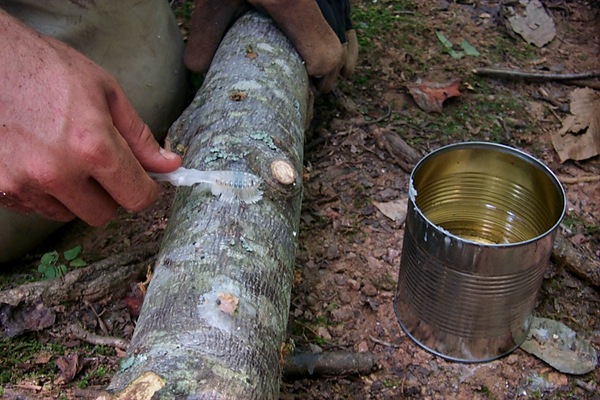
Above: Ken uses a brush to cover each plug with hot wax to seal in the spawn. The wax was melted on a camp stove.
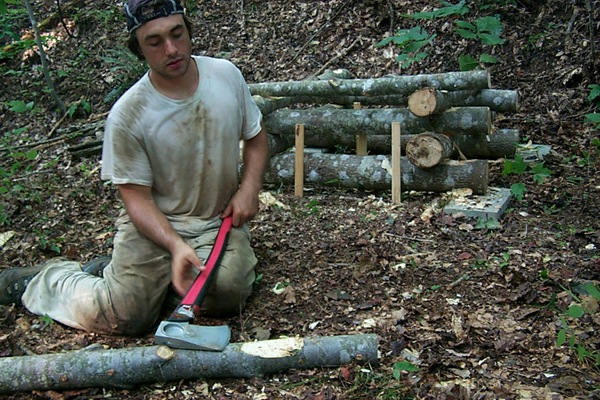
Above: Ken notches a log for stacking.
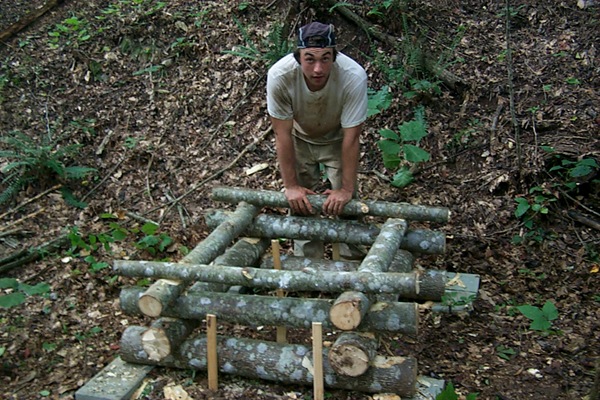
Above: All done except for the deer protection!
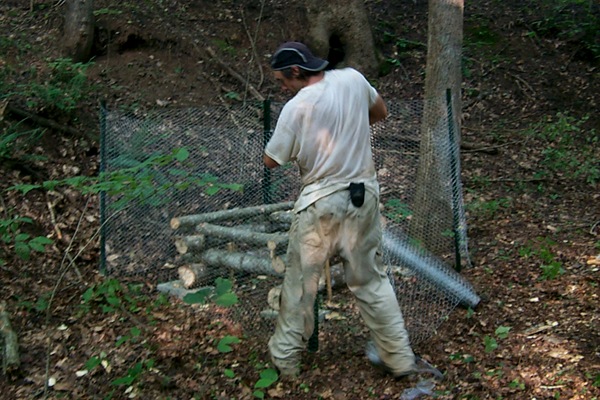
Above: Ken puts up chicken wire to keep the deer away from the logs.
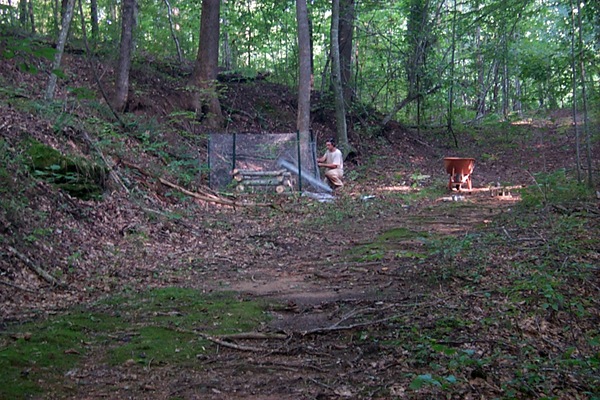
Above: The branch bottom. This area is almost perfect for a mushroom farm. There’s a small track into the woods suitable not only for the wheelbarrow, but also for the Jeep if needed. To the right in this photo about 20 feet out of sight is a small stream. Behind the camera is another stream. The streams are small, but the larger of the two runs year round. The smaller stream sometimes stops in extremely dry weather. But the humidity here is always high, and except in winter the thick hardwood canopy blocks almost all the sunlight.
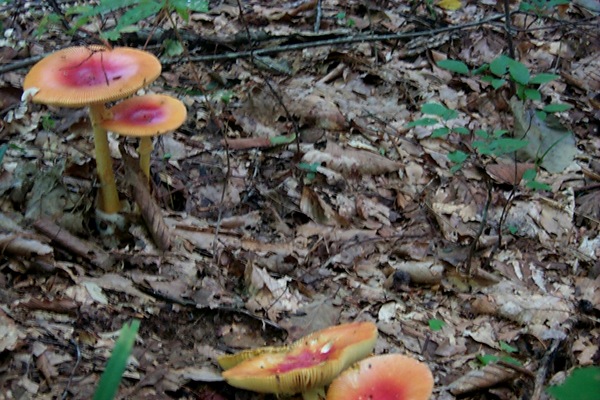
Above: Mushrooms grow everywhere in this area. Even in dry weather, the mushrooms grow in the branch bottom.
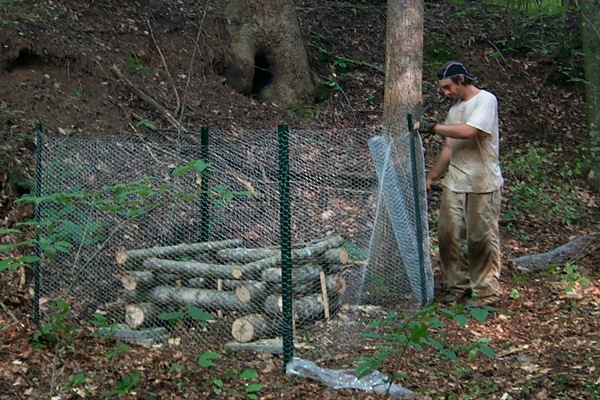
Above: All done and ready for the deer. The instructions say that we can expect mushrooms in five to 12 months. The logs should produce two harvests a year for three to five years.

Apple economics
If you want good apples, the best way is to grow them yourself, I’m sure. But my young apples trees probably won’t produce for two more years or so. The summer heat is hard on the appetite and the urge to cook. I haven’t made sourdough bread for over a month. But the craving for apple pie never goes away, and I expect the craving for apple pie to get even worse as fall approaches.
Anywhere in the country one drives during the summer, one sees old apple trees hanging full of apples, but how to get them? I fantasize about an apple raid. In the local grocery stores, all the apples are from Washington. All of them. The same thing is true at Whole Foods in Winston-Salem — nothing but Washington apples. I refuse to buy them. There are local apples everywhere, going to waste, but there’s no system for getting them to someone who might use them. We did ask a neighbor if they’d sell us some apples, and they said sure, they’d give us all we want. But those apples aren’t quite ripe.
On Friday at the Danbury farmer’s market, the farmer couple who I now refer to as our favorite farmers had some apples for 50 cents a pound. I bought enough for a pie. These apples look the way apples are supposed to look — all sorts of colors, with spots and even the occasional worm hole. No problem. Cut around it. To me, those perfectly shaped things in the grocery store that they call apples are not apples. They’re more like cardboard, usually.
The best apples I ever had were from old, abandoned apple trees.
A good persimmon year?
The wild persimmon crop won’t be ripe until early fall, but they’re coming along nicely. I pass three wild persimmon trees on the way to the mailbox, and they’re all heavily loaded with nice, plump, green persimmons.
I’m hoping for some nice persimmon pudding this fall.
Southern style tomato sandwiches
Ken’s first taste of Bunny bread
Once upon a time, when you grew up in the South, tomato sandwiches were what you had for lunch. For a proper Southern tomato sandwich, the whitest, fluffiest bread you can find is in order. Here at the abbey, I bake all the bread, whether it’s biscuits, sourdough loaves, rolls, pizza crusts or whatever. But, ever since I moved back to North Carolina from California, once a summer I buy a loaf of Bunny bread, the whitest, fluffiest bread that can be bought around here. I also leave my high-end organic mayonnaises bought at Whole Foods in the fridge and use a common grocery store mayonnaise. Of these low-end mayonnaises, Duke’s is my favorite.
Tomato sandwiches are an important tradition. That’s a recipe I’d never mess with.
Farmer's market, etc.
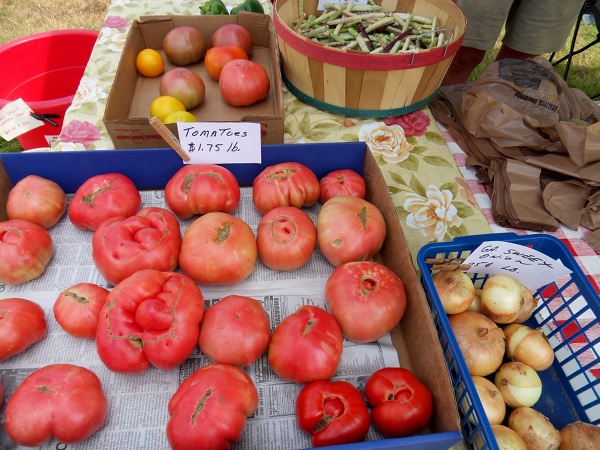
Tomatoes are not yet plentiful. When they are, the price will come down.
Ken and I went to the Danbury Farmer’s Market today. Ken took some photos along the way. Here are today’s photos, along with a couple of older catch-up photos.
As for the rainfall, one farmer said they got about half an inch last night. Another farmer got almost an inch of rain.
This is the stand of the farmer couple that this summer we’ve been calling our favorite farmers.
The vines at Oak Valley Vineyards, not far from Priddy’s General Store and about five miles from Acorn Abbey
The tobacco crop seems to have handled the hot, dry weather very well.
Ken built a firepit down at the edge of the woods. We had our first fire in it last Friday evening, a rare cool evening.
Ken with his last supper before starting a three-day fast. He’ll end the fast at dinner tonight, for which he has requested pizza and apple pie.
Basil season
Apple pie from Levering apples
Levering Orchard
Today we drove to Levering Orchard in Ararat, Virginia, hoping to pick some cherries. Unfortunately we were a week or so too late for this year’s cherry crop, but we did pick some peaches and some Lodi apples.
Levering Orchard has been operated by the Levering family for three generations. Frank Levering now runs the orchard. Frank has written several books on rural living. He and his wife, Wanda Urbanska, produced the PBS television series Simple Living. I first met Frank more than 30 years ago, so we had a chance today to talk about old times and old friends.
I’ll probably make a pie from some of the apples. Most of the peaches probably will go into peach smoothies.