Increasingly, liberals are noticing that it’s very expensive to be poor. It may seem strange to those of us for whom bank accounts are an ordinary fact of life. But many people cannot afford bank accounts. Consequently poor people pay more for just about everything.
Often when I go to the post office, I see people buying money orders and paying with cash. Fortunately, money orders from the U.S. Postal Service aren’t expensive — $1.20 for up to $500. But cashing a check may have cost them up to 12 percent. Many people with precarious finances do have bank accounts, but they get eaten alive by fees. Americans paid $34.3 billion just in overdraft fees in 2017. The poorest are the most vulnerable, with a typical poor person with a bank account being charged about $450 each year.
Democrats — in particular Sen. Kirsten Gillibrand of New York — have proposed that all U.S. post offices offer retail banking services. Republicans, naturally, don’t like the idea. Even some centrists don’t like the idea. But it seems to me that any serious plan for reducing economic inequality must include a mechanism for giving poor people options that allow them to avoid financial predation, which is at present a lucrative and ugly business.
Meanwhile, on the other side of the tracks, those who are solvent and who know how to manage money make money from their banks. “Rewards” cards are the main vehicle for that.
Rewards cards are increasingly controversial, because merchants are charged more by credit card companies when customers pay with a rewards card. Some people have even made a hobby of juggling rewards cards to maximize cash back, using spreadsheets to track the best deals. According to the New York Magazine article that I just cited, more than 90 percent of credit card transactions now involve “rewards.” This is costing banks more and more money, so powerful financial interests are fighting for changes.
Though it is merchants who have to pay for the use of credit cards, we all pay for the credit card industry through higher prices charged by merchants. What rational person would not want to get some of that money back, if the banks let you do it?
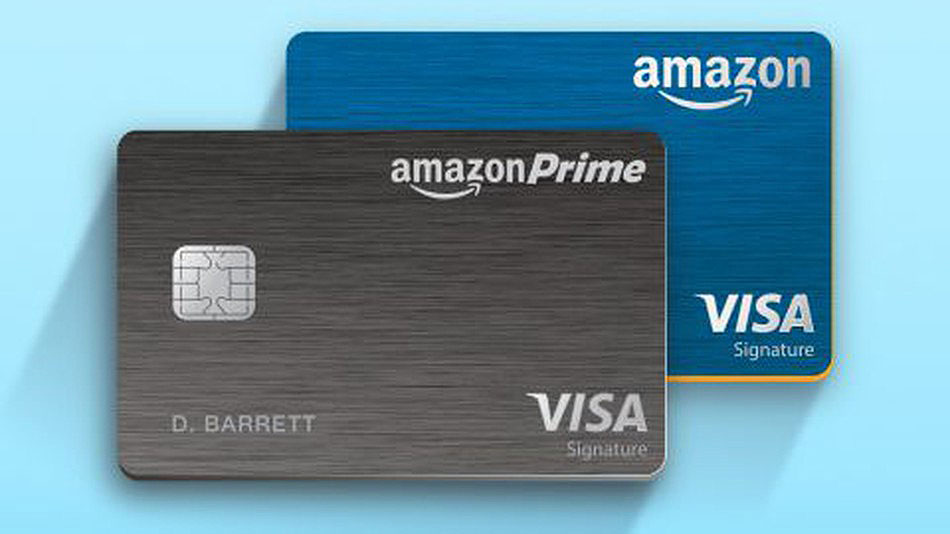
I confess that I have two rewards card. Each year I earn a significant sum from my Bank of America rewards card by paying the full balance each month and collecting the rewards. Recently I acquired an Amazon Prime rewards card. I really didn’t want another credit card, but 5 percent cash back on everything I buy from Amazon and Whole Foods was just too good a deal to turn down, since Amazon and Whole Foods are my two main supply lines. And, strangely enough, Bank of America even sweetened the deal a bit last month by allowing customers to choose their 3 percent category, with online shopping as one of the categories. That probably was to compete with Amazon’s card. But the difference between 5 percent and 3 percent was too much to pass up.
The unfairness built into this system is apparent. Those who are financially stronger are making money off of those who are financially weaker, through higher prices on virtually everything from groceries to gasoline. Does that mean that I should abstain from using a rewards card? No, because the rewards that I don’t collect would be pocketed by the bank, not by the poor.
Instead, we should demand financial reform that is fair to the poor and less harsh on merchants — at the banks’ expense. If that means an end to rewards cards, I’ll understand. As long as merchants reduced their prices to reflect reduced expenses for accepting credit cards (would they?) then we’d still get the money back through lower prices.