They’re very shy and try to hide behind leaves. They’re small, and they don’t last long. The abbey has lots of young wild persimmon trees that volunteered in the ditch along the roadside after the old pine trees came down seven years ago.
Watching a bewildering world from the middle of nowhere

They’re very shy and try to hide behind leaves. They’re small, and they don’t last long. The abbey has lots of young wild persimmon trees that volunteered in the ditch along the roadside after the old pine trees came down seven years ago.

It’s difficult to write a spoiler-free review of Neal Stephenson’s Seveneves, but I will try. It’s not really a spoiler to say that, in the first paragraph of the novel, the moon blows up. What follows is a long saga of survival — 866 pages long.
Stephenson always provides a hot read. I devoured the book in six days. Stephenson also always provides a feast for nerds. Reading Seveneves is like taking a course in orbital mechanics. Stephenson is not the best at character development, character conflict, and character intimacy. But he seems to be aware of that weakness in his previous books and has made a strong effort to do a better job in Seveneves. Still, he writes some of the least hot love scenes in science fiction.
I give Stephenson high marks for giving the reader a lot to think about. His novels do seem to stick to the ribs over the years. But after about a week’s reflection on what’s worth remembering and worth keeping in Seveneves, I can’t say that I come up with much. One could ask the question, “What is Neal Stephenson passionate about?” I’m pretty sure that, after reading Seveneves, the only solid answer would be technology.
I don’t accuse Stephenson of being a techno-utopian. I think he’s too smart for that. He also has some criticism for those who might put too much faith in technology, and at one point in the book he uses the phrase “techno-mystical ideation.” Yet it seems pretty clear to me that technology is his passion. This is clear just from reading his acknowledgements.
The bottom line, for me at least, is that Stephenson writes must-read science fiction. However, I’m getting stronger and stronger whiffs of an arrogant and elitist attitude that can spoil fiction if it gets out of hand. Stephenson is most comfortable with characters who have big egos, lots of admirers, and Ph.D.’s. If you read the acknowledgements or check out his personal web site, it’s pretty clear that he runs with the gazillionaires of the tech industry — the lords of the universe — and that he can’t much be bothered by us mouth breathers.
Stephenson probably will get a movie deal for this book. It’s the kind of space spectacle that Hollywood loves, and I’m sure that Stephenson knew that when he wrote it. I’d give it four out of five stars. Unless he does something completely different with his next book, I’ll have read enough Stephenson.

There are several wildflower patches scattered around the abbey’s sunny acre. This patch, right in front of the house, has been taken over largely by daisies. I’m not even sure how they came to be there. They could have arrived in a sack of mixed wildflower seeds, or they could have come naturally, just because they liked it there.

I am almost finished with Neal Stephenson’s blockbuster science fiction novel Seveneves, and I will have a review of it soon. Last night, 50 pages from the end of this 866-page novel, I was touched by one of Stephenson’s erudite little details. Some characters sing a hymn, and Stephenson identifies the hymn tune as the Welsh hymn “Cwn Rhondda.” This hymn has somehow managed to survive the calamity that strikes Earth in the first paragraph of the novel.
Every organist knows that “Cwm Rhondda” is one of the great majestic Welsh hymns that often are sung at royal events at Westminster. Stephenson’s mentioning the hymn gave me an irresistible compulsion to hear it sung. I put the book down and went to YouTube to shop for a good performance. There are some terrible ones, to be sure. The good ones, and there aren’t many, are either from Wales or Westminster. This led me to reflect yet again on something I have long known: Americans simply cannot sing. There are American choirs that can sing. But Americans as a whole cannot, or won’t, sing. We even shame people who sing too enthusiastically. When I was a child, regularly dragged to church, there was a woman in the congregation who sang a little louder than everyone else, Cornelia. Everyone made fun of her singing.
The Welsh are different. Not only do they have a living culture of choral singing, they have a living culture. American culture, in so many ways, is dead, and our inability to sing together is a consequence of that. Singing together is of the commons, and we American individualists aren’t much into common things. At the big sporting events, do we stand as one people and skillfully sing our national anthem together? Of course not. Some popular singer sings it solo, and part of the sport is to see what sort of patented personal spin this singer can give to the anthem to try to make it water-cooler talk the next day.
I can remember only once in my life when I have heard a large group of Americans actually sing. That was around Christmas 1996, in San Francisco. There is an annual event in Davies Symphony Hall called “Christmas Pipe Dreams.” The hall is jam packed. Everyone sings Christmas favorites, accompanied by the hall’s enormous organ and perhaps a brass choir. They make games of it. The director may divide the audience by counties — Marin, Alameda, San Francisco — and see who can outsing each other. I am proud to say that I am an American who can sing, and at this event I sang at the very top of my lungs and yet could not hear my own voice because the sound was so enormous. Does this mean that the San Francisco Bay Area, unlike most of America, has a living culture and a respect for the commons? I would say so.
Anyway, here’s a link to a YouTube performance of “Cwm Rhondda” in a church in Cardiff packed with Welsh people. I believe the BBC made the video, though I don’t know what the occasion was. Listen carefully to the Welsh articulation of the vowels and consonants. There is nowhere in the world I’d rather hear English spoken than in Wales. I have visited Welsh friends in Pontypridd several times. “Cwn Rhondda” actually was written for a hymn festival in Pontypridd in 1905, which makes the hymn about 110 years old.
They sing the last few lines of the hymn in Welsh. Part of what we are seeing here is the surviving Celtic spirit. Listen to the recording with a good headset if you have it. The recording quality is excellent. The choir and congregation nail the details. Note the strength of the altos. I’m guessing that most young Welsh women learn early on whether they are better suited to be sopranos or altos and that they learn part-singing.
And to prove that the church in Cardiff is not an anomaly in Wales, here’s a congregation in Swansea similarly nailing it:
A musical footnote: The congregation here is singing with the church’s choir. The choir is certainly well trained and well disciplined, but note how the congregation fully participates and how the congregation is paying just as much attention to the director as the choir. You can see this in the full stops at the end of verses (which the director is certainly controlling) and in the director’s ability to control the slowing tempo and fermata before the last line. The organist is probably watching the director on a video link. And by the way, that fermata before the last line is not just a director with good taste. It’s actually written into most arrangements. And, as long as I’m being a musical nerd, note the musical drama that occurs in the next-to-last line. On the words “Feed me till I want no more,” the tenors and second sopranos hammer the same repeating note with an also-repeating trochaic rhythm. While that note is repeating, the basses step down six chromatic steps, with all voices landing firmly on the dominant, with a full measure to move into the dominant seventh, followed, of course, by the last line and the inevitable return to the tonic. It is brilliant choral writing.

I don’t want to drop any spoilers to the plot of the sequel to Fugue in Ursa Major (which is in progress and which I hope to have in print sometime next year). But Jake does set out on a rather dangerous journey of what I would call cultural recovery.
I have put countless hours of thinking and research into imagining what the world would be like if Christianity had never existed. The church, of course, automatically supposes that it has improved the world. I beg to differ. The church really was just Rome, entangled in the theology of what, except for accidents of history, would have been an obscure (and theologically ordinary, for its time) Middle Eastern cult. The church systematically drove all the magic out of the world. It saw nature and the rest of creation as just resources, with no other inherent rights or value, for humans to exploit. It used the nastier parts of its theology to wipe out time-tested bottom-up social structures (which worked) and replace them with top-down social controls (which exact a huge toll on the human psyche, because people aren’t aware of any other systems and thus don’t even know what’s wrong with their lives). I could go on and on.
Thus I am fascinated, as a storytelling proposition, with what might happen if you took a contemporary young man like Jake Janaway and set him down in the middle of a culture untouched by Christianity. I chose Scotland as a key setting, partly because I love and am somewhat familiar with the British Isles. It’s also the culture of Jake’s ancestors, as it is mine. The Scottish coast also is only a few days’ travel, by sea, from Gaul (France), and hence the Scottish elite are aware of, though at a safe distance from, the turmoil of Rome’s clash with the more pastoral cultures of North Atlantic Europe. Rome called them barbarians, not least because they wore trousers (which popes and some clerics still don’t wear). But I would argue that Rome was much more ruthless and violent than the barbarians.
I also would argue that, had Rome been less violent and less ruthless, Rome and the barbarians eventually would have come to terms. Even in the first and second centuries B.C., the barbarian tribes were turning away from raiding as the centerpiece of their economies and were happy to produce things of value and trade with Rome instead. The tribes wanted Rome’s wine and luxury goods. Rome wanted commodities like tin and copper — and slaves. Rome required a constant input of slaves by the tens of thousands to drive its economy. Calling them barbarians made it much easier to excuse slaughtering and enslaving them. Even in the 19th Century United States, the church split over slavery. The evangelicals of the Southern Baptist Church, a major supporter of today’s Republican Party, split again in the 1960s over Civil Rights. It is only one of many of the moral failures of Christianity and the Roman politics that tends to revolve around it.
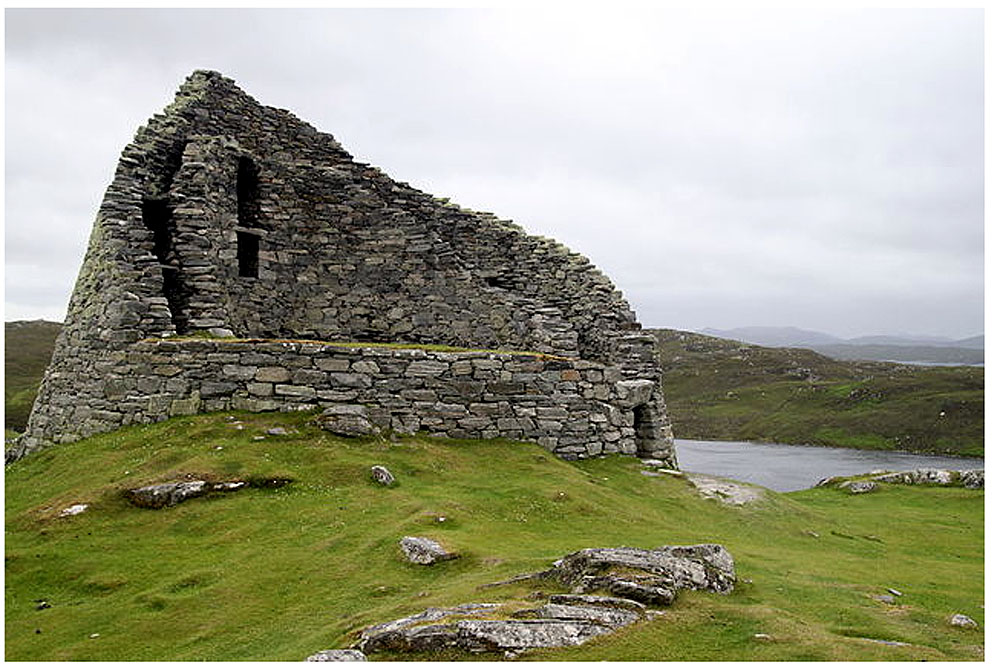
Anyway, if you lived on the coast of Scotland in 48 B.C., and if you were very lucky, you just might live in a broch. The brochs were fortifications, certainly, intended to protect the occupants from raids. They marked status. They almost certainly were watch towers and beacons. The brochs were situated so that a beacon fire at the top of a broch could be seen from the next broch, which could relay the signal onward. A system of flags, I suspect, also was used.
Not a great deal is known about the interior of the brochs (the timbers long ago decomposed), and it’s hotly debated by archeologists. They might have been roofed — or not. There were no exterior windows, so I am skeptical of how wise it would be to roof the entire broch, since it would always be dark inside. If I built a broch, I’d roof it partly, to let in some light. The double stone walls were mortarless. Between the walls there were stone stairs, and, depending on the size of the broch, chambers. There were windows in the inner walls facing the enclosed courtyard.
Obviously Jake is going to spend some time in a broch in the sequel to Fugue in Ursa Major. There will be a thriving community around this broch. Jake will be able to learn quite a lot from them about what life was like for the Scottish Celts in 48 B.C. Much of this, of course, will of necessity be a project of imagination, but a great deal of it is based on a good two years of research and stacks of books that I don’t have any shelves for. Jake also will get swept up in what is going on in Gaul.

By the way, this is 1,004th post in the Into the Woods blog.
In the past, I have mentioned one of my heros (or heroines, if you wish) — Rita Levi-Montalcini. Italians affectionately called her “La Professoressa.” She was a Nobel laureate. She discovered nerve growth factor back in the 1980s and in 1986 won the Nobel Prize in Medicine. She died in December 2012 at the age of 103.
My favorite interview with La Professoressa is now behind a paywall. But in the interview (I believe she was 98 or 99 at the time), she was asked how she managed to remain so active, with such a young mind. She said that it was because she took nerve growth factor. Nerve growth factor, as I recall, is manufactured in small quantities in Italy, where it is used to treat certain eye disorders. It is not available in the United States. At the age of 98 or 99, La Professoressa said that her mind was sharper than it had been in her twenties. She still worked in her lab every day.
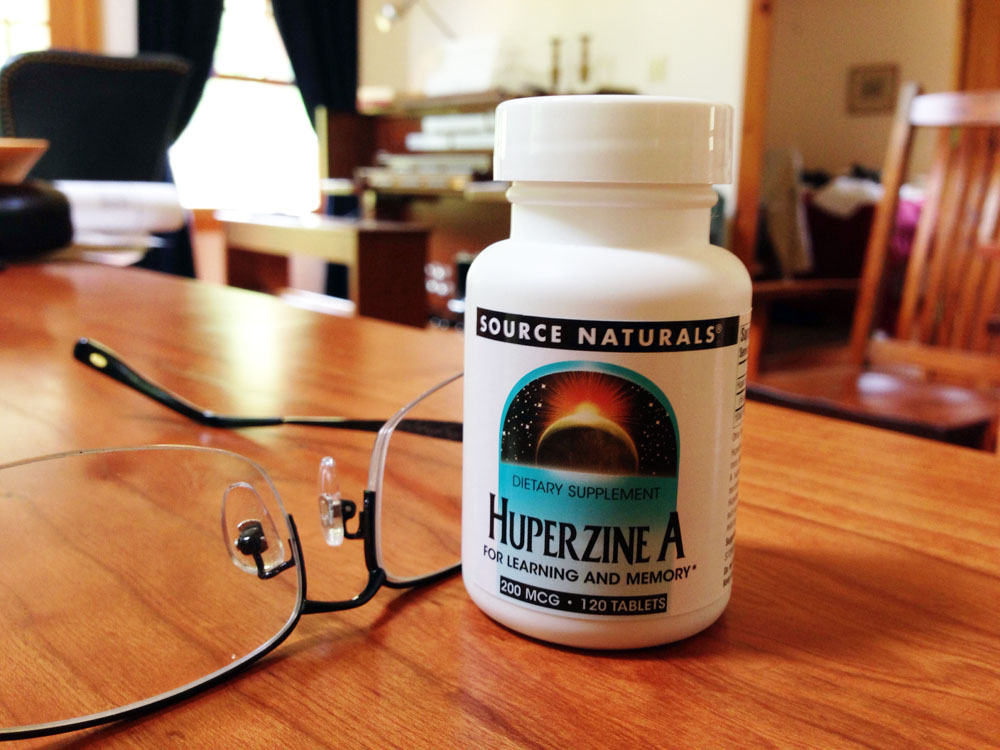
This naturally got me thinking about how it might be possible to acquire some nerve growth factor. I never found a way, but sources pointed to something similar — Huperzine-A. It’s natural and is derived from an Asian moss. There isn’t as much research on Huperzine as I’d like, but the research that has been done is promising for anything having to do with neurological degeneration such as Alzheimer’s. It seemed likely that Huperzine would be helpful to anyone who’s getting older.
At the time I started taking Huperzine-A, Ken was here. As you know if you’ve read Ken’s book, he’s a smart guy. Sitting across from his young mind at breakfast and dinner every day is a challenge. My 63-year-old mind would sometimes forget things (names and nouns in particular). Sometimes I would tell him something that I’d already told him, and he would nicely let me know that I’d already told him that. I found that tremendously embarrassing.
After a couple of months on Huperzine, I asked Ken if I’d forgotten anything lately or repeated something I’d already told him. He thought for a second and said, “Why no, I don’t think you have.”
After I started taking Huperzine, I finished and published my novel. I lost 20 pounds (and have kept it off). I may certainly still have little memory lapses if I’m tired or distracted (forgetting the names of people I don’t know very well, for example). But I’d put my memory up against anyone’s. If you asked me how many clean coffee cups are in the cabinet, or for an inventory of what’s in the dishwasher at the moment, I’d probably get it right. I rarely misplace things. I don’t forget to shut the chickens up in the evening. I know what’s on my calendar.
The effect of Huperzine is subtle. It doesn’t feel like coffee or any kind of stimulant. In fact it actually lowers the heart rate. My resting pulse is rarely above 72, and if I’m really relaxed it’s in the 60s (though how low it goes varies with how much exercise I’ve been getting). Huperzine just makes you feel more focused and more able to concentrate. It won’t compensate for lack of sleep. Nothing does.
There are two side effects.
If you take it close too close to bedtime, it probably will give you insomnia with a racing mind. (Frankly, a racing mind in the middle of the night can be a good thing, if you don’t have to get up in the morning. The imaginative work I do for novel-writing mostly happens in the middle of the night, or while taking long walks. See Clark Strand’s new book Waking Up to the Dark: Ancient Wisdom for a Sleepless Age.)
Huperzine also will give you vivid dreams. When I read the Amazon reviews by people taking Huperzine, I thought they might be exaggerating the effect it has on dreams. But they weren’t. If you want to enhance the dream effect, take Huperzine close to bedtime. If you have good dreams, they’ll be very good. If you have a bad dream, it will be very bad. The dream effect, however, does tend to diminish over time. It’s most noticeable in the first days of taking Huperzine. It increases the complexity and vividness of dreams. I often hear music in my dreams. In a dream just last night, an organist was playing a fugue. I am quite sure that I heard all four voices of the fugue, as clearly as if I were at a live performance. I don’t know how the brain can render detailed visual and aural reality on the fly (in dreams, at least), but somehow it does. If you are prone to sleep paralysis, Huperzine probably will aggravate it.
Here’s an Amazon link for buying Huperzine, which I pass on with all possible disclaimers. You should read up on Huperzine before you try it. Read the Amazon reviews.
Huperzine appears to not have much effect on younger people (except for dreams). Younger people probably don’t need it. But I personally am convinced that it helps keep older minds sharp.

The late Rita Levi-Montalcini

While I’m thinking about wine, here’s another good value, from Trader Joe’s. For at least a couple of months now, Trader Joe’s has carried both a chardonnay and a cabernet from Liberté vineyards. That winemaker is in Paso Robles, which is in San Luis Obispo County in southern California. Both the chardonnay and the cabernet are $9.99.
Truth is, I never cared much for so-called “fine wines.” As the price of a bottle of wine rises, the increased quality either diminishes rapidly in line with the law of diminishing returns, or the value is entirely fictitious and is related to heightened demand, or snob appeal. I’m one of those people who see wine as food. I’d no more pay $40 for a bottle of wine than I’d pay $20 for a cauliflower. There’s not a thing in the world wrong with good country wine. I also don’t mess around much with weird varietals. When I’m shopping for wine, I go always look for honest, basic, fruity chardonnays and cabernets.


Back in the 1990s, when I was living in San Francisco, had a comfortable income, and had access to a deep cellar, I lived in the French mode, bought wine by the case, and fetched it from the cellar. A lot of the wine I bought was from Bonterra Organic Vineyards. Bonterra’s wines aren’t the sort of wines that will knock your socks off, but they’re good wines and a good value.
Now that I’m in North Carolina and now that retirement has suppressed my wine budget, I no longer buy wine by the case (though I probably should — it doesn’t really cost any more that way). I had not even seen a bottle of Bonterra wine in years. Imagine my surprise, then, at seeing several bottles of Bonterra organic chardonnay and cabernet in an ordinary country grocery store in Walnut Cove. I bought all the bottles that were on the shelf. The 2011 chardonnay was about $10 a bottle and the 2011 cabernet about $12.
I find this puzzling. How did organic wine from a not-very-large California vintner end up on a shelf in a country grocery store in North Carolina? I’m afraid that it probably means that the wine was not well reviewed, didn’t sell well, and got remaindered out to free up warehouse space. But I’m speculating.
Still, if you come across Bonterra wine, give it a try. I see from their web site that they have a wine club. I just might sign up. I have not yet opened the cabernet. The chardonnay is slightly watery though strong on alcohol, but it has good color and a nice, fairly soft chardonnay taste. In short, it’s perfectly fine for a $10 wine.
It occurs to me that I’ve not written about wines here often, mainly because retirement has cut into my wine budget. For the record, I am strongly of the opinion that California wines are the best in the world. I prefer wines from Sonoma County, but Napa and Mendocino will do.
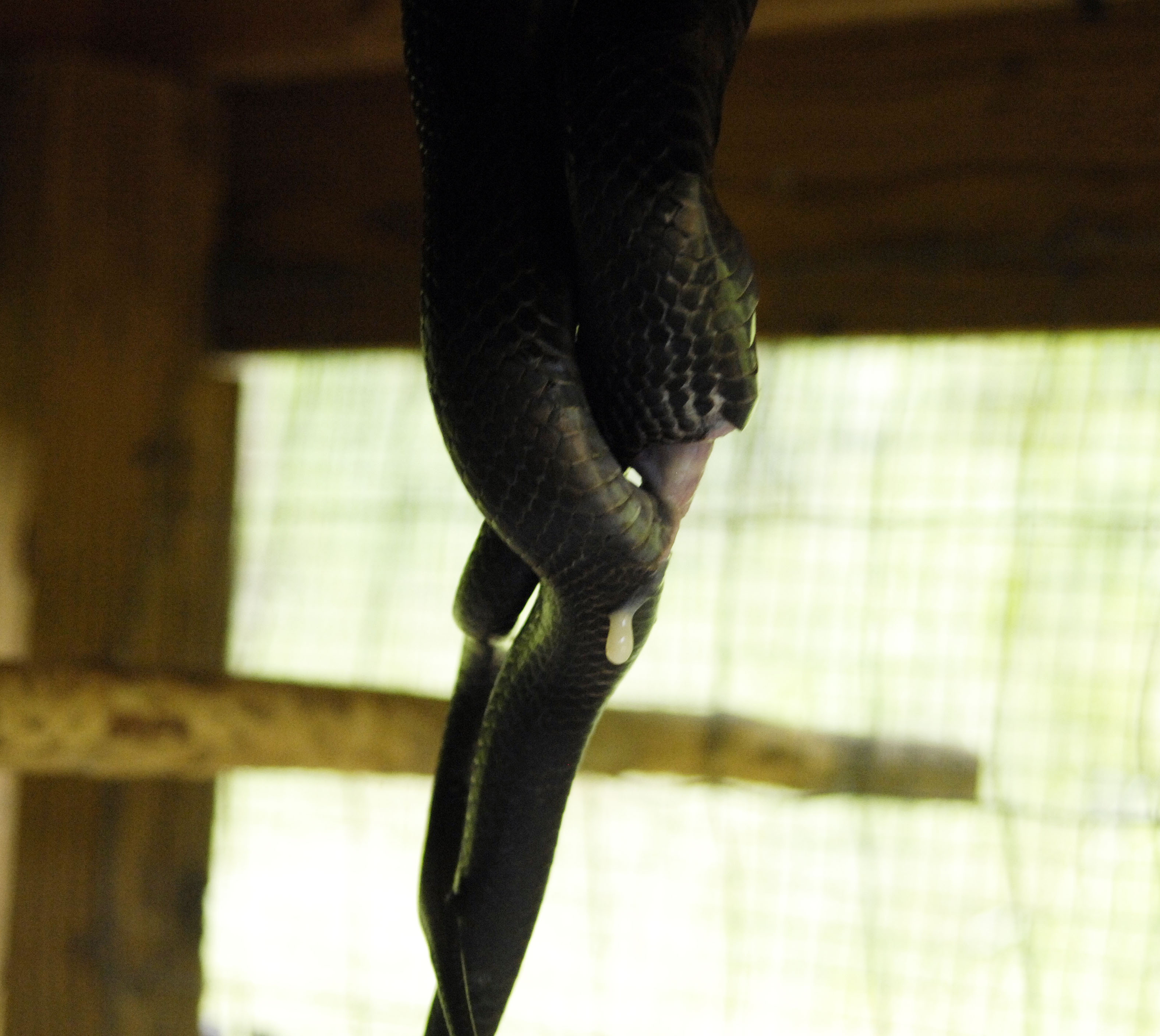
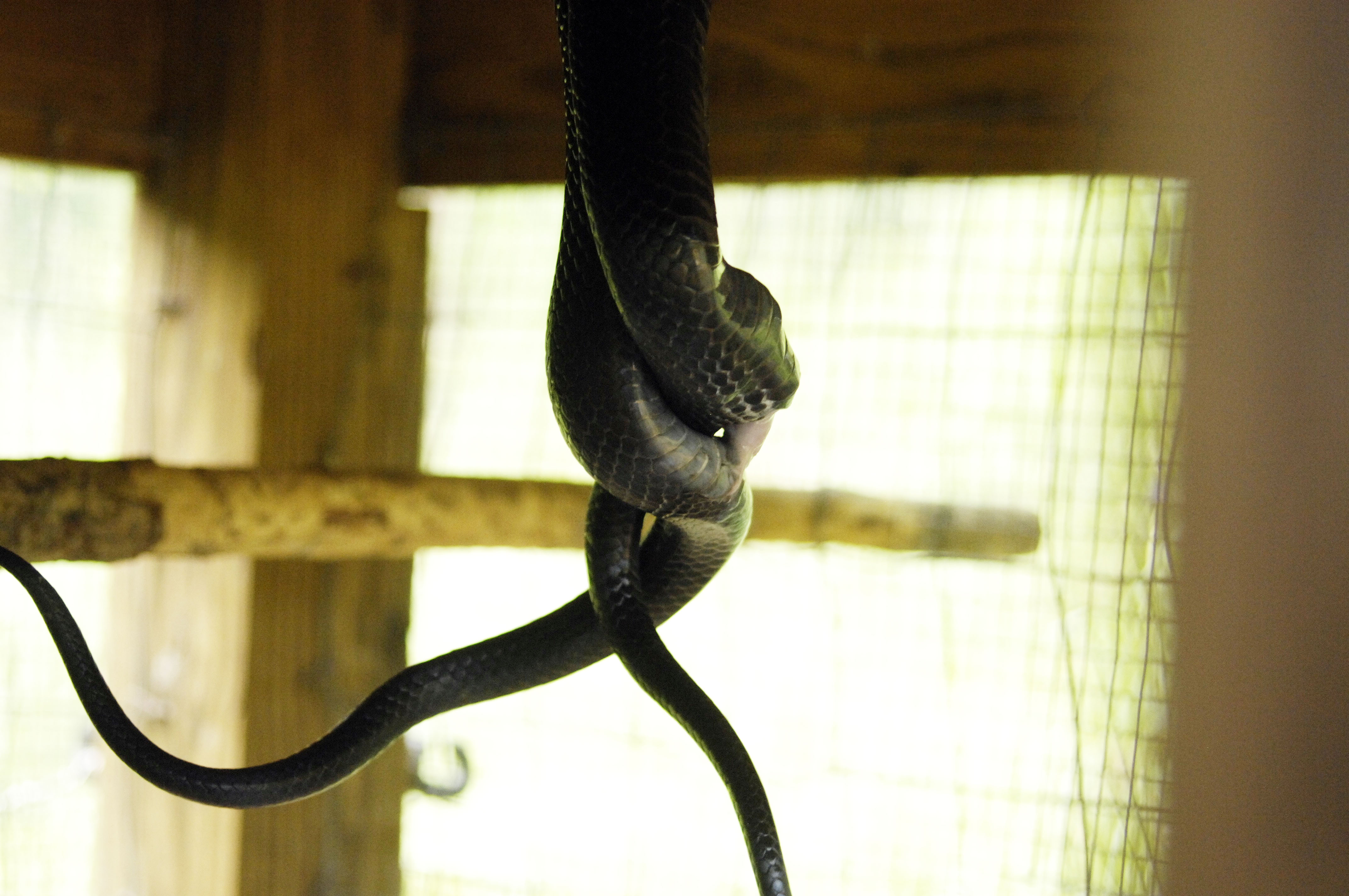
I’m not going to actually post these photos directly to the blog, because I think many people will find them frightening or disgusting, especially those who have a phobia of snakes. So, instead, below are links that you can click on if you really want to see the photos.
While doing chicken chores this afternoon, the lower bodies of two blacksnakes were hanging down through the trap door in the chickens’ two-level chicken house. I ran and grabbed the camera, and the snakes were still at it when I came back. I am fairly snake phobic myself, but I’m becoming less so, as I accept the fact that snakes are an important part of the local ecology, and as I get used to seeing them. I’ve gotten pretty brave, as you can see just because I took these photos (with a 70mm lens). These X-rated photos shed a lot of light on snake anatomy and behavior.
Trigger alert! Do not view these photos if you have a phobia of snakes. These photos are rated X.

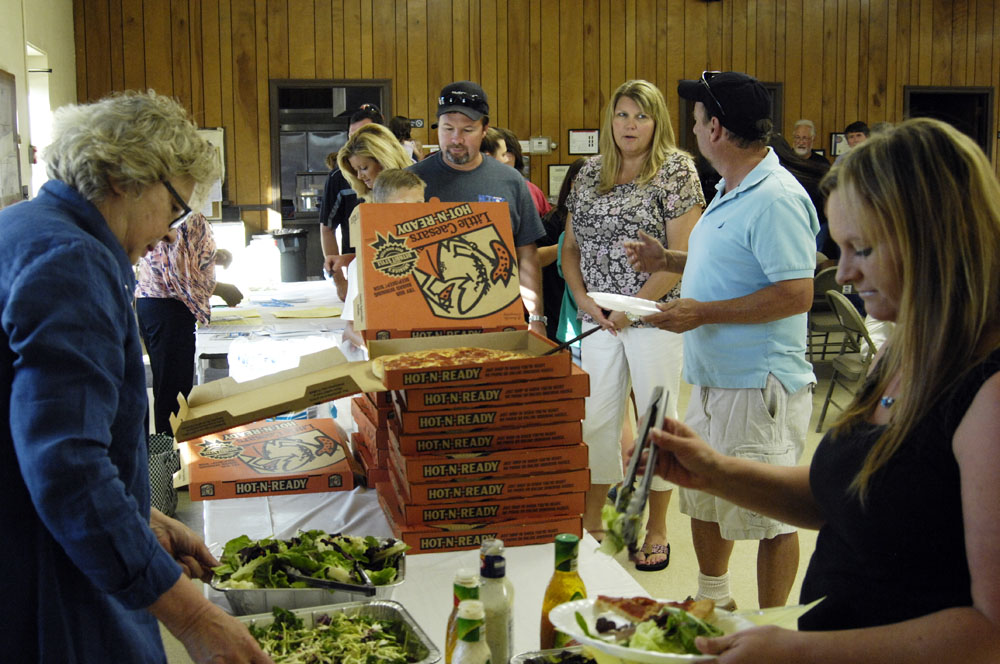
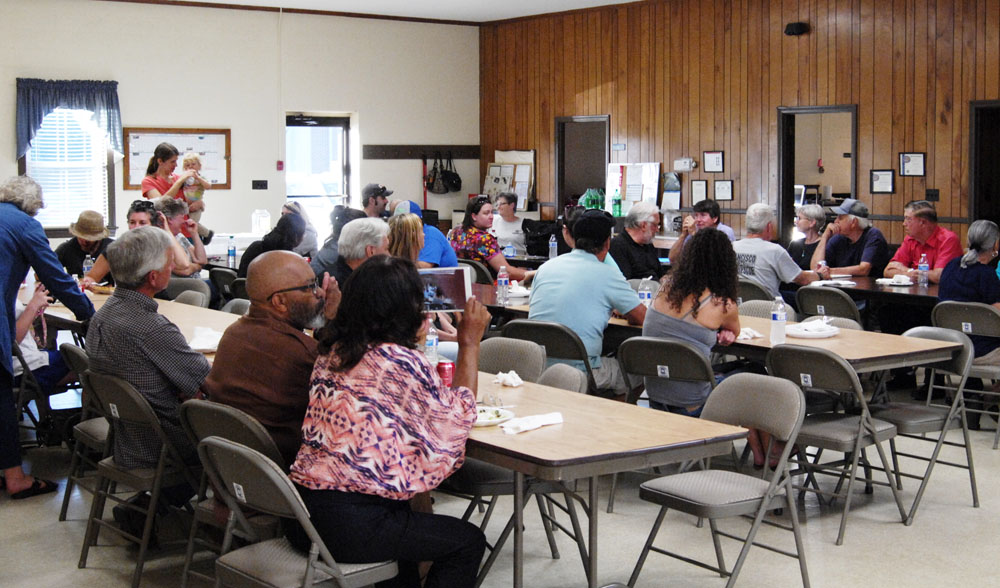
Earlier this week, I was asked to attend and shoot photos of a community gathering in northern Stokes County. The people there are concerned about the possible closing of the elementary school there. To them, the school is an important part of their community. To the school board and the county commissioners, the school is a budget problem in an era in which the county (like many rural counties) actually is losing population.