
A smaller take on lemon cake
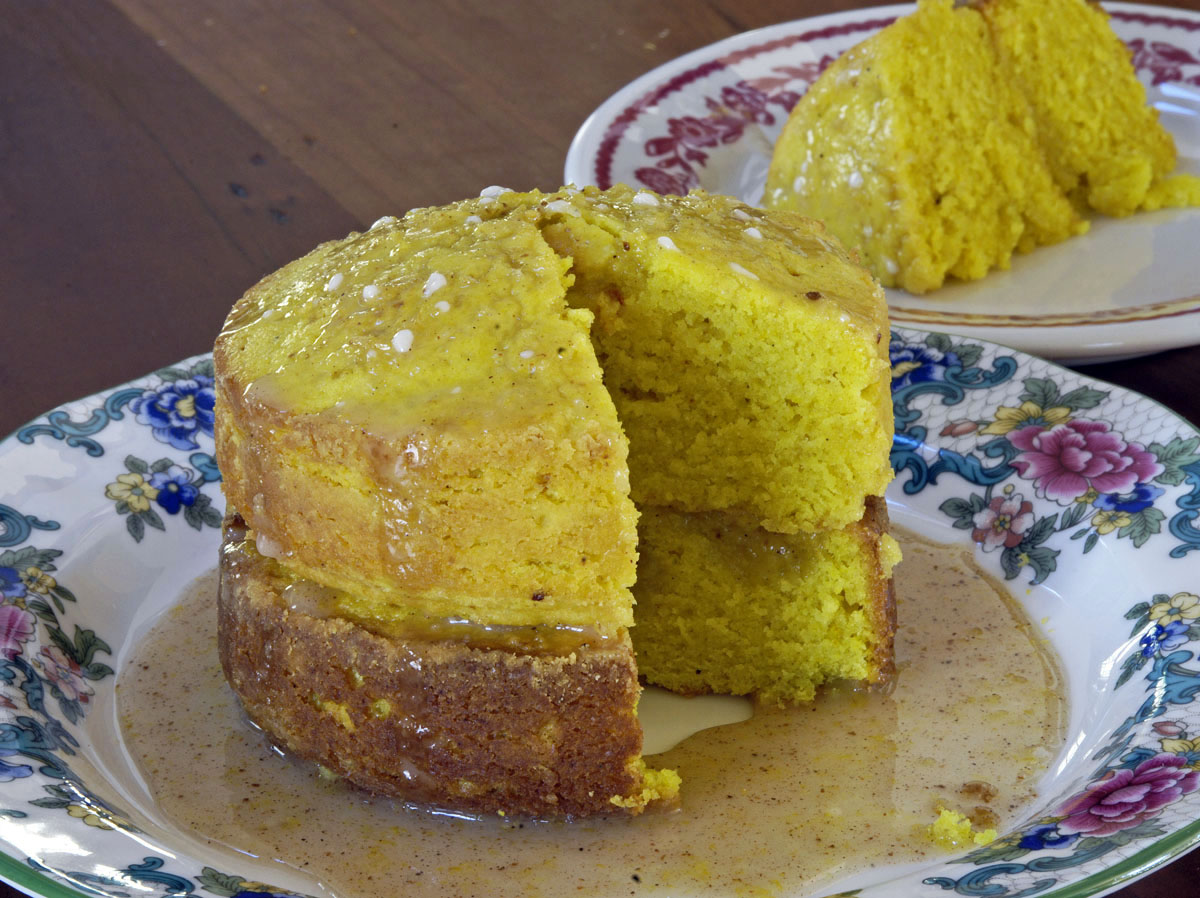
I haven’t been able to get lemon cake out of my head. I am working on the third novel in the Ursa Major series, and I just wrote the scenes in which Rose, the Scottish cook, sees Jake again. She wastes no time making one of Jake’s favorites — her lemon cake.
But it’s just me and the cat and the chickens right now, so what would I do with a huge cake involving six eggs and half a ton of butter and flour? I read a bunch of lemon cake recipes and came up with a recipe that uses only one egg, with the other ingredients similarly reduced. I wanted a dense cake, more of a pound cake. I wanted it to be very lemony, and I wanted nutmeg in it.
Here’s what I came up with:
1/2 stick butter
1/2 cup sugar
1 egg
1/2 cup flour
juice and gratings from 1 lemon
1/4 cup cream
1/2 teaspoon baking powder
1/2 teaspoon nutmeg
1/2 teaspoon turmeric (for color)
Follow the usual procedure for cakes. I used used a stand mixer. Cream the butter and sugar. Add the egg and beat the living daylights out of it. Add the other ingredients and beat just enough to mix it well.
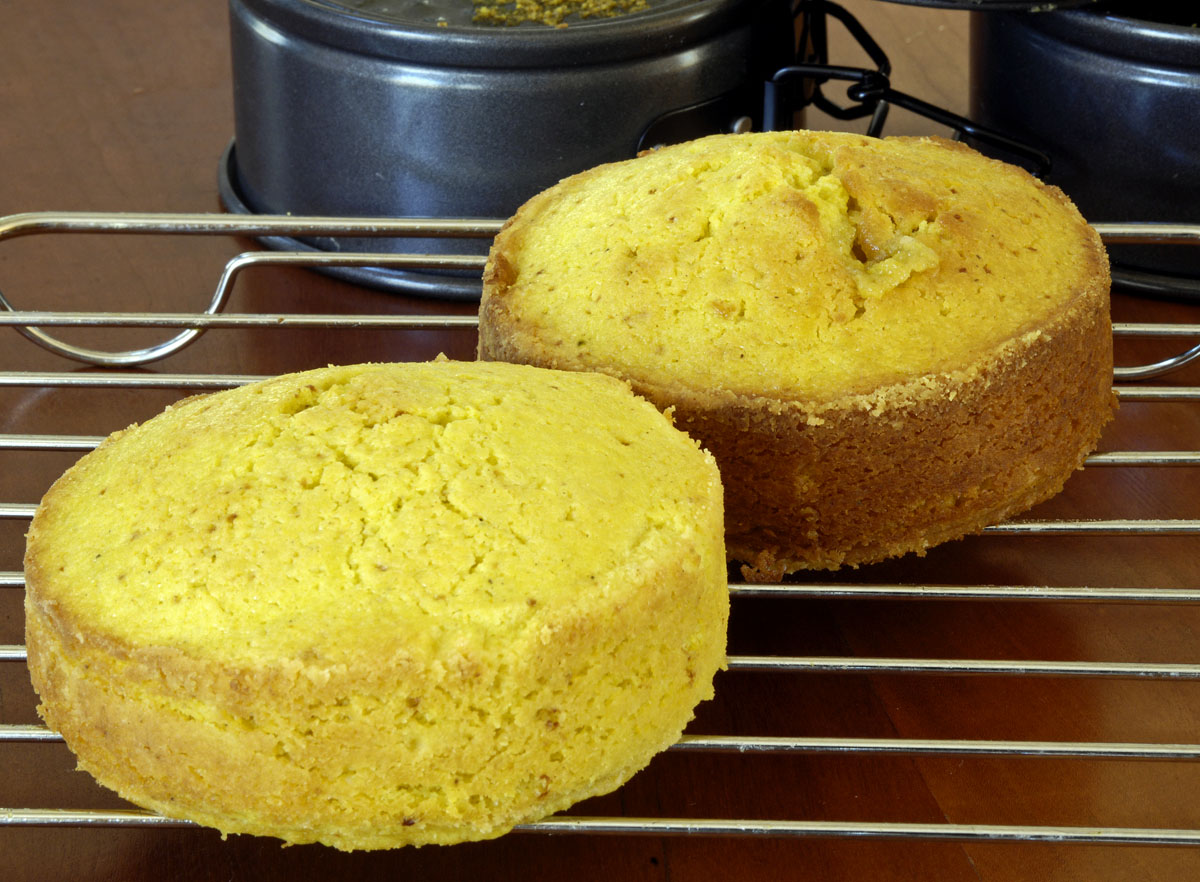
I used the 4-inch spring-form pans that I bought for Scottish pies, in two layers. Bake the cake at 325 degrees until it passes the toothpick test. My pans and oven required about 29 minutes.
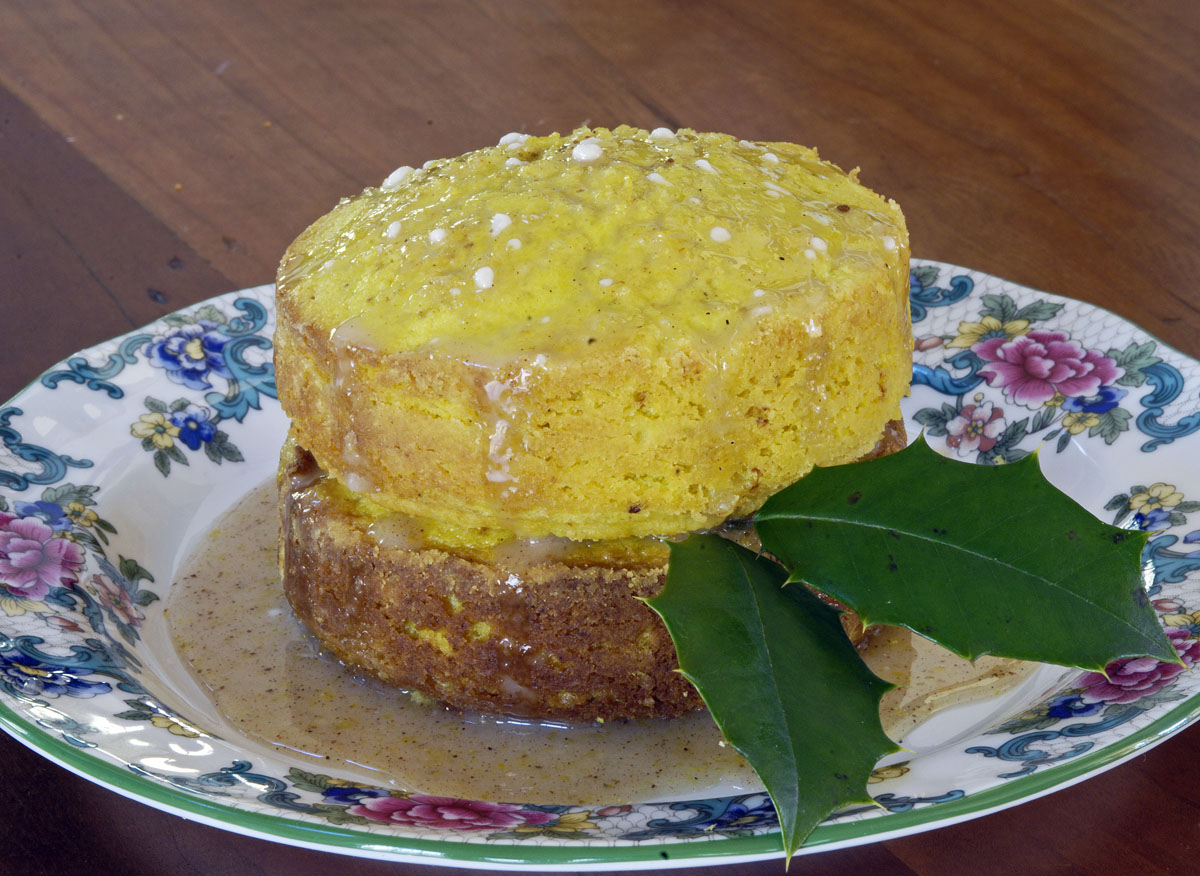
For the icing, I made a slurry of 1/4 cup of powdered sugar, the juice and gratings of one small lemon, and half a teaspoon of nutmeg. The icing was too runny and did not make a proper glaze, but I just didn’t want to add more sugar.
The white matriarch
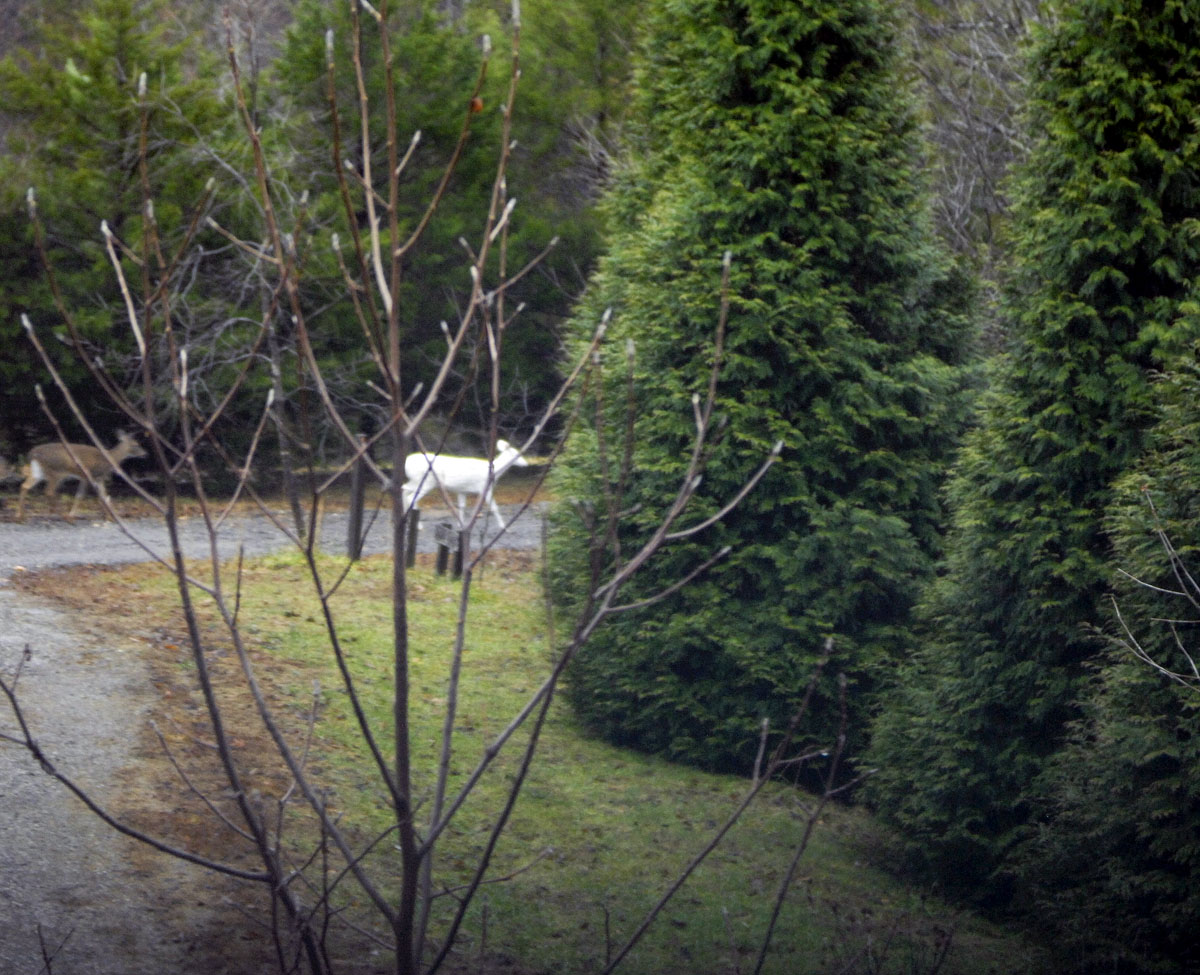
A troupe of five does passed through the yard this morning, with the white deer in the lead. She has been around for at least three years now, so she seems to have become a matriarch. I don’t worry too much anymore about her getting shot. It’s my understanding that all the hunters in the area are aware of her and have taken an oath not to shoot her. Deer season ends Jan. 1. It’s always a relief when deer season ends.
Turning points in right-wing propaganda
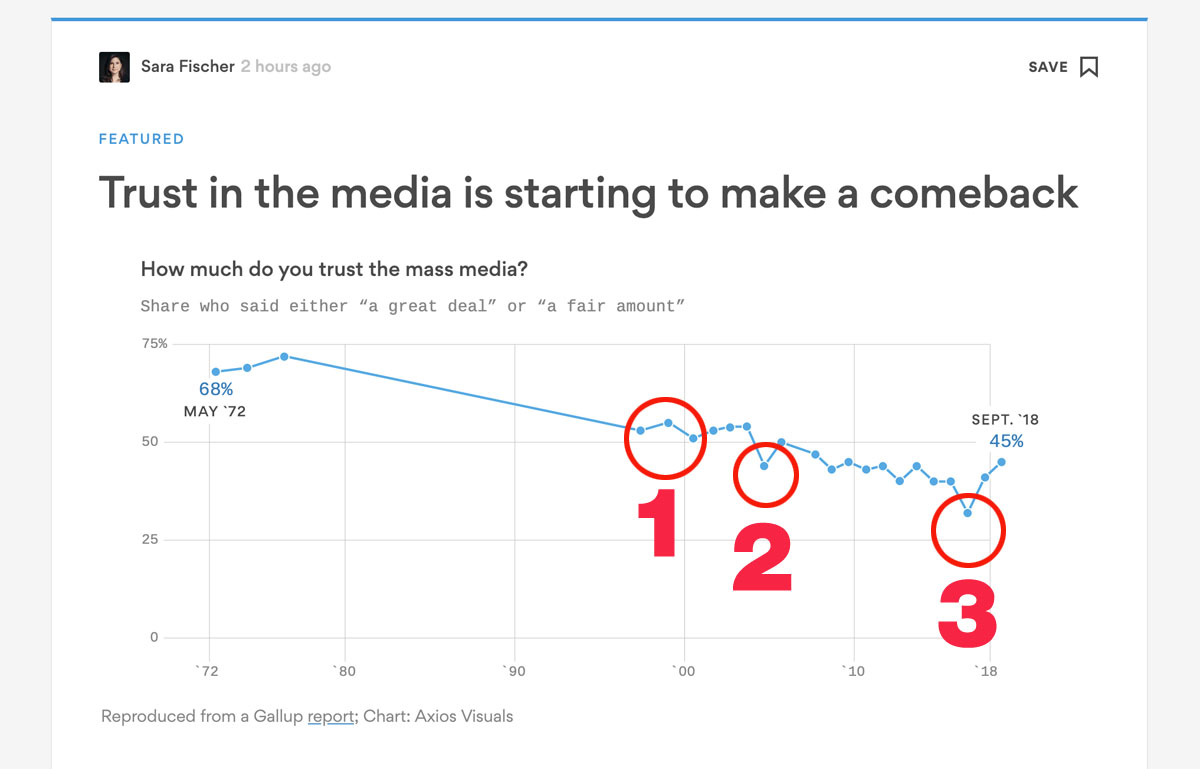
This morning, Axios has an optimistic piece with the headline “Trust in the media is starting to make a comeback.” The article reports on several polls and studies, including a study by the Knight Foundation released in September 2018. Axios says nothing about what was happening during the years the trust trajectory changed directions. But it’s very important that we take note of this history, because it reveals a great deal about right-wing propaganda and the degree to which people fall for it.
First, what happened in the 1970s?: A long trend toward declining trust for the media began in the 1970s. Though I have no sources to cite for this, my hunch would be that a major cause of distrust toward the media was the oil crisis of the 1970s. The line starts downward around 1976. At that time, gasoline costs were rising sharply, and a recession had just ended. People were badly stressed by “stagflation” and the cost of gasoline. People began to doubt (rightly so) whether they were being told the truth about inflation and oil. Gerald Ford, who was president from 1974 to 1977, did not inspire much confidence, nor did Jimmy Carter, who was president from 1977 to 1981. Then came Ronald Reagan (1981-1989), who lied freely and often and who took great delight in dividing the country and demonizing the opposition. It was Reagan who began teaching angry, ignorant old white people that government was the problem, not the solution. Reagan was followed by the feckless George H.W. Bush (1989-1993).
In 1995, the utterly vile Newt Gingrich became speaker of the U.S House of Representatives. Gingrich left no doubt: Republicans hate government and find government useful only insofar as government controls war and taxation. When Bill Clinton became president in 1993, the country was sharply divided, not just politically, but also intellectually (insofar as right-wingers need rational support for what goes on in their heads). Republicans by now had learned an extremely important lesson: Distrust of the government and distrust of the media are a powerful double-barrel weapon. They aimed that weapon at the American people. In 1996, Fox News was created, with the evil Roger Ailes as CEO. As David Frum has written, Republican ideology is an ideology that cannot succeed in a democracy. People just don’t want what Republicans actually want to do, so Republicans have no choice but to lie and cheat. Republicans are perfectly willing to do whatever damage to democracy is necessary to achieve right-wing objectives. They realized many years ago that an anti-government ministry of propaganda is essential to the right-wing project.
Fox News: Turning point 1, late 1990s: This is a major turning point. For the first time, the American people were faced with a powerful organization whose product was pure propaganda. The historian Christopher R. Browning has called Fox News “a privatized ministry of propaganda.” The so-called mainstream media were completely unprepared for Fox News’ ruthlessness and the sheer brazenness of its lies. Fox News has more than enough power to set an agenda and to force the responsible media to repeat and amplify that agenda. The lies are thick, fast, and repeated. Right-wing shouting heads amplify the lies’ emotional power. Most of the lies go unchallenged. While Fox News was finding propaganda to be highly profitable, the mainstream media underwent a disastrous downsizing after the Internet destroyed a critical part of its business model (classified ads). Newsrooms were confused and intimidated, terrified of losing more subscribers than they already were losing. Having worked in newsrooms all my life until I retired in 2008, I watched something terrible play out. Journalists refused to call a lie a lie. Somehow, the received wisdom in newsrooms was that he-said she-said journalism was the key to survival. Official lies were passed on with no challenge other than a quote from the opposition, as though both sides were equally valid. My view was that the only hope for journalism — and for the trustability of journalists — was to call a lie a lie. Very few journalists agreed with me. I lost the argument then. But now I believe I have been vindicated. I have even received an apology or two from journalist colleagues who now admit that they were wrong. But the damage has been done.
We were lied into the Iraq war: Turning point 2, 2004: Point number 2 on the chart above is extremely embarrassing. It shows what can happen when journalism is overwhelmed by propaganda. Notice the modest increase in the early 2000’s, as President George Bush and vice president Richard Cheney lied the country into the Iraq war, pulling the country and the media along with them. The country actually was unified for a while — in support of a war. Then there was a downdraft of trust around 2004 as people — and people in newsrooms including the New York Times — realized that they had been propagandized and deceived by the Republican Party and the neoconservatives who had taken over the party. It was May 2004 when the New York Times published its half-assed, and still shameful, apology for its coverage of the run-up to the Iraq war. We must never forget Judith Miller, whose name must remain on the long list of graves to be pissed on because of the damage people like her have done to the American democracy, in their service to power and money. Few things in my life have been more terrifying than watching while not only the United States, but also our allies such as Britain, were seized with war fever. That war fever was a well-designed product of the Bush-Cheney administration and its propaganda machine. This country actually became deranged with war fever. Anyone who dared to resist was exposed to a level of demonization that was professionally and socially dangerous. I was in San Francisco at the time. Even the Left Coast newspaper where I worked, the San Francisco Chronicle, was swept up in the war fever, though our subscriber base provided the cover to resist, had we had the journalistic good sense to avoid the contagion of war fever. But the New York Times had war fever, so most other newsrooms did, too. (The McClatchy Washington bureau was a rare exception.)
You might think, if you were naive and optimistic, that a profitable war on false pretenses, sold by a corrupt Republican government and its ministry of propaganda, is the worst thing that could be enabled by a timid and insecure mainstream media culture overwhelmed by an aggressive and amoral ministry of propaganda. But you would be wrong to think that. During Barack Obama’s presidency (2009 to 2017), Fox News and the Republican Party doubled down on demonization and lies, setting the stage for what I believe is the most dangerous political event in American history: Donald Trump in the White House.
The media finally started calling a lie a lie: Turning point 3, 2016: I always hesitate to say that Donald Trump was elected to the White House, because a reasonable person can have reasonable doubt about how severely the presidential election of 2016 was corrupted not only by brilliantly focused propaganda and meddling both foreign and domestic, but also, possibly, by the hacking of state elections systems. Robert Mueller, surely, will have more to tell us on that subject. In any case, Donald Trump’s gaining the White House was like a Near Death Experience to every responsible journalist who still had a job. Suddenly newsrooms came to their senses. They saw what idiots they had been. They saw how they had been played by the right-wing media and the Republican Party. They suddenly remembered that truth, rather than trying to “balance” lies, was the standard of journalism. Subscriptions to the New York Times and the Washington Post surged. I still wonder about the Times sometimes, but the staff of the Washington Post went to work to redeem themselves. At long last, American newspapers were able to use the word “lie.” Fully understanding in spite of his stupidity that the truth would take him down, Donald Trump, like all despots and despot wannabes, declared the media to be the enemy of the people. Only Trump was to be believed.
So the Republican Party took the White House in 2016. But they overplayed their hand, ensuring disgust and blowback not only for the Republican Party, but also for its propaganda machine. Every rational person who is halfway paying attention now knows that Trump is a criminal and a traitor and that he brought his criminal syndicate with him into the White House. When Trump is taken down, the Republican Party will go down with him. Fox News will be exposed for what it is: a propaganda machine that serves power and wealth by profitably deceiving angry old white people, many of whom don’t have a pot to piss in, partly because they lack what it takes to succeed in the modern world, and partly because they have been betrayed by the machinery of economic inequality, for which even the Democratic Party deserves a share of the blame.
What will happen next?: No one knows. But I have a lot of hope, and a lot of guesses. Some people already have gone to prison for the criminal conspiracies that got Trump into the White House. Many more will go to prison. Trump will go to prison, too, unless he can make some kind of deal for resignation that allows him to avoid prison. The Republican Party and the Republican Senate will turn on Trump when that becomes necessary to try to save the Republican Party as the Trump criminal syndicate goes down in flames. But, if there is enough justice in the world, the Republican Party will have so damaged itself that it will never win — or steal — another election. Fox News will lose credibility with everyone but the 20 percent or so of the American people who will believe anything they are told, as long as their hatreds, their fears, and the ugliness of their religion are fed. The deplorables are a minority, far too few to continue to knock the country around once the Republican Party dies, as it will die, simply because (as David Frum wrote) anything as vile as today’s Republican Party cannot survive in a democracy.
I am hardly the only one who believes that we are at a fork in history. On the right lie the Republican Party, fascism, an end to the rule of law if Trump’s criminal syndicate is allowed to remain in power, the triumph of the international oligarchy that brought Trump to power, and killing blows to the American democracy through right-wing legislatures and right-wing courts. To the left lies a lot of hard work.
This 2016 uptick in media trust is probably the most encouraging sign I’ve seen that 2016 was the trough of the right-wing war on the American democracy, a war in which the death of truth would be to them a good riddance. If the blue line on the chart above breaks the 50 percent barrier and continues to climb, then I think that the American democracy has a future. It will mean that we have begun to agree on some things again, after a long national nightmare during which right-wing tactics intentionally drove us apart and intentionally made agreement impossible. To save the Republican Party, it was necessary for evil men to dismiss those things that threaten all of us to focus politics only on the things that threaten the Republican Party and its oligarchs’ agenda. And if the American democracy has a future, then maybe, just maybe, we might actually be able to do something about the things that we agree on, once a shared reality sets the agenda. Climate change and economic inequality are at the top of the list. We also need some fixes in our democracy, to insure that liars, criminals, and oligarchs never get control again.
Low-carb winter feasting
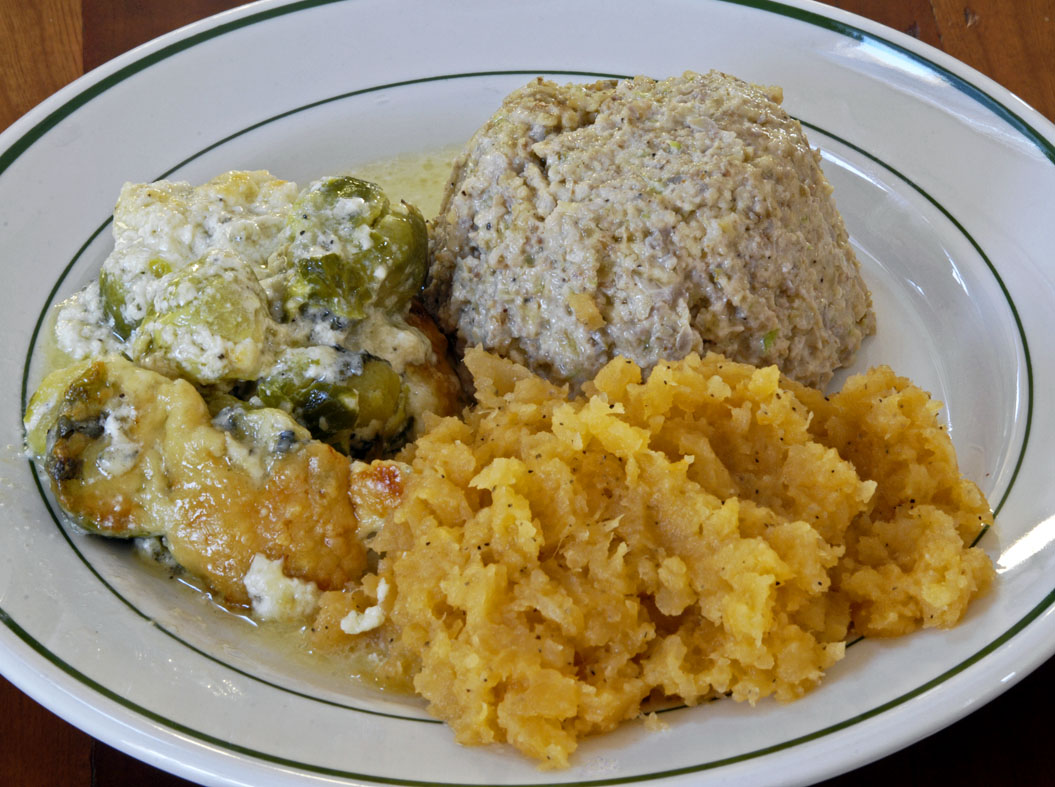
Walnut pâté, mashed rutabaga, and Brussels sprouts gratin
Rutabaga loves Brussels sprouts. Brussels sprouts love Roquefort. Roquefort loves walnuts. There you have it. A menu for a snow day.
It’s amazing what you can get away with if you banish carbs. Not only have I maintained the summer diet that got me into shape for hiking in Scotland, I’ve continued to lose weight at the rate of about a pound a month after I got home. And not only do I not feel hungry. I also feel like I’m overeating, even though I’m not. We’re all different, though. Other people’s mileage may vary. But if you say goodbye to bread and pasta and sweets, something alchemical happens.
Rutabaga: For now, at least, turnips and rutabagas are the new potatoes in this house. A couple of weeks ago I made mashed potatoes for the first time in months. I was expecting a treat, but instead I found the potatoes cloyingly sweet. They actually tasted as though they had sugar in them. They were good potatoes, too — organic Yukon gold potatoes, mashed with butter and cream. I realized that I had enjoyed a recent pot of turnips much more. Last week at the grocery store, I intended to buy turnips. But the rutabagas were 50 percent cheaper, so I bought rutabagas instead. I boil them with a minimum of water and mash them with butter, salt, and pepper.
Walnut pâté: Nuts are a staple on low-carb vegetarian diets. Walnut pâté is as easy as pie. Throw walnuts, celery, onion, garlic, and seasonings into the food processor, with tahini as a binder. I added a tiny whiff of sage.
Roquefort Brussels sprouts gratin: I always have Roquefort in the fridge, though it usually goes into salad dressing (with lots of garlic). But Roquefort makes an excellent gratin if combined with parmesan. Today’s gratin also included milk and cream, in a buttered baking dish.
I go through stages, and I may well be back to making cinnamon rolls sooner or later. But, for now, trading carbs for low-carb pig-outs feels like a very good deal.

Brussels sprouts gratin with Roquefort, parmesan, milk and cream
How do the birds know that snow is coming?
Photo update: Snowmageddon arrives:

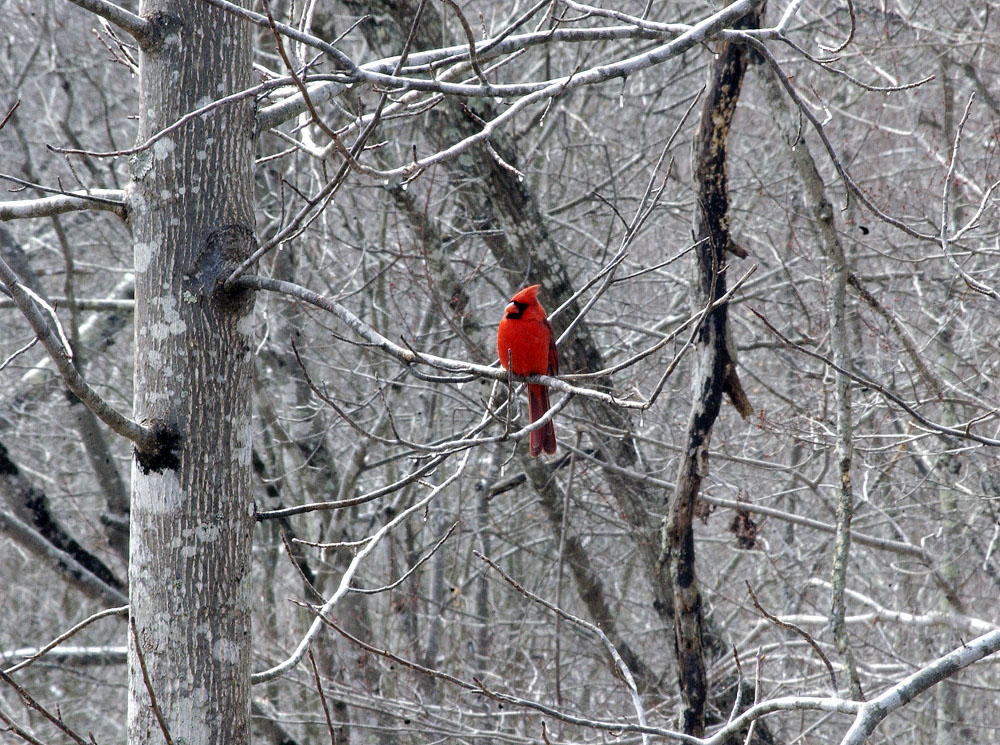
A file photo taken here in March 2014 — a cardinal
While looking out the upstairs windows with Lily this morning, it was apparent that the birds were unusually active and agitated. The traffic into and out of the arbor vitae trees was particularly busy, as though the birds are laying claims to shelter space from the heavy snow that is forecast here for tonight and tomorrow.
All of the arbor vitae trees (there are 14 of them in the abbey’s front yard) have little openings in the foliage that the birds use for flying in and out. I’m pretty sure that the openings actually are made by the birds and their frequent traffic. The birds can fly straight in with little or no wing contact. Watching even for a little while, it’s apparently that a single arbor vitae tree shelters many birds, and different species at the same time. They fly in at different levels. Six or more levels per tree would be my guess.
There is an English word for what I think these openings might be called — smeuse. I have never heard this word used, but Robert Macfarlane’s book Landmarks, on the rewilding of the landscape through language, defines smeuse as “the gap in the base of a hedge made by the regular passage of a small animal.” I don’t know whether the word also would apply to a hedge-like tree. I hope it does. Maybe readers in the U.K. could shed light on that question?
When there is heavy snow, it’s always a problem finding a place to put bird seed where the birds can get it. It occurs to me that just throwing food into the arbor vitae trees might work.

Some of the abbey’s arbor vitae trees

Doorways for birds. Are they smeuses?

The human equivalent: All the milk (except for the organic milk!) has vanished two days before the storm is due.
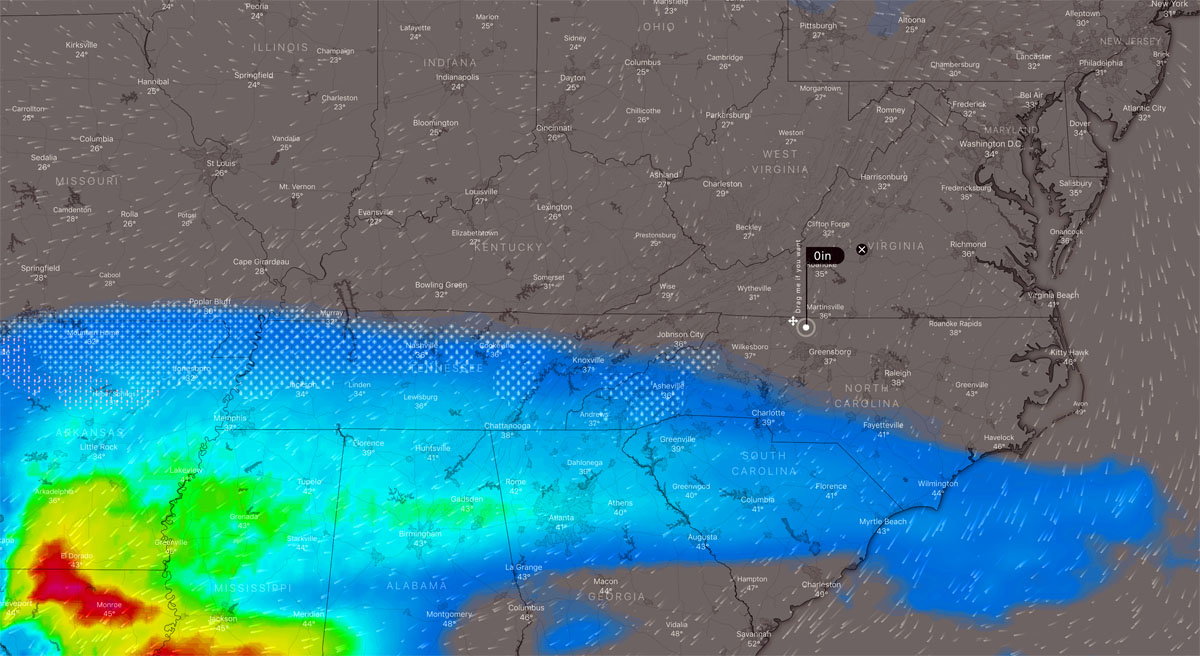
Snowmageddon approaches from the southwest. windy.com
The Apple watch EKG function
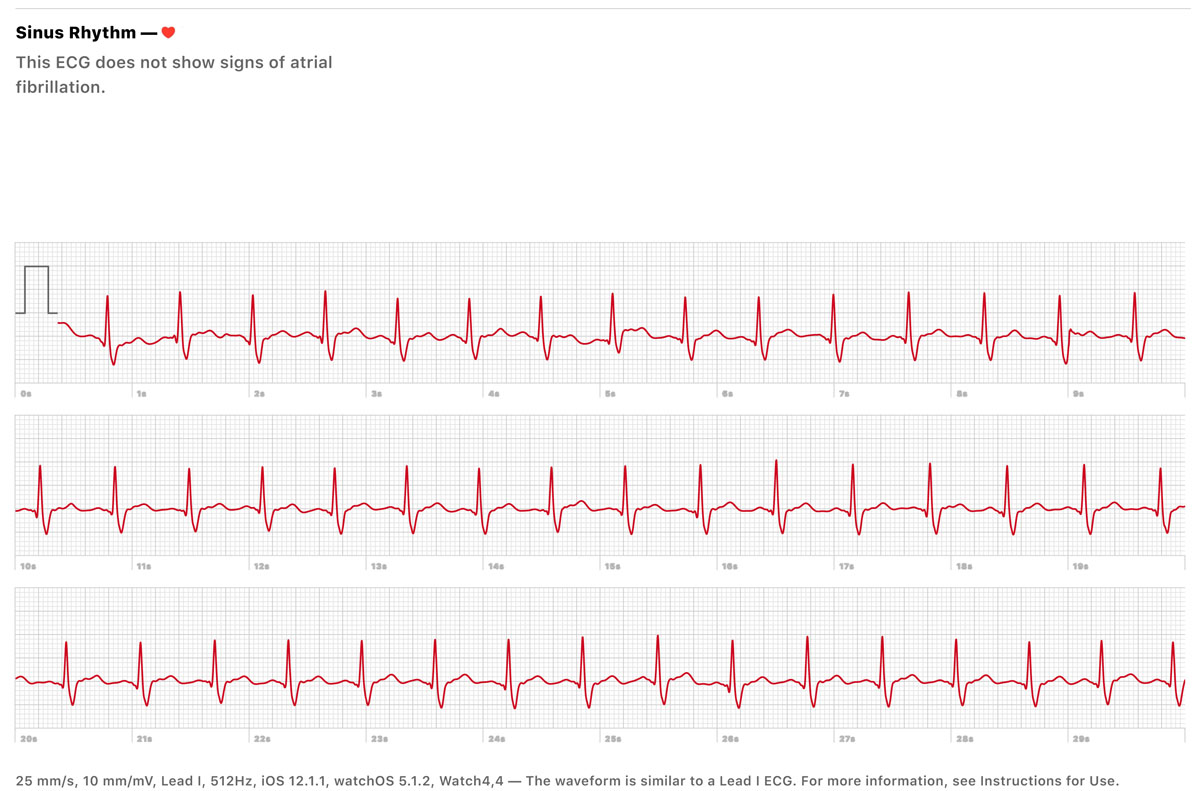
Apple released a bunch of software updates yesterday — 10.14.2 of Mac OS; 12.1.1 of iOS; and 5.1.2 of watchOS. The updates for the iPhone and the Apple watch enable the long-promised EKG function on the Apple watch 4.
I’m going to guess that thousands of people who’ve never seen an electrical graph of their own heartbeat before (including me) saw that for the first time today. It’s easy. You press your right finger against the stem of the watch, and the back of the watch has electrical contact with your left wrist. That forms a circuit that goes across your heart. In 30 seconds, the watch creates a simple EKG. The test is intended only to detect atrial fibrillation.
The iPhone saves a record of all your EKG’s. If you request it, the iPhone app will create a PDF of the EKG that you can use to start a conversation with your doctor. I used that PDF to create the image above.
Lucky for me, the watch didn’t detect a problem.
I’ve had the Apple watch for about three weeks now. I have become very fond of it, not only as a timepiece but also as a communications device and fitness coach. If I’ve been sitting at the computer for too long, it taps my wrist and tells me that it’s time to stand up and move around for a while. It has encouraged me to walk more, knowing that it counts every step and that I’d like to have a good report at bedtime. I am still trying to understand how to make use of its “heart rate variability” function (as are many watch wearers). But heart rate variability is a complicated subject for another day, after I understand it better.
Three times, I have triggered the watch’s fall detector. In all three cases, I was slapping my hand against my leg — for example, when I was on the deck yelling at the squirrel to get off the roof. I replied to the watch’s prompts and told it that I had not fallen.
Honestly I would feel a little insecure now without the watch on my wrist. That, I’m sure, is just what Apple was aiming for.
The yield curve and the coming Trump recession
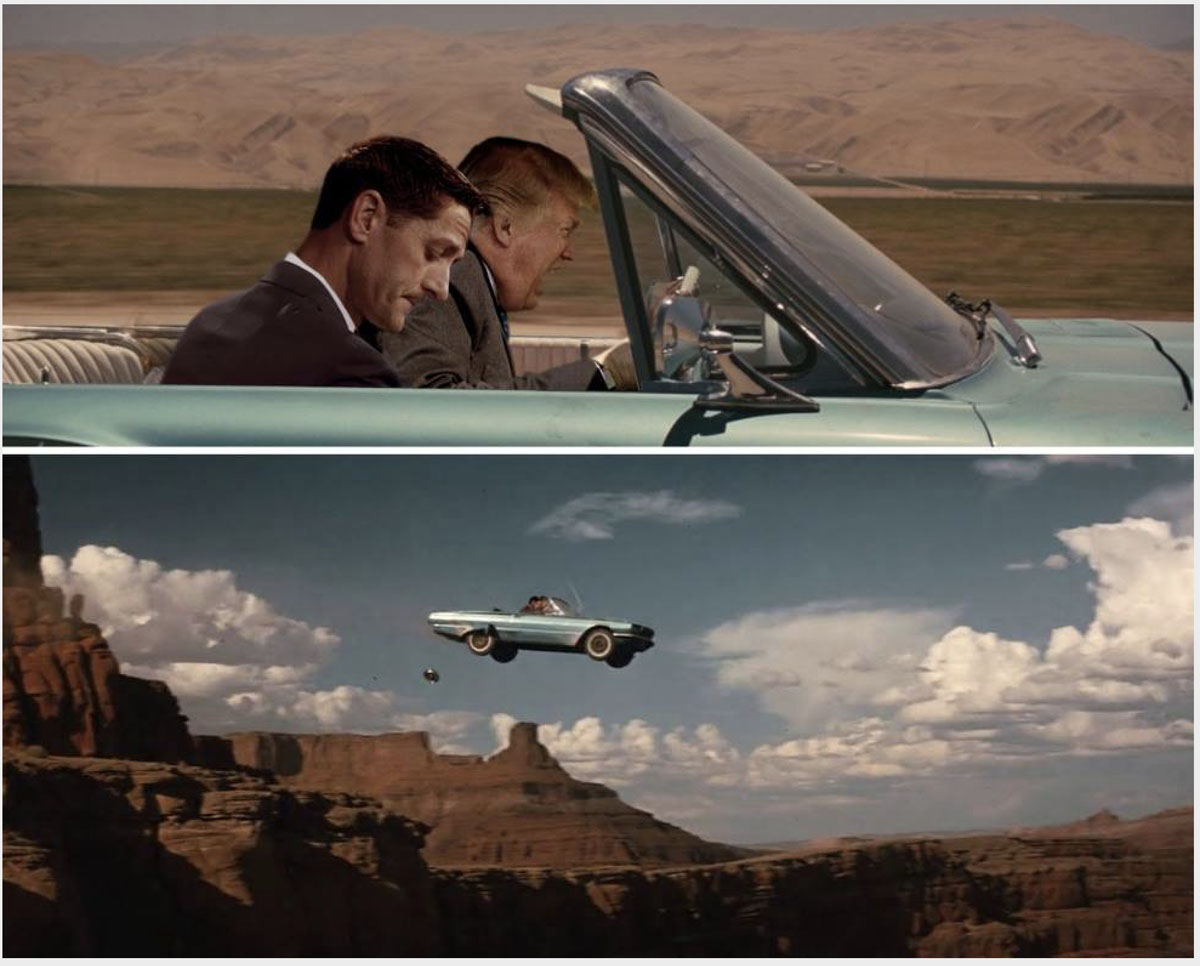
A Facebook meme
One of the first rules of managing your money is never to give, or to accept, advice about money. I’m not giving any advice in this post. But I am suggesting that now is a good time to take a good hard look — according to one’s own lights — at the state of the U.S. (and the global) economy.
Yesterday, the yield curve on U.S. treasury bonds (2-year notes vs. 5-year notes) inverted for the first time since 2007. We all know what happened in 2008. An inverted yield curve, of all economic indicators, has proven to be as reliable a predictor of economic downturns as exists.
Here are some articles:
Bloomberg: The U.S. Yield Curve Just Inverted. That’s Huge.
Reuters: Dollar drops as U.S. Treasury yield curve inversion sparks recession fears
Forbes: The Yield Curve Just Inverted — Sort Of — And That Is A Sell Signal For Stocks
Am I blaming Trump? Not necessarily. Just as Trump gets zero credit for the past few years of economic growth, he may not get the blame for the next recession. Economic cycles and their causes don’t usually have a great deal to do with who is in the White House. But how a country responds to an economic downturn, though, is very important. Trump has plenty of room to screw up on that.
Back in the 1990s, as I got old enough to get serious about money and retirement, I did my best to study up on economics, investing, and economic cycles. I watched very carefully as the Dot-Com boom of the late 1990s turned into the enormous bubble burst of 2001. And as the housing and mortgage bubble grew during the Bush-Cheney years, I watched with horror (because I was very close to retirement). That bubble burst in 2008. But I landed on my feet without losing a nickel of my retirement money, because I knew the bust was coming.
During periods of economic growth, risk is less risky. Lots of people make money. But when an economic downturn is looming, it’s time to go defensive. Going defensive means taking a look at your investments. Is your money in the right places? Going defensive means taking a hard look at the economy, trying to figure out where the trouble spots are, and trying to figure out one’s vulnerabilities.
When big players in the stock market (often called “strong hands”) realize that the market is unsustainable and is going down, there is a huge retail effort to transfer stocks to “weak hands.” Weak hands are then forced to sell in a panic and absorb most of the losses. That’s why professional investing advice is often so corrupt. There is a famous (and possibly apocryphal) story about J.P. Morgan, who said that he knew it was time to sell his stocks when his shoeshine boy started talking about buying stocks. It’s true that the stock market is not the economy. But the economy and the stock market do tend to run on parallel tracks.
We all need our own crystal balls, because everyone’s situation is different. I’ll have more posts in the future on economic conditions. But, for the moment, I have only one point to make. That is that the warning lights are flashing that the time has come to go defensive. Thanks to globalization, we’re all in pretty much the same boat these days. Readers in Europe have plenty to think about, too, such as Brexit in the U.K., or the recent outbreak of economic discontent in France, which has forced President Macron to reverse course on fuel taxes.
As for me, I’m going to plant an extra-big garden next spring.
Update: Just after I posted this, the Dow Jones Industrial Average was down almost 800 points. The media are focused on a connection to American trade with China. But I suspect that it has much more to do with investors spooked by the yield curve, as large institutions unload stocks and go defensive. The Dow may well regain most of these losses tomorrow morning, as often happens. But this kind of churning in the stock market is typical of what occurs at this point in the economic cycle.
Update 2: This advertisement appeared in my Facebook feed a day after I wrote this post. This kind of deceit is typical at this point in the economic cycle. As “strong hands” work to sell off their holdings for as high a price as possible, retail efforts intensify to sell stocks to “weak hands,” who are not aware of where we are in the economic cycle and are left holding the bag. Notice that this ad is targeted at older people, and that Facebook knows my age.

Update 3: Here is what Fox watchers are being told:

Meow

Hay bale sculptures are a thing around here (we grow lots of hay). Obviously there are even competitions, because there was a sign beside this sculpture saying that it had won first prize in something. It’s in Mayodan, North Carolina.
Those of you who are not up to date on agricultural machinery may not know that hay from large fields is often baled into large, very heavy rolls these days. These rolls are too heavy to be moved by one human being. But the smaller, rectangular bales are still produced, too. This cat sculpture combines both types of bales. And a lot of black paint.
The eternal elegance of good technology
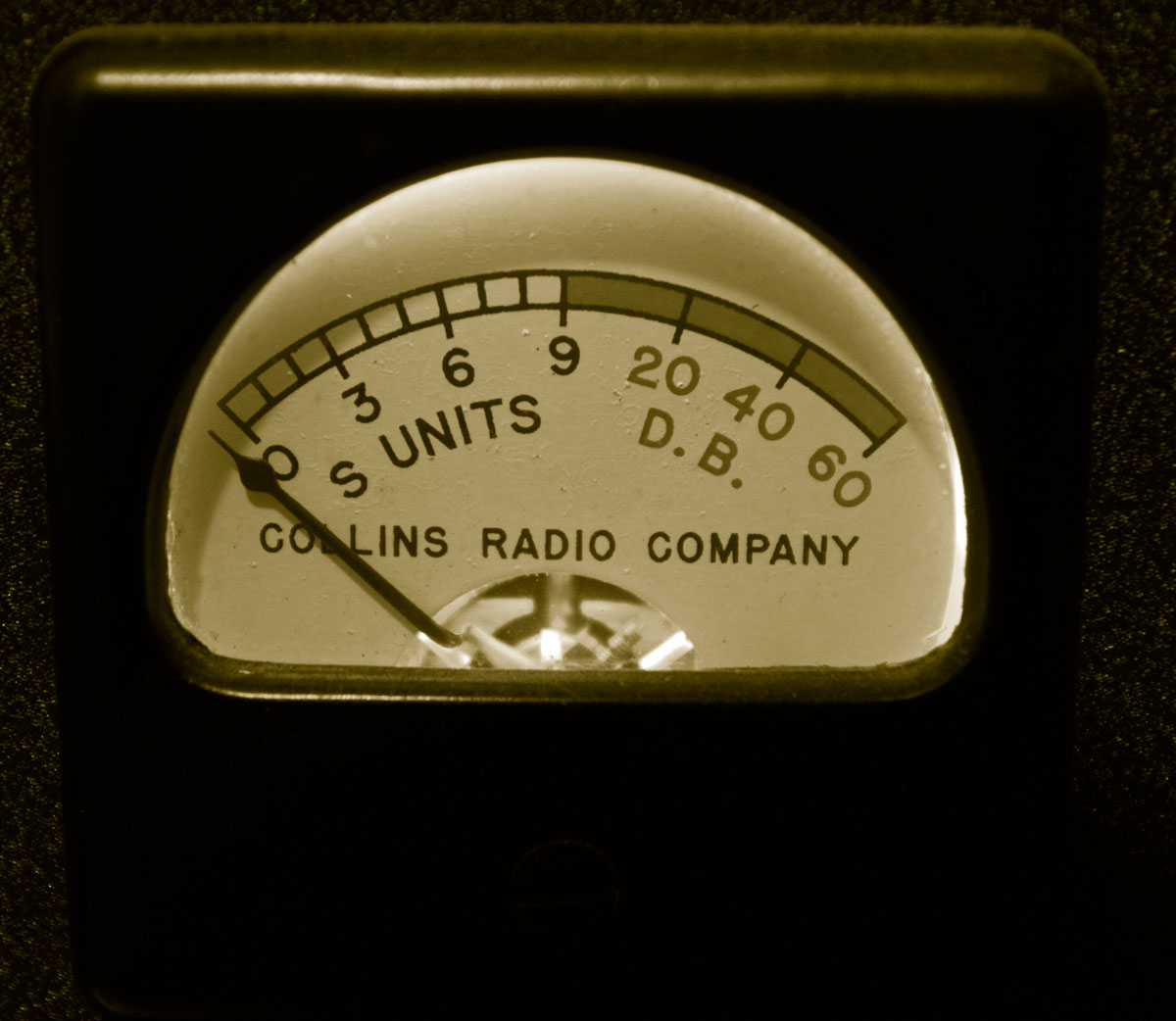
The signal strength dial on a Collins 75A-4 receiver, circa 1952
Uh-oh. This is a nerd post.
Every so often, I have a maintenance day for my collection of obsolete technology. Stuff gets dusted. Stuff gets turned on and exercised. Batteries in portable devices get charged. Little fixes gets done. These things are like pets. Like pets, they like to be photographed. Unlike pets, they hold still for tripod shots with long exposures.
To keep working and for a long life, many devices actually need the periodic exercise. Failure to periodically use my IBM Selectric III would be one of the worst things I could do to it. Capacitors in old radios and other electronics need tend to deteriorate unless they are energized and charged periodically. Batteries require maintenance. But old devices, like old pets, also need to be (and like to be) petted and loved. They are intelligent machines from some incredible engineers. I have been known to say that engineers were some of the best artists of the 20th Century. A collection of old technologies is in many ways an art collection.
Strangely enough, pretty much all my old technology works. I realized today that my Pioneer SX-9000 receiver-amplifier (about 1972) is sitting idle and needs to be used. It works fine, but all of its dial lights are burned out. On eBay, for the SX-9000 and many other classic amplifiers, one can buy brand new LED replacement bulbs for the dial lights. For $19.95, I ordered a set of bulbs. I’ll soon make a project of opening up the SX-9000, dusting it out, replacing the bulbs, and moving it to a place where it can be connected to good speakers and still be heard.
I didn’t get to all my old pets today. But they’re still loved, so maybe tomorrow.
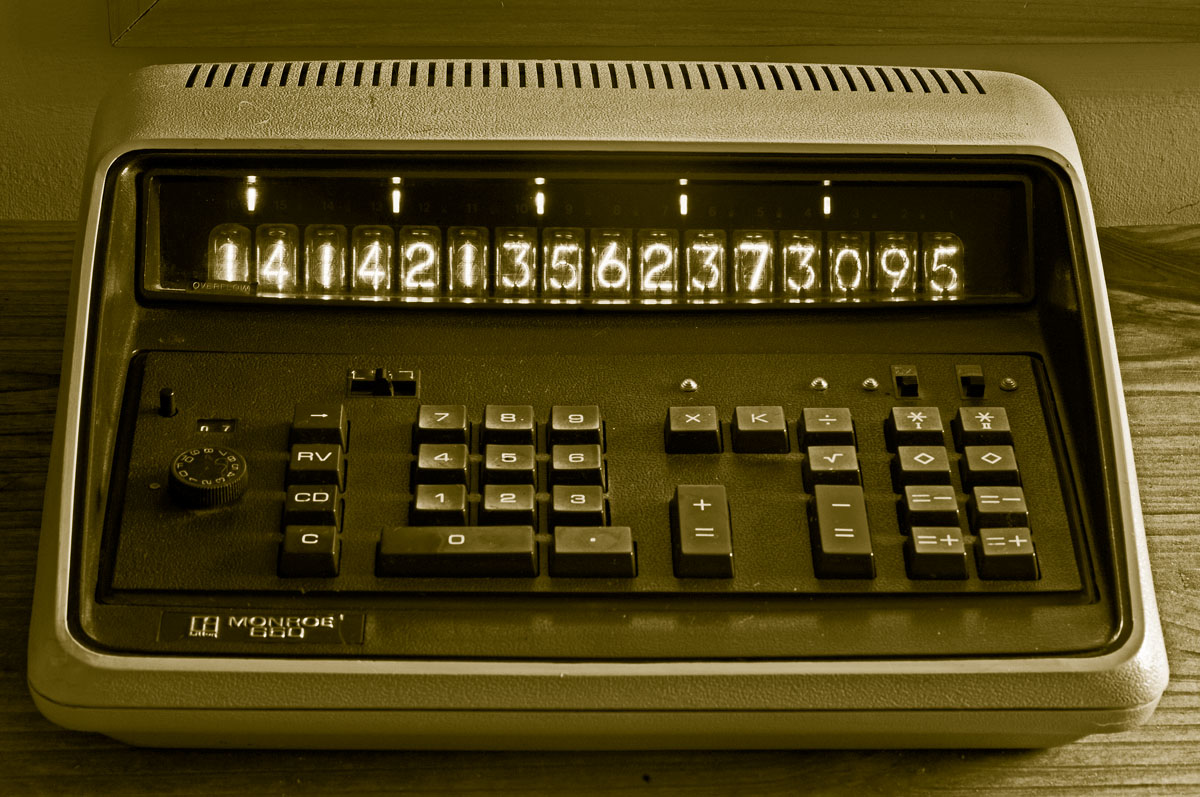
A Monroe 650 calculator, with Nixie tubes, which just calculated the square root of 2. This is my go-to calculator when I’m doing my taxes.

An Astatic D-104 microphone
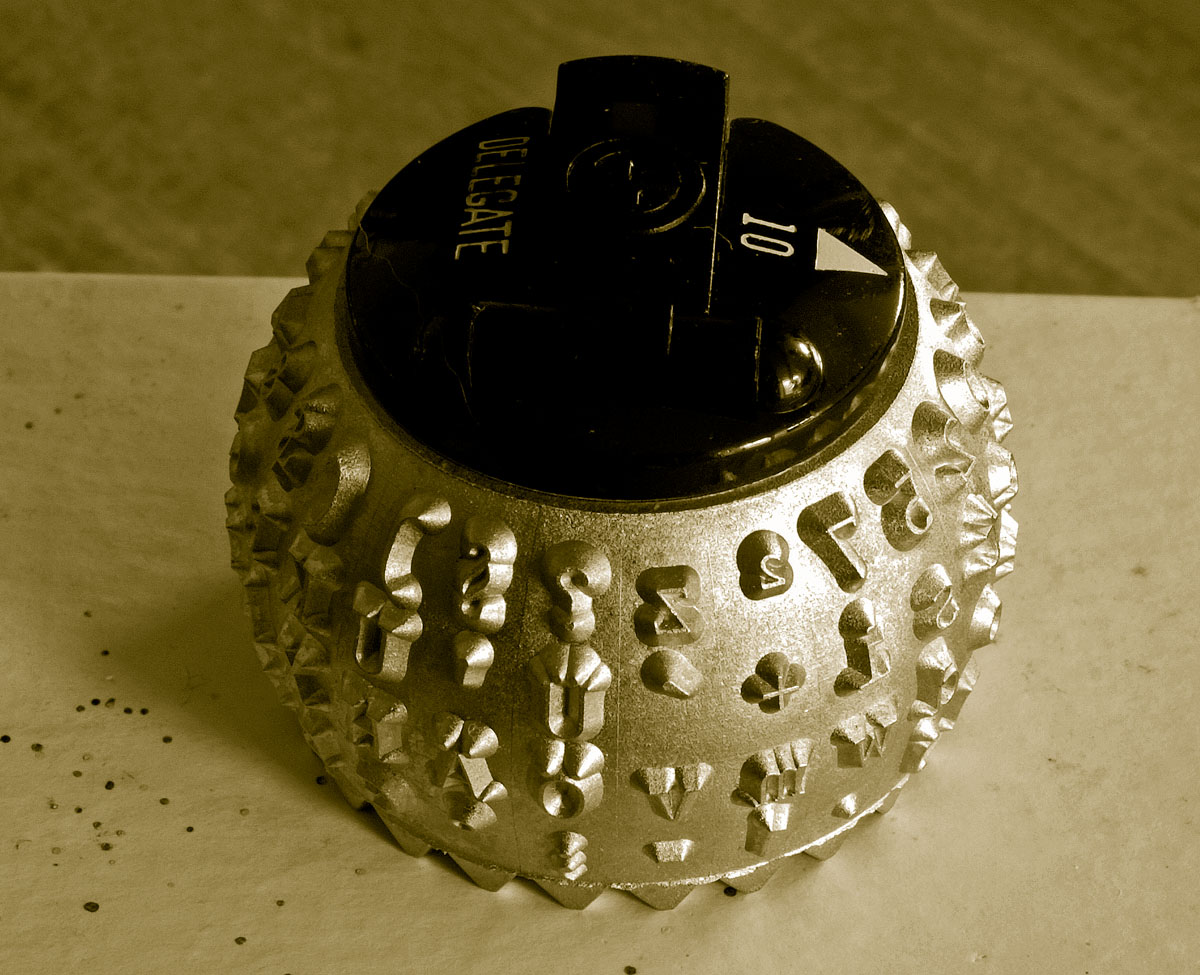
A 10-point “Delegate” typeface for my IBM Selectric III. My IBM Selectric is long retired from the San Francisco Examiner and bears a nameplate for The Typewritorium, a San Francisco typewriter business that may still be in operation, though I think it has moved.
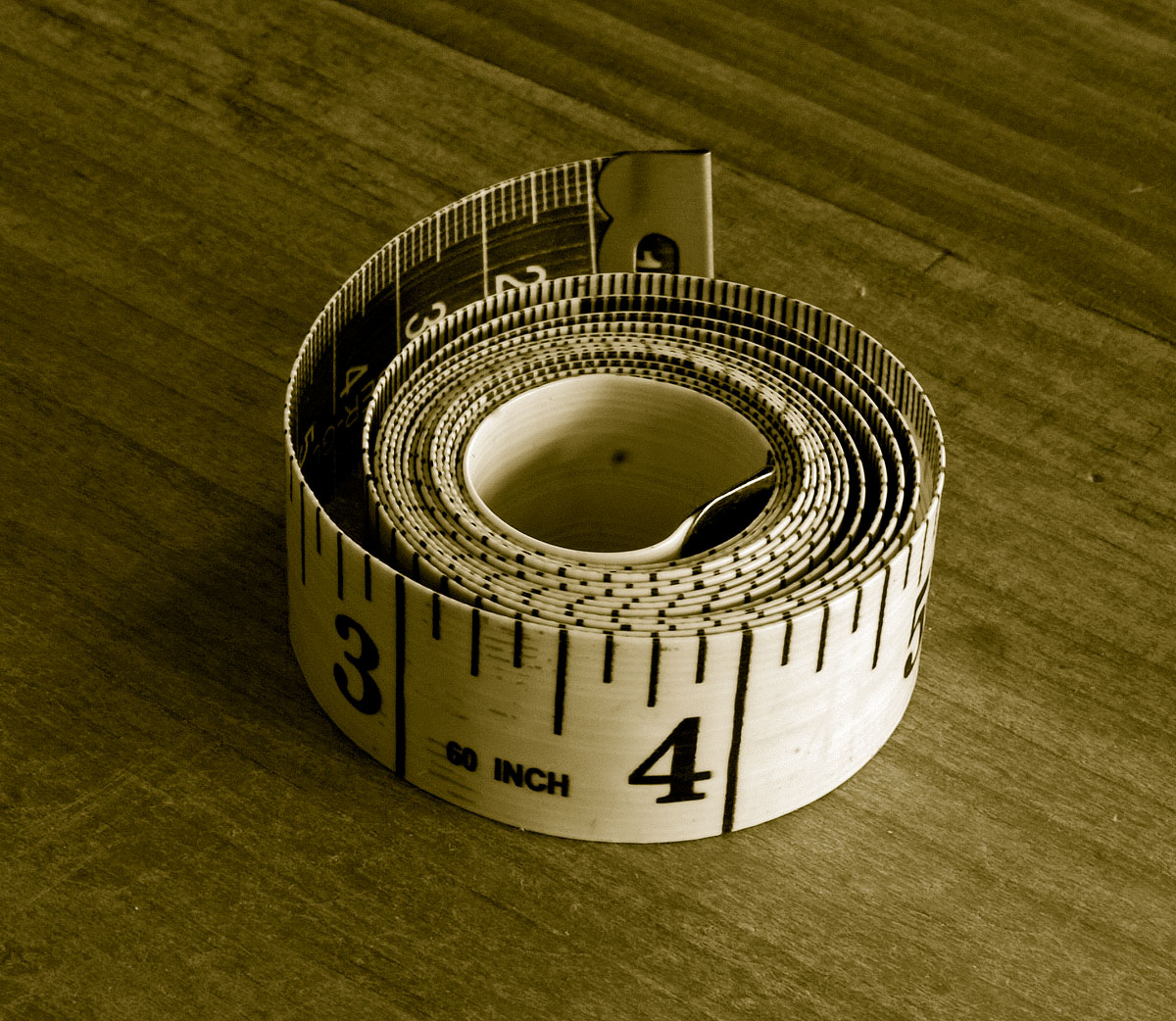
An analog measuring device with a very long history
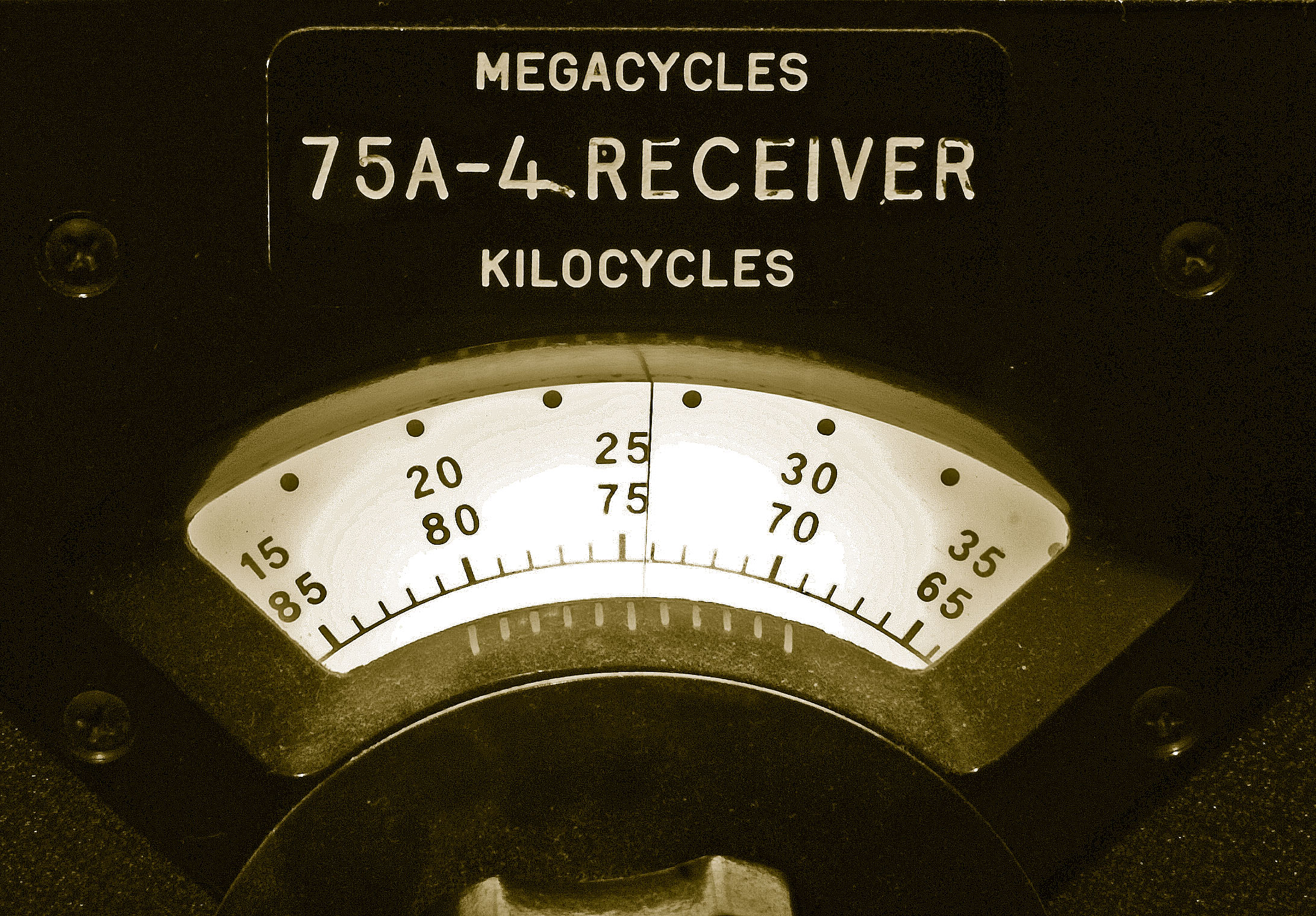
The fine-tuning dial on the Collins receiver, which has 21 tubes and weighs 35 pounds
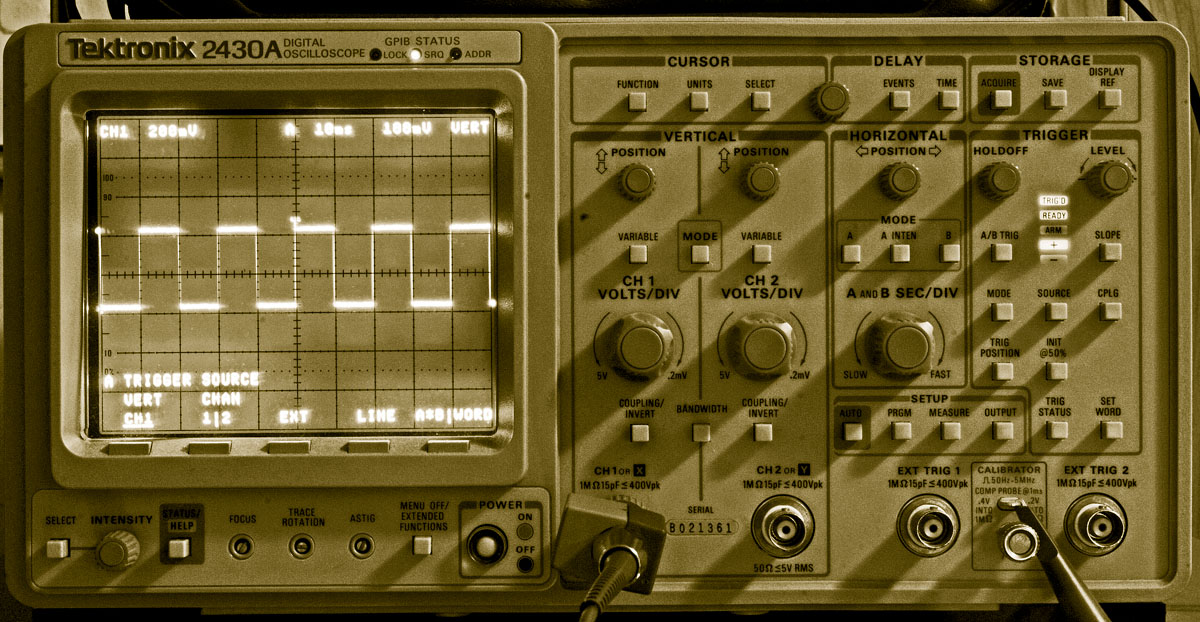
A Tektronix 2430A oscilloscope, totally cherry and shipped from San Francisco when I moved. It was retired from the data center of the San Francisco Newspaper Agency, where I believe it was used for calibrating the read-write heads on early “wash tub” disk drives.
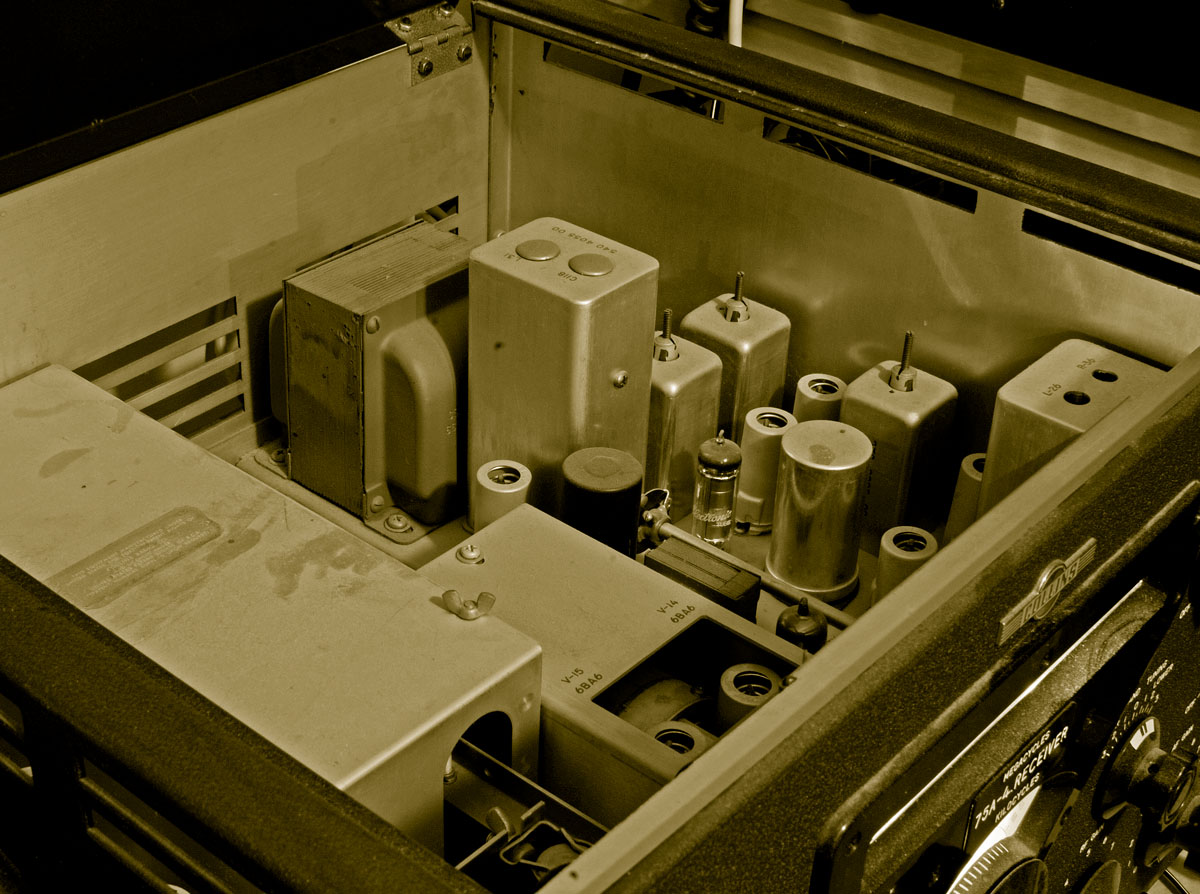
The somewhat dusty interior of the Collins 75A-4 receiver
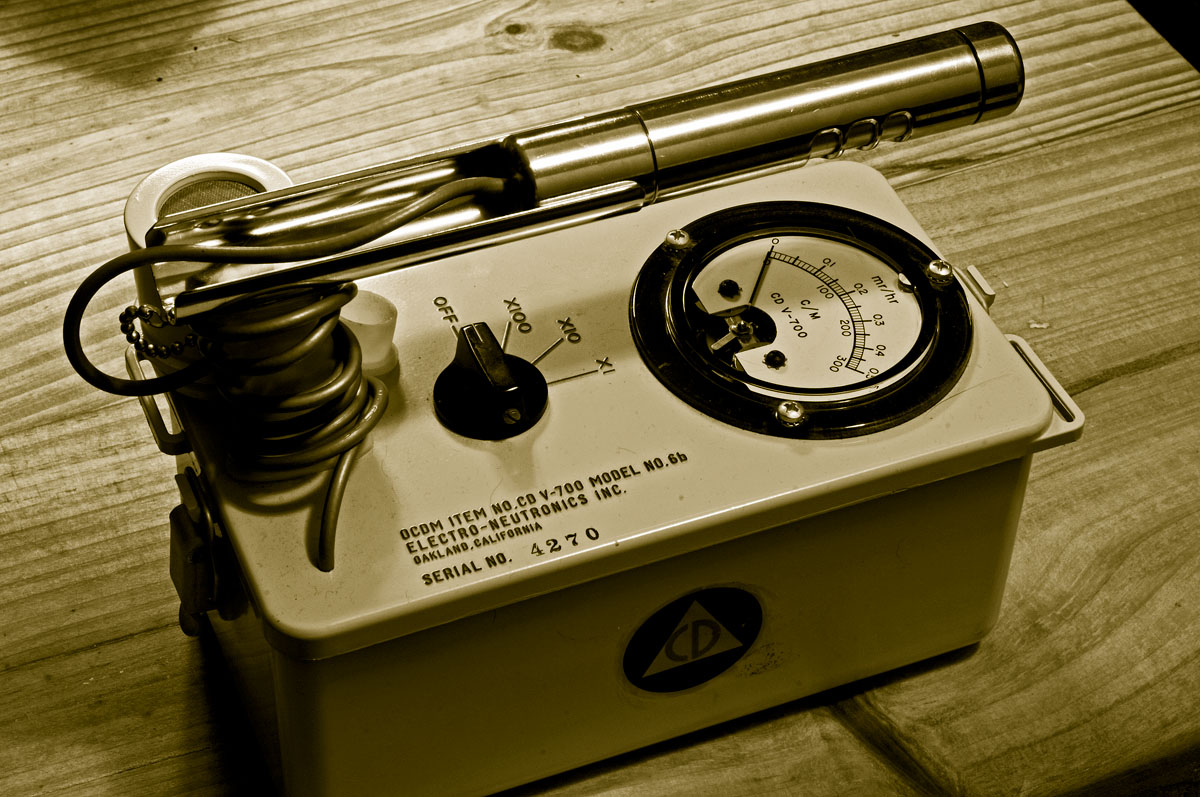
A Civil Defense CDV-700 Geiger counter, in perfect working condition. There were times when winds from the Fukushima Daiichi disaster in Japan (2011) blew this way. The Geiger counter reported a significant (but not dangerous) increase in the North Carolina background radiation.