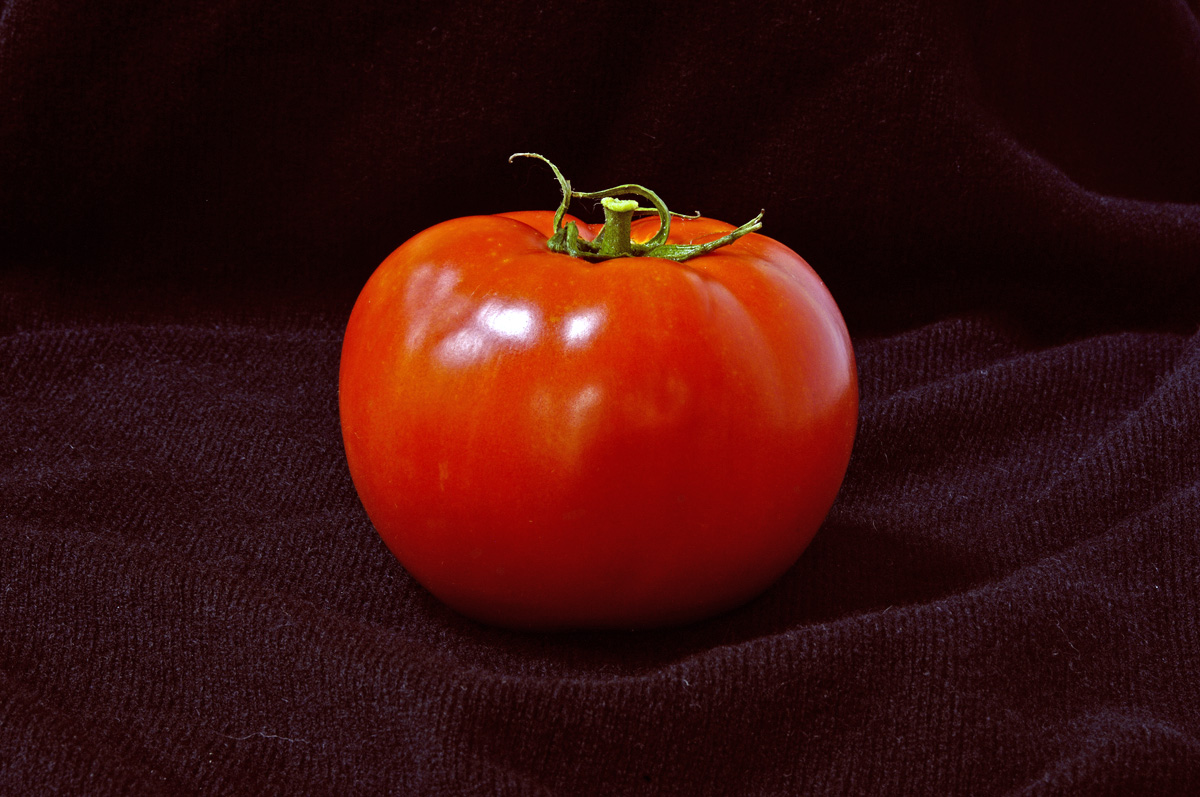
Chow mein (approximately)


As I mentioned in the previous post on Polish pierogi, if you can’t make things authentic, at least you can make things good. The fact that we don’t have either the skills or the ingredients to do exotic cuisines authentically doesn’t mean that we shouldn’t take inspiration from those cuisines and do the best we can. There’s an analogy to musicianship. The fact that we’re not all professional musicians and didn’t go to Juilliard should never stop us from making the best homemade music that we can make.

But back to the kitchen.

For the chow mein, I used whole wheat linguini for the pasta. The vegetables are broccoli, carrots, cabbage, onion, red pepper, celery, and garlic. The sauce is a combination of soy sauce, rice vinegar, honey, vegetable bouillon paste, and harissa sauce, which is a Tunisian pepper sauce that I always stock. I always have soy sauce and rice vinegar, but that’s about all I ever have that’s specifically Chinese.

No wok? A big skillet will do.

Just from experimentation, I think I have at least partly figured out the secret of wok cooking (using a big skillet). The reason you need high heat is to quickly boil away the water that leaks from the vegetables. The presence of water being converted to steam greatly lowers the temperature. But once the vegetables slow down on leaking water, you must be very careful and work quickly lest things get too hot. Once the wok starts to dry out, the browning process begins. You want the vegetables as dry as you can get them without overcooking them, and you want as much brown as you can get, because that’s where the umami is. Practice is required. It alls happens very fast. But this chow mein left no vegetable water in the bottom of the plate (or in the wok). The shiny brown color comes not only from the brownness of the sauces (which also must be largely boiled off by high heat), but also from the browning of the vegetables. The cooking oil makes everything shine.

Tofu would have gone very nicely with this. But I had roasted peanuts as a second course.

Pierogi (approximately)


I have never seen a filled dumpling or a filled pastry that I didn’t like. Have you?

Earlier today, I came across a list of comfort foods from every American state. What a list! Here it is. The one that kept my attention, though, was Ohio — pierogi.

The only thing holding me back was that I didn’t want to eat all that dough — white dough, anyway. It so happened that I’d been grinding wheat this morning. So why not try to make pierogi from fresh-ground whole-wheat flour? (For my post on how easy it is to grind your own flour — with the right machine, anyway — see here.)

I know absolutely nothing about Polish cuisine. I wish I did. But in the spirit of intrepid cooking, I’ll try anything, keeping in mind the principle that, at least you can make it good even if you can’t make it authentic. For basic instructions on pierogi-making, I consulted this. I steamed the pierogi in the steam oven rather than boiling them, and after steaming them I gently browned them in butter.

For the filling, I used potatoes, peas, browned onions, and celery. From English cookery, we know that a certain kind of alchemy happens when peas, celery, and other savory things are contained inside a crust. The filling was delicious. My sauce — a sweet and sour pepper-paste sauce — was probably more Asian than Polish. But from a bit of Googling it would appear that there are absolutely no rules about what to serve with pierogi. The limit is your imagination and what you happen to have in your kitchen.

Pastas and dumplings have a lower glycemic index than bread, so pierogis would be a good way to get your grains.

The other two photos, below, are recent makings in the grain department — whole wheat banana bread, and a cornbread luncheon sandwich of peanut butter and onion, made from leftover cornbread.

Railway project #2


The tracks cross a road before starting up a ridge along Prillaman Switch Road near Ferrum, Virginia. It’s possible that this little place was once a regular train stop. The passenger train between Roanoke and Winston-Salem was called “the Punkin Vine.” Its last run was on Feb. 18, 1961. Click here for high-resolution version.


Using Google Earth’s satellite images, I followed the Norfolk Southern train route from Belews Creek, North Carolina, northward into Virginia, looking for photogenic spots. In the satellite images, I saw a trestle bridge just south of Ferrum, Virginia. That’s about an hour-and-a-half drive north from the abbey, if you take the backroads.

I would have to say that the drive was somewhat depressing. I had expected the backroads to be a picturesque mixture of hills, forest, and farmland. But because my route kept fairly close to the railway, what I saw instead was mostly decayed industry and the falling-apart old houses of the people who worked in those industries. Once upon a time, living near a railway meant jobs. Now it means unemployment, decayed infrastructure, poverty, and Trump voters. There were shockingly few farms. Apparently people didn’t farm much if they worked in the old industries. Instead, they worked for wages and bought most of their food in little country stores. There also were quite a few of what I call nasty little churches. They are independent churches, falling apart just like the houses, of fundamentalist denominations such as “Holiness.”

A county or two to the west of the railway, rural Virginia is much more beautiful. Now I know.

The trestle is just south of Ferrum on Prillaman Switch Road. The railway is following a ridge at that point. The trestle bridges a small stream. The stream was almost roaring with snowmelt on the March day that I was there. To get from stream level up to railway level required climbing a steep and rather treacherous bank. I climbed the bank with my digital camera, but the film camera and its tripod are just too heavy for such a climb. These are all digital photos.

At some point I’m going to time these expeditions to catch a coal train on the tracks.


⬆︎ Click here for high-resolution version.

Episcopic illumination


Two letters of the word “LIBERTY” on an American 25-cent piece, magnified 60x


Two years ago, I wrote a post, with photos, about my Nikon Model S microscope. People who are Googling for this classic microscope often find my post, and it has been quite popular. In 2016, I did not have an “episcopic illuminator” for the microscope. I recently bought one on eBay. These devices for Model S microscopes seem to be fairly rare and don’t come up for sale often — at least not at a decent price.

An episcopic illuminator is a device that lights the specimen from above. What you see in the microscope is light reflected from the specimen. The opposite of this is “diascopic” illumination. In diascopic illumination, the light is below the specimen. What you see in the microscope is light that is transmitted through the specimen.

As you might imagine, both types of illumination are sometimes used together.

Somehow, my Nikon D2X camera seems to have infected me with a fetish for optics. Like my Nikon D2X camera, the Nikon Model S microscopes are now considered largely obsolete by professionals. But collectors and hobbyists snap them up for their quality and their continuing usefulness.

Unfortunately, the through-the-microscope photos here are of poor quality, because they were shot with an iPhone held over the microscope’s eyepiece.


⬆︎ The episcopic illuminator is the attachment on the left with the lettering “Nikon / 69368 / 1.5x.” Similar illuminators are an option on many microscopes.


⬆︎ The lamp below the microscope stage is a diascopic illuminator.


⬆︎ This is a blade of grass, with both episcopic and diascopic illumination, showing the barbs on the edge that can irritate or even cut tender skin.


Celebrity scientists


Stephen Hawking, Neil deGrasse Tyson, Carl Sagan, Albert Einstein, Madame Curie, Rita Levi-Montalcini


One of the healthier elements of our culture, including our media culture, is that we still have celebrity scientists. After the death this week of Stephen Hawking, we are left with a vacuum. To help fill that vacuum, I nominate Roger Penrose.

What are the characteristics that help elevate a scientist to celebrity status? Certainly they need to have discovered something or explained something that captures the public imagination. It helps if their personal stories are intriguing. It also helps if they’re charming and photogenic.

If you read this blog, you’re probably a serious reader. But do you read science? Much of my nonfiction reading is science, particularly physics. If you’re not reading science, then you’re missing a lot of the good stuff about what makes our times so interesting. Despite the steady progress in technology, and despite rapid progress in some of the sciences, physics is stuck and has been stuck for nearly a hundred years. That’s a big deal. It’s also a serious problem. But that doesn’t make physics boring. To the contrary, there is a growing suspense and sense of drama in physics as scientists struggle to unify relativity with quantum theory. Those two theories have been proven valid again and again. And yet they contradict each other in exceedingly mysterious ways. We still have no idea what gravity is — or time, for that matter — though there is tantalizing evidence that, when we finally do have a grand unification theory, an understanding of gravity will come along with it.

I have often said that I would like to live long enough to see two things — the grand unification theory, and the day the extraterrestrials land. I also am seriously open to the possibility that a grand unification theory will reveal that there is simply nothing here, nothing physical anyway, and that that is what has made the investigation so hard. Don’t laugh! Remember that Einstein warned us that we won’t get anywhere without imagination.

Why do I nominate Roger Penrose? I think I won’t even try to explain it, except to say that Penrose tries to tie the mystery of consciousness to the elusive grand unification theory. That’s not a mystical proposition. If you know about the “Schrödinger’s cat” thought experiment, then you know that observation by a conscious observer does seem to have something to do with the missing pieces of a grand unification theory, not to mention the mystery of something vs. nothing, or at the very least the mystery of something vs. bewildering uncertainty. I believe that Penrose is the Einstein of our time, the smartest person alive. You can find his books at Amazon. There also are many Penrose lectures on YouTube.

Science is a healthy antidote to the increasing primitiveness of our media and political culture. To read science is to strike a blow against the Republicans and religionists who are working to roll back the Enlightenment and turn off any lights that aren’t powered by coal. Next time you’re in a bookstore, why not check out the science section? Just pick a book on a subject that interests you. One subject always leads to another.


Roger Penrose

More about barley


Click here for high-resolution version

Back in January, when I wrote a post about fried barley polenta, I was using organic pearled barley, because that’s what I had at the time. However, pearled barley (though it’s very good) is not really a whole-grain product. Hulled barley is. Today, while it was snowing outside, I did another experiment with barley polenta using organic hulled barley. You can buy organic hulled barley in bulk at Whole Foods. It’s one of the best bargains in the Whole Foods bulk section.

There’s something magical about barley. It sticks to the ribs like nothing else. It’s outrageously healthy, both for the digestive system and for the bloodstream. It’s one of those foods that is pure medicine. No wonder the gladiators ate it. Smart people would figure out a way to make it a staple, using much more barley and much less wheat. The most delicious way to use barley that I’ve figured out so far is to make polenta from barley grits. Once you’ve figured out your method for cracking the barley into grits and working it into polenta, the next step is figuring out ways to season it. I plan to spin it as sausage when it’s served at breakfast (using sage and pepper). And it works great as a binder for vegetable burgers when served at supper. I’m guessing that it also would make a fine raisin pudding. It loves sauces, including gravy. It would make excellent arancini or risotto. It would substitute for meatballs in lots of recipes. It could be combined with soybeans and appropriate seasonings to make a vegan meatloaf. The barley experiments will continue.


Click here for high-resolution version

The photos in this post are digital, using natural light from north-facing windows.

Tinctures, on film


A friend in Black Mountain is experimenting with making tinctures. The alcohol is organic grape alcohol. The ingredients include all sorts of herbs and flowers. Also, below is the film version of the recent daffodils shot.

These are both film shots using Fuji Velvia 100 reversal film in the Mamiya RB67. The tinctures shot is with a 90mm K/L lens; the daffodils shot is a 250mm K/L lens. The tinctures shot is at f/32 with an exposure time of 45 seconds.

Where have all the fairies gone?


The Enchanted Forest, John Anster Christian Fitzgerald, 1819-1906


Where have all the fairies gone?

We could ask this question two different ways, depending on how you see the world. If you believe that fairies exist (or used to exist), then the question is literal. If you don’t believe in fairies, then there is still a serious question here, a cultural question. Why were fairies once such an important part of human lore? When did we lose interest in fairies? Why?

A friend who lives in France and who knows about (and shares) my interest in the Celts recently sent me a book, The Celtic Twilight, by the Irish poet W.B. Yeats. The book was first published in 1893. Yeats was a mystic, and I’m pretty sure he believed in fairies — or at least very much wanted to. In this book, he travels in rural Ireland and asks people to tell him what they know about fairies. Faeries were already fading then. But they were still very much a part of rural life and the Irish belief system.

I am certainly not the only person to wonder where the fairies have gone. I Googled for the words “where have all the fairies gone” and got a number of little articles. Most are like this. Those articles use words such as “spirit,” “vibration,” “devic,” and “plane.” Though it is harmless, this type of credulous, too-magical thinking makes me cringe. But I also found this, a much smarter and more thoughtful piece. The author thinks that we reached peak fairy around 1926. He thinks that it was the automobile that ruined the world for fairies. This is not just because cars are noisy and are made of metal (fairies hate iron), but because we stopped walking. In particular, we stopped walking in quiet places where nature is still unspoiled.

Though it’s bad manners to quote authors’ last paragraphs, I’ll make an exception here, because I think it’s important: “So, I’m pretty sure cars killed off the fairies and reduced the trove of local stories. And I’m also pretty sure of this: these could be revived if only we got out and about by foot more often, especially where the pavement ends.”

Rational as the author is, clearly he wants the fairies back. I do, too.

Often I stand in my upstairs windows, which face into the woods, downhill toward a little stream. Many times from those windows I have seen the white deer. I have seen an owl perched in the huge old beech tree that overhangs the big rock. The owl flew away on enormous wings when it saw me watching. The white deer, I believe, sleeps under the big rock sometimes. I have seen the trees crowded with hundreds of crows. The crows increasingly seem to like those woods — a positive sign, I think, of something. Noisy as the crows are (they come almost every day), I love the sound they make. The crows also nest in the woods. During the spring I watch them gliding in and out to their nests through holes in the heavy green canopy. One year, a mama fox raised two cubs in those woods. Out of the woods come squirrels, who sometimes get onto the roof of the house, and possums, for whom I leave snacks on the deck. In the spring, the bottom of the little valley is densely strewn with May apples. After a heavy rain, the stream almost roars as the water cascades over the rocks. The water, which at times has been cloudy, is remarkably clear and clean at present. These upstairs windows face west. The full moon sets in the woods, early in the morning. The wind in the trees sounds very different in the winter than in the summer. But particularly in the summer, the wind in the leaves sounds remarkably like the sea. The woods go on and on for miles. You’d have to cross some roads, but I’m pretty sure that one could walk all the way to Quebec from here, up the spine of the Appalachian Mountains, without really leaving the woods.

And so, reading W.B. Yeats’ carefully curated fairy stories from the 19th Century, I ask myself: Shouldn’t there be fairies in those woods? Should I hide the cars up the hill? Would I have to squint and look for them out of the edges of my eyes? Should I try taking naps on the big rock, under the beech tree? Would I have to eat some mushrooms? What sort of fairies might they be? Would they like me? Should I post a little sign, “Fairies welcome here”?

But seriously, the cultural loss is devastating. The 19th Century Irish country people whom Yeats interviewed about fairies were nominally Catholic, but I get the strong impression that Catholicism was a very weak force compared with the ancient folk beliefs. Priests were to be made fun of, but you’d better listen to what the fairies say. Whereas, if I hiked to the north and interviewed some neighbors, they’d know plenty of church talk, but they’d be utterly empty of imagination. And how many of them still walk in the woods?

There was a brilliant piece in last Sunday’s New York Times by E.O. Wilson, the biologist. He is arguing for the Half-Earth project, which he believes is necessary if the human species is to survive. The Half-Earth project calls for setting aside half of the earth as habitat for other species. Humans would keep to their own half, and in a sustainable way. That’s a brilliant idea. Maybe, then, there’d be room enough on earth for the fairies, too. Meanwhile I’ve got a little spot for them to help tide them over, if they’d like to have it.

If E.O. Wilson is right, and if we don’t make room for earth’s other creatures, then we’ll be next. It was just that the fairies went first.


Click here for high-resolution version


The fate of the caboose


Back in 2014, I posted photos of a caboose that was for sale. At the time the caboose was located in a private park near Madison, North Carolina. Last year, the town of Stuart, Virginia, bought the caboose and moved it to Stuart.

I’d have to say that I was pretty disappointed when I drove by to check out the caboose a few days ago. It’s now parked in a falling-apart old industrial neighborhood near the Mayo River. The caboose looks ill-at-ease and a little embarrassed to be where it is. The restoration work has been so-so. In fact, no work has been done on the interior at all.

The residents of the abbey actually briefly considered buying the caboose and renovating it as a B&B. The price of the caboose was reasonable, but the catch was the cost and hassle of moving it. Apparently the only effective way of moving something so heavy is with an industrial crane. So the cost of moving the caboose would have been greater than the cost of the caboose itself.

Still, I can’t help but think that the caboose would have been much happier here, tucked up into the woods above the orchard, nicely landscaped. There’s already water, electricity, and a septic tank connection at that spot, because that’s where I parked my camping trailer while I was building the house.

Oh well. Maybe a tiny house someday.