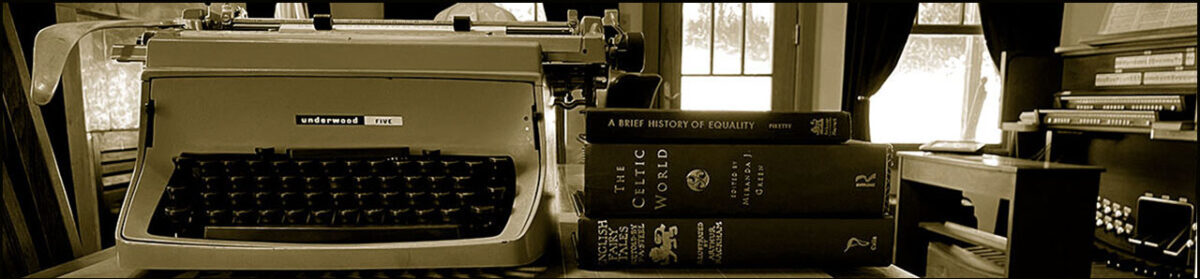
Charles Dickens: Barnaby Rudge


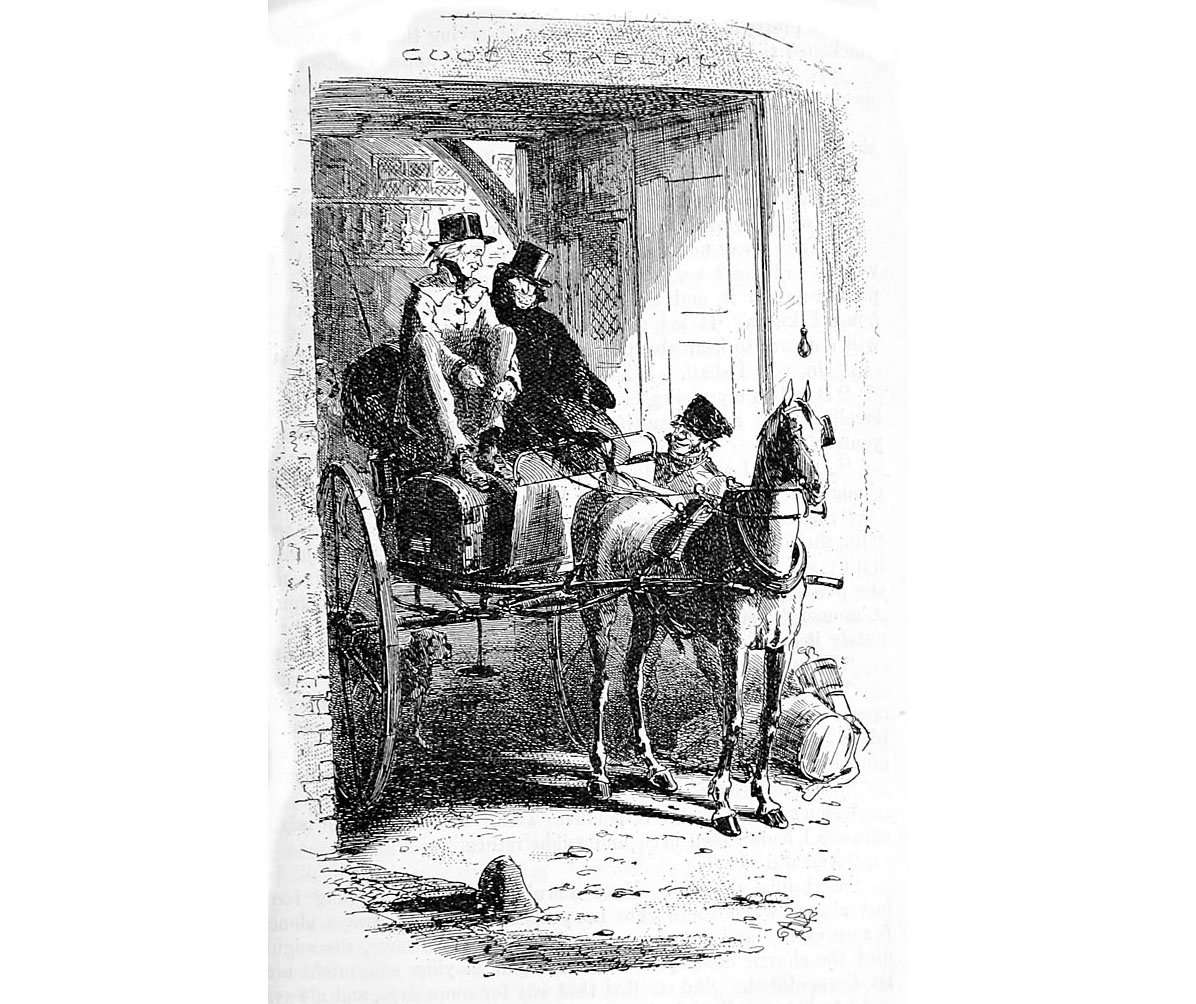
The Maypole Inn

Choosing the next novel to read is a huge pain in the neck. I Google for novels on particular subjects or particular periods, or I pore over book lists, and then I look up the books on Amazon. Sometimes I settle on a novel that looks like it might be a good choice, but when I “look inside” the Kindle edition on Amazon, I quickly see that the author cannot write. I move on.

When stuck between novels, reading a classic is a fallback that rarely fails. I have a Kindle file with the complete works of Dickens. I settled on Barnaby Rudge. I am no stranger to Dickens. I have read David Copperfield at least twice.

Yes, Dickens’ style is a little thick. His characters, especially the wicked ones, usually border on caricature. Important scenes are usually melodramatic. And yet few novelists have ever been able to paint pictures in the mind the way Dickens does. His style, actually, is remarkably cinematic. According to the Wikipedia article on Dickens, in 1944 Sergei Eisenstein wrote an essay on Dickens’ influence on cinema. Dickens may have invented the technique of cross-cutting, in which the narrative shifts back and forth between things that are happening at the same time.

There is a particular reason for reading Barnaby Rudge at present. The novel is about the Gordon Riots of 1780. The similarities between the Gordon Riots of 1780 and the Trumpist insurrection at the U.S. Capitol on Jan. 6, 2021, are remarkable, so remarkable that I’m surprised not to have come across an article about it. Some things never change, including the sickening religious character and mob-affinity of people who do such things. Lord George Gordon was an odious man, the puritanical head of the Protestant Association, horrified by the idea of Catholics having equal rights. Yep. The mob attacked Parliament.

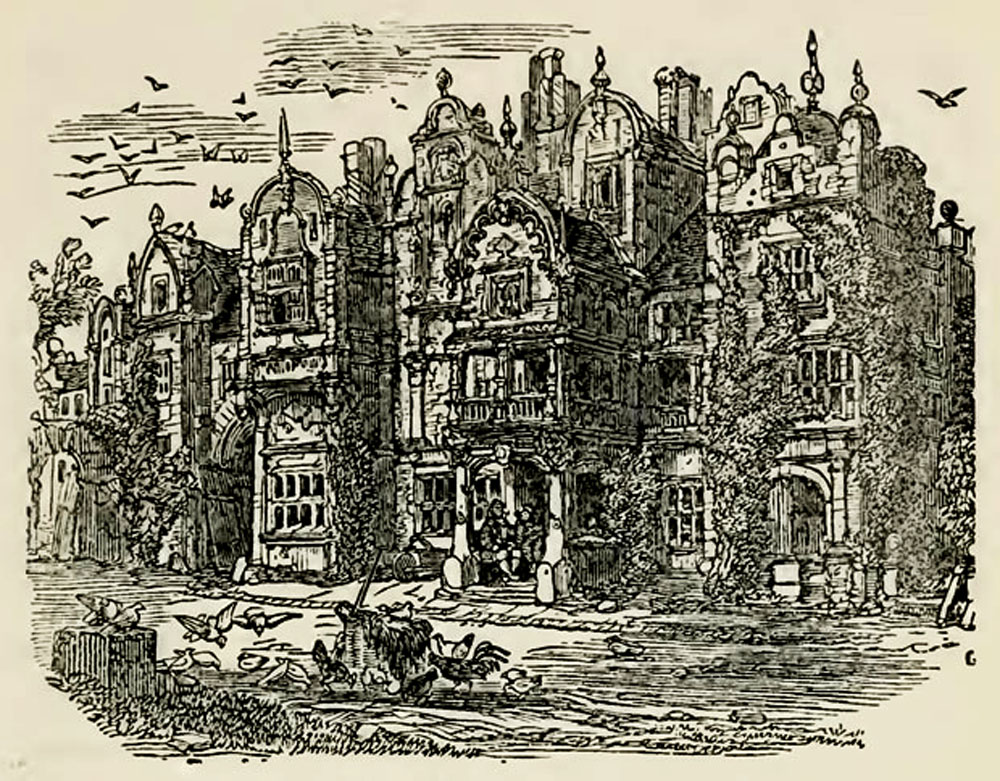
Even if you are reluctant to take on such a long book (almost 700 pages) and such a dense read, the opening scenes of Barnaby Rudge are worth reading. It is a dark and stormy night, and the story opens inside a country inn ten miles outside of London. Few writers can conjure atmosphere the way Dickens can. Dickens’ Maypole Inn very much reminds me of Tolkien’s Prancing Pony. What could be more cozy and comfortable that an inn in old England (or Scotland, or Ireland) on a dark and stormy night? Another thing about Dickens that I love: When people are eating, he always tells us what.

I don’t really find Dickens’ style of writing archaic. So many novelists, especially today, just can’t write. There is still much to be learned from Dickens about how it’s done.


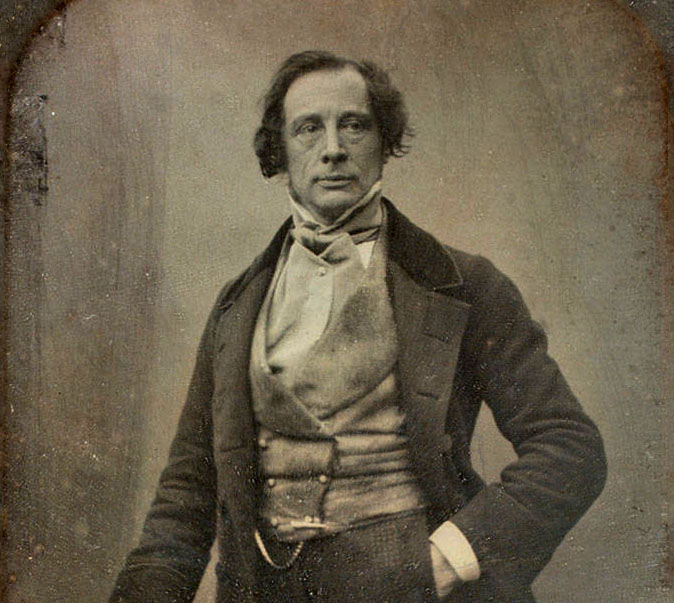
Charles Dickens in 1852. Source: Wikipedia

Pasta is a piece of cake


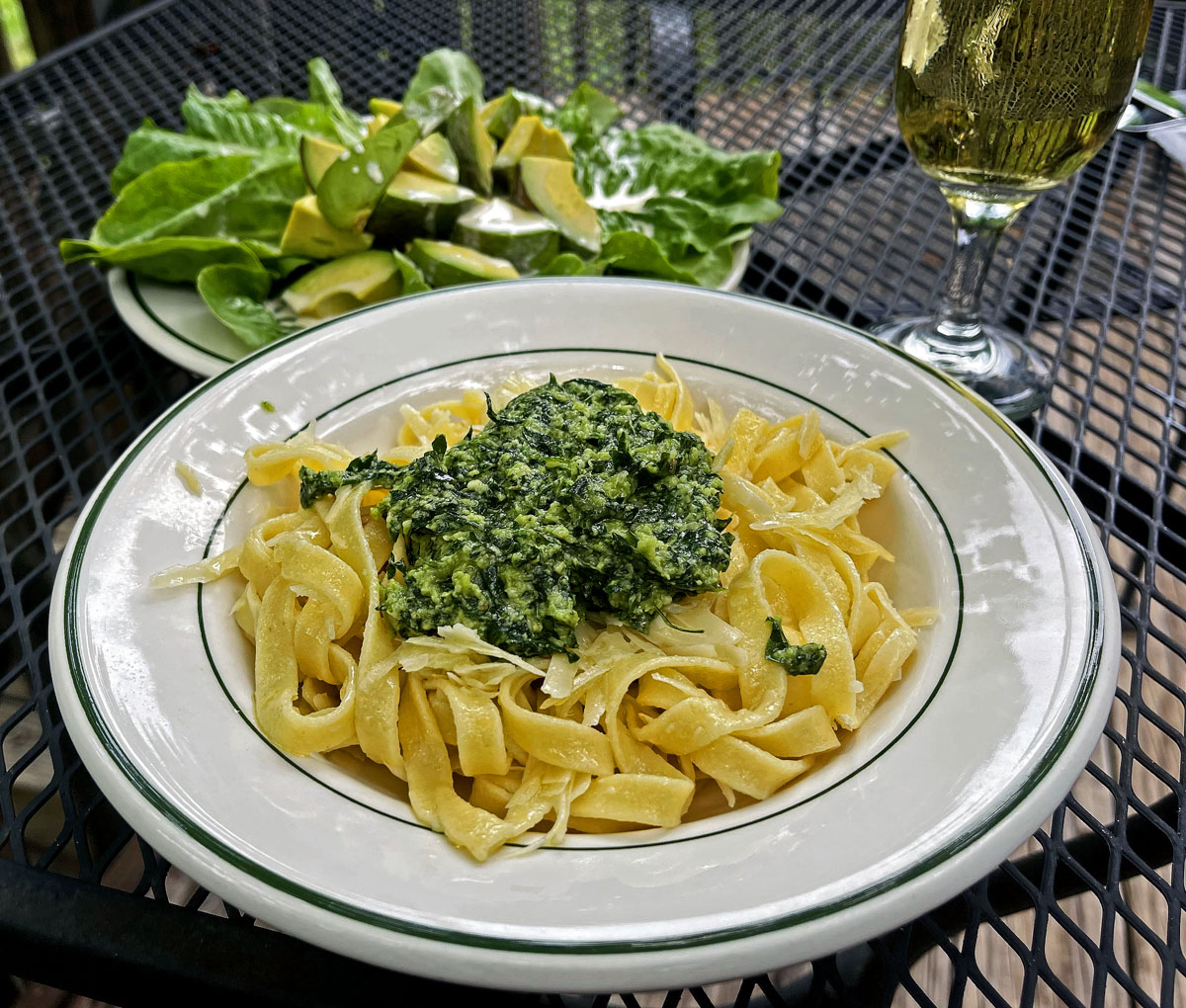
Homemade tagliatelle with basil-parsley pesto. The basil, parsley, and lettuce came from my garden. The pesto was made with a mortar and pestle.

When I posted last week about working on my Italian cooking (“A summer project: Italian cooking,” June 2), I was not thinking about pasta — honest. I was thinking about how to make the most of the summer vegetables from my garden.

But as I read more and more of Elizabeth David’s Italian Food, I realized that pasta is part of the deal in Italian cuisine. So I needed a pasta plan — including figuring out how not to eat too much of it.

It was easy to see that a pasta machine would be necessary. I am pretty sure that I will never, ever, be able to make pasta with a rolling pin. So, when I was grocery shopping on Tuesday, I stopped by the Williams Sonoma in Winston-Salem and bought an Imperia (made in Italy!) pasta machine, $80. This is a hand-cranked machine. Williams Sonoma also has attachments for KitchenAid mixers. But the attachments are much more expensive than the hand-cranked machine, and I reasoned that a pasta machine driven by such a high-powered motor would be a very high-powered way to make a very big mess.

With the hand-cranked machine, at least, the mess is much less than I feared. I was afraid of a sticky mess. But instead it was a mere floury mess. If you’re used to handling dough, your second batch of pasta will be excellent. I won’t presume to give any instructions here, because I’m just a novice. But there are many videos on YouTube about how to make pasta at home.

Amazon also has the Imperia machine, for less, naturally, than I paid at Williams Sonoma. It’s a heavy little thing. And it’s entirely practical, not at all a use-it-once kitchen gadget.

I do have one warning. Most recipes for pasta will make an outrageous amount of pasta, enough to feed a family of ten, to require a 40-gallon cauldron for boiling, to keep you turning a crank for half a day, and to run out of places to hang pasta. If you’re cooking for an old-fashioned Catholic family, I understand. But since I cook only for myself and for the possum who makes nightly visits to my backyard, even a one-egg batch of pasta is more than twice as much as I can eat. My possum will eat Italian tonight.

A thought that helped me overcome my resistance to making something as high-calorie as pasta is that pasta skills (and a pasta machine) also will assist with egg dumplings, which would make a fine winter comfort food. Also, the method of making Asian noodles can’t be that different from making Italian pasta.

I’m probably the last California-influenced cook to start making pasta. There are two skills involved, I would say: How to make the pasta (easy); and how not to make too much of it (hard). The real technical challenge with homemade pasta, I would say, is making no more of it than you ought to eat.

The princely hoe


The new hoe

I confess that I ruined my old hoe. I left it out in the weather too often. That weakened the handle, and the handle separated from the blade. The blade fell off while I was hoeing a row of tomatoes. To wear out a hoe would be an honorable thing. But to neglect and abuse a hoe is a crime and a shame that would have shocked our ancestors.

I know better than to leave garden tools outdoors, but I plead guilty to doing it. Wooden handles deteriorate. Blades rust. As I reflected on my cruelty and guilt, hoping that my contrition will ensure that I never harm another hoe, I realized how ancient the hoe must be. The hoe is a kinder blade than the sword and the ax, but no doubt it changed the world just as much.

The Wikipedia article on the hoe describes some of the history. Hoes are mentioned in the Code of Hammurabi, about 1750 B.C. Even today, Third World subsistence farmers with no ploughs get by only with hoes. When there is no iron or steel, wood will do. The Wikipedia article includes a photo of an Egyptian hoe made of wood. The Roman hoes, of course, were made of iron.

In European culture, there can be no doubt that hoes were introduced across Europe in the migrations that brought agriculture, the wheel, the horse, milk animals, and the Indo-European languages. How could I be so thoughtless as to leave out in the rain an instrument so royal? I vow to never treat a hoe with disrespect again. I should be able to salvage the old hoe and put a new handle on it, though replacing handles on hand tools is becoming a lost art.

My new hoe has a fiberglass handle. That was the only kind of hoe the hardware store had. I’ve made a hook in the shed for it to hang from, away from the rain and sun. Fiberglass won’t decay like wood, but it hates ultraviolet from the sun.

One of my favorite gardening books, Gardening When It Counts, emphasizes the importance of keeping hoes sharp. I find that to be true. I use a hoe in the garden not so much for loosening the soil but for cutting weeds. It’s remarkable, really, how efficient hoes are for that. As long as the weeds don’t get out of hand, I can hoe my garden in not much more than 30 minutes.

The new hoe (and probably all new hoes) came with an angle on the blade, but the blade is not truly sharp. I took a file to it. I’ve also ordered a sharpening tool from Amazon that attaches to a drill. The rotary sharpener is made for lawn mower blades, but I’m pretty sure that it will do a good job of sharpening the hoe.

When I was a young’un growing up in the Yadkin Valley of North Carolina, I wasn’t made to work as much as some young’uns were. But I was sometimes made to hoe. I didn’t like it. But I’m glad to have acquired some hoeing skills early in life. And since this post is an obituary for my old hoe, I want to mention that my old hoe never harmed a living thing that wasn’t a weed, not even a snake. Many a hoe, like pitchforks, have been used as weapons.

When I lived in San Francisco, I learned that people who grew up without any farm experience did not even understand the expression “a long row to hoe.” That is sad. I have looked down long, long rows of weedy tobacco on hot summer days.

Rest in peace, old hoe. If I can find a new handle for you, I’ll bring you back and never mistreat you again.

A summer project: Italian cooking


A friend who lives in the south of France asked me yesterday in email what plans I have for summer. I couldn’t think of a thing, other than trying not to hide too much indoors in a bug-free, air-conditioned house. Then I remembered one thing: That, with the riches I hope to get from the garden, I plan to work on my Italian cooking.

It was about ten days ago, upon observing that though the early garden was 90 percent a failure because of the cold, dry spring, the summer garden looks promising. I will have yellow squash next week. The cucumbers and tomatoes are blooming. The basil and onions are coming along, but slowly. I planted okra from seed today.

Like most Americans, I grew up with spaghetti. Every few years or so I’ve made lasagna at home. I put some effort into improving my pizza skills, especially with crusts. I’ve had a few incredibly good dinners at proper and properly Italian restaurants in North Beach in San Francisco. But I have never made an effort to concentrate on authentic Italian cooking. I realized that I needed a book for that.

Cookbooks are available from Italian cooks with current TV shows, but I wanted something classic. The classic work on Italian cooking for English-speaking cooks was easy to identify. It’s Italian Food, by Elizabeth David. It’s one of the most beautiful cookbooks I’ve ever seen, illustrated with excellent color prints of Italian paintings of food. The book was printed in Verona.


Italian Food. Elizabeth David. Barry & Jenkins, London, 1954, 1987, 1996. 240 pages.


First published in 1954, this book satisfies my curiosity about what any culture’s cuisine was like when the cooks had experience and memories that went back to the 1800’s. What I saw in my grandmother’s kitchen in the Yadkin Valley of North Carolina in 1954 (she was born in 1896) was nothing like what one sees in even the best kitchens today. New developments in cuisine, such as the ideas of an Alice Waters or a Michael Pollan, are very important. But cooking also has roots, and some knowledge of those roots is a must-have for any cuisine.

I ordered this cookbook through Amazon. It was shipped from the United Kingdom. There must be a good many copies in print, because the book is not hard to find. Booksellers don’t usually say what edition they’re selling. Mine is the 1996 edition, in very good condition.

I’ve a lot of good reading ahead of me, but the part about basil convinced me that this is indeed the cookbook I want:

“Nothing can replace the lovely flavour of this herb. If I had to choose just one plant from the whole herb garden I should be content with basil. Norman Douglas, who had a great fondness for this herb, would never allow his cook to chop the leaves or even to cut them with scissors; they had to be gently torn up, he said, or the flavour would be spoilt. I never agreed with him on this point, for the pounding of basil seems, on the contrary, to bring out its flavour.”

By pounding, I assume she means pounding in a mortar and pestle, which is now the only method I will use for making pesto.

Italian cooks, she writes in 1954, go to market twice a day. That’s a beautiful idea, but no American can live that way anymore. Some of us can, however, go to the garden twice a day.

Elizabeth David, who died in 1992, is an important figure in the history of cooking and cookbooks. The Wikipedia article is a good starting place for information about her.


Click here for high-resolution version


Lettuce pesto with lettuce from my garden

Pesto from lettuce?

Lettuce pesto sounds bland and watery. In truth, it is a little bland and a touch watery. But if lettuce is what you’ve got, then lettuce pesto it is. It will be three weeks or so before I can expect any summer basil from the garden. The winter basil from the kitchen window is almost gone, but I had enough of it to season the lettuce a bit.

Franz Schubert: Zum Sanctus


As I have said here before, few sounds on earth can equal the sound of well trained, well directed human voices singing together. There is the sound of the sea crashing against rocks, and birds in a garden on a spring morning, or children laughing and a cat purring. But, somehow, life on earth also learned to produce sounds like this.

The theology is dreadful, so it’s best to leave the German below as German. I was unable to find a decent YouTube performance that included the instruments scored below. This piece, like so many, is much more often murdered than performed well.

Some history of La Marseillaise


Please read the first paragraph before listening…


The first important thing about La Marseillaise, I think, is that it is a hymn. Hymns typically are written in four-part harmony for singing — soprano, alto, tenor, bass. This hymn has been subjected to an infinite number of variations, improvizations, and outright murders. It’s not easy to find a recording of the hymn sung in (fairly) simple four-part harmony. The above performance by the “the Minionaires” was as close as I could find. Now listen to the Minionaires. It’s only one minute and 44 seconds long…

As far as I can tell, it was only recently that the origin and true composer of La Marseillaise was questioned. Traditionally, the hymn is attributed to Claude Joseph Rouget de Lisle, in 1792. But was de Lile — gasp — a plagiarist? You can read on the web that, before he died, de Lisle confessed to the true source of the anthem. (He lived until 1836.)

If scholars have confidently established the truth about the history of La Marseillaise, I’m not aware of it. However, there is evidence out there that we all can hear!

A good starting place is Mozart’s Piano Concerto in C major, K. 503. The link below is an excellent performance of this concerto. The entire concerto is worth listening to, but if you’d like to hear the bits that sound like La Marseillaise, then skip to minute 12 or so, before the cadenza begins at 13:20. The literal quote from La Marseillaise starts at 15:03, but you’ll hear it coming long before that. Note that this concerto was written in 1786, about six years before de Lisle wrote La Marseillaise!

Keep in mind when listening to the performance above that the quote from La Marseillaise occurs in the cadenza of the first movement. Pianists get to improvise during cadenzas. There is no doubt that the pianist here, Kenneth Broberg, improvised into the cadenza a very literal quote from La Marseillaise. I’ve not attempted to find the score and see what the score says. But, when people have written about this, they usually say that elements of the first movement of the concerto “remind people of” La Marseillaise.

Mozart’s concerto was written in 1786. But it appears that a much more obscure Italian composer, Giovanni Battista Vioti (1755-1854), got there first. The claim in the YouTube video below is that Vioti wrote this theme in 1781:

It sounds like a smoking gun to me!

Europe at the time, it seems, was in a fever of patriotism and revolution. We Americans earned our democracy during this period. But all we got for a national anthem was “The Star Spangled Banner.”


Extra credit: Since you skipped straight to La Marseillaise part of the Mozart piano concerto, why not go back now and listen to the entire concerto. When I am in a certain state of mind, I spend a good bit of time on YouTube listening to, and comparing, musical performances. Too often, we suppose that our culture — and by culture, here, I mean European post-Enlightment culture — is being lost. But if a young pianist such as Kenneth Broberg can grow up in Minnesota and learn to play like this (Broberg was born in 1993), then it’s hard to imagine that anything is being lost. Some of the young musicians coming out of Asia almost stop my heart with their technique and the depth of their musical insight. To me, listening to music recorded around the world is an important compensation for my cultural isolation in the woods, in the provinces. Why do I listen in a state that I can best describe as incredulity, suspending disbelief? How can these young people do this? I know just enough about music to know how difficult it is. If anything, I would argue that, far from losing anything, our musicians are getting better. As long as we are a culture that can train these young musicians (and young writers — much more difficult and a subject for another post someday), then I would argue that the idea that we are a culture in decline does not hold up.


Shadow and Bone


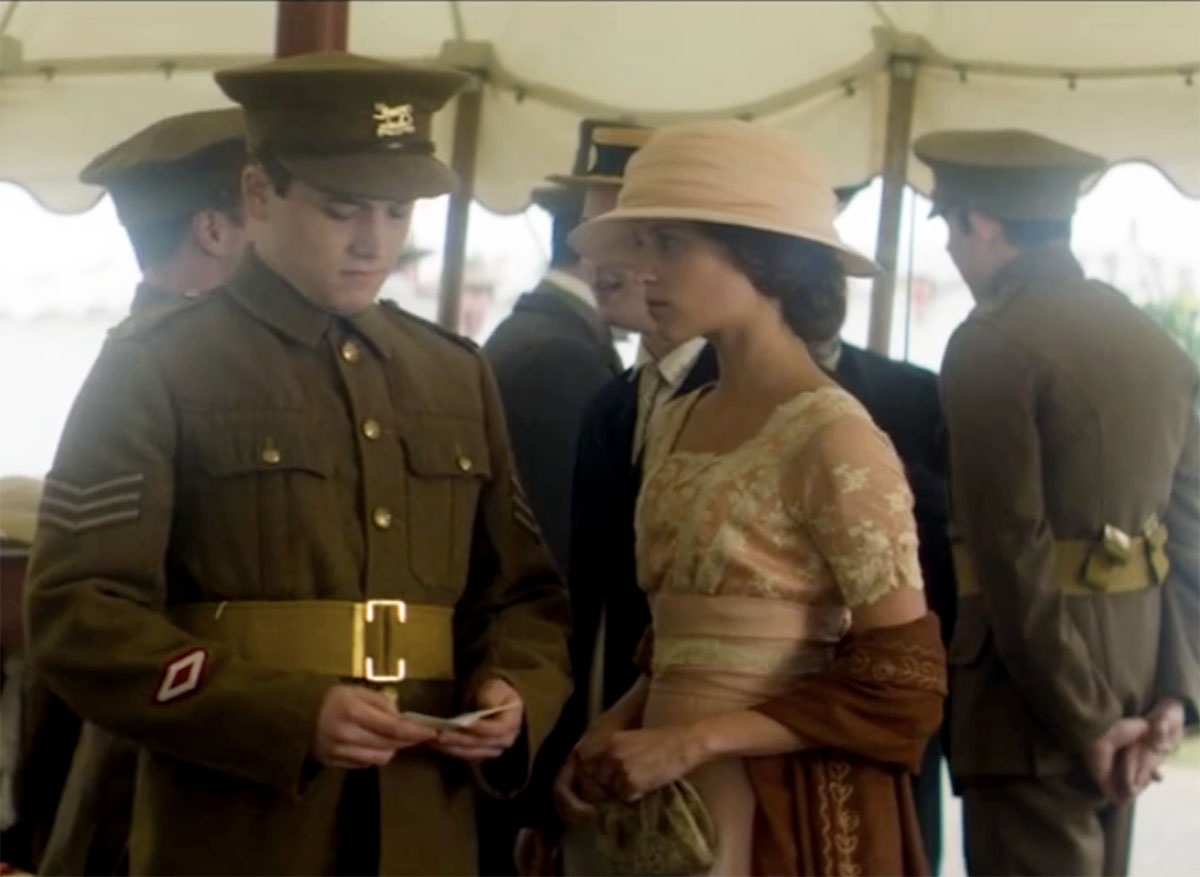
Who knew that Tsarist Russia could look so good? Actually, most of this series was filmed in Hungary. Not since “Game of Thrones” has a fantasy series been such a visual treat.

I had watched the trailer for “Shadow and Bone,” and I was skeptical. But I heard good reviews from friends. I’ve watched two episodes so far, and it has greatly exceeded my expectations. The plot is a bit thick. I had to watch parts of it twice to hang on to the threads. But two episodes was enough to hook me.

The casting is excellent. It’s a very attractive, diverse, eccentric, and charismatic cast of characters. The sets and settings are lavish. Filming must have cost a fortune. The music is very good. And the horses!

The series is based on a trilogy of fantasy novels by Leigh Bardugo. It’s available for streaming from Netflix. There are eight episodes in the first season. I’m surprised how little buzz this series has gotten.

An international recipe for progress


Scotland 2070: Healthy, Wealthy, Wise. Ian Godden, Hillary Sillitto, Dorothy Godden. College Publications (London), 2020. 218 pages.


What would it take for Scotland to attain the same level of wealth and wellbeing as the Nordic countries? This book lays out a fifty-year plan for accomplishing that. What’s remarkable about this book, though, is that its ideas easily translate to any country looking to the future.

I first became aware of this book from an article April 17 in the Guardian, “An independent Scotland could turn to Denmark for inspiration.” I ordered the book from Amazon.

Though one of the book’s subtitles is “An ambitious vision for Scotland’s future without the politics,” it’s not entirely true that there is no politics in the book. It’s pretty clear that the authors’ view is that Scotland can optimize its future only by breaking with the United Kingdom and becoming independent. The authors, though they are highly educated, are not scholars. They’re businesspeople. In the U.S., it’s generally safe to assume that businesspeople believe in conservative notions of small government, low taxes, keeping working people on the brink of starvation with no safety net so that they’ll work for cheap until they drop dead, crummy education, health care as a profit center rather than a means of keeping people healthy, and a manipulative and deceptive politics that ensures that people are preoccupied with cultural grievances and thus never figure out who is really eating their lunch. These Scottish businesspeople are the opposite of that. The central principle — a principle at last being advocated by America’s Democratic Party — is that government exists to serve the people. This is in opposition to the neoliberal principle that has reigned for decades, that government exists to serve private profit.

Twenty-five years ago I fell in love with Ireland on my first trip there. But Ireland has changed in the past 25 years, and not for the better. Ireland chose a low-tax, low-productivity, low-knowledge, low-education, low-equality neoliberal strategy. Global money thus poured into Ireland. The authors of this book use kinder language about Ireland’s mistakes. I’m more blunt. The way I’d put it is that Ireland greatly damaged itself and its people by becoming a global tax whore. But I’ve also been in Denmark a couple of times, where I admired the contrast between Denmark and Ireland and how Denmark has developed a prosperity that serves its people rather than the global rich. Scotland, on the other hand, has been pretty much in stasis, largely because Scotland is a tail wagged from Westminster. The United Kingdom — or should I say England — seems too inclined to waste time and opportunity by nursing its cultural hurts, which is holding Scotland back. If Scotland does become independent in the future, the power of global money would do everything possible to turn Scotland into another Ireland. The authors of this book understand that. It would be up to the people of Scotland to choose a better path by looking north rather than south, and that’s the point of this book.

Though it’s tempting to list the key points of this book’s vision, I think I won’t, because it’s a book worth reading no matter where one lives. I will say this, though. That vision of the role of government and the demands of the future have a great deal in common with the vision that President Biden has brought to Washington. California, America’s most progressive state, just announced a $75 billion budget surplus. Voodoo economics has had its day. It’s time to get serious about a sustainable green economy, with major new investments in education, health, and infrastructure broadly defined.

Go for it, Scotland.

Greenland


Preppers love disaster films. And, after Covid-19, aren’t we all preppers now? “Greenland” is a pretty good disaster film.

Except that “Greenland” is really more of a family film — a vulnerable seven-year-old boy with diabetes, and a mom and dad (who aren’t getting along very well) fighting to save the family.

The film was supposed to be a summer blockbuster last year, in theaters. The Covid-19 lockdown forced a change of strategy. I first noticed “Greenland” in iTunes, where Apple was renting it — renting it! — for $19.99. That was an interesting test of the desperation of the bored lockdown market. I have no idea how many people rented it at that price. I waited for the rental price to come down to $5.99, as it did a month or two ago.

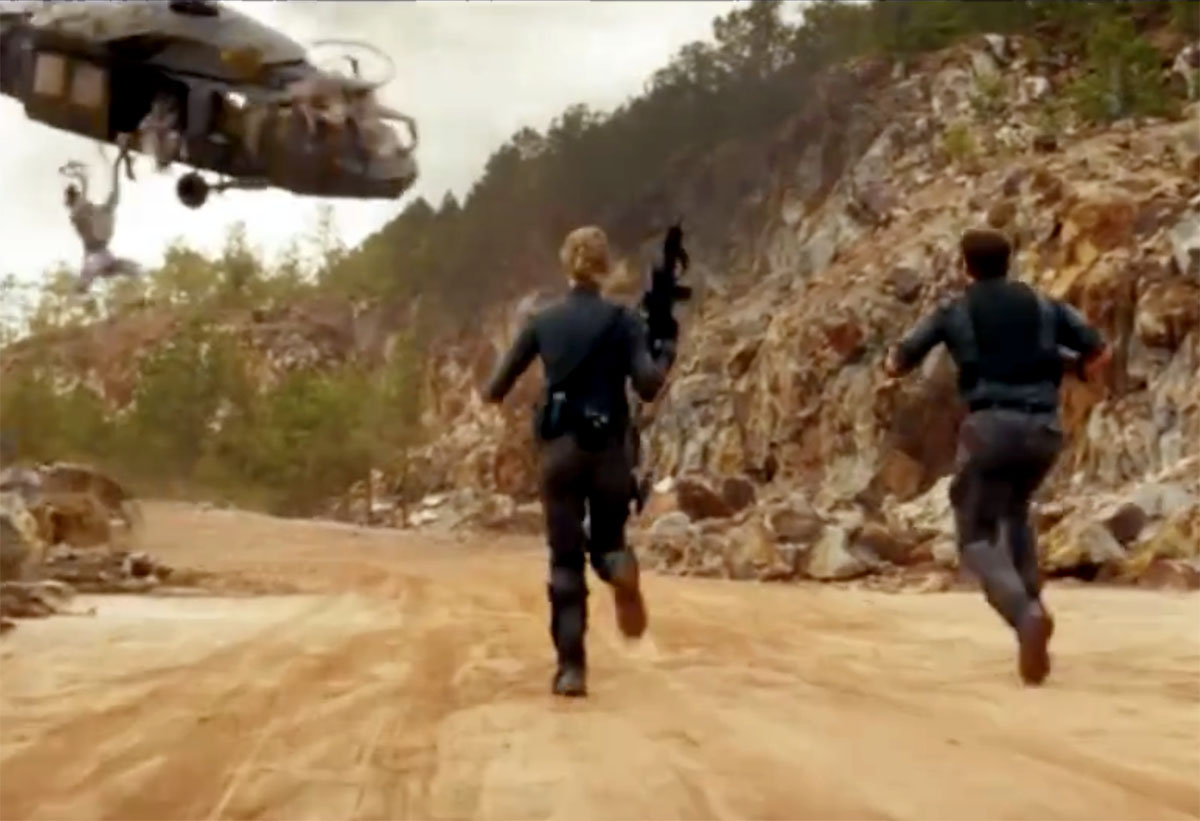
What’s scary about “Greenland,” and also of particular interest to preppers, is that the people are far more scary than the comet fragments bombarding the earth. The film reminded me of “War of the Worlds” (2005), when I kept yelling at Tom Cruise on the TV, “No! Get off the roads! Stay away from people!” It’s the same with “Greenland,” which is largely a movie about a terrifying road trip north from Atlanta.

Screenwriters usually do a pretty good job of representing mass psychology during a disaster. Some people will try to help others. But others would shoot you over a bottle of pills. In a disaster, cities are a terrible place to be. But the highways would be worse.

It was after 9/11 that I became a left-wing prepper. I continued to live in San Francisco for eight more years. It was obvious how trapped I was. In a disaster, the possibility of evacuating San Francisco over the two bridges — the Golden Gate Bridge north to Marin County, and the Bay Bridge east to Oakland — would be non-existent. The only way out of the city would be by boat (if you had one), or by a dangerous road trip south toward San Jose. I bought a Jeep for that purpose. My plan was to drive the Jeep out to the coast, offroad through Golden Gate Park, and then to try to find a way south, off the pavement and around stalled traffic as much as possible. Fortunately I never needed the Jeep for an evacuation, but I still have it. It also was during those San Francisco years that I got an amateur radio license and learned how to use radios. Another detail that the “Greenland” screenwriters got right is that, when the inferno caused by the comet subsided after nine months, the scattered survivors located each other by radio. A detail the screenwriters got wrong, however, was in showing abandoned houses still with electricity, and cell phones still working after cities are on fire, and cars with enough fuel for a long road trip. Every bug-out plan must consider communications and a rendez-vous plan worked out in advance. Anything you need but didn’t stash in advance will not be available.

If you live in a populated place, do you have a bug-out plan? From wildfires or earthquakes in California, to tornados anywhere from the plains to Maine, to hurricanes and flooding along the rivers and coasts, millions of Americans need a bug-out plan and don’t have one. “Greenland” should encourage us to think ahead.

Literary novels and other trash


I know that, when something really gets under your skin, it’s a psychological red flag and that one should ask oneself what’s really going on. Whatever. But when I ask myself what’s really going on with my aggressive hatred of literary novels (or literary anything), I think it’s this: Literary novels are not merely bad, they’re also a fraud. They’re a fraud because they suck up so much oxygen, suffocating and marginalizing and demeaning far better work. Literary novels get all the attention. Everything else is carefully ignored by critics (though not by the millions of people who actually read for pleasure).

Kazuo Ishiguro’s The Buried Giant is trash, not worth having been written and not worth reading. But just look at all the fawning reviews it got in the New Yorker, the New York Times, and the Atlantic. I believe Gore Vidal called them “university novels,” though I’m not sure Vidal is entirely guiltless, literarily speaking. Orson Scott Card, a good writer in spite of his rotten politics, call it “pre-criticized fiction,” written to appeal to critics and for those who imagine themselves to be a literary elite.

So why did I read The Buried Giant? A friend was reading it, and I was looking forward to discussing it with him. Normally I would have flung such a book within thirty pages. But I kept reading even after I discovered it was a university novel, for the sorriest of motives: to have more credibility to rip it to shreds.

As is required in a literary opus, the title is meaningless. Clarity is forbidden, and vagueness and randomness substitute for plot. Most of the novel doesn’t make sense, because it’s not supposed to. It’s supposed to be more like a Rorschach test, and the reader is expected to project great profundity into the vagueness that one can’t quite put one’s finger on and that — since the critics loved it — must surely have gone over one’s head. The reader is constantly taxed with an excess of words. But, worst of all, the ending is frustrating to the reader and cruel to the characters. To my mind, it’s a writer’s ethical duty both to readers and to the writer’s characters that a novel’s characters might be made to suffer, but that they will be compensated in the end by winning their heart’s desire. It is both a literary crime and a breach of ethics to leave one’s characters in hell because that’s “like life” or something. If I ever met an author like Kazuo Ishiguro I would berate him within an inch of his life for being a fraud, for possessing a mediocre mind in which a deliberate vagueness masks the mediocrity, for his pessimism and literary cruelty, and for being a mediocre and wordy writer to boot.

A friend from L.A. with a large eating-out budget once criticized me for liking cuisines that are “easy to like,” such as Thai. To his mind, stuff that is hard to like — raw eels in cold gummy rice and reeking seaweed, for example — is the real test of a connoiseur. My crime was refusing to go with him to a sushi restaurant.

I refuse to be shamed. There must be a thousand bodice rippers, ten thousand science fiction and fantasy novels, and a hundred thousand historical novels, crime novels, spy novels and mysteries that are better, better written, wiser, and deeper than the phony likes of The Buried Giant.