Today's photos, in no particular order

wtree-work-may29.JPG
The local power company, Energy United, has been clearing trees around the power lines up on Duggins Road. I stopped and had a nice chat with the two supervisors about going as easy on the greenery as possible. They were very nice and didn’t disagree at all. Part of what they’re doing, though, is an infrastructure upgrade. They’re getting ready to replace the old copper and steel overhead wiring with aluminum and steel wiring. They say that the new wiring is stronger, less likely to melt when something falls on it, and has lower electrical resistance.

wstrawberries-may29.JPG
The local strawberries are in. These were in a produce market at Walnut Cove, and they told me the berries were grown in Madison.

wsickle-1-may29.JPG
In the agricultural history department, this old sickle caught my eye. It’s beside the main drag in Walnut Cove.

wsickle-2-may29.JPG
It’s meant to be pulled by a mule. It takes power from a rear wheel, and, through a shaft and cam, converts the wheel’s motion to reciprocal motion to drive the sickle. This machine was made by B.F. Avery & Sons Co., in case anyone is doing a web search on old machinery.

wsickle-3-may29.JPG
The sickle

woldhouse-1-may29.JPG
Abandoned homeplaces are always fascinating. There are lots of them around here, and we take them for granted. But they can’t be common everywhere. I would imagine it takes certain trends and circumstances to create abandoned homesteads, things like cheap land, changing technology, more suburbanized ways of making a living, migration patterns, and so on. In short, not many people want to live that way anymore, and the places aren’t worth keeping up. It’s a shame.

woldhouse-2-may29.JPG
Old houses are a repository of vanishing culture. They’re also a repository of heirloom varieties of flowers, shrubs, and fruit trees. This particular old house, on Stewart Road on the way to Walnut Cove, has two huge growths of roses, one pink, one deep red. The front porch is large and is still there, but it’s been taken by overgrowth.

woldhouse-3-may29.JPG
An overgrown outbuilding. It’s all so art nouveau.

woldhouse-4-may29.JPG
Honeysuckle everywhere. Right now you can drive for miles and miles on the backroads and never leave the scent of honeysuckle.

woldhouse-5-may29.JPG
Irises by the kitchen window

woldhouse-6-may29.JPG
Old roses…

woldhouse-7-may29.JPG
Can you find the chimney?

Speaking of miracles…

harris-miracle.jpg
Cartoon by Sidney Harris

I came across this quote a couple of days ago at survivalblog.com:

There are only two ways to live your life. One as though nothing is a miracle. The other is as though everything is a miracle. — Albert Einstein

I don’t think Einstein was deluded about the all-knowingness of science. I think he understood perfectly well, though he longed to understand, that he didn’t have a clue why grass grows or why roses bloom.

I’ve tried to verify this Einstein quote and see what its context might be, but I’ve not succeeded so far. Einstein was too complex to go around making up aphorisms. If the quote is authentic, there must have been some interesting context.

From Mama's house to my house

w-m17-01-mamas-roses.JPG
Mama’s roses

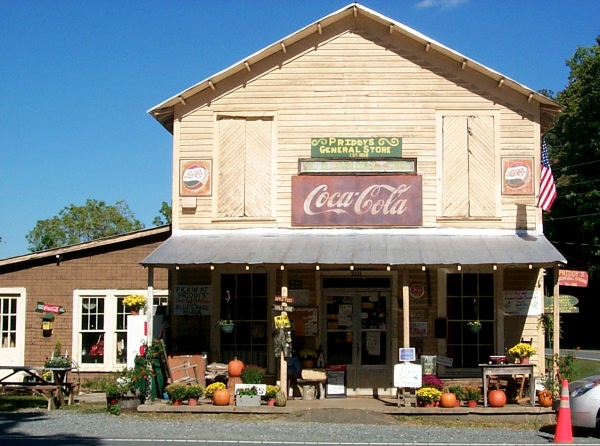
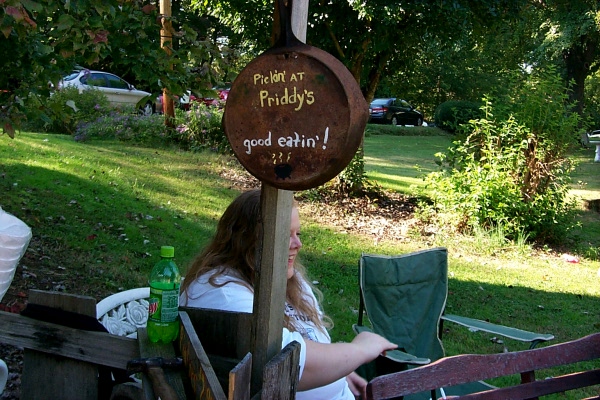
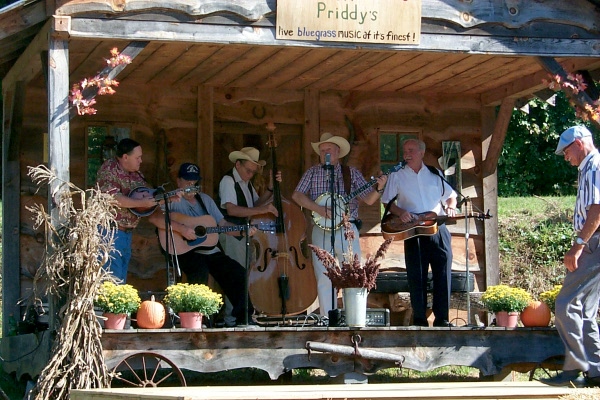
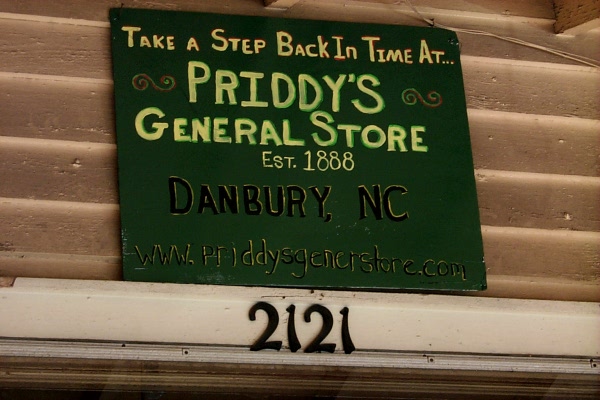
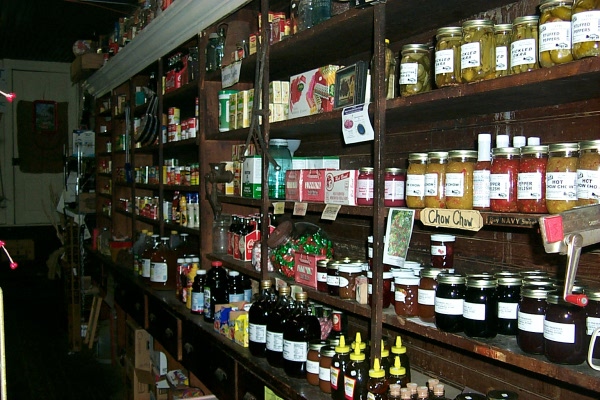
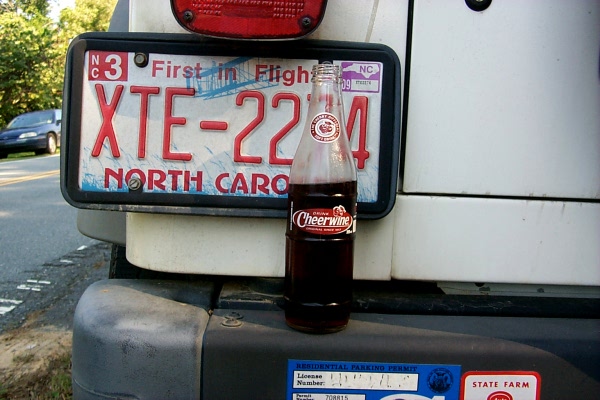
All these photos were taken yesterday. I let the GPS device pick a route from Mama’s house to my place in Stokes. I told the GPS device to pick a route that led past a particular place along the Yadkin River where I’d remembered seeing an old mill 30 years ago, and I told it to stay off the main roads. What a route! I knew some of the roads, but others were completely new to me. This was an amazingly scenic route that just happened to lead past the places where parts of three movies were filmed: Junebug (Pinnacle, Stokes County), Cabin Fever (Priddy’s General Store, Stokes County), and Leatherheads (Donnaha, Yadkin County). This area is rich in agricultural history. More posts on agricultural history another day. It took me along the foot of Pilot Mountain. The route also led past two old Stokes County resorts — Vade Mecum and Moore’s Springs — and it took me past the entrance to Hanging Rock State Park, not to mention downtown Danbury (the Stokes county seat) and Priddy’s General Store, where I stopped to get a Cheerwine and say hello to Jane Priddy-Charleville, who runs the store. It took me past a winery that I was not previously aware of, about which I’ll post another day.

w-m17-02mamas-grapevines.JPG
Mama’s young grapevines

w-m17-03-mill-1.JPG
The mill on the Yadkin

w-m17-04-mill-2.JPG
Machinery in the mill on the Yadkin

w-m17-05-mill-3.JPG
More of the mill on the Yadkin

w-m17-06-mill-4.JPG
Cogwheel at the mill on the Yadkin

w-m17-07-mill-5.JPG
Cadillac in the barn by the mill on the Yadkin

w-m17-08-mill-6.JPG
The hardworking owner of the mill on the Yadkin

w-m17-09-moores-springs-1.JPG
Moore’s Springs, Stokes County

w-m17-10-pilot-mountain-1.JPG
Pilot Mountain

w-m17-11-vade-mecum-1.JPG
Vade Mecum (Stokes County), now a summer camp

w-m17-12-vade-mecum-2.JPG
The road to Vade Mecum

w-m17-13-homestead-1.JPG
A Yadkin Valley homestead

w-m17-14-homestead-2.JPG
Another Yadkin Valley homestead

w-m17-15-dogs-1.JPG
Residents of a Yadkin Valley homestead

w-m17-16-priddys-1.JPG
Security guard at Priddy’s General Store

w-m17-17-priddys-2.JPG
Priddy’s General Store

w-m17-18-priddys-3.JPG
The owner of Priddy’s General Store

w-m17-19-farm-machine-1.JPG
How they did it then

w-m17-20-farm-machine-2.JPG
How they do it now

w-m17-21-farm-machine-3.JPG
How they did it then again

eBooks: Their day has come

wnyt-on-sony.JPG
Today’s New York Times on my Sony Reader

There were several failed attempts to introduce electronic books before Sony finally got some traction with the Sony Reader in 2006. When Amazon introduced the Kindle in 2007, they sold like hotcakes, and Amazon couldn’t keep up with the demand. Only recently did Amazon announce on their web site that they finally have enough Kindles in stock to ship them immediately after purchase.

If you’re buying a eReader today, the Kindle is the way to go. It loads itself wirelessly over the cellular data network, and Amazon pays all the costs of that wireless sync’ing. The Sony Reader, on the other hand, must be connected to a computer to load new books or content.

I have a Sony Reader, but I don’t have a Kindle. The San Francisco Chronicle did have a Kindle, though, and I got to play with it a bit before I left San Francisco. The hardware could use some redesign, but its theory of operation is brilliant.

The Sony Reader at first was dependent upon Sony’s Windows-only application and Sony’s on-line store. Sony’s Windows application is embarrassingly clunky, and the store’s offerings are seriously limited — mostly mass-market stuff.

But a free open-source application has liberated the Sony Reader and given it new life. The application is Libprs500, and it runs on Windows, Macintosh, and Linux. Many sources of eBooks for the Sony Reader, both free and commercial, have sprung up on the Internet, and the Libprs500 application lets you load all that content on the Sony Reader without having to use Sony’s clunky application at all. Because I like science fiction and fantasy, I particularly like the Baen Free Library, which also has books for sale.

wprs500.jpg
Libprs500 running on my Macintosh

One of the nicest features of Libprs500 is its ability to pull down RSS feeds from news sources and automatically format them for the Sony Reader. This makes it practical to read today’s newspapers on the Sony Reader rather than in front of the computer. The list of available feeds is shockingly intelligent (as one might expect with an intelligent open source application). For some of the sources, a password an subscription are required. The New York Times requires a password, even though it’s free.

wprs-news.jpg
The Libprs500 list of news sources

The Stokes County Public Library is poor and has a very limited selection of books. The nearest bookstore is in Winston-Salem, and it’s pathetic (I guess I must not be in San Francisco anymore). I don’t have room to store books anyway. So I’ve dusted off my Sony Reader. When Amazon redesigns the Kindle hardware to correct the mistakes they made in the first version, I wonder if I’ll be able to resist buying one.

The real promise of eBooks is in the very early stages. eBooks drastically lower the cost of self-publishing. I hope book publishers are soon as threatened by technology as record companies are now.

With both the Kindle and the Sony Reader, with any of the available software, you can make your own books with text from any source. Go to Project Gutenberg, of course, for the classics, which are now in the public domain.

whunchback.JPG
I made my own copy of “The Hunchback of Notre Dame” using the French text from Project Gutenberg

Spring

millay.jpg
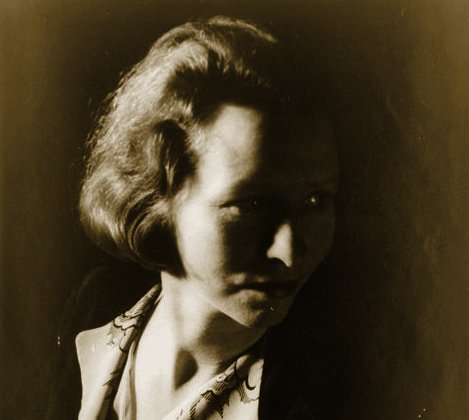
Edna St. Vincent Millay, 1914. Photo by Arnold Genthe

It’s a ritual of mine to send out this poem every year using whatever communications system is close at hand. It used to be newspaper Atex or SII systems. Then it was email. This year it’s the blog…

The Goose-Girl

Spring rides no horses down the hill,
But comes on foot, a goose-girl still.
And all the loveliest things there be
Come simply, so, it seems to me.
If ever I said, in grief or pride,
I tired of honest things, I lied:
And should be cursed forevermore
With Love in laces, like a whore,
And neighbours cold, and friends unsteady,
And Spring on horseback, like a lady!

— Edna St. Vincent Millay

Creecy greens (and roadside produce stands)

creecies-w.jpg
A mess of creecy greens, probably from South Carolina

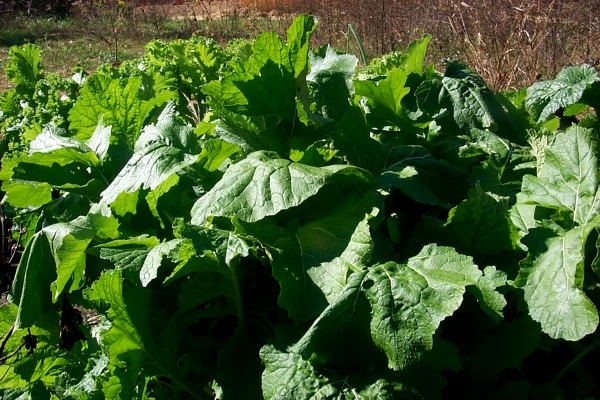
Creecy greens have a long history in America. They grew wild, and they appeared in late winter, often when there was still snow on the ground. My dad, who grew up in the Blue Ridge Mountains, used to say that after a long winter the mountain people developed a strong hunger for something fresh and green. So when the first creecies appeared, they were a feast.
Around here creecy greens can be bought this time of year from roadside markets. I bought these from a roadside produce stand on U.S. 601 near Mocksville. They were relatively pricey — $1.29 a pound. For comparison, cabbage was 39 cents a pound at the same market. The woman who runs the produce stand said she thinks the creecies came from South Carolina. Creecy greens are of the order brassicales, so they are related to cabbage and mustard.

cabbage-w.jpg
Wintered-over cabbage, 39 cents a pound

Speaking of cabbage, the mountains just to the north of here are cabbage country. Carroll County, Virginia, long known for its cabbage, is diversifying into broccoli as well. I have not yet had a chance to try Carroll County broccoli. Though I have had excellent cabbage in California, there is a tendency in California for cabbage to be pale and fluffy. Proper cabbage should have dark green outer leaves, and it should be as dense and hard as a piece of marble (attention, San Francisco Chronicle food department: you need to do a piece on the dignity, selection, and use of cabbage).

There is only one device I’ve ever seen that chops cabbage quickly and easily for coleslaw, and I’ve tried everything, from blenders to food processors to chopping knives to mandolins. The device is the Wear-Ever salad maker. We had one when I was young. Last month my sister found one in the Goodwill Store at Mocksville, and she was kind enough to let me buy it (I think she wanted it, too). It makes fine slaw, fast, without making a mess and without a lot of waste. It’s a very handy thing to have, because the winter diet here calls for cabbage in some form almost every day.

wear-ever-w.jpg
A Wear-Ever salad maker. They were made in Oakland, California, in the 1950s and 1960s, and maybe earlier for all I know. You might be able to find one on eBay.

The 50-mile rule for local eating is a nice goal (and it might even be possible in a lot of places at some times of year), but for many Americans it’s not workable. I propose as an alternative the 50-year rule: if people in the same place had it 50 years ago, it probably makes economic sense to have it now. I’m no expert on the history of this, but having lived in these parts 50 years ago, it’s clear that the winter foods that were available then are the cheapest and best winter foods available now. This includes Florida oranges, cabbage (from Virginia?), pintos beans (South Carolina? Georgia? Texas?), onions, and potatoes. Fifty years ago, of course, was before the Interstate highway system. I suspect much of this produce came up U.S. Route 1 and went onward to New York and New England. Locally, it probably came by U.S. 601, which is a spur of U.S. Route 1.

Update, 5:50 p.m.:

The finished winter supper: creecy greens with a sweet-and-sour treatment (vinegar, olive oil, and a touch of turbinado sugar); warmed-over pinto beans (with sliced onion); fresh hot flaxseed pone; and salmon cakes. The salmon cakes certainly violate the 50-mile rule, but they don’t violate the 50-year rule. My mother used to make salmon cakes fairly often from canned salmon. This was a premium brand of wild red sockeye salmon from Whole Foods in a 7.5 ounce can. If you’re shipping food from Alaska, canned is the cheapest, which probably means it takes less energy than fresh or frozen salmon. And I admit it. I like fish burgers. This is a low-carb, high-protein, healthy country supper.

supper-w.jpg
Creecy greens, pinto beans, flaxseed pone, and salmon cakes from wild sockeye salmon

Beatrix Potter — conservationist

lake_district_near_torver.jpg
A farm in England’s Lake District

If you haven’t seen the 2006 film “Miss Potter,” I highly recommend it. The film is historically accurate in reminding us that Beatrix Potter was a conservationist. As a child she spent summers in England’s Lake District, and after she became rich and famous she bought a farm there. She was deeply concerned because developers were buying up small farms for vacation homes, and she used her wealth to buy and preserve these places. When she died she left over 4,000 acres to a trust, and that trust is now part of a national park.

Delicious in Danbury?

danbury-bakery.jpg
Winston-Salem Journal

The Winston-Salem Journal has a featurette this morning on Artist’s Way bakery and cafe in Danbury.

My vote for the best eats in Danbury, though, would have gone to the cafe across the street that had amazing hot dogs. Unfortunately that place has closed. In my opinion, Artist’s Way tries just a little too hard to be fancy. But it’s always good to see local entrepreneurs doing well.