A photo a day, #8


Click here for high-resolution version.

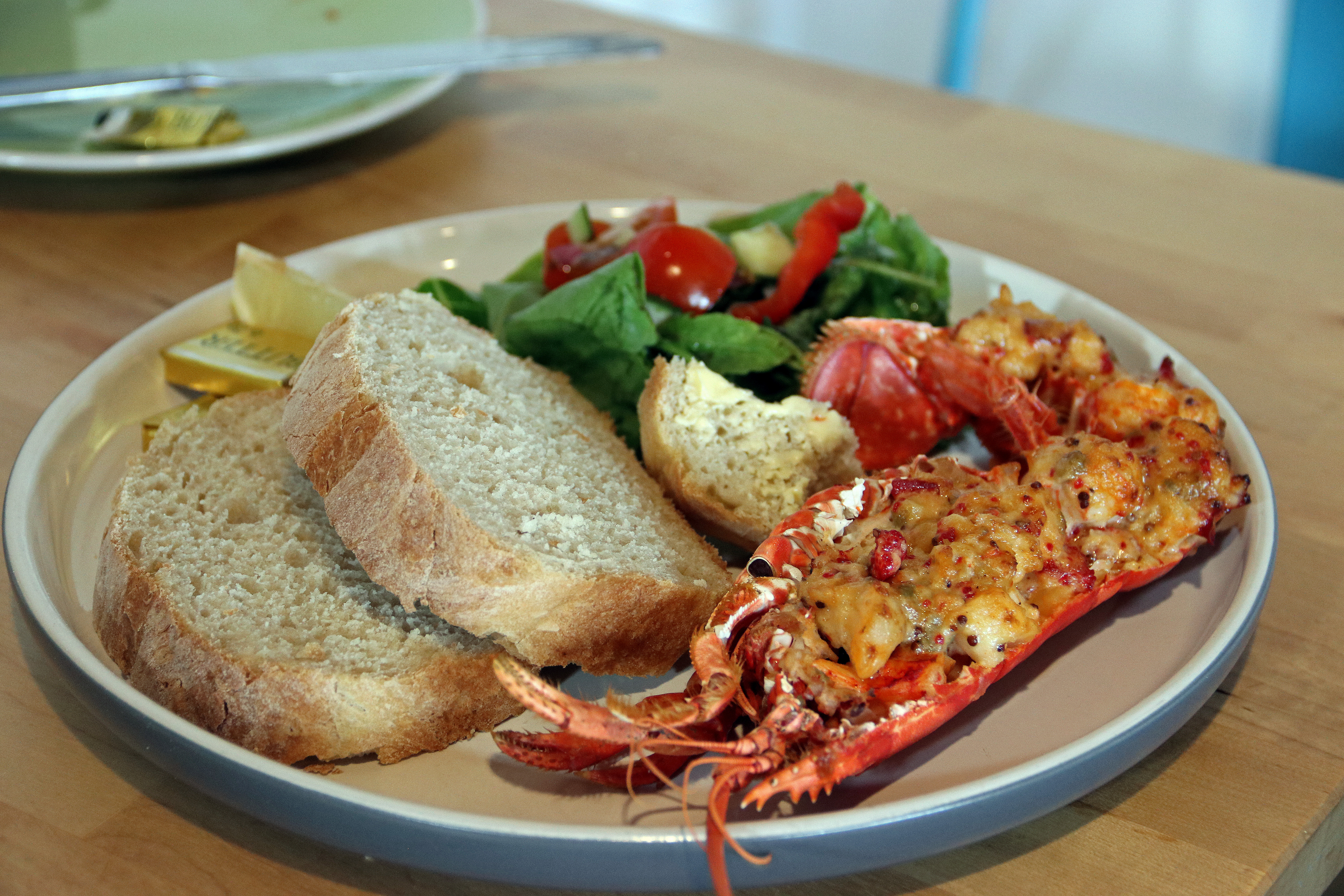
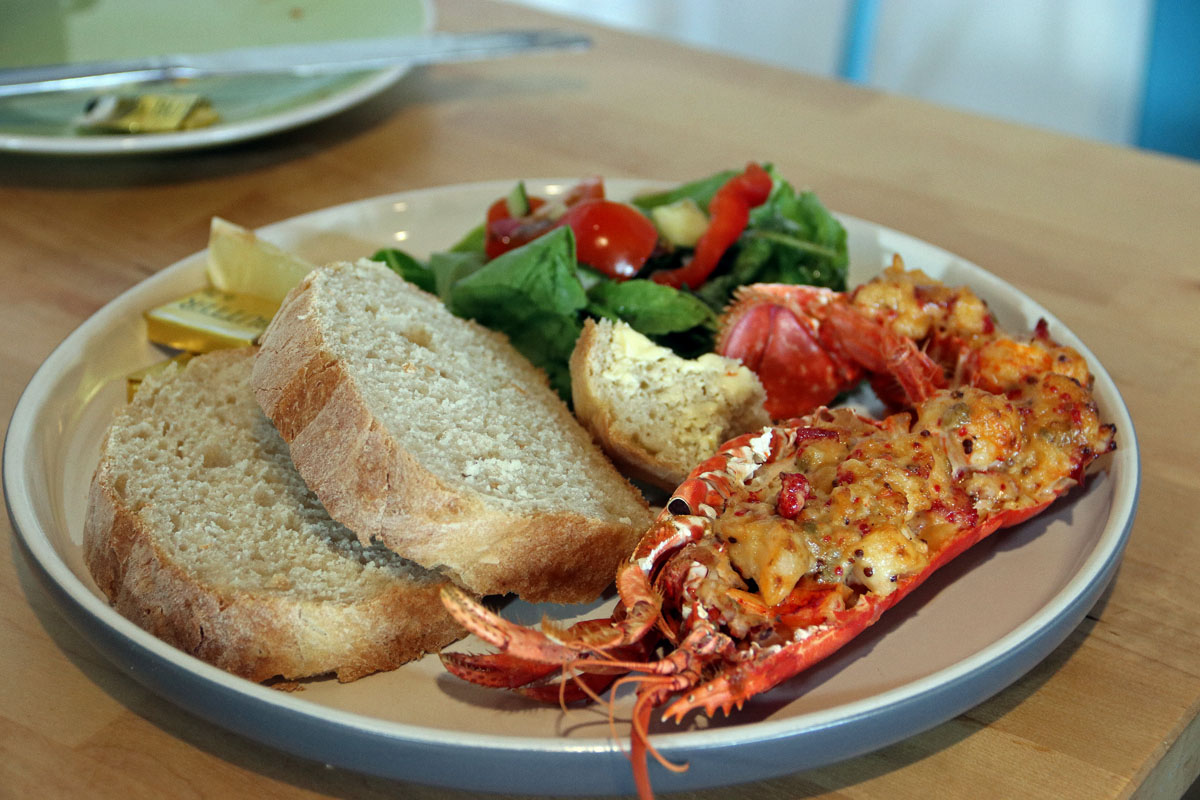
Tourism is the cornerstone of the Scottish economy and accounts for something like 10 percent of Scotland’s jobs. Without tourism, rural areas of Scotland would surely be poor. The tourism industry in Scotland seems well aware of the importance of food in making tourists happy. Odds are that, as long as you aren’t too far off the beaten path and can find a restaurant, it will be a good one. The irony, though, is that traditional Scottish fare is hard to find. Instead, most restaurants serve what I call international Mediterranean tourist cuisine. The breads are superb and are usually baked by the restaurant that serves it. The seafood is extraordinary and locally sourced. Menus will often tell you the names of the local fishermen who supply the different types of seafood. The ales, not to mention the whisky, may be local, too.

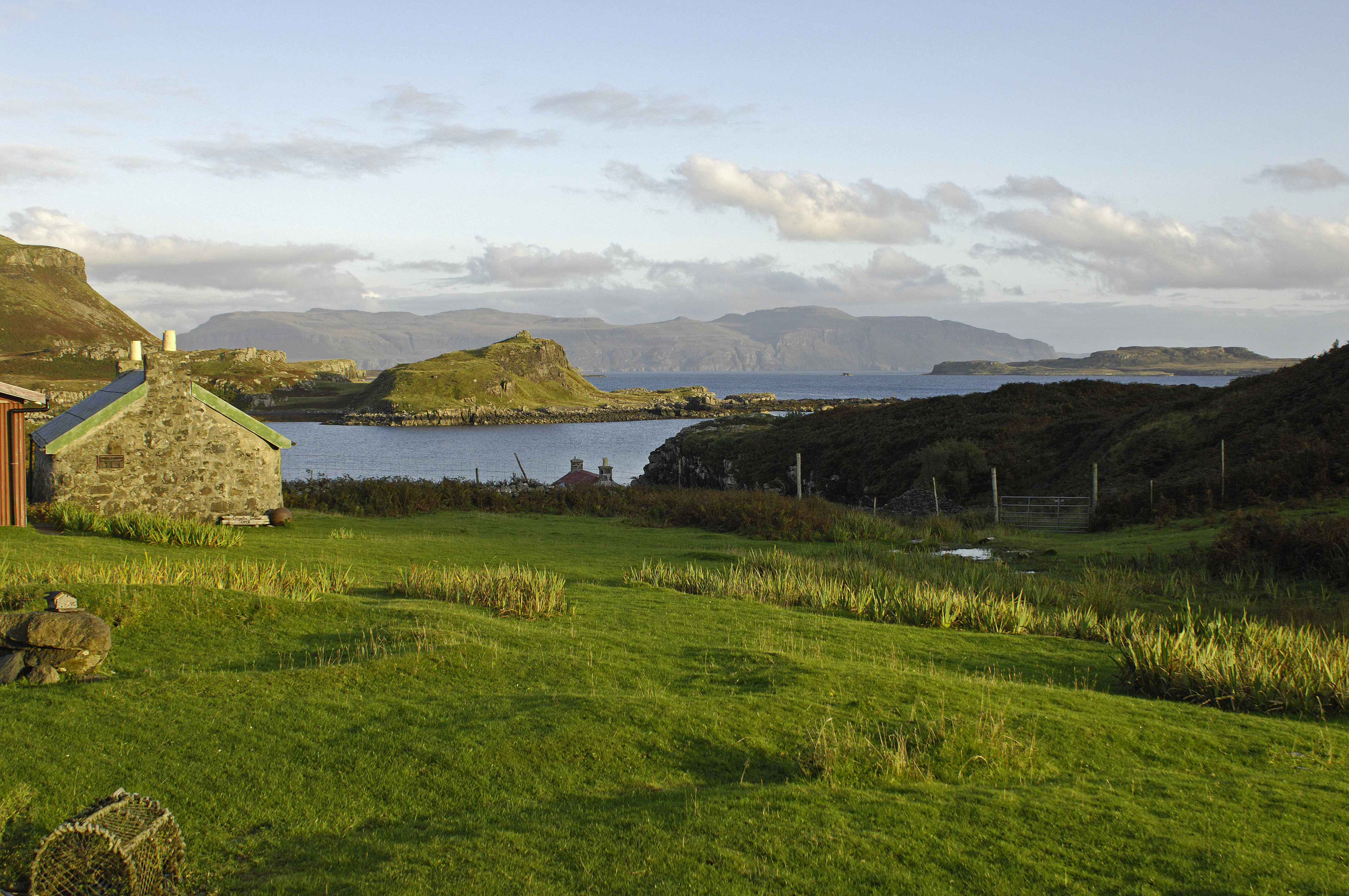
Above is Lobster Thermidor at the Boat House restaurant on the isle of Ulva. The isle of Ulva is off the beaten path (the ferry that gets you to the island is a small motorboat). And yet the Boat House served some of the best — and the most reasonably priced — food that we had. Most visitors to Ulva come over on the ferry, go for a short walk, have lunch, and return to Mull.

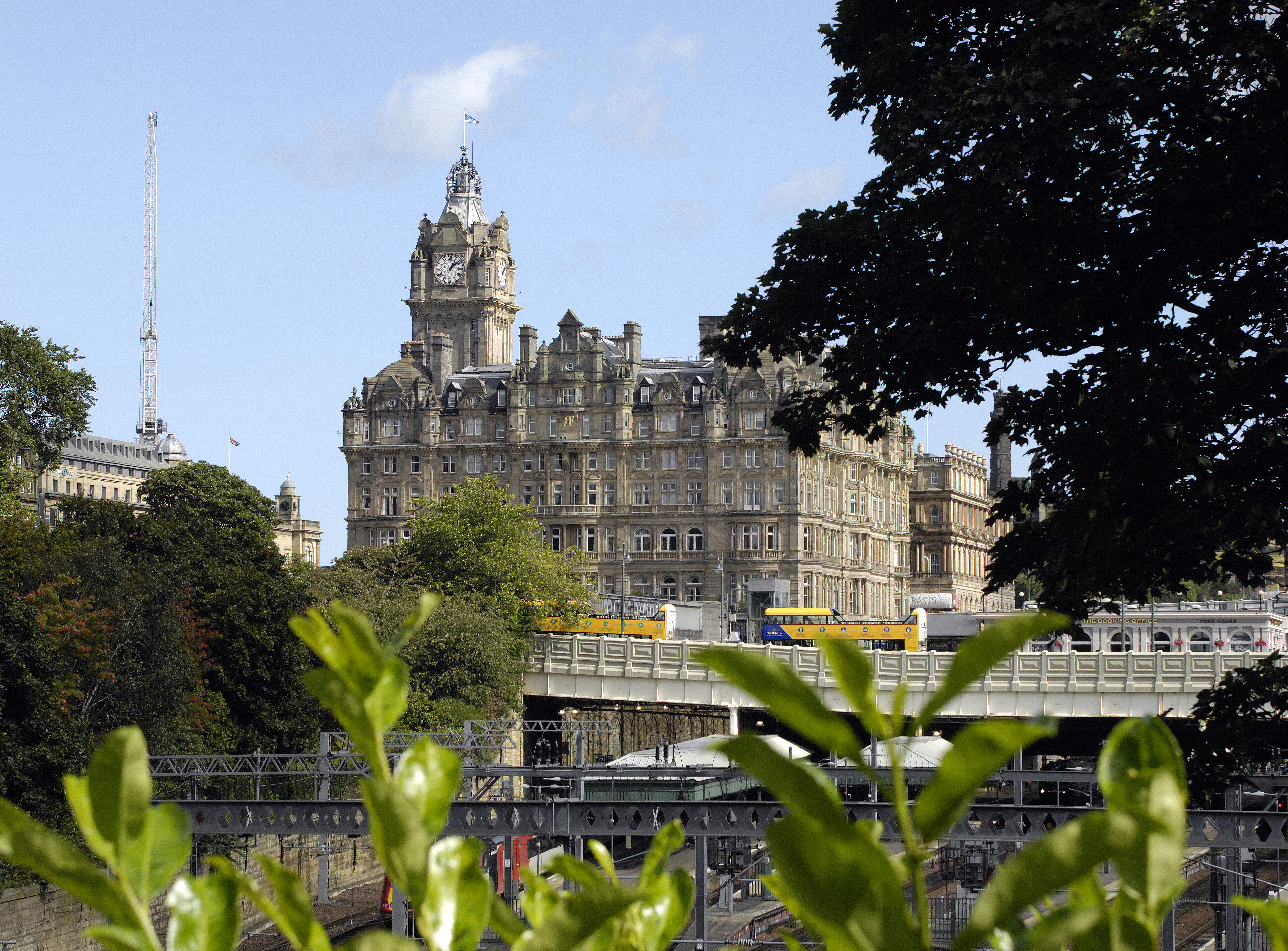
The downside of food in Scotland is that the grocery stores — even in Edinburgh — are not very good. You’ll find plenty of good bacon, but the produce leaves much to be desired, both in quality and variety. So that’s an economic niche just begging to be filled in Scotland — small farms growing good produce. In a restaurant garden on the isle of Iona, I saw some of the most beautiful celery I’ve seen. Such celery would make a fine export.

A photo a day, #3


Click here for high-resolution version.

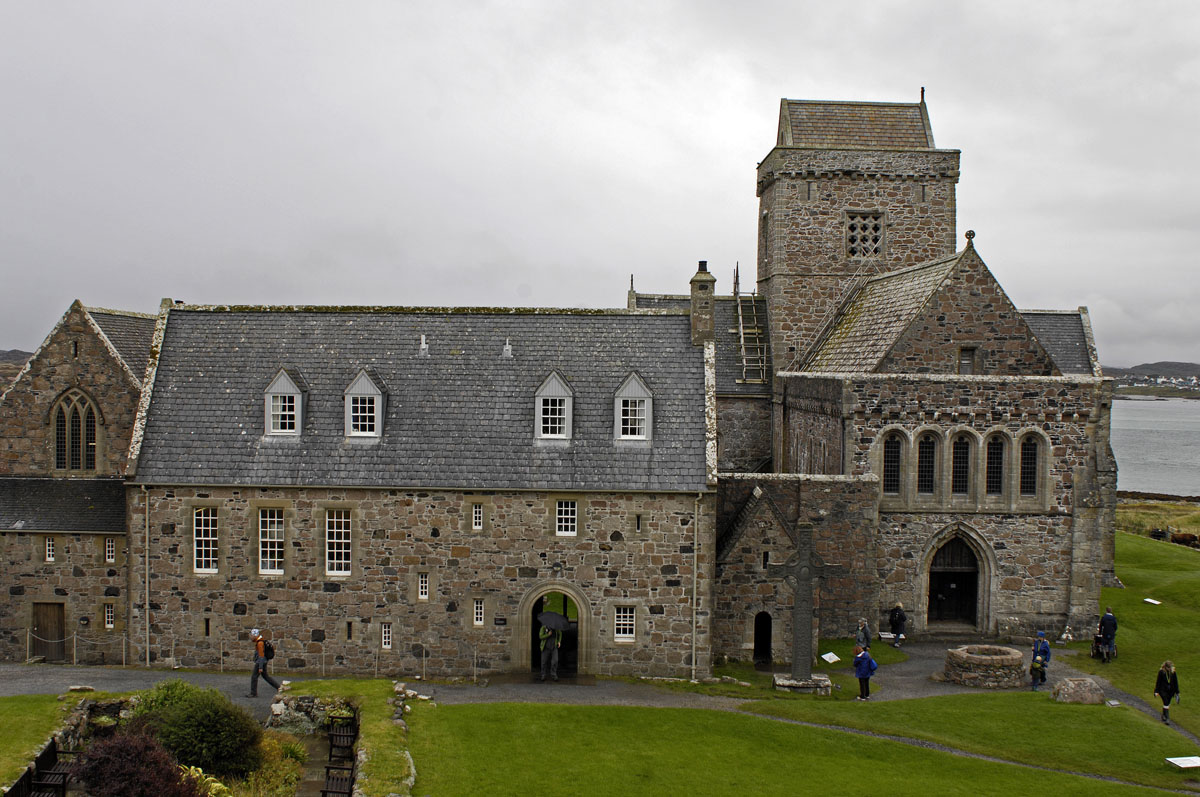
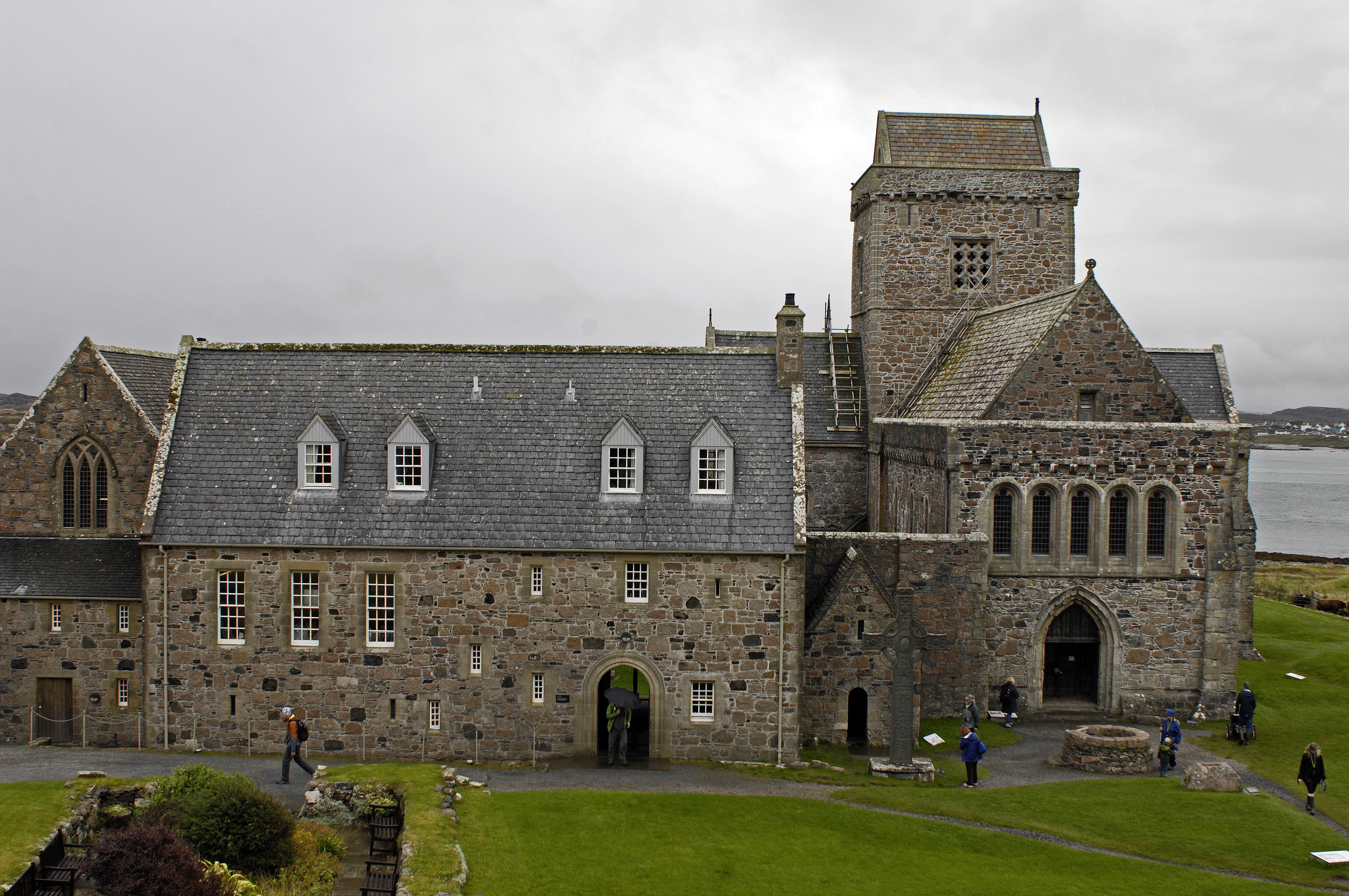
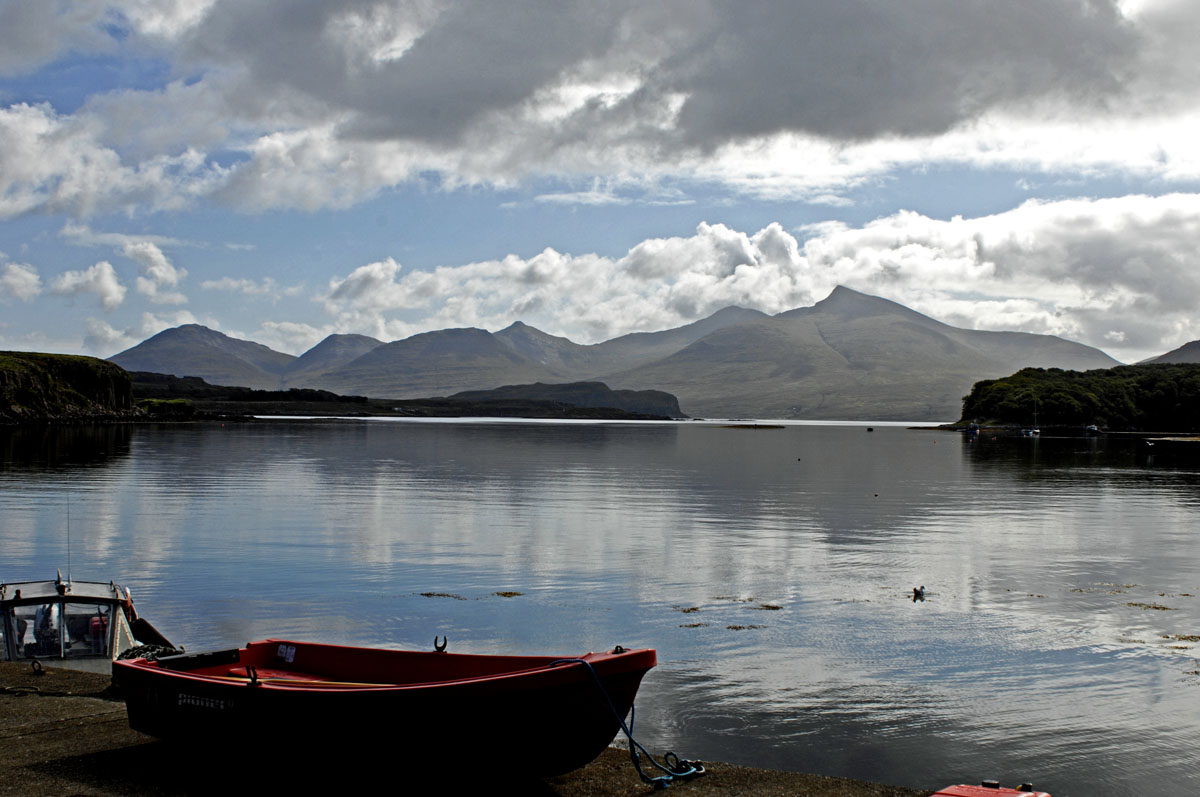
The abbey on Iona is a heavily visited tourist destination. It was, easily, the least interesting place on the four Scottish islands that Ken and I visited — Mull, Ulva, Gometra, and Iona. The isle of Iona itself, though small, is fertile and beautiful. But, to me, the abbey is just another outpost of the ugly Roman religion, which as it metastasized over the centuries destroyed superior cultures on earth as effectively and mercilessly as a mile-wide asteroid.

The abbey on Iona was founded by Saint Columba, who was from Ireland, in 563. Some archeological remnants of the early settlement remain, but the current building dates from the 13th Century. The building has been heavily restored and is now packed with tourists, many of whom seem to consider visiting Iona a kind of New Age pilgrimage. I always get a bad vibe from evangelicals. I felt that bad vibe very strongly on Iona, particularly inside the church, which has a loft fitted out with all the electronics that is used these days for “praise” music in evangelical churches. It’s an odd mixture — such an old church with such hip (and probably made in America) music. But they’re definitely raking in the dough, just as Saint Columba did by catering to rich clan chieftains.

According to Wikipedia, Saint Columba was the great-great grandson of Niall of the Nine Hostages, the 5th Century Irish king who is said to have brought Patrick to Ireland. Though King Niall, technically, is prehistoric, there is all sorts of evidence, including genetic evidence, that he was a real person and that he left a great many descendants. In fact, DNA testing shows that I have the genetic marker of Niall’s descendants (the marker is common in Ireland, especially in the north). However, if I am descended from Niall, the greater-by-far odds are that I’m of bastard descent, whereas Columba was legitimate. Though the interpretation of the Y-chromosome marker for Niall’s descendants has been questioned, nevertheless I interpret the DNA evidence as a pretty reliable indicator that my own pagan ancestors were in Ireland during the 5th Century. Thus my own ancestors were caught up in the Christianization of Ireland and Scotland. For that reason, I take rather personally what I see as genocide — the Christian destruction of pagan cultures. To me, the saints Patrick and Columba represent an enduring shame, as those of us who live in Christianized cultures continue the work of throwing the Roman religion off our backs — its crummy texts, its infantile (and borrowed) stories, and its ossified and primitive notions about ethics, morality, and epistemology, which in spite of the Enlightenment still exert their 13th-Century influence, poisoning our politics and ruining the minds it touches.

I apologize for the rant. But I hated the abbey on Iona, and I grieve for what the place stands for.

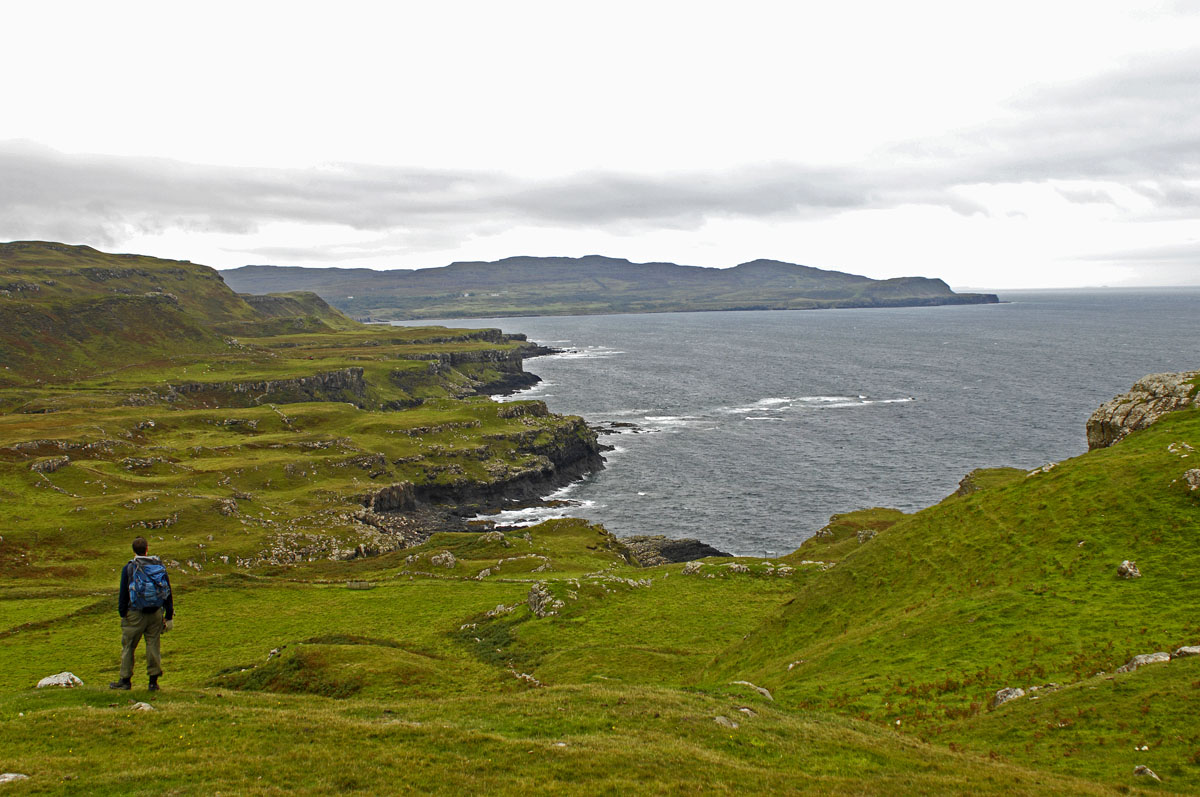
For now, a photo a day


Click here for high-resolution version.

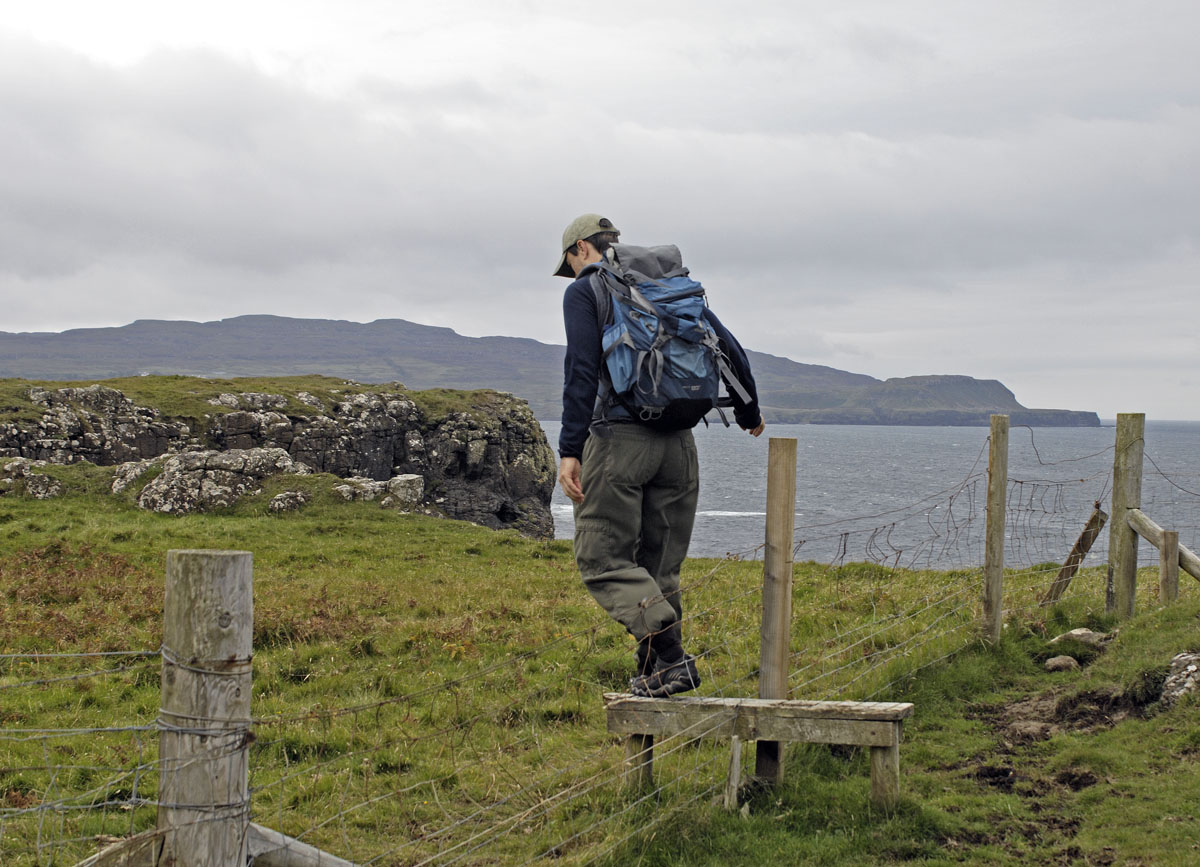
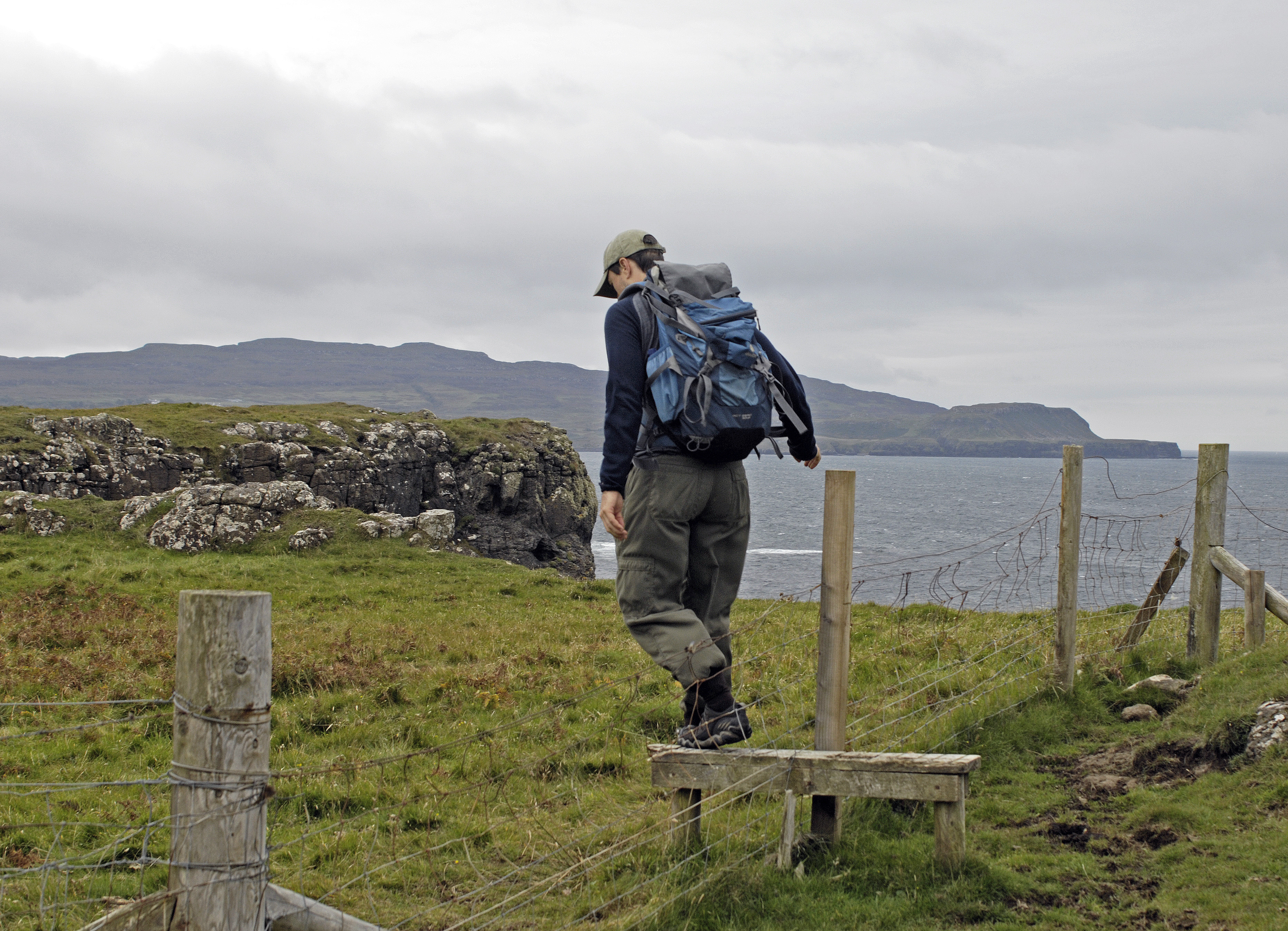
In a few days, I’ll have lots of Scotland photos and a long post. Sorting and prepping the photos is going to take some time. Plus, Ken took lots of photos as well, and I will include some of Ken’s photos in a future post. For now, I’ll try to put up a photo each day. Above, Ken, my indefatigable hiking companion, crosses a stile near Calgary on the isle of Mull. We saw lots of stiles — from very simple ones to complex works of functional art — and photographed them all.

New from Acorn Abbey Books


Ken’s three very popular books are published by New York publishers. However, Acorn Abbey Books, as a small-press “indie” imprint, is honored to release one of Ken’s short books in paperback format. That’s The McCandless Mecca: A Pilgrimage to the Magic Bus of the Stampede Trail. It’s priced at only $6.99, and you can buy it at Amazon.

This book has been available in Kindle format since 2013. The paperback edition, and the Kindle edition, have been revised to include a new afterword. The book also now includes 18 photos.

For the record, Ken’s other books are Walden on Wheels: On The Open Road from Debt to Freedom, Trespassing Across America: One Man’s Epic, Never-Done-Before (and Sort of Illegal) Hike Across the Heartland, and This Land Is Our Land: How We Lost the Right to Roam and How to Take It Back.