The elusive okra bloom


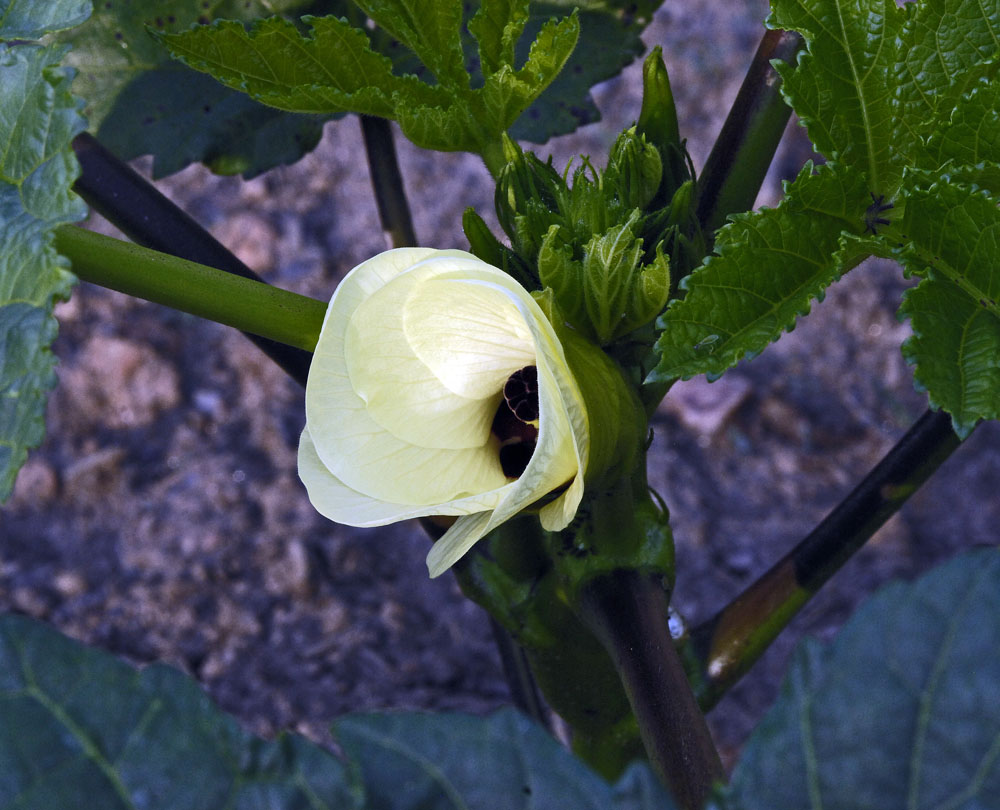
An okra flower. Click here for high-resolution version.

I have been trying to get a photo of a fully open okra flower, but I still have not succeeded. Okra is a relative of hibiscus, and its flowers are much like hibiscus flowers. The photo above, of a not-yet-fully-open flower, was taken at 9 a.m. two days ago. At 8 p.m. the same day, I returned with the camera expecting to see a fully open flower. Instead, the flower already had wilted. I’ll keep trying. Okra flowers, I think, are the most beautiful flower in the vegetable garden.

I’m also doing my best to understand the morphology of how the okra flower relates to the okra seed pod (which is the edible part). That, too, is going to require more observation.

A note on flower photography: A tripod is almost always necessary, otherwise blurring occurs when maximum sharpness is needed. Wind is often a problem and also can cause blurring, because narrow apertures (and therefore longer exposures) are often necessary to manage depth of field. I usually shoot flower photos at different aperture settings, then determine in Photoshop which aperture setting worked best. The idea is to get the objects of interest sharply in focus, while blurring secondary objects that are closer to, or farther away from, the camera.


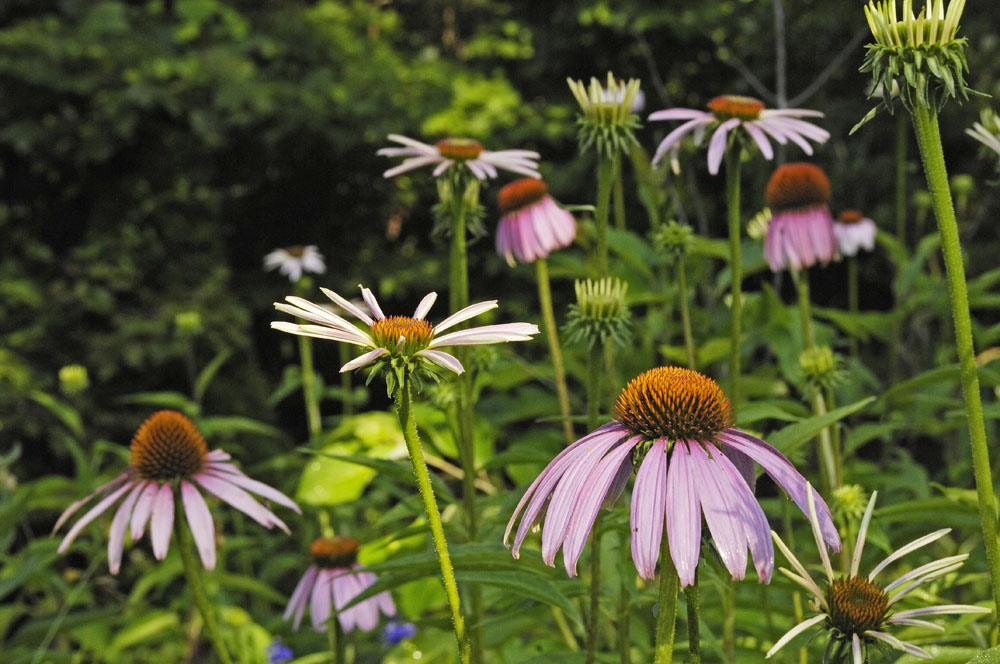
Blooming elsewhere at the abbey. Click here for high-resolution version.

Two theories of gardening


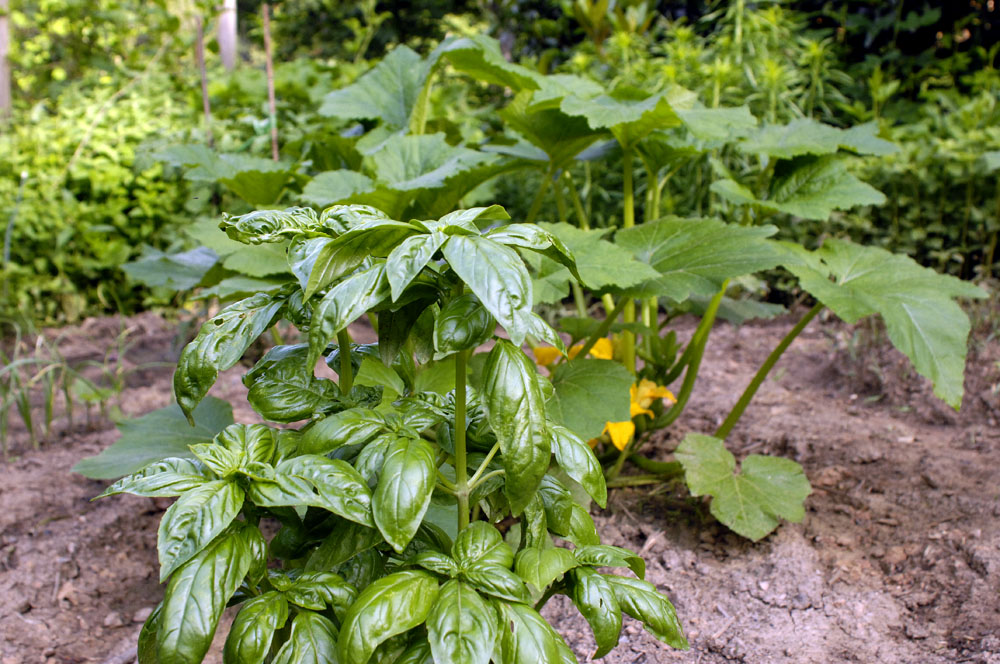
A thriving squash plant, with lots of room and some pampering. Notice how dry the soil is.

I’ve already learned a lot from my experiments with this year’s garden. As I’ve mentioned in other posts, my plan this year was to plant sparsely, leaving plenty of space between things for cultivating and for weed control. This type of gardening also is water-frugal.

One of my favorite gardening books is Gardening When It Counts: Growing Food in Hard Times, by Steve Solomon. This sparse, water-frugal type of gardening is what he recommends when life depends on your garden. I believe I am sold.

That’s not to say that a hard-working gardener with irrigation cannot pack a garden densely and get great yields. But I’m not a hard-working gardener, and this year I resolved to not do any irrigation.

May was a wet month with 8.69 inches of rainfall. June has been dry, with only 1.29 inches of rain in the last 17 days. Gardens really ought to have an inch of rain or more per week. So we are on the dry side. But, so far, nothing in the garden is showing signs of water stress. Weed control has been easier now that the weather is dryer. The plants, with little competition from weeds and from other plants, seem to be pulling enough water from deeper in the soil without any problem. My yields have been terrific. And insect pests, so far, have not been a problem.

I think I’m also realizing that a productive garden is not just about soil and water. It’s also about sun. No plant can make a lot of vegetables without a lot of leaves and a lot of sun to do the metabolism. So sparse gardening also gives plants plenty of room to spread their leaves and get their sun. Soil, sun, and water: the sparse-garden theory is all about not forcing plants to compete with other plants for what they need. That makes sense to me.

The eve of self-destruction


Stephen Miller, Donald Trump, Paige Patterson, Paul Presslar

Slogging through the news each morning (and afternoon, and evening) is increasingly dangerous to the mental health of rational, morally sane people. Yet I hold my nose and continue to do it. Whether we acknowledge it or not, Americans really are living through a Manichaean period of good versus evil. How this all turns out probably will be the most important inflection point in American history.

Part of what nauseates me is the sheer ugliness and depravity of the people we now have to read about each day in the news. In a post eleven months ago, I floated the idea that conservatism is not just a way of seeing the world, but that conservatism is inherently pathological and is a symptom of moral defect. The farther to the right one goes, the greater the pathology and the greater the defect.

Why do so many morally defective people crave power? Some attain it; most don’t. Why is it that the ever-present flip side of a craving for power is a craving to be submissive to “authority”? Why do morally defective people who are unable to attain power lust to submit to a morally defective big man who will act out their defectiveness for them? When morally defective men do attain power, why do they fail to grasp that power brings scrutiny and resistance, and that scrutiny and resistance will eventually expose their secret crimes, their foibles, and their evil? Why do they fail to grasp that they will never acquire the absolute power and the absolute truth-control that they crave and that eventually they will be exposed and brought down? What is is about morally defective men that causes them to cloak themselves in religion? Why are religious people so easily duped by, and led by, morally defective men? The obvious answer is that these things are just the inherent nature of authoritarian moral defectiveness, which always gets entangled in dominance and dogma.

Some of these thoughts were amplified this morning when I came across a piece in The Atlantic with the headline “Southern Baptists Call Off the Culture War.” I hope that is true, because Southern Baptists have been — I will not mince words, and I must resort to Manichaean language — a powerful force for evil for decades. The Atlantic piece sets the date for when this evil began, and it names two of the evil men who launched it:

“In 1967, at New Orleans’s historic Café du Monde, a young seminary student named Paige Patterson and Texas Judge Paul Pressler met over a plate of beignets to hatch a plan to unite conservative Southern Baptists and take over America’s largest Protestant denomination.

“The two men successfully executed their strategy in the subsequent decades, a movement they labeled the ‘Conservative Resurgence’ and their opponents dubbed the ‘Fundamentalist Takeover.’ Whatever one calls it, the result was a purging of moderates from among denominational ranks, the codifying of literal interpretations of the Bible, and the transformation of the Southern Baptist Convention into a powerful ally of the Republican Party.”

The exposure and the bringing-down took decades, but eventually even Southern Baptists — people of little intellectual or moral achievement — managed it, probably after women and people of color asserted themselves against the old white men. Paige Patterson was recently ruined and disempowered for covering up rape and abuse, among other things. Paul Presslar is in a heap of trouble, accused of molesting children and raping boys. None of this would have gone on for so long if so many people had not looked the other way. As with Catholicism in Ireland, a country that was once so priest-ridden, and where nuns once trafficked in children and pregnant young women, a reckoning and rethinking may be beginning, even among slow-on-the-uptake white people in the American South. I cannot let up on hammering those people who think that the church and its God-besotted people can do no wrong. Religion attracts, and provides cover for, the wicked. The wicked and their enablers are entirely capable of destroying the American democracy while believing that God put these big men here to save us.

I’d have a question for Southern Baptists, who, according to The Atlantic piece, are trying to reconstitute themselves in a better way. That question is: Why were you (as with Trump) unable to see what those men are? It was right under your God-besotted noses for years.

The story about Presslar in the Houston Chronicle contains a quote from a Baptist preacher from around 1978 that is very telling. The reference to high school students seems to have to do with Presslar’s pursuit of boys:

“Are you going to minister to 250 high-school students or 13 million Southern Baptists?”

Reports are that some evangelicals are losing their enthusiasm for Donald Trump. Every little shred of decency helps. Maybe that decency could even grow, with fewer evil men to feed moral defectiveness.

Stephen Miller, by the way, is the moral monster who apparently talked Trump into putting little brown-skinned children into concentration camps. Miller’s destruction will be particularly satisfying to watch.

Between 35 and 40 percent of the people in this country remain in a state of depravity and delusion, cheering the deeds of morally depraved men. Partly because of this army of losers’ steady diet of propaganda — not to mention their need for scapegoats — they still don’t see what Donald Trump is, and they still don’t see what is going to happen. Their propaganda system is potent enough not only to make millions of people believe that Donald Trump was “sent by God.” It’s also potent enough, thanks partly to racism, to demonize, and to blame the bad stuff on, honorable men like Barack Obama. Still need scapegoats? Try billionaires and oligarchs instead of little brown-skinned children.

As for what is going to happen, Donald Trump (and many members of his criminal syndicate) are going to prison (some have already gone) for corruption and treason. The danger — and this is why I can’t turn away from the news — is in how much damage they will do before they are exposed and brought to justice. As for Trump’s God-besotted enablers, it’s up to us to rub their God-besotted noses in the consequences of their moral defects.

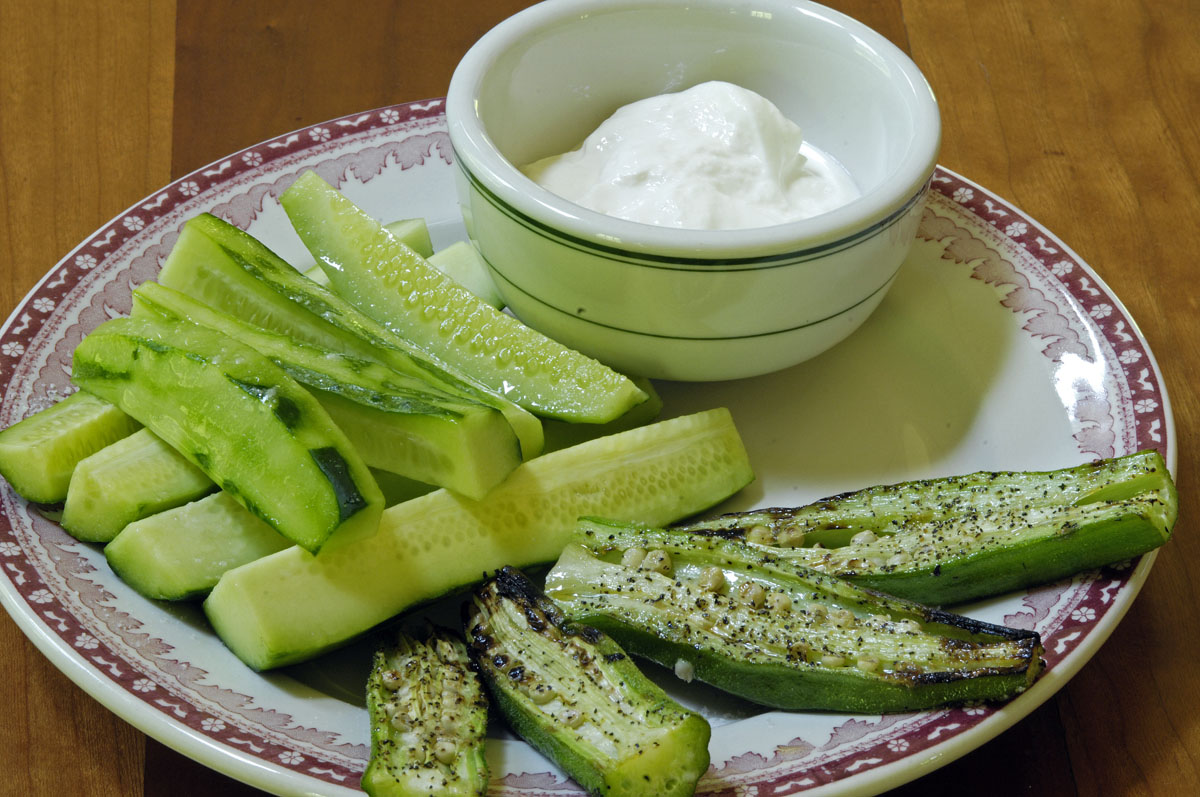
Roasted okra


Okra roasts beautifully. The seeds are tender, but with a slight crunch. They’re a bit like fresh corn kernels, or fresh peas. If seared and not overcooked, I think okra would be great in curries. I also want to experiment with using okra as a thickener in sauces for stir-fries, avoiding the dreaded cornstarch.

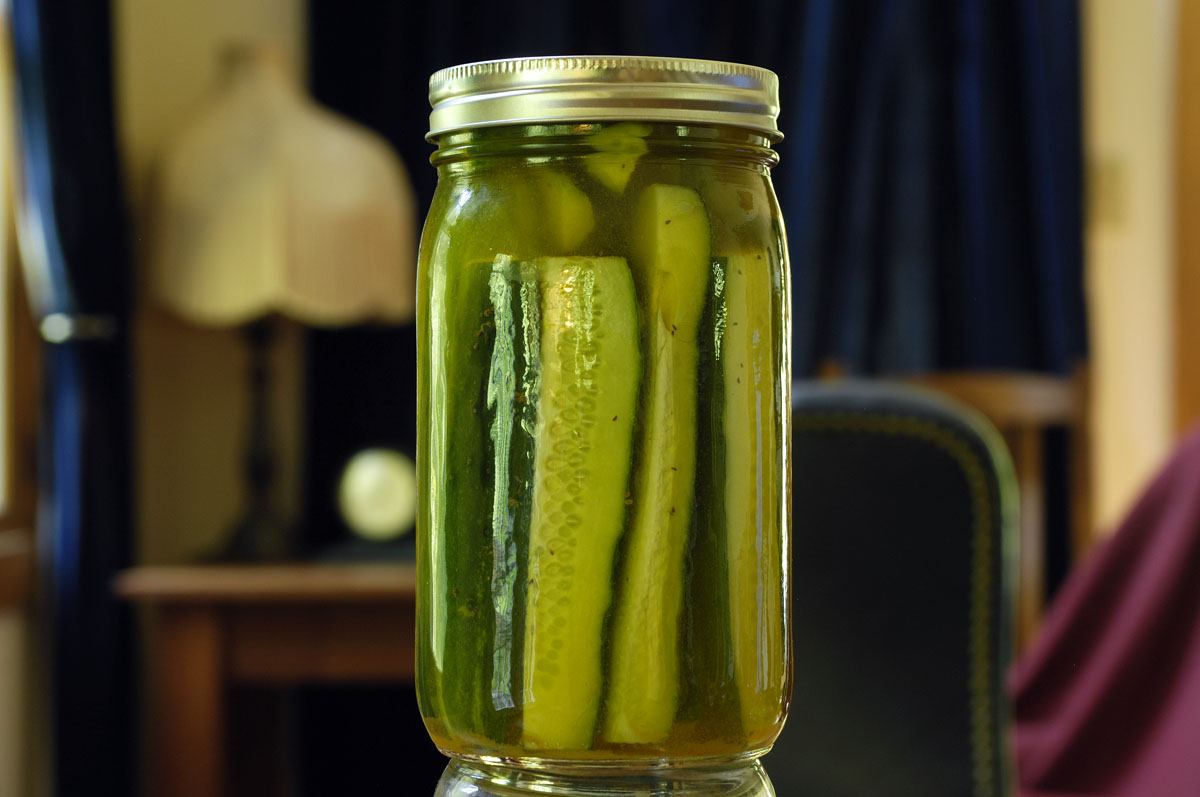
Refrigerator pickles


It takes 10 minutes or less to make a quart of refrigerator pickles — just long enough to heat some vinegar and sugar, throw in some spices, and pack the jar. Three days’ worth of cucumbers from four flourishing cucumber vines yielded enough surplus cucumbers for two quarts of refrigerator pickles.

If you Google, you’ll find plenty of recipes for refrigerator pickles. It’s an easy way of preserving cucumbers that are meant to be eaten within the next couple of weeks.

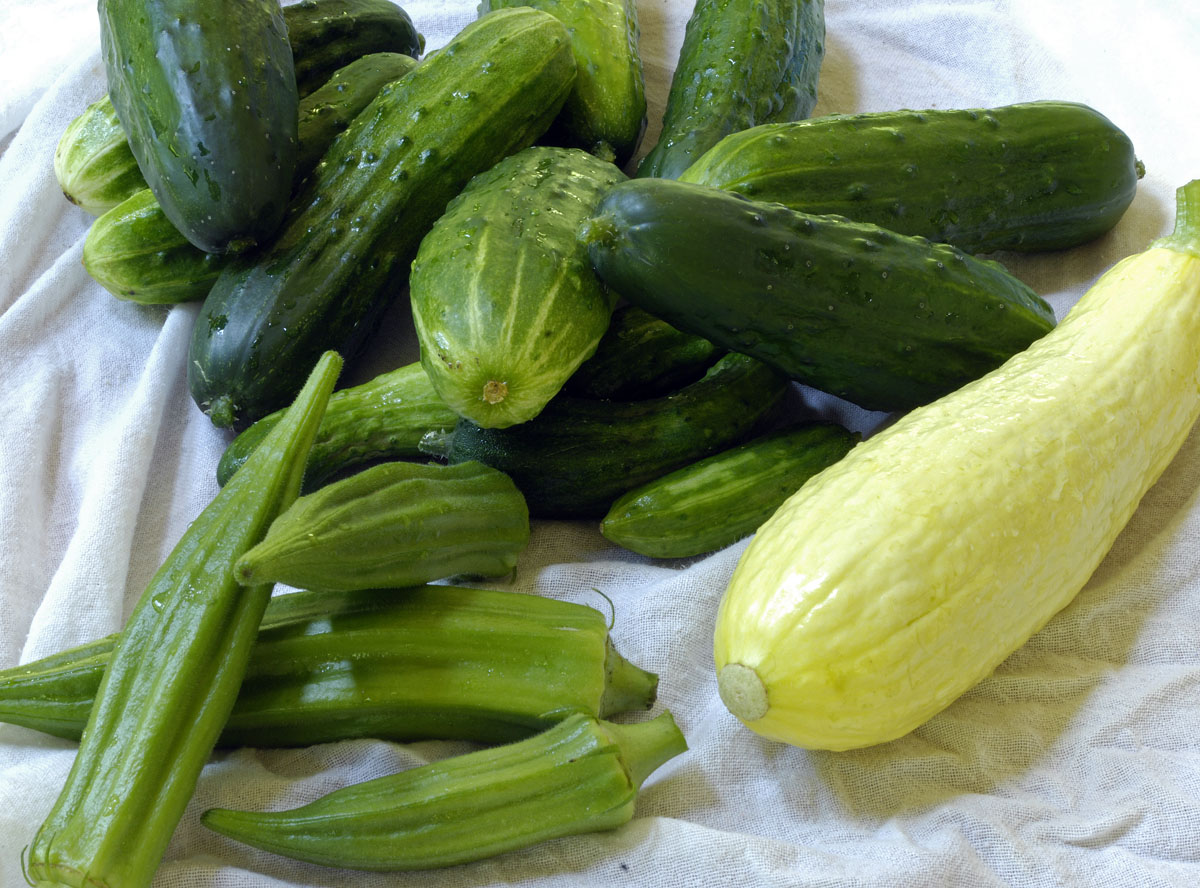
I cut the first okra this morning. The squash are just getting started.

The squash kicks in


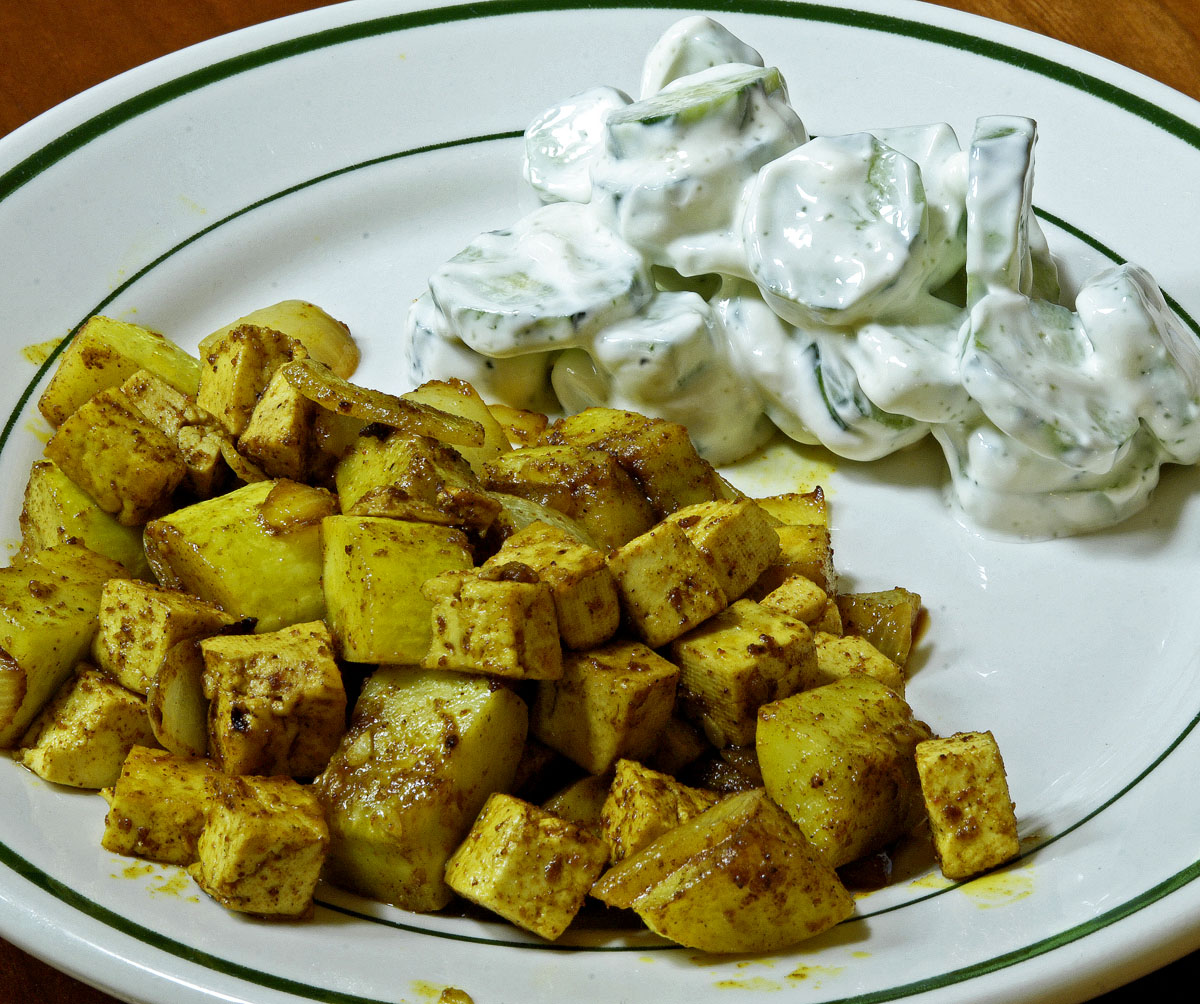
Squash-tofu curry, cucumbers in sour cream

I picked the first yellow squash today. I already had decided that it would go into a squash-tofu curry.

The abbey’s cucumber plants are climbing high and producing excellently. Unless one has enough cucumbers to pickle, cucumbers have to be eaten fresh every day. I decided on cucumbers in sour cream. That’s a Polish dish, I believe — cucumbers dressed with sour cream, a bit of vinegar, a bit of sweetener, and salt. But the concept is the same as an Indian cucumber raita. It’s a cooling dish, and so it’s a nice contrast with a spicy curry. Sour cream or yoghurt — let your conscience be your guide.

When the garden is making lots of cucumbers, I like to stay one day behind. Today’s cucumbers get washed, wrapped in moist muslin, and stashed in the fridge. Tomorrow, they’ll be nice and chilled and ready to eat. Garden cucumbers are like garden tomatoes. It’s impossible to have too many.

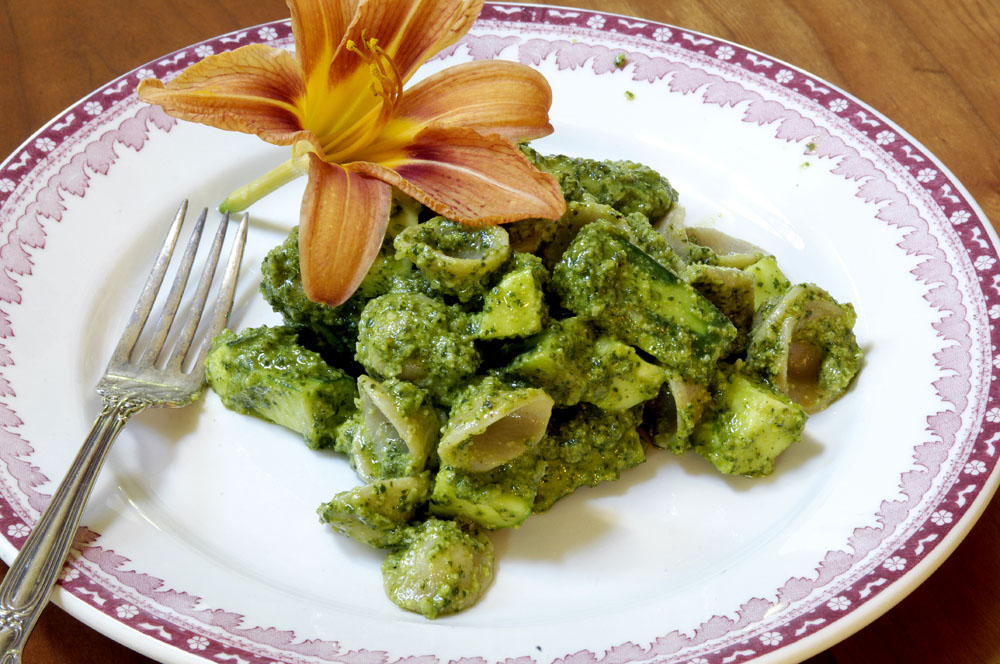
First pesto of the season


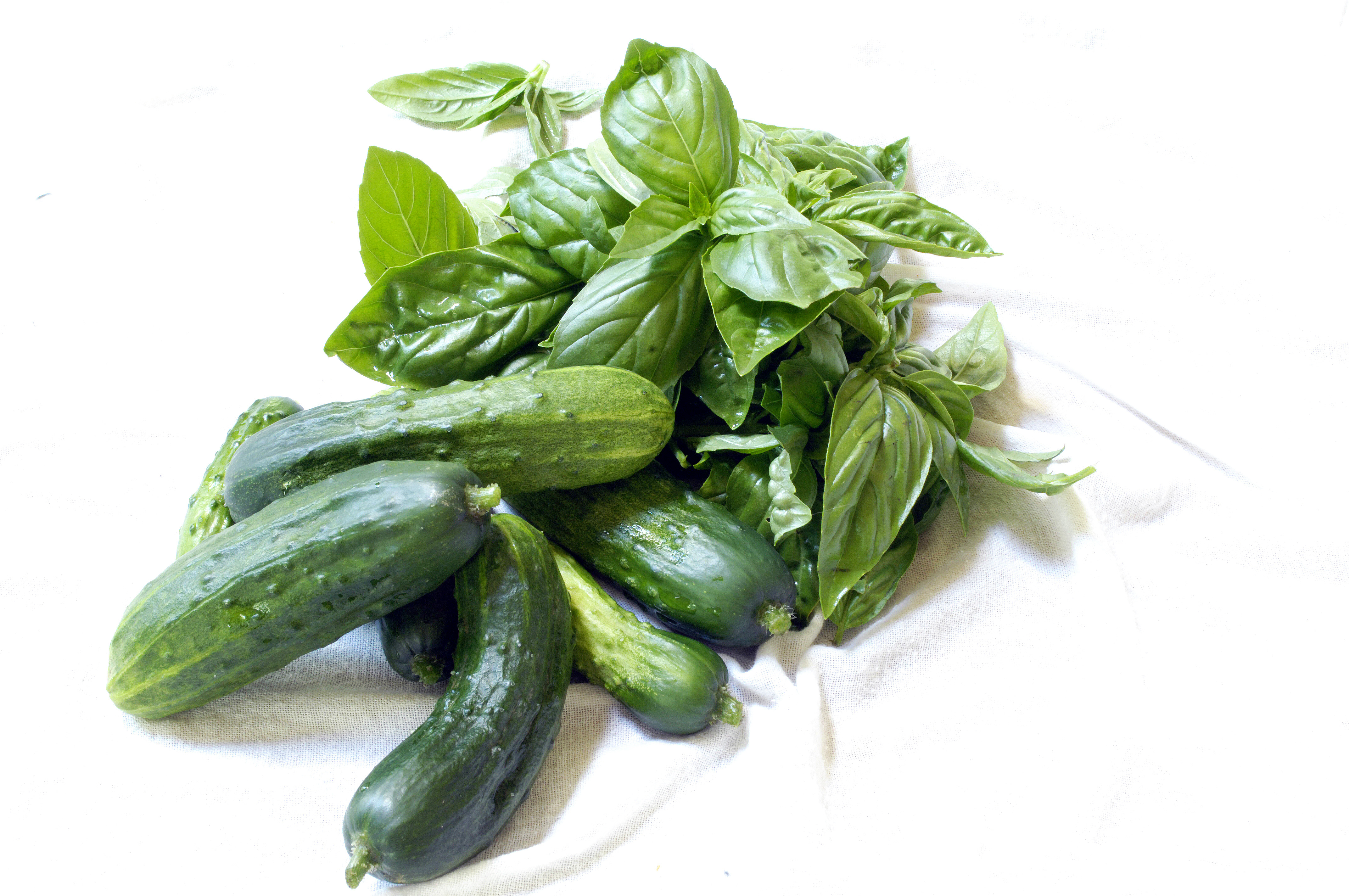
Cucumber-pasta pesto. Click here for high-resolution version.

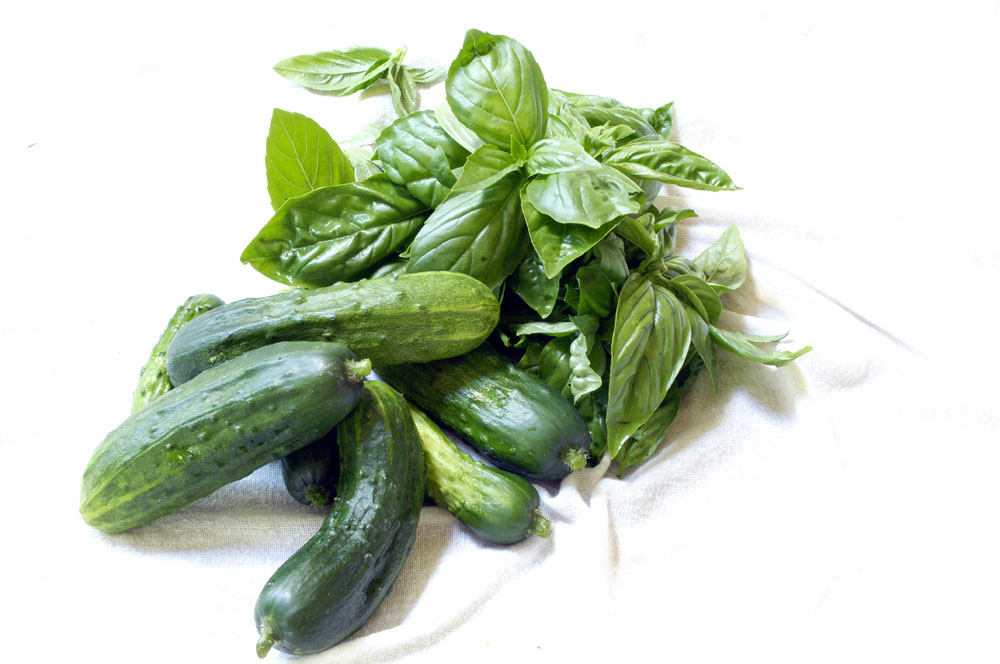
In the summer garden, the basil and cucumbers won the competition for who gets to the kitchen first. The yellow squash will be about one day behind, the first tomato about five days.

It has been an excellent gardening year, at least for the summer garden. The rainfall has been generous and well timed.

Life is good when the garden is doing well.


Click here for high-resolution version.


Why the trend toward mean-looking cars?


Normally, car design is one of the farthest things from my mind. But as I mentioned in a post a few weeks back, I recently bought a new car. So I’ve been noticing things that I normally ignore.

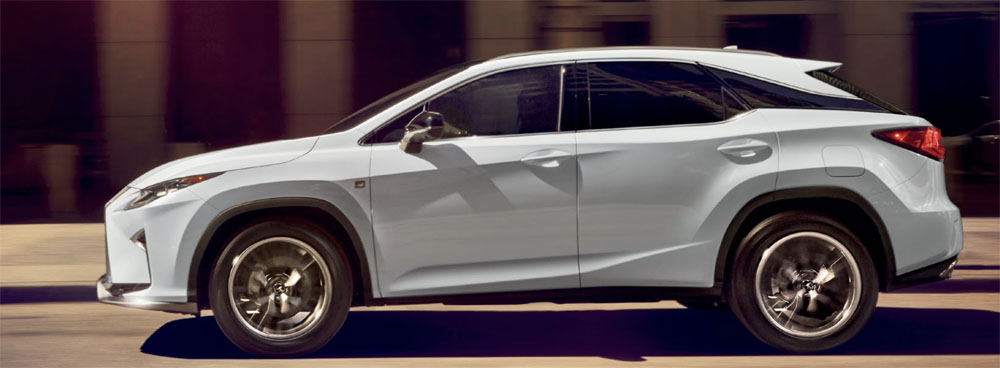
The thing I noticed while looking for a new car — and the thing I continue to notice as I drive here and there — is a trend in car design that I find both ugly and disturbing. From Cadillacs to Camrys, from family SUVs to sportier cars, nearly all cars these days look like warrior robots. It’s the Transformers look.

Whatever that says about us, it can’t be good.

I try to stay off the interstate highways. Going on the interstates feels like going to war. So maybe that has something to do with people’s love of cars that look like assault vehicles. But surely something else is going on. Judging from, say, the Camry’s design, it would appear that the Transformers look strongly took hold around 2015, though there were hints of it in the preceding years. Is it just that car makers recently figured out that aggressive designs sell? Not to mention that the Transformers movie franchise had already market-tested aggressive designs? No doubt it helped that we’ve been in a period of cheap gasoline. Big cars are in.

I came across an article from 2008 with the headline, “Science Shows People Prefer Angry, Aggressive Cars.” I’m afraid they do.

I also came across a scientific white paper from 2002 with the title, “Tin Cans or Assault Vehicles?: The Role of Crashworthiness and Non-Aggressiveness in Vehicle Safety Design, Promotion and Regulation.” This paper makes the point that, when considering a vehicle’s safety, people put no value on whether their car is likely to kill or injure someone else. They only think about their own safety. They (Americans, anyway) believe that big cars are the safest cars. The paradoxical consequence is that the greater number of heavier, less maneuverable vehicles on the road makes the roads less safe for everyone.

The more I’ve thought about it, the more I feel that aggressive car design is not just ugly, it’s ethically repugnant. Though I’m aware that there is no causal relationship, aggressive car design also coincides with disturbing new trends in highway safety. The long U.S. trend toward safer highways may have reversed in 2015. It’s still too soon to be sure. But ten states had frightening increases in highway fatalities between 2015 and 2017. In Rhode Island, the increase was 87 percent. Today’s vehicles have fantastic new safety systems, but it seems that these safety systems are being offset by driver distraction (phones, for example) and higher speeds. Europe, I believe, continues on a trend toward safer highways. Let’s not forget that most Europeans drive much smaller cars than Americans. If we Americans all drove smaller cars, we’d almost certainly all be safer.

Is it possible to be a conscientious objector and stay out of the highway wars? Not entirely, of course. It’s almost impossible to imagine a car-free lifestyle in this day and age, unless you live in a major American city with proper public transportation (there aren’t many of those). If I were still working rather than retired, and if I had to commute on today’s freeways, I’d probably feel differently about whether I should drive a bigger, more powerful car. But even if I did drive a bigger car, I’d prefer that it not look like an assault vehicle.

For whatever reason, I ended up with a car that looks like a mouse. I certainly felt like a mouse a few weeks ago when I drove on Interstate 40. Even with the speed control set exactly at the speed limit, a never-ending train of aggressive-looking and aggressively driven SUVs would bear down on me from behind, get a little too close if they were in my lane (the right lane, of course), and then race by like predators pursuing meatier prey than my mouse. I believe that the driving behavior of some of the drivers intentionally expressed contempt not only for my small car, but also contempt for any object that impedes their God-given right to guzzle gas and drive 20 mph over the speed limit. It put me in one of my people-hating moods.

One of these days, I promise, I’m going to come up with a blog post that finds some reasons for liking contemporary Americans. Most days, I can’t think of any. When Americans are on the road, they’re at their worst.

And you knew a political angle was coming, didn’t you? When an aggressive driver in an aggressive-looking SUV is bearing down on my mousy car on the interstate, I get a Republican vibe. Is there any data to support that? It’s hard to know for sure, for lack of data. But, as with all grim statistics, red states do have higher traffic fatality rates. Whether there’s a causal relationship or not, there still has to be something meaningful in that. And, yes, Democrats and Republicans have very different taste in cars, and it’s just what we liberals would expect. Only a eco-liberal would drive a car like mine, and they don’t like my kind.

It doesn’t surprise me that, in an era of weaponized and ugly politics, people drive weaponized and ugly cars.


Another Transformers car. They all look alike to me.

Garden report


Click here for high-resolution version.

I’m not the sort of gardener who does everything the same from year to year. I experiment. I try to learn from my failures. After all, gardening is an exercise in adaptability, since conditions are never exactly the same.

This year’s garden strategy was to plant sparsely in such a way that every individual plant can be pampered. I made the rows very wide so that I can use the tiller to cultivate between rows to keep down the weeds. For the remaining weeds, I’m hoeing, or pulling weeds by hand. I resolved that there would be no irrigation this year. Partly this is because the long-range precipitation forecast looked good, and partly it was because the old piping had gotten leaky and worn out, and I had to discard it. I was planting during a period of heavy rains, and washouts were a possibility. So I planted in raised rows (shaped with a hoe) and mounds (also shaped with a hoe). Everything that can climb must climb. Climbing plants such as cucumbers greatly prefer to climb, rather than to sprawl. I made cucumber trellises and tomato supports from rebar and heavy string. Weeds are much easier to manage when things don’t sprawl. There’s also my snake phobia. I don’t want to leave any places where snakes can hide.

So far, the result has been good. My primary weakness as a gardener is to let the weeds get away from me after the weather gets hot and miserable. So far, I’m well ahead of the weeds. The squash are blooming. The first green tomato has formed. There are lots of tiny cucumbers. The basil is vigorous. The onions seem a little slow, probably because I got them planted a little too late. I’m growing lots of okra this year.

So far the outlook is good for a productive summer garden.