
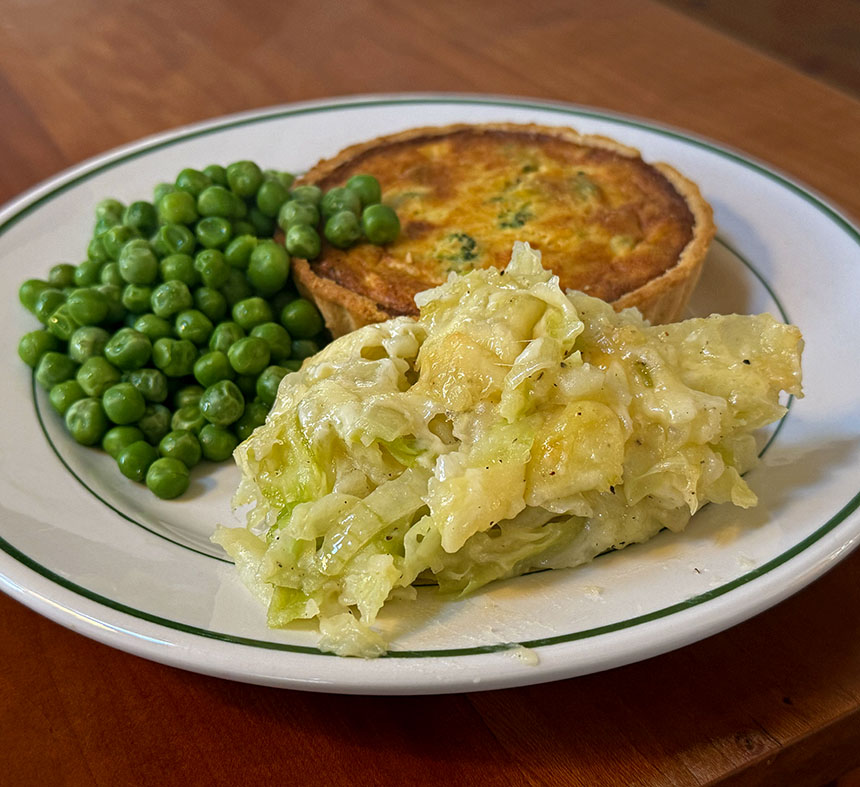
Rumbledethumps. Click here for high-resolution version.
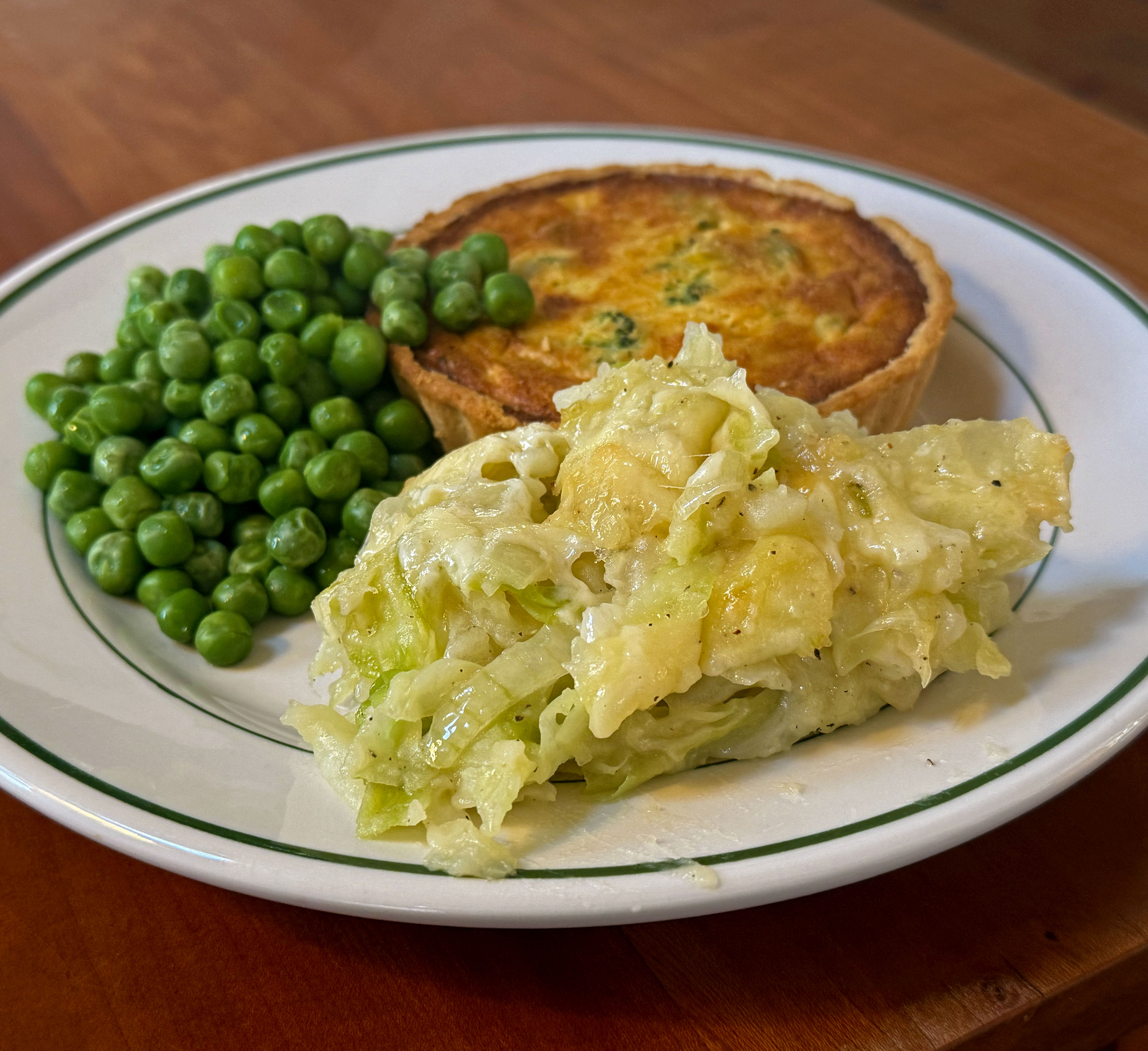
Just as I was thinking about what to cook on a bleak midwinter day, a friend who lives in the south of France (who is Danish but shares my appreciation for British cultures) sent me a link to a YouTube video about making rumbledethumps. So I made rumbledethumps.
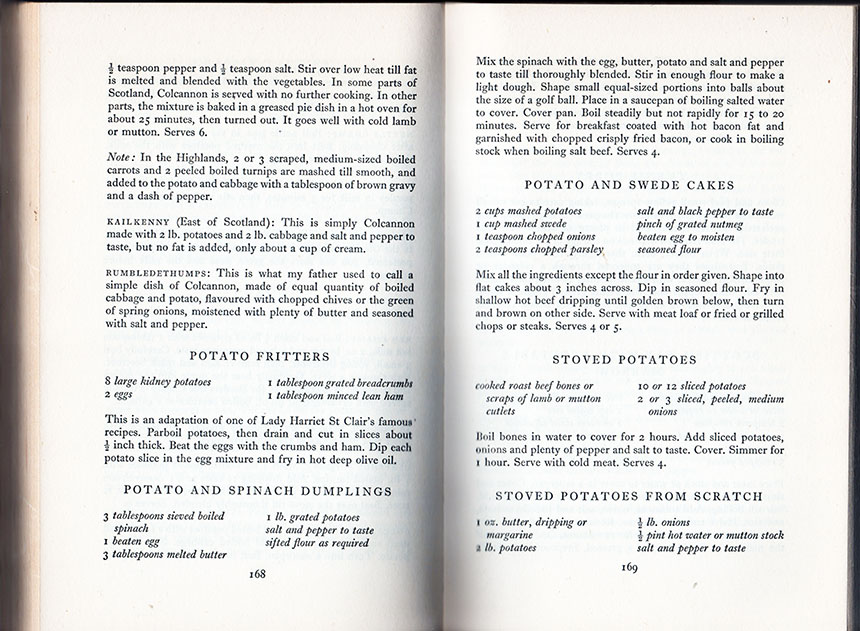
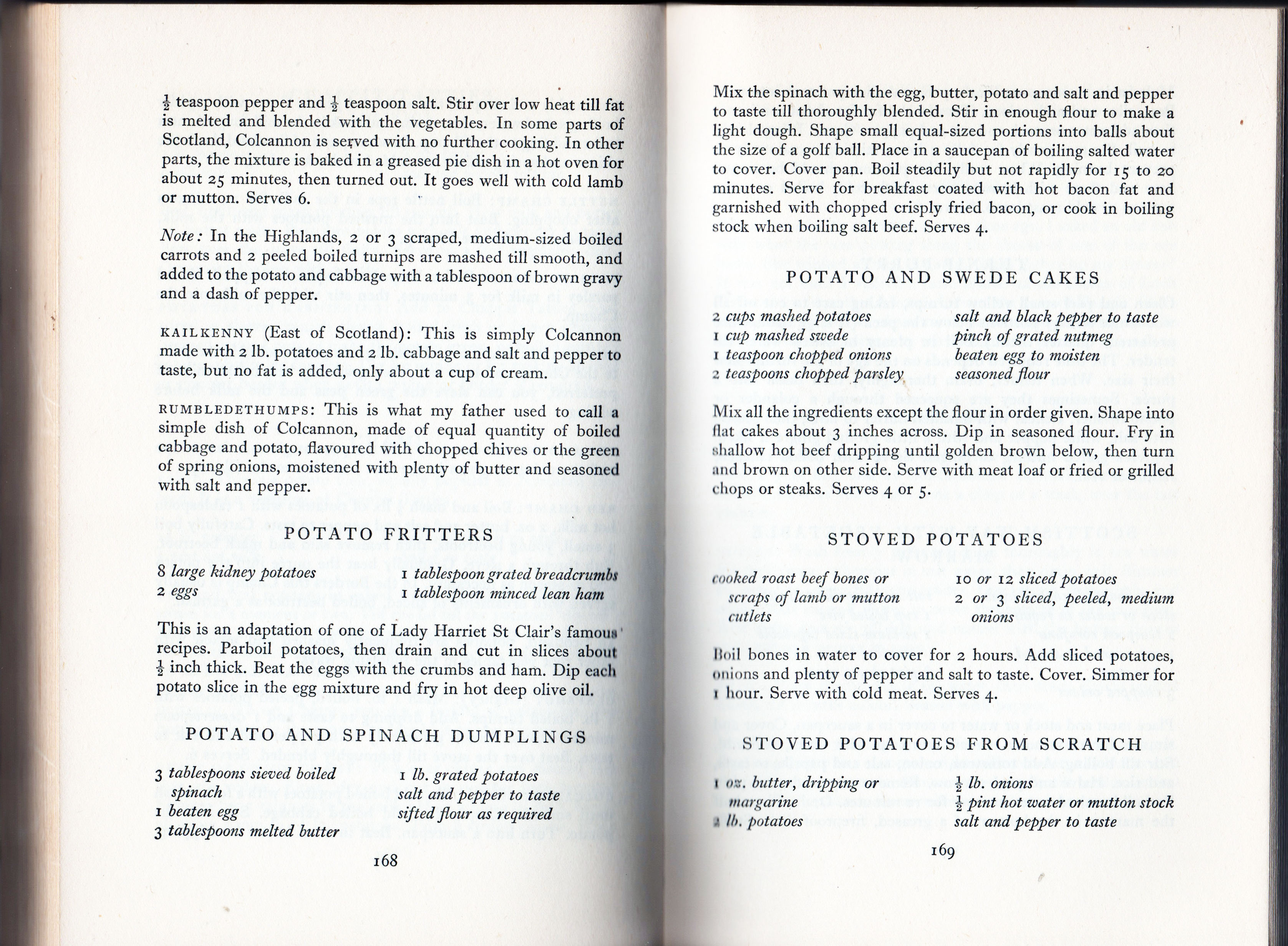
I have only two Scottish cookbooks. One, The Scottish Women’s Rural Institutes Cookery Book, sixth edition, 1948, does not mention rumbledethumps, but it does include a short recipe for making colcannon, which I believe is considered to be the Irish version of rumbledethumps. My other Scottish cookbook, The Scottish Cookery Book, 1956, includes a short reference to rumbledethumps among the potato recipes My guess is that rumbledethumps is so simple and so basic that no one really needs a recipe.
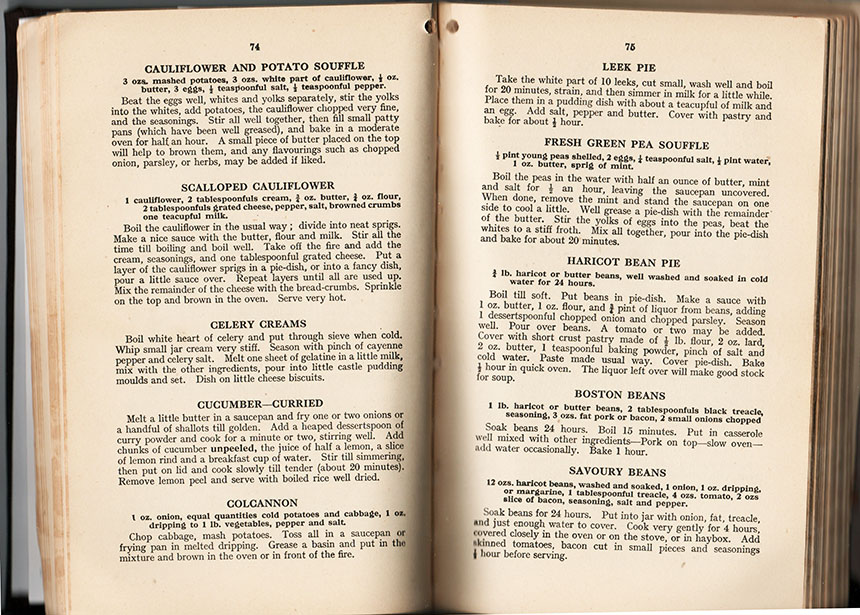
⬆︎ The Scottish Women’s Rural Institutes Cookery Book. Click here for high resolution version.
⬆︎ The Scottish Cookery Book. Click here for high resolution version.
I looked at a number of online recipes for rumbledethumps. Some sauté the cabbage along with the onions to precook it. Other recipes boil the cabbage. I boiled my cabbage to cut down on calories. But I suspect that much of the savoriness of rumbledethumps comes from lots of butter (or drippings) and salt. I used only a little butter and made up for it with olive oil. But in these old recipes, there really is just no substitute for butter (and lots of it), or drippings (and lots of it).
⬇︎ In the video, the cook pronounces the th in rumbledethumps as though it is a t. This puzzles me. ChatGPT says that TH-stopping is a normal feature of Scots. If so, I’ve never noticed it. Notice that he also rolls his r’s sometimes.
I wonder if I could make bubble and squeak from the leftover rumbledethumps.