Review: Interstellar

interstellar

A good test of a movie, I think, is to let it digest for a few days and then ask yourself: Having digested this movie, was it nutritious enough that anything stuck to my bones? With “Interstellar,” the answer for me turns out to be no.

“Interstellar” is highly entertaining. It’s fast-paced, very smart, and beautiful to watch. There are strong character elements, with well-paced emotional peaks and valleys. In short, it’s a great experience at the theater (I saw it in IMAX). But not much sticks to the bones.

The sport of second-guessing director Christopher Nolan’s science seems to have quickly faded from the media. I’m not hearing any Oscar buzz. I don’t think it’s just me. I don’t think it’s sticking to many people’s bones. Still, I love it when Hollywood makes science fiction blockbusters.

Was “Interstellar” an environmental movie? One of the flaws of the movie, in my opinion, was that it tells us too little about what had happened on earth and was in too big a hurry to get into space. And having gotten into space, it lingered a little too long. Matt Damon could have been written out of this film with no loss at all. Clearly back on earth there was some sort of climate disaster, and lots of people died. Clearly this led to ugly cultural changes and what seemed to be a kind of leftist fascism. But that’s all left vague. It’s almost as though the director is in a hurry to abandon the earth and get on with an earth substitute made with technology. There is an ugly whiff of techno-utopianism: earth is disposable; superior people will save our plebeian asses, but only just enough of us to assure genetic diversity.

The word “existential” shows up a lot in things written about Christopher Nolan. That is very appropriate. Nolan seems allergic to approaching anything with the scent of the collective about it. He does not concern himself with values. With Nolan, very little is shared. Everything is seen through the eyes of single individuals, and they all see something different. I’m not necessarily criticizing existentialism in art, but existentialism tends to involve heavy exertion while on a low-protein, high-carb diet.

Should you see “Interstellar”? By all means, in IMAX if possible. But go out for a burger afterwards, because you’ll probably leave the theater hungry.

You also won’t feel the need for another Matt Damon or Matthew McConaughey movie for a long, long time.

Abbey photography update

A-nikons

The abbey’s venerable Nikon D1X was starting to have occasional shutter malfunctions, so I went on eBay and bought a D2X, the model of professional camera that succeeded the D1X in 2004. The pros have moved on to D3’s and D4’s, so the D2X is now an affordable camera. I found a practically new one on eBay, with barely 3,000 shutter actuations. My D1X is now a backup camera.

It always seems shocking to me that, no matter how much professionals pay for their professional cameras, lenses can easily cost as much as the camera, or more. Those of us who don’t make money from photography but who take photography seriously must make do with the best lenses we can afford. I was greatly in need of a wide-angle lens, and I recently added a Nikkor 28-70mm lens to my camera kit. I also have a 50-200mm lens that gets a lot of use. And of course everyone has a 50mm so-called “prime lens,” which has the virtue of having a large pupil and the ability to see in low light, but which otherwise is pretty limited.

You’ll find as many opinions about cameras as there are photographers, but my preference is for Nikon professional cameras. They’re heavy, and they’re outrageously expensive when they’re new, but after they’re eight or so years old, when the pros have moved on to the newest model, the previous generation of cameras becomes easy to find on eBay. And if you watch the auctions carefully for a while, you can find a like-new camera that spent most of its life in a box, unused.

It’s amazing what the new digital cameras can do. But I remind myself that, even 50 years ago and more, photographers managed to get incredible shots with cameras, slow film, and lenses that we could consider hopelessly obsolete today. My D2X seems like a miracle, and it is so well-behaved, fast, and logical that it starts to feel like a part of your eye and brain.

Sprouting season has arrived

sprouts-111

When the garden is kaput and stuff in the grocery store starts looking like it’s traveled a long way, it’s time to start sprouting. It’s an old hippy skill that I’ve never abandoned, though often I just forget about the possibility of sprouts.

The best place I know to get sprouting seeds is from the Sprout People in San Francisco. What out for their high shipping costs, though. If you order $60 worth of stuff, shipping is free.

And, of course, don’t forget to add lots of garlic to the dressing. With garlic, sprouts, and lots of tangerine and orange juice, you’ll survive the winter just fine.

P.S. I haven’t yet ordered sprouting seeds or sprouting supplies from Amazon, but they seem to have good stuff and good prices, and much of it is available for free shipping with Prime. I still feel a little guilty ordering stuff from Amazon, but, especially when one lives in the sticks, low prices and fast, free shipping are hard to resist.

Autographed copies of Fugue in Ursa Major

A-fugue-promo

“Intelligent, mysterious, a perfect book for a movie; loved it!”

In time for the holidays and winter reading, I’m offering autographed copies of Fugue in Ursa Major. The cost is $15.

If you’d like to order a copy, please send an email to fugue@acornabbey.com and include this information:

1. Your name and mailing address

2. Whether you’d like to pay with a check or by PayPal

3. A name (if any) that I should include with the autograph

4. The text of a brief inscription (if any) that you’d like for me to include with the autograph

I will reply to your email with information on where to mail your check or how to pay with PayPal. After I’ve received your payment, I’ll send you the book by U.S. Postal Service priority mail.

The cost of priority mail alone is more than $5, so this is a bargain and doesn’t really earn me much profit. But I thought that loyal blog readers who bought the book in eBook format might also like to have a real copy of the book.

Real apples, and the sorrows of orcharding

A-apple-day-1
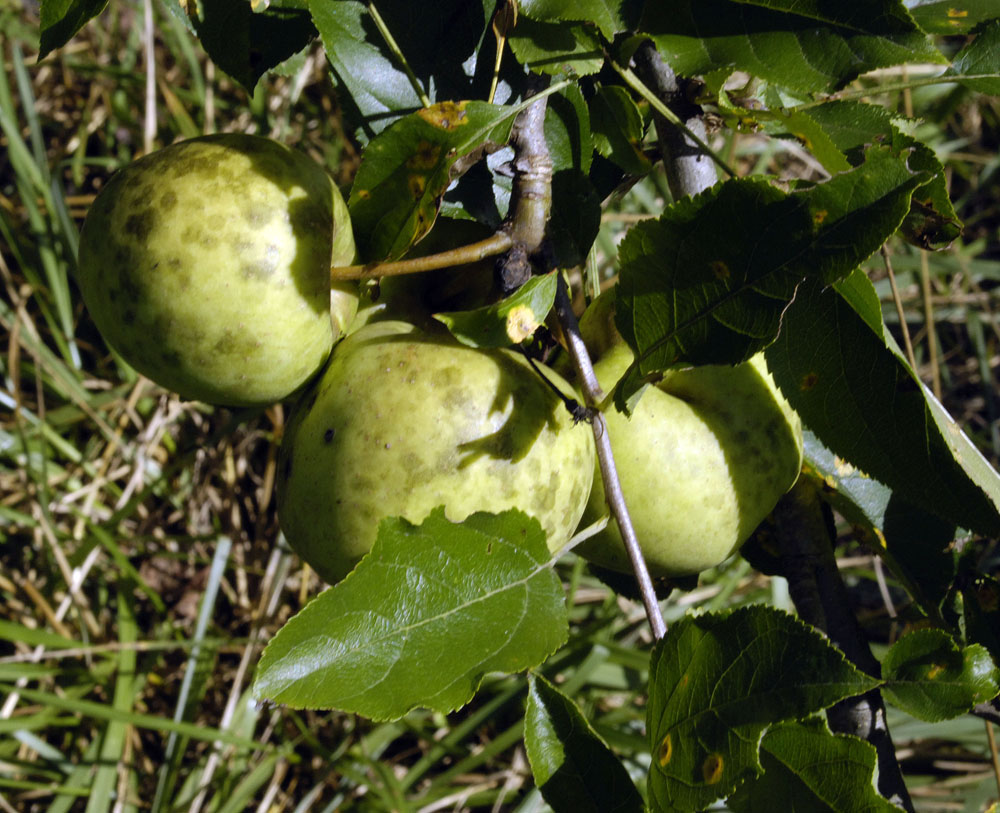
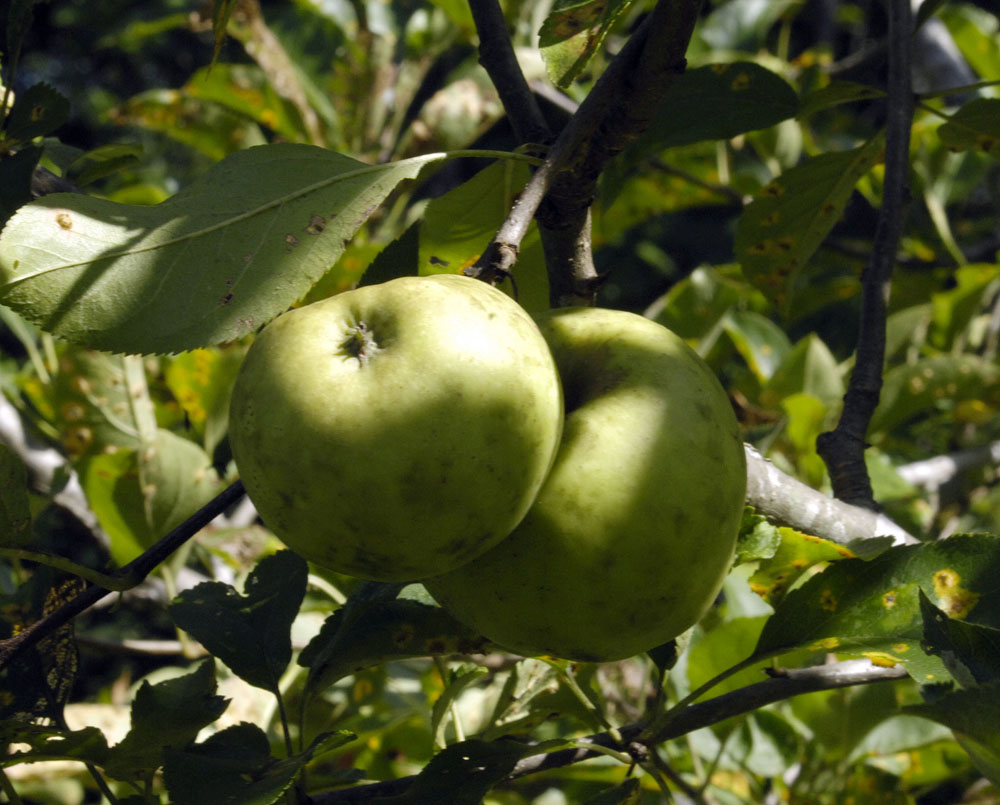
November apples at Century Farm Orchards

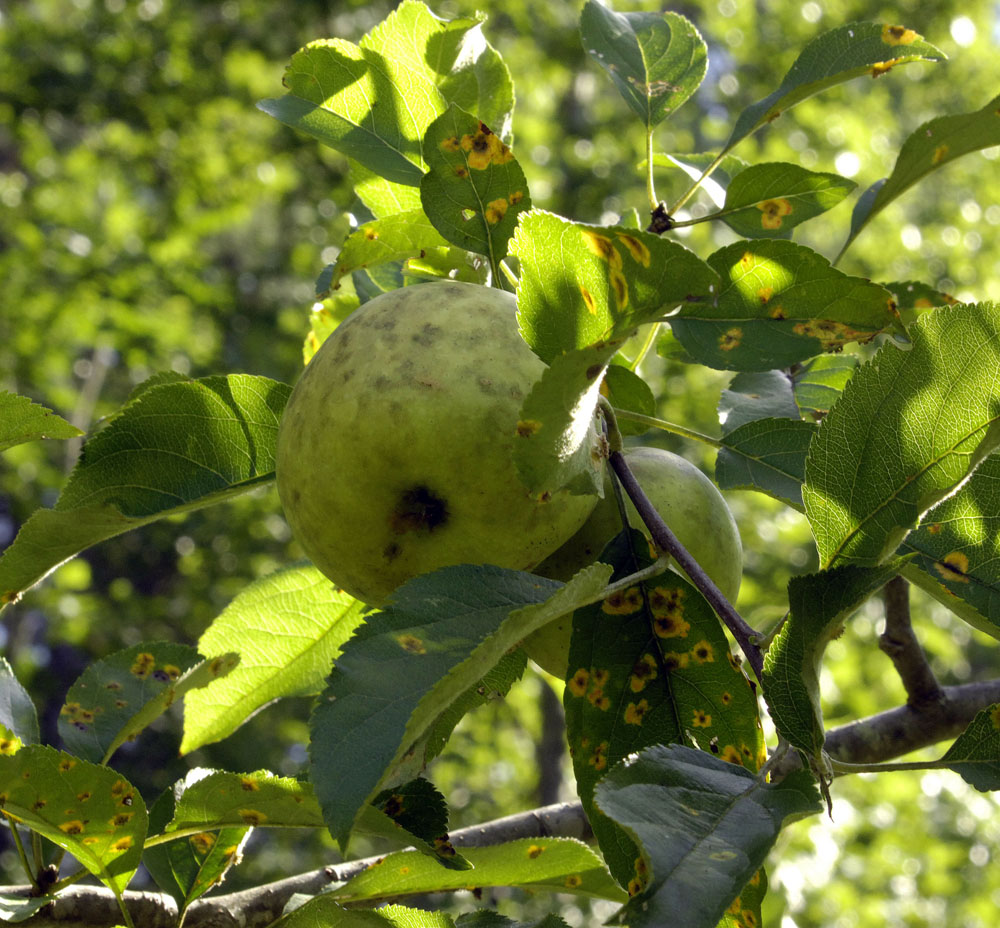
Fatalities in the orchard during the last year include fig trees killed (above ground, at least) by brutally cold weather last winter, and another pear tree lost to the Black Death. Ken also found room for a couple more apple trees. Today I picked up some replacement trees.

I know I’ve harped on this theme before, but happy is the household with an established orchard. Rearing young apple trees is like rearing children in the Dark Ages — lots of them die, plagued with all sorts of pests, hazards, and diseases. The abbey’s orchard is six years old now, and it’s coming along. There was almost no apple yield this year, though, because last winter all the trees got a major pruning. This was probably the most important pruning of the trees’ lives, because it will pretty much determine the shape of the adult apple trees. Pruners say you should prune so that a bird can fly through the tree. That doesn’t leave a lot of buds for producing fruit the following season. But, during the 2015 season, with luck, the abbey should get its first serious apple harvest. That will be the orchard’s seventh year.

One thing I got right: Avoiding low-quality trees from mass-production nurseries, the kind of trees that are sold at box-store garden departments. I had bought a few such trees as replacements, and they just didn’t do well. Almost all the abbey’s trees came from Century Farm Orchards in Caswell County, North Carolina. They specialize in old Southern varieties of apple trees. These trees are very hardy and well-suited to the local climate, though like all young fruit trees they need a lot of care and attention to reach adulthood. Century Farm Orchards is not really a storefront operation. One orders trees early in the year. You get an invoice in October, and you pick up the trees at open house events in November.

Today’s new trees included two mammoth blacktwig apple trees, two kieffer pear trees, a brown turkey fig, and a celeste fig.

Another nice thing about the abbey’s modest-size orchard is that it’s on a fenced slope, nicely turfed, fed on organic fertilizer and lots of chicken droppings. The grass and clover in the orchard are incredibly lush, and of course all that organic nutrition and earthworm activity works down into the soil and benefits the apple trees. We use only natural pesticides. The poor trees pretty much have to fend for themselves, like 9th Century peasant children.

A-apple-day-2
I picked up two new blacktwig trees today.

Cornish pasties

A-pasty-1

I love reading novels set in another time, another place, in which the author describes what the characters are eating. I’ve been reading Sir Walter Scott’s Ivanhoe. In it, a monk (seemingly a monk, at least) and a knight are sharing a pasty in the monk’s hermitage deep in the forest. That really stuck in my mind, and I resolved that, when cold weather returned, and after election season was over, I’d make some pasties.

Pasties are an ancient food. They go back to the Middle Ages. Now, I love nouvelle cuisine and California cuisine as much as the next person, but I also love archaic cuisine as much as I love archaic language and archaic settings. Note how the word is pronounced, though. It’s like “pass,” not like “paste.” I haven’t had a pasty since I was in Cornwall many years ago, and I had never made pasties until today.

If you want to make pasties, first I suggest that you Google around and study some recipes. Also, for the technique for crimping the crust, there are some good YouTube videos. Pasties are eaten all over the British Isles, but it is chiefly the Cornish who lay claim to the art of pasty-making today. Cornish pasties generally contain beef (skirt steak). I wanted vegetarian pasties. There are certain ingredients that are optional and certain ingredients that are not optional. Among the non-optional ingredients, in my opinion, are potatoes, rutabagas (which the British call “swedes”), peas, onions, and celery. To today’s pasties I also added a bit of grated cheddar cheese with truffles in it, as well as a little cream.

If you did your Googling, you’ll have found many different recipes for the crust. The crust resembles pie crust, except that the crust should have more “structure” than pie crust. OK. I added an egg. I also wickedly used butter in the pie crust, diluted with about 25 percent olive oil. Unlike pie crust, pasty crust can take a little kneading. Be sure to refrigerate it for a couple of hours before you roll it out.

My crimping would not pass muster with the Cornish defenders of traditional pasty-making. Maybe I’ll do better next time. But it held together.

An egg wash or milk wash will give a nice, shiny crust. I used egg wash because the abbey chickens produce more eggs than I can possibly use when Ken is away. For pie crusts, I have terrible luck if I mix any whole wheat flour into the unbleached flour. But with the pasty crush, half whole wheat and half unbleached flour yielded a very tender crust. And by the way, I no longer use any flour that isn’t organic. It makes a huge difference in quality.

The pasty was obscenely good. Have it with wine, and by candlelight and firelight, to enhance the medieval effect.

Speaking of medieval, a reader asked me to comment on the election. I was campaign manager for a candidate for county commissioner, and that job has eaten me alive for more that two months. It was like having a full-time job — meetings, constant phone calls, a heavy load of email, lots of promotional work. We ran an extremely sophisticated campaign that scared the living daylights out of the opposition. But in the end, we went down, hard, in the wave of hatred, ignorance, anger, and apathy that swept across the country on Nov. 4. But we will never give up on dragging Stokes County, North Carolina, kicking and screaming into the 18th Century.

I’ve fled back into the woods, and I hope to stay here for a while.

A-pasty-2
Just out of the oven

A-pasty-3
With the egg wash, before going into the oven

At last, a free day

A-vertical gothic window

I apologize for the long absence from the blog, and I appreciate the emails asking if everything is OK. I’m heavily involved in a local political campaign, trying to bring a little progress to Stokes County. Things will get back to normal after the election.

Today was the first day in many days that I didn’t have to go out. It was a perfect day for that. Reading Ivanhoe in my room, all I could hear was the cat purring under the blanket, the rain dripping from the eaves, and a crow over on the ridge.

Compromising with carbs

bread-2
Chapati bread, four parts whole wheat to one part soy flour

We’ve known it for years, but a major new study has confirmed the evidence that carbs will make you fat, and fats won’t hurt you. Below is a link to the New York Times story about this study:

http://www.nytimes.com/2014/09/02/health/low-carb-vs-low-fat-diet.html

In my own experience with dieting, I certainly have found this to be true. I am five feet 10. I have never weighed more than 165 pounds, but 165 pounds is way overweight for me. I’m an ectomorph with slender bones. My ideal weight as a younger man was about 148, with some muscle-mass maintained in a gym. Without any gym-maintained muscle mass, my ideal weight is closer to 145 or even a few pounds lower. I judge my ideal weight as the weight at which I look trim and at which my waist is a sensible 32 inches.

Just over a year ago, I had gotten close to 165 pounds, partly because I had expended a lot of effort in learning to make decent sourdough bread. Bread is my downfall. It is my favorite food. I was a picky eater as a child, and without bread I probably would have dried up and blown away.

But here’s the problem: How can we keep bread in our lives but keep carbs down?

Lately I have been experimenting with flat breads. Oven-baked breads, whether risen with yeast or with a sourdough culture, just won’t rise if the dough is heavy. It’s difficult to make good bread even with 100 percent whole wheat, because it’s too heavy. But flat breads are a whole different thing. Flat breads don’t require a bubbly dough. Rather, the dough is rolled thin before it’s baked so that the steam during baking causes the bread to balloon up with one big steam bubble in the middle. The bread sinks as it cools, but it’s very tender. Indian chapati bread is the classic version of this. It’s baked not in an oven, but on a griddle or in a skillet.

It’s very, very easy to make delicious chapati bread from 100 percent whole wheat flour. But it’s also possible to mix in low-carb flours such as soy flour and still end up with great-tasting, tender bread. I’ve been able to make good chapati bread with two parts whole wheat flour to one part soy flour.

However, if you’re not experienced with chapati bread, I’d recommend finding a recipe on the Internet and figuring out the technique. Once you understand how to roll the dough to the right thickness and get it to puff up in a hot skillet, you’re ready to try lower-carb versions.

I’d recommend starting with a ratio of about 5 parts organic whole wheat flour to 1 part soy flour. If the results are good, then try a ratio of 4-1, then 3-1, and then even 2-1. Notice how the soy flour changes the texture of bread. It’s up to you to find the ideal ratio.

The addition of soy flour to whole wheat flour not only increases the protein and lowers the carbs, it also reduces the glycemic index of the bread.

For a year now, I have been able to keep my weight below 147 pounds. To lose weight, I have to ruthlessly cut out carbs. But maintaining a good weight is much easier. It’s all about figuring out what your own limits are with carbs. It’s also about watching the scales and adjusting your weight when you’re only two pounds over, rather than 20. I hope I never have to lose 20 pounds again.