The griefs of starting an orchard

orchard-1
This apple tree looks spare and lanky because it was pruned heavily last winter. It won’t produce much fruit this year and instead will put all its 2014 effort into the growth of the tree. But, next year and in future years, the pruning will pay off.

Lucky is the man who has a mature, productive orchard. Starting an orchard is like trying to raise children in the Dark Ages — the investment is enormous, and the mortality and accompanying heartbreak run high. The oldest trees in the abbey’s orchard will be six years old this fall. The other trees vary in age, as trees that have been lost have been replaced. This process of death and replacement continues.

Among the lessons learned, a couple of things stand out. For one (as with dogs), know your breeder. Fruit trees that come from fruit-tree puppy mills may look nice when you see them at the big-box hardware store. But they may have come from nurseries far away, and they may be of stock and varieties that are not hardy and not suitable for your area.

The abbey’s strongest trees are all old Southern varieties of antique or heirloom apple trees from a nursery two counties to the east that specializes in such trees — Century Farm Orchards. Though I lost (and replaced) two of those twelve six-year-old trees, that mortality rate is good compared with the mortality rate of other fruit trees. We’ve almost given up on cherry trees. Insects defoliate them. We were on our second or third attempt at growing fig trees, and things were looking good, until the near-zero temperatures last winter killed the figs. So while the cherry trees, figs, and even the pears die of the whooping coughs, smallpoxes and scarlet fevers that afflict young fruit trees, the hardy old apple trees and peach trees carry on. Getting fruit trees to maturity is not a small challenge.

We were tempted to attempt olives. But we pretty quickly decided against it, because olives are not truly suited to this area, and the risk of mortality in any given year would be high. Even figs are a big risk. But we love figs so much that we soldier on.

If (at least in this area) you want maximum fruit and minimum grief in your young orchard, stick with apples and peaches, of old and proven varieties, from known nurseries with a track record and a nurseryman who will answer your emails (as David Vernon from Century Farm Orchards always does).

orchard-2
A baby peach

orchard-3
Baby apples

orchard-4
A fig stalk, killed by the cold winter, though its roots may still be alive

Wild ramps, and ramp pesto

A-ramps-1

I have heard of ramps for many years, but not until today did I finally taste them. Ramps are members of the onion-garlic-leek family, and they grow wild all over the Appalachians. A friend gave them to me on a recent trip to Asheville. Ramps appear in April, I believe, and then they fade.

I made the tops of the ramps into pesto. Though the bulbs (which look like little onions) are as edible as the tops, I saved the bulbs to plant in the branch bottom where the May apples grow. There is a good chance that the ramps will naturalize here in the Stokes County foothills.

The tops have a mild oniony taste, much like leeks, but more tender. They made a delicious pesto.

A-ramps-2

Monticello

monticello-1
Click on images for high-res version

I was on the road for the past week. The first stop was Lynchburg, Virginia. Then I went on to Charlottesville, and from there to Asheville, North Carolina.

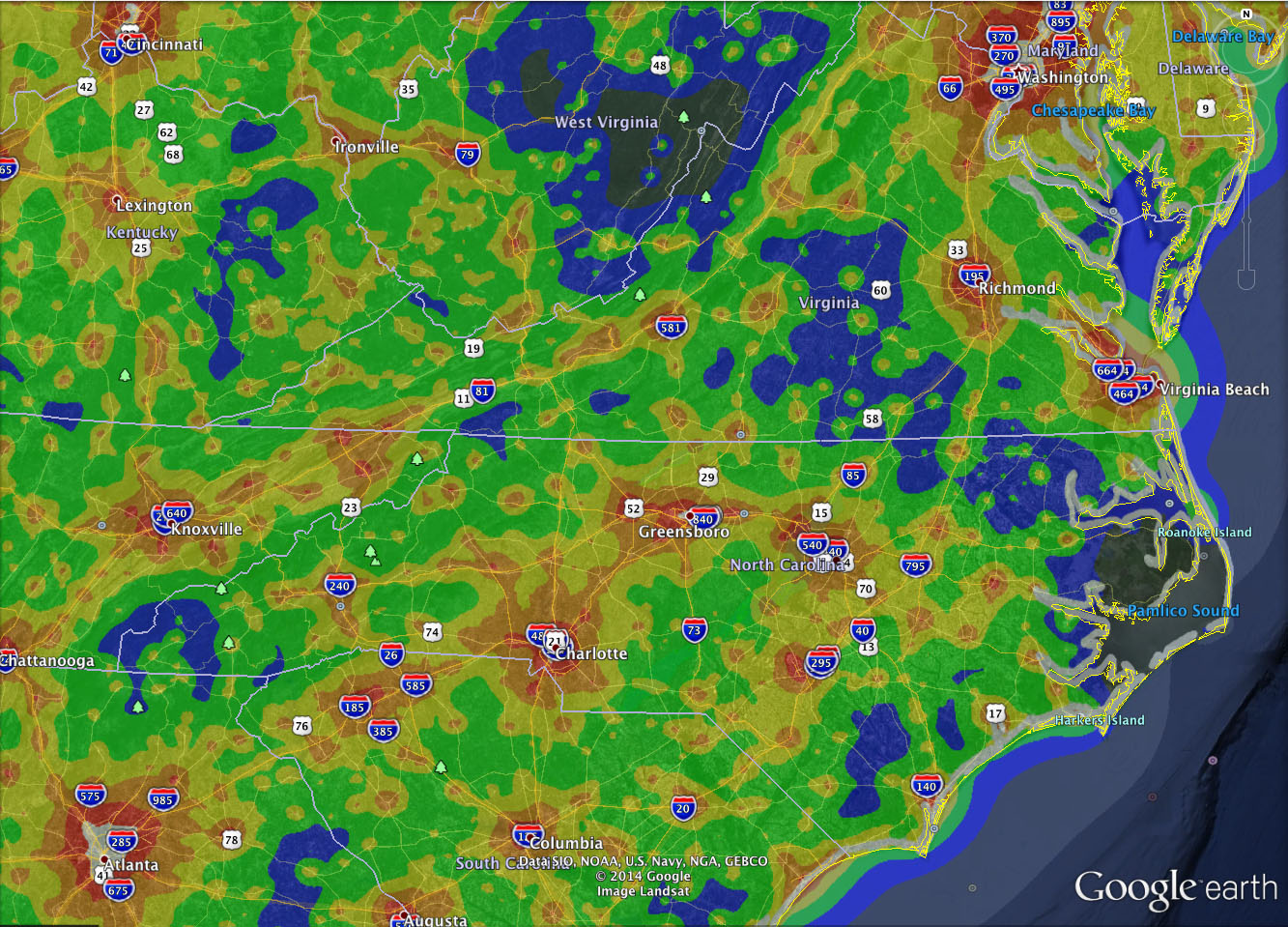
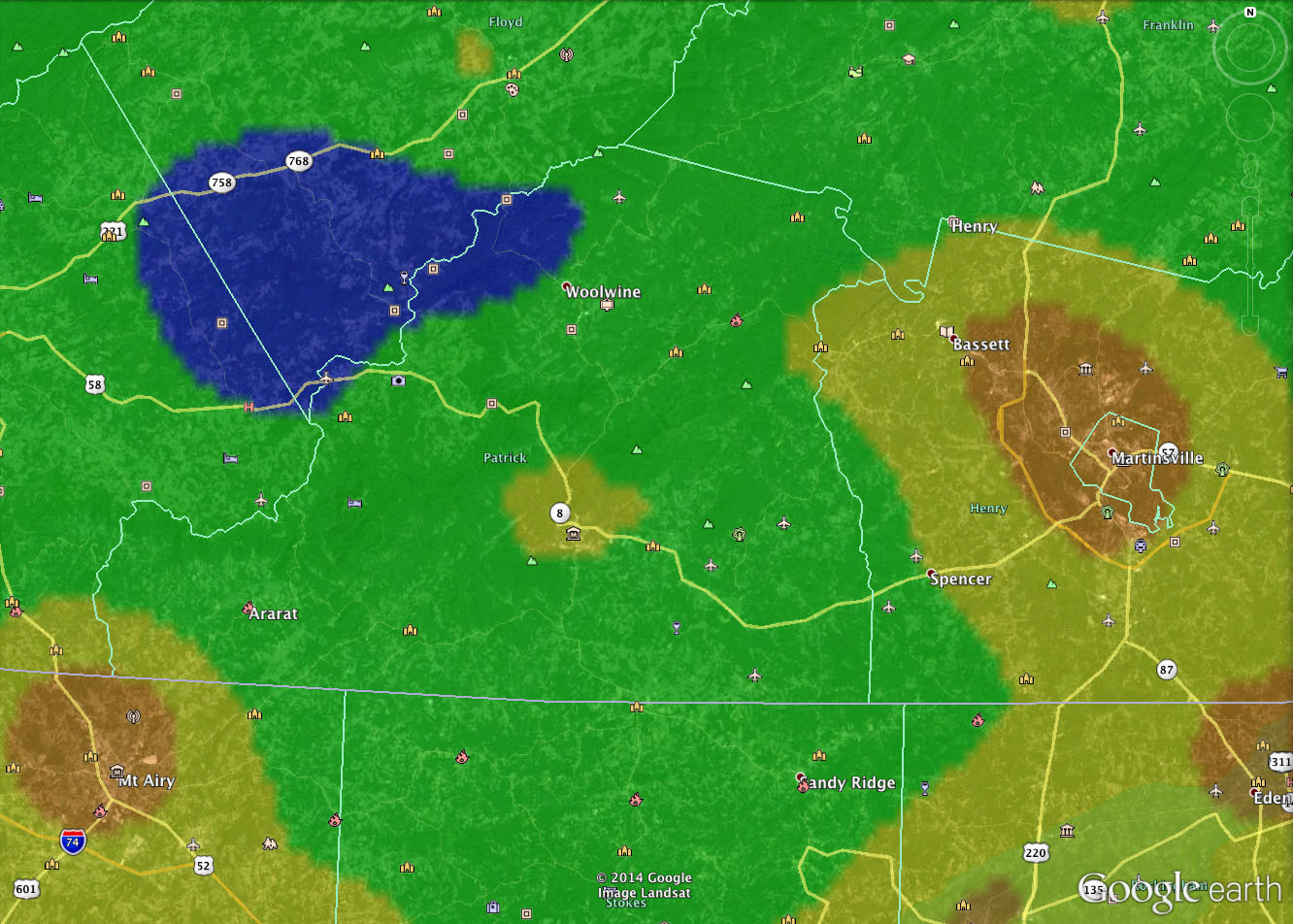
Partly I was checking out settings that I used in my novel, Fugue in Ursa Major. The book is still in the revision stage (new publication date May 30, I hope), so there was time to tweak descriptions of some of the settings, if necessary. Luckily, it won’t be necessary, though I may write in a few minor details. Google Earth, along with photos found on the web, are excellent resources for writers. An important scene occurs on the campus of the University of Virginia, so I spent a good bit of time there, seeing things with my own eyes and taking photographs. Also, when Jake, the young protagonist of the novel, goes stargazing, he drives south from Charlottesville on Interstate 81 toward the area of the Appalachians where the borders of Virginia, Tennessee, and North Carolina come together. I followed that route to Asheville.

Monticello is stunning. Photographs of Monticello usually fail to capture that the house sits on the crest of a small mountain, with amazing views in all directions. I also had never realized how Charlottesville’s hills are part of the Blue Ridge Mountains. The Blue Ridge Parkway extends north of Roanoke almost to Charlottesville, and I-81 shadows the route of the parkway for many miles.

monticello-2
The gardens at Monticello

monticello-3
The gardens at Monticello

monticello-4
The dome at the University of Virginia. The dome was visible from Monticello with a telescope, and Jefferson watched its construction from home.

Coping with screwy weather

screwy-weather-1

A brief warm spell about three weeks ago gave us hope that we might be able to make an early start with the garden. It was not to be. A cold spell followed, and two nights with hard frost. Only the lettuce germinated decently. Even the broccoli and cauliflower, which we started from plants, had minor damage from the frost.

We decided to re-till the area where the seeds didn’t germinate and try again in a week or so when the weather is warmer. Ken took advantage of the downtime in the garden to apply some of the organic soil amendments that had been delivered late, including dried kelp, cottonseed meal, blood meal, bone meal, and lime.

screwy-weather-2
The two new chickens have been transferred out of the bird cage in the house to the chicken coop. They were getting too big and too rowdy to remain indoors.

screwy-weather-3
An apple blossom damaged by frost

No Fracking in Stokes: our new video

As regular readers know, I’ve been involved for the last two years with No Fracking in Stokes, a grassroots group fighting fracking in Stokes County and in North Carolina.

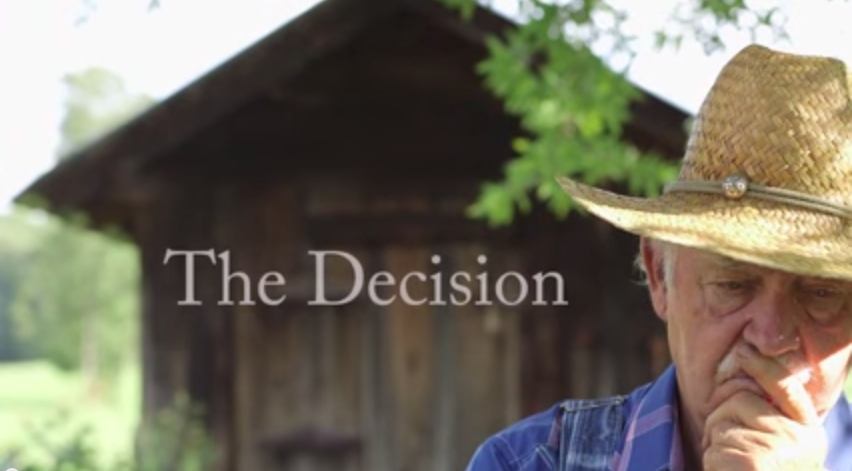
Our group has released a new video, filmed here in Stokes County (except for the shots of actual fracking in the Marcellus shale area of Pennsylvania). The actor is a retired schoolteacher, and the farm where this was shot is just a few miles from the abbey.

That’s the abbey’s garden in one of the photos near the end of the video, and the chicken perched in the Jeep window is an abbey chicken, Fiona.

The original music is by Rex McGee, a Stokes County musician.

Printin’ Office Eatery

eatery-1
Fried oysters with salad and hushpuppies

One of the nicest new businesses to come on line in Stokes County lately is the Printin’ Office Eatery. It’s in Danbury, facing the main drag.

Part of the brilliance of the Printin’ Office is that the menu appeals to two sets of people — the locals, whose business of course is necessary if a restaurant is to succeed; and visitors, with somewhat more urban tastes, traveling through on their way to Hanging Rock State Park. They also have pizza, which is a good lick, because northern Stokes County is pretty much a pizza desert. The restaurant’s sign is a little hard to see, though, so look carefully to your right as you drive north through Danbury, just before you pass the old courthouse.

One of the beautiful things about a place like Stokes County (and one of the reasons I’m here) is that we don’t have the suburbanization and population density required to support fast food places. There are fast food places in King, far to the south, and a couple in Walnut Cove, but that’s it. Eateries out in the sticks are always small and locally owned.

The place gets its name from its location. The Danbury Reporter, a long-dead newspaper, used to be published in the printin’ office there.

I’m reproducing the menu here to share the local flavor.

P.S. They have free WIFI. Northern Stokes County is very poorly wired, but there is fiber under some of the main roads, including through Danbury, at least as far as the library and the county government center.

eatery-2

eatery-3

eatery-4

menu-1

menu-2

Noah: a short review

noah-1

I commend director Darren Aronofsky (who co-wrote the screenplay) for seeing the cinematic potential of the story of Noah and the ark. I mean, who’d have thunk it, since the Noah story is such a short and minor feature of the book of Genesis. But all the ingredients are there for a blockbuster, in particular apocalypse and evil and the potential for great spectacle. I was eager to see it because it’s a new addition to the apocalyptic genre, so I went on opening weekend and saw it in Imax (recommended).

Normally I would not rush out to see a bible story, but “Noah” is pissing off so many religious fanatics that I figured Aronofsky must have done a pretty good job with the theology. Glenn Beck called the film “pro-animal” and “anti-human.” And apparently Fox News has been buzzing about how “unbiblical” the film is. Excellent.

“Noah,” in addition to being a highly entertaining movie, is an eloquent takedown of the dominionist school of religious weirdos, which includes a lot of evangelicals. These are the people whose political power (with corporate backing) is keeping us in the age of fossil fuel and blocking environmental progress and conservation. These religious types seem to be getting the message that their slash-and-burn religious views make them a lot like the wicked people who had to be destroyed by flood. Save the animals but destroy all the war-loving people in order to save the earth? That spooks them, because they believe that it’s the environmentalists, the tree-huggers, and the save-the-animals people who are of the devil. Recycling and solar energy threaten their rights and their way of life. Cheap gas forever! Down with Noah and the tree-huggers and endangered species! Oops.

The theme is the same, really, as the theme of my novel Fugue in Ursa Major: what if the only way to fix this planet’s problems is to have an apocalypse and start over from scratch with a little more respect for nature?