How much coal to power our houses?


Duke Power’s Belews Creek Steam Station, Belews Creek, North Carolina

My post yesterday was about how many kilowatt hours of electricity the abbey uses on a cold winter day. Though I use about half as much energy as the average American, there are no grounds for boasting. When that energy use is translated into pounds of coal, it is substantial.

Here’s how we can do the math. Most of my electricity here probably comes from a coal-fired steam plant, because that’s the nearest generator. That’s Duke Power’s Belews Creek Steam Station. The Wikipedia article on the steam station gives some statistics on the station’s efficiency and tells us how many Btu’s of thermal energy are required at the station to generate a kilowatt hour of electricity. At Belews Creek, which is a pretty efficient steam plant, 9,023 Btu of heat is needed to generate 1 kWh of electricity.

Coal varies in its energy content, but a reasonable average for coal is 20 million Btu of heat per 2,000 pounds of coal. So one pound of coal releases 10,000 Btu of heat when it’s burned. Now we can do the math for roughly how much coal is required to supply the abbey’s electricity.

On the coldest day of January, I used 37 kWh of electricity. Translated to pounds of coal, that means that the abbey required 33 pounds of coal for heat, light, cooking, appliances, etc., on the coldest day of January. On the warmest day of January, it works out to 11 pounds of coal. For the month of December, I used 625 kWh of electricity. That works out to 563 pounds of coal for December. That doesn’t sound so good, does it? But at least my energy consumption is on the low side for an American.

In 2012, I used a total of 6,764 kilowatt hours of electricity. That means I’m responsible for burning just over 3 tons of coal in 2012. Now look at our sprawling suburbs, our bright lights, our wasteful buildings, and use your imagination.

If you’d like to do the math to roughly translate your own electrical consumption to an equivalent amount of coal, multiply the number of kilowatt hours on your electric bill by .9023. The .9023 number represents the coal-to-electricity ratio for North Carolina’s Belews Creek plant, but your local numbers probably don’t vary too much, and with a little Googling you may be able to localize your calculations.

Smart meters, and the cost of staying warm


The green bars show my daily electricity usage for January in kilowatt hours. Below: a smart meter.

A year or two ago, my electric company — a regional electric coop named Energy United — installed “smart meters.” The purpose of these meters is to save the power company money, because no one has to be sent around to read them. The meters call home over the electric lines, reporting data back to the power company. Not to mention letting the power company know if your power is out, and automatically tracking widespread outages.

But this calling home doesn’t happen just once a month. It’s a regular thing. This allows the power company to track daily usage of electricity and report it to their customers on their web site.

I’m almost obsessive in collecting data on my electricity usage. I keep records of the abbey’s electrical usage in a spreadsheet, going back to when the lights at the abbey first came on in June 2009. When the weather is exceptionally cold, as it has been at times this month, I like to see how many kilowatt hours it takes to get through a really cold day.

Yesterday, January 25, was such a day. The low was 16F when the day started, and 19F when the day ended. The temperature did not rise above freezing all day, and snow and ice pellets were falling. I used 37 kilowatt hours yesterday. That covered the heat pump’s usage, plus my normal electrical usage. My stove is electric. I baked bread and did a lot of cooking yesterday. I also kept water boiling in a kettle for part of the day to raise the humidity in the house. My electrical cost for the day was $2.82. If I look at kilowatt-hour usage for the lowest-usage day of January (when I used very little heat) and do the arithmetic on the difference, I calculate that my heating cost yesterday was $1.91, while the remaining $0.91 was for other electrical usage.

This blows my mind. Partly it’s that electricity rates are low in North Carolina compared with some other areas, and partly it’s that the abbey is a very efficient building and isn’t too big (1,250 square feet). Plus the heat pump, a Trane unit of the same age as the abbey, is pretty efficient. Heat pumps are by far the most energy-efficient source of heat, though they lose efficiency when the outdoor temperature is low. When the outdoor temperature is, say, 45 degrees, a heat pump is about four times more efficient than when the outdoor temperature is, say, 16 degrees. It is, after all, capturing heat from the outside air and pumping it into the house, so they don’t work as well in cold weather. All heat pumps, as far as I know, having heating coils that kick in if the outdoor compressor can’t produce enough heat. They really are quite amazing machines, and modern heat pumps are much more efficient than the heat pumps of 20 or 30 years ago. Modern heat pumps also use ozone-friendly gases. The old freon systems are getting old and are rapidly being replaced.

These calculations led me to a thought experiment. What if that heat had come from, say, gasoline rather than electricity. If the gasoline had cost $3.69 a gallon, then the $2.82 would have bought me three-quarters of a gallon of gas. The cost of the heating portion of my electricity equals half a gallon of gas. That means that I heated the abbey on the coldest day in January for the amount of energy (calculated according to cost) that it would take to drive an SUV about 8 or 9 miles! How the carbon load compares may tell a different story, but that’s a calculation for another day.

I plan to do a future post on how I’ve used my energy consumption data to roughly calculate my carbon footprint. We all should know what our carbon footprint is.

Note: The abbey has a propane fireplace, and I did use the fireplace some yesterday for the entertainment of myself and the cat. However, the BTU output of the fireplace is much less than the house’s heating system, and the fireplace is never used at night, when the heating system works hardest. Though the fireplace contributed some heat yesterday, the amount of that heat would be minor compared with the heat provided by the electric heat pump system.

Broiled tomatoes


Broiled tomato. Click on photo for larger version.

What are winter tomatoes good for? Not much.

But they are pretty good for one thing: broiling. The unnatural firmness of winter tomatoes actually becomes something of a virtue when the tomato is broiled, because the tomato holds up under the broiler and doesn’t collapse into a puddle. Broiled tomato adds a nice zing to a winter breakfast, not to mention a dose of potassium and lycopene.

Scotch broth (sort of)


Scotch broth. Click on image for larger version.

The best soup I ever had was a bowl of Scotch broth. That was in Edinburgh, in a second-floor restaurant where the waitress called me honey just like they do here.

Like all home cooking, there is no one way to make Scotch broth, and it varies widely. Some has peas, some not. Some uses a stock made from sheep bones. Some uses lamb and is almost a lamb stew. It pretty much always, I think, includes barley. And even though it’s called broth, it’s a thick soup.

I prefer Scotch broth with peas. Start with a good stock. Boil sheep bones if you want to, or some lamb. You want some onions, some celery, a turnip, some carrot, and of course some peas and barley. I have no idea how it’s done in Scotch home kitchens (maybe by simmering it all day?), but to thicken the soup I strain out about two-thirds of the solids, whiz it in the blender, and add it back to the soup. Even so, you’ll still need to simmer the soup for four to six hours or more, as slowly, slowly as possible. You can’t rush Scotch broth.

Though I don’t think it would be done in Scotland, where Scotch broth strictly involves winter vegetables, I like to add some tomato or even tomato paste.

Food photography at the abbey

I’m always looking to improve my photography, including my food photography. A new (actually used off eBay) camera a while back — a Nikon D1X — was a big step. I recently got a lighting kit for interior photography and food photography.

If you ever watched a professional photo shoot for food photos that are to be published, you know that food photography isn’t easy. I’ve been slouchy in the past for the sake of expediency. For example, holding the camera rather than using a tripod is a good way to reduce the quality of the photo. To prevent jiggling and blurring, a wide aperture must be used to shorten the exposure. A wide aperture means that the depth of field is very low. That is, the broiled tomato may be in focus, but the bacon an inch or two behind it on the plate will be out of focus. The way to correct this is to use a narrow aperture (f stop). A narrow aperture means that the exposure must be longer, hence a tripod. Even with good lighting, the exposure may need to be a full second or longer. So the tripod is essential.

Another important factor with food photography is color management. The color of light varies greatly according to its source. To get true colors, the camera must accurately know (or be able to estimate) the color of the light. Sometimes the color can be corrected by fiddling with the “white point” in Photoshop. But the easiest way to have foods be the right color in a photograph is to use artificial light that is daylight colored — special bulbs. Yippee. I now have such lighting apparatus, plus the white umbrellas that are used to diffuse the light.

Here’s an aside for all who’d like to improve their photography. You’d think, given the way that today’s point-and-shoot digital cameras are marketed, than the number of megapixels is all that matters — the more megapixels, the better the photo. That is completely wrong. Megapixels only matter if you want to print a photo really large — say, the size of a billboard. People who sell digital cameras would like for you to believe that when 8 megapixel cameras are available, 4 megapixel cameras are obsolete. And when 16 megapixel cameras are available, 8 megapixel cameras are obsolete. Totally wrong. All those extra megapixels do is waste storage space on your computer. In some cases, the extra megapixels may help you crop in on a small object in a photo, but chances are that that small object will be blurry, for a number of reasons including the quality of the lens, or focus that is not exact.

My Nikon D1X is 10 years old, and professional photographers have moved on and no longer use them much. But if you’re looking for a camera, you’ll be far better off with a high-quality used camera than with a new camera of lesser quality. The most important factor to the quality of your photos is technique. The second factor, I would say, is the quality of the lens. Another important factor is the internal attributes of the light-sensing and processing parts inside the camera. That gets too technical to go into here, nor do I claim to understand it all. But forget about megapixels.

At this point I’ll plug a book by a neighbor and friend, Jess Moore. The book is Great Pictures Made Simple: How to Make First-Rate Pictures With a Low-Cost Digital Camera or Cell Phone. The book is available on Amazon. Then, when you get good with a low-cost point-and-shoot camera, start shopping for a good camera with a set of good lenses.

Why I'll leave the chickens indoors this morning

Raptors are common here. Though usually they’re soaring overhead rather than perched in the trees facing the abbey. I’ll let the chickens out later this morning, when I’m sure the coast is clear.

Update: A friend on Facebook identifies this as a sharp shinned/Cooper’s hawk and says that they don’t normally go after chickens. Judging from a Wikipedia photo, I believe this is a young hawk.

BBC World Service on your phone

It was a sad day when, on July 1, 2001, the BBC World Service ended its shortwave broadcasts to North America. You can still get it if you want to pay for satellite radio (no way), and some public radio stations carry bits of the BBC’s news.

To help fill the gap, the BBC makes the audio available with a phone call to 712-432-6580, which I believe is in Iowa. Back when both my phones had limited minutes, that didn’t help me much. But when I got the iPhone 5, I also switched to a Verizon plan with unlimited minutes. Unlimited minutes are mostly wasted on me, but the BBC helps burn some of them off and get more value out of the nasty sum I pay to Verizon each month.

The BBC World Service broadcasts in English 24 hours a day. Normally I don’t listen to radio news, including NPR, because broadcast news is mostly useless and moves much too slowly for me, nor do I spend much time in a car. I can absorb information many times faster by reading. But there is something special about the BBC. It has been in operation since 1932, and it is one of the best news operations in the world. London calling…

At certain times of day, when radio propagation conditions are right, you might still be able to pick up the BBC’s shortwave broadcasts aimed at Western Africa, if you’re in the eastern U.S. But it would be hit or miss. You do have a shortwave receiver and a decent antenna, don’t you?

High school's permanent marks and scars


Reynolds High School, N.C. Department of Archives and History

A story in the Winston-Salem Journal this morning refers to “historic” R.J. Reynolds High School and mentions that the school is 90 years old this year. Not many high schools make it to that age, at least as still-operating schools, or make it to the National Register of Historic Places. No doubt most of us remain haunted by high school, for better or for worse, but there’s something about Reynolds High School that gets — and stays — under your skin.

Even in this era, 46 years after I graduated, I find myself driving by the school when I’m in the area, to see if it has changed (not much) and if the cherry trees are still there. It always feels a little crazy to be so drawn to a place, given how miserable I was there. But anyone who went to Reynolds will understand. We were constantly reminded how privileged we were to go to Reynolds (even though it is a public high school) and the word “tradition” was heard almost daily. My readers in Britain, where schools are hundreds and hundreds of years old, will think this funny. But we Americans, of course, measure our history on a shorter scale.

In these parts, if you went to Reynolds High School, you leave it on your resume no matter your age or other achievements. One of North Carolina’s senators, Richard Burr, graduated from Reynolds in 1974, and this fact is mentioned on his Wikipedia page.

The school does have an interesting history. It was partly tobacco money that paid for the school and its rather grand auditorium. Katherine Smith Reynolds, widow of R.J. Reynolds, donated land for the auditorium in 1918. The school opened in 1923, the auditorium in 1924. One of the traditions of the school is that the ghost of Katherine Smith Reynolds still haunts the auditorium. And in fact it is the auditorium which haunts me to this day, more than the school. The auditorium seemed as grand to me then as Carnegie Hall does today, and it was similarly a temple of music. Winston-Salem, partly because of cultural advantages handed down by its Moravian settlers, and partly because of the patronage of old money (Hanes, Reynolds, and Gray), punched above its weight musically. I even had the stage to myself once in 1966, when I gave an organ performance during the annual Key Club Follies. The orchestral and choral music I heard in that auditorium were critical to my early music education. My high school music theory class sometimes met on the stage, when we needed access to the big Steinway.

But of all the music that haunts me from that era, it’s one thing in particular that stands out — the school hymn, “Her Portals Tall and Wide.” It was written in 1933 by a student whom the older teachers remembered, B.C. Dunford Jr. It was generally sung a capella in clear four-part harmony by the school chorus, with the chorus located in the upper balcony for the best acoustical effect, and always with the lights dimmed. Sometimes the members of the chorus held candles. It was more than a tradition; it was a sacred ritutal. This hymn is always mentioned in histories and reminiscences, but I am unable to find a single recording of it. I must put that to rights and record it at the organ. No doubt the current chorus teacher (I hope they still have chorus teachers) could provide me with the score.

P.S. to the current principal: The fourth floor was still used in the 1960s. I had Spanish classes up there.


Reynolds Auditorium, N.C. Department of Archives and History


That’s me in the center, a photo of the yearbook staff in the 1967 yearbook. Did I ever do anything other than publishing? I guess not…

The abbey's literary output so far

It has been only three and a half years since the lights first came on at Acorn Abbey, but I think its literary output has been respectable in that time.

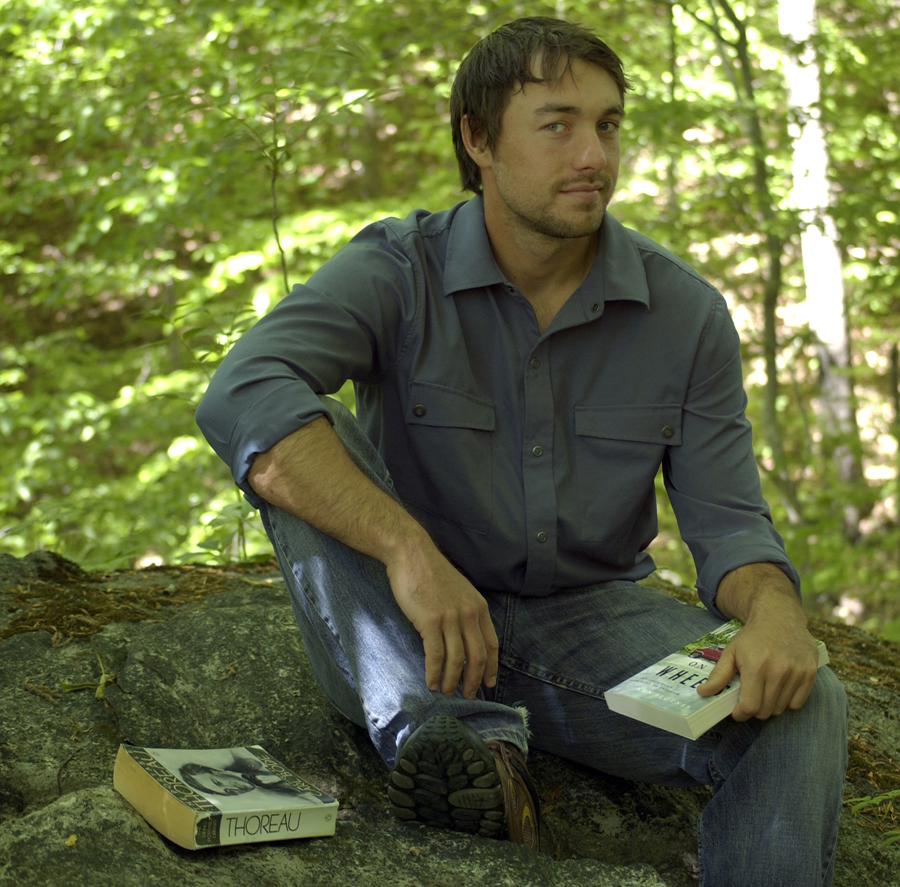
Ken’s first book, Walden on Wheels: On the Open Road From Debt to Freedom, will be released May 14. Here is a link to the Amazon page. It tells a story that many followers of this blog already know: how Ken paid off a sizable student debt in only a few years, then went on to get a master’s at Duke University, living in his van to keep his expenses down. But there’s more to Ken that readers of Ken’s blog or this blog know yet. That is that Ken, like Thoreau, is a natural born philosopher. Ken, aware of his tender age, is very modest in asserting this philosophical inclination. But in this book, for the first time, really, we witness the early stages of a transformation from a hockey-playing frat-boy type into an heir of Thoreau. Ken wrote the book here at the abbey. It’s in the final stages of production now. In fact, at Ken’s request, I’m reading the final page proofs this week.

And there is a second book that has come out of the abbey. Last year I did the editorial and prepress work for People Skills Handbook: Action Tips for Improving Your Emotional Intelligence. This book is now in print and is available on Amazon. There are four co-authors of the book, all of whom are professionals in management training, as well as a psychologist, a counselor, and educators. It’s a good book if I do say so myself. It’s priced high for the corporate market, it’s a bit long at 450 pages, and it’s not exactly meant for casual bedtime reading. But for those who work with people or manage people, it contains some good advice, nicely organized.

And of course there’s this blog, which, at five and a half years, is one of the older blogs around. I started the blog before I left San Francisco.

There will be more. Ken is planning to write a book about hiking the route of the Keystone XL pipeline, which he also has described in his blog. The book, I’m sure, will go much deeper than the blog, and perhaps we’ll learn what’s been going through that philosopher’s mind of his as he walked, and walked, and walked.

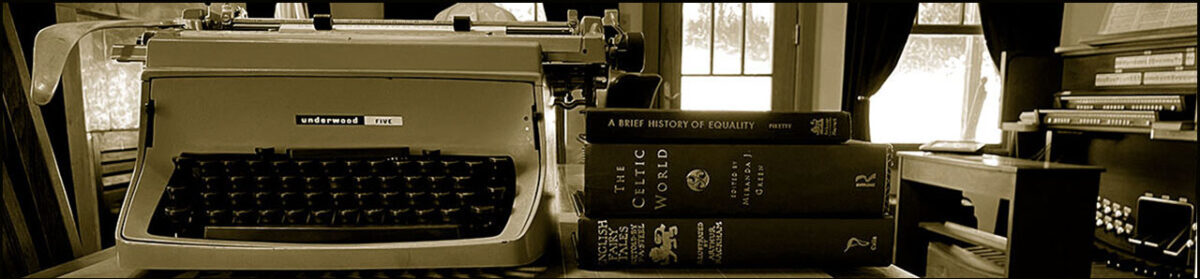
If I were more disciplined, I’d get off my butt and finish the apocalyptic novel I started a while back, not to mention my memoir. And I sometimes think about writing a book about Acorn Abbey, a kind of guide on how to downsize your life and get away from it all. But frankly I don’t have Ken’s discipline. He will sit squirming in his chair and write for eight hours at a stretch, setting goals and then reaching them. Whereas I in many ways am still recovering from career burnout and the accumulated stress of corporate and urban life. I go easy on myself and take plenty of time to putter, to read, to smell the flowers, to pet the cat, to tend the chickens. My whip-cracking days are over. But we’ll see. I’m a fast writer when I put my mind to it.

Though I was being fanciful when I started calling this place an abbey, it has turned out more like an abbey than I had hoped.