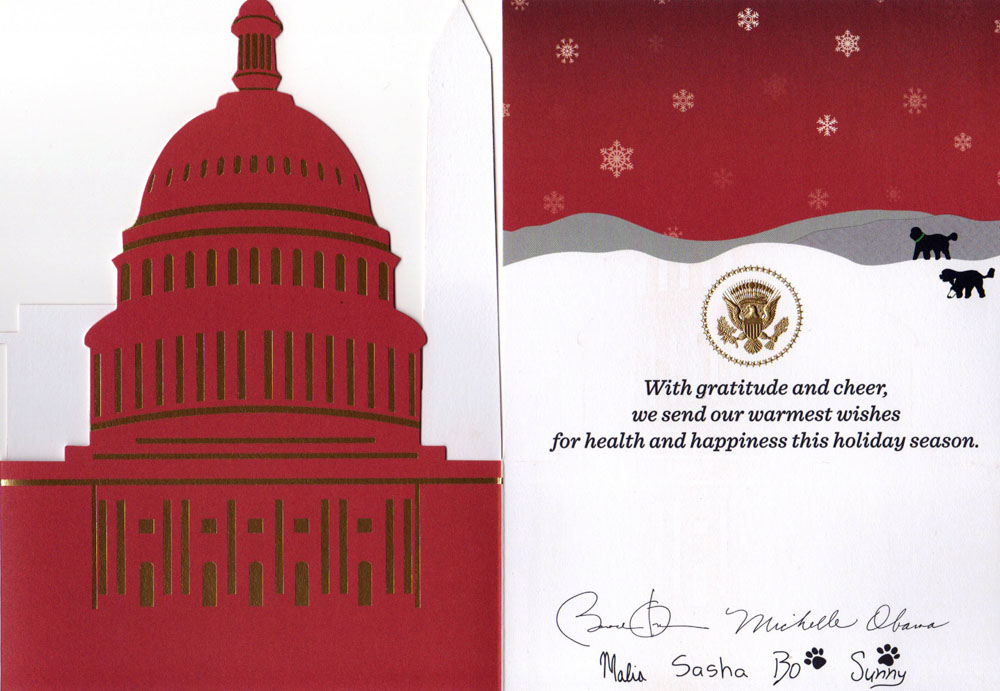
It would appear that being a county chair for the President’s party gets you a White House Christmas card. It will make a nice trophy. It’s funny, but some people are selling them on eBay. There’s no way I’d do that.

Watching a bewildering world from the middle of nowhere
It would appear that being a county chair for the President’s party gets you a White House Christmas card. It will make a nice trophy. It’s funny, but some people are selling them on eBay. There’s no way I’d do that.
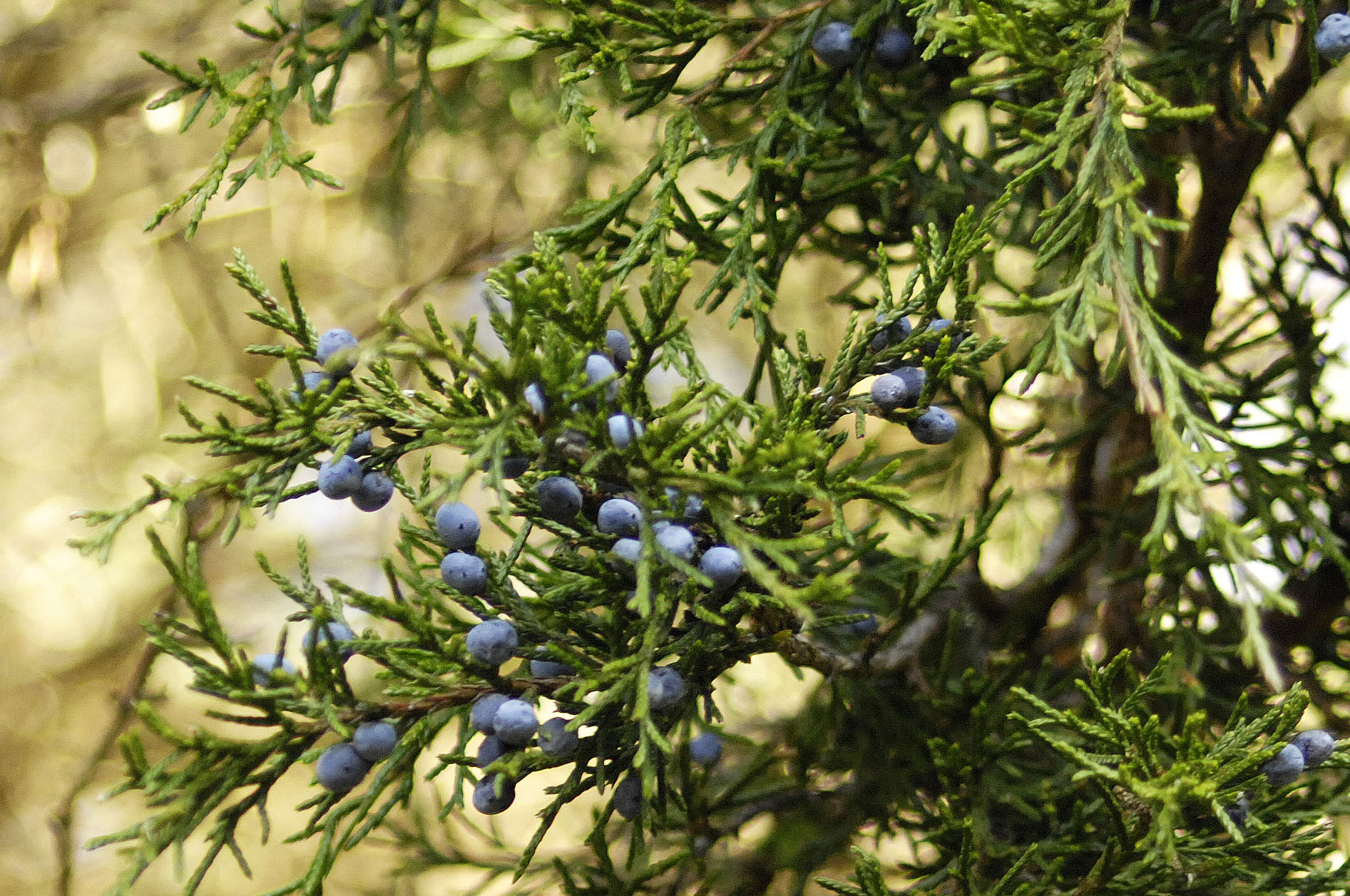
Here in the South, where they are a common wild tree, we call them cedar trees. They actually are a juniper — Juniperus virginiana. This time of year, many of the trees are heavily loaded with berries. I think that not all birds like juniper berries, but some birds certainly do. I had a large flock of birds (were they cedar waxwings?) feasting on juniper berries in my largest tree just this week.
Birds also use these trees as night roosts. This particular tree has a bunch of doves in it every evening.

I posted a while back about abelia, an old-fashioned flowering shrub that the bees and butterflies love. I asked my local plants and landscaping shop to find me some more, and this week six new abelia plants went in at the edge of the yard, up against the woods.
No place could possibly have too much abelia. Its dense, tiny flowers go on blooming for months. It makes a fine hedge. I figured that the rabbits, which are humorously abundant at the abbey, would appreciate a new hedge at the edge of the woods. Plus the birds love to shelter in hedges.
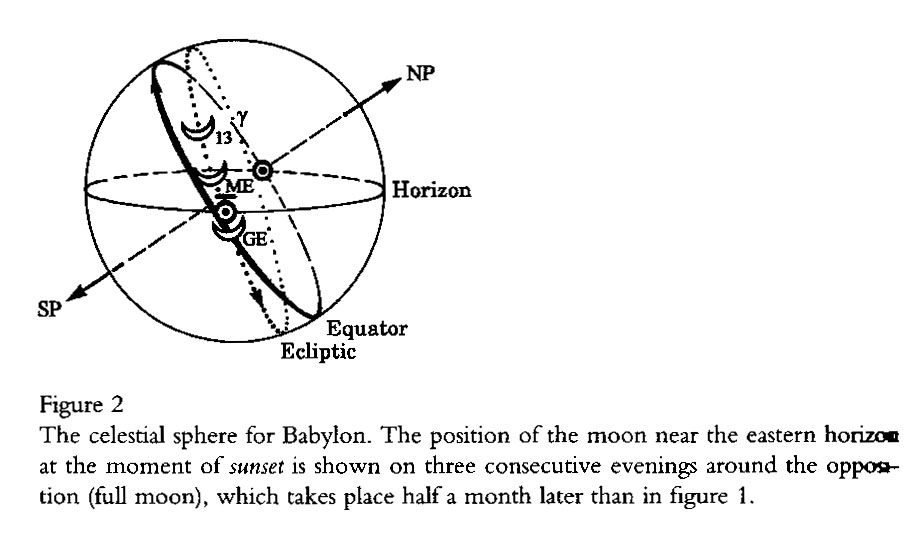
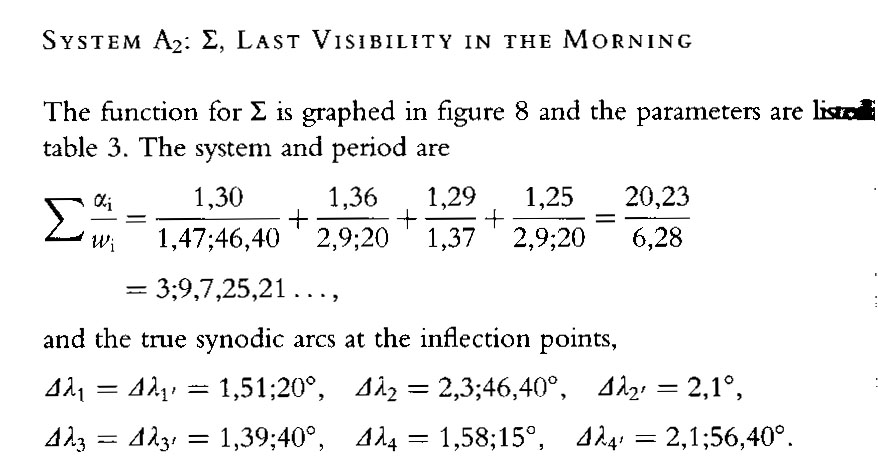
Ancient Astronomy and Celestial Divination, edited by N.M. Swerdlow. MIT Press, Cambridge, Massachusetts, 1999.
An Analysis of Celestial Omina in the Light of Mesopotamian Cosmology and Mythos (master’s thesis), by Robert Jonathan Taylor, 2006.
How did the ancients predict the future using the stars? Why do I care?
I care because, in Oratorio in Ursa Major (to be released April 1, 2016), Jake will meet characters in 48 B.C. who do celestial divination. As with all the science and history in my novels, I don’t want to just make stuff up. Research is required. A year or so ago in another post on another book, The History and Practice of Ancient Astronomy, I described how the ancients knew quite a lot about the science of astronomy. They were careful observers of celestial events, they developed pretty accurate theories, and they were much better at math than we might think today.
But divination — that is, prediction — obviously went much farther than astronomy. What were their methods?
As with astronomy, much of the work that went into celestial divination was done first by the Babylonians, and from there it spread throughout the ancient Mediterranean. Kings were particularly interested in predicting the future, and kings could afford astronomers. Will the crops be good? If a war begins, who will win? Is the king at risk of dying? Those were urgent questions, and the stars were believed to hold the answers.
Books such as Ancient Astronomy and Celestial Divination are more concerned about how the ancients did the observations than the kinds of predictions they made. The master’s thesis by Robert Jonathan Taylor was a lucky find, because Taylor is less concerned with the science and more concerned with the predictions.
Briefly put, the ancients composed catalogs of omina, also called omina series. The catalogs of omina lists celestial conditions determined from observations, then tell you what the observations mean. [If … then.] These predictions were based on experience, it seems. Though no doubt there was an intuitive element and some kind of reasoning.
Here are some examples of omina (taken from ancient clay tablets that have survived and that scholars have carefully catalogued and published):
If Venus is dimmed in month I: in that month the crop of the land will not succeed, the market will decrease.
If Venus enters Jupiter: the king of Akkad will die, the dynasty will change, either a soldier will go out or the enemy will send a message (asking for peace) to the land.
If the star of Marduk is dark when it becomes visible: in this year there will be the asakku-disease.
If an eclipse begins and clears in the north: Downfall of the army of Akkad.
Eclipses were very ominous. The observations listed in the omina had to do with the moon, the planets, certain stars, the sun, and even the weather. The planet Venus was of particular interest because (since Venus is close to the sun) it moves across the sky pretty speedily. Jupiter was thought to be especially predictive of dynasty changes.
As you can see, ancient celestial divination was not really the same as the kind of zodiacal astrology that many people believe in today.

My little unicorn is back. This time she was in the front yard, at dusk, with a sister (who is not an albino). It was a difficult shot with a long lens, high ASA setting, and low light. But I’ll get a good picture of her yet.
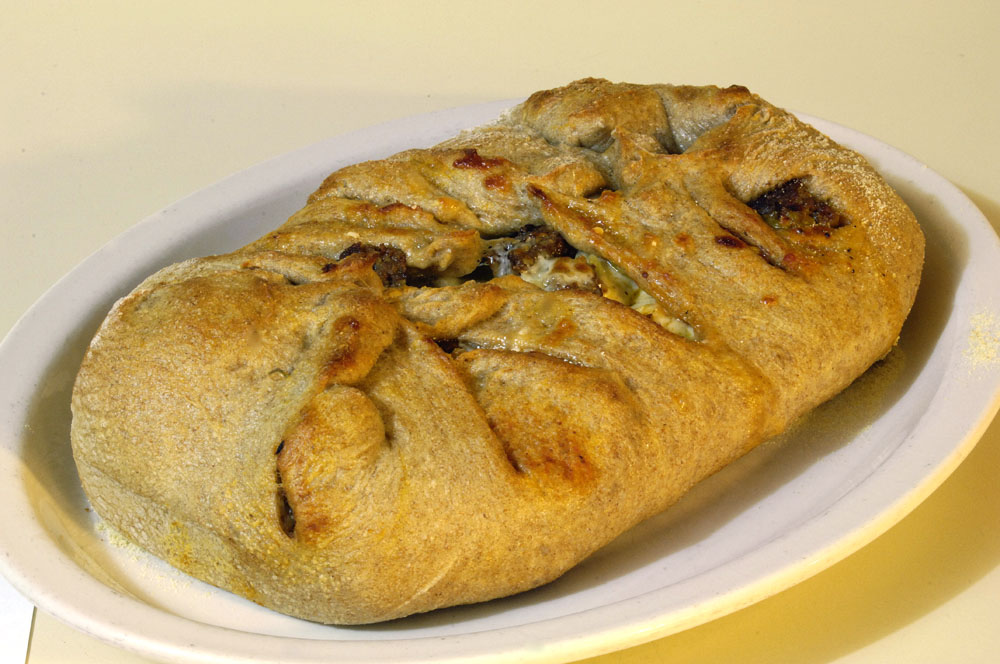
Once you’re on the slippery slope of good homemade pizza, you’re bound to fall into the decadent land of stromboli. I saw a stromboli at Whole Foods (where they bake very good pizza, by the way) and I knew that I was doomed to try it at home.
This stromboli is filled with cauliflower, seared brussels sprouts, fake sausage, mozzarella, parmesan, and garlic. I partly cooked the cauliflower by steaming it before putting it into the stromboli. The crust is like a pizza crust. This crust is half unbleached flour and half whole wheat sprouted flour.
This was my first effort at stromboli. It came out a bit ugly, but it was good. It seems there are multiple methods for shaping stromboli. I’d recommend some Googling and watching some YouTube videos to find a stromboli method that works for you.
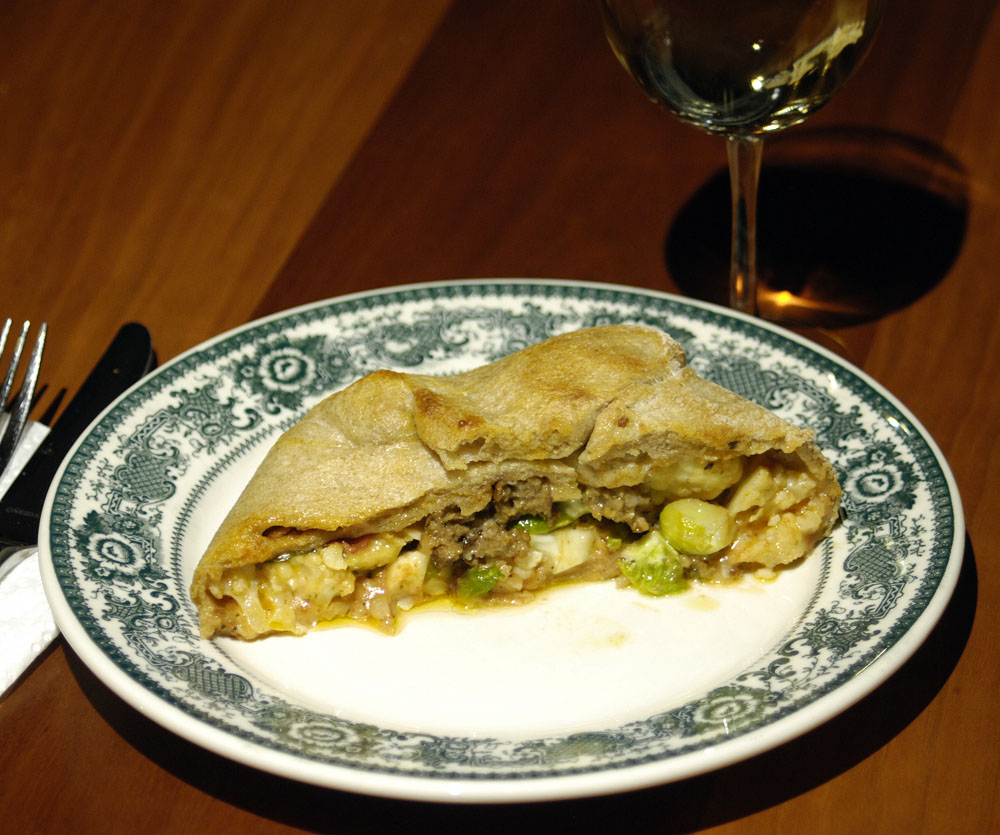

I used the slash-and-braid method of shaping the stromboli.
My mention of John Williams’ “Leia’s theme” in a recent post got me wondering about the sound track for “Star Wars: The Force Awakens,” which will open on Dec. 18.
The Wikipedia article confirms that Disney commissioned John Williams to compose the score. We also know that Harrison Ford, Carrie Fisher, and Mark Hamill will return (somewhat older) in their old roles. So it stands to reason that the score will include the old themes. In the Wikipedia article, Williams confirms that we’ll hear the old themes, but he doesn’t say much about new musical themes:
[The old themes] “will seem very natural and right in the moments for which we’ve chosen to do these kinds of quotes. There aren’t many of them, but there are a few that I think are important and will seem very much a part of the fabric of the piece in a positive and constructive way.”
As you can imagine, Star Wars fans worldwide have been sleuthing and looking for leaks. Amazon France apparently accidentally leaked the track list for the soundtrack CD:
1. Main title and the attack on the jakku village
2. The scavenger
3. I can fly anything
4. Rey meets bb-8
5. Follow me
6. Rey’s thème
7. The falcon
8. That girl with the staff
9. The rathtars!
10. Finn’s confession
11. Maz’s counsel
12. The starkiller
13. Kylo ren arrives at the battle
14. The abduction
15. Han and leia
16. March of the resistance
17. Snoke
18. On the inside
19. Torn apart
20. The ways of the force
21. Scherzo for X-wings
22. Farewell and the trip
23. The jedi steps and finale
It sure looks like there’s some new stuff there. I have pre-ordered the soundtrack CD from Amazon. Though I have a lot of doubts about what Disney will do with Star Wars, we can surely count on John Williams to get the music right. Dec. 18 will be not just a big day for cinema. It also will be a big day for music.
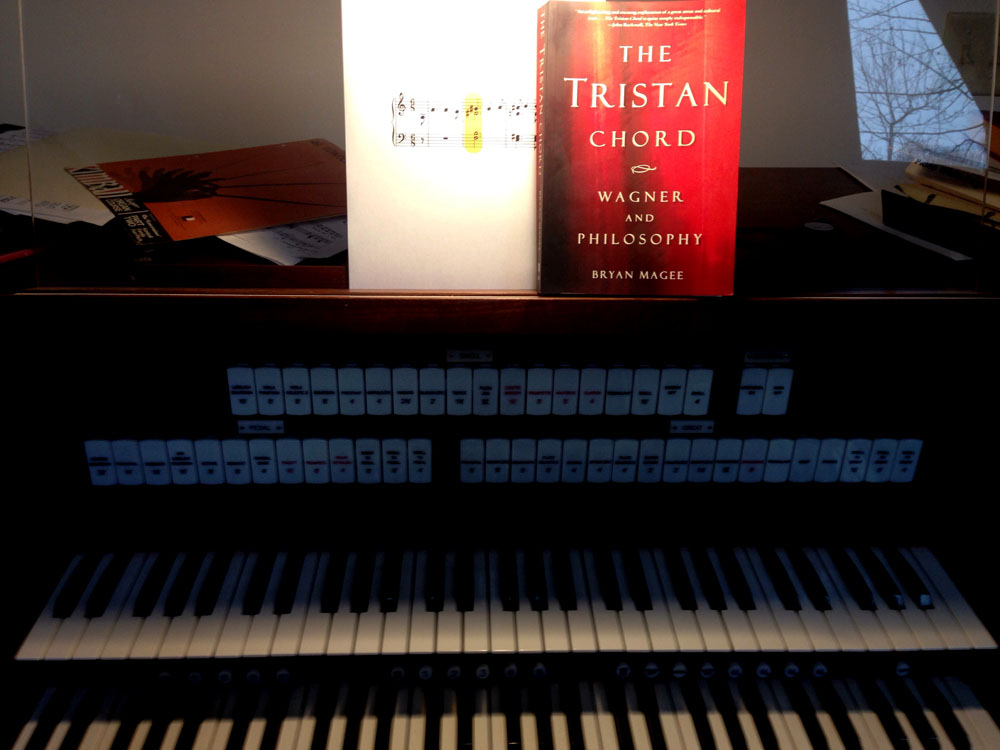
The Tristan Chord: Wagner and Philosophy. By Bryan McGee, Henry Holt and Company, New York, 2000.
When I bought this book, I expected only to browse it. I ended up devouring it. As I’ve mentioned in other posts, you never know where research for a novel might lead you. In this case, I was thinking about musical metaphors and interesting ideas for the Socratic dialogues in Oratorio in Ursa Major.
Truth be known, I am not that great a fan of Richard Wagner. I even have been to a performance of “Tristan and Isolde” by the San Francisco Opera, and that did not win me over to the music. I find the music (four hours of it!) difficult to listen to. Still, the legend of Tristan and Isolde is archetypal in Western culture. Jake, my protagonist and hero in Fugue and Oratorio in Ursa Major, often makes drawings of unusual buildings, and he has a bit of a thing for towers covered with vines and thorns (like the tombs of Tristan and Isolde in some tellings of the story).
Nevertheless, I think it’s very important to know just what a landmark Wagner’s “Tristan and Isolde” was in the 19th Century. The music was like nothing ever heard before. Orchestras declared it impossible to play. Singers said that it was impossible to sing. There were more than 70 rehearsals of the opera in Vienna between 1862 and 1864, but the performance was called off and the opera was declared unperformable. Finally Wagner succeeded in staging it, in 1865 — 150 years ago.
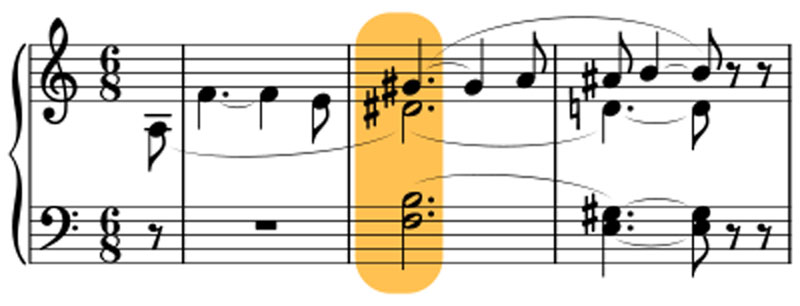
After 150 years, the debate still runs hot in some musical circles. Just what is Wagner’s Tristan chord? Is it just a modified minor seventh chord? Or is that G-sharp an appoggiatura to the A, putting the chord in a whole different light? (It’s not necessary to understand the music theory here. The point is that the experts have been arguing and disagreeing for 150 years, and there are several theories about what the chord is.)
Here is what the music looks like:
Here it is played on the Acorn Abbey organ:
Stephen Fry did an excellent documentary on the Tristan chord called “Wagner and Me” back in 2010. (More about this Fry documentary in a moment.) Fry emphasizes the unbearable longing that the chord expresses. Our ears want the chord to resolve, but in four hours of music, it never does — not until the very end of the opera. No wonder some people consider the opera to be torture.
What do we mean by a chord resolving? Even if you can’t read music and don’t know a thing about music theory, your ear knows all the rules. For example, if I sing the first line of this ditty:
Old MacDonald had a farm!
Your ear will give you no rest until you hear that musical phrase resolved:
Eee-aye eee-aye oh!
There. That resolved it. Or think of the last note of pretty much any song:
And crown thy good
With brotherhood
From sea to shining —
Your ear will give you no rest until you hear the last note, in which the dominant chord, as it always must, resolves to the tonic:
Sea!
Believe me, even if you think you know nothing about music, if you love music and listen to music, your ear knows all the rules. I doubt that any metaphysical system will ever be able to explain why music has the emotional effect on us that it has, but part of that musical effect, surely, is creating tension — even longing — in unresolved harmonies and melodies, and then taking us along for a nice ride toward the resolution.
In many ways, John Williams (who wrote the music for “Star Wars”) is the Wagner of our time. Listen to this performance of Leia’s theme and think about how the music creates longing and tension and demands that we listen until we hear these tensions resolved. The final resolution comes quietly at 4:11, with a lonely note from the violin, followed by the remainder of the tonic chord in an arpeggio from the harp. Again, it doesn’t matter what the “tonic” chord is or what an “arpeggio” on the harp is. Your ear knows when it has finally got what it wanted. When the final chord finally comes, the orchestra quietly takes over the chord from the violin and the harp and holds the chord for many beats, to let the resolution sink in and to give our ear the peace it was longing for:
You’re not in a hurry, are you?
Here’s an excerpt from Stephen Fry’s “Wagner and Me” documentary:
Part of what makes Bryan Magee’s book so fascinating is his discussion of the philosophy of Immanuel Kant and Arthur Schopenhauer, both of whom greatly influenced Wagner. Over the years, I have made repeated attempts to read Kant’s Critique of Pure Reason, and each time I have been turned back by the impenetrable density of Kant’s writing. Magee acknowledges that Kant’s writing was unnecessarily turgid and boils Kant down. We are all Kantists now. Magee does the same thing for Schopenhauer. And thus I learned that I am pretty much a Schopenhauerian, though not quite as pessimistic.
Magee is an engaging writer and has written a number of books aimed at making modern philosophy comprehensible to ordinary people.
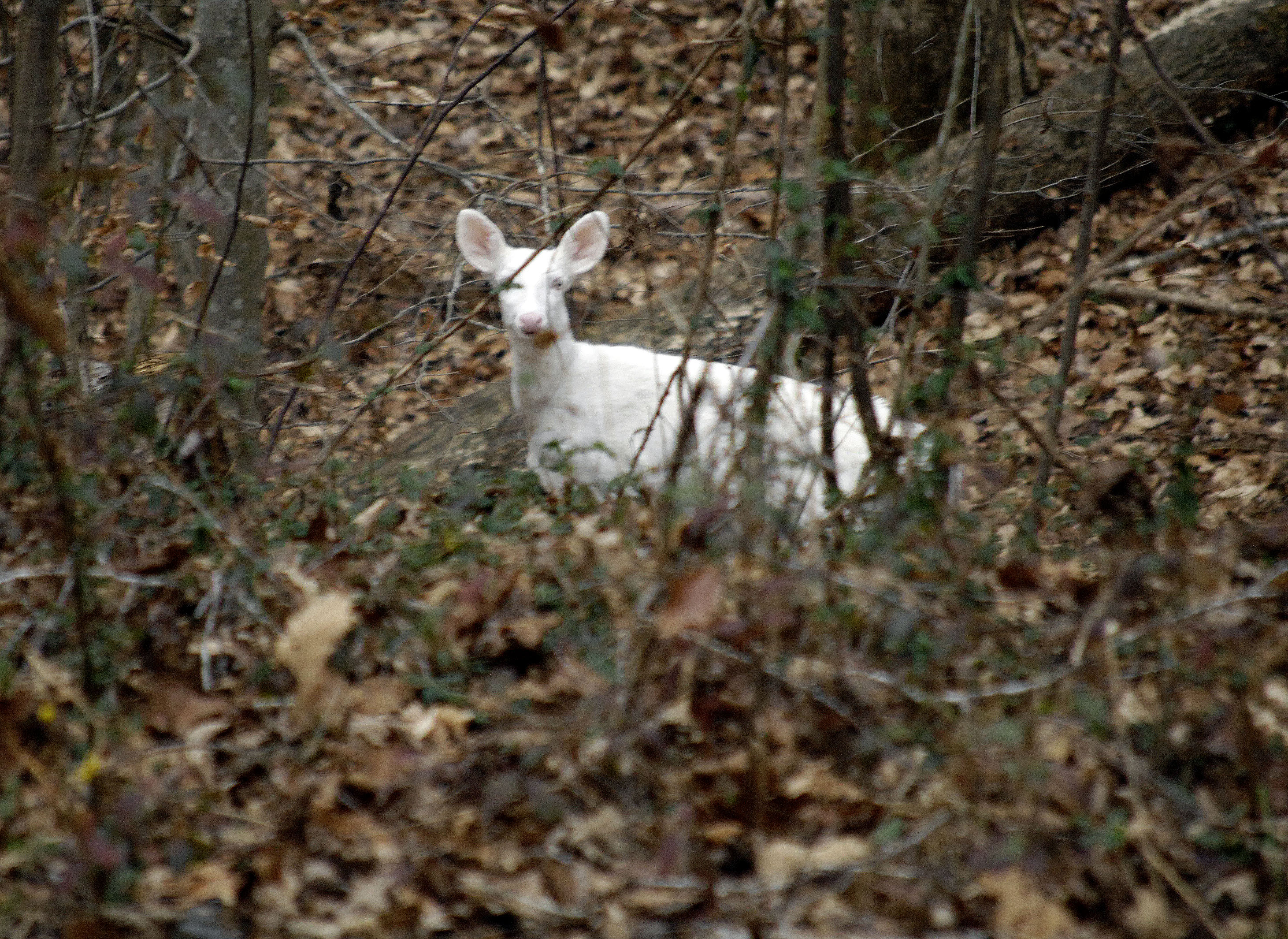
Through the kitchen window, I caught an glimpse of white down in the woods. I had heard rumors of her existence in the woods near the abbey. I quickly grabbed the camera, changed to a longer lens, and went to check. She dashed away quickly, and there wasn’t an opportunity for a great photo.
Some quick Googling suggests that hunters report that only about one deer in 30,000 is albino.
I hope she stays safe.
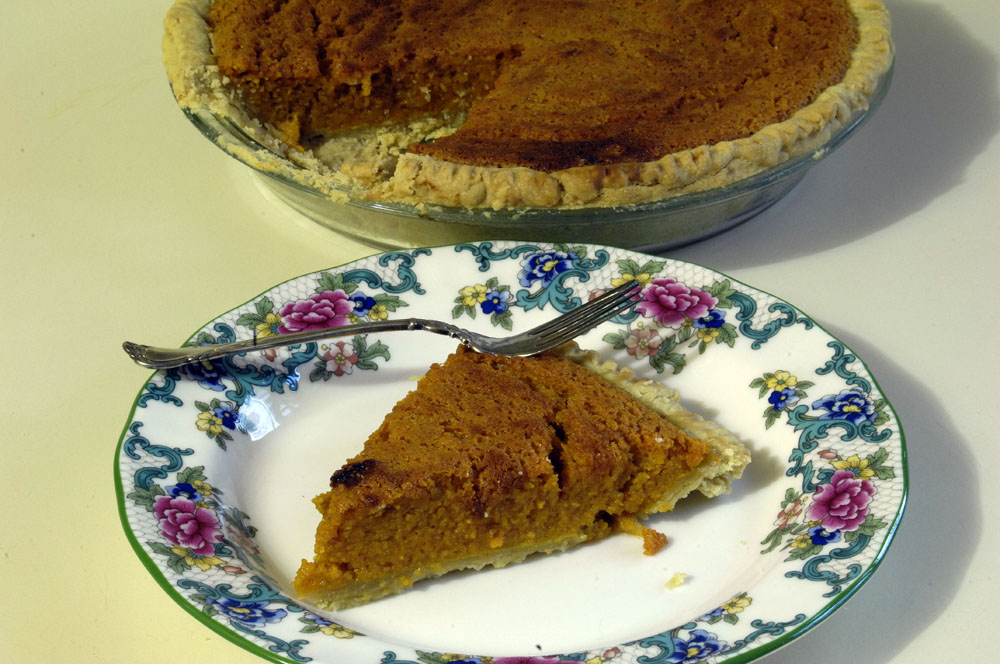
Here’s a traditional abbey-recipe pie that you can make all winter. A friend gave me some home-grown sweet potatoes, and I resolved to make a pie out of them. I had not made a sweet potato pie in ages, because usually I go for pumpkin pie. But, as I mentioned in an earlier post, proper cooking pumpkins were hard to find this year. But sweet potatoes are easy. Stokes County, North Carolina, is a great producer of sweet potatoes, and the friend who gave me the potatoes knows the good ones — he used to be an agricultural extension agent and helped commercialize our sweet potatoes.
As usual, I study a lot of recipes to get concepts, then I go off in my own direction. I wanted this pie to have a whiff of rum and citrus. Here’s the recipe:
Sweet potato pie

1 1/2 pounds cooked sweet potatoes
1 cup sugar (3/4 may do -- use your judgment)
1/2 cup fresh-squeezed orange juice
2 eggs

1 teaspoon cinnamon
1/2 teaspoon nutmeg
1 teaspoon vanilla extract
1 tablespoon rum
Separate the egg yolks and whites. Beat the whites until they are stiff. Add the remaining ingredients and beat like the dickens. Pour the mixture into an unbaked pie shell. Bake at 350 degrees for about 50 minutes or until properly done. The pie will rise like a soufflé while baking, then sink as it cools.
It has been years since I’ve had distilled spirits in the house. I actually went to the Walnut Cove ABC store today and bought rum especially for this pie. I figured it couldn’t hurt to have a little rum around for the holidays.
I would not recommend boiling the sweet potatoes. You’ll boil all the flavor out of them and make them soggy. Baking them, then removing the skins after they’ve cooled, is the way to go.
My pie and quiche crusts are always homemade. It’s just 2 cups of unbleached flour, half a cup of olive oil, and enough cold water (just a few tablespoons) to moisten the dough. You know the procedure for pie crusts, right?
This pie is delicious. I’m going to have a second piece now.