Hard times: How would we respond?

farming-in-cuba.jpg
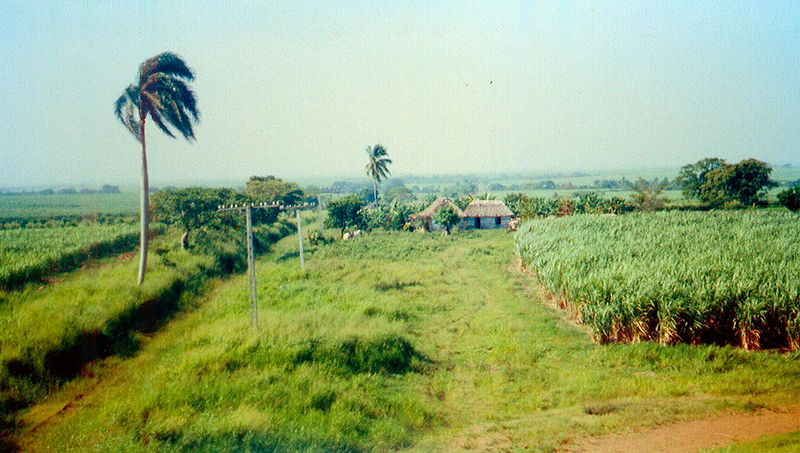
Wikipedia: a sugar plantation in Cuba

Though I try not to be too gloomy, I, like many others, am afraid that there’s a significant chance that there may be hard times in our not-too-distant future. In fact, I’m afraid we may be in for a double whammy. Whammy No. 1 would be a long period with a weak economy. Whammy No. 2 would be the end of cheap oil.

As for the economy, Steven Pearlstein, a columnist at the Washington Post, summarizes it pretty well today in Enough with the economic recovery: It’s time to pay up. Pearlstein says: “The controlling reality is that the global economic system is rebalancing itself after years in which the United States was not only allowed but encouraged to live beyond its means, consuming more than it produced and investing more than it saved. Now the bill for that is finally coming due — all the clever and seemingly painless ways for postponing that day of reckoning have pretty much been played out. The only question now is what form that payment is going to take. Will it be an extended period of subpar growth and high unemployment, inflation that erodes the purchasing power of our income and the value of our assets, a deflationary spiral that grinds down wages and salaries and increases our debt burden — or, as I suspect, some combination of all three?”

As for the end of cheap oil, Jörg Friedrichs, a social scientist at Oxford, has an article in the August issue of Energy Policy about possible responses to the end of cheap oil. Miller-McClune Online also has an interview with Friedrichs.

Friedrichs sees three likely responses, two of them quite negative, and one of them positive:

1. Attempts by nations to take oil by military predation, as Japan did from 1918 to 1945.

2. Attempts by elites to preserve their rich lifestyles at the expense of the rest of the populaton, as North Korea did during the 1990s.

3. Socioeconomic adaptation, which is what happened in Cuba after the fall of the Soviet Union, when Cuba’s fuel imports dropped by an estimated 71 percent. Cubans adapted by turning their apartment terraces and urban vacant lots into gardens, and by helping each other out. Because Cuba has never been a rich country, traditional knowledge (of such things as farming) was still common. Family and community networks were still strong.

As much as I loved my 17 years in San Francisco, I certainly would not want to be in any city during hard times. I’d rather be in farmland, places where people still have barns and pastures, places where people remember the skills that supported their parents and grandparents.
Patience

patience-00001.JPG
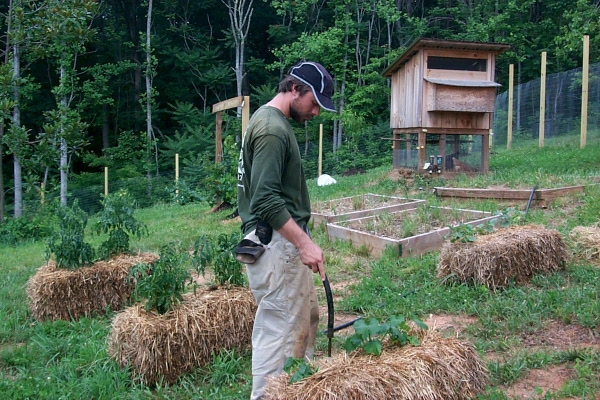
Ken waters the straw bale garden

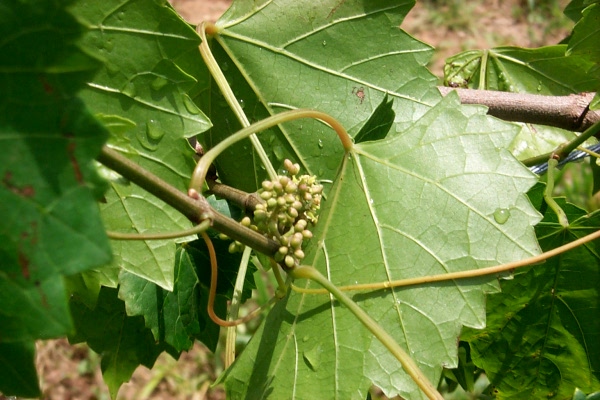
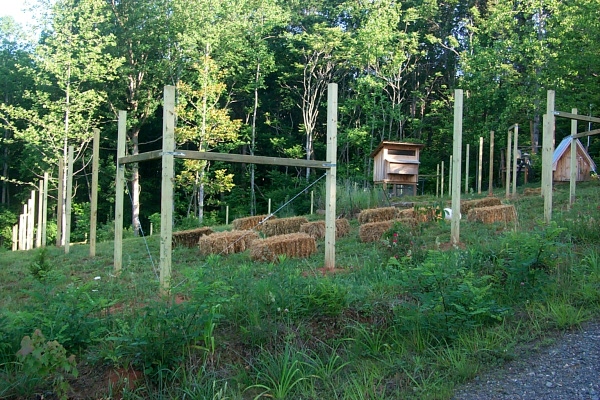
The vegetable garden this year is both small and late, because of time spent putting up the garden fence and planting permanent fruit trees. In future years, I intend to have a much larger vegetable garden. But the plants are all developing. The blueberry bushes and grape fines actually will have a little fruit this year.

patience-00002.JPG
The first tomato

patience-00003.JPG
Baby grapes

patience-00004.JPG
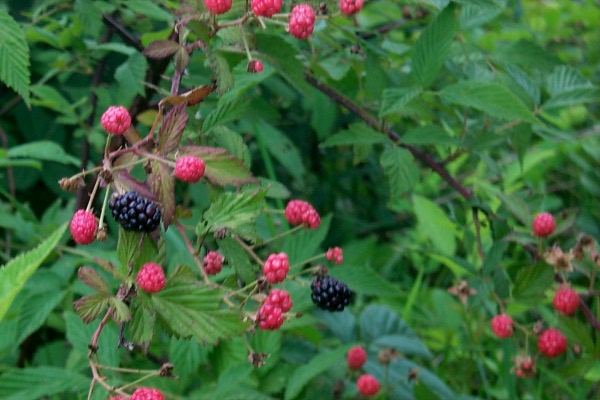
Wild blackberries

Photos from my morning walk

morning-walk-1.JPG
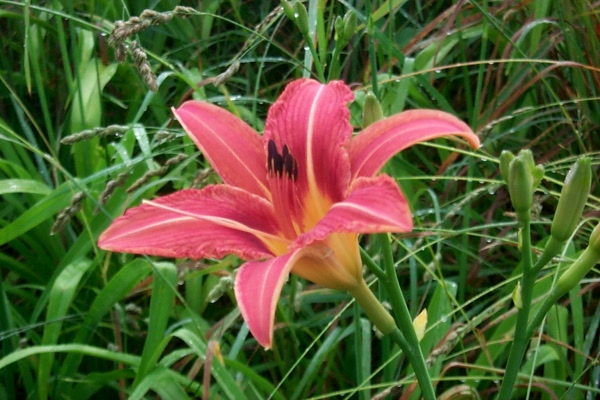
Late yesterday afternoon, a thunderstorm dropped almost one and a half inches of rain here. So all the growing things are very happy this morning. The first railroad lily opened this morning.

morning-walk-2.JPG
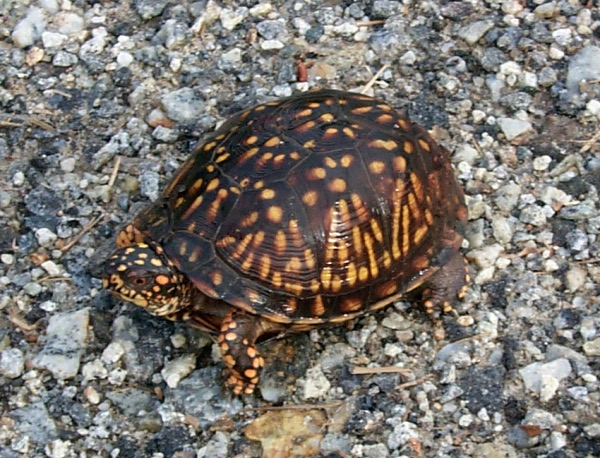
This terrapin slowly wandered across the driveway.

morning-walk-3.JPG
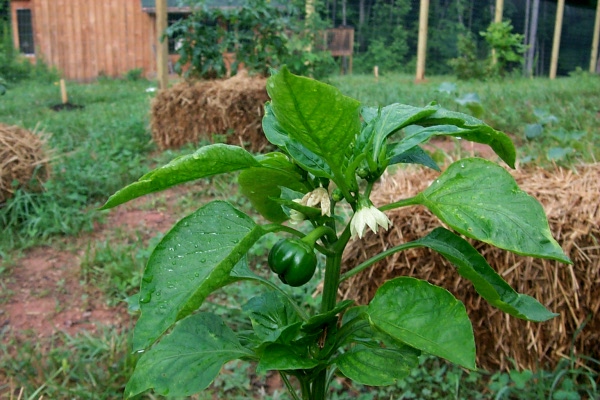
A baby bell pepper

morning-walk-4.JPG
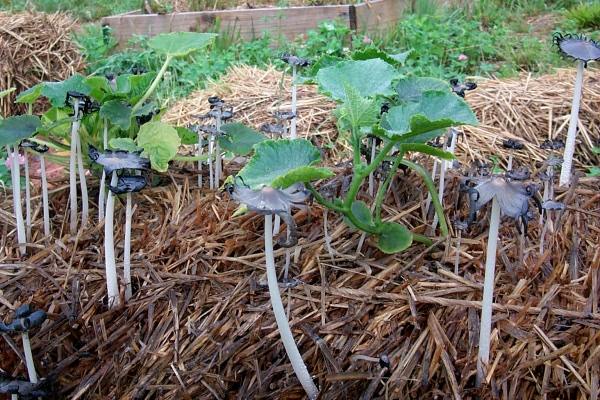
A couple of the straw bales have a crop of mushrooms each morning. As soon as the morning sun hits the mushrooms, they turn black and dry up.

Mitchell's Nursery

mitchell-1.JPG

Ken and I made a run this morning to Mitchell’s Nursery and Greenhouse at King. We came back with the trailer loaded with: Another fig three, two peach trees, 3 blueberry bushes, two grapevines, a rhododendron, 2 crepe myrtles, a dogwood tree, and two emerald green arbor vitae trees. I wanted a couple of cherry trees, but unfortunately they didn’t have that.

mitchell-2.JPG
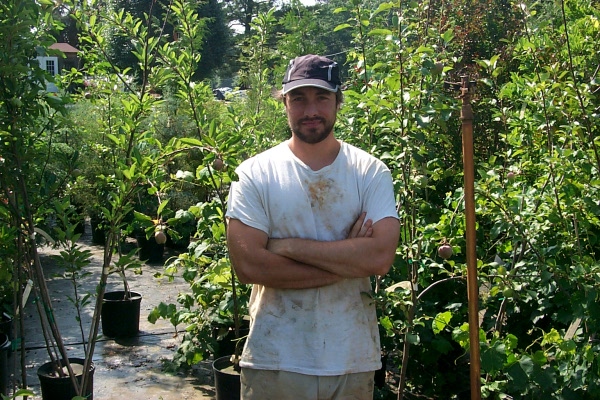
This nice man answered all our questions at the nursery.

mitchell-3.JPG
Ken among the shrubbery

mitchell-4.JPG
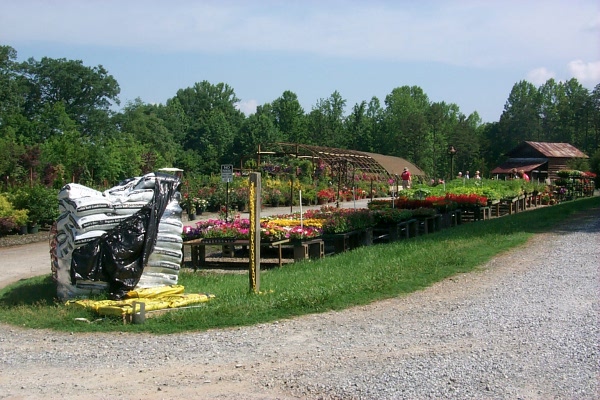
Mitchell’s is one of the biggest nurseries in the area.

mitchell-5.JPG
After the nursery, it’s off to Sandy Ridge Landscaping Materials to get more compost. Ken has used three loads of compost already, and we’re not nearly done.

Hand tools

aa-bent-mattock-1.JPG
This old mattock couldn’t stand up to Ken’s demands.

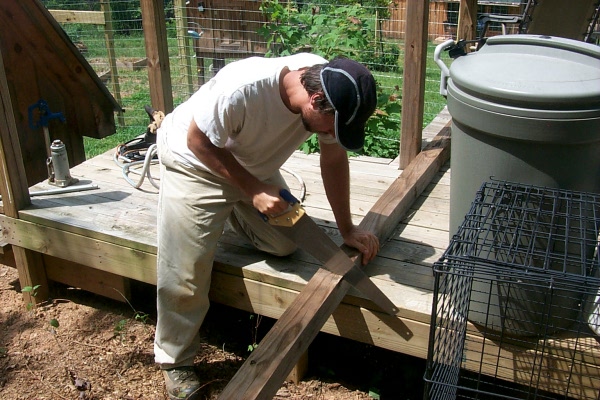
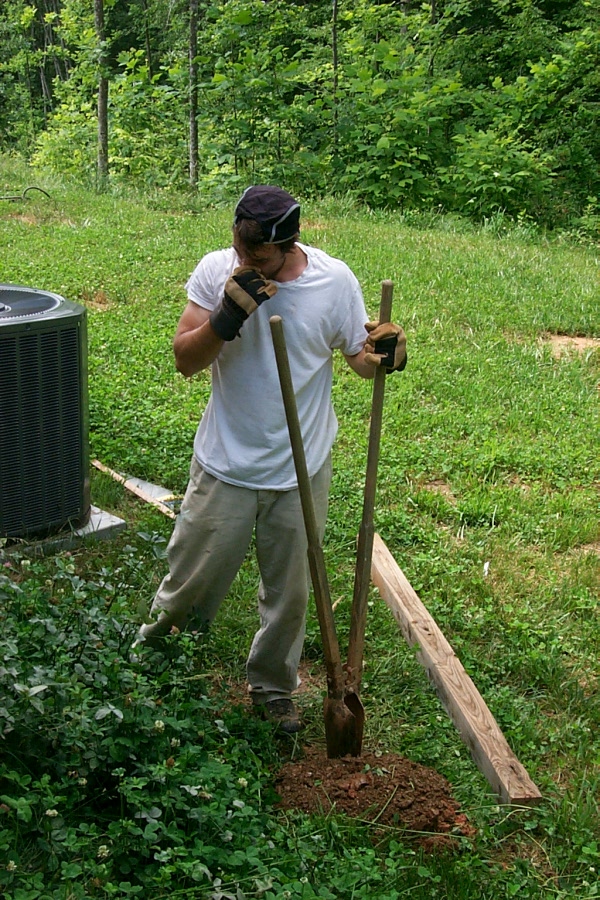
Though we used a rented gasoline-powered augur to drill the holes for the fence posts, and though we frequently use a battery-powered drill and screw driver, otherwise we are using hand tools this summer. Ken is strong and doesn’t mind the work, and in most cases the hand tools are much safer.

aa-ken-sawing-1.JPG
Ken saws a post.

aa-post-hole-diggers-1.JPG
Ken planting a post for a hose rack

Chicken Liberation Day

chicken-freedom-day-1.JPG

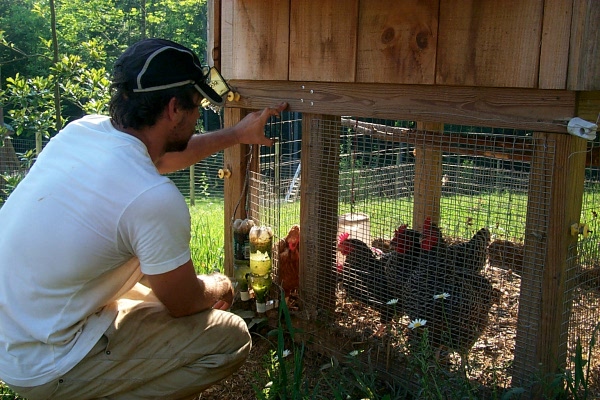
It was a long day, but Ken and I finished building and installing the two gates today. So the fence is officially done. We let the chickens celebrate this event by letting them out of the chicken coop to scratch inside their vast new garden fence for the first time.

chicken-freedom-day-2.JPG
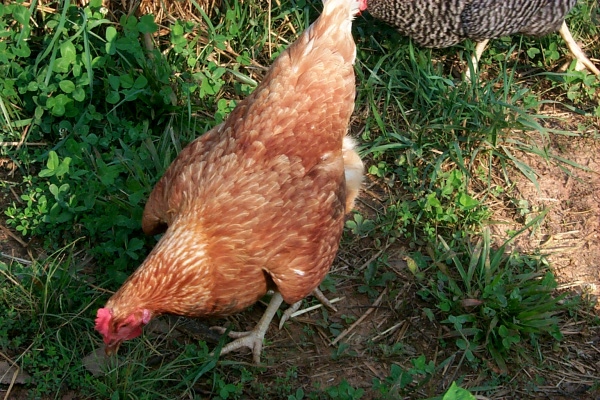
Ken opens the door to let the chickens out. By the way, I believe we are seeing the pecking order here, left to right. The red chicken is No. 1 in the pecking order, so she is first up to the door.

chicken-freedom-day-3.JPG
All this new ground to scratch!

The straw bale experiment is under way

straw-bale-tomato-1.JPG

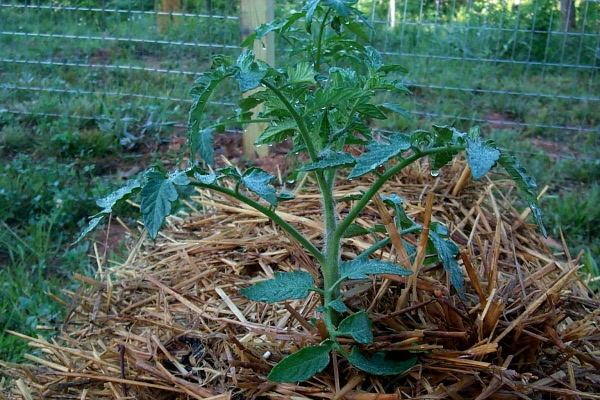
Ken and I planted some tomatoes and basil in the straw bales yesterday. We’ll see how it goes. The vegetable garden is going to be very limited this year. The fence-building project got in the way. Not to mention that to start a garden before the fence was up would be to take chances with the deer (again). Last year, for example, the deer pretty much wiped out all my tomato plants in one night.

This year, however, there will be a weekly farmer’s market in Walnut Cove, and a farmer’s market every other week at Danbury. I’m hoping those two farmer’s markets will make up for the smallness of the vegetable garden.

Strawberry preserves

a-strawberries-2010-05-1.JPG
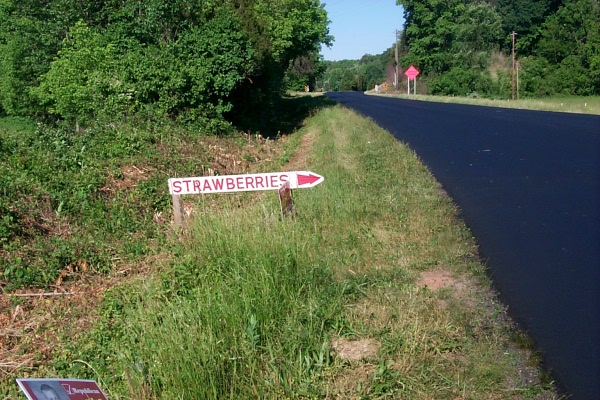
The sign marks the spot on Brook Cove Road.

It had been 20 years since I’d made strawberry preserves. Ken was eager to make preserves for the first time. Monday, May 10, was an unusually cool day, perfect for picking strawberries. So off to Mabe’s Berry Farm we went. Mabe’s Berry Farm is on Brook Cove Road near Walnut Cove.

a-strawberries-2010-05-2.JPG
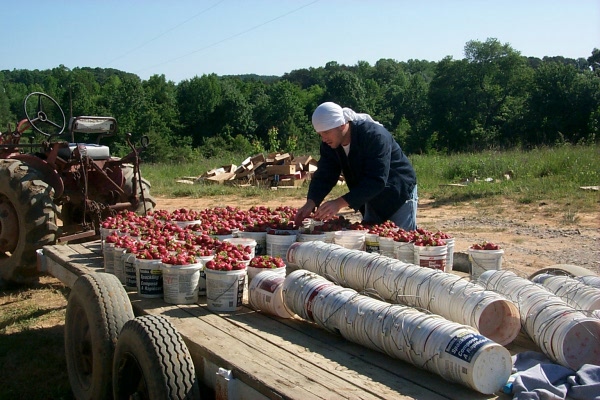
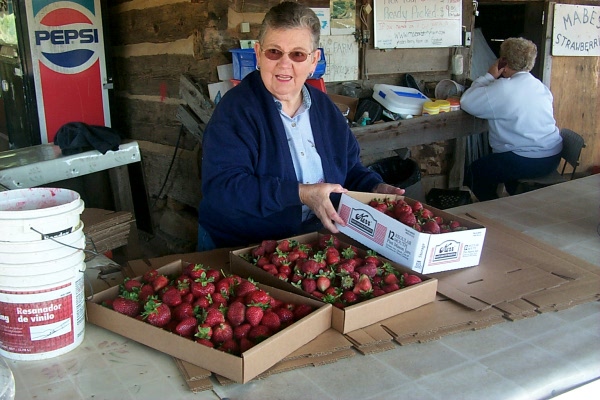
A strawberry field worker loads berries to be sold already picked.

a-strawberries-2010-05-2a.JPG
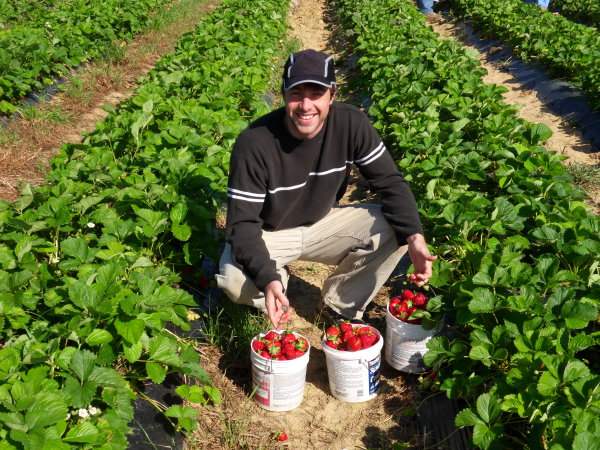
The berries are cheaper if you pick them yourself. Here’s Ken with the three gallons of strawberries we picked.

a-strawberries-2010-05-3.JPG
Our berries are transferred to boxes for the ride home.

a-strawberries-2010-05-4.JPG
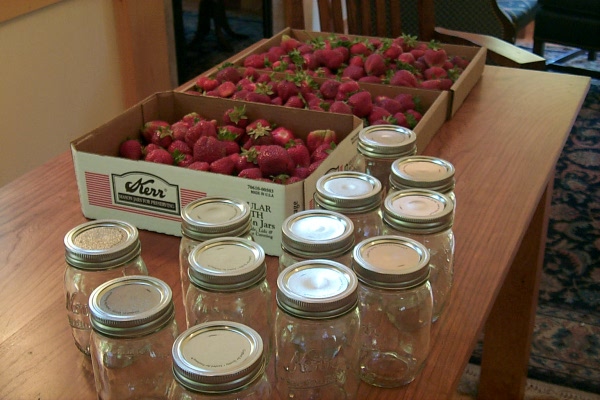
Back at home, the jars and berries are almost ready to start. The jars will go into the dishwasher to get them clean and hot.

a-strawberries-2010-05-6.JPG
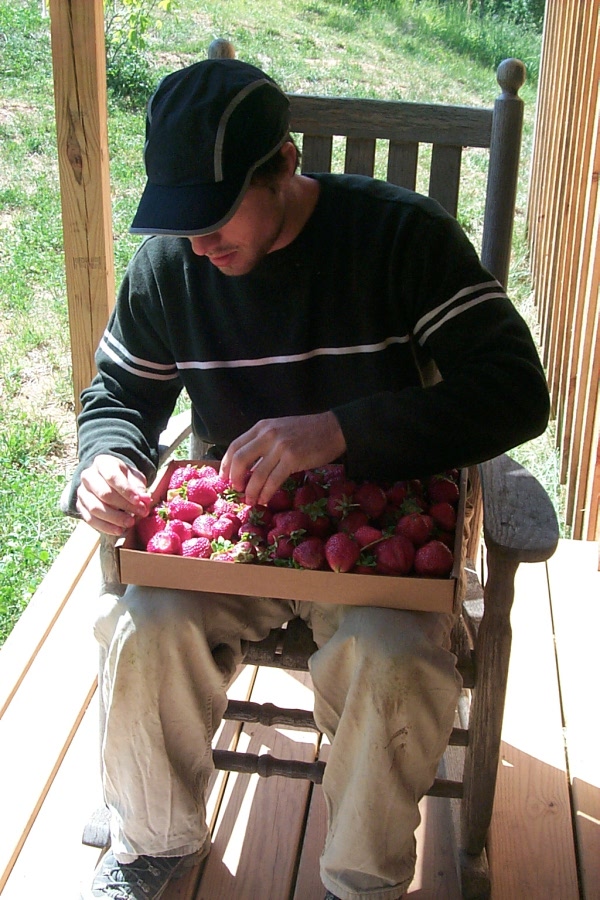
Ken caps strawberries.

a-strawberries-2010-05-5.JPG
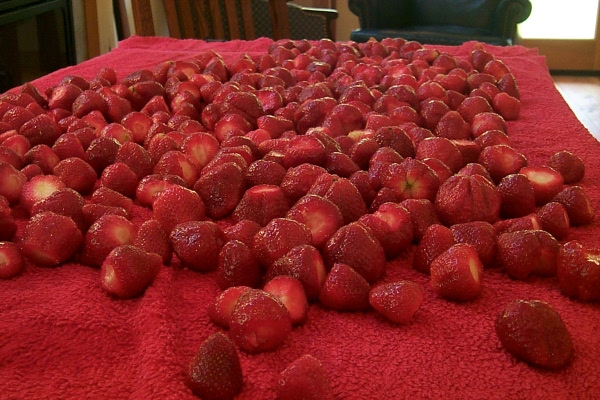
Washed and capped and ready to cook

a-strawberries-2010-05-5a.JPG
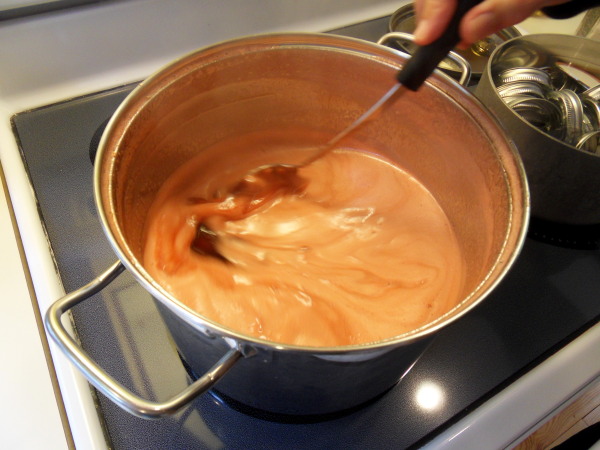
The strawberries are boiled with sugar. The preserves use a lot of sugar — five cups of sugar for each quart and a half of strawberries. The lids are boiling in the pot to the right.

a-strawberries-2010-05-7.JPG
All done.