Update on Fugue in Ursa Major

fugue-update

I regret that, several times, I’ve made optimistic projections about when Fugue in Ursa Major will be released for sale. Then I keep missing the targets.

My new target date for release is June 20. I am reasonably confident that, even if I miss that target date, I won’t miss it by far.

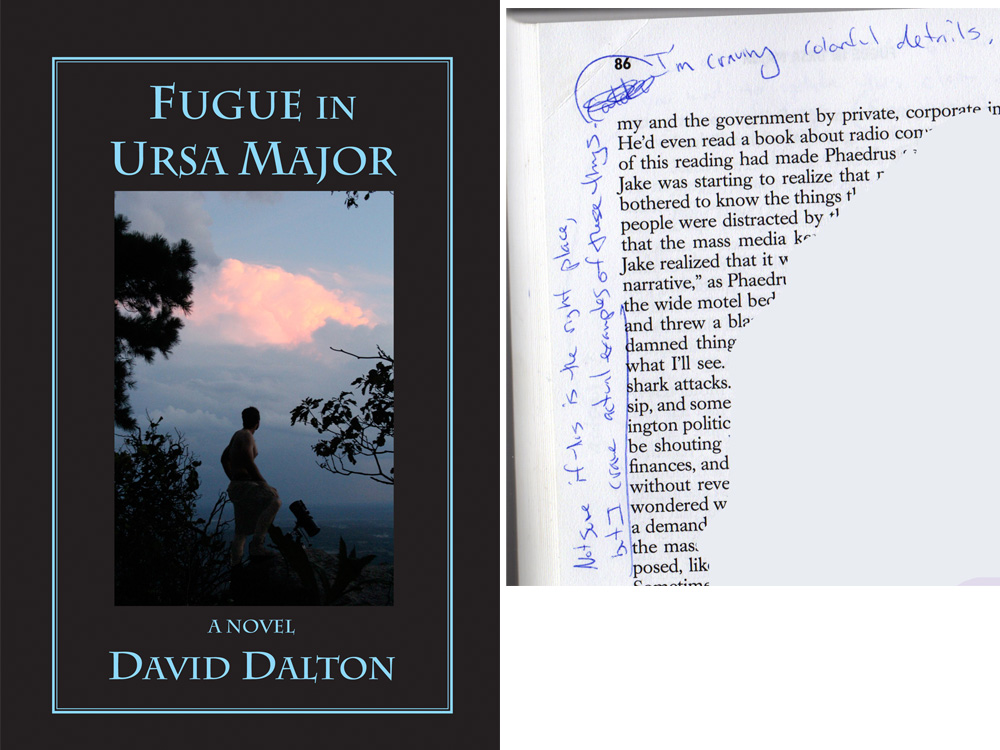
The novel is now in its third round of revisions. I am really fortunate to have excellent first readers, and I have taken their suggestions very seriously. With each round of revisions, I think the book has gotten much better. Not only do I have the first readers’ markup on the proof copies to work with, there also have been many discussions around the dinner table, or around the fireplace, with significant quantities of wine consumed in the process. Literary labor is hard, hard work. Literary work also sometimes involves damage to an author’s ego. But I think that serious writers roll with the punches from their first readers and then get to work to make the story better. After all, it’s the reader’s experience that matters, not the writer’s. Not that readers call the shots. But it’s OK to argue.

One of the things that became clear was that Fugue in Ursa Major demands a sequel. The second book of a series must knit nicely with the first, so many of the revisions have involved background and setup for the sequel. A lot of work has gone into thinking about the characters, getting to know them, and getting them right.

Every self-published writer is terrified of not selling many books. I am, of course, developing a marketing plan for Fugue in Ursa Major. I’ve also gone to a good deal of trouble to ensure that the book is published with my own imprint — Acorn Abbey Books — rather than the publisher being listed as not my own Acorn Abbey imprint but instead one of the providers of on-demand printing. The book will be available for sale through Amazon, of course. But bookstores, it seems, don’t like to order books from Amazon. Bookstores will, however, order from small publishers as long as the orders go through their usual channels. So a considerable amount of work was involved in setting up the book for on-demand printing from Ingram, from which bookstores and libraries order books. This area of publishing and book distribution is changing rapidly. But I was in the publishing business for much of my life, so I am better prepared to navigate this terrain than many self-published authors. We shall see. Release day approaches.

In any case, I wanted to let blog readers know that I’m working as hard as I can to get the book out in June.
The garden kicks in

A-garden-supper-1

The abbey is far from self-sufficient in food, a fact made clear by expenditures at Whole Foods. But each year when the garden kicks in, there begins a time, lasting for several months, in which the abbey is pretty much self-sufficient in produce. Eggs too are an important part of the equation. Eggs from the abbey’s expert hens provide up to 20 percent of our protein year-round.

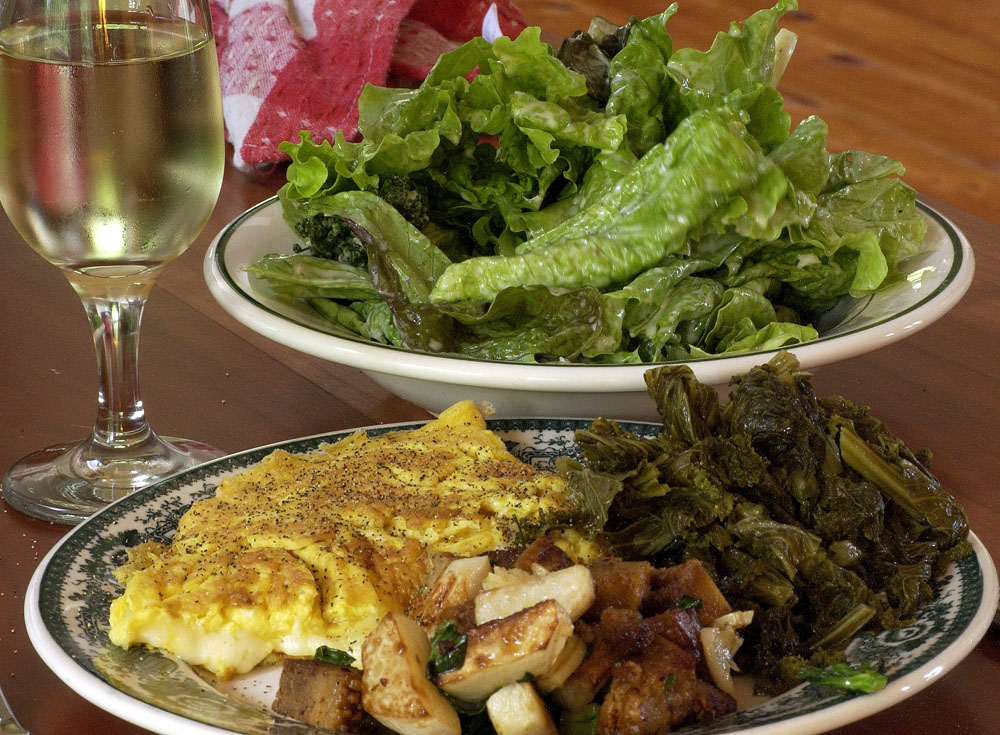
So the season is beginning in which suppers at the abbey largely consist of food grown here. Yesterday’s supper (above) was omelette, a salad of lettuce and broccoli with homemade garlic-Roquefort dressing, turnip and mustard greens, and a side-dish medley of seared turnips, baby bok choi, and some leftovers. All the produce except the garlic came from the garden — garden to table in about an hour.

On the next trip to Whole Foods, I’ll buy very little produce — a significant savings. Instead, Ken will slave in the garden.

A-garden-supper-2
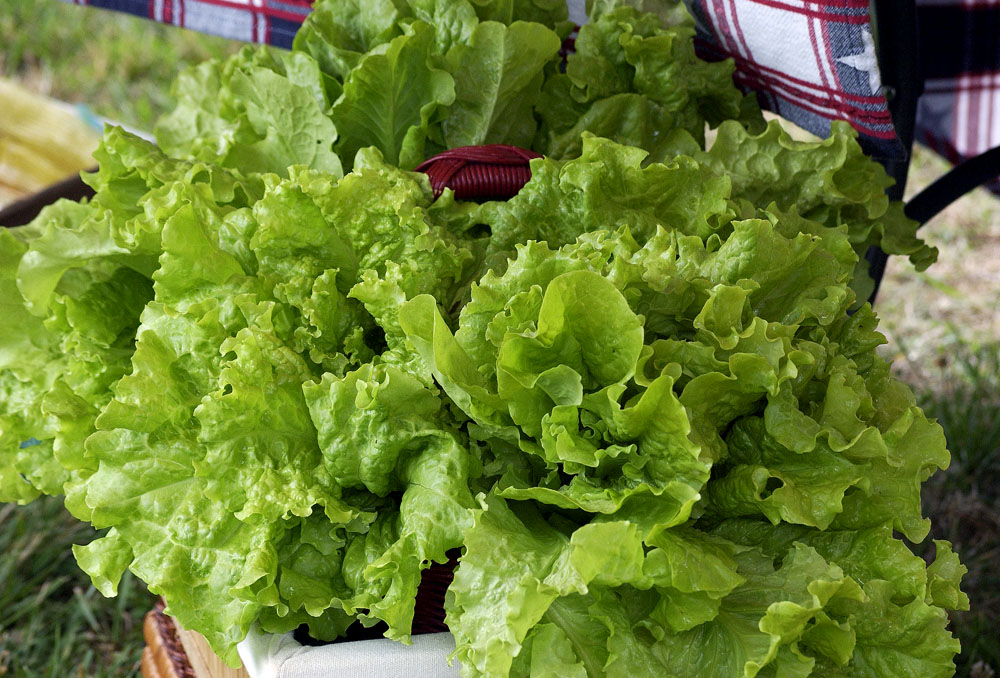
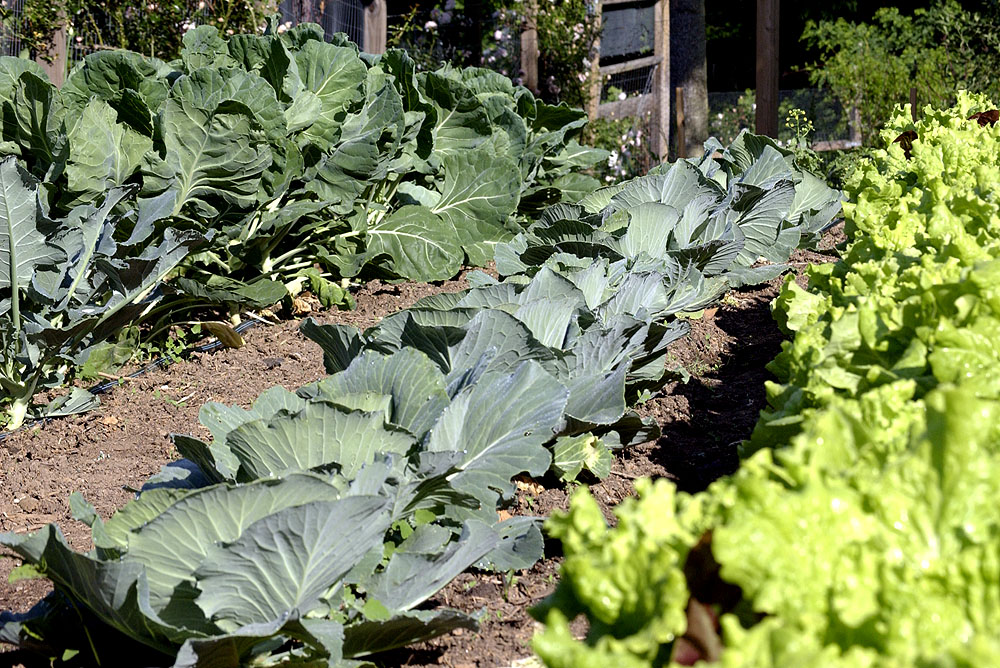
Lettuce, cabbage, and brussels sprouts

A-garden-supper-3
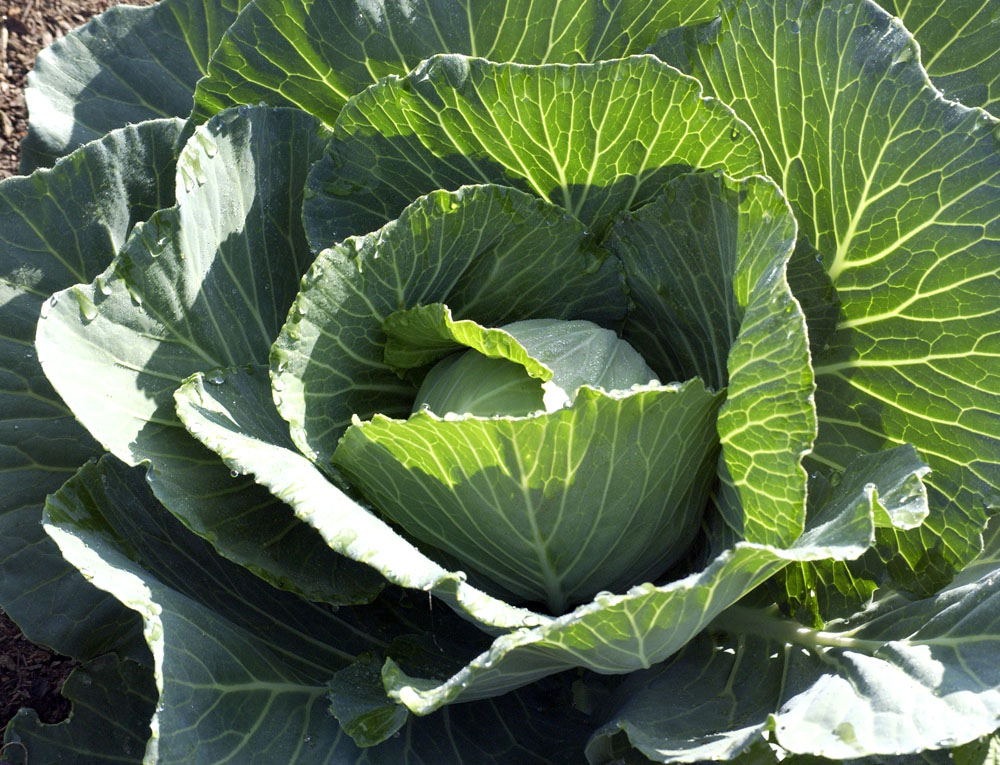
A young cabbage

A-garden-supper-4
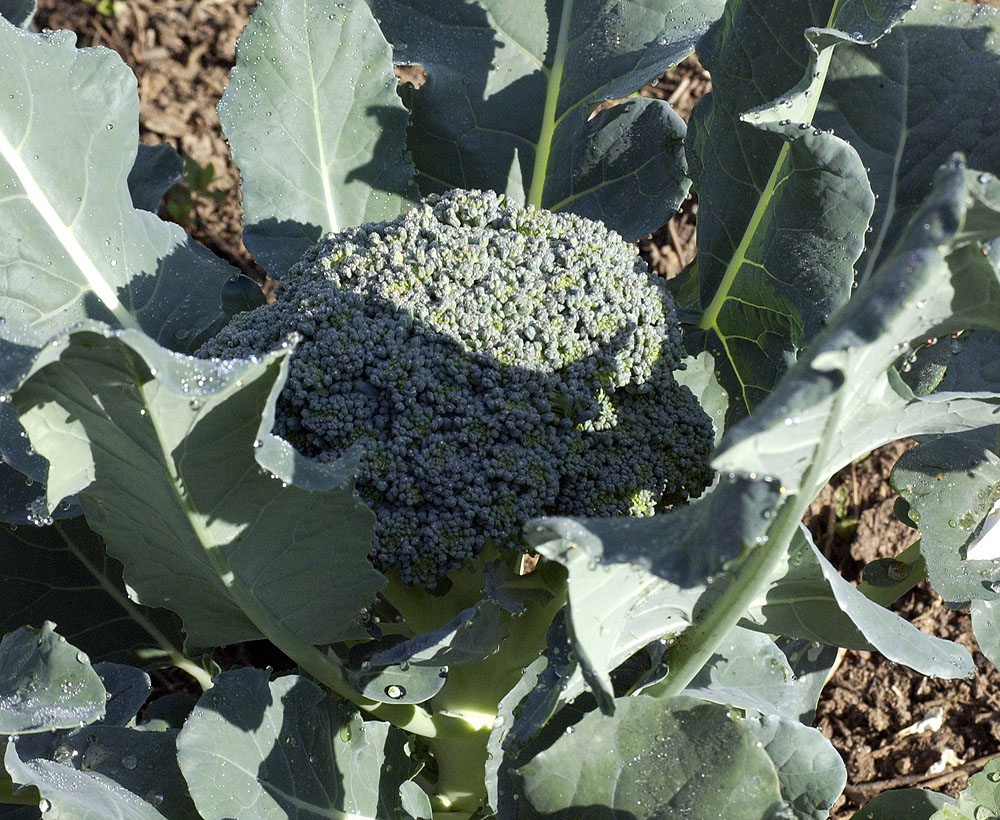
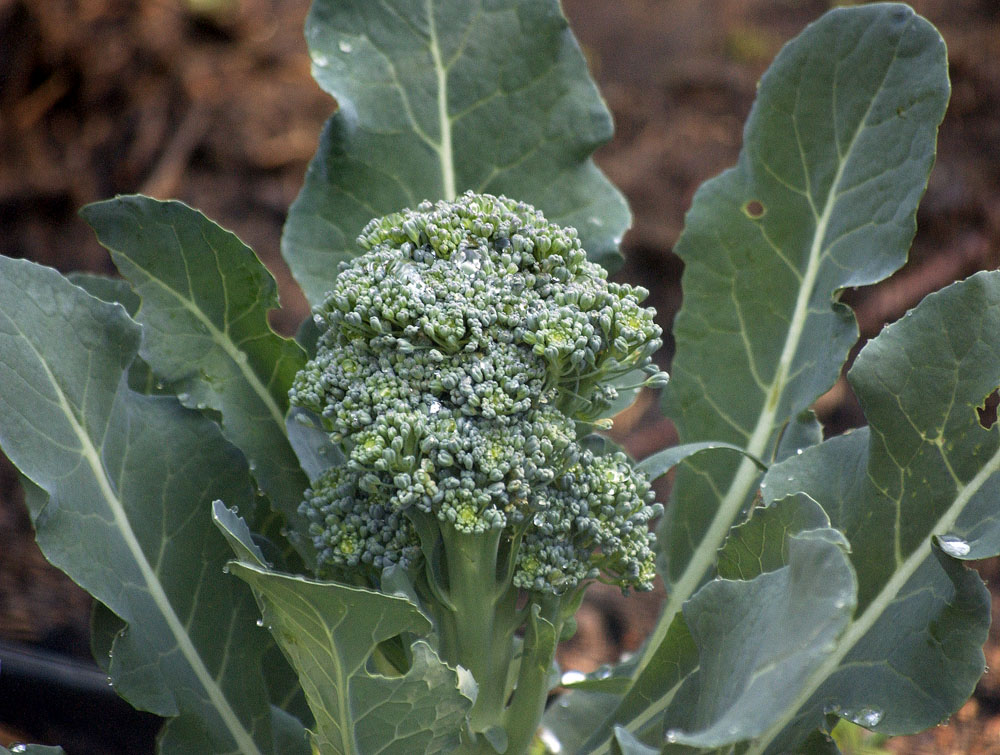
Some of the finest broccoli this year I’ve ever seen

A-garden-supper-5

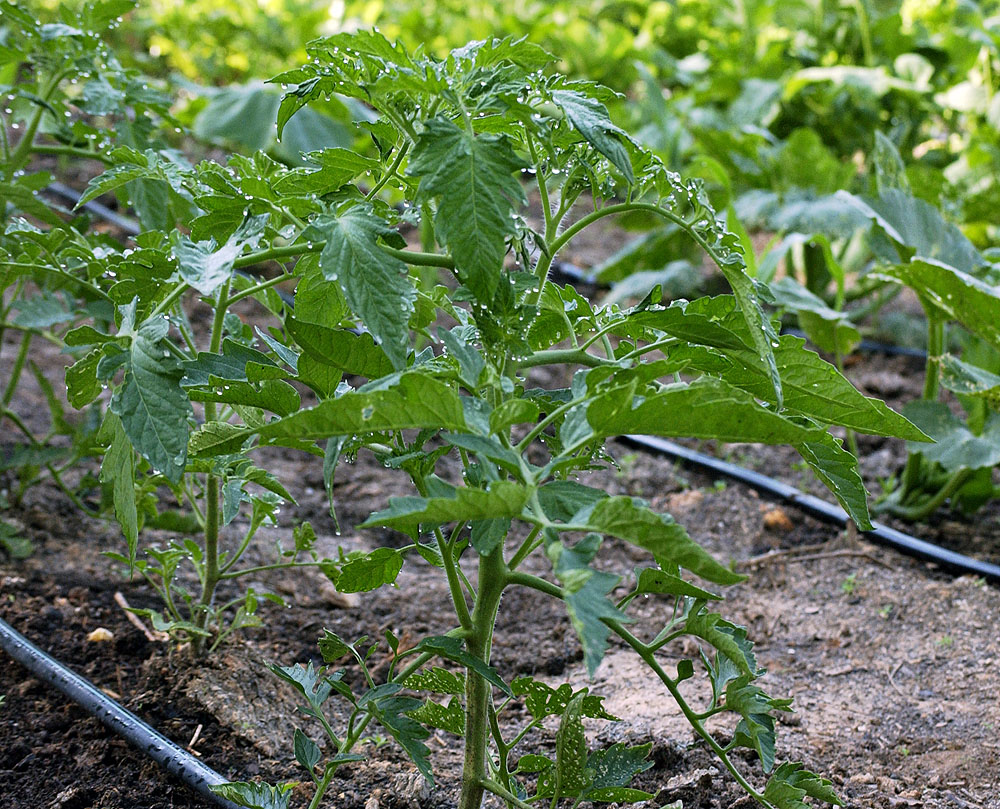
Above, a young tomato. For those not familiar with the Carolina foothills, the soil here is mostly red. Over the past five years, the garden has had literally tons of compost and other organic materials added. Building the soil and feeding the worms is a years-long process, and the process is now well along here. I’ve never seen such rapid growth in the garden. No doubt the insect pests will get worse as the weather gets hotter, but so far the garden has been almost bug free.

A-garden-supper-6
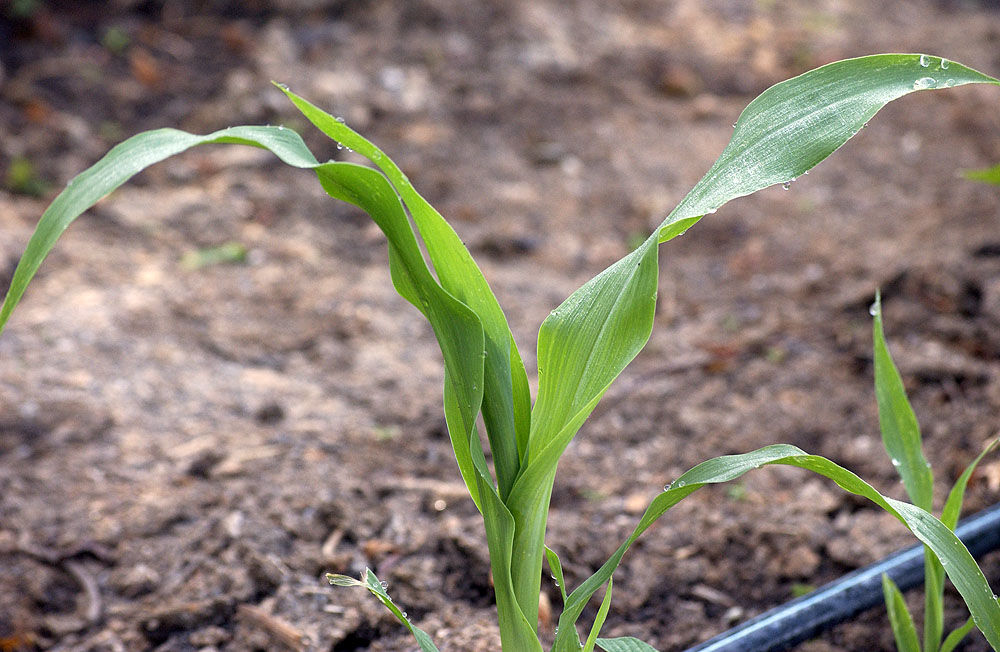
Young corn

A-garden-supper-7
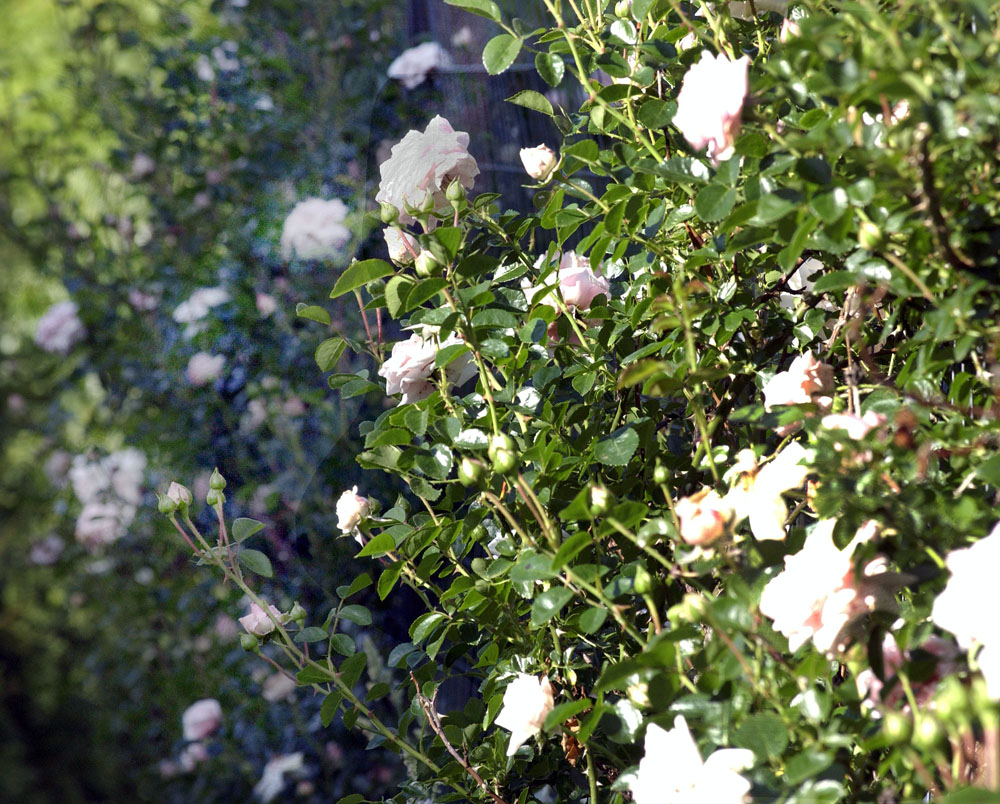
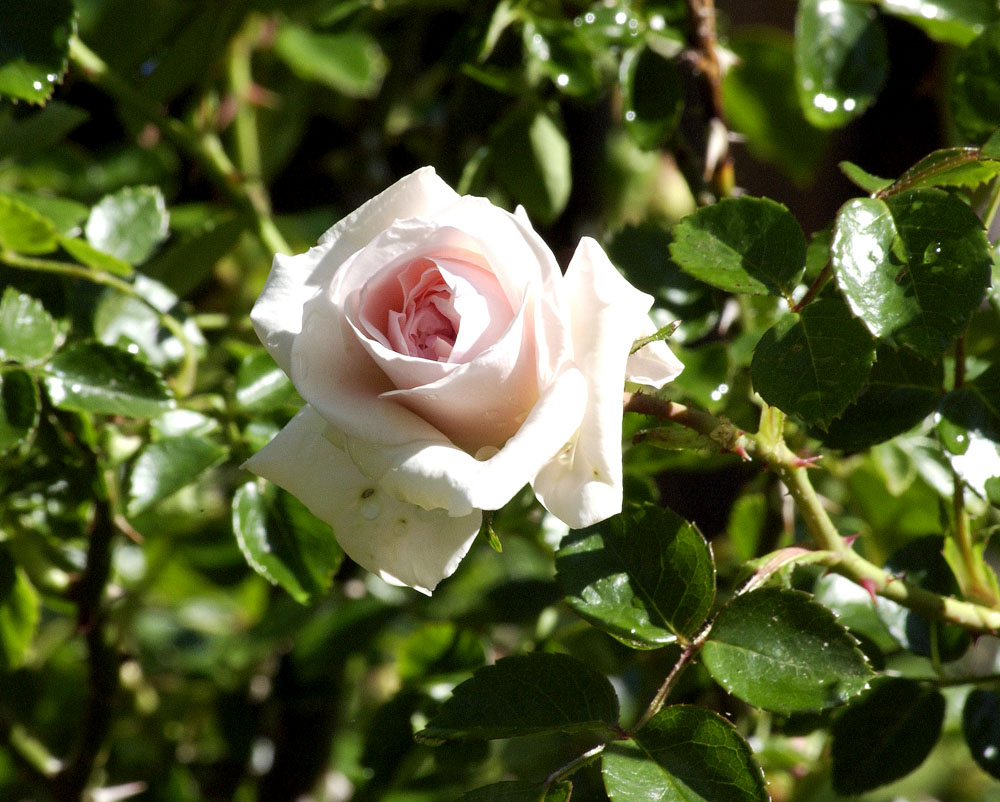
We have walls and walls of heirloom roses on the garden fence and elsewhere.

A-garden-supper-8
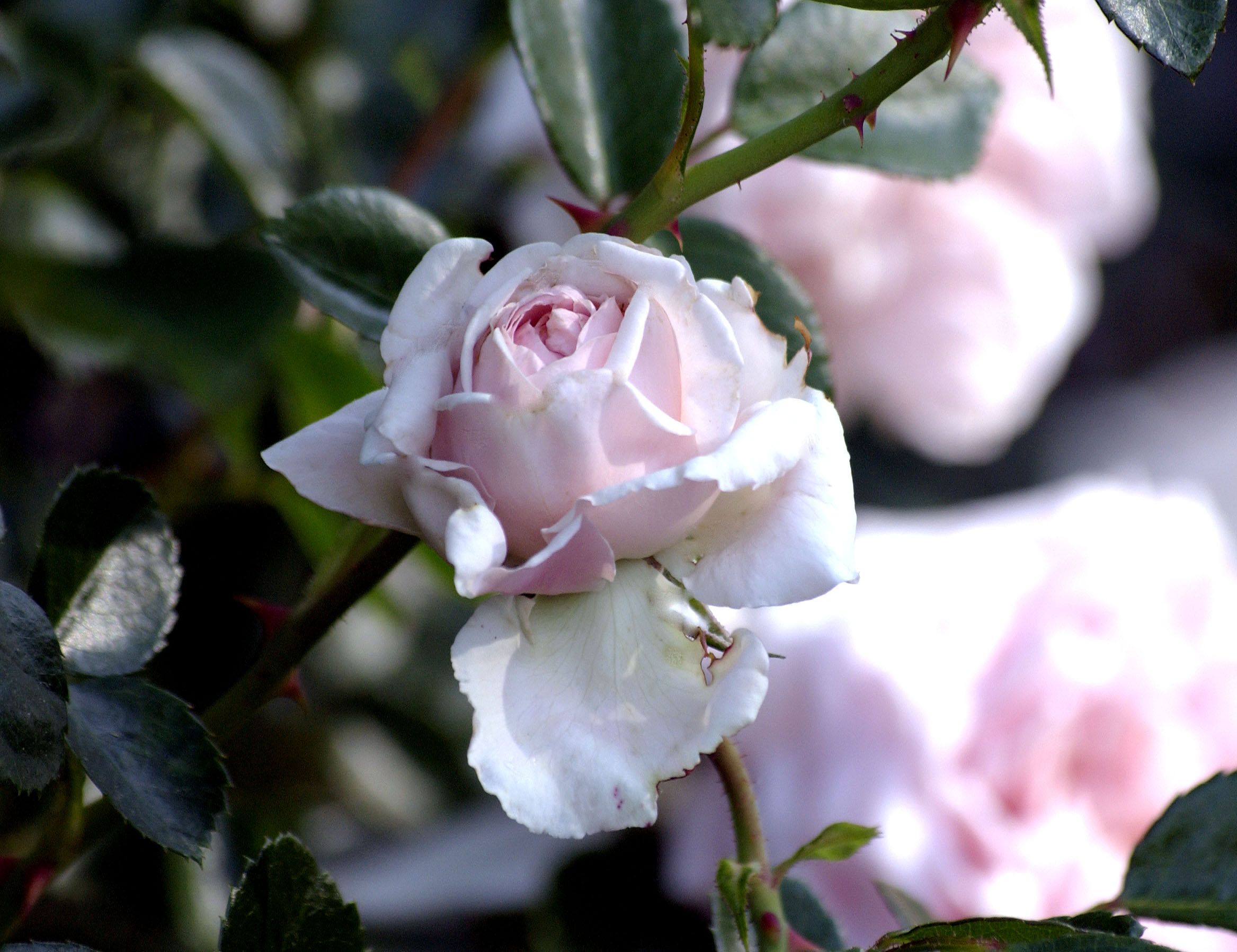
A rose on the garden fence

Old-fashioned shrubs

mystery-plant

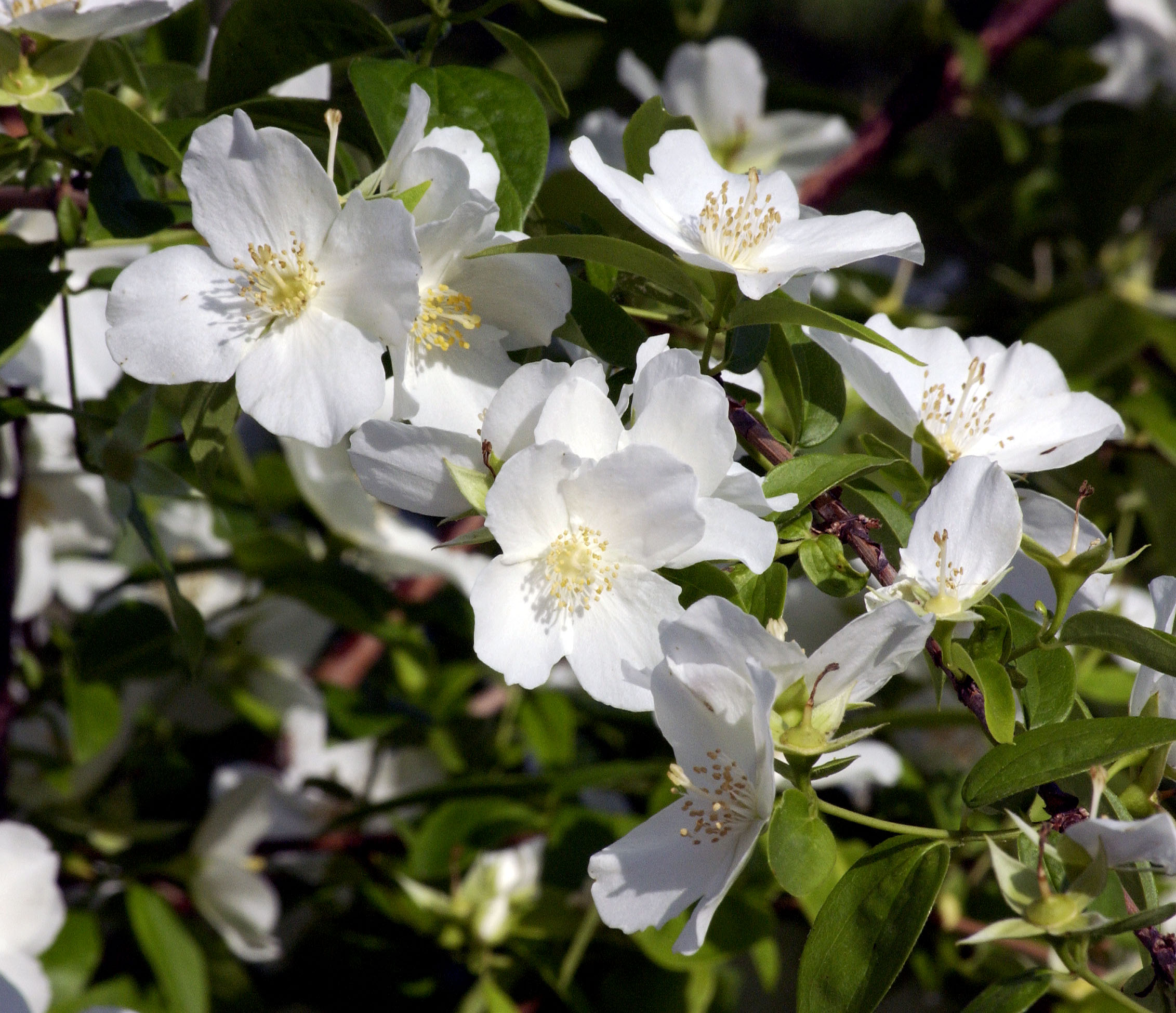
A neighbor has given us some shoots from her old-fashioned shrubs. I’m pretty sure this is English dogwood, also known as “mock orange,” or Philadelphus coronarius. If that indeed is what it is, it’s a native of Southern Europe. A hundred years ago, it was very popular, and it can sometimes be found around old homesteads. It has gone out of fashion. Time for a revival.

A good drink was had by all

rose-1

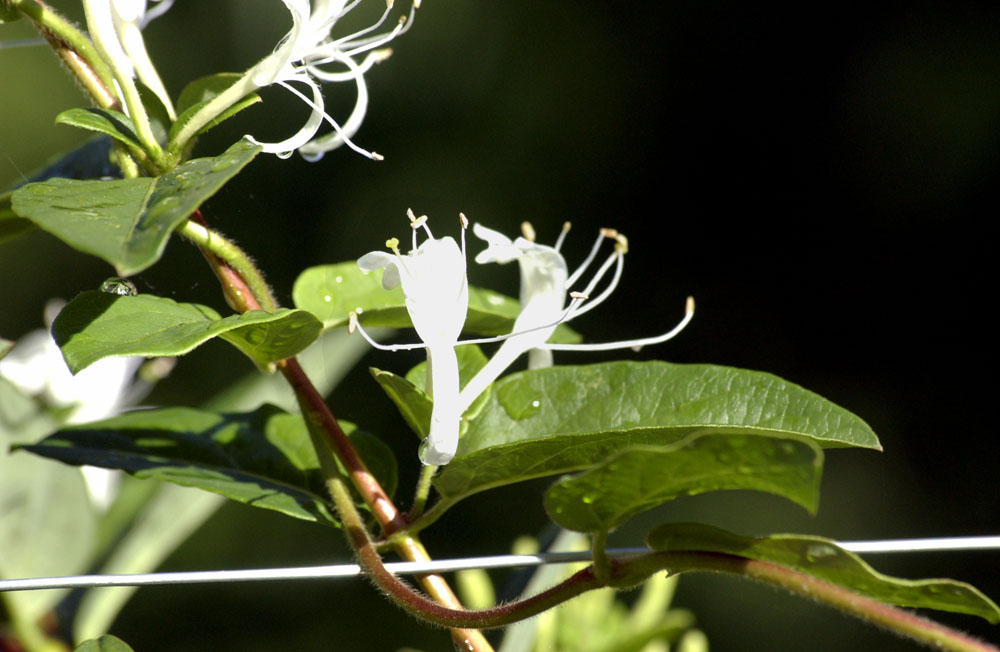
There had been barely half an inch of rain in the last month. Yesterday, it rained — 1.56 inches. This morning you can almost feel the exuberance of the green things. The honeysuckle and the roses are just getting started. We’ve been eating lettuce for a week, and now we’re covered up with lettuce. The first broccoli probably will be harvested today, and mustard greens tomorrow. Soon there will be cabbage and onions.

rose-2

rose-3

rose-4

American classic

A-burger

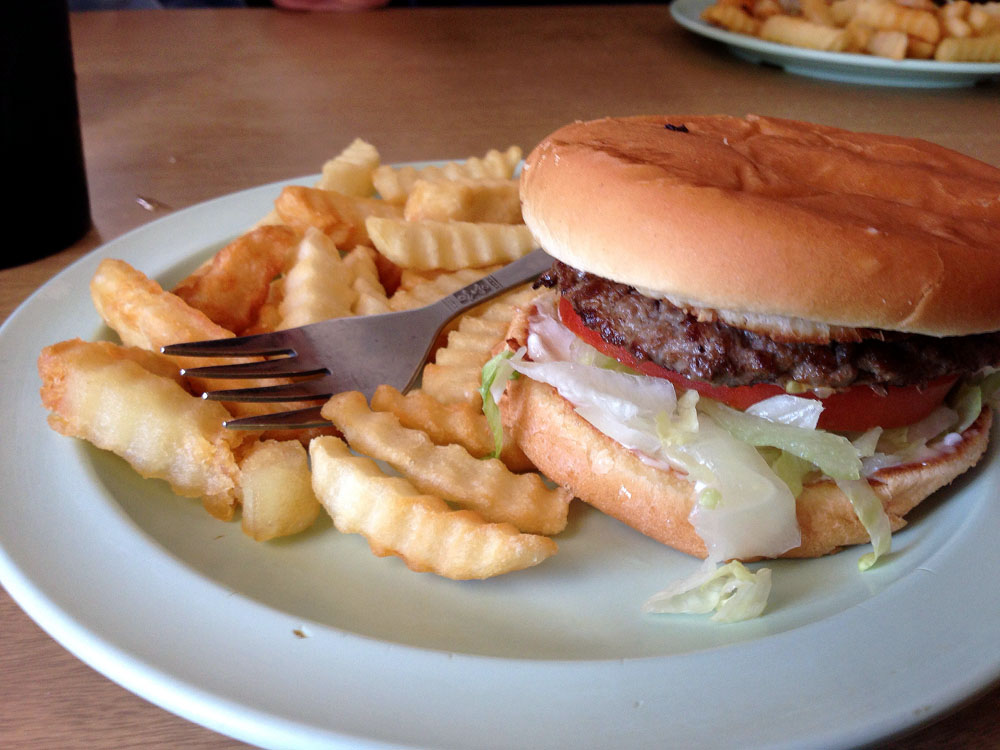
Sometimes when I am out and about and the only choice is to eat what the natives eat or go hungry, I eat what the natives eat. One of the few reliable items on any country menu will be the hamburger. This is because it’s food they understand, and they have to make it fresh.

This classic American burger is at Jim’s Grill near Yadkinville, North Carolina. Jim’s Grill has been around for decades. In the 1950s, it was a hot spot, with curb service, a jukebox, burgers, shakes, and teen-agers. Now it’s a place where old people go for lunch. Many of those old people, no doubt, went there as teen-agers in the 1950s.

It’s that farmer’s market time of year

A-future-1

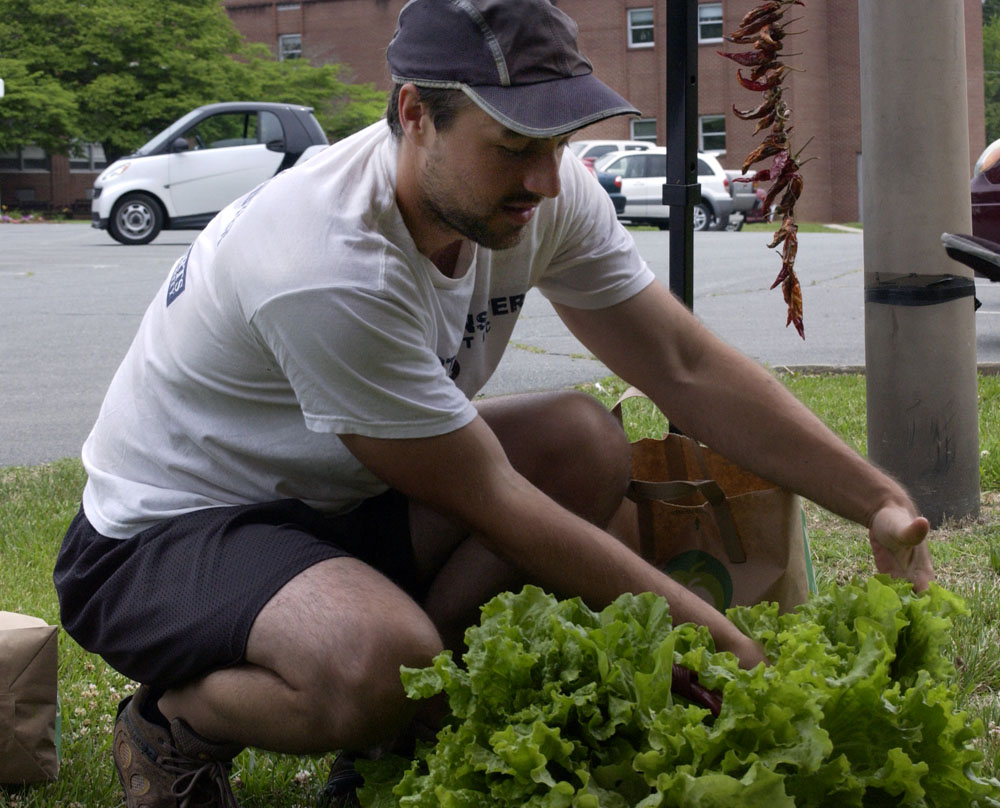
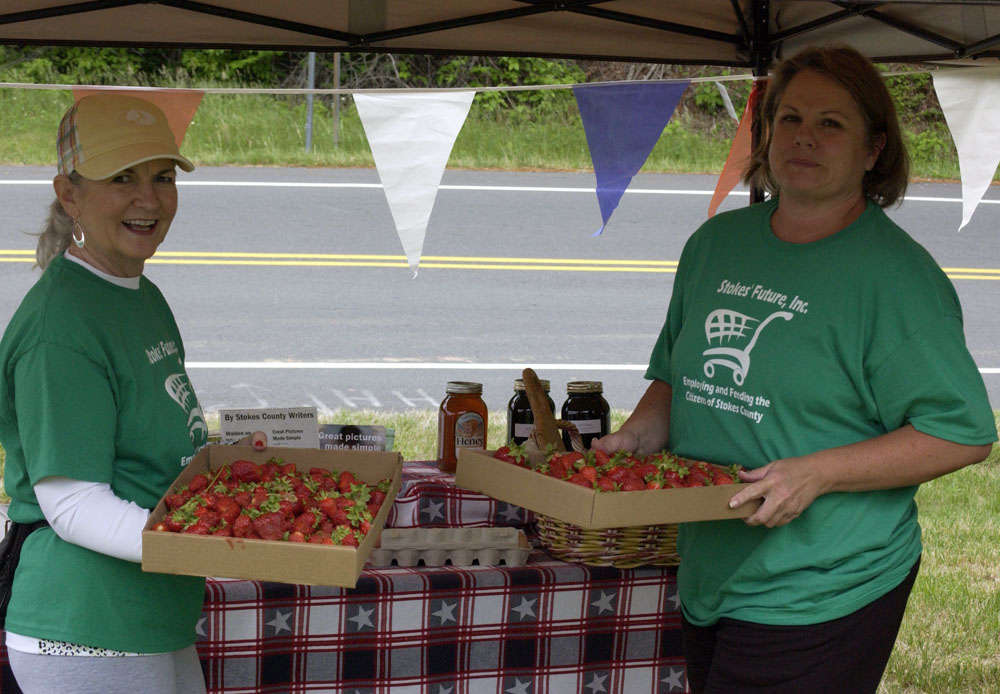
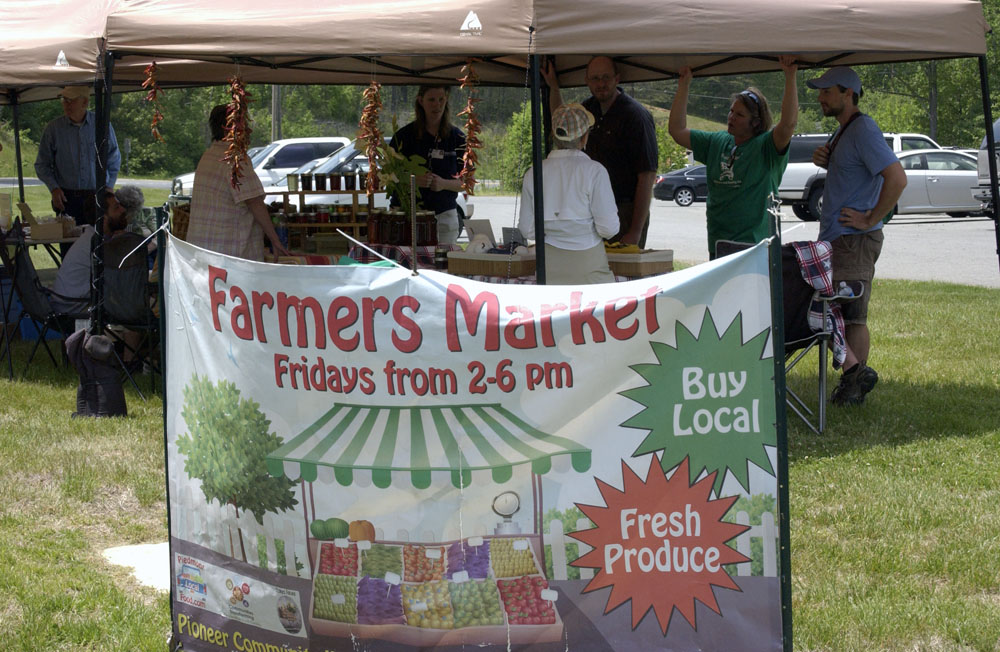
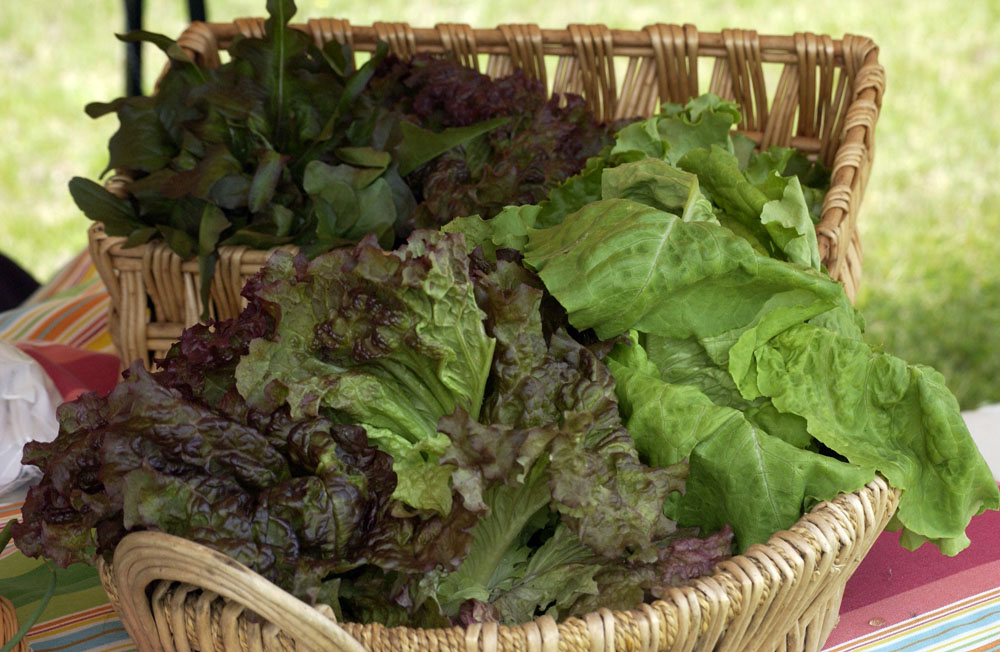
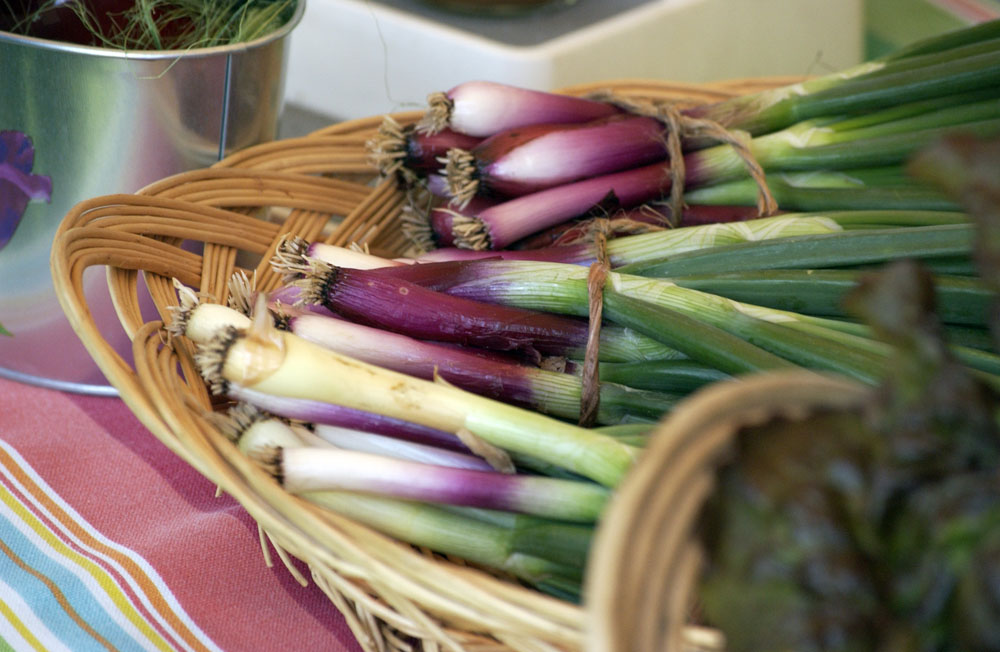
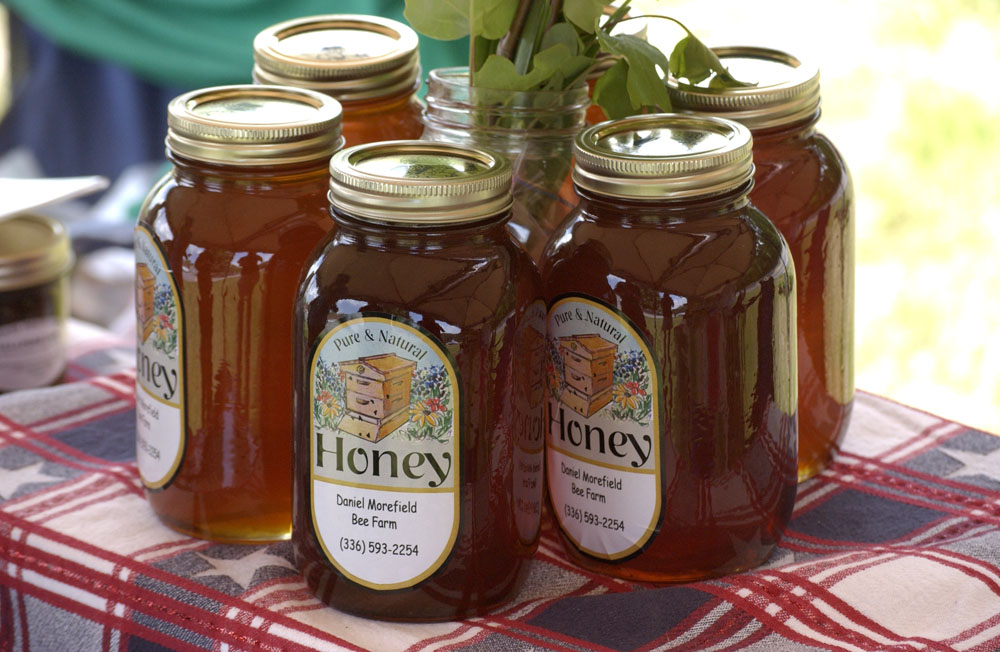
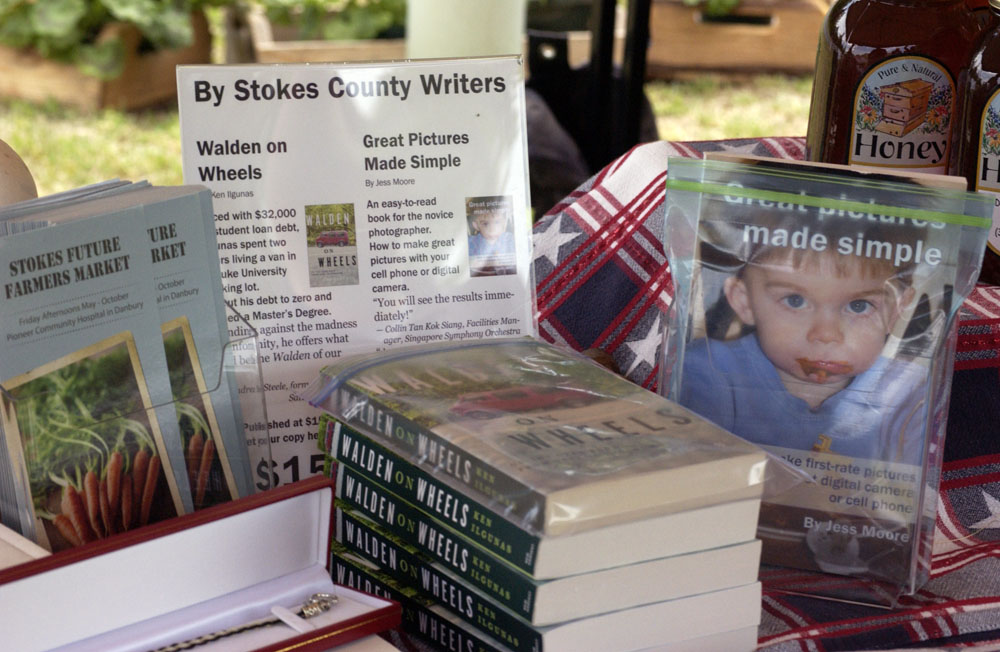
The farmer’s market nearest to the abbey is in Danbury, and today it opened for the season. It’s operated by a group called Stokes Future, several members of which are friends of the abbey. So far, there’s not much fresh produce available other than lettuce and onions. But you can buy honey from bees that are only a few miles away, or a book written at the abbey.

A-future-2

A-future-3

A-future-4

A-future-5

How to find a dark sky

dark-sky-1
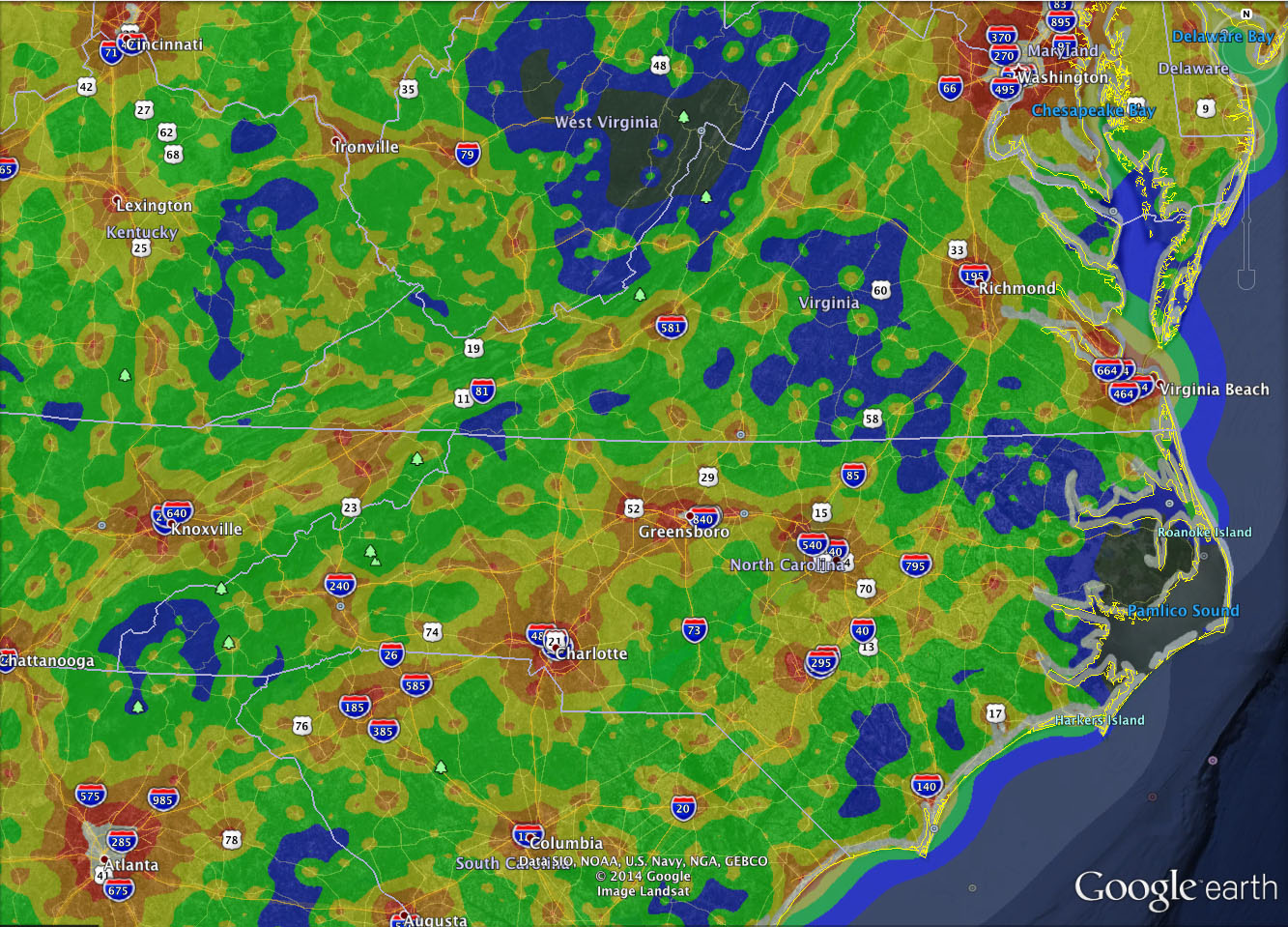
The dark blue areas are reasonably dark skies. One of the darkest areas on the East Coast is in West Virginia. Note that almost the entire state of North Carolina has ruined skies, with the exception of the Dismal Swamp in the northeast corner of the state.


One of the cruelest, most magic-killing forms of our alienation from nature is our inability to see the stars. Light pollution, of course, is the cause of it. Cities, suburbs, rural areas, fracking areas — all these places are brightly lit, all night. Massive quantities of fossil fuel are expended to drive off the darkness. This is insane, but it is only one of the many forms of insanity that we’re no longer even aware of anymore, because that’s Just the Way Things Are.

Would you like to see how far you’d have to travel to see a dark sky? Here’s a link to instructions on how to get a light-pollution overlay for Google Earth. First you download a light-pollution map (it’s a TIFF image) from a site in Italy. Then follow the instructions in the link to load the overlay into Google Earth and position the overlay correctly.

dark-sky-2

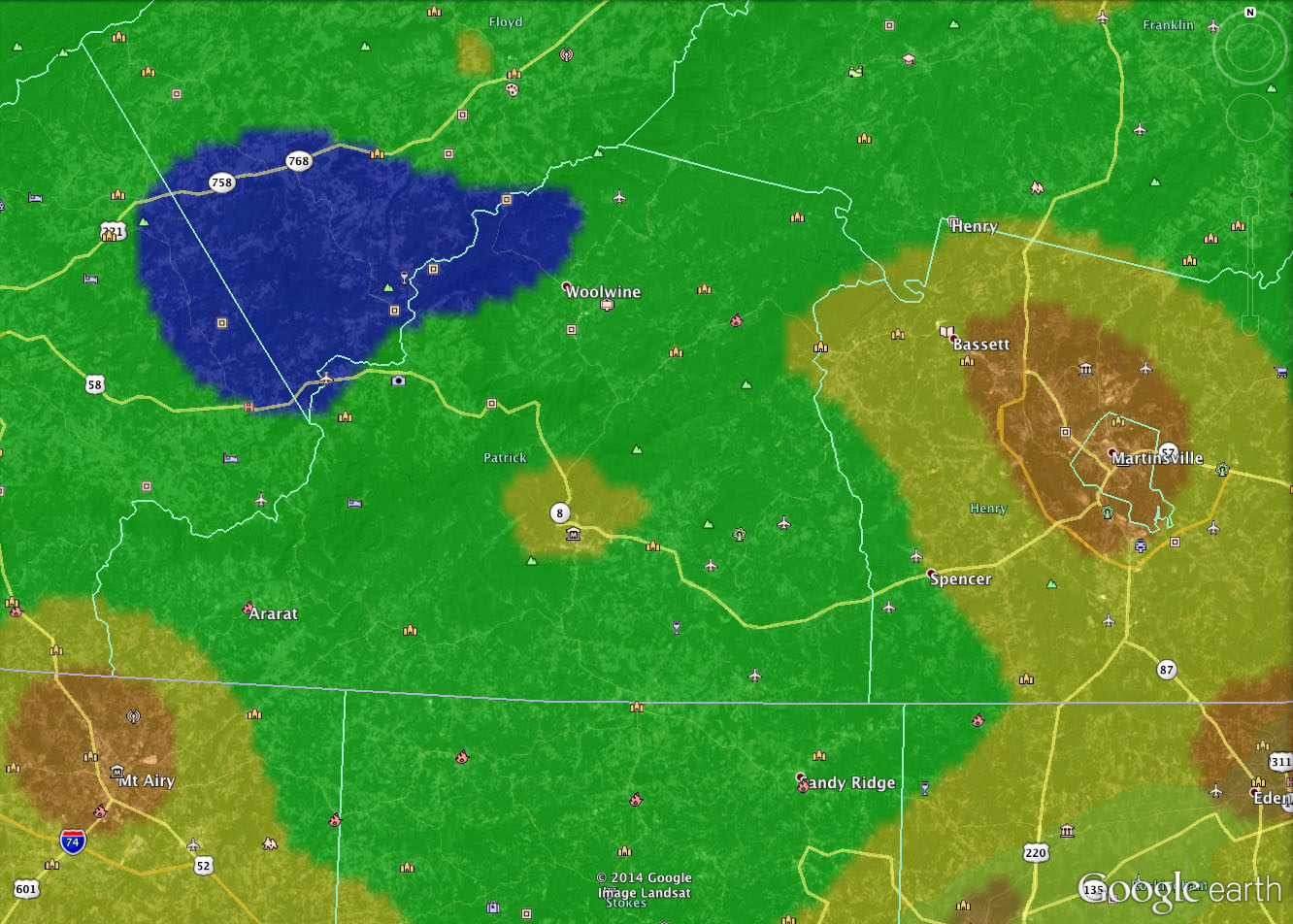
I am in northwestern North Carolina, north of Greensboro and Winston-Salem. Note that the nearest dark sky, for me, is in southern Virginia, between Hillsville and Floyd. I am quite familiar with that area. It’s isolated, is sparsely settled, and is reachable on tiny, winding roads.

dark-sky-3

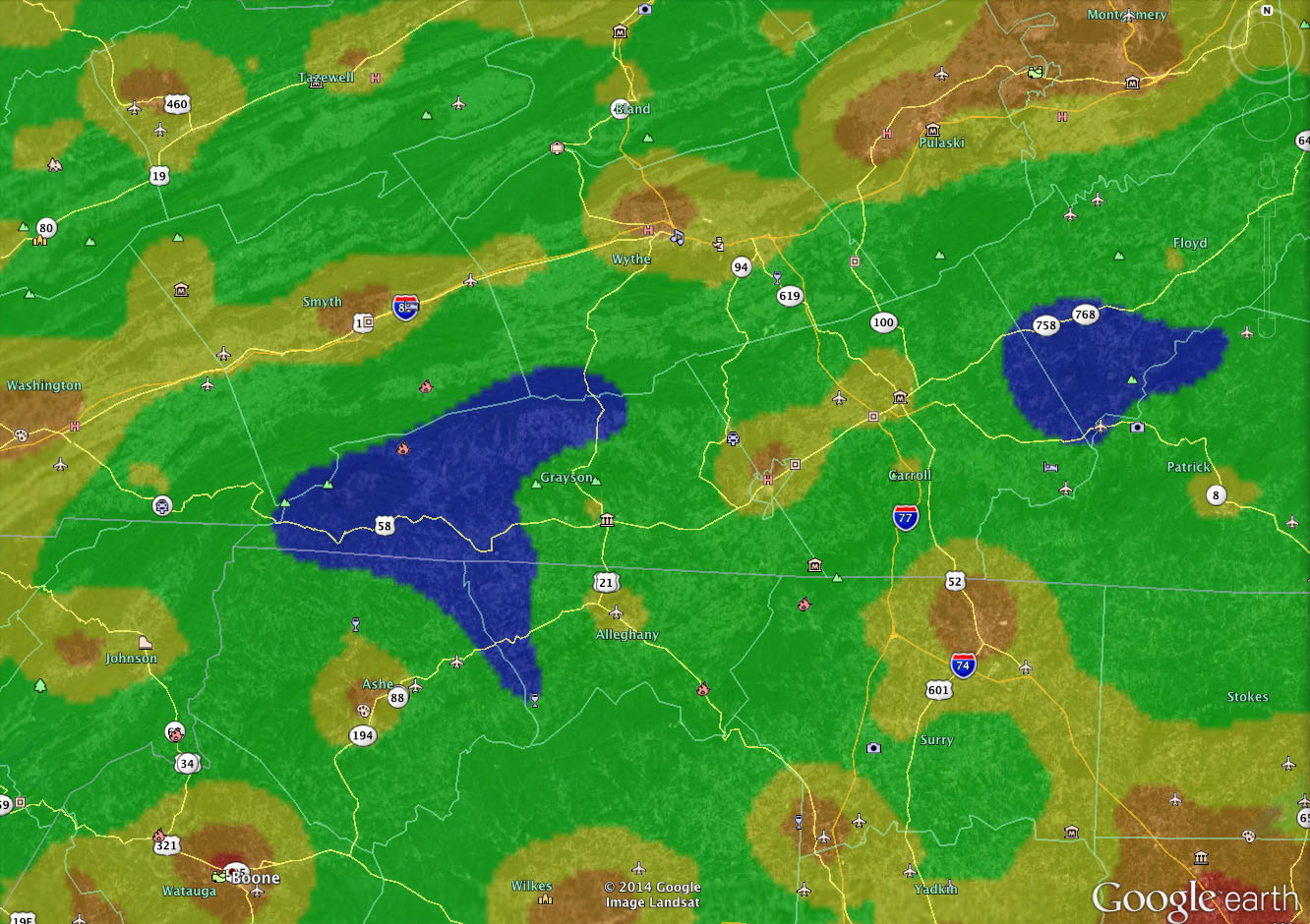
In my novel, Fugue in Ursa Major, the young protagonist is a stargazer. The novel begins with Jake driving southwest from Charlottesville to go stargazing, to the blue area west of Grayson, Virginia.

The new publication date for the novel, by the way, is May 30. I’m still waiting for one of the first readers to finish. He’s an academic and won’t have time to read the draft until the end of the academic year, which is — tomorrow! His feedback on the novel is very important to me, so I’m holding up the release of the book for a few more weeks.

The griefs of starting an orchard

orchard-1
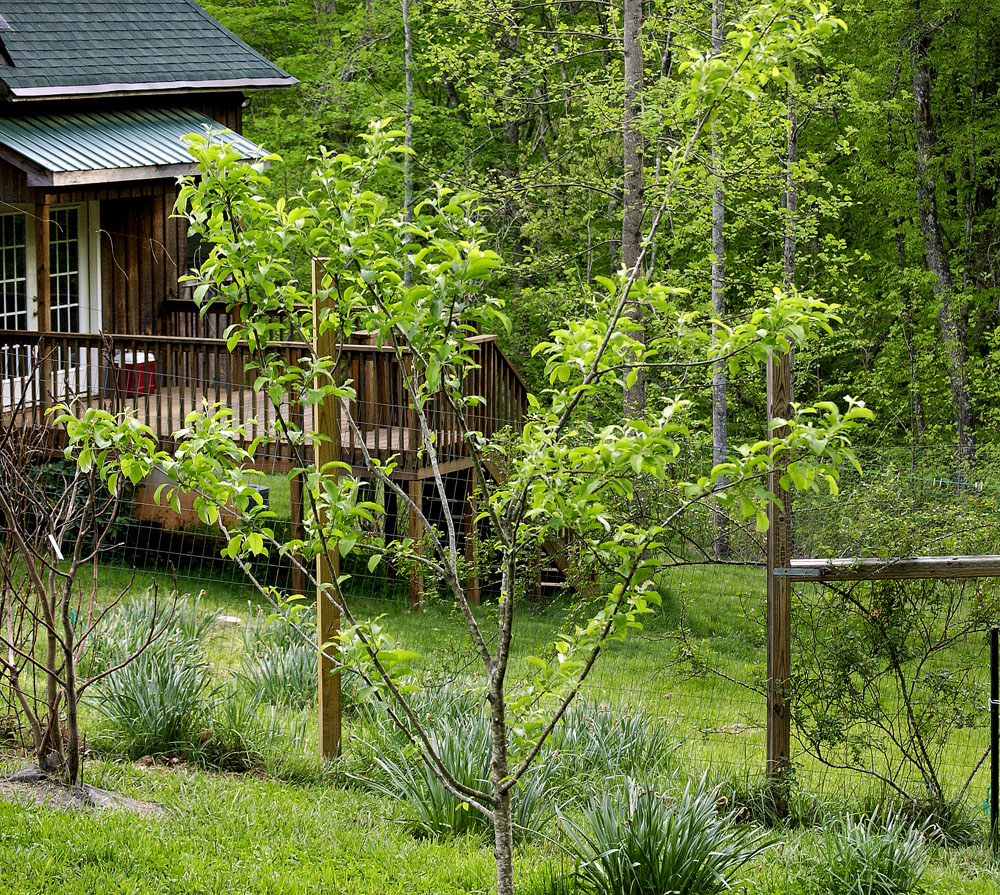
This apple tree looks spare and lanky because it was pruned heavily last winter. It won’t produce much fruit this year and instead will put all its 2014 effort into the growth of the tree. But, next year and in future years, the pruning will pay off.

Lucky is the man who has a mature, productive orchard. Starting an orchard is like trying to raise children in the Dark Ages — the investment is enormous, and the mortality and accompanying heartbreak run high. The oldest trees in the abbey’s orchard will be six years old this fall. The other trees vary in age, as trees that have been lost have been replaced. This process of death and replacement continues.

Among the lessons learned, a couple of things stand out. For one (as with dogs), know your breeder. Fruit trees that come from fruit-tree puppy mills may look nice when you see them at the big-box hardware store. But they may have come from nurseries far away, and they may be of stock and varieties that are not hardy and not suitable for your area.

The abbey’s strongest trees are all old Southern varieties of antique or heirloom apple trees from a nursery two counties to the east that specializes in such trees — Century Farm Orchards. Though I lost (and replaced) two of those twelve six-year-old trees, that mortality rate is good compared with the mortality rate of other fruit trees. We’ve almost given up on cherry trees. Insects defoliate them. We were on our second or third attempt at growing fig trees, and things were looking good, until the near-zero temperatures last winter killed the figs. So while the cherry trees, figs, and even the pears die of the whooping coughs, smallpoxes and scarlet fevers that afflict young fruit trees, the hardy old apple trees and peach trees carry on. Getting fruit trees to maturity is not a small challenge.

We were tempted to attempt olives. But we pretty quickly decided against it, because olives are not truly suited to this area, and the risk of mortality in any given year would be high. Even figs are a big risk. But we love figs so much that we soldier on.

If (at least in this area) you want maximum fruit and minimum grief in your young orchard, stick with apples and peaches, of old and proven varieties, from known nurseries with a track record and a nurseryman who will answer your emails (as David Vernon from Century Farm Orchards always does).

orchard-2
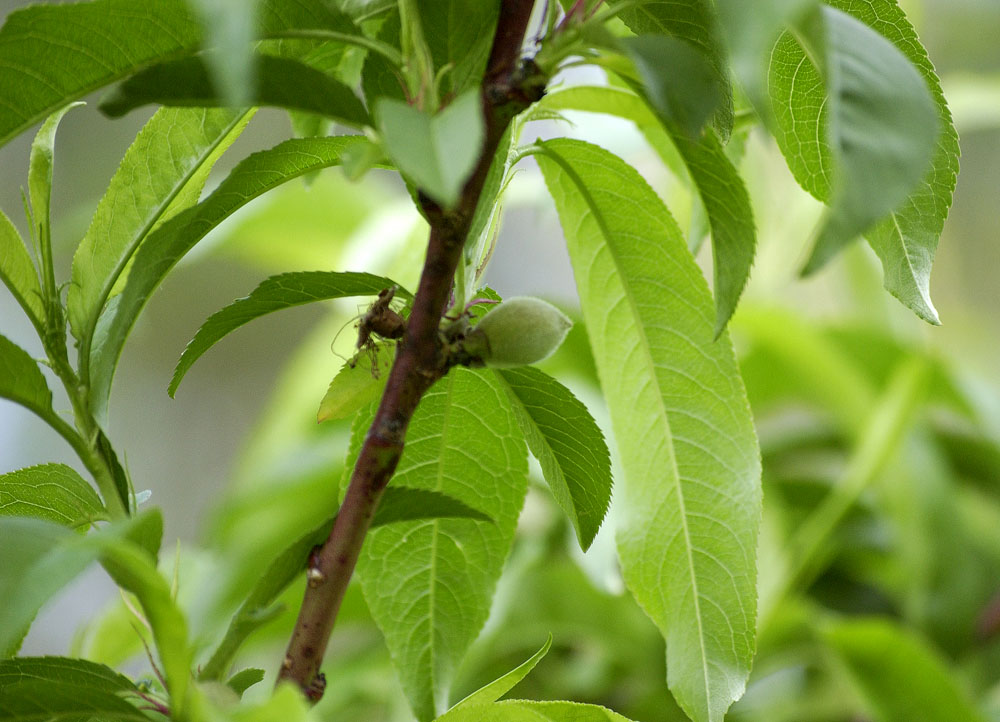
A baby peach

orchard-3
Baby apples

orchard-4
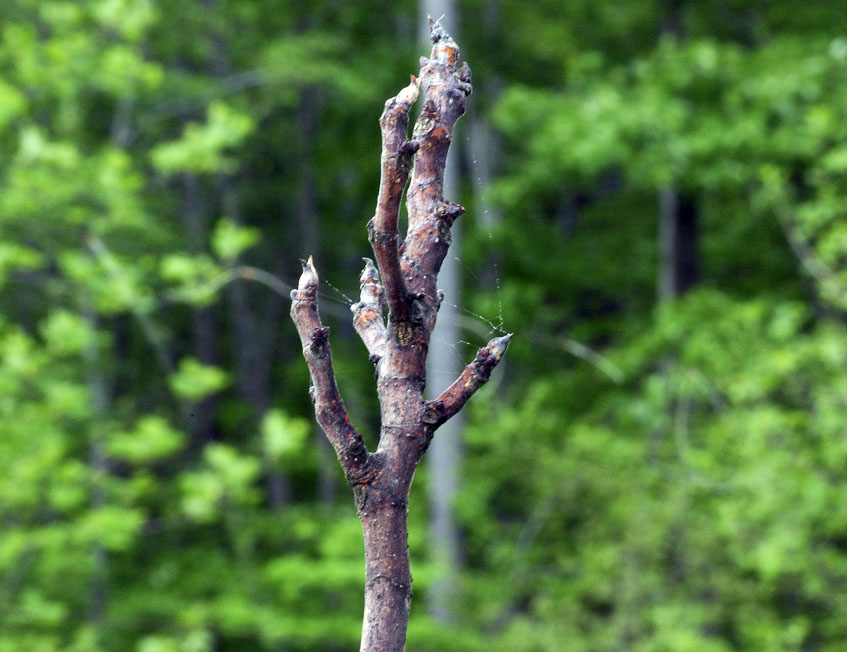
A fig stalk, killed by the cold winter, though its roots may still be alive