Remembering that there are smart people in the world


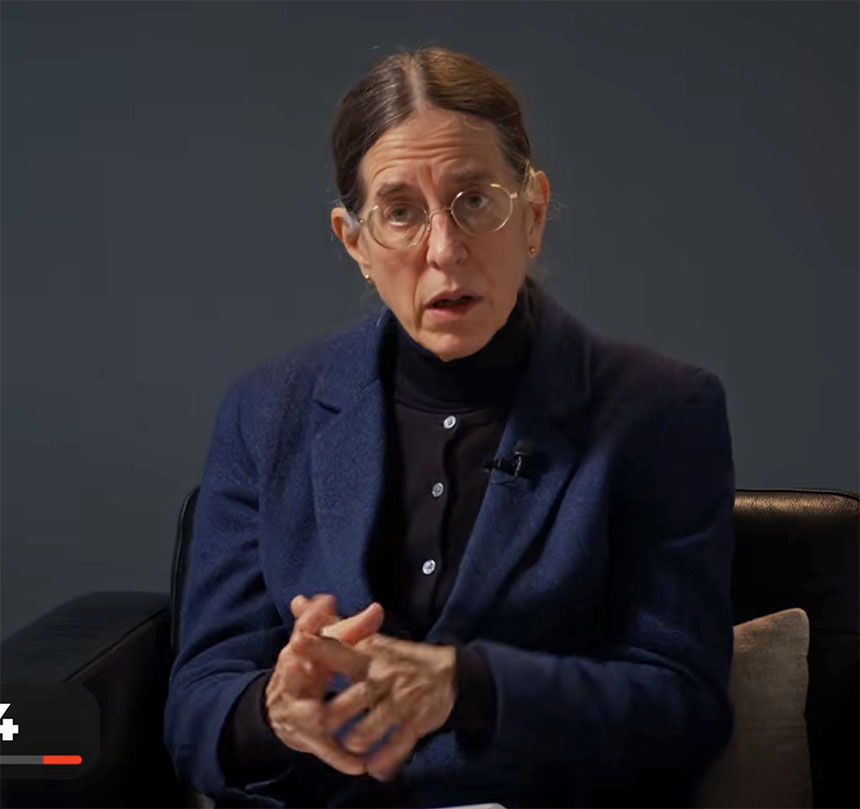
Sarah Paine. Source: YouTube. The interview from which the screen shot was made is here.


Every day and every hour, idiots and fascists flood the zone with you-know-what. The media scramble to deal with it and even manage to expose a lie or two occasionally. But the zone is still flooded with you-know-what, and there’s hardly any bandwidth left over for anything else.

Consequently those of us who know you-know-what when we hear it not only have to do a lot of filtering for the sake of our sanity. We also have to work extra hard to find, and hear, the voices of those who actually know something about the world and whose purpose is to improve the world rather than to rape it.

Sarah Paine is one of the wisest voices out there. Reading about her background in the Wikipedia article reminds us that there are still people who spend their lives learning and teaching rather than making deals, lying, and ripping people off.

Paine has been making herself available for YouTube interviews lately. Almost a million people have watched that interview in the last two months, so people are paying attention. She also had an article in Foreign Affairs last fall. Foreign Affairs is behind a paywall, but there is a PDF of the article available here: By Land or by Sea: Continental Power, Maritime Power, and the Fight for a New World Order. The article is a must-read about how MAGA, if not stopped, is leading the United States toward impoverishment and collapse.

The American intelligentsia have mostly been pushed into the margins today. Fortunately they’re doing their best to continue a real conversation in venues such as YouTube and Substack, where they are needles in a haystack waiting for you to find them. We can dream of a day when we take the microphone away from idiots. Until then we’ll have to work a little harder.

⬆︎ Roger Penrose is 94 years old. He is the Einstein of our time, and for as long as he is still with us, every word he says is priceless. Brian Cox, by the way, though he is television personality in the U.K., also is one of the few people who know enough to do a good interview with Penrose.

⬆︎ Those who have been reading this blog for years will recognize Ken in the video above. I’m linking to this video because it’s charming and because it shows how transformational voices that are drowned out in a zone flooded with you-know-what never go silent. Rather, they do what they can wherever they are, and they keep at it. It was Ken who organized “No Mow May” in the Scottish village of East Linton.

Hummus

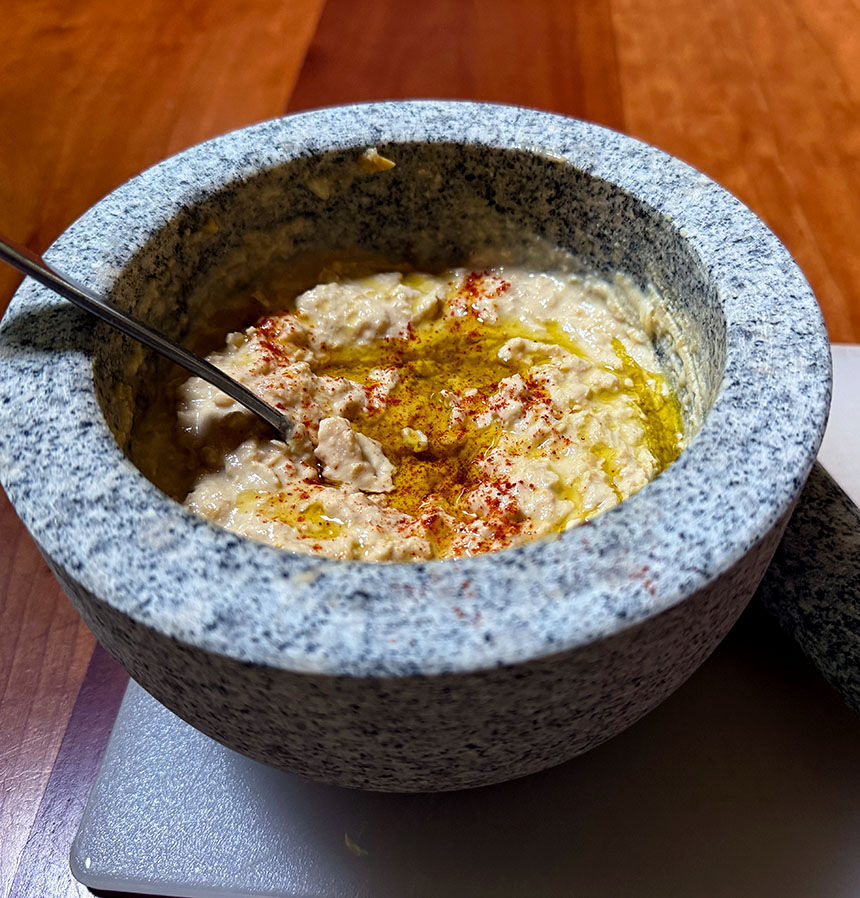
⬆︎ Before there were food processors, there were mortars and pestles. I thought of hummus because my cucumber plants just started blooming, and I’ve seen two tiny tomatoes coming along, smaller than peas. Nothing goes better with fresh, raw, summer vegetables than hummus — except maybe pesto. My basil is growing fast. The drought here finally gave way to a rainy spell, and the garden has started taking off.

My review of an 1823 novel


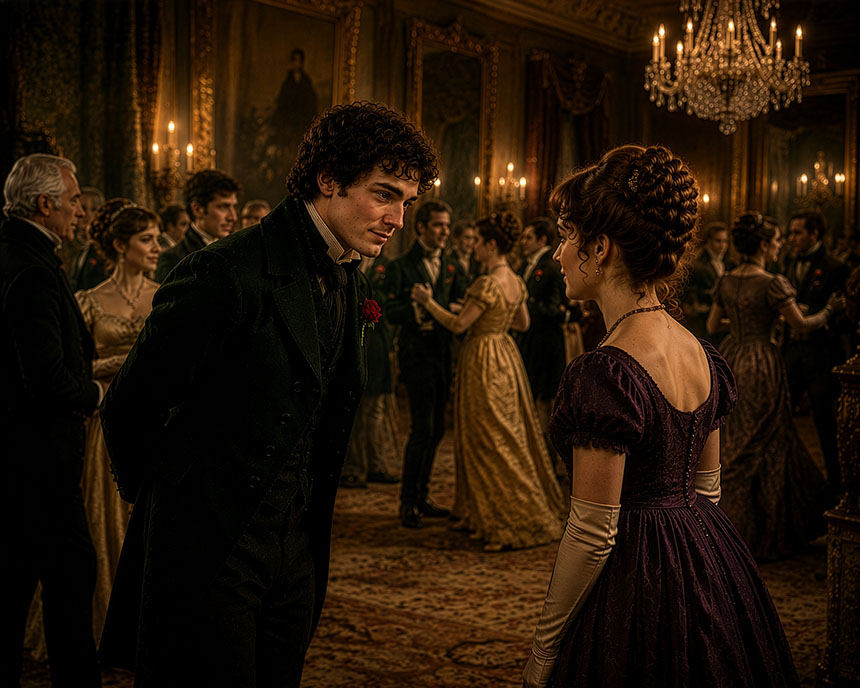
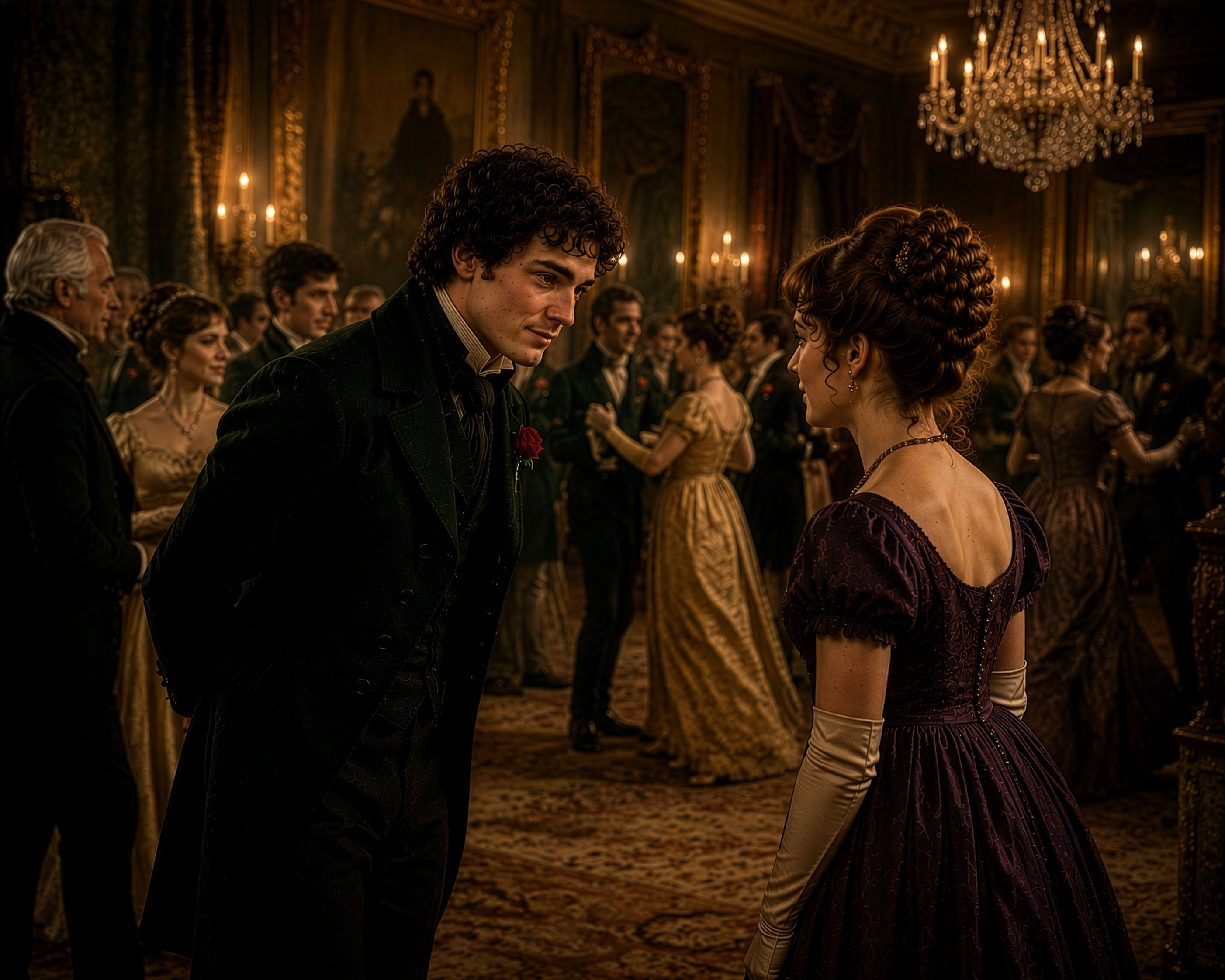
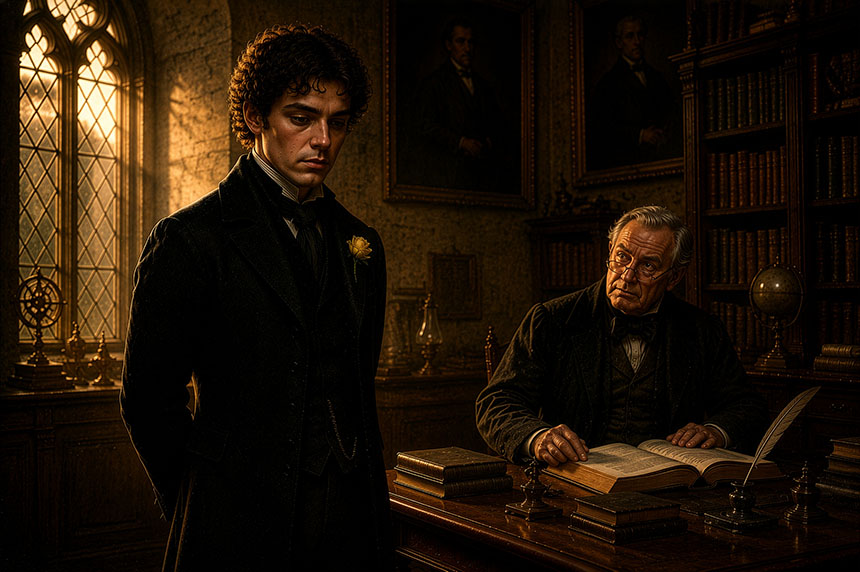
Reginald at Grypherwast Hall. Images by GPT 5.5 based on my imagination of scenes from the novel. Click here for high-resolution version.


Reginald Dalton. John Gibson Lockhart, William Blackwood, Edinburgh, 1823. Three volumes, 1,028 pages.


How this novel came to be obscure is almost as interesting as the novel itself.

John Gibson Lockhart was the son-in-law of Sir Walter Scott. Lockhart was by no means an obscure writer. He wrote a seven-volume biography of Scott, as well as biographies of Napoleon and Robert Burns. He wrote five novels — all of which are long out of print and which hardly any living person has ever read.

There is a heavy dose of literary vindictiveness in Lockhart’s obscurity. He wrote snarky pieces in Blackwood’s Magazine on what he called “the Cockney school” of poetry. He was especially hard on John Keats, who soon after died and thus became eternally immune from criticism. Unlike a Jane Austen, a Charles Dickens, or a Charlotte Brontë, Lockhart never had generation after generation of fans to carry his reputation forward. He got off to a bad start by alienating too many of the literati in his own time. Reginald Dalton has been out of print since 1825. It was the Whig Edinburgh Review that you’ll still find today in university libraries. Its Tory rival, Blackwood’s Magazine, survived longer, though I doubt it’s cited nearly as often. It was Blackwood, of course, that published Reginald Dalton.

I hope I haven’t frightened any fellow liberals away from reading this novel. The Tories of that time were elitists, no doubt. But they were fully on board with the Enlightenment.

Perhaps another reason that Lockhart has been neglected is that, unlike more popular 19th Century writers, he was not a social critic. Rather, he was a Tory in a literary world of Whigs. No doubt he was a bit of a snob. But Reginald Dalton is almost certainly an accurate depiction of social life in some circles at that era — particularly Oxford, but also London, Edinburgh, and rural Lancashire. Come to think of it, Lockhart’s Oxford is not always the nicest of places, though it’s always picturesque, and the food and drink must have been some of the best in England.

To my judgment, it’s a brilliant novel with a great plot, excellent dialogue, and very cinematic scenes. In many ways, it’s a Jane Austen with a male protagonist — a humble vicar’s son who has been cheated out of his proper inheritance, Grypherwast Hall. Reginald Dalton is sometimes called the first Oxford novel. Reginald gets into a lot of trouble at Oxford, trouble that he often enough makes for himself but which also is the work of the novel’s villains.

The novel’s long and complex sentences, the Scots dialogue, and the untranslated Latin, French, and Greek are a challenge to modern readers the same way Sir Walter Scott’s novels are a challenge to modern readers. But, with some patience, it’s all surmountable, and very rewarding. The good characters are endearing, and the villains very human. The Wikipedia article calls the novel a comedy. That only shows how little anyone knows this novel anymore. There are some funny scenes in which a carriage collides with a turnip cart, and a London dinner party which erupts into pandemonium when an heiress is discovered to have eloped. But Reginald Dalton is not a comedy. I hope that someone at the BBC discovers this novel and sees what a fine mini-series it would make. All the right ingredients are there.

My micro press, Acorn Abbey Books, is working on a new edition of Reginald Dalton using text recovered from the 1823 first edition. I hope to have that book in print by July. The book’s length, and the challenge of recovering text from a 200-year-old book, have taken some time.


⬆︎ Click here for high-resolution version.


⬆︎ Click here for high-resolution version.

About that jet that Qatar gave to Trump …


A palace in a Boeing 747 for free? Ha! Source: YouTube

The San Antonio Express-News reported last week that modifications are almost complete in the “flying palace” that Qatar gave to Trump last year: Trump’s Qatari dream jet sets course for Air Force One duty by July 4.

The ultra-rich who already own a big chunk of the planet and who intend to own and control the rest of it all fly around the world in private jets. Increasingly they are contriving to keep these flights secret, but to some degree they can still be tracked.

The Washington Post had a fascinating story last week on how someone built a system for tracking “business jets,” monitoring for a situation in which a large number of these jets converge in one place. The story is Want to track the apocalypse? One theory: Follow the billionaires’ jets.

That’s a brilliant idea. That apocalypse-watch system avoids intimidation by not tracking any oligarch in particular. You may remember the case of the young guy who was targeted by Elon Musk after the guy tracked Musk’s jet and reported the jet’s moves on social media.

All this gave me an idea. I have been using Claude Code to write programs for me, and it has done a fine job. For example, I now have a searchable database of the complete works of Sir Walter Scott, as well as a searchable database of Scott’s letters.

I asked Claude if it would be feasible to track a bunch of planes belonging to super-rich evildoers, log the data into a database, and use that database as a tool for open-source intelligence, which is the only kind of intelligence available to those of us who are poor but who crave to understand what is going on in the world. (I am hardly the only person doing this kind of thing.)

Claude said sure. The work took about two days of Claude time. Claude Code built the system for me in 14 steps — among them acquiring the “tail numbers” and other information about jets to track, creating a database schema, finding a free source of ADS-B tracking data, capturing the data and poking it into the database, and building interfaces to query the database using a web page and an RSS feed.

My system has been running now for only three days. It will take a while to build a strong database containing some very useful history. Most of those planes don’t fly every day. But even after three days, it’s getting interesting.

I don’t have any data yet on American tech billionaires. I’m not sure yet whether that’s because they haven’t flown in the past three days or they have a means of keeping their ADS-B tracking data out of public databases. (I won’t try to describe ADS-B here except to say that every plane of any size is required to constantly transmit a stream of data about its location, altitude, etc. Thousands of ground receivers collect this data. It’s perfectly legal. It’s how you can go on line to see whether the plane you have to meet at the airport is going to be on time. It’s how I know that an Air France flight from Atlanta to Paris often passes right over my house at 9 p.m.)

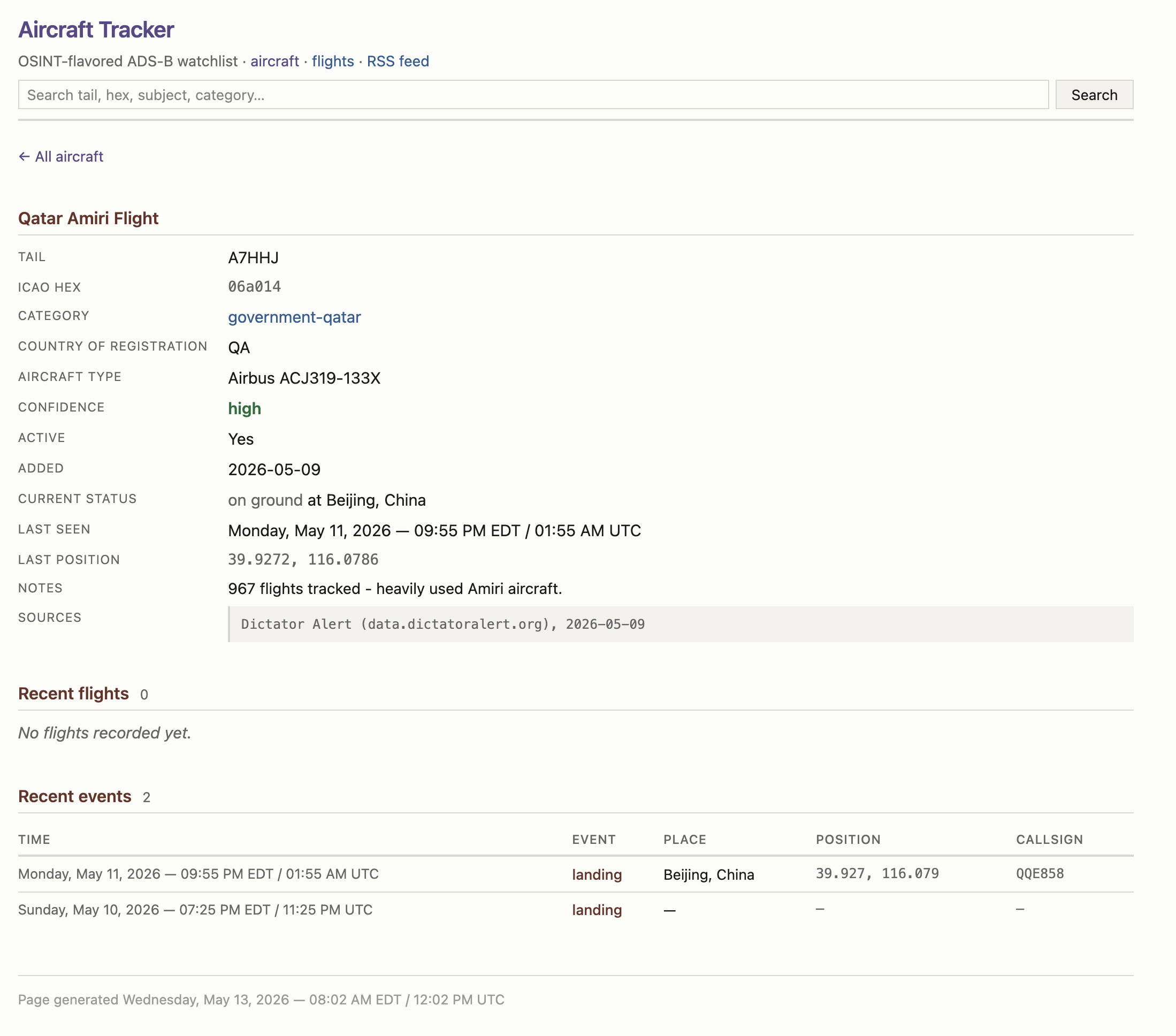
I am seeing, though, a great deal of flying about by foreign royalty and oligarchs — Qatar, Saudi Arabia, and Russia in particular. For example, what does Qatar, a tiny but super-rich oil country ruled by a royal family, have to do with China? I have no idea, but a Qatari Airbus landed in Beijing on Monday, a couple of days before Trump arrives. Is that merely a coincidence? I don’t know, but one of the things to watch for is the sneaky ways global oligarchs meet up to coordinate their moves. The database that Claude built for me has some special logic to monitor for convergences. As for Qatar and Trump, it has long been obvious that they’re trading favors.

As much as I would like to, I can’t put this database on line, because it would attract the wrong kind of attention. But this is one of the ways I try to watch a bewildering world from the middle of nowhere.


A screen capture from my database built by Claude


Update:


Source: Flightradar24

This morning my flight tracking database reported that a plane owned by the U.S. Department of Justice, and believed to be Kash Patel’s plane, was over the North Atlantic. I verified this with FlightRadar24, which says the plane is en route from Richmond, Virginia, to Ankara, Turkey. Why would Patel be going to Turkey? A Google search doesn’t find anything written about that. Patel was just dragged over the coals by a Senate committee for his promiscuous travel at taxpayer expense.

Things that last almost forever


Click here for high-resolution version.

During my lifetime, there have been several types of new cookware that claimed to be improvements — stainless steel, aluminum, “clad” cookware of different layers of metal, glass and ceramics, and, worst of all, nonstick coatings. But the truth is that the last word in cookware was spoken thousands of years ago.

Glass and ceramics I would keep. Iron and copper are the very best. People have been using copper cookware for thousands of years. Iron cookware came later, because working with iron required a higher temperature. So iron cookware goes back only to the Iron Age.

The classic copper cookware of the type we use today came about in the late 18th into the 19th centuries. You’ve seen it in the kitchens of those British period pieces, where there is a huge array of it and its all perfectly polished. It has always been expensive.

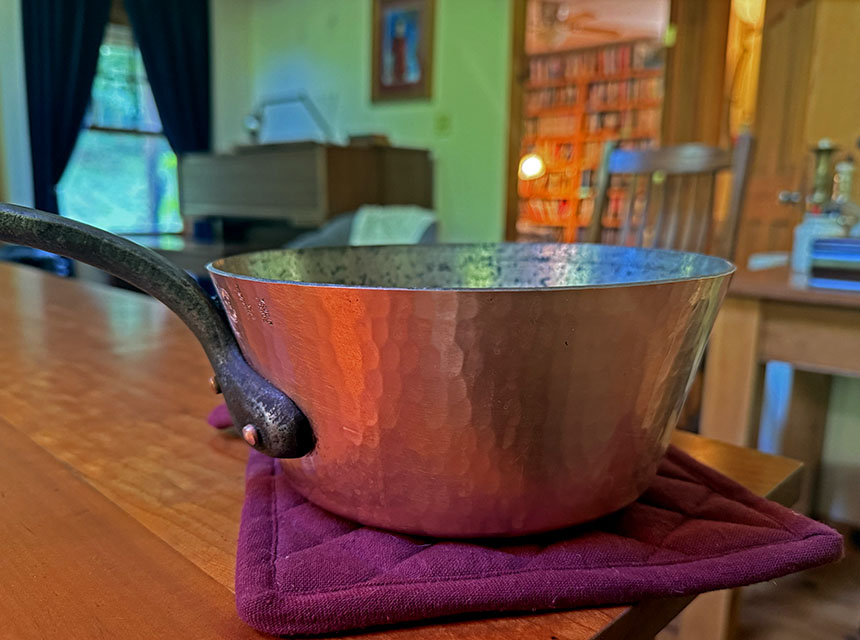
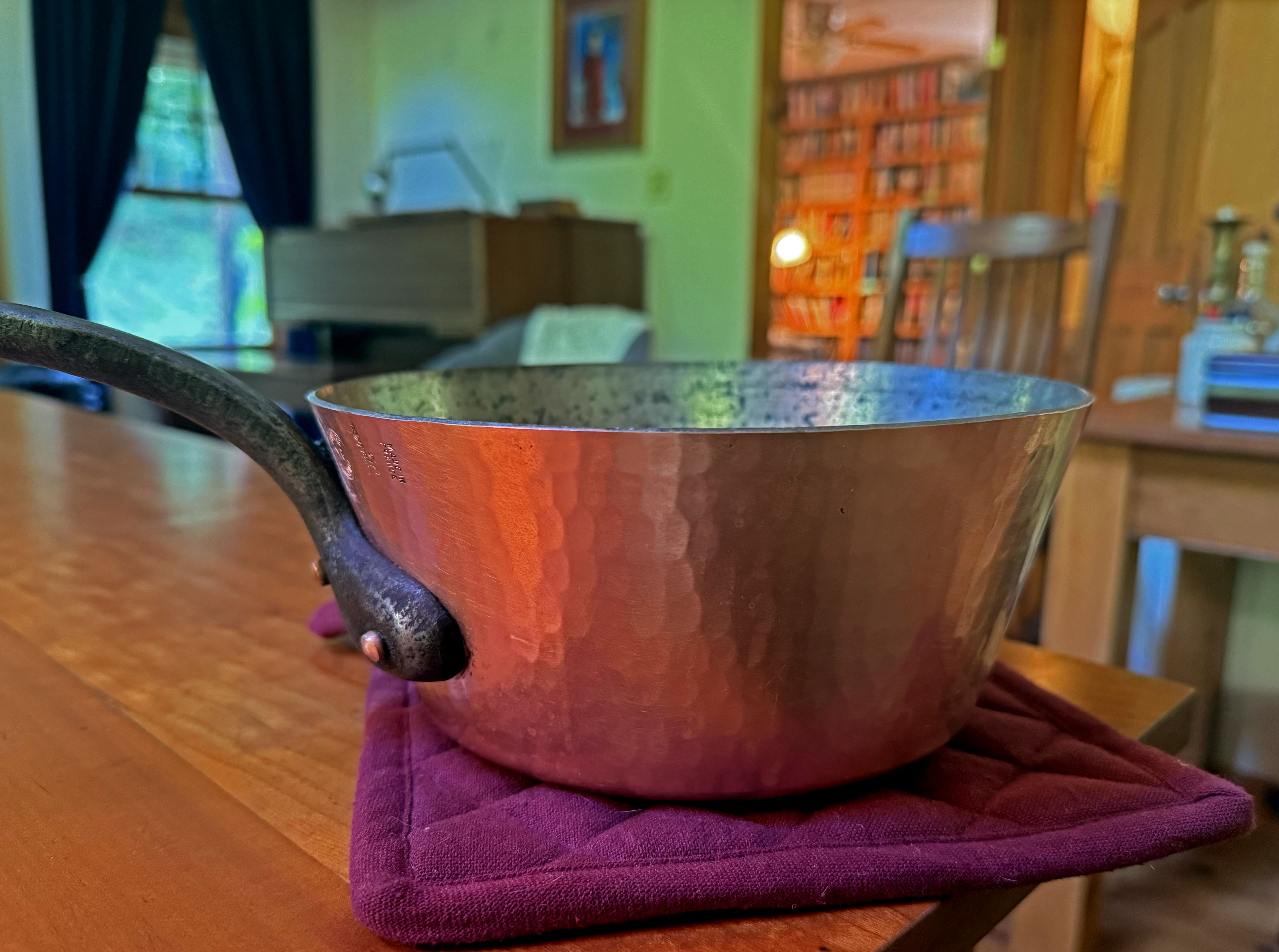
I bought the 2.5 quart copper saucepan on eBay five years ago. I use it almost every day. That saucepan and my largest iron skillet are the two pieces of cookware that I use most, by far.

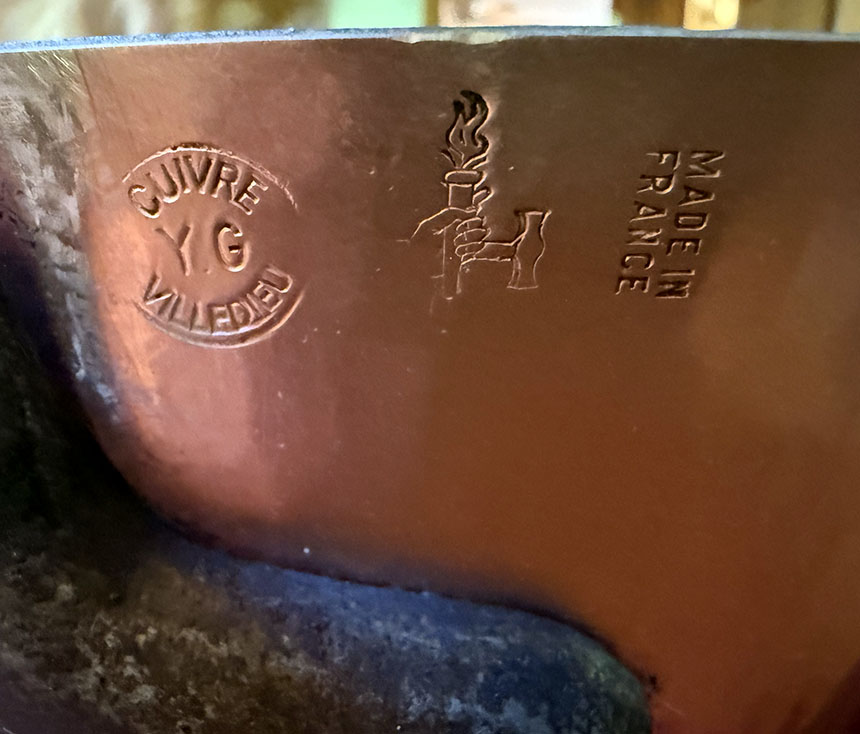
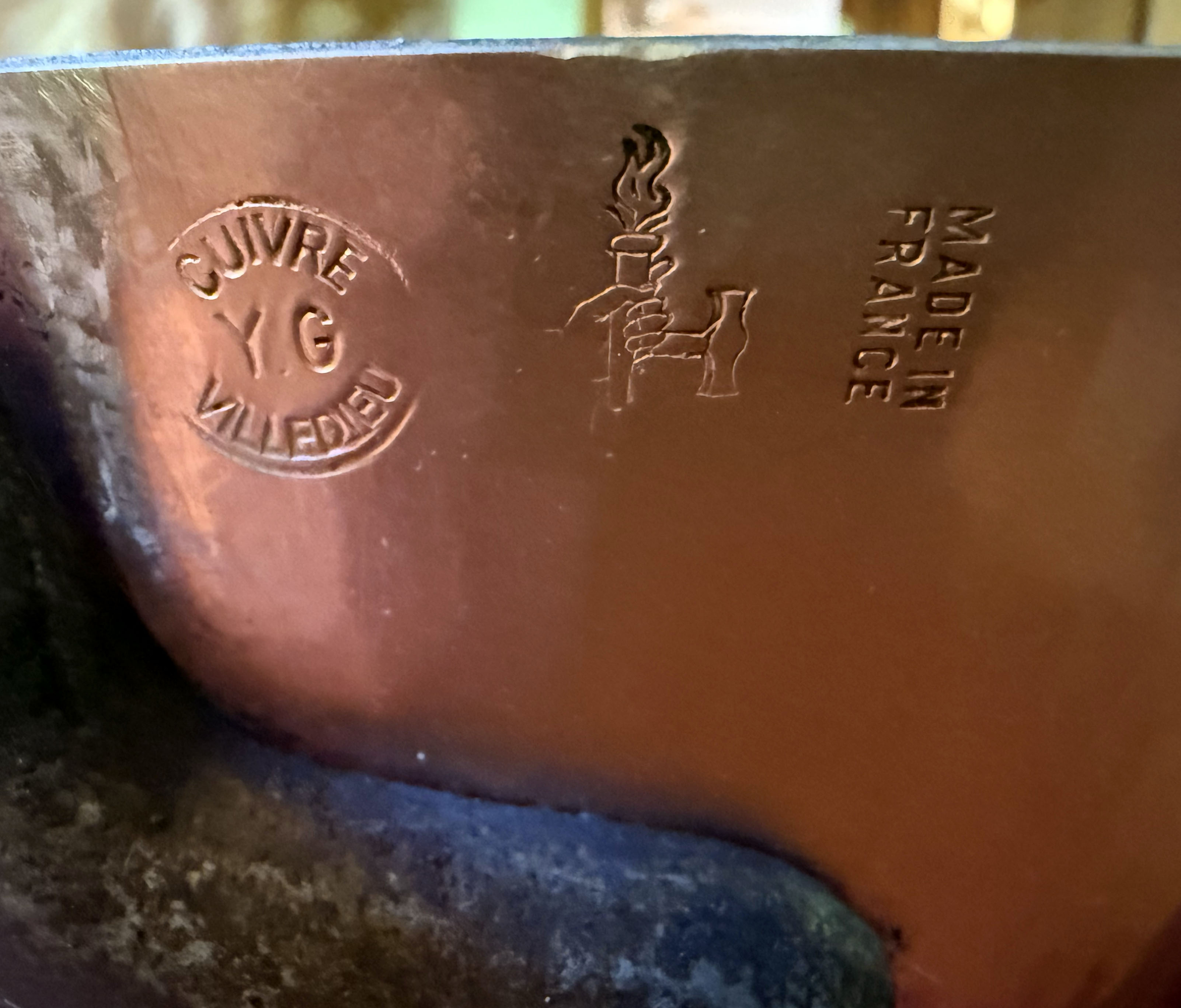
The hand-hammered copper saucepan was made in Villedieu, France. The hammering is not just for appearance. It actually strengthens the copper and helps it hold its shape. I looked at my eBay history at saw that I paid $186.84 for the saucepan. That’s a lot for a used pot. But I don’t regret a penny of it.

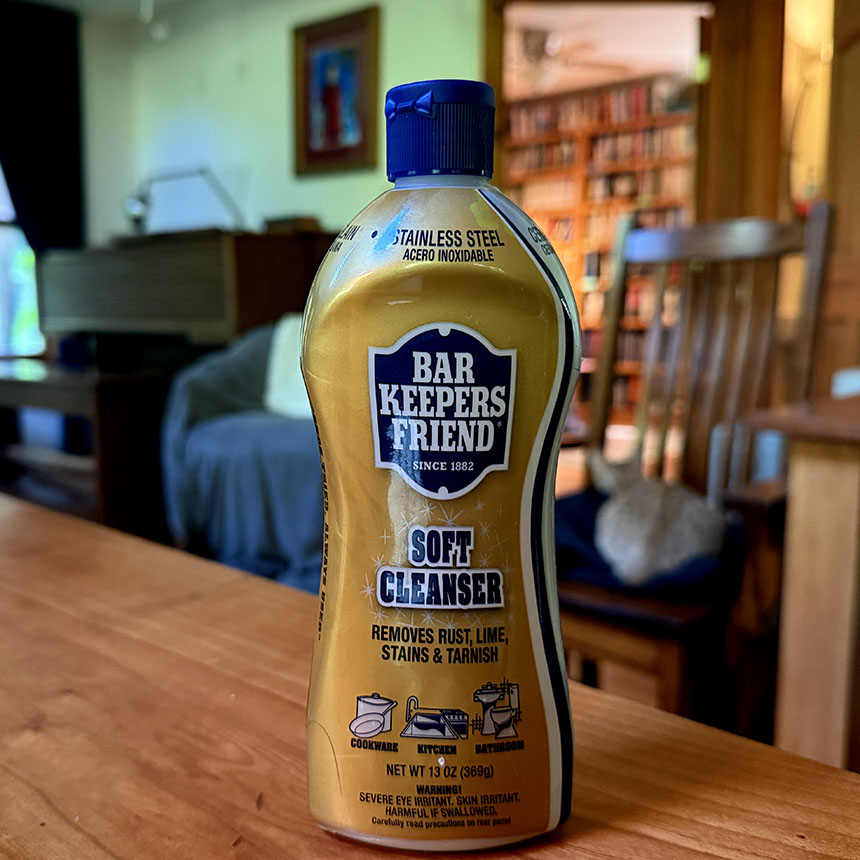
Normally the saucepan is tarnished and stained. But I cleaned it and polished it this morning before I made a portrait of it. I used Bar Keepers Friend and then silver polish. The magical ingredient in Bar Keepers Friend is oxalic acid. Everyone should have some of that stuff stored under the sink.

Copper is a superb conductor of heat. Copper cookware, though, should be lined with tin, because tin is far more inert that copper. The tin, unfortunately, is not as durable as the copper. So frequently used copper vessels need to be re-tinned after some years of use. There are still a couple of places in the U.S. that do that work. You mail them your pot, and they re-tin it and polish it and mail it back to you. When shopping for used copper pots, the condition of the tin is an important factor.


⬆︎ Click here for high-resolution version.