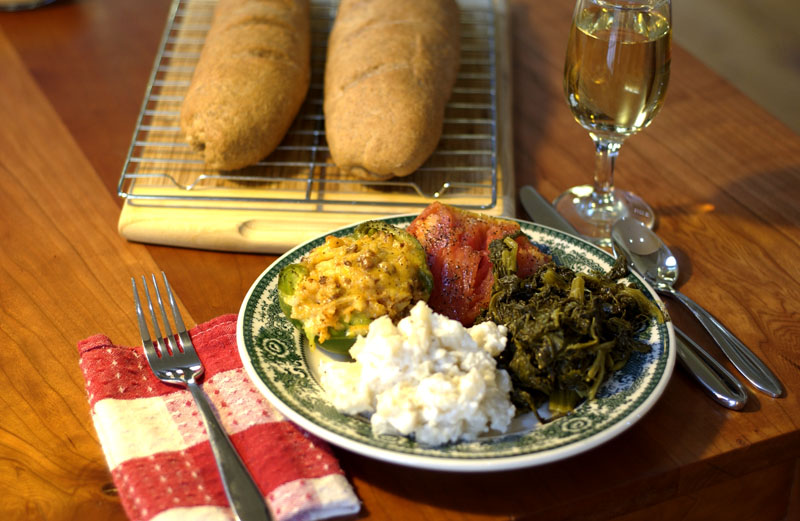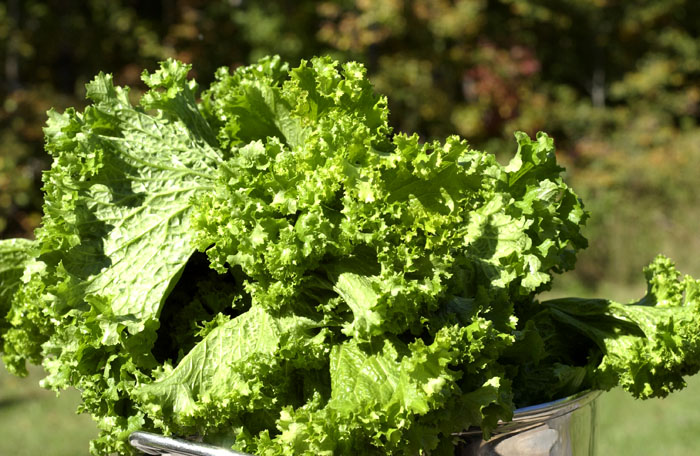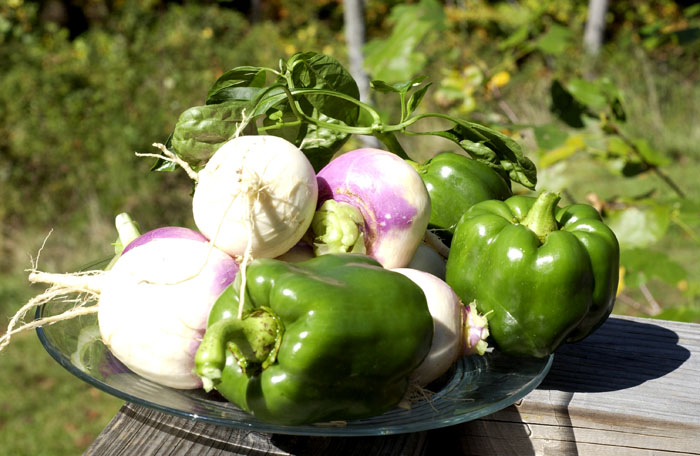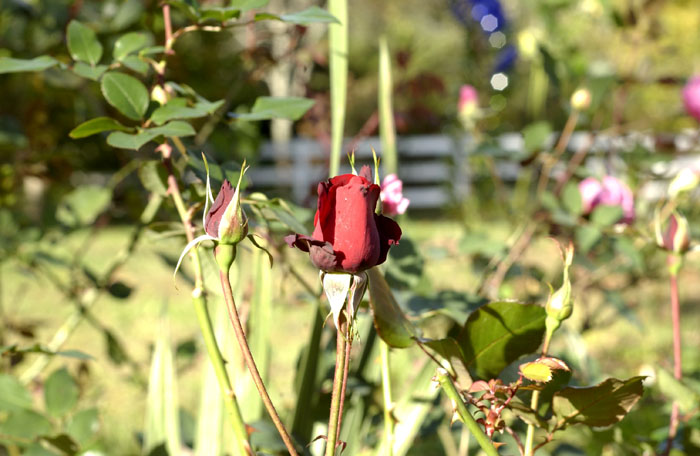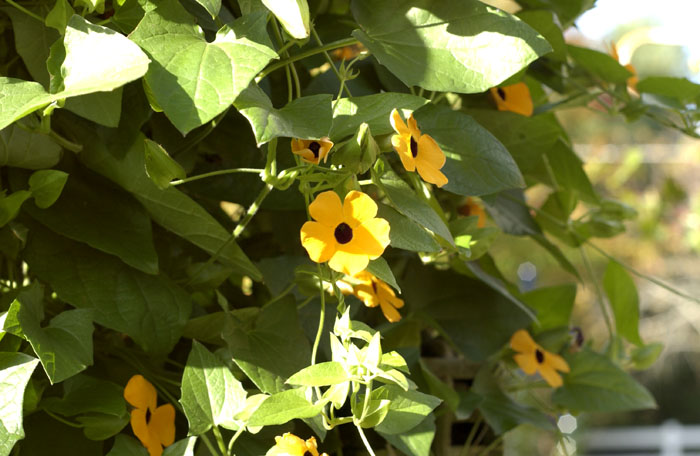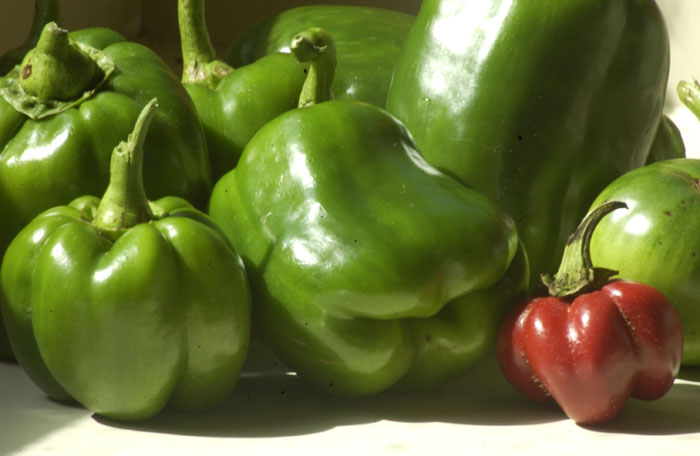
I have a visitor from California, so the abbey kitchen is running at high speed, as it did while Ken was here. This is a green pepper stuffed with rice, cheese, and vegetarian fake sausage; mustard greens; a roasted tomato; turnips seasoned with toasted sesame oil and Greek yogurt; and abbey bread. All the produce came from my garden, except for the tomato, which came a friend’s garden near Asheville.
Still going…
Asheville and thereabouts

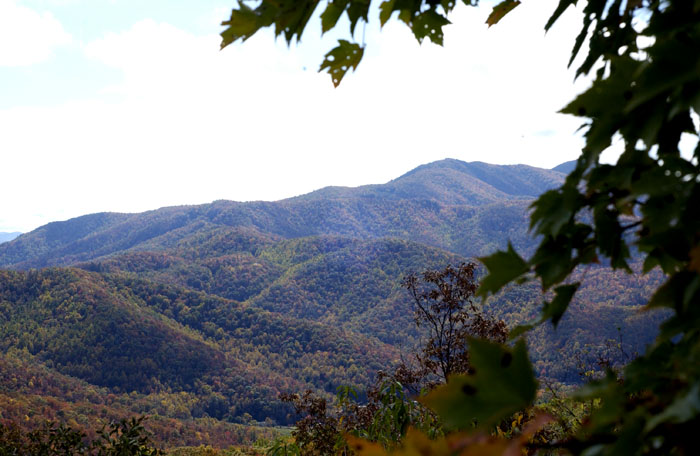
I made a three-day trip to Asheville this week. This photo is from the Blue Ridge Parkway near Mount Mitchell

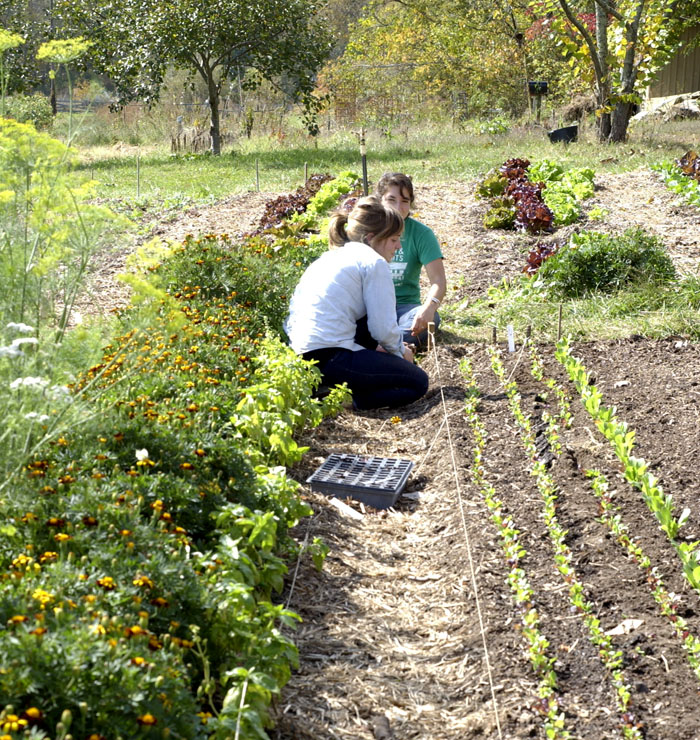
Warren Wilson college is an unusual college that requires work credits for its students. The college has a rustic campus that includes a 300-acre working farm.

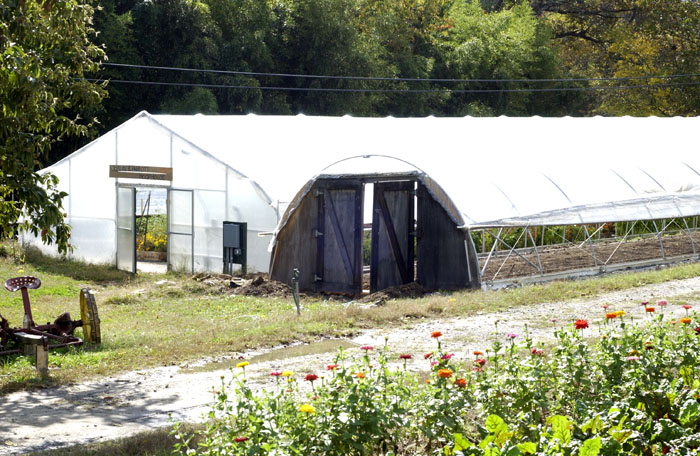
Greenhouse on the Warren Wilson farm

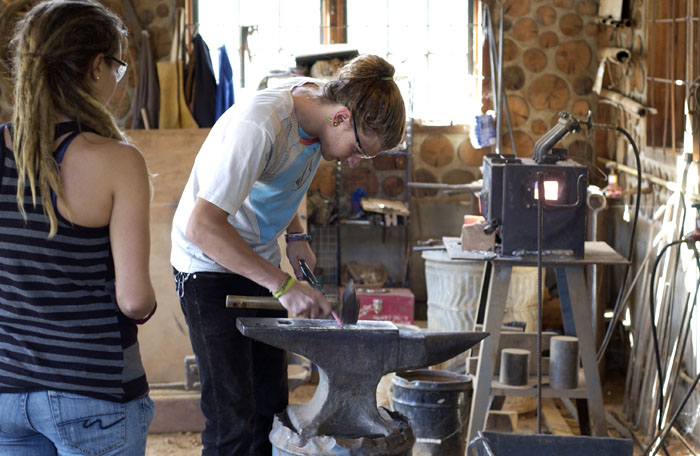
The Warren Wilson blacksmith shop

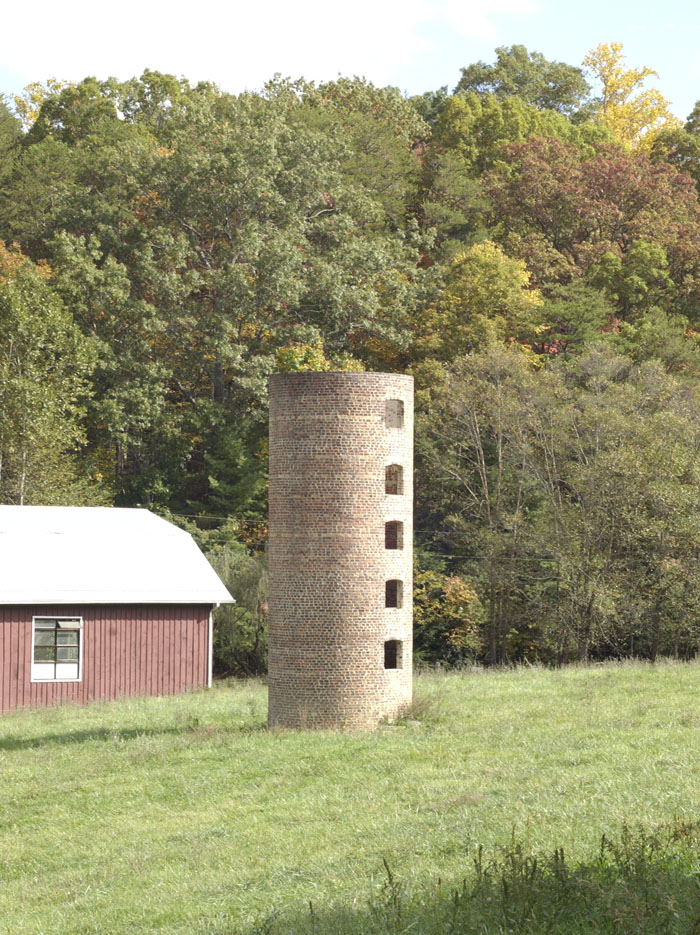
A brick silo on the Warren Wilson farm

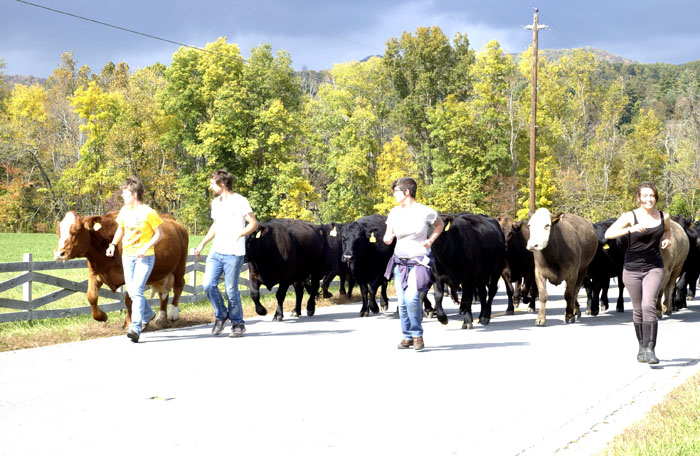
The running of the cows. The students are moving the cows from one pasture to another, using the main road.
Can whole wheat bread have a good crust?
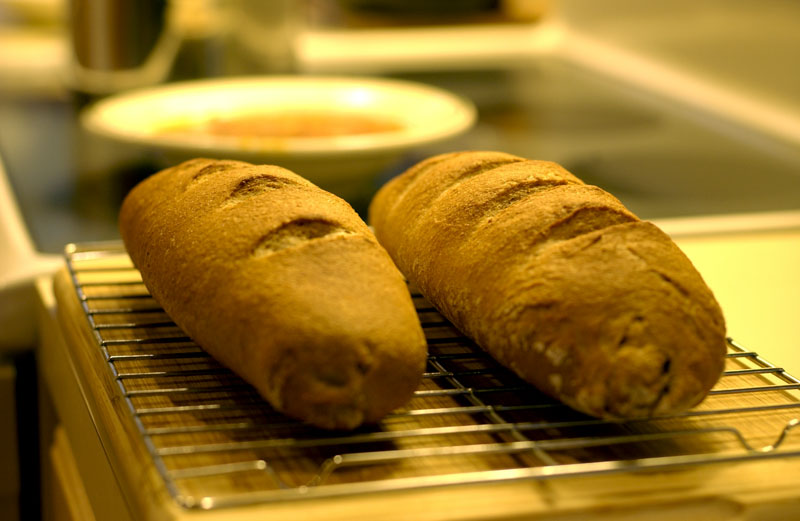
I sent this photograph of my whole wheat French bread to a friend, and he said it made his teeth hurt just looking at the pictures. To my taste, however, the crust was excellent and not tough at all.
For some time, I’d been planning to do the research and development necessary to upgrade the abbey’s rustic loaves to something with a more exciting crust. The gold standard for bread crust, of course, is French bread. On a recent trip to Asheville, I bought a perforated French bread pan made by Chicago Metallic. That was the first step. The second step was to do some research on how to shape French bread loaves and get the crust right.
Though I knead my bread dough in unbleached flour, I use 100 percent whole wheat flour (King Arthur), to make the dough. The dough for my rustic loaves is really just the same as classic French bread — nothing but flour, water, yeast, a bit of sugar to feed the yeast, and salt. No change was needed in the dough. To get a proper French bread crust, I made these changes in my bread-making process:
— I don’t use a coating of oil to keep the dough from drying out while rising. Instead, I let the dough sit on a dusting of flour in a well-covered bowl.
— I give the bread two risings rather than rushing it with only one.
— From Googling and YouTube videos, I figured out the technique for shaping and slashing the loaves.
— I use a spray bottle to mist the loaves with water before they rise and again before I put them in the oven.
— I throw a little water in the oven to create steam for the first 10 minutes of baking.
These methods are simple. It’s easy, really, to make French bread in the home kitchen. The crust was delicious. The perforated bread pans really do work, and the bread did not stick to the pan, even though I used no oil. Though all the dough recipes I came across mix quite a lot of unbleached flour into whole wheat loaves, I’m not tempted to do that.
These French loaves will become the new version of the everyday abbey bread.
Rain…
As the world turns

Arrested at the Wall Street protests
Steve Jobs, Stanford University commencement, 2005:
“No one wants to die. Even people who want to go to heaven don’t want to die to get there. And yet death is the destination we all share. No one has ever escaped it. And that is as it should be, because death is very likely the single best invention of life. It is life’s change agent. It clears out the old to make way for the new. Right now the new is you, but someday not too long from now, you will gradually become the old and be cleared away. Sorry to be so dramatic, but it is quite true.
“Your time is limited, so don’t waste it living someone else’s life. Don’t be trapped by dogma — which is living with the results of other people’s thinking. Don’t let the noise of others’ opinions drown out your own inner voice. And most important, have the courage to follow your heart and intuition. They somehow already know what you truly want to become. Everything else is secondary.”
Back in May when I wrote the “Got a revolution” post, I was in almost a state of despair at the passivity and invisibility of today’s young people as our democracy and our economy are stolen out from under us by our political and corporate elite. How could they — for a timely example — be flocking to Apple stores and building entire lifestyles around their technology, while failing to grasp the message that Steve Jobs, a heretic and a visionary, was trying to put across to them. Could today’s young Americans really be as stupid and deluded by propaganda as today’s older Americans (see Medicare sign, above).
How ironic, that Steve Jobs, one of the greatest free spirits of our time, the son of an Arab father, a rabble rouser, became CEO of the biggest corporation in America. Does that change my views of corporations? No. It just reminds us what corporations ought to be, and what corporations ought to do: Bring good things to people at prices they can afford, don’t prey on your customers, beat your competitors by being better rather than seeking a monopoly like Microsoft, and leave government to the people.
Steve Jobs was a philosopher. He was a Martin Luther. He was a Martin Luther King. I hope he is remembered for a long, long time.
And finally, as the Wall Street protests show, our young people are waking up. They know who is eating their lunch. They know who is lying to them.
They also are wired.
The stage is set, I’m afraid, for unfolding events to slowly work out an extremely important historical question. Will technology enslave the people — top down, through surveillance, snooping, the commoditization of personal information, and 24/7 propaganda? Or will technology liberate the people, bottom up?
Our young people will decide. As of today, with young people in the streets, I am optimistic.
I’m also reminded of words by my friend Rob Morse, in his column in the San Francisco Examiner, on the death of Herb Caen, the venerable columnist for the San Francisco Chronicle whose death left San Franciscans almost traumatized.
“We’re on our own now,” Morse wrote.
Good news for Texas?

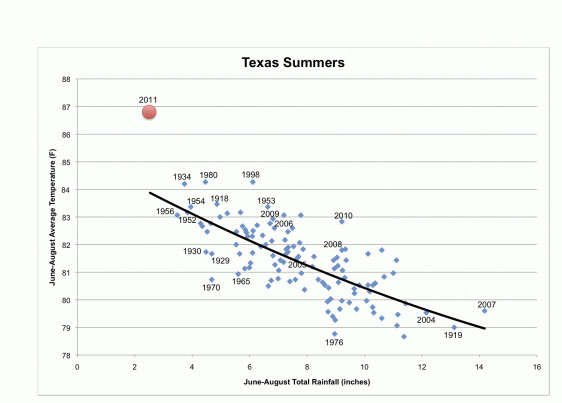
The red dot at the top left indicates that the severe drought in Texas this summer was an outlier event — not a trend. [John Nielsen-Gammon]
One of the things that made this past summer so scary was the extraordinary drought in Texas. This part of the Southeast is not all that far from Texas, and many of the same climate patterns apply. For example, La Niña is known to be related to droughts here in North Carolina, and the same is true in Texas.
So I have kept a fearful eye on Texas, desperate to know whether the Texas drought is an ugly new trend or an outlier event that will reverse.
John Nielsen-Gammon has crunched some numbers on this. He acknowledges that his crunching of the meteorological data is crude and preliminary, but it’s the best data we’ve got so far. His concludes that the 2011 drought in Texas is an outlier event and that thus it is highly likely that it will reverse.
Nielsen-Gammon also sheds light on a question that has puzzled me. Why do droughts tend to last for years? We know that La Niña causes short-term droughts that last a season or two or three. But what causes an entire decade of droughts?
Nielsen-Gammon says that the data shows that long-term droughts are related to long-term oscillations of surface water temperatures in both the Atlantic and Pacific.
Bottom line: If Nielsen-Gammon is right, then there is cause for hope that these clusters of hot, dry summers will give way to clusters of cooler, wetter summers.
Green pepper bumper crop
So far in September, six inches of rain have fallen here. That has made a huge difference in the cool-weather crops. The peppers, which merely survived during the hot, dry, summer, have become very productive and are even still blooming. The turnips, mustard and kale also are doing extremely well.
I couldn’t ask for better soil. It’s all about water.
Wild turkey — yuck
Those classic speakers can be repaired

Two of my Rodgers FR1.7 speaker cabinets, with the 8-inch drivers newly restored
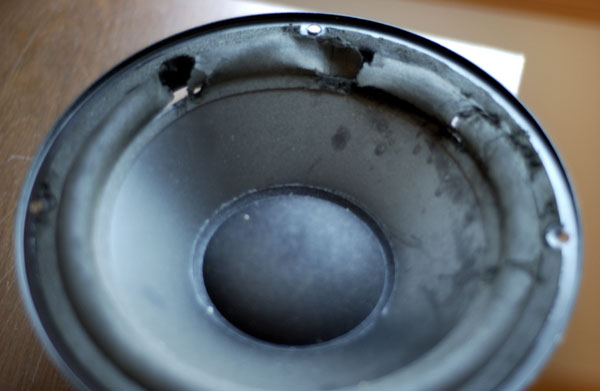
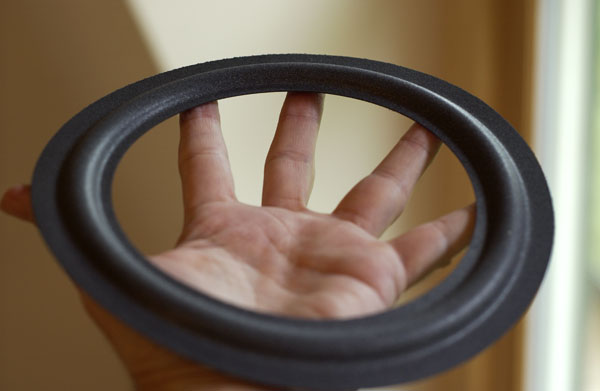
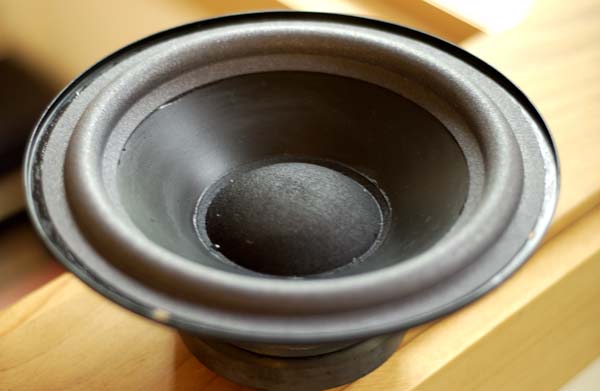
Until three or four years ago, I didn’t know that those classic speakers that appear to be blown out can be repaired. The problem isn’t as ugly as it looks. To keep an airtight seal between the front and back of the speaker, the outside of the speaker has a plastic foam “surround.” These surrounds have a life of 10 to 20 years before they must be replaced.
When speakers have blown-out surrounds, it doesn’t mean that they’ve been abused. It’s just that the foam gradually decomposes from exposure to the air.
The repair job involves carefully removing the old surrounds, cleaning the glue and foam residue off the surfaces, and gluing a new surround onto the speaker. Surrounds can be bought on-line. I bought my from Parts Express.
If you want to undertake the restoration of a speaker, you have some research to do. First you need to determine the correct surrounds to order. And though the restoration kits come with instructions, it’s a good idea to watch some YouTube videos of the process.
The abbey’s new organ, a Rodgers Cambridge 730 built in 1992, came with eight Rodgers FR1.7 speaker cabinets like the those in the photo above, plus two very large subwoofers to support the low pedal stops. Four of the FR1.7 speakers needed repair, a job that I’ve finally finished. Now as soon as I assemble some more speaker cables I’ll have the full complement of 10 speaker cabinets. That’s 500 pounds of speakers, almost equal to the weight of the organ console. That’s a heck of an audio system for a heck of an organ. I used to hesitate to call myself an audiophile, but I think I’ve earned the title, considering how much excellent (but vintage) audio equipment I have in the house. And now that I’ve been through the rite of passage of repairing speakers.
I was pleased to see that the 8-inch speakers in the FR1.7 cabinets are Peerless speakers, made in Denmark. It made me realize how few Danish imports most Americans have. I love Denmark, having been there on two business trips. So I’m proud of the Danish speakers in my Rodgers organ. Rodgers organs, by the way, are made in Oregon. They are sometimes referred to as the Rolls-Royce of electronic organs. They use digitally sampled pipe sounds. When Rodgers organs are installed and adjusted properly, even organists think they’re listening to a pipe organ.

An 8-inch speaker with a blown-out surround