Solar gain


The front door and hallway around 8:30 a.m.

Building a house will make you crazy. But one of the advantages of new construction is the greater energy efficiency of current building codes. Stokes County’s insulation requirements, for whatever reasons, are stricter than surrounding counties. For example, the amount of ceiling insulation required will not fit between the joists, so 2×4’s must be nailed on top of each ceiling joist to create a deeper channel for insulation. Building codes and inspections are a source of anxiety during construction, but after a house is finished and you get that coveted certificate of occupancy, building codes are a source of security.

I confess that the plan for the house at Acorn Abbey was selected more for its style and features than any practical considerations such as heatability. Still, at only 1,250 square feet, I’m not heating a barn. The house’s south-facing orientation, by pure luck, turned out to be perfect to get maximum solar gain in the winter and minimum solar gain in the summer. In the winter, when the sun is low in the south, the sunlight pours into the south-facing, east-facing, and west-facing windows. In the summer, when the sun is overhead, very little direct sunlight comes in those windows (except the west-facing windows, where I installed shades), and the sun heats mostly the attic.

Last winter, I did not have any draperies downstairs. Even though my windows exceed the building code requirements for efficiency, still any window is going to lose more heat than a wall. In particular, I could feel cold air around the north-facing double doors leading to the rear deck. I made a point of investing in heavy draperies before another winter. The four big windows in the living room now have heavy velvet drapes. Two of those windows face north. I bought thermal curtains to cover the double door to the deck. Curtains for the upstairs gothic windows are going to have to wait another year. The ceiling is high in that room, and the windows almost reach the ceiling, so heavy 12-foot-long draperies (9 feet wide) will be required — expensive and beyond my budget for now.

I don’t have any way to quantify the increased efficiency of the drapes, but my subjective impression is that they help quite a lot. For the past four or five days, we’ve had daytime highs in the upper 60s and nighttime lows of around 39. During weather like this, the heating system never runs, day or night. Daytime solar gain brings the upstairs temperature to about 73, downstairs to about 72. At night, with the draperies all closed, the upstairs temperature drops to about 66, and the downstairs temperature drops to about 65. Cooking breakfast raises the downstairs temperature to 66 or 67. The house then warms gradually during the day as the sun pours in. A ceiling fan in the upstairs bedroom, the room which receives the biggest dose of sunlight through the gothic windows, helps to push some of the warm air downstairs.

If I ever built another house (and I won’t), I think that, as part of the planning, I’d study the solar potential of each window and its orientation. There are online tools (which know the elevation of the sun above the horizon at any time of year) that will help you do this. Acorn Abbey is not a solar home, but every little bit helps. I like to ask people what their heating costs are, and so far no one I’ve asked has had lower heating costs than I have. Every time the heat pump comes on, I cringe a bit not only because energy is being used, but also because I’m adding to the wear and tear on my heat pump, which I want to last for a long, long time.


The eastern side of the living room


The downstairs bedroom, through the bay window


The lower stairs


The upper stairs. The spot of sunlight on the right is coming through the front dormer, which faces south and is not visible in this photo.


The upstairs bedroom. All the photos were taken about 8:30 a.m. on Nov. 11.

Time to make sauerkraut


You need cabbage, crocks, a scale, a shredder, and the right kind of salt

Making sauerkraut is not my favorite chore. Shredding the cabbage is tedious, and bits of cabbage go everywhere. I did the job out on the deck to keep the mess out of the kitchen. I use Harsch crocks, which are made in Germany especially for making sauerkraut. The Prago cabbage shredder requires a lot of manual work, but it does the job and gets the cabbage exactly the right thickness for sauerkraut.

I made 15 pounds of sauerkraut today, from cabbage bought in Virginia. I used a little more salt than last time — 3 tablespoons per 10 pounds of cabbage. Next spring I hope to make sauerkraut from my own homegrown organic cabbage.

The first tasting should be in early December.


Shredded and in the crock


I keep the crocks under a table near the kitchen

The garden in November


Winter rye grass

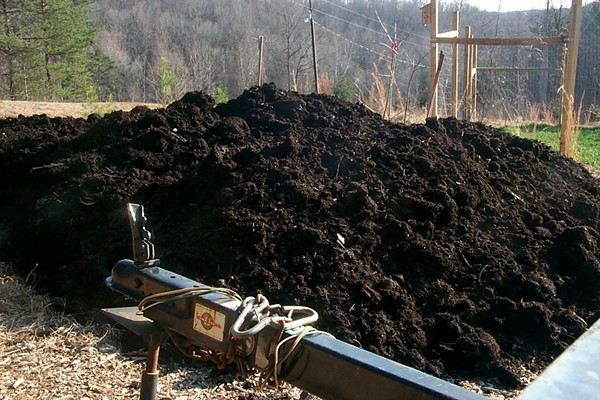
Back in October, I used the tiller to work 650 pounds of organic fertilizers into the garden area, then I sowed winter rye as a cover crop. The rye grass is doing well. Not only will it make a nice winter cover crop, it also should serve as a great source of winter greens for the chickens. Each morning when I let them out of the chicken house, they immediately start eating grass and clover. They have a craving for greens. I’m pretty sure that it’s the chlorophyll that gives their egg yolks such a deep orange color.


Beets

The beets and turnips have survived the light frosts and freezes we’ve had so far. I want to let them grow as long as possible, but I’ll have to pull them all the day before the first really hard freeze is forecast.


A frostbitten young fig tree


Patience, looking shabby

One of the hens, Patience, has been moulting. She lost her tail feathers. She looks pretty shabby at present, but I can see the new feathers coming in. She’ll need those feathers soon enough.

Not a very colorful fall


The fall colors are not very bright this year. This is Hanging Rock from Moore’s Spring Road. These photos were taken yesterday on a trip to Yadkin County.


This is Pilot Mountain from Bowen Road near Pinnacle.


This little woodframe gothic church is in the little town of Dozier in Forsyth County. I love its design, with the three stepped windows and the three-step steeple.

The New Yorker on Internet security

Anyone interested in Internet security and Internet snooping will want to read Seymour Hersh’s article in the Nov. 1 New Yorker: “The Online Threat: Should we be worried about a cyber war?” The article contains a lot of interesting background on where the government, the military, and private corporations stand on the question of Internet security in general. For example, it would be technically easy for all of us to have encrypted email, with each email electronically signed to verify who sent it — thus putting an end to spam and preventing anyone from snooping on our email. But the powers that be don’t want that, because they want to be able to snoop on us.

The article provoked me to do something that I had meant to do for a long time: set up my computer for encrypting email. It took me less than 30 minutes to do it. But the problem is, very few people are set up to encrypt email, so I’d be sending email that none of my email correspondents can read. What we chiefly need is a movement in which everyone starts encrypting their email. There are free tools for doing this, whether you’re using Windows, a Mac, or Linux. If you’re interested, why not Google around for some instructions…

On my Mac, I’m using MacGPG and GPGMail. Those of you using Windows might want to look into something like EnigMail. The concepts of public-key encryption can be daunting if you’re new to the idea. Some reading and experimentation are required. If programmers could make these interfaces truly simple (and they’re not there yet), then lots of people would start encrypting.

Sweet potato harvest


Spread out to dry on the deck

I had not really planned to grow sweet potatoes this year, but back in late July or early August I came across some sweet potato sets in a produce shop at Walnut Cove. I bought a pack of the sets.

Ken then made a sweet potato bed about 6 feet square by turning a spot of garden with a mattock and heaping on lots of compost. The sweet potatoes flourished (in spite a few raids by Mr. Groundhog) until the frost bit the vines yesterday morning. Today I composted the vines and dug up the potatoes. That 6-by-6 plot yielded a large grocery bag full of potatoes.

Apple and cabbage country

After two rainy days, two dark and stormy nights, and a total of 3.7 inches of rain, I went on a little outing today to southern Virginia to buy apples and cabbage. It’s not really very far. Acorn Abbey is only 13 miles from the Virginia state line.

It’s nice living near apple country, but it’s disappointing that most of the orchards grow only the top-selling and less interesting varieties such as Golden Delicious and Stayman. It’s going to be a few more years before the little orchard at Acorn Abbey (with eight varieties of apples) kicks in, so I’ll take what I can get. The apples were four dollars a peck.

Ayers Orchard also grows grapes. They don’t make wine, but they sell the grapes to winemakers.

Restaurant china


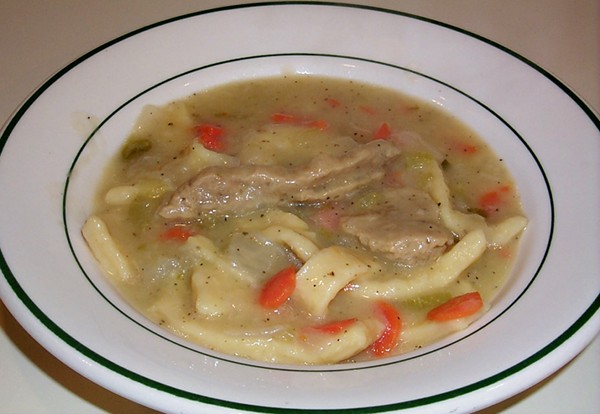
New soup bowls made by Buffalo china

I have long had a great fondness for restaurant china. It’s heavy and durable, and it’s relatively inexpensive. I bought eight soup bowls on eBay that arrived today. Somehow I have to find room for them in the cabinets with the Victor “truck driver” mugs and the Buffalo cups and saucers. They don’t match? No problem, at least to me.

A while back, I wrote about how the right mugs and cups help to get coffee to the right temperature for drinking and keep it there. With soup, something similar is going on. Serving soup from deep, narrow cereal bowls just doesn’t work for me. The soup won’t cool properly. In my opinion, soup should be served very hot, and in small servings. The hot soup should go into a wide, narrow bowl, where it will cool quickly to the right temperature for eating it. The shapes and sizes of the bowls, plates, cups and mugs that we all use reflect a cultural consensus on how food should be served. Consensus changes. For example, these days there seems to be a growing consensus that coffee should be served in something gigantic. I object.

The makers of institutional china, at least in previous decades, got it about right, in my opinion. These bowls are new old stock, probably made in the 1980s. Buffalo china is still being made. Buffalo is now owned by Oneida.

Jane Austen

Why have we had a Jane Austen revival? Why do we remain fascinated with 200-year-old novels in which nothing much happens but drawing-room conversations and emotional detective work by women to figure out the intentions of men? Partly, I’m sure, the answer to that is the BBC. We can’t get enough of those BBC costume dramas, those lavish sets, those charismatic young English actors and actresses. I’ll argue, though, that reading Jane Austen, for some mysterious reason, is more entertaining than the BBC productions.

It had been more than 30 years since I’d read Jane Austen, so I’ve had a bit of a Austen marathon during the last month. First I read Sense and Sensibility, then Pride and Prejudice. Then I watched the 2009 BBC production of Emma with Romola Garai. How many versions of Emma have we seen? Still, we’re always ready for a remake.

Many readers today probably find Austen difficult to read. Her sentences are long and tangled. Though her world is a world of strict and repressive rules, if she has a rule for using commas, I don’t know what it is, unless it’s that long sentences must have lots of them, with some semicolons mixed in for variety. Some new editions include notes to help modern readers understand some of the references to elements of culture that are now lost. For example, my 2003 Barnes and Noble edition of Pride and Prejudice includes notes from a scholar. But on the very first page this scholar proves that she doesn’t know as much as she thinks she knows. Jane Austen writes (Mrs. Bennet is speaking):

“Why, my dear, you must know, Mrs. Long says that Netherfield is taken by a young man of large fortune from the north of England; that he came down on Monday in a chaise and four to see the place, and was so much delighted with it that he agreed with Mr. Morris immediately; that he is to take possession before Michaelmas, and some of his servants are to be in the house by the end of next week.”

This sentence, the scholar deems, requires two notes: One is to tell us that a chaise and four is “a four-wheeled closed carriage.” I laughed out loud, because this is very wrong. A chaise and four is a carriage pulled by four horses. Anyone of Jane Austen’s time would have known that a carriage carrying a single person pulled by four horses means either or both of two things: That the person is rich, or he is in a hurry. The second scholarly note tells us that Michaelmas is the feast of St. Michael, celebrated on Sept. 29. Michaelmas also marked the end of summery weather.

That Sense and Sensibility was Jane Austen’s first novel (1811) is, I think, evident in a certain lack of confidence in her writing style and an unevenness in her sense of drama. For example, she pulls off a stunning piece of drama in one place, but misses the opportunity in another. Near the end, Marianne falls ill while she and Elinor are traveling and staying at the home of a friend. Marianne takes a turn for the worse, and Elinor fears that the situation is so grave that she sends for their mother to come in all haste. In the dark of night, a carriage (drawn by four horses!) comes roaring up to the house, and Elinor assumes it is their mother. But actually it is Willoughby, who has heard of Marianne’s illness and who comes to say that he has loved Marianne all along. Contrast this high drama with the book’s climax, when Edward reveals to Elinor that it is she he loves after all, but without a bit of drama.

No film version of these novels can reconnect us with our lost culture (and lost powers of the English language) the way the books can. We seem to realize that something important is missing in our post-industrial lives, but we’re not sure what. And how could we know, without some research? These classic novels help to remind us of what was lost when we went to work in factories and paved the world.

As an example of the loss of a picturesque element of culture: In chapter 7 of Sense and Sensibility, Sir John Middleton decides to have a party on short notice:

He hoped they would all excuse the smallness of the party, and could assure them it should never happen so again. He had been to several families that morning in hopes of procuring some addition to their number, but it was moonlight and every body was full of engagements.

These days we hardly ever notice the moon. Once upon a time, our social lives revolved around it, because those carriages (and poorer people on foot) could move around much more safely and conveniently in the moonlight.

We traded our moonlight for headlights and street lights. What a sorry deal.