Keeping an eye on the FCC

roosevelt-2
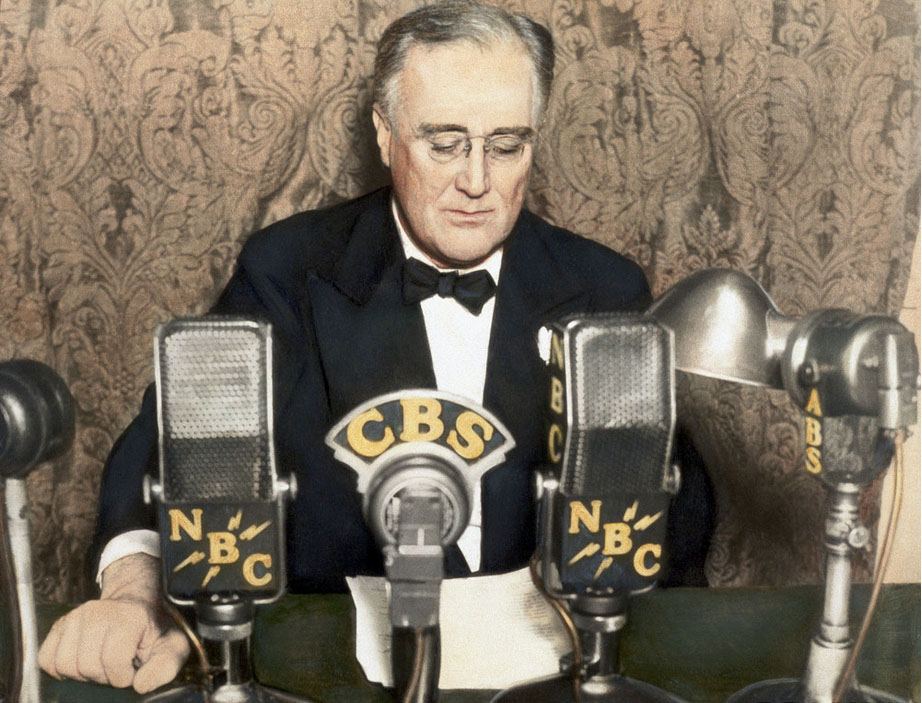
President Roosevelt prepares for a fireside chat.

A couple of days ago, I posted an item on the importance of keeping an eye on the FCC. The item was focused on the future of over-the-air television, which may not affect your world very much. Still, we all need to keep an eye on the FCC, because decisions made by the FCC are critical to the future of the media, the future of the Internet, the choices we have, and what we pay.

A friend of mine who teaches communications law commented on that post. So that his information doesn’t get lost in a comment, I’m reposting it here.


The libertarians’ absolutist argument against regulation in the communications sector is silly on three particularly ironic points:

1) We already have a largely unregulated system thanks to the Telecommunications Act of 1996, which loosened or erased many longstanding rules, particularly those guarding against monopoly ownership. Among other things, the Act led to an almost overnight consolidation of the radio industry whereby a company like Clear Channel could grow from 60 to 1,200 stations in 18 months. The first order of business in that nationwide takeover was the elimination or decimation of local news staffing at all of those stations.

2) The media and telecom giants, from Time-Warner Cable to Disney, long ago captured the regulatory agencies, along with Congress and state legislatures, and openly and brazenly manipulate the rules they are supposed to live by. Furthermore, the FCC often doesn’t even enforce its own rules, making them meaningless. Just one example here: The FCC has allowed Rupert Murdoch to get around the newspaper-broadcast cross-ownership ban by granting him a waiver year after year; thus, he can control newspapers, television stations and radio stations all in the same market (New York, for one).

3) Media companies WANT there to be rules because the rules help them operate in a necessarily structured and predictable environment, and because, more often than not these days, the rules favor their interests against those of the public. The ban on municipal broadband in North Carolina is a prime example, but industry-friendly — indeed, industry-written — rules stretch to the FCC and the Justice Department, which, for example, is sure to rubber-stamp a merger between Comcast and Time-Warner Cable if the two companies decide to go ahead with it. It would create a monopoly that would control the television and Internet services of about 50 percent of the American population.

There are other reasons that the libertarian dream of a no-rules-at-all utopia is stupid, but those three suffice. I suppose the fundamental point to make is that their position is ahistorical. It is detached from both the technical and legal history of the communications sector. When the federal government first started regulating radio in 1927, it was because the radio owners themselves were screaming FOR regulation — someone to police the wild, wild west of their new industry and sort out the chaos of too many stations chasing too few frequencies. Regulating the technical aspects of radio was at the center of the FCC’s mandate when it was created by the Communications Act of 1934, and it remains a vital part of the agency’s mission today.

An example particular to Acorn Abbey: The only way there will ever be high-speed Internet service in such a rural locale will be through the use of so-called “super wifi,” which harnesses unused “white space” on the “gold-plated spectrum” that television stations enjoy. It can travel for miles and penetrate buildings just like a TV signal. There are even experiments under way to see if television transmitters can be altered so that they also can transmit Internet traffic. It would solve the rural broadband build-out problem overnight because the infrastructure is already in place.

Of course, the same companies that routinely decry regulation of any kind, the likes of Comcast and Time-Warner, will do anything they can to manipulate the rules to prevent the above scenario from happening. And they will try to manipulate the rules at the federal, state and county levels to stop any new efforts to break their monopoly control. And once again, the problem will not be that we have regulations. The problem will be that we have regulations written to benefit the regulated, not us.

For background on the Radio Act of 1927:

http://en.wikipedia.org/wiki/Radio_Act_of_1927#The_Radio_Act_of_1927

For background on the Communication Act of 1934:

http://en.wikipedia.org/wiki/Communications_act_of_1934

For background on the Telecommunications Act of 1996:
http://en.wikipedia.org/wiki/Telecommunications_Act_of_1996

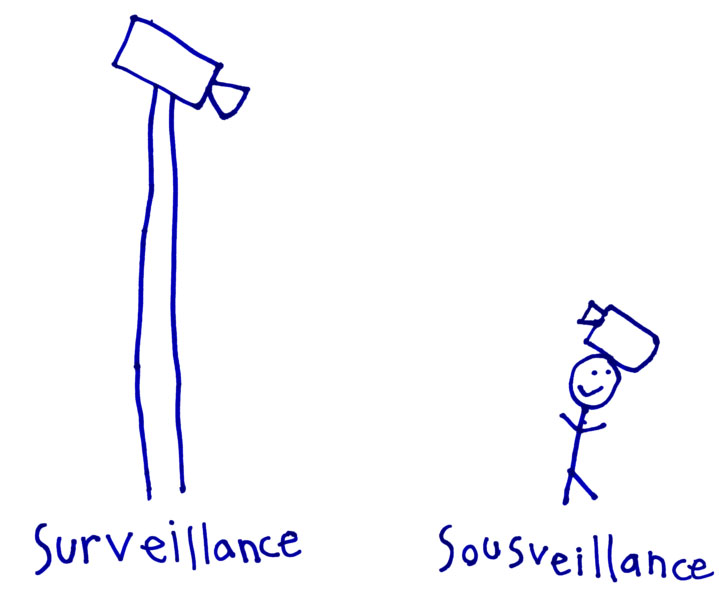
Sousveillance?

sousveillance
Source: Stephanie Mann, age 6, via Wikipedia

Periodically I check out the web site of David Brin, a science fiction writer and futurist, to see what’s on his mind. Brin is the author of the brilliant and classic Startide Rising (1983), which won both the Nebula and Hugo awards the year it was published. But, smart as Brin is, I find that I usually disagree with him. This is because I put him in the unpleasant category of techno-utopians — people who think that technology will solve all our problems, including our energy problems and even our political problems. I think that is bunk, and dangerous bunk.

Brin had linked to a piece he wrote in “The European” in which he argues that the solution to growing surveillance and invasion of privacy is “sousveillance.” The word “sousveillance” is a made-up word and is the opposite of surveillance. It means spying up at elites the same way they spy down on us. The prefix “sur” of course comes from a French word meaning over, or above; and “sous” is another French word meaning under, or beneath.

This notion that sousveillance is an effective antidote to surveillance seems to me to be so obviously silly that I’m inclined to think that the techno-utopians are even more deluded than I had thought. Just give everyone a Google glass and we’ll fix the world’s surveillance problem!

First of all, there is a straw man fallacy: “… [F]or the illusory fantasy of absolute privacy has to come to an end.” Who said anything about absolute privacy? There has never been such a thing as absolute privacy in American society or American law. The law and the Constitution are almost silent on the issue of privacy. But there have been lots of lawsuits having to do with privacy, and as far as the courts are concerned the issue is pretty settled.

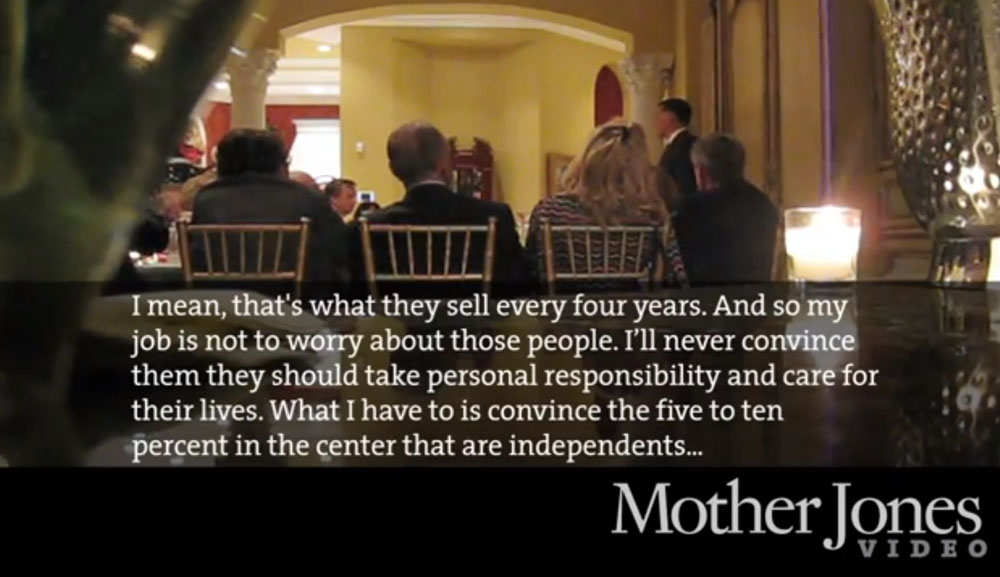
But the second and biggest point of silliness is the notion that we small people have the same power to spy on elites that they have to spy on us. Yes, sometimes it happens. The photo of the cop pepper-spraying a group of already restrained protesters held our national attention for weeks. That was a fine example of sousveillance — someone had a camera ready at the right time. Another brilliant lick of sousveillance was when a waiter (or someone) at a Romney fund-raising event for rich people secretly made a tape of Romney trashing 47 percent of the American people as “takers.” It helped expose Romney as a servant of the rich, and it helped him lose the election.

Edward Snowden’s spying on the spies, then releasing the evidence to the media and to Wikileaks, is the all-time best example of sousveillance. Because of the actions of one very clever nerd, the elites caught red-handed are still squawking and trying to lie their way out it. We got some very useful information on how elites’ surveillance systems operate, though that information will soon enough be obsolete.

But as brilliant as these coups of sousveillance were, such things are always going to be rare and accidental. That is because elites have systems for secrecy that we little people will never have. They are rich, they are ruthless, and they are spending hundreds of billions of dollars (most of it our own tax money) to build walls of secrecy around themselves while monitoring everything we do. The idea that the little cameras in our phones, or built into our glasses, can fix this is seriously dumb. Nevertheless, we need to always keep our cameras handy, and we must be creative in coming up with new ways to spy on elites.

pepper
Dumb cop: Nailed by the camera!

romney
Dumb politician: Nailed by the camera!

The rewards of rural life

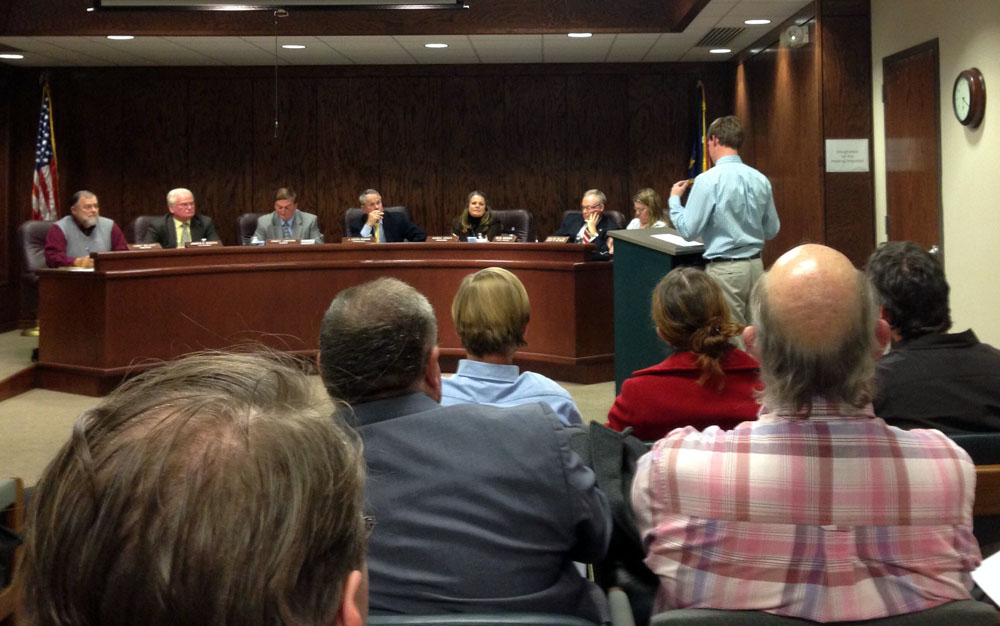
commissioners
A concerned citizen speaks to the Stokes County commissioners.

Though I certainly enjoyed my 17 years in San Francisco, rural life is far from boring. One of the good things about backroads places such as Stokes County is that the American system of government operates at a small scale. People know each other. It’s easy to get involved. A few people can make a big difference.

In my political activities against fracking, I’ve gotten to know a good many people. Often the same people who show up to work for one urgent cause will show up to work for another urgent cause. In Stokes County, the newest urgent cause is preserving an enormously valuable 19th-century resort and keeping it in the hands of the public. The resort, Vade Mecum, belongs to the state of North Carolina at present and has been operated at a loss by N.C. State University. A few weeks ago, N.C. State informed Stokes County that they’re closing Vade Mecum, which had been used mostly as a seasonal camp for young people. Very quickly, the county’s leadership — both elected and unelected — have gone to work to come up with a plan that would get Vade Mecum and its pristine 900 acres into county hands and keep it open. Tourism is increasingly important to this county, and Vade Mecum adjoins Hanging Rock State Park, which is the most visited state park in North Carolina. So Vade Mecum and its land could become an important part of Stokes County’s tourism master plan.

The room was packed at a meeting Monday of the county commissioners. A retired farmer, in a 30-minute presentation to the commissioners that was simply the most entertaining and most effective presentation I have ever seen, outlined to the commissioners a plan for preserving Vade Mecum that was developed by a group of concerned citizens. The commissioners seemed to like the plan and have promised to act soon on preserving Vade Mecum.

Though dramas like this certainly happen at the state and national level, here at the county level everyone is up close to the action. There is a real sense of working together. I like it. And at this stage of my life, I’d rather live here than even in a place like Paris.

vade-mecum-2
The main lodge at Vade Mecum

The lost Celtic civilization: does it matter today?

Gundestrup
A detail of the Gundestrup caldron. Source: Wikipedia


The Discovery of Middle Earth: Mapping the Lost World of the Celts. By Graham Robb, W.W. Norton & Co., 2013, 396 pages. Published in Britain as The Ancient Paths: Discovering the Lost Map of Celtic Europe.


Most people — certainly most Americans — never stop and reflect on culture, as though somehow the way we live (and the way we think) today was somehow inevitable. But a bit of travel, a bit of history, and a bit of reflection make it pretty obvious just how arbitrary culture is. Many of us despise American culture. Western culture as a whole is seriously screwed up, though there have been many gifted people over the centuries who have, in large and small ways, managed to make Western culture a little less ugly than it otherwise would have been. But culturally we remain what we are, and some of us don’t like what we are. Our relationship with nature is completely broken. All the magic has been driven out of the world. Our culture and religion have warped our psyches and trampled our instincts (just ask Freud). We are a mess.

A Mozart or a Thomas Jefferson or an Einstein have only a limited effect on culture, the grandeur of their individual achievements notwithstanding. But there are major turning points in culture. One such turning point in Western culture — and I would argue that it was the most important turning point, though it happened 2,000 years ago — was the almost total destruction of Celtic civilization by the Roman armies and the Roman religion. If this had not happened, we in the West would be living in a completely different world today. I think it would be a better world.

The Roman destruction of Celtic culture — genocide is not too strong a word — was so complete that we know very little about the Celts today. Long after the Roman armies had defeated the Celts in Gaul (France) and Britain and hunted down and killed the Druids, the Roman church continued the work of cultural annihilation. The destruction of the Celts in Gaul was so complete that their language was wiped out. Today, we have two main sources of information about the Celts. The first source is the record left by Greek and Roman historians, including a history by Julius Caesar himself, who spent several years away from Rome with the army, waging war against the Celts. But this written record must be interpreted very carefully, because much of it was anti-Celtic propaganda meant to justify the destruction of the Celts. Plus, many of those historians never set foot outside of Greece or Rome or even met a Celt. They just repeated what others had written. The second source is archeology.

Anyone who is seriously interested in the Celts must include a disclaimer, so I include it here. I am not interested in the neo-Druids, the people who put on white robes and show up at Stonehenge at the equinoxes. There is a vast body of romantic, imaginative and speculative material about the Celts and the Druids. We must ignore all that. And by the way, Stonehenge is not even Celtic. Stonehenge is thousands of years older than Celtic civilization. Celtic civilization was contemporary with classical Greece and Rome.

Graham Robb’s book is one of the most important new books about the Celts to come out in years. It is meticulously researched, with something like 500 sources cited in the notes. Robb’s focus is on Celtic astronomy and geometry, and how those things affected the physical layout of the Celtic highway system and Celtic towns. But along the way, Robb’s story touches on many other areas of Celtic life and Celtic culture.

Were the Celts primitive compared with the Romans? Ha! In many ways, Celtic technology and Celtic science were superior. The Celts already had a well maintained system of roads and bridges, which is one reason the Roman armies could move so fast and why it was so easy for the Romans to lay down Roman roads on top of existing Celtic roadways. The Celtic wheeled vehicles were so technically superior to the Roman vehicles that virtually every word for wheeled vehicles in Latin comes from the Celtic language. The Celts’ communications system was faster than the Romans’. The Celts could transmit news from one end of Gaul to the other in a matter of hours, using a network of acoustically well-placed shouters, with protocols for ensuring accuracy. The Romans used runners, which was slower. Robb makes it clear that the Druids were scientists as well as politicians, religious leaders, and diplomats. Celtic society, says Robb, was an intellocracy. It was governed by people who were selected for their merit and who spent as much as twenty years in training.

Why would the Romans (including the Roman church) have gone to so much trouble to completely wipe out the Celtic civilization? The answer, I think, is clear. It was because the Celtic way of life, the Celtic way of thinking, and the Celtic religion were deadly dangerous to the Romans. The Roman culture and the Roman religion simply could not have survived unless Celtic civilization was destroyed. If the Romans had not destroyed the Celts, those of us of European descent would be very different people today.

The abiding ugliness of Roman culture and the Roman religion is an important theme in my novel Fugue in Ursa Major. I’ve had to do a great deal of reading about Rome, and the Celts, to make sure that what I’ve written is historically defensible. Graham Robb’s book, though it was published while Fugue in Ursa Major was undergoing its final editing, was a godsend, not least because it gave me greater confidence that I was on the right track.

So, today, as heirs to the cultural poverty and systems of hierarchy and power bequeathed to us by the Romans, is there anything we can do to retrieve what was destroyed when the Celts were destroyed? There may be. The first step: read. But be sure that what you read is from serious historians. Then, when you have a good foundation in Celtic history, use your imagination. How might your life be better if Celtic, rather than Roman, ways of thinking had prevailed?

Moral Monday in Stokes County


Earline Parmon, state senator for Forsyth County (click on images for high-res version)

North Carolina’s urban counties have been having Moral Monday events, but I’m wondering if Stokes County isn’t one of the few small, rural counties to do it. The turnout was not exactly tremendous — less than a hundred. But the speeches were fiery.

While listening to several dynamic and experienced African-American speakers at today’s event, I had a breakthrough realization about why it has been so difficult to organize rural white Southerners against fracking. African-Americans learned how to organize and fight decades ago. Rural white people are just getting started.


Linda Hall Hicks, a retired schoolteacher and member of the No Fracking in Stokes steering committee


Ann Meadows, also a retired schoolteacher and member of the No Fracking in Stokes steering committee

2 major TV appearances by Ken

Ken has two major television appearances coming up in the next week. On Thursday, June 20, he’ll be on CBS This Morning. On Monday, June 24, he’ll be on the Tonight Show with Jay Leno. The scheduling of the Tonight Show appearance may change because of the NBA playoffs, so check the Tonight Show web site if need be. He’ll be talking, of course, about his new book, Walden on Wheels: On the Open Road From Debt to Freedom. Ken wrote this book here at Acorn Abbey, and I helped with the editing.

Needless to say, I am very proud of Ken and very excited about the career push he’ll get from this. I’m also proud of his connection with Acorn Abbey and the interesting work that has gotten done here — much to my surprise, really, because I never imagined that my retirement would be so busy and so rich.

If you enjoy Ken’s television appearances, you’ll get some idea of how much I enjoy Ken’s conversation at breakfast and dinner each day.


Ken Ilgunas

Idiots in charge


Raleigh News & Observer: Pat McCrory, newly elected governor of North Carolina, dedicated corporate servant

You would think, wouldn’t you, that if an anti-education red state governor wanted to say something stupid like the quote below about North Carolina’s university system, he’d first have one of his aides do a little fact-checking. Here’s the quote as given in the Raleigh News & Observer:

“If you want to take gender studies that’s fine, go to a private school and take it. But I don’t want to subsidize that if that’s not going to get someone a job…. Right now I’m looking for engineers, I’m looking for technicians, I’m looking for mechanics.”

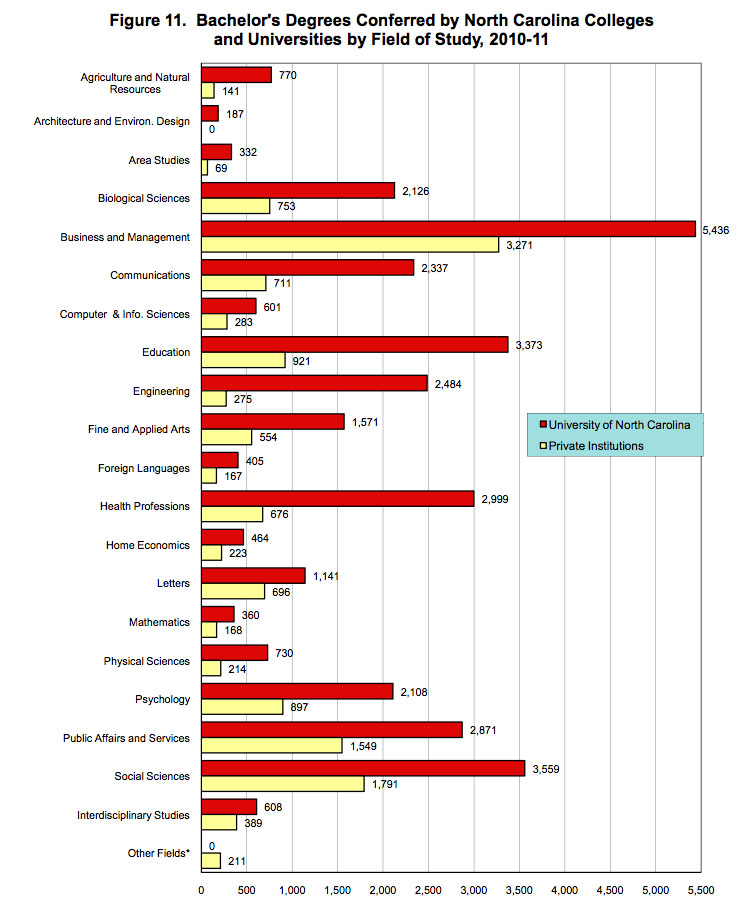
You’d think that North Carolina’s university system is turning out a bunch of English majors and gender studies majors. Hardly, as the chart below shows. All the same, this false charge will be used to further degrade and corporatize North Carolina’s once strong education system. And by the way, I’d bet a nickel that that talking point about gender studies was written by ALEC (American Legislative Exchange Council) the out-of-state right-wing outfit which actually has written most of the legislation that these corporate-owned politicians are enacting — not just in North Carolina, but all over the country.

But McCrory doesn’t care about facts. He just believes in his gut that “education” is just trade school that ought to serve corporations, and he does not approve of liberal arts educations. It’s the same medieval mindset that caused the Republican Party of Texas to oppose the teaching of “higher order thinking skills.” Undermines parental authority, you know. These people don’t want us to think for ourselves. They want us dumb, so we’ll believe what we hear on TV, and so we’ll keep electing people like them.

Right-wingers now control the legislature and the governor’s office in North Carolina. Their agenda: to put private corporate profit above everything else; to decimate the state’s educational system, including letting for-profit outfits encroach on the public schools; to frack the state; to roll back clean energy initiatives; to shift the tax burden away from corporations and the rich onto the backs of working people; to make it harder for people they don’t like to vote.

North Carolina is screwed. The know-nothing white rural folk who voted in these clowns will be the people most hurt by what Raleigh is getting ready to do. But they won’t know what hit them, because they’re all sitting in front of the television watching Fox News.

Here’s the kind of graduates we actually have in North Carolina. Source: ƒ„Statistical Abstract of Higher Education in North Carolina, 2011-2012.


Postscript: And here’s the kind of guy this legislature has put in charge of ethics. The Senate chair of the Legislative Ethics Committee paid off his personal credit cards with campaign donations. This is the kind of people who want to educate us, to frack us, to tax us, while distracting us with blather about god and guns and jobs.

Update: Here’s an editorial in the Raleigh News & Observer on McCrory’s stupidity.

Update 2: An essay by the president of Macalester College.

So much destruction, so little oil

We’re being bombarded with all kinds of propaganda these days about a so-called renaissance in American oil production, as though they’ve found a way to get around the absolutes of peak oil and keep the stuff flowing for decades more, cheap.

See that little blip on the end of the chart? That’s what we’ve gained from fracking places like North Dakota into mudholes filled with toxic wastes. Can you imagine what we’d have to do to this country to get any meaningful amount of oil from a highly polluting extraction method like fracking?

Ridiculous political drama

Here is a fresh, important lesson in how political players and the corporate media collude to generate false, self-serving drama. It’s not difficult to pull back the curtain and see what they get out of it. Political players — especially those with the weakest hand — get to strut in front of cameras and recite their talking points, to build their brands, to reinforce the fiction that Washington is the center of the universe. The media need conflict, urgency, and drama to get people to watch their crap and listen to their dumb-as-rocks talking heads.

Immediately after the election, the political entertainment industry panned their cameras to the so-called “fiscal cliff,” as though it was all pre-planned, which it was. Political players cooperated in all sorts of ways, including running it down to the wire to maximize the drama. But in the end, it wasn’t even close. The legislation passed 89-8 in the Senate and 257-167 in the House. What a silly drama.

It was the same with the election. The right-wing media said Romney would win (apparently believing their own fantasies), and the mainstream media said it was a close horse race. But a small minority of real-world people, thanks to Nate Silver, knew that it was not close, and that Romney would not win. Silver was demonized and marginalized, and the political entertainment industry went right on playing out the election according to their horse-race script. Here’s a test: Did you find, and evaluate the evidence of, Nate Silver before the election? If yes, you get a gold star. If not, you need to rethink your information sources.

The ringmasters of the pig circus will do it again, and then again. We will see within the next day or two what their next dramatic theme will be. They’re shifting the cameras and rehearsing the script even now. The show will go on.

To the ruling elite (and by this I mean all the players in the government industrial complex, not just Democrats), there are many benefits in this arrangement. One important benefit is distraction. By focusing the people on empty dramas, they distract us from the things that really matter. They keep us angry and divided, so that we can’t see who is really eating our lunch.

The cure: to turn off our televisions and read. Everything must be read with great skepticism and an alertness to hidden agendas and conflicts of interest. Those who have a record of being wrong (that category includes almost all our pundit class and all the players who go back and forth through the revolving doors between government and corporations) must be ignored. Anyone who has any kind of power must be assumed to be lying until proven otherwise. Similarly, anyone who is rich must be assumed to be lying until proven otherwise.

Also, keep a long memory. Remember when the whole political entertainment complex ridiculed the idea that there was a housing bubble? Remember when Alan Greenspan, kissing the ass of George Bush, who was running for president, said that the Clinton-era surplus created the danger that we might pay off the debt too fast, and that we must therefore give rich “job creators” a tax cut? The script-writers for the pig circus keep the horse shit flying so fast that we’re not supposed to have time to fact-check or to think back to their lines in last year’s script. Don’t let them get away with it.

Apply a few simple tests of track record and truth, and it’s clear that 99 percent of what we’re fed by our media and by political players is horse shit.

As they roll back the curtain on the pig circus’s next act, pay no attention. What’s important, as always, is somewhere they don’t want us to look.

At the water cooler, instead of talking about the “fiscal cliff” and the drama du jour, review the show. Critique the performances. Ridicule the script. Laugh at the contrived, car-chase ending. Speculate on the setup for the sequel. Then turn off the damned television and don’t fall for it again.


In fact, the “fiscal cliff” legislation passed the House with a significantly greater margin than John Boehner’s re-election as speaker (220 to 192).