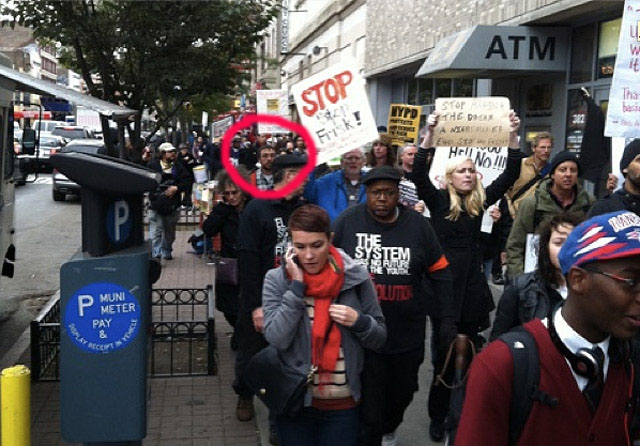
Guess where Ken is?


Photo from the Gothamist. Can you espy Ken? Solution below…

Ken called from New York yesterday, from Occupy Wall Street. I could barely hear him for the noise in the background, but he wanted to let me know where he was, because he understands how much I’d like to be there myself. He flew to New York from Alaska a few days ago. He was getting ready to go with the group that was to march on Harlem to draw attention to racial profiling. Cornel West was arrested later in the day, but as far as I know, Ken was not among those who were arrested.

I knew that if I searched for photos from the Harlem march long enough this morning, I’d eventually find one with Ken in it. And sure enough I did.

I hardly need to add my commentary to the national hubbub around Occupy Wall Street. I’m glad for that hubbub. It was a long time coming. The New York Times has a predictably lukewarm piece today about how Tea Party sympathizers and Occupy Wall Street sympathizers are angered by comparisons between the two movements, because the two movements see completely different causes for the world’s problems. To Tea Partiers, government is the problem. To OWS’ers, out-of-control banks and corporate capture of government are the problem.

A gazillion words have been written trying to describe the line that separates this polarized country. In my opinion, almost everyone is overlooking the clearest dividing line, which also is the largest part of the cause of the polarization. It’s this: There are those upon whom the corporate and right-wing propaganda works, and there are those who see through it. And that, as I see it, is the real reason that Fox News and other propaganda empires are working overtime to demonize Occupy Wall Street. The Occupy Wall Street movement threatens the fragile system of lies and anti-government, pro-greed, pro-rich propaganda that the right wing has so carefully built over the last 30 years. They thought they could buy the government and make the government serve wealth and corporate power rather than the people, and they thought they could get away with it if they saturated the country with anti-government propaganda. They were wrong.

Update: Ken put up a short post on his blog on Occupy Wall Street.

Resisting Internet snooping


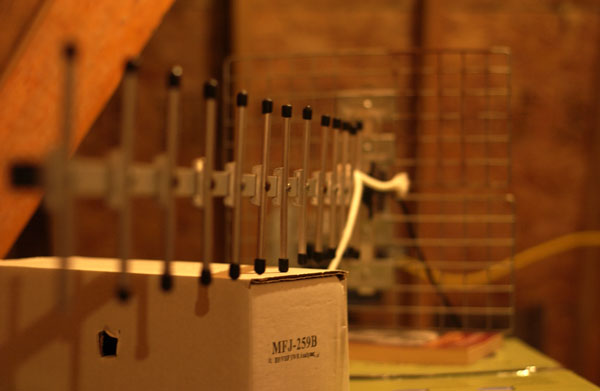
My cellular antenna, pointed at a Verizon tower for Internet service. Apple found my WIFI and its exact location, even though it’s in the boonies, in the darkness of my attic.


The dark side of the Internet is that it is a big machine increasingly optimized for the invasion of privacy. For example, my WIFI router lives in the dark up in my attic, connected to an “air card” and special antenna that connect me to Verizon for Internet access. My WIFI router is in the woods in a sparsely populated rural area, half a mile from a paved road and a good many miles from a Verizon tower. And yet I discovered yesterday, while experimenting with “location services” on my iPad, that Apple knows the exact location of my WIFI router. How can that be, since my iPad 1 does not have GPS, 3G, or any other means of determining its location?

I had to think for a while and do some research before I figured it out. A friend was here recently with an iPhone equipped with GPS. He was unable to get an AT&T cell phone signal from here, but he did connect to my WIFI router. His cell phone, I now realize, knew its exact location from GPS. It also, of course, knew the unique machine address, or “MAC address,” of my WIFI router. Because “location services” was enabled on his iPhone, the iPhone transmitted my WIFI router’s unique identifier and its exact location to Apple’s databases. Google does something similar. Apple’s and Google’s databases know the exact locations of millions of WIFI routers — public and private — all over the world. If you enable “location services” on an iPhone or iPad, you consent to this. Apple has fully “disclosed” it. Google built its database partly by having vehicles drive through the major streets and roadways, sniffing out WIFI signals, capturing the WIFI systems’ unique identifiers, and transmitting the location back to Google’s database.

So Apple has pinned me. I can’t undo it. My only recourse would be to sell my current router so that someone else is pinned with its location and buy a new, virgin WIFI router. Then I’d have to lock down my router, never use “location services,” and forbid my friends and visitors from connecting to my WIFI system. How likely am I to do that? The first thing visitors want to know these days is whether you’ve got WIFI. Guests expect it, along with clean towels and a mud-free driveway.

Still, I try to do everything that is reasonable and practical to prevent my (totally legal and benign) Internet activity from being logged in corporate databases. This kind of data, from all of us who use the Internet, is now routinely logged, cross-referenced with our names and addresses, and sold — more often to other corporations but also to government and investigative agencies.

Your Internet service provider, this very minute, is almost certainly logging all your web browsing. Your ISP knows everything you do on the Internet. This data is almost certainly kept for a long time, maybe forever.

Is there anything you can do about that?

For a good while, I’ve been looking for a trustworthy “virtual private network,” or VPN, provider that will encrypt all my Internet traffic (making it invisible to my ISP, Verizon), while keeping my IP address private. There are many organizations on the Internet that provide this kind of service, but most of them seem to be part of a shady gray market that mostly serves people who are up to no good.

I think I’ve found a VPN provider that is a respectable business, reasonably priced, with service that is good enough not to slow me down when I’m browsing. In fact, there is evidence that this VPN service actually speeds up my browsing, because Verizon is now intercepting its customers web traffic and sending it through “optimization” servers that attempt to reduce the bandwidth that Verizon customers use. Verizon intercepts only traffic on HTTP port 80, so encrypted VPN on other ports bypasses Verizon’s optimization servers. Verizon has disclosed this.

The software system I’m using is OpenVPN, and the company that provides the service is Private Tunnel. I’ve been using this service for a week now. They provide OpenVPN software for both Mac and Windows. On my Mac, the app is robust and transparent. It uses a tiny amount of CPU. I’m very pleased with it so far. I had a couple of questions for Private Tunnel’s tech support, and they got back to me immediately via email. Though this is not spelled out in Private Tunnel’s terms of service document (it ought to be), I am assured by their tech support department that, though they log incoming connections to their servers and keep those logs for a month or two, they do not log your browsing destinations. And because all your traffic is encrypted by the VPN software, your ISP gleans no data about your activity on the Internet, other than the fact that you have an encrypted connection to a Private Tunnel server.

Do you need something like this? You do only if you don’t want corporate America to collect and resell data about your Internet activity. Also, if you use a laptop or notebook at a public WIFI hot spot, this encryption prevents snoopers at that hot spot from intercepting and stealing passwords, etc., from any unencrypted data that you transmit through that hot spot.

New plantings


The red maple

I’m very lucky to have a garden shop a few miles away owned by the county’s former agricultural extension agent. I bought some bargain trees from him that were planted yesterday. The trees (though I didn’t know it when I picked them out) were all trade-show trees from Monrovia nurseries that Michael had bought after a trade show two or three years ago. The trees have been in their pots all that time, waiting for the day when the garden shop would open. The trade-show look had worn off, but the trees were beautiful specimens in good condition, pot bound, and eager to be planted. I got them at a bargain price.

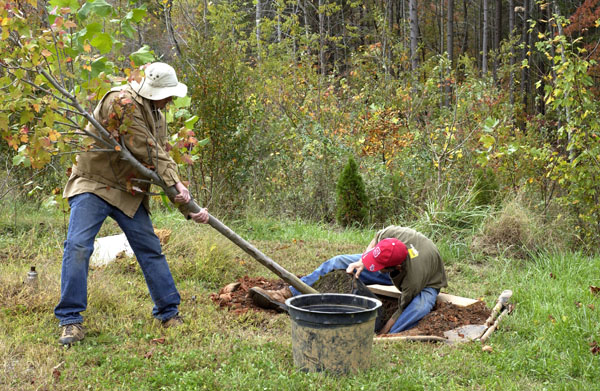
Yesterday Michael and his helper planted a number of new things at the abbey: a red maple as a shade tree, a weeping willow, a conical ligustrum, two kiwis, two figs, and two raspberries.

Ah, toast

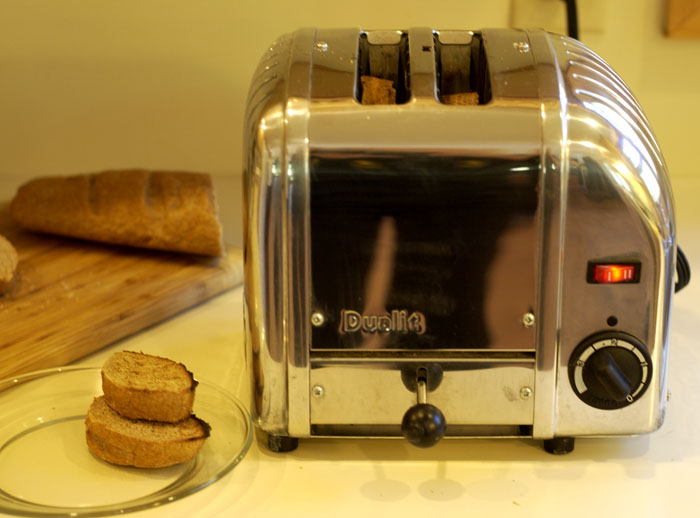
One of my motivations for wanting to evolve the abbey bread into French loaves was to make it possible to slice it for toast. If one makes bread every day, then it makes sense to have one warm and fresh for supper and one left over for breakfast.

The Dualit toaster, by the way, is a beautiful toaster, but its working parts are unremittingly aggravating. The “lifter,” instead of coming straight up, comes up at an angle, pressing the toast against the side of the slot and trapping the toast inside the toaster. It completely dumbfounds me how a toaster maker could put so much thought and expense into the exterior design while making the working parts almost useless. It makes me want to put a curse on English engineers. I bought the toaster some years ago at Williams Sonoma. I don’t recommend it, unless they’ve re-engineered the lifter.

This morning the stuck toast started to burn, setting off the smoke alarms and scaring the cat half to death. The toast was nice, though. The burnt edges even add to the provincial flavor. Maybe that’s what those old English designers had in mind?

Fall cookin'

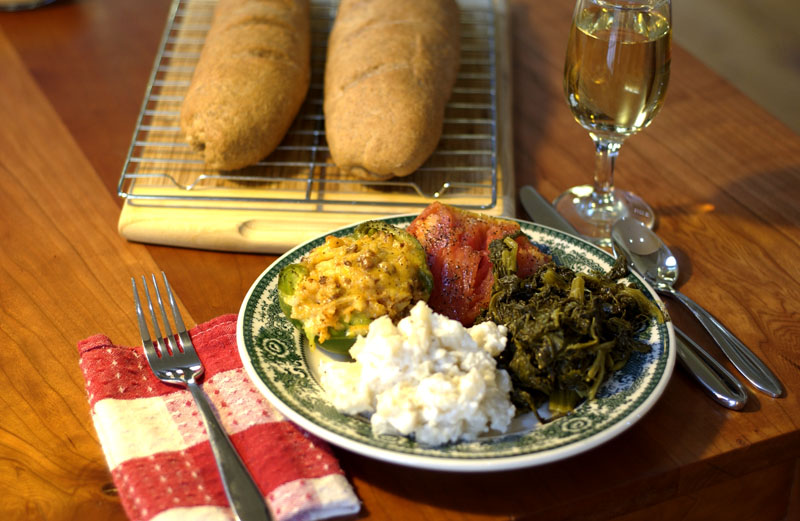
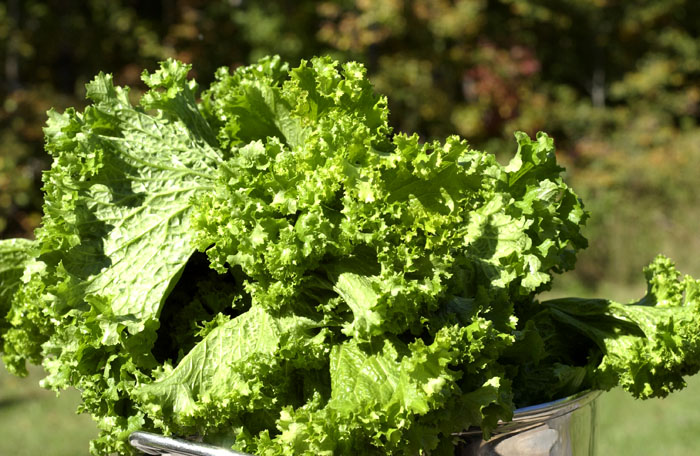
I have a visitor from California, so the abbey kitchen is running at high speed, as it did while Ken was here. This is a green pepper stuffed with rice, cheese, and vegetarian fake sausage; mustard greens; a roasted tomato; turnips seasoned with toasted sesame oil and Greek yogurt; and abbey bread. All the produce came from my garden, except for the tomato, which came a friend’s garden near Asheville.

Asheville and thereabouts


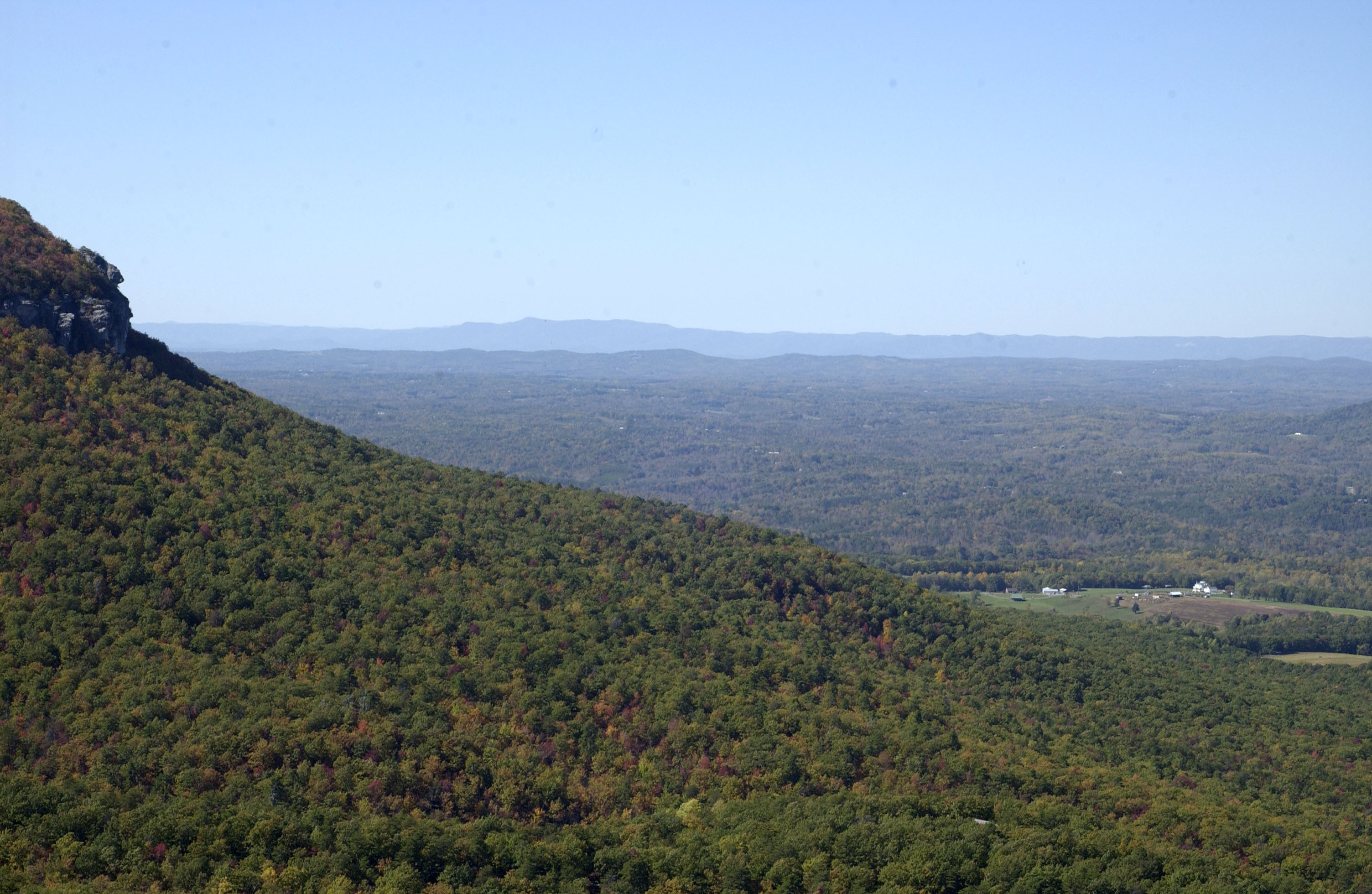
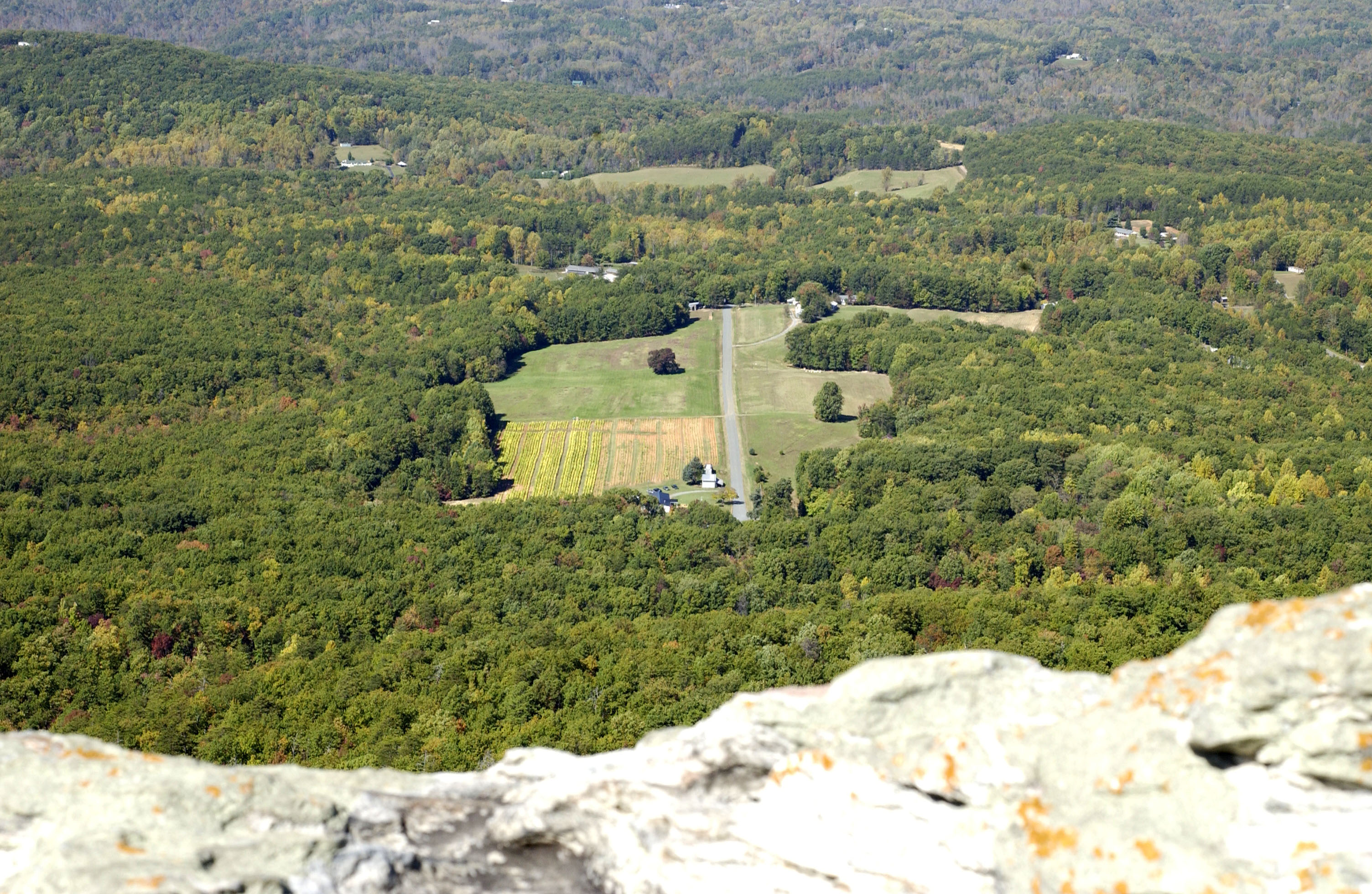
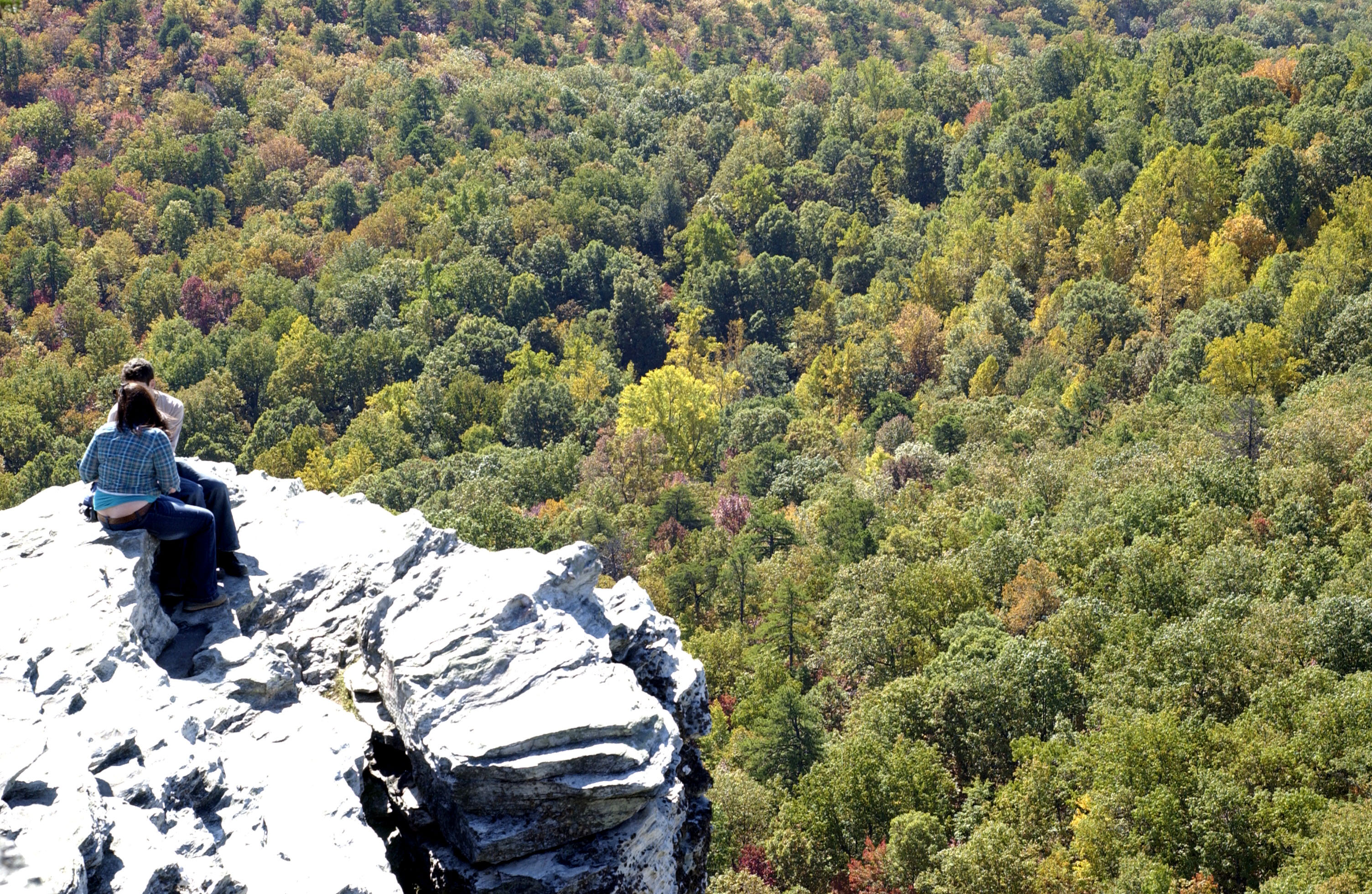
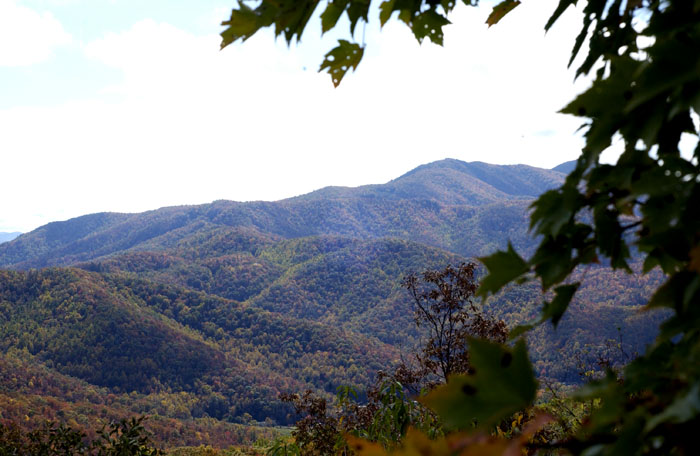
I made a three-day trip to Asheville this week. This photo is from the Blue Ridge Parkway near Mount Mitchell


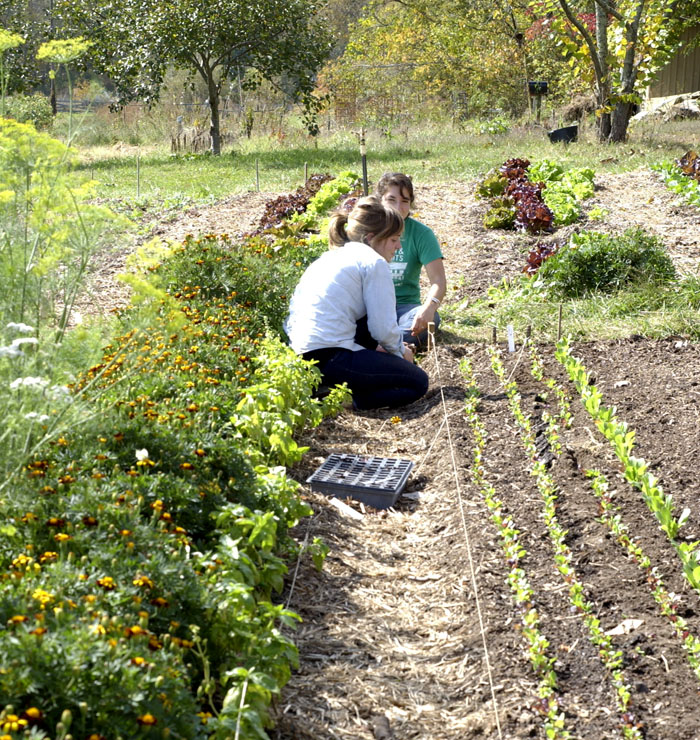
Warren Wilson college is an unusual college that requires work credits for its students. The college has a rustic campus that includes a 300-acre working farm.


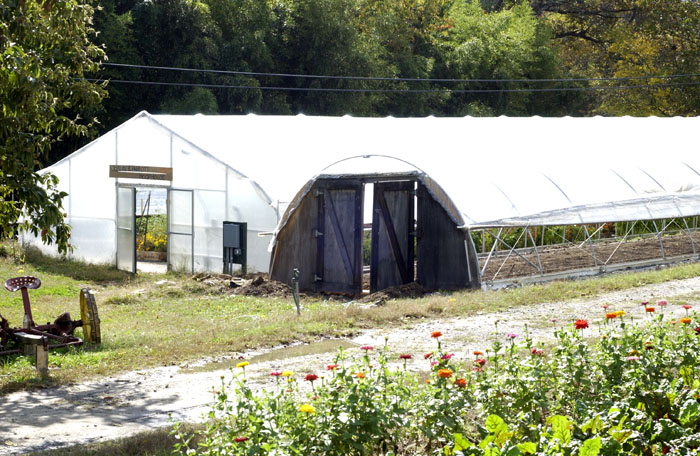
Greenhouse on the Warren Wilson farm


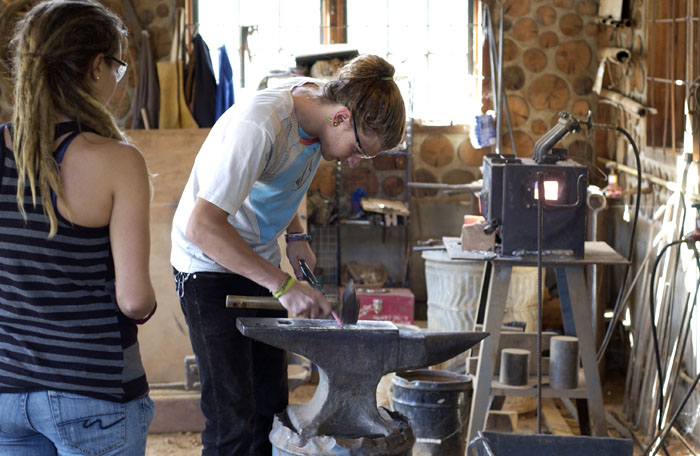
The Warren Wilson blacksmith shop


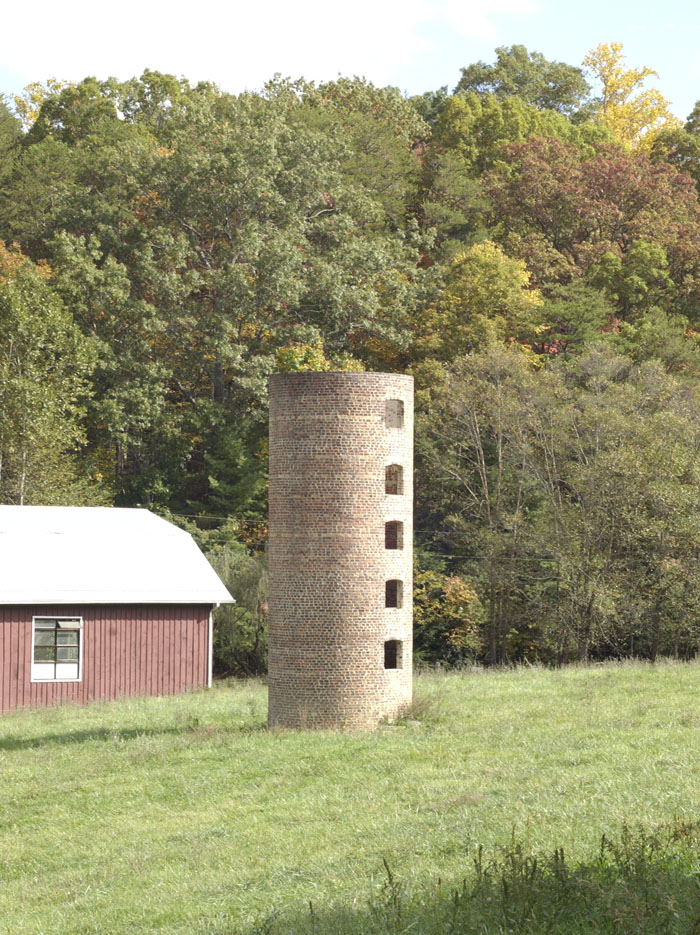
A brick silo on the Warren Wilson farm


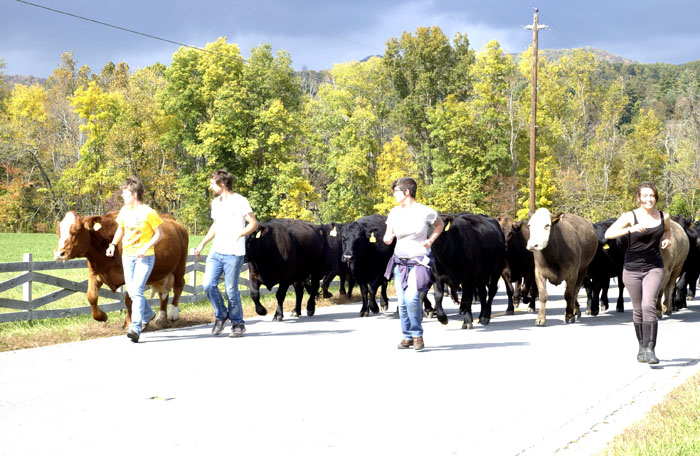
The running of the cows. The students are moving the cows from one pasture to another, using the main road.


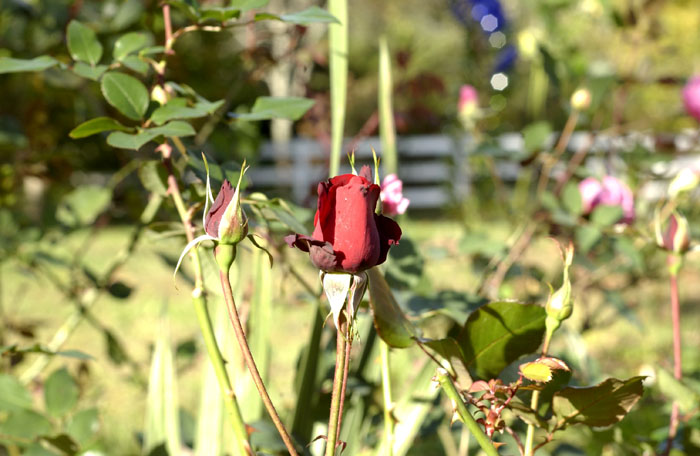
A late rose in a friend’s garden at Black Mountain

Can whole wheat bread have a good crust?

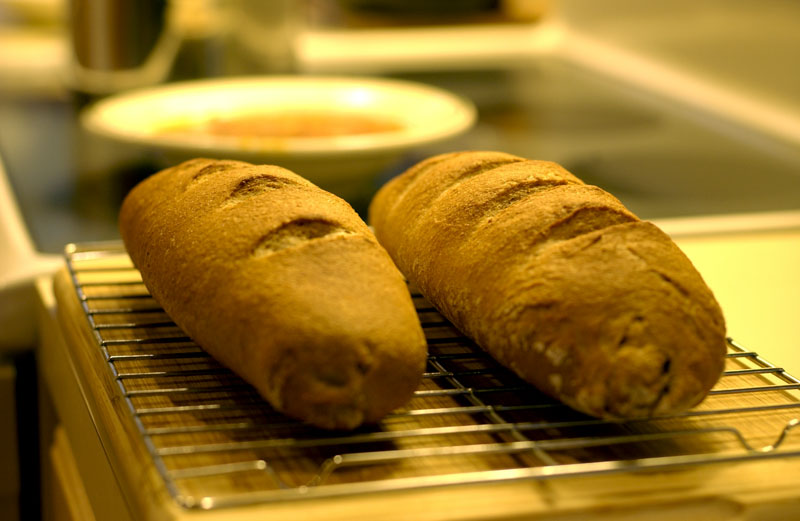
I sent this photograph of my whole wheat French bread to a friend, and he said it made his teeth hurt just looking at the pictures. To my taste, however, the crust was excellent and not tough at all.

For some time, I’d been planning to do the research and development necessary to upgrade the abbey’s rustic loaves to something with a more exciting crust. The gold standard for bread crust, of course, is French bread. On a recent trip to Asheville, I bought a perforated French bread pan made by Chicago Metallic. That was the first step. The second step was to do some research on how to shape French bread loaves and get the crust right.

Though I knead my bread dough in unbleached flour, I use 100 percent whole wheat flour (King Arthur), to make the dough. The dough for my rustic loaves is really just the same as classic French bread — nothing but flour, water, yeast, a bit of sugar to feed the yeast, and salt. No change was needed in the dough. To get a proper French bread crust, I made these changes in my bread-making process:

— I don’t use a coating of oil to keep the dough from drying out while rising. Instead, I let the dough sit on a dusting of flour in a well-covered bowl.

— I give the bread two risings rather than rushing it with only one.

— From Googling and YouTube videos, I figured out the technique for shaping and slashing the loaves.

— I use a spray bottle to mist the loaves with water before they rise and again before I put them in the oven.

— I throw a little water in the oven to create steam for the first 10 minutes of baking.

These methods are simple. It’s easy, really, to make French bread in the home kitchen. The crust was delicious. The perforated bread pans really do work, and the bread did not stick to the pan, even though I used no oil. Though all the dough recipes I came across mix quite a lot of unbleached flour into whole wheat loaves, I’m not tempted to do that.

These French loaves will become the new version of the everyday abbey bread.

Rain…

There was good rain in early September, followed by another dry spell. A nice rainy front is blowing up from the Gulf of Mexico this week.

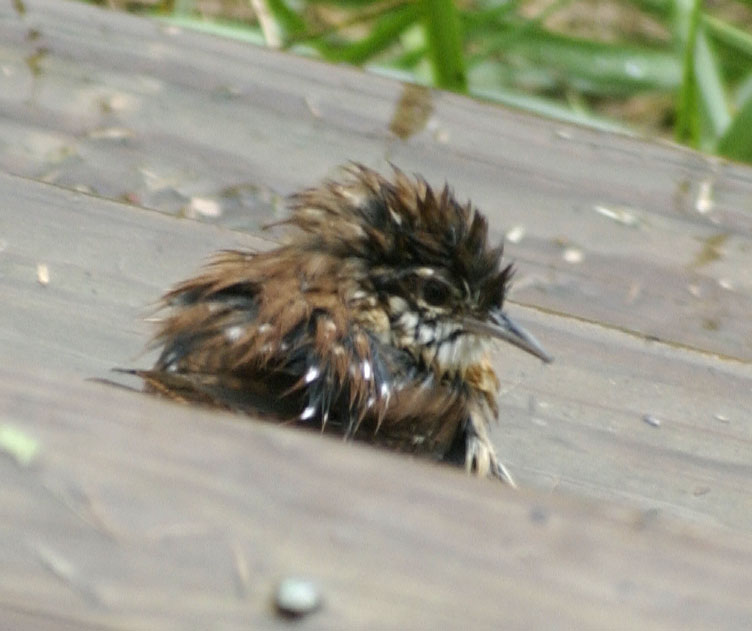
Some of the wild animals seem to enjoy the end of dry spells. This wren was taking a bath in the water dripping off the roof.