
Fugue in Ursa Major went on sale today. You can buy it in pretty much any format you want — paperback, Amazon Kindle, Barnes & Noble Nook, or Apple iBooks.
Watching a bewildering world from the middle of nowhere

Fugue in Ursa Major went on sale today. You can buy it in pretty much any format you want — paperback, Amazon Kindle, Barnes & Noble Nook, or Apple iBooks.
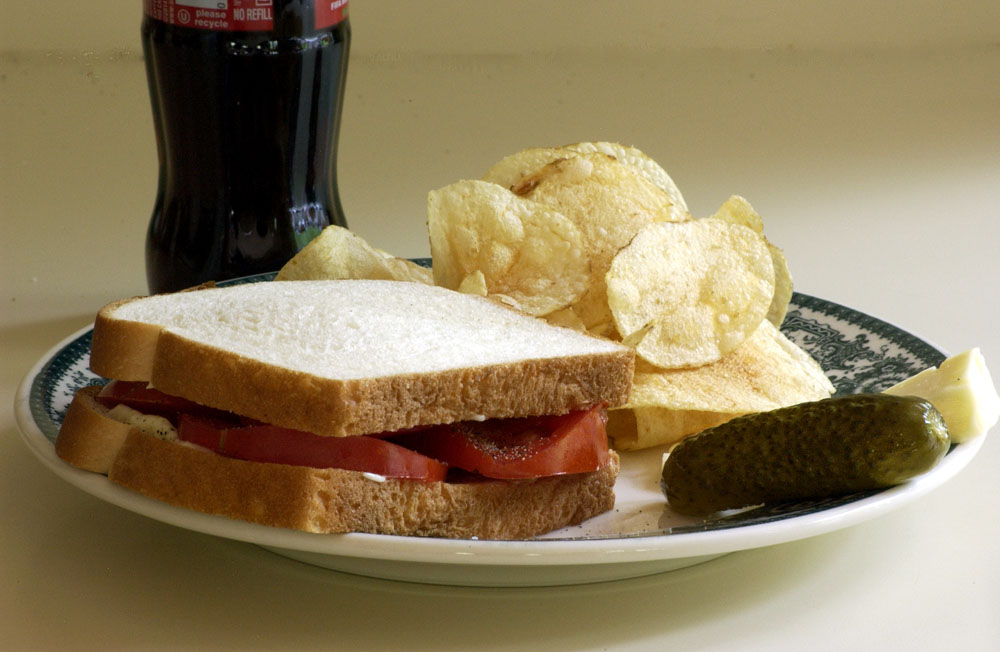
One of holiest of white trash sacraments is the first tomato sandwich of the season. Around here, that means that certain nasty foods are temporarily allowed into the house. For this year’s bread, I chose Merita Old-Fashioned, just because it had a better squeeze on the store shelf than Bunny. The chips, as always, are Wise chips. Wise once made a New York Times top-10 list of best regional potato chips. Mayonnaise on both sides of the bread. Milk would be a proper accompaniment, but this year I had Coke from a commemorative bottle, over ice.
The remaining bread will go to the chickens. I hope it doesn’t hurt them. I’ll finish the chips.


Beatrix Potter’s work is now in the public domain
Authors write to make a living. Eventually, authors get old and die, but their work lives on. Books, paintings, even movies — all become part of our historical and cultural heritage. Imagine how we’d all lose if someone still held a copyright on Shakespeare’s plays, or Beethoven’s music, or the paintings in the Louvre.
But how long should an author’s heirs be allowed to profit from an author’s work? On that there is no agreement. In past years, it is profit that has been winning, and copyrights have been extended for longer and longer.
This year, the work of artists and writers who died in 1943 came into the public domain. That included the work of Beatrix Potter. Current copyright law in the U.S. keeps copyrights alive for 70 years after the author’s death. Peter Rabbit was first published in 1902, so that means that Peter Rabbit was private property for about 112 years. That’s a long time.
Copyrights were extended again (by the U.S. Congress) as recently as 1998. Mickey Mouse, Gone With the Wind, and Gershwin’s Rhapsody in Blue are still private property. Those who opposed copyright extension complained that the intent of the law was to protect lucrative franchises such as Mickey Mouse that corporate owners want to keep locked down.
This is a major conflict in our culture at present — the conflict between private property and “the commons.” For example, owners of beachfront property are in conflict with those who maintain that beaches are a natural resource that belong to all of us. For years and years, defenders of the commons have been losing. This means that a few people are much richer. But the rest of us are poorer.
Why is this on my mind at present? Partly because I wanted to use an excerpt from a poem by Edna St. Vincent Millay after the title page of Fugue in Ursa Major. I waited too long to check on the rights to Millay’s work, assuming that her work was now in the public domain. I was wrong. A foundation owns the rights to Millay’s work. To avoid any pesky legal risk, I had to apply to the foundation for permission, and I had to include a special credit line on my book’s ISBN page. This held up the publication of Fugue in Ursa Major. If I’m doing the math right, I believe we have to wait seven more years for Millay’s work to enter the public domain.
However, the publication of Fugue in Ursa Major is getting close, and I will be able to keep to the July 14 release date. The revisions are done, the type is set. Everything is in the pipeline. I’ll have much more to say about Fugue in Ursa Major as July 14 approaches.
P.S. If you haven’t seen the 2006 film “Miss Potter,” about the life of Beatrix Potter, I encourage you to put it on your must-see list.

Squash is coming out my ears. I couldn’t bear another bit of it without turning it into something sinful. Solution: pizza.
The sauce is a pesto sauce made from garden basil. The squash is masquerading as pepperoni. It didn’t fool me. There is — no joke — half a cup of garlic in the pesto sauce. At the abbey, garlic is a vegetable, not a seasoning. The crust is homemade, though I have to admit that I have never learnt the knack of making a truly sophisticated pizza crust. I need to study up on that.
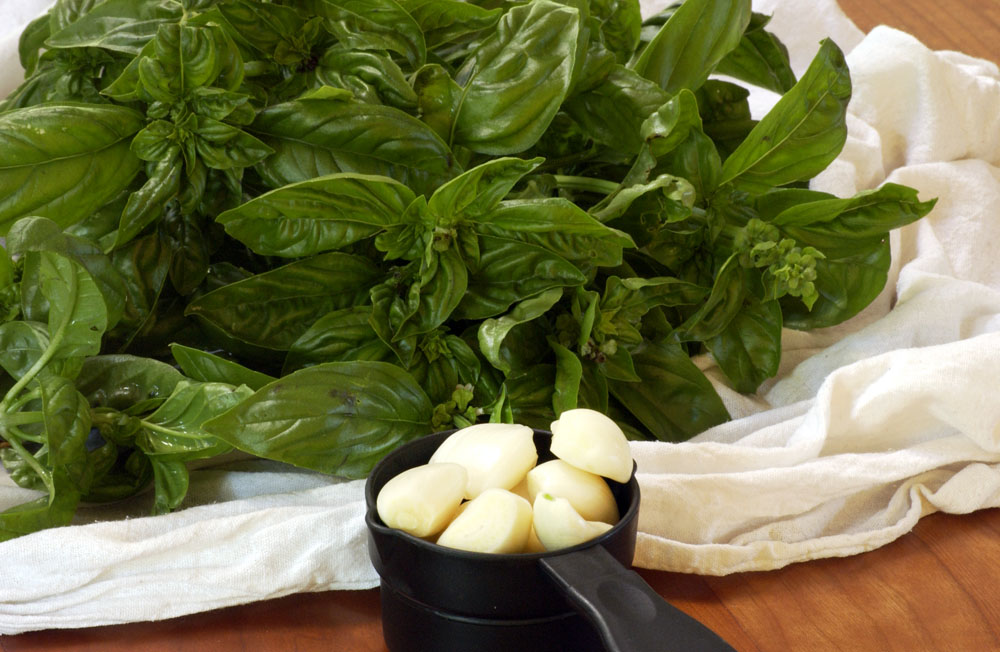
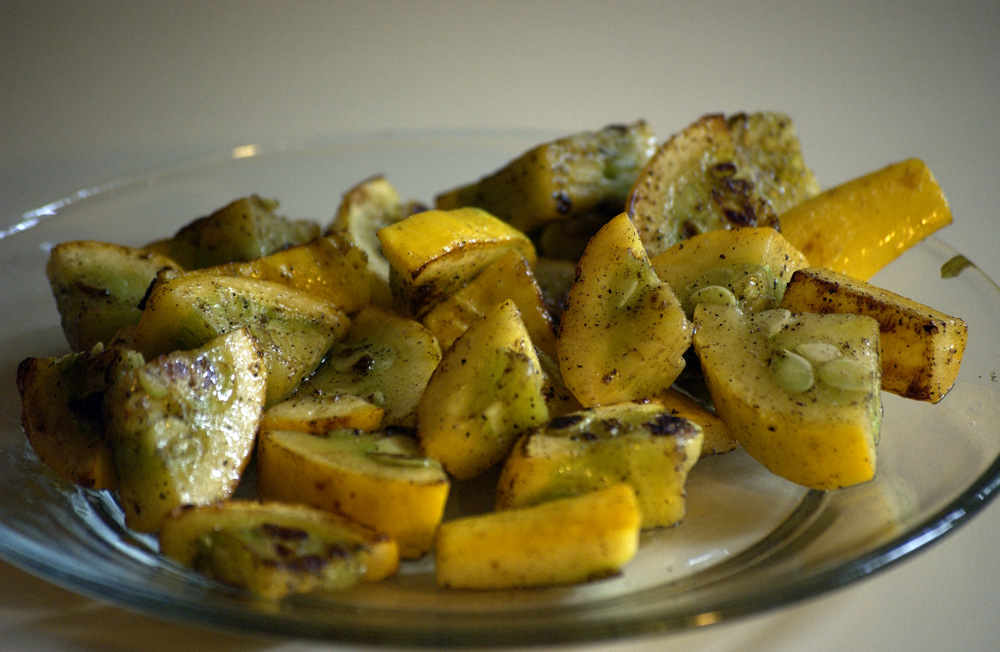
The abbey garden is cranking out squash faster than the abbey kitchen can handle it. Squash has been on the menu almost every day. Squash can be one of the most boring vegetables in the world, so preparing it is a big challenge.
Everyone’s favorite squash dish, of course, is sliced squash dipped in batter and fried. That’s a great treat, but it’s a bit too high carb and high fat to have too often. Not to mention that it makes a big mess in the kitchen. The healthiest way I know to make good squash is to sear it in a skillet. Done poorly, the squash becomes hopelessly watery. However, if done carefully, the squash can be very appealing. It won’t turn to mush, and browning it adds a lot of flavor.
Use a hot skillet with a little oil. Olive oil can’t take higher heat, so I use sesame oil, sunflower oil, or even grapeseed oil. Salt makes vegetables release their water, so I don’t salt squash while it’s being cooked.
You want the pan to be not quite hot enough to smoke, but hot enough that the squash will brown in only a few minutes. Any water released by the squash (which won’t be much if you give it just a few minutes of high heat) will dry up in the pan.
To make up for the lack of salt, serve the squash with some sort of salty sauce. One of the abbey’s favorite sauces is what I call “cucumber sauce.” That’s a chilled sauce made of about 3/4 sour cream and 1/4 mayonnaise, seasoned with salt and pepper.

The photo was taken with an iPhone.

They invited themselves to lunch and helped themselves to day lily buds. There were a few left that they’d forgotten to eat during the night.

Most of the readers of this blog are not from Stokes County, or even from North Carolina, so I need to explain what Vade Mecum is and why people in Stokes County are so concerned about it.
A hundred years ago and longer, Stokes County was a tourist destination. People would come into Walnut Cove on a train, then travel by wagon to one of the resorts. The resorts were clustered around what is now Hanging Rock State Park. There are cool-running springs there, particularly on the shady north side of the park. It was a cool place to be in the summer. Most of the old resorts, which were built of wood, are gone. Only one remains: Vade Mecum.
Vade Mecum was never exactly abandoned, but it was a bit of a white elephant, and no one knew quite what to do with it or how to deal with the expense of keeping it up. It belonged to the Sertoma Club for many years, and for that reason it’s often known by another name, Camp Sertoma. In recent years, it has been managed by N.C. State University. However, N.C. State was losing money on the property and abandoned it on short notice last year. The Stokes County commissioners scrambled to figure out what could be done with the property. Interested citizens floated a business plan, but the plan never flew. But at present, the North Carolina General Assembly is considering a budget bill that would include some money for Vade Mecum and attach Vade Mecum to Hanging Rock State Park, which is just a stone’s throw away. It seems likely that the bill will pass and that Vade Mecum will be saved for the people of North Carolina. But people in Stokes County aren’t counting their chickens yet.
Yesterday there was a tour of Vade Mecum. Many people who are very interested in saving the place had never been inside, including me.

The dining room

The kitchen

Just inside the main door

Robin, superintendent of Hanging Rock State Park

Friends of Vade Mecum and leaders of the tour

A bedroom on the third floor

The chapel

The chapel ceiling

The gym, which has a stage at one end…
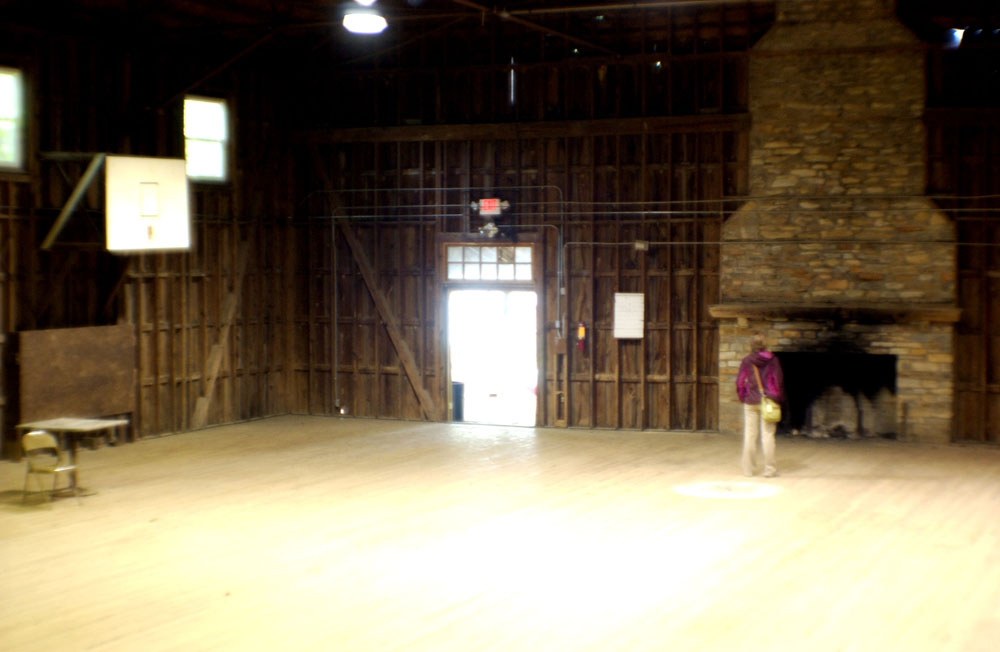
… and a fireplace at the other
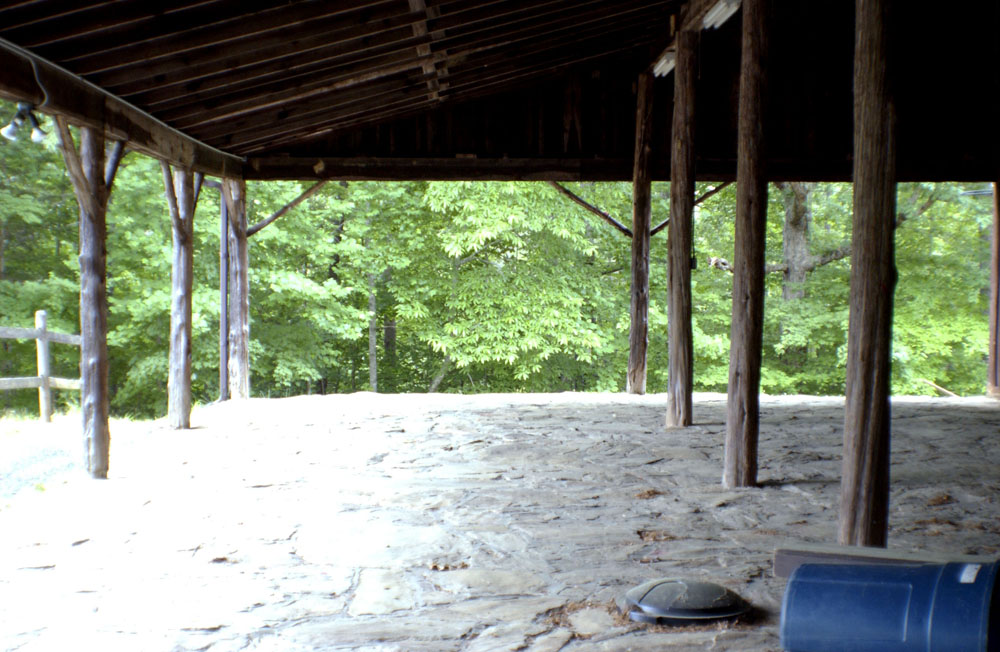
The big porch in front of the gym

A vast swimming pool behind the gym

Some of the cabins

The main building

A serious weapon that every kitchen needs, for wielding against hard-to-cook foods, is a pressure cooker. I wouldn’t know how to cook garbanzo beans without one (and we eat a lot of hummus). Lately I have turned the pressure cooker toward the problem of tender mustard greens.
Tender mustard is a desideratum of every gardener. Picking the greens very young might help. But one can’t waste all those mature greens, can one? Twenty-five minutes in the pressure cooker and the greens are perfect.
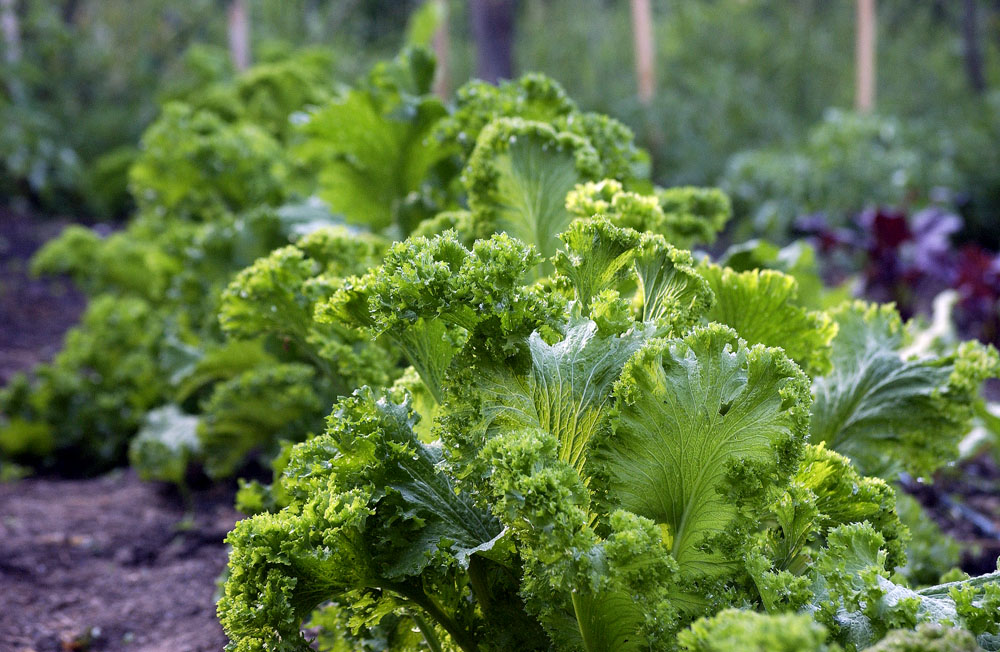
Mustard greens
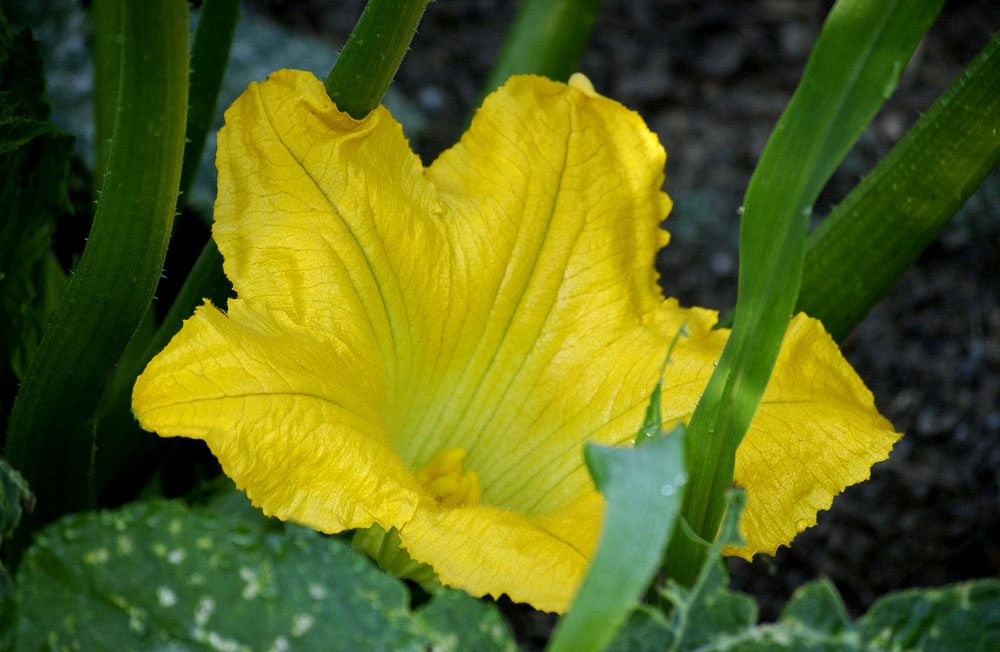
A squash bloom

A humble turnip

Lettuce, approaching maturity
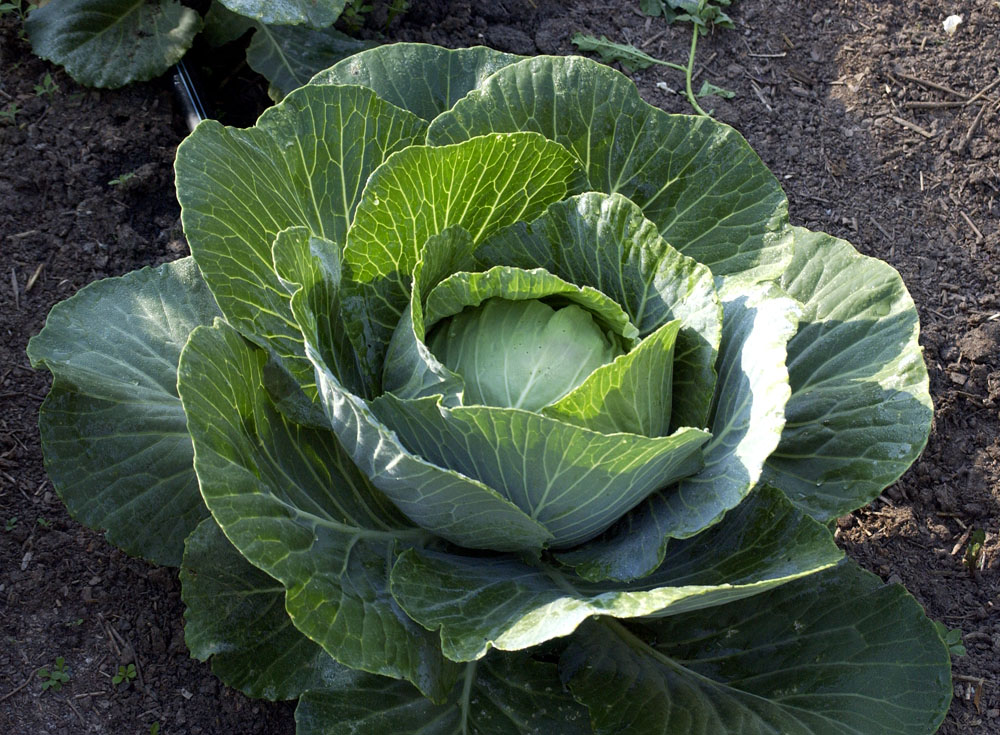
A cabbage, which will soon use its one-way ticket to the kitchen

My family heirloom beans

The garden on June 2

The first day lilies, with thousands to follow

A wildflower patch

When did lemons get to be so expensive? For years, I rarely bought them, because they just didn’t seem worth the price, and the quality was rarely appealing.
And yet, lemons can be useful. Nothing is better than fresh-made lemonade on a hot day. Trader Joe’s has pretty good prices on lemons, so I’ve been buying them again.
When I was a young’un, growing up in the Yadkin Valley, there was pretty much no such thing as exotic foods, because foods — at least fresh foods — weren’t transported very far then. And yet, as I recall, there were almost always lemons in the refrigerator, almost surely from Florida. Fresh lemonade was not unusual (though iced tea was an everyday thing). I remember a lot of lemon custard pies. I remember cake frostings with lemon peel grated in. My 1942 edition of The Joy of Cooking frequently calls for lemons, as though Irma Rombauer assumed that, even in the 1940s, cooks were likely to have them. Lemons have been shipped around for centuries, I’m sure.
In any caste, I’m resolved to get into the habit of buying lemons in the summer, as long as the price is right.
As for the lemonade, it needs to be sweet. That would require far too much sugar. I’ve been sweetening the lemonade with stevia extract. Stevia extract is not a perfect sweetener (nothing is perfect other than sugar). But the intensity of the lemon taste masks the aftertaste of the stevia.
Normally I use vinegar in hummus. But lemon juice works well too, and it gives the hummus a much brighter taste than vinegar.