He’s back …

800px-Scott_Card
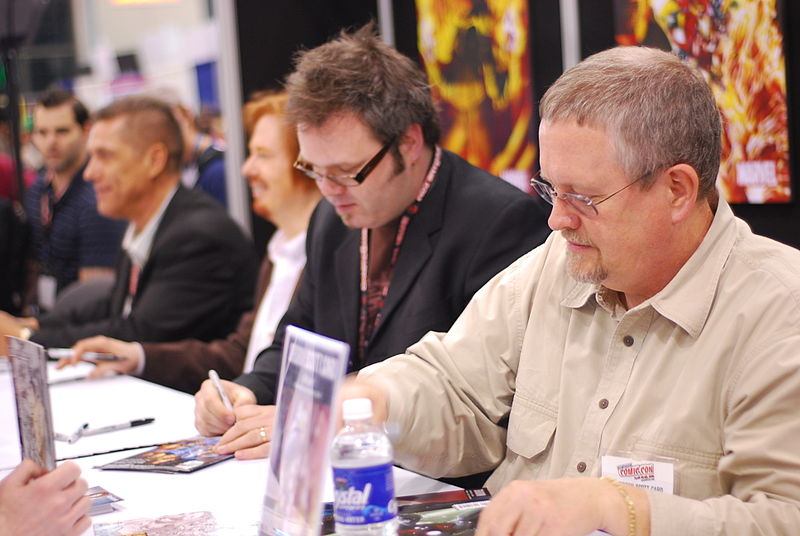
Orson Scott Card, right. Source: Wikipedia

If you’re at all familiar with science fiction and with movies, then you know that Orson Scott Card is a controversial writer of science fiction who won both the Nebula and Hugo awards in 1985 for Ender’s Game. Ender’s Game has finally been made into a movie, and it will open Nov. 1, starring Harrison Ford and Asa Butterfield.

For years, Card wrote a weekly column for a small conservative newspaper in Greensboro, North Carolina. He frequently aired his controversial political views in the column, ensuring that he stayed in trouble with the literate intelligentsia, who don’t take kindly to right-wing thinking. That run of columns ended in April when the Rhino Times closed. But this month, the Rhino Times resumed publication with a new owner, and Card’s column is back. Here’s a link to his new column.

So far, Card has avoided controversy in the new column and has written mostly about food. No doubt the folks in Hollywood have asked him to avoid controversy, because some groups are already organizing boycotts of the movie version of Ender’s Game.

Though I totally don’t get Card’s politics, or his religion, I can’t be too hard on him. He’s an old friend, and we got to know each other back in the 1980s when I operated a computer bulletin board system named Science Fiction Writers Network. At the time, I was located near Winston-Salem, and Card was in Greensboro. So we were practically neighbors. I and some other local fans threw a big dinner for Card at a hotel in Greensboro to celebrate Ender’s Game winning the Nebula and Hugo awards. Also, Card was a guest for dinner at my place at least a couple of times.

Some other time, I’ll talk about the golden age of computer bulletin boards (early 1980s). I was in the thick of that golden age.

Anyway, I’m not going to criticize Card here. I still greatly respect his views on literature and storytelling. And because he influenced my own views so much many years ago, I’ve assimilated more than a little of Card’s literary DNA.

If you haven’t read Ender’s Game, it’s a classic. By all means read the book before you see the movie.
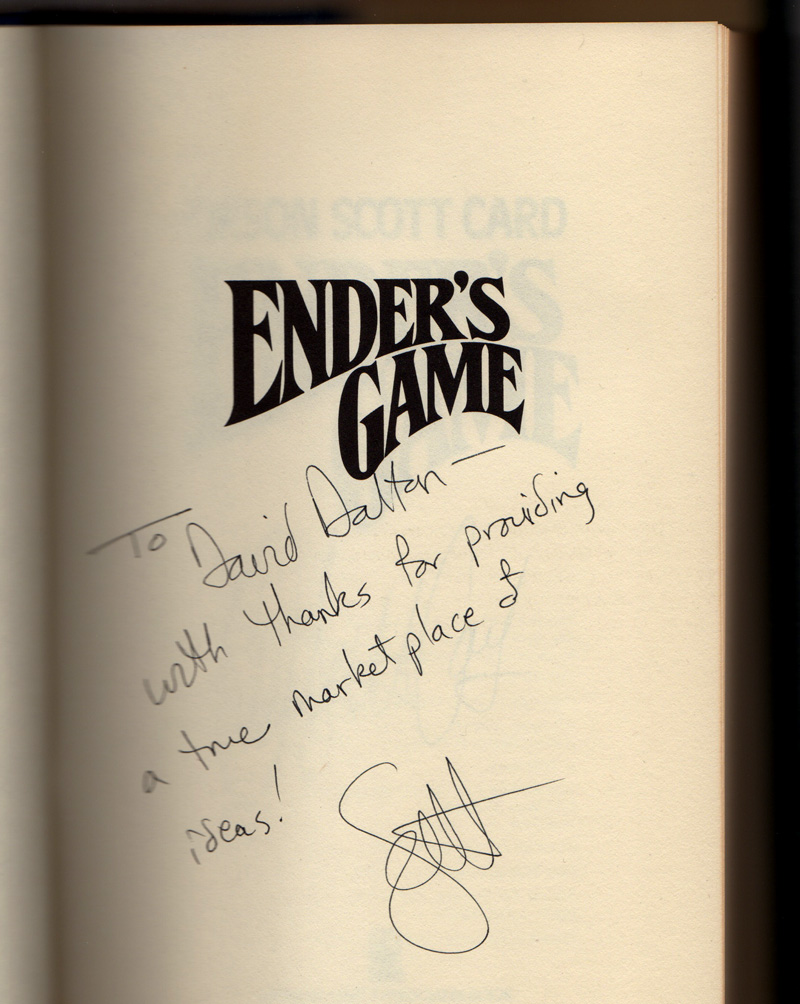
R-enders-game-title-page
The title page from my autographed first edition of Ender’s Game
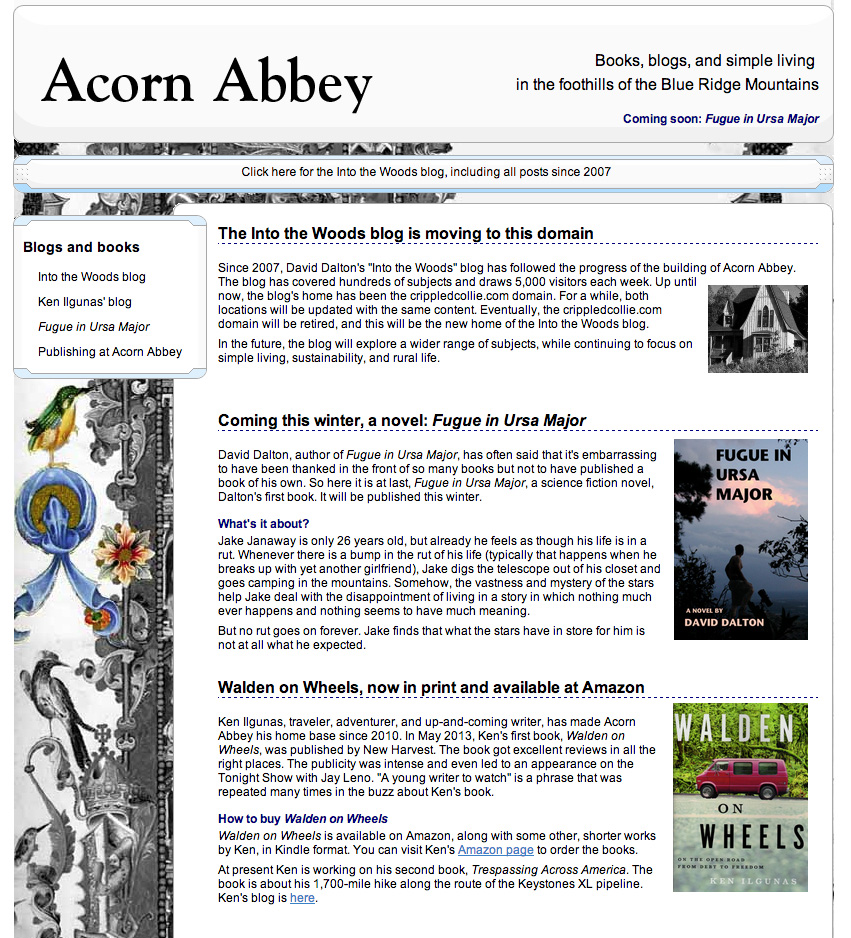
Did you change your bookmarks?

new-site

This blog has been copied — lock, stock and barrel — from crippledcollie.com, where the blog was started in 2007. This will be the blog’s new home, though I’ll update both domains in parallel (probably for months) to give everyone time to move here. Eventually, crippledcollie.com will be retired, and all the new material will be here. However, I am in no hurry to retire crippledcollie.com, which gets about 5,000 visitors per week. Since 2007, I’ve written so many posts on so many subjects that a lot of people land here with Google searches. I don’t want to lose all that Google traffic.
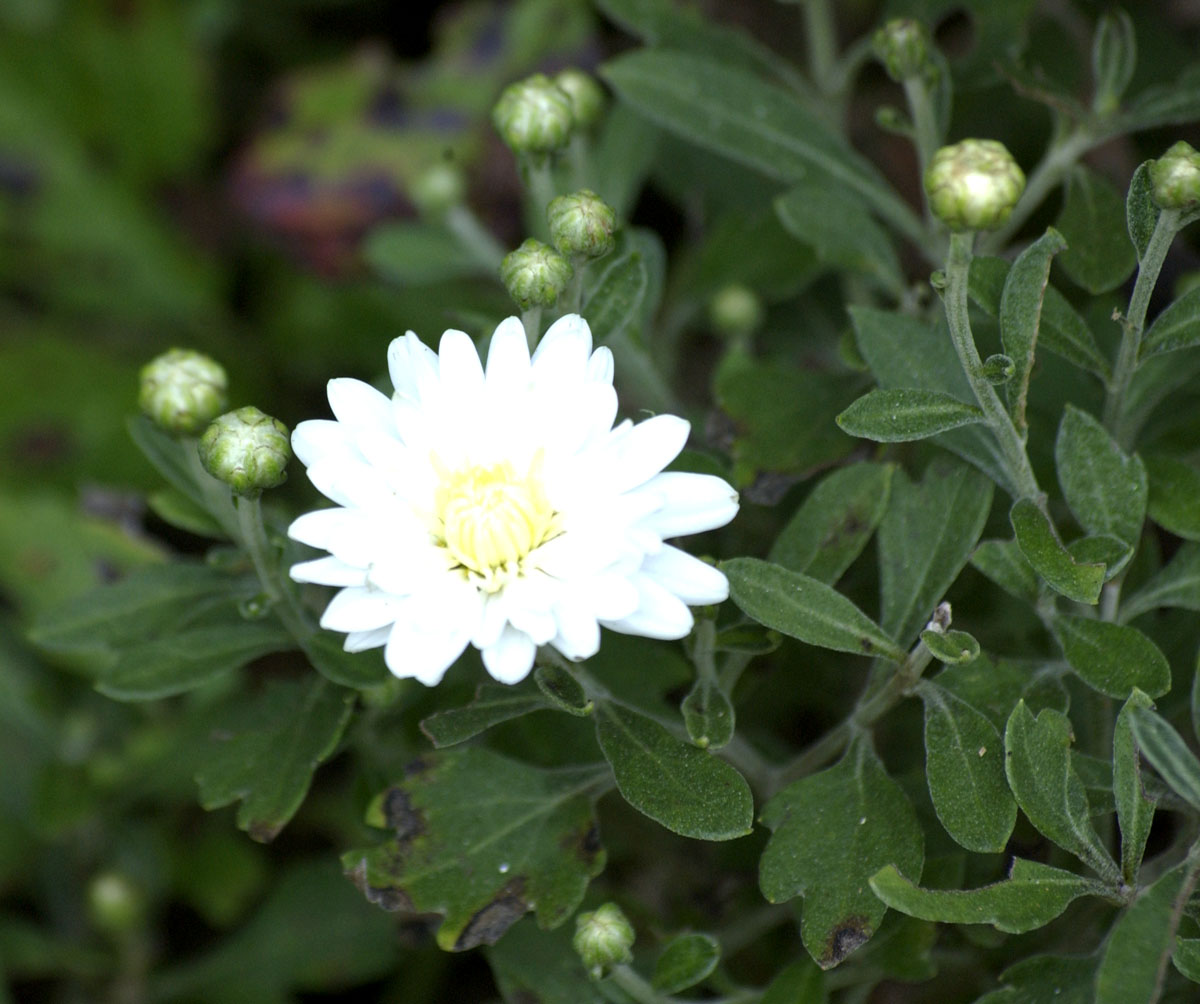
Note that when you visit the Into the Woods blog here in the new domain, all the existing posts have been copied here, going all the way back to 2007. You’ll find a simpler, fresher look. Photos will display slightly larger. And, because the new blog uses the latest version of WordPress, I’m hoping that comments will be easier.

The Into the Woods blog will continue to focus on simple living in rural America. But because Acorn Abbey is increasingly involved in publishing, a new domain, appropriately named, with some shift in focus seems appropriate.

I’ll have more information soon on the next book to come out of Acorn Abbey. That will be Fugue in Ursa Major, a science fiction novel by David Dalton. The novel is finished and is now being edited. Soon the novel will be in the hands of my three distinguished reader/advisers. After that, there will be more editing and minor revisions before it’s published. Publication should happen in late November or December.

I’m going to self-publish Fugue in Ursa Major. The odds of finding a commercial publisher are terrible. Self-publishing is no longer stigmatized. I’ve been in publishing all my life, so it’s easy work. There will be a trade paperback version available through Amazon, as well as an Kindle edition and an edition for Apple iBooks.

Moral Monday in Stokes County


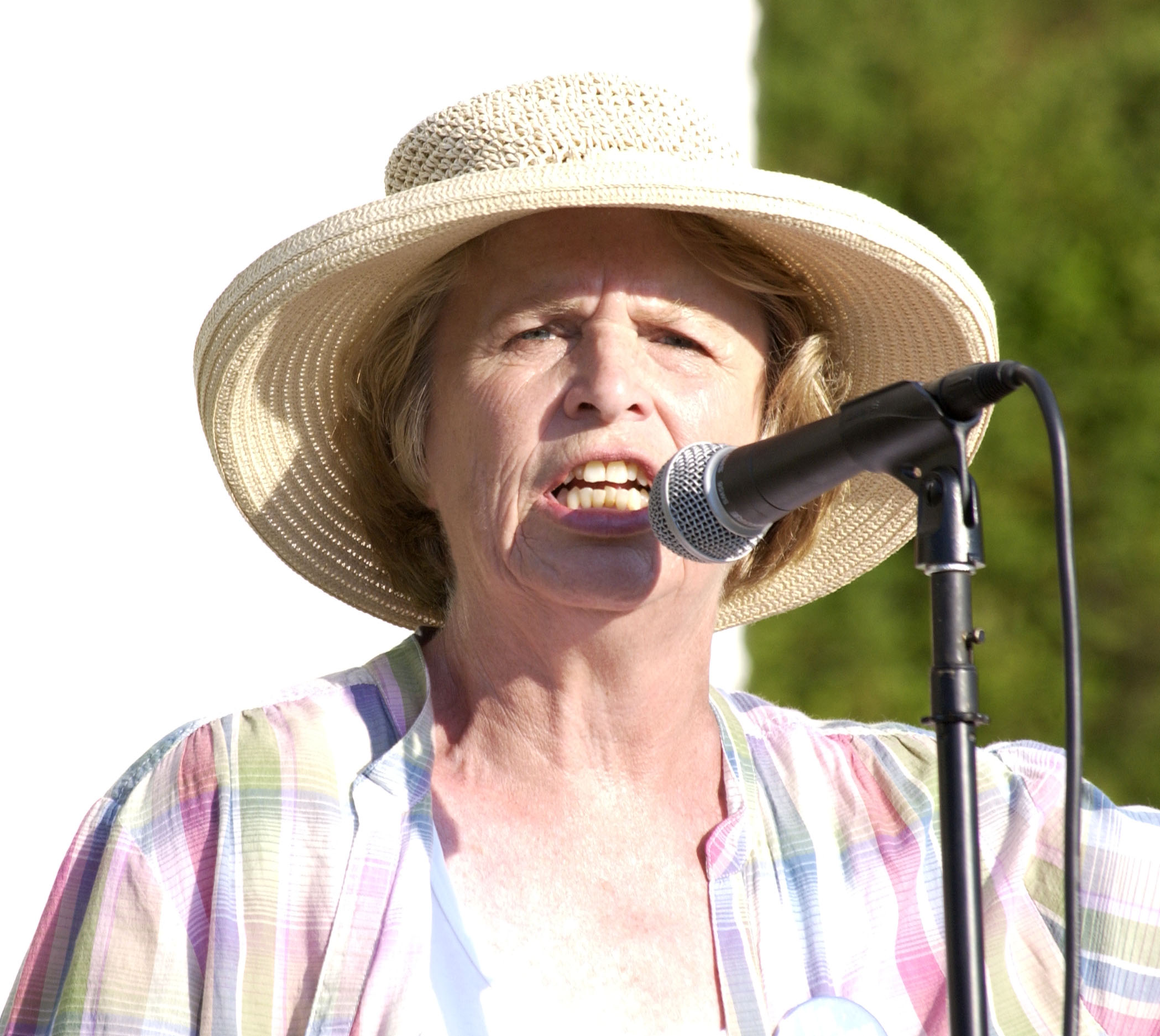
Earline Parmon, state senator for Forsyth County (click on images for high-res version)

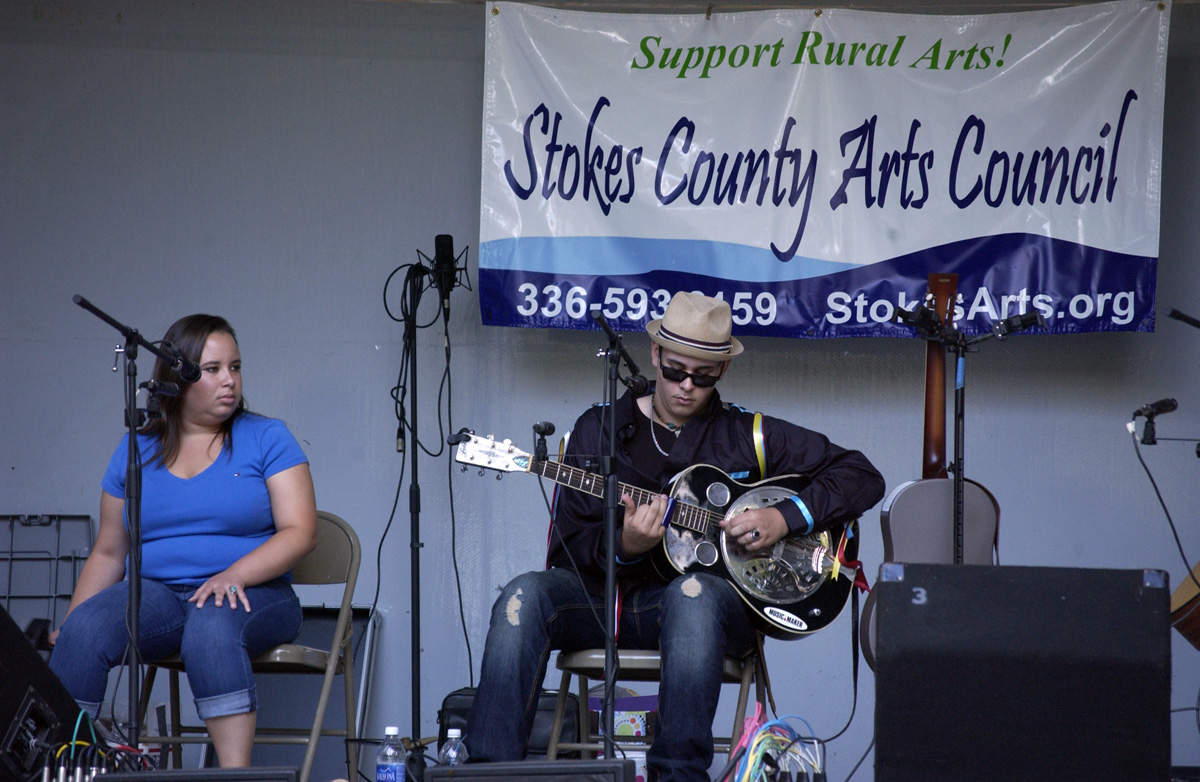
North Carolina’s urban counties have been having Moral Monday events, but I’m wondering if Stokes County isn’t one of the few small, rural counties to do it. The turnout was not exactly tremendous — less than a hundred. But the speeches were fiery.

While listening to several dynamic and experienced African-American speakers at today’s event, I had a breakthrough realization about why it has been so difficult to organize rural white Southerners against fracking. African-Americans learned how to organize and fight decades ago. Rural white people are just getting started.


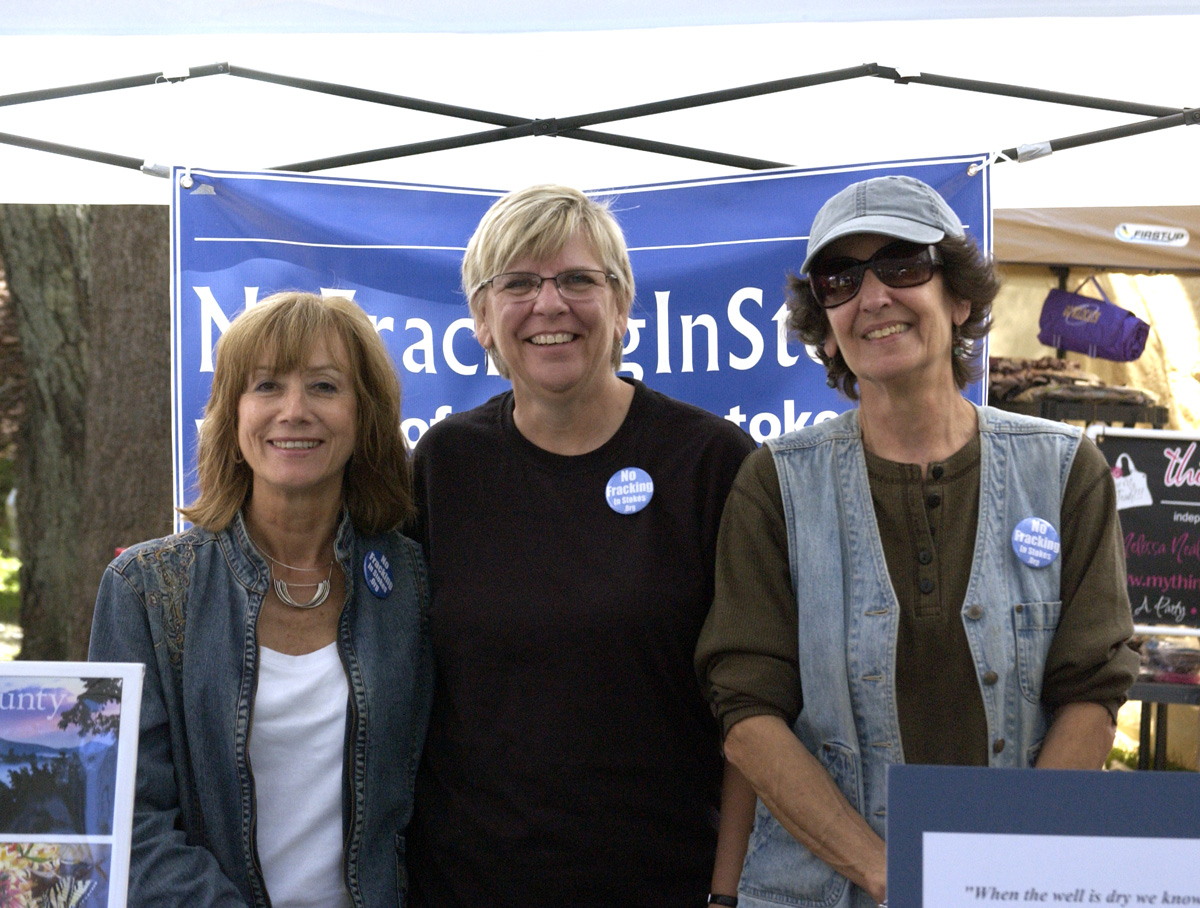
Linda Hall Hicks, a retired schoolteacher and member of the No Fracking in Stokes steering committee


Ann Meadows, also a retired schoolteacher and member of the No Fracking in Stokes steering committee

Promontories


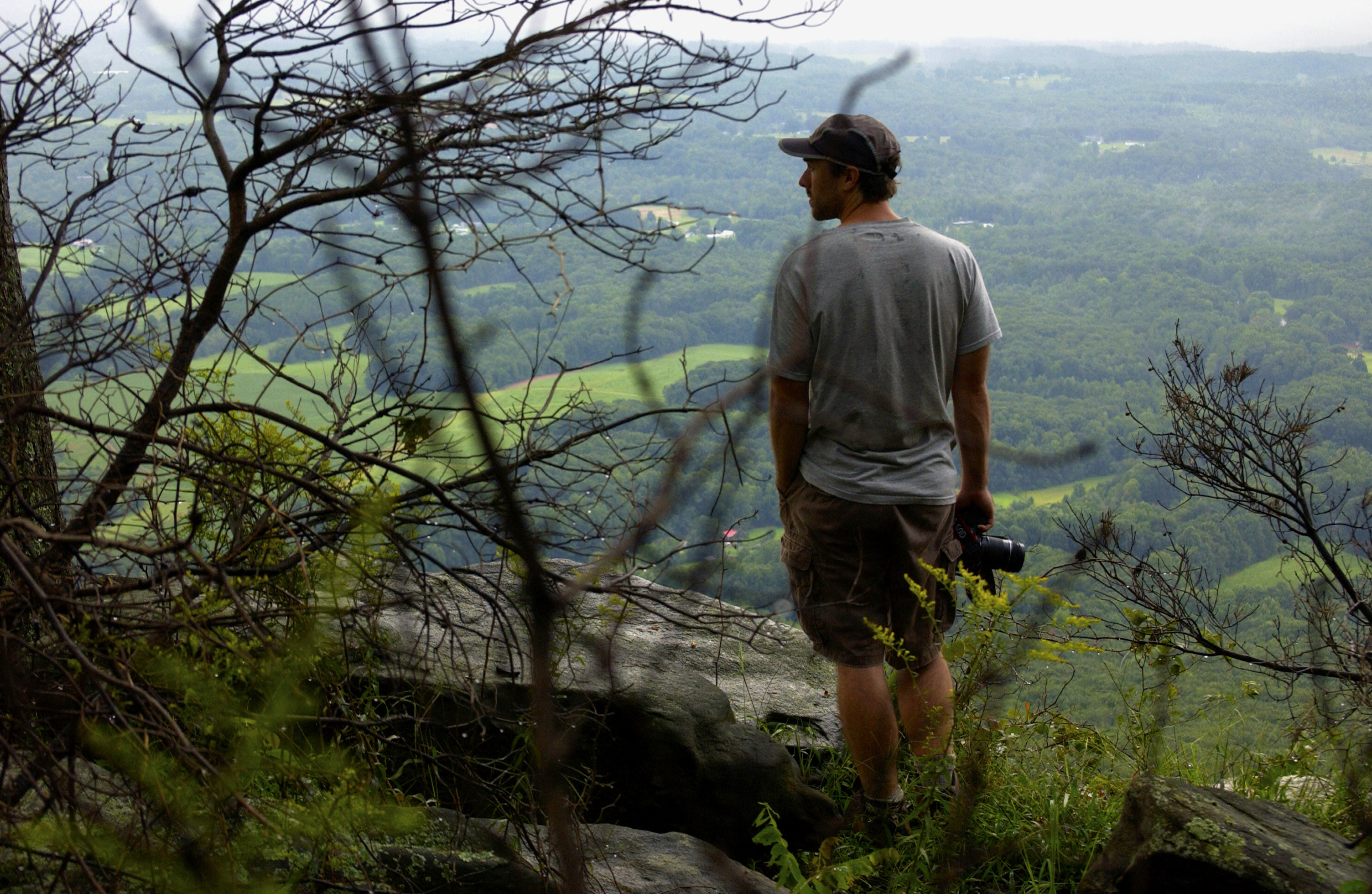
Ken Ilgunas on Pilot Mountain. Click on image for larger version.

Ken has been here for much of the summer. His next adventure will be to the British Isles and Ireland, starting in September.

Those of us who live in Stokes County like to remind people that Stokes County has its own little mountain range — the Saura Mountains. These mountains have some excellent promontories. There is Hanging Rock State Park near Danbury, and Pilot Mountain, which is in Surry County just over the Stokes County line. The photo above was taken at Pilot Mountain.

All the varmints are eating well

All up and down the food chain, everybody has eaten well this summer. This is because of the generous rain and the lushness it has produced. I have never seen so many rabbits. The vole population has recovered from its winter minimum. One sees deer twins all over the place. There are lots of wild turkeys with lots of little ones. The finches are in the meadows, feasting on seed. There are oodles of bugs and butterflies, terrapins, and baby snakes (which I see only out on the paved road while walking).

I will never forget the summer of 2013.

Making peace with summer


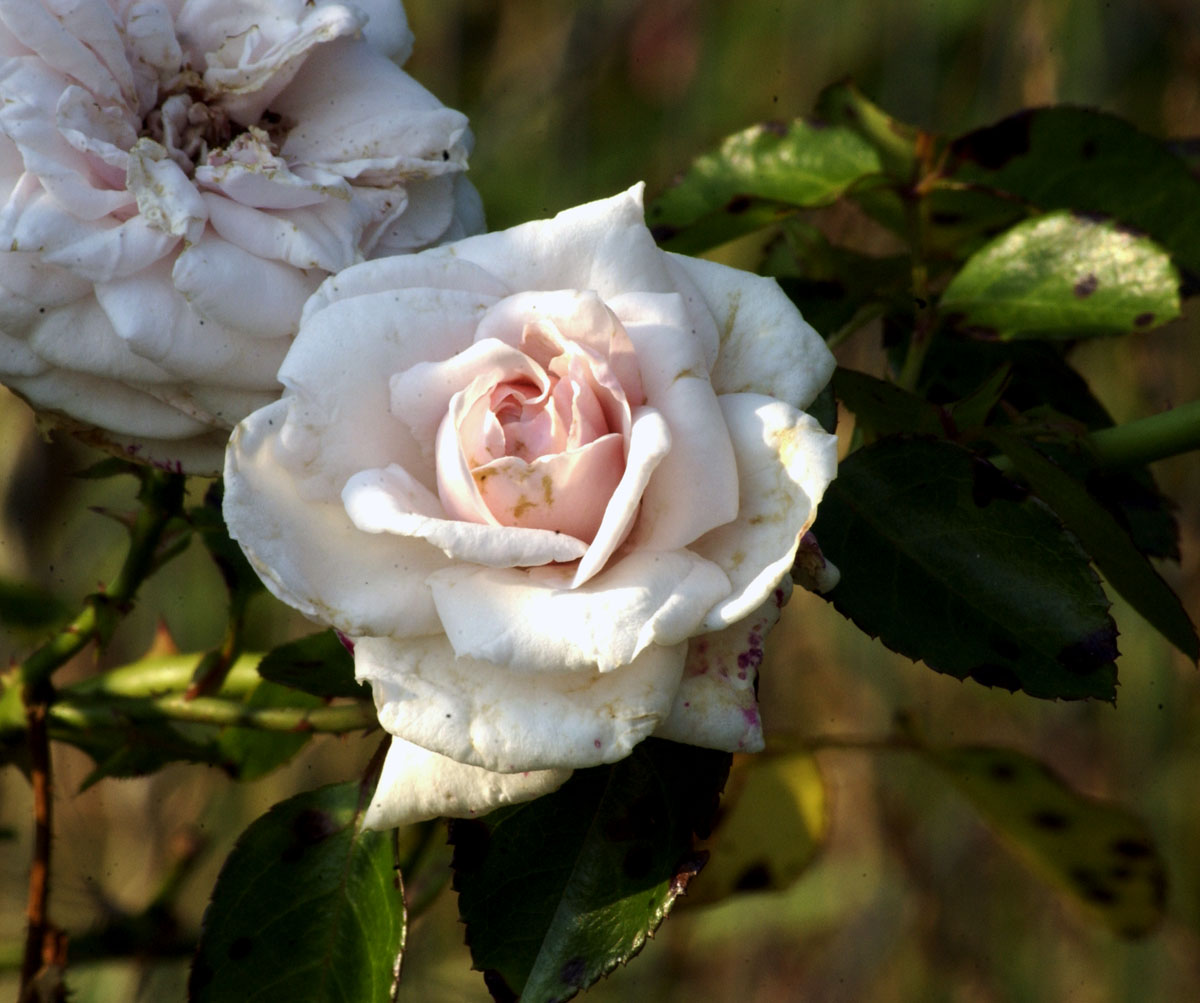
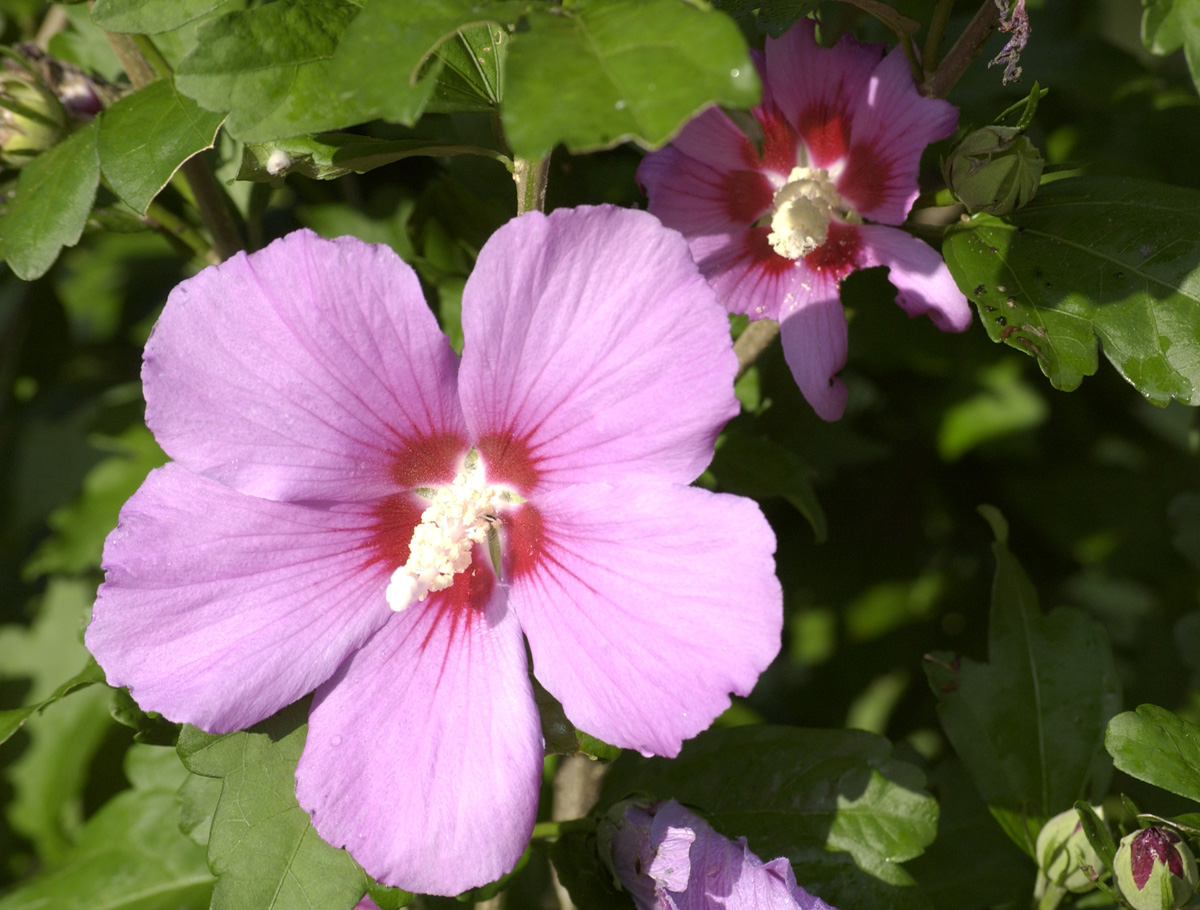
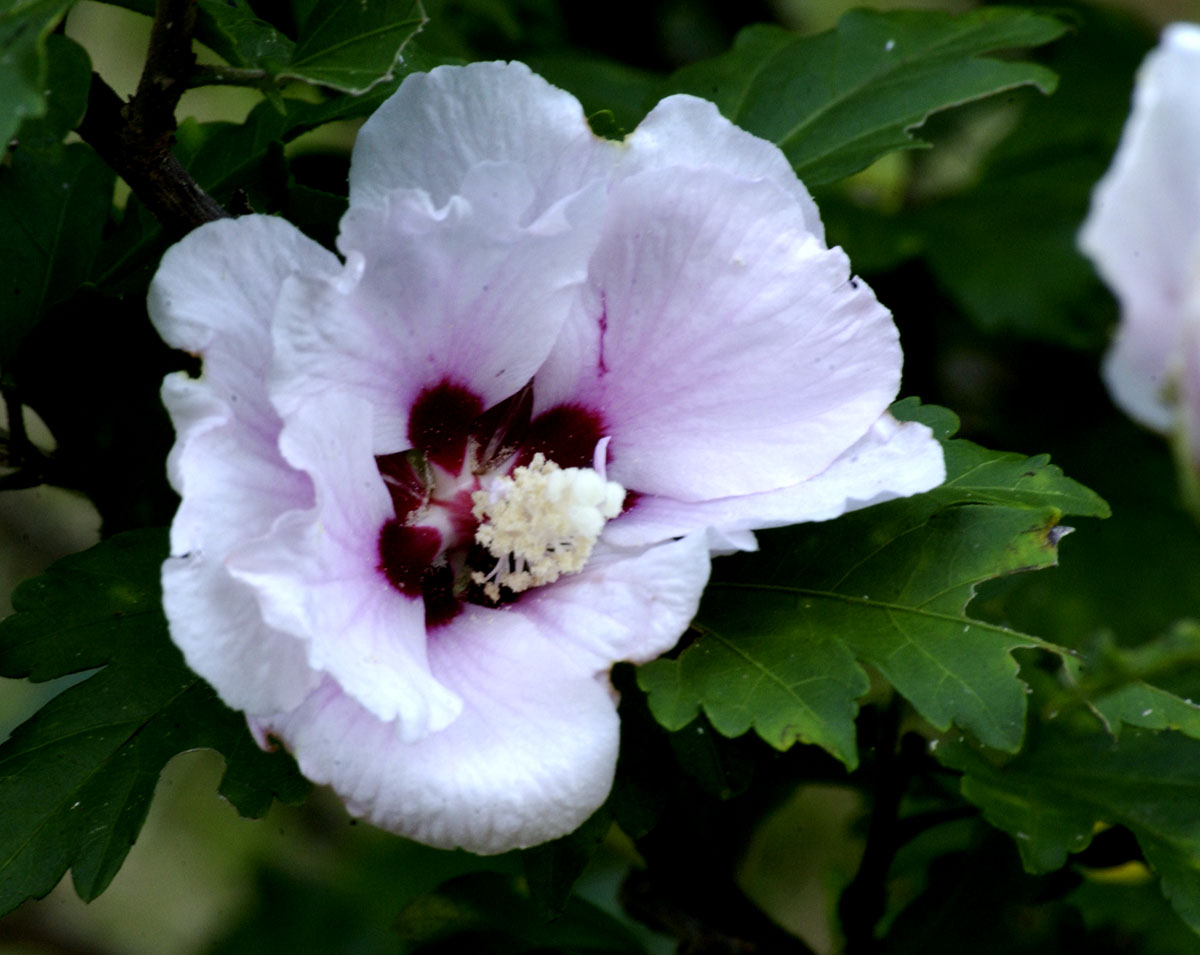
Rose of Sharon

Longtime readers of this blog know that summers in the South can be hard to bear, especially after 17 years of the chilly summers of San Francisco. This year I resolved to make peace with summer. I am pleased to say that I have been successful. But this has been an extremely unusual summer.

A couple of weeks ago during a cold snap, a friend a few miles to the north reported that the low one night (in August!) was 49 degrees. I recorded 53 here. The highest daytime temperature that I can recall all summer was 94 degrees. So making peace with this particular summer was not that great a challenge. It has been one of the most beautiful summers I can remember. All summer long, everything has been lush. In July there was 11.8 inches of rain. Since Jan. 1, there has been 54.5 inches. For August so far, there has been 5.6. Oh, if only every summer could be like this one.

The key to getting along with summer is to get up early. That’s when the old-timers in this area got most of their work done. Almost every morning this summer I’ve gotten up as early as 6 (sometimes later) and gone for a long walk while it’s still cool, rain or shine. Then, for the rest of the day, one can guiltlessly retreat indoors to the air conditioning. But that’s another thing. There were weeks-long periods in July as well as some days in August when no air conditioning was needed.

Even now, the air conditioning system is turned off. The temperature is 72 degrees at noon. The low forecast for tonight is 54. August doesn’t get any better than that.

The official abbey bread


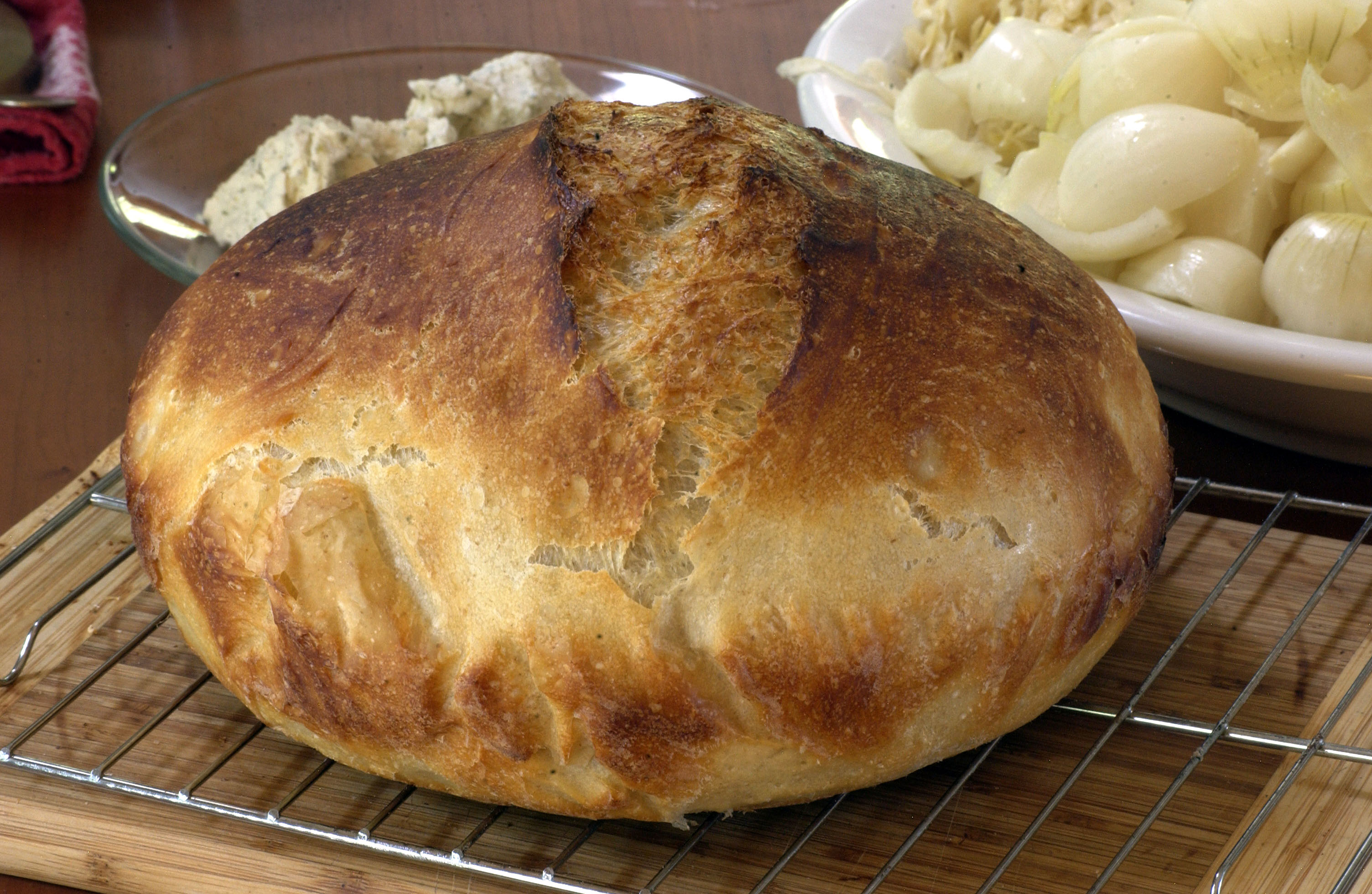
Click on photo for larger version

Any proper abbey (or so I have thought for a long time) ought to have its trademark bread. And any abbot worth his salt ought to be able to bake it. Not just any bread will do. There has to be something special about it. So gradually I have been refining the recipe for Acorn Abbey’s signature loaf.

I just used the dreaded word “recipe.” I’ve been making bread for decades, measuring vaguely and just baking out of experience. But with the rustic sourdough loaves, I have been measuring, by weight, using a kitchen scale. This is because I’ve found that to get consistent results, one needs to control the “hydration” of bread — that is, the ratio of flour to water. Abbey bread at present is 85 percent hydration (100 parts flour to 85 parts water, by weight). Though wetter bread would be nicer, it’s much harder to handle. I probably will experiment with trying to increase the hydration a few percent and see how it goes.

As I’ve mentioned in previous posts, the abbey bread is inspired by Michael Pollan’s book Cooked, in which the bread concept is based on the sourdough bread at Tartine bakery in San Francisco. It’s baked in a Dutch oven.

There was one part of Pollan’s method that just did not work for me. He gives the dough its final proofing in a bowl with the loaf face down. He upends the bowl over the Dutch oven and lets it plop. I found that unworkable. What if the dough sticks to the bowl? What if the dough loses its loft from the fall? I’ve settled on a method which is a bit more trouble but which is reliable. I line the proofing bowl with wide strips of parchment paper, then set the loaf right side up on the parchment paper for the final proofing. When it’s ready for the Dutch oven, I lift the loaf by the ends of the parchment paper and set it gently into Dutch oven.

The total amount of time to make decent sourdough bread is not that great. But one must start the night before, and the bread requires regular attention on baking day. The abbey bread is usually done by 5 p.m.

I’ve settled on a kind of Mediterranean schedule of baking every three days. Strangely enough, this has reduced the net amount of bread, and therefore carbs, consumed at the abbey. This is because I’ve stopped making biscuits and rolls, all of which tend to get eaten at one meal. On day 1, the bread is served warm for supper. On days 2 and 3 it comes back as toast or in slices at supper. If there is any left (rare), then the chickens get it.