Y'all just help yourselves…

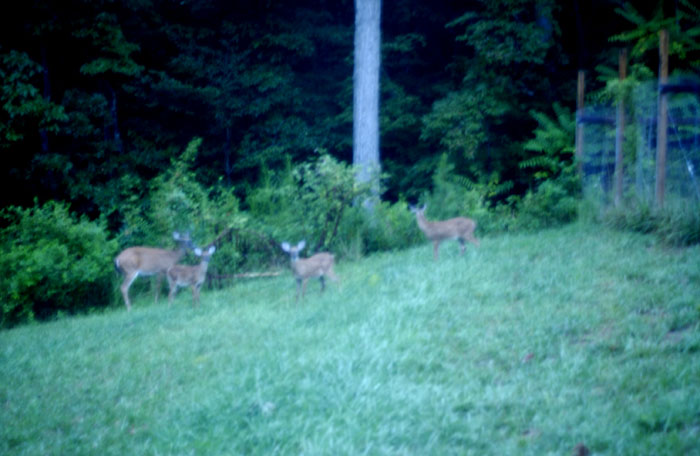
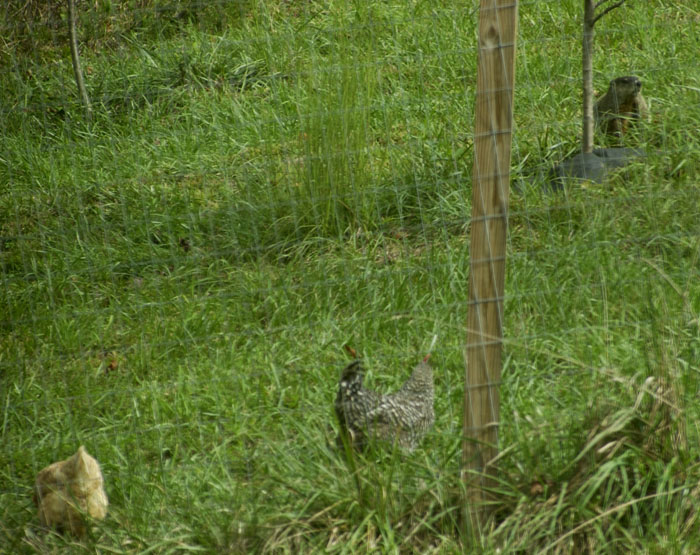
There was a once-upon-a-time when the chickens and groundhogs were wary of each other. Now they have daily grazing parties in the orchard.

I wish I had some idea what my groundhog population is. I’m pretty sure I have two separate families. The fence that keeps the chickens out of the garden also keeps the groundhogs out. Mostly the groundhogs seem to want my grass, and I’m fine with that. So I leave them alone. It’s the voles that do most of the damage, but the voles feed the foxes.

It makes me think of George Bernard Shaw’s preface to his play about Joan of Arc:

The saints and prophets, though they may be accidentally in this or that official position or rank, are always really self-selected, like Joan. And since neither Church nor State, by the secular necessities of its constitution, can guarantee even the recognition of such self-chosen missions, there is nothing for us but to make it a point of honor to privilege heresy to the last bearable degree on the simple ground that all evolution in thought and conduct must at first appear as heresy and misconduct. In short, though all society is founded on intolerance, all improvement is founded on tolerance, or the recognition of the fact that the law of evolution is Ibsen’s law of change.

And so it is, I think, with Mother Nature, and groundhogs, and voles. I try to tolerate them to the last bearable degree.

In Ireland, it's cool to be a farmer again


The Irish Times


There are two dangers in not owning a farm: the belief that heat comes from the furnace and food comes from the supermarket. — Aldo Leopold


The Irish Times started a three-part series today on how family farms are making a comeback in Ireland’s depressed economy. In fact, farming is one of the most promising areas of the economy. Young people now see farming as an option. This, of course, is relocalization — a return to the land after people saw what the globalization of the economy got them.

What puzzles me is why that doesn’t seem to be happening here. Compare the story from the Irish Times with the link I posted yesterday to a New Yorker story about economic deterioration in Surry County, North Carolina, the county just to the west of Stokes County, where I live. Young people continue to move away, both in Surry and Stokes, while many old family farms sit more or less intact, but fallow. All too many family farms, however, have been chopped up into subdivisions during the past few decades, if they were near a population center or a main road.

I am speculating, because I don’t have nearly enough information to make such a judgment, but it is as though most people here are at an earlier stage in a process. They have perceived the downsides of the boom and bust and waste brought to us by globalization. But they’re not yet thinking much about what they could do, largely by themselves, with the resources that are close around them. I don’t know if it’s the truth or an urban legend, but one regularly hears that some children don’t know that French fries comes from potatoes. If that’s true, then the cultural connection to the land has been completely severed. Not to mention that education has failed. Maybe things never went that far in Ireland.

The New Yorker in Mayberry


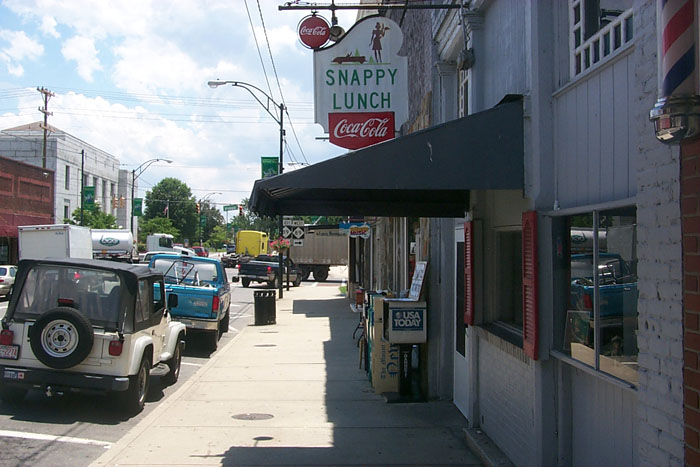
Snappy Lunch in downtown Mount Airy

It isn’t often that urbane institutions such as the New Yorker find themselves in places like Mount Airy, North Carolina. In the September 12 issue of the New Yorker, George Packer has a must-read piece on how the United States has deteriorated — in almost every way — since the events of Sept. 11, 2001. The article is “Coming Apart: After 9/11 transfixed America, the country’s problems were left to rot.”

This piece is available on the New Yorker’s web site to non-subscribers, here.

This article is not in any way condescending toward Mount Airy. It’s hard to nail down the gist of an article this long and thoughtful, but these two paragraphs come pretty close:

While the media were riveted by the spectacle of celebrity wealth, large areas of the country were—like Surry County—left to rot. The boom had been built on sand: housing speculation, overvalued stocks, reckless deregulation, irresponsible deficits. When the foundation started to crumble with the first wave of mortgage defaults, in 2007, the scale of the destruction became the latest of the decade’s surprises. Hardly anyone foresaw how far the economy would fall; hardly anyone imagined how many people it would take on the way down. Even the economic advisers of the next Administration badly misjudged the crisis. The trillions of dollars spent and, often, misspent on wars and domestic bureaucracies were no longer available to fill the hole left by the implosion of the private economy. Reborn champions of austerity pointed to the deficits in order to make the case that the country couldn’t afford to spend its way back to health. And, like the attacks that were supposed to change everything, the recession—which was given the epithet “Great” and was constantly compared with the Depression of the nineteen-thirties—inspired very little change in economic policy. Without effective leadership, the country blindly reverted to the status quo ante, with the same few people making a lot of money, if a little less than before, and the same people doing badly, if a little worse.

This malignant persistence since September 11th is the biggest surprise of all. In previous decades, sneak attacks, stock-market crashes, and other great crises became hinges on which American history swung in dramatically new directions. But events on the same scale, or nearly so, no longer seem to have that power; moneyed interests may have become too entrenched, élites too self-seeking, institutions too feeble, and the public too polarized and passive for the country to be shocked into fundamental change.

This just in: Reading fiction changes us

I have an old friend from the 1970s who is now in federal prison after being convicted on federal tax fraud charges. It was a messy case, with accusations of bilking investors, money laundering, perjury, and obstruction of justice. A former chairman of the North Carolina Republican party and former aide to the late Sen. Jesse Helms also was swept up in the case. How did my friend get there? He came from a very rich family — his family owned a Southern textile company — and he never lacked for anything.

When I knew him he was in his late teens. He was reading Tolkien and wearing funny hats. But after Tolkien, he read a lot of Ayn Rand. It changed him forever.

His father was an old-fashioned textile magnate who believed that his company had a duty to the community. His son — let’s call him Powell — acknowledged no such duty. Powell, aided by the family fortune, I assume, set up a textile business in Haiti, then the poorest country in the Western hemisphere with annual per capita income of $360. Powell was lionized in a 1987 article in the Washington Post, which saw in him some kind of heroism for doing business in Haiti. “If unions come, I go,” he is quoted as saying.

In 2002, he wrote an article calling the Bahamas “a Libertarian paradise.” The business that was caught up in federal fraud charges was operating out of the Bahamas. While in federal prison, he wrote a manifesto about the corruptness of the American justice system. He believes that he was set up and that he is a victim of the government.

I’d give credit for the following quote if I was sure who wrote it. It was a blogger, I believe, who goes by the name Kung Fu Monkey:

There are two novels that can change a bookish fourteen-year-old’s life: The Lord of the Rings and Atlas Shrugged. One is a childish fantasy that often engenders a lifelong obsession with its unbelievable heroes, leading to an emotionally stunted, socially crippled adulthood, unable to deal with the real world. The other, of course, involves orcs.

There you have it. Kung Fu Monkey also shows much insight in contrasting Tolkien with Rand, because their fiction has had pretty much the opposite effect on culture.

And now along comes a study from the University of Buffalo which found that reading fiction increases empathy. Young people who read Harry Potter books identify as wizards. Those who read vampire books identify as vampires. But here’s the gist of it:

The subject matter of fiction is constantly about why she did this, or if that’s the case what should he do now, and so on. With fiction we enter into a world in which this way of thinking predominates. We can think about it in terms of the psychological concept of expertise. If I read fiction, this kind of social thinking is what I get better at. If I read genetics or astronomy, I get more expert at genetics or astronomy. In fiction, also, we are able to understand characters’ actions from their interior point of view, by entering into their situations and minds, rather than the more exterior view of them that we usually have. And it turns out that psychologically there is a big difference between these two points of view. [Keith Oatley]

Psychological expertise. There you have it. But I think you have to read widely — many, many good authors — to develop psychological expertise.

Those whose view of reality is proudly empirical do not recognize such a thing as psychological expertise, because its insights are not falsifiable. That is almost certainly true. But the fact that something is not falsifiable does not prove that it is wrong. To empiricists, English majors are just babbling when they sit around and analyze stories and characters. But there is a method to it. Harold Bloom at Yale, for example, has a very well developed literary method. Camille Paglia was one of Bloom’s students, and it was this kind of method that she used in her brilliant book Sexual Personae. Empiricists despise that book. English majors and other lovers of fiction find it rich with cultural insight.

I don’t buy the proposition, by the way, that reading fiction increases empathy. Some fiction diminishes empathy and gives people permission to exercise their predatory instincts. There are good stories, and there are bad stories, which affect us for good or for ill.

Mrs. Fox had a busy day


Click on photos for larger version

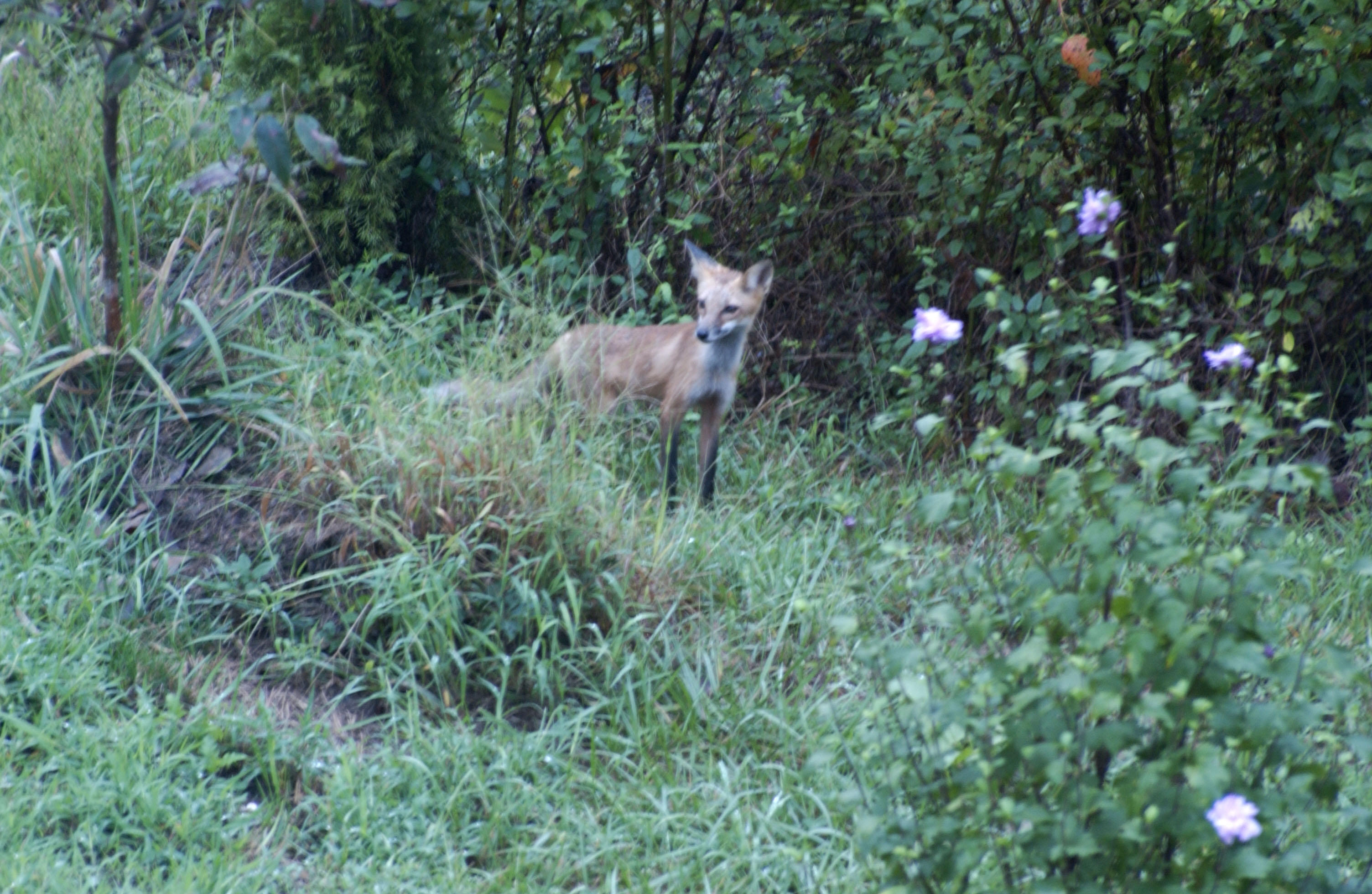
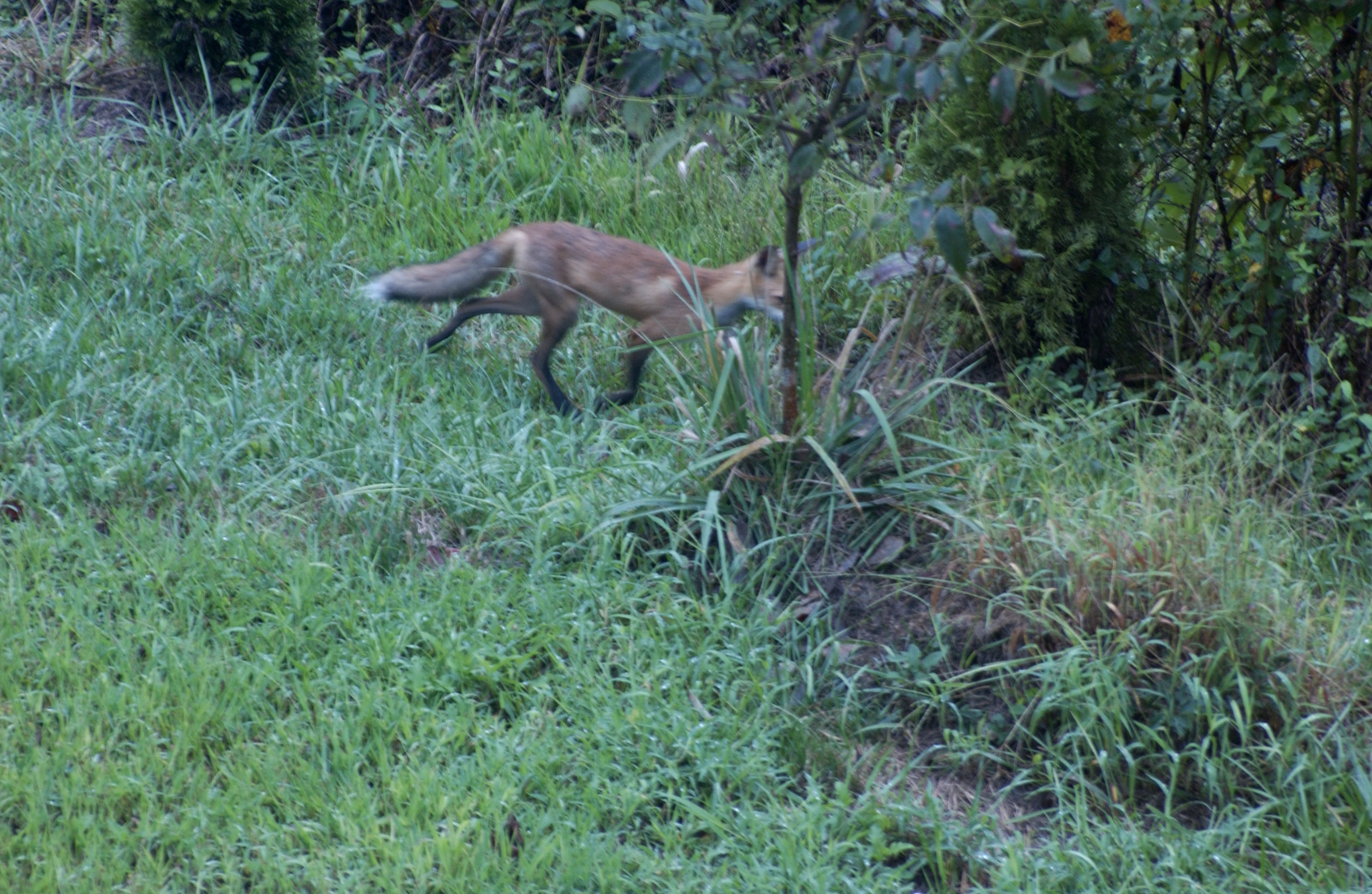
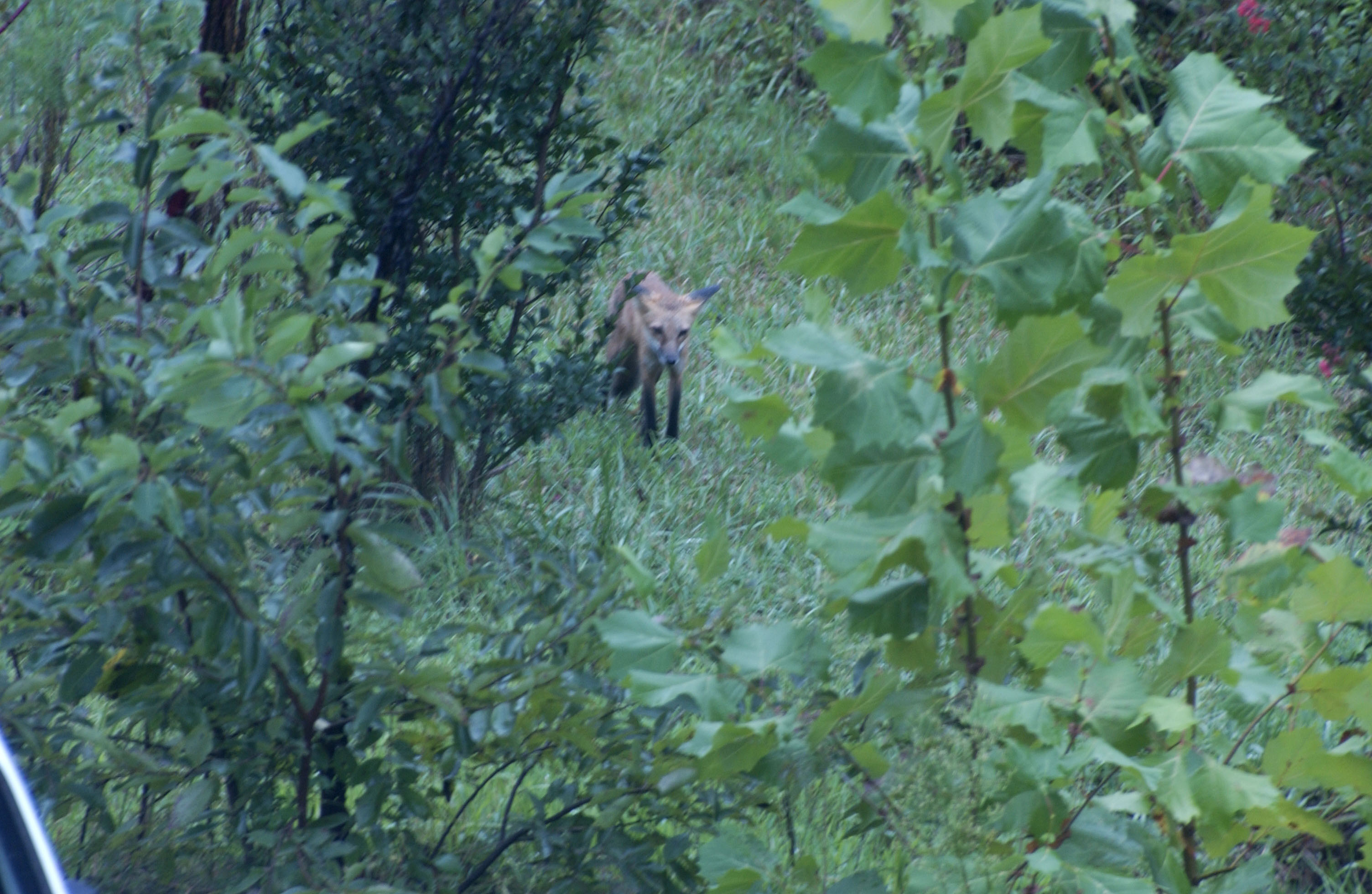
I saw quite a lot of Mrs. Fox today. She crossed the yard several times as she went about her business, and she was hunting voles in the weeds. I couldn’t change lenses on the camera fast enough to catch her hunting voles, but it was fun to watch. She’d sit on her haunches, very still, and watch. Then she’d leap in a very high, graceful arc and come down with her jaws and front paws ready to make a catch. Unfortunately she didn’t get a vole while I was watching.

Mrs. Fox may be getting more and more comfortable being in the yard during daylight. I hope so. She makes a nice dog substitute. And I’m not absolutely sure that this is Mrs. Fox. It could be one of the pups she raised this year. These are the clearest photos I’ve been able to get so far, so I’m hoping the markings will help me distinguish one fox from another.

Do snakes drink water?

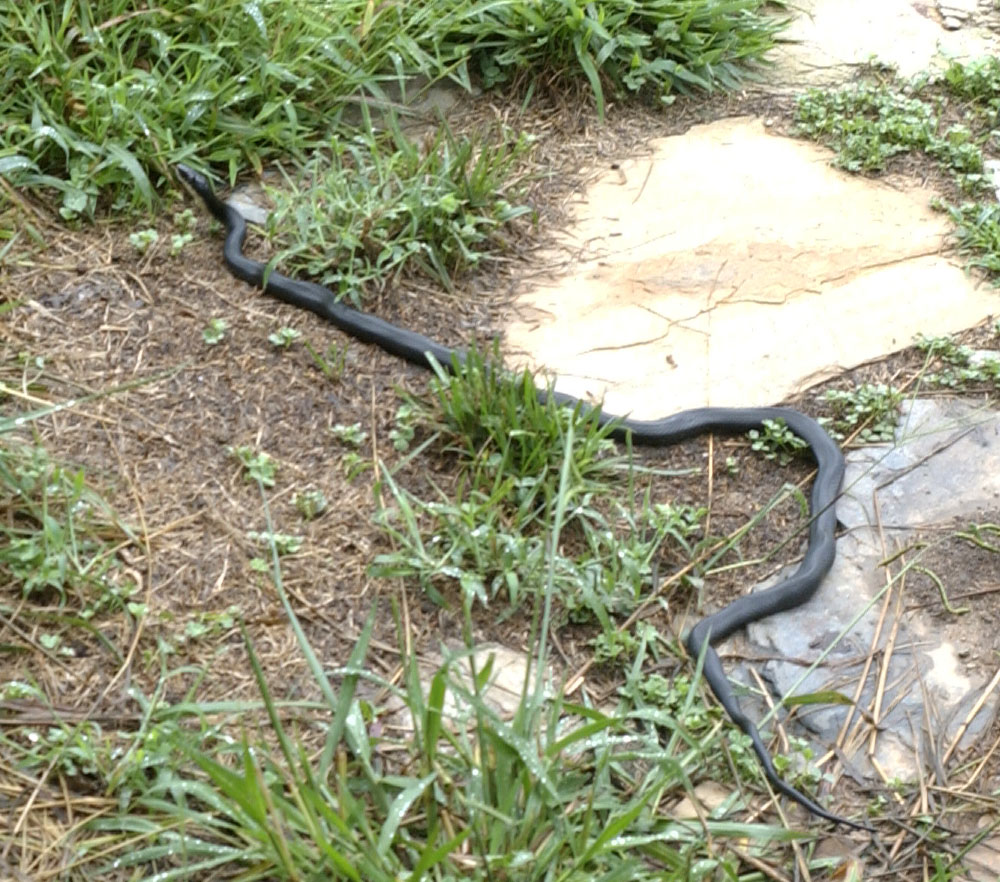
As I watched this snake, it appeared to me that it was lapping water droplets, like a cat, from the wet grass. It wasn’t just flicking its little red tongue. It was flicking it at the grass. I asked a friend who has kept snakes as pets if they lap water. He said no, that snakes get most of their water from their food.

I remain unsatisfied by that answer. It sure did look like it was lapping water like a cat.

Jewel weed


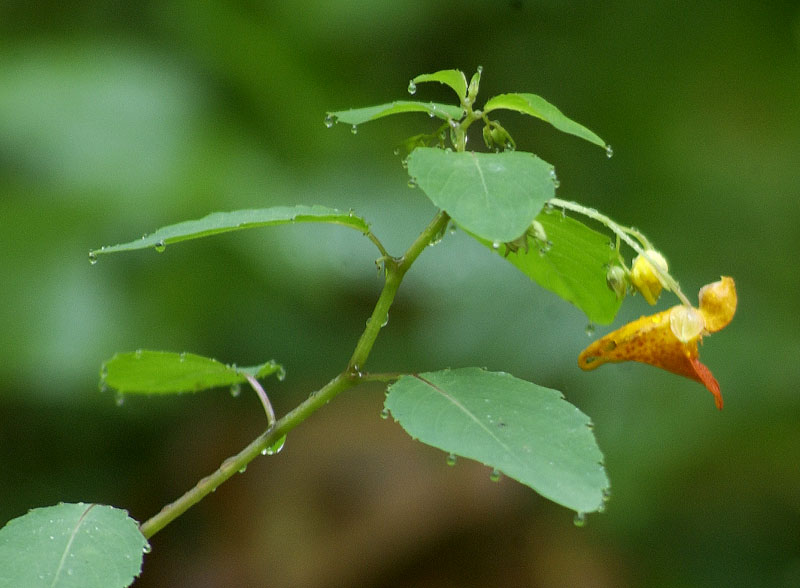
This jewel weed grows along the roadside downhill from me, in an area where my small stream passes through a culvert under the road.

In the previous post, I mentioned jewel weed as a plant that might grow well in the dark, moist area under my deck. As luck would have it, there is a stand of jewel weed along a branch downhill from me, so I can steal some seeds down there.

The native wild jewel weed grows in the shady undergrowth along small streams. It has dangling, horn-shaped flowers. In the fall, it forms elongated seed pods. When the pods are ripe, taut fibers along the seed pod are like springs. If you touch a ripe pod, it will explode with a surprising amount of force and fling seeds as far as 10 feet. It’s a magical little plant, even without the seed bombs.

Michael’s suggestion was that I gather some jewel weed plants when the pods are ripe and lay the plants under the deck. When the pods explode, they’ll seed the area under the deck.

A major shift in the weather

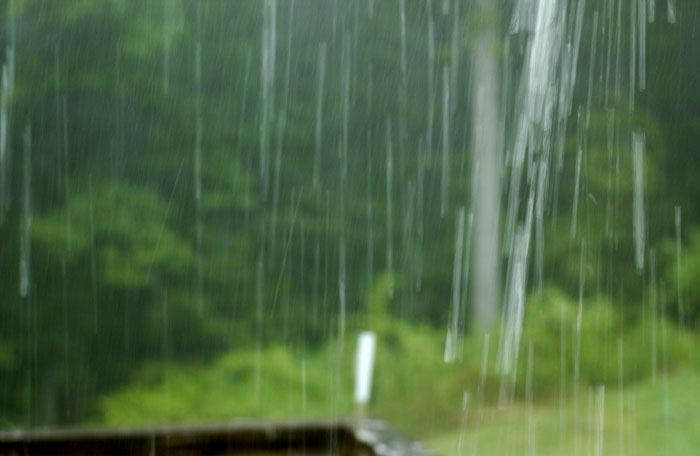
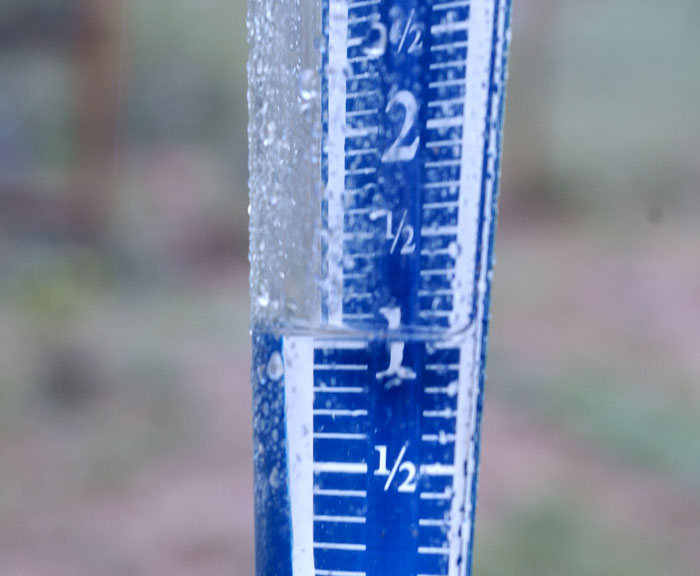
I wasn’t expecting rain today, but I heard thunder around 5:30 p.m. and discovered that a good-size storm was bearing down on me, moving out of Virginia headed north to south (not the typical summertime pattern). It left a bit more than an inch of rain.

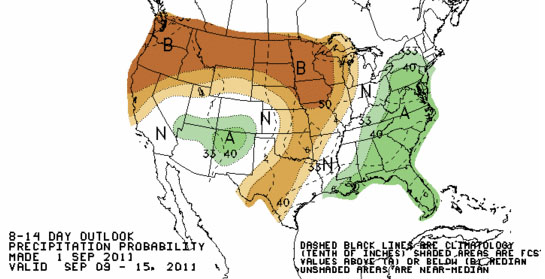
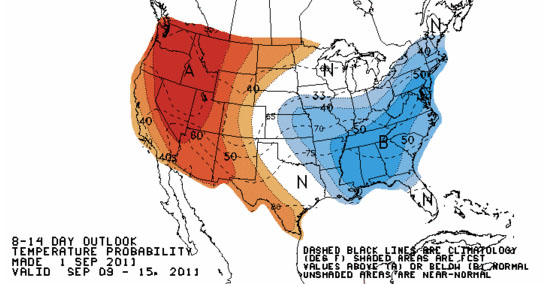
Not only that, but the 14-day forecast shows the entire eastern seaboard down for below-normal temperatures and above-normal precipitation. If that forecast holds true, then this miserable summer is over. The abbey will soon be green and lush again. I already feel myself transforming back into a human being from the snarling ogre I was during the summer.

By the way, I had a visit this week from Michael, who was Stokes County’s agricultural extension agent for the past five years until he resigned a month ago to work for himself. One of the things he’s now doing is consulting with organic farmers and gardeners like me. I was almost ashamed to have him here while the abbey grounds are looking so parched, but Michael saw right past all that — he lives only a few miles away and deals with the same weather patterns that I’m dealing with. The work that Ken and I have done here (thank you, Ken, wherever you are) got all kinds of gold stars from Michael (especially for the lawn, the orchard, the vegetable garden, the wildflower patches, and the animal habitat), and his message basically was keep up the good work. He did have some great ideas, though, and he solved some of my problems. Such as:

Q. Why did my blueberries die? A. Soil pH. Blueberries like a more acid soil and won’t do well in my orchard area, where I keep the soil well limed for the apple trees.

Q. Why did my fig trees die? A. Replant in an area with morning sun and more water. We picked a spot.

Q. Why did my dogwood die? A. It’s difficult to get dogwoods started under full sun without lots of babying for several years. Replant dogwoods in an area with less sun.

Q. Will anything grow in the darkness under my north-facing deck? A. Jewel weed! This is one of the most magical plants in the world. I’ll post later about jewel weed, with a photo.

Q. What’s the best way to solve my irrigation problem? A. Do some shoveling and enlarge an already-existing pool in my branch which just happens to be at the point where the branch is closest to the garden. Buy a low-cost pump from Harbor Freight. Buy flexible irrigation tubing to run up the hill to the garden and hook it to a soaker system. This will be a winter project.

Q. Can I grow pawpaw trees along my branch? A. Probably not, unless I’m willing to clear some trees over the branch to provide a little more dappled light. Though pawpaw trees might grow by my branch in the existing low light level, they probably would not bear fruit.

Michael also had some excellent ideas, such as planting muscadines on the upper side of the garden fence and raspberries on the woods side of the fence. Both will climb the fence without need for strapping. The other two sides of the fence already have roses, which are growing slowly, but Michael assured me that they would eventually cover the fence. He’s also going to help me find and plant a new shade tree for the south side of the house. I want a shade tree that’s as big as I can find, so that I’ll see some shade in my lifetime.

I doubt that a non-commercial type like me could get this much attention from a county agricultural extension agent, because they’re very busy. So I’m lucky that he’s now working for himself. But that’s something for everyone to keep in mind. I believe that just about every rural county in America has an agricultural extension agent. Expert help is a very good thing. And I’ve learned enough from my experience, and from reading, that I can well understand what a professional horticulturalist has to say.

Climate Prediction Center. These forecasts are updated every day. Your tax dollars at work. What would we do without a strong weather service, information to which every American is entitled, for free? “Entitled” is a beautiful word.