Must Americans be taught a lesson?


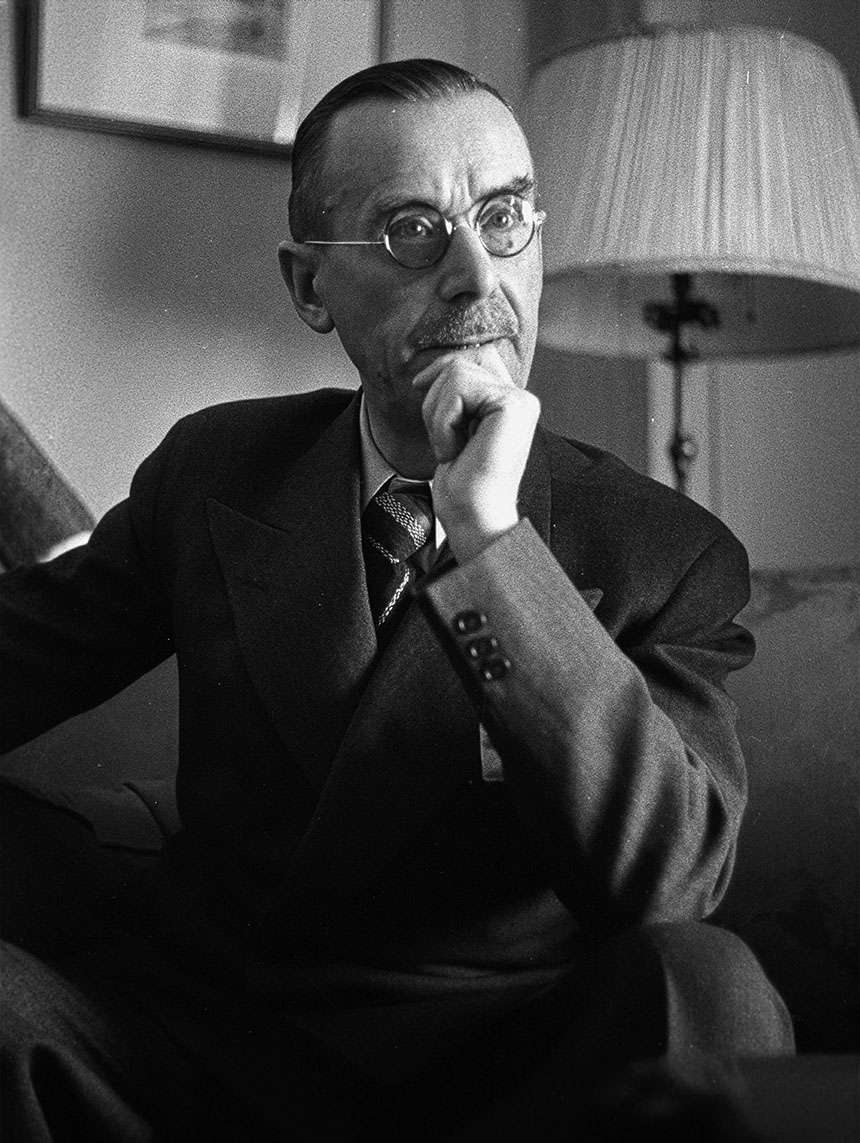
Thomas Mann. He warned Germany, but they didn’t listen. Source: Wikimedia Commons.

If Trump stays on his current course toward global catastrophe, then he must be stopped. If Congress, the courts, and the American people fail to stop American aggression, then who can, other than Europe?

The 77 million Americans who voted for Donald Trump have no understanding of how what is happening in the world today recapitulates what happened in Germany not that long ago.

With Trump’s threats against Greenland, his obvious intention of ceding Europe to Putin, and his also obvious intention of putting down the Western democracies and divvying up the world for rule by autocrats, Europeans are in a terrible bind. They have been there before, and they have not forgotten it.

Are we getting dangerously close to a situation in which the world must defeat Trump because Americans won’t?

According to ChatGPT in research-assistant mode, half a million people left Germany between 1933 and 1945 when they saw where Hitler was taking Germany. Many of those were Jews. About 30,000 were political and intellectual exiles. Thomas Mann was one of them. As early as 1933, he moved to Switzerland. In 1939, he emigrated to the United States.

From America, Mann wrote a series of radio addresses to the German people that were broadcast into Germany by the BBC. Twenty-five of those radio addresses, from 1940 to 1942, are available in the public domain. As far as I can tell, the complete set of radio addresses in an English translation are available only in book form, recently published by Camden House: Thomas Mann’s Antifascist Radio Addresses, 1940–1945.

Here is an excerpt from Mann’s address to the German people in May 1941. We Americans are now in the same predicament.

***

I tell you at the moment of your greatest — or perhaps not yet greatest — exuberance, that it will not be accepted, not permitted. Do not believe that you only have to establish iron facts before which humanity will bow in due time. It will not bow before them, because it cannot bow before them. However scornful, bitter, and doubtful one’s thoughts may be about humanity, there is, underneath all wretchedness, a divine spark in it, undeniable and inextinguishable, the spark of the spirit and the good. Mankind cannot accept the ultimate triumph of evil, untruth, and violence — it simply cannot live with them. The world resulting from a Hitler victory would be not only a world of universal slavery, but also a world of absolute cynicism, a world which would find it totally impossible to believe in the higher and better in man any longer, a world which would belong completely to evil and be subject to evil. There is no such thing; it will not be tolerated. The revolt of humanity against a Hitler world filled with the utmost despair of spirit and good — this revolt is the most certain of all certainties; it will be an elementary revolt before which the ‘iron facts’ will crumble like plaster.

The desperate revolt of humanity against Germany – must it come to that? German nation, how much more must you fear the victory of your leaders than their defeat!


The web site problem should be fixed


After several calls to the hosting provider (GoDaddy), I think I finally got an accurate diagnosis on what has made this blog unreachable at times during the past four days. It was a denial of service (DoS) attack.

I have upgraded the hosting level to get around the problem. Previously, the IP address of acornabbey.com was shared with a great many other domains. Thus a DoS attack on one of those domains would effect all of the many domains that are sharing a server and a TCP/IP address. The upgraded hosting plan includes a unique TCP/IP address for acornabbey.com.

I should emphasize that it was not acornabbey.com that was the target of the DoS attack. This domain was just collateral damage. If you’ve had trouble reaching the blog recently, I apologize. We should be out of the woods now (but we’re still Into the Woods. 🙂 )

Are you feeling the 1960s vibe?


Minneapolis is becoming a preview of what Americans will do if they have to. The video of what the people of Minneapolis did to the right-wing “influencer” Jake Lang ought to show Trump and MAGA what decent Americans think of their ideology, and what decent Americans will do if that ideology goes beyond the toleration of free speech to violent troops in the streets:

The right-wing comments on the New York Post video are interesting. For example: “Ah yes … the peaceful and tolerant left at it again.”

They still don’t get it if they think that there is no limit to what Americans will tolerate.

The true believers in the White House don’t seem to see the risks in Trump’s threat of new tariffs to punish Europe over Greenland. Greenland increasingly looks like the red line. Buy Greenland? They’re not selling.

If Trump actually sends American troops into Greenland, then how does he expect to stay in power with all the forces that would then be allied against him? — the American people, in the streets; Europe and Canada, with damaging economic sanctions; and, if we’re lucky, the American Congress and the U.S. Supreme Court actually enforcing the Constitution.

What would it take for the American military to stop taking orders from Trump? The true believers in the White House have already shown that they’re terrified that the American military might not take illegal orders.

I was just a young whipper-snapper journalist when I read Wallace Carroll’s Persuade or Perish (1948). The book was based on his experience as head of the U.S. Office of War Information from 1942 until 1945. The book’s theme is that even wars cannot succeed without persuasion.

I don’t think that we Americans have forgotten what we learned from the Civil Rights Movement and the anti-war movement of the 1960s. People in the streets can do a lot, but there’s also a lot of persuading to be done. Think Woodstock. And today we have more options than just protest songs. The Greenland video below is a fine piece of persuasion — both persuading people that they have the power to resist, and warning Trump and MAGA that trying to impose fascism and own the hemisphere definitely will not be a cakewalk.

Please make it happen, Apple


Screen shot from Apple’s 1987 video about Knowledge Navigator. The resolution of the old video is poor, so I asked ChatGPT to redo the image, then I scaled the image up using Adobe’s Firefly tool. Click here for high-resolution version.


If there was a moment when I became a lifelong Apple groupie, it was 1987, when I attended an Apple marketing event in Charlotte, North Carolina. The event was to promote Apple products for publishing. Apple, along with Adobe, already knew in 1987 that their products would become essential in the publishing industry. During my career in publishing, I spent many hundreds of thousands of dollars on Apple and Adobe products for the newspapers I worked for. The costs were easy to justify, because the new tools for digital publishing were so much less expensive than the systems they replaced.

At that event, Apple showed the Knowledge Navigator video. It was like a dream — Steve Jobs’ dream. Could it ever happen? If it could happen, how long would it take?

Ironically, Apple fell behind on AI systems. Siri was an industry joke. But all of a sudden, everything is now coming together to make Steve Jobs’ dream a reality — an AI assistant with a video avatar, with access to your telephone and email, knowledge about who you are and what you do, the ability to do real-world research, and even the ability to generate pictures and video.

The rumors are that Apple will release a new version of its HomePod this year, with a screen. It is thought to be closely integrated with a new Siri powered by OpenAI’s ChatGPT. I am hoping that Apple will surprise us by including a talking video avatar for Siri, with your choice of avatars (whom you might or might not name Siri). A talking video avatar for AI is going to happen soon. It would be ever so cool if Apple did it first. And if Apple does it in 2026, then it will have taken 39 years for Steve Jobs’ dream to become a reality.


ChatGPT’s imagining of what an Apple video avatar might look like.


Note on downtime

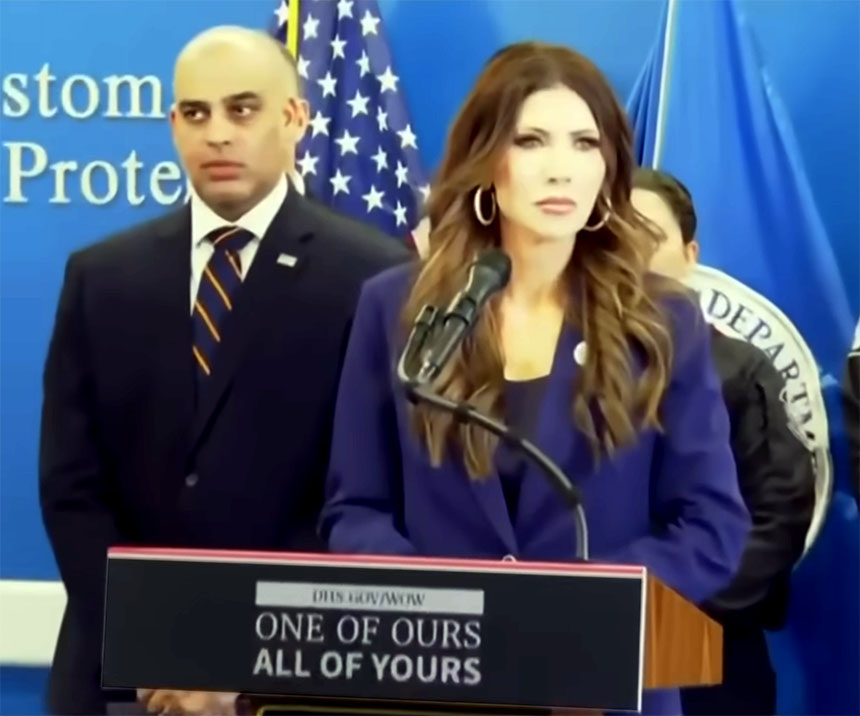
There was some sort of problem yesterday (January 15) with this blog’s hosting service (GoDaddy). The blog was either down or partially down from around 2 p.m. until 9 p.m. EST. GoDaddy was very vague about what caused it. But it may have had something to do with the the fact that Monday’s post “One of ours, all of yours” went viral. Hits on the blog were around a hundredfold higher than usual. My guess is that people all over the world were alarmed by Kristi Noem’s press conference. But information about it was hard to get, because the media ignored it. So people searched and doom-scrolled. The heavy hits on the blog came from DuckDuckGo, Bing, Yahoo search, and Google.

I’m not entirely convinced that the problem is completely solved. I’d appreciate it if you’d leave a comment if you’ve tried to connect to the blog and encountered a problem.


‘One of ours, all of yours’


Social media, I understand, is buzzing with interpretations of just what it was Kristi Noem meant by the words “One of ours, all of yours” on the podium during a news conference in New York on January 8, after Renee Nicole Good was killed by ICE agents in Minneapolis.

Some social media posts say it’s a Nazi phrase related to the Lidice massacre. Some say the phrase has something to do with the Spanish Civil War, and some say the phrase originated with Q-Anon. Neither I nor ChatGPT can find any good evidence for any of those citations.

Still, there are two important questions: Just what did Noem mean? And why did the mainstream media ignore it?

I think I can guess why the media ignored it. It was just another act of sanewashing. That such a phrase was actually used by an American cabinet secretary who commands thousands of men armed to the teeth should have provoked dozens of op-eds asking what it means, especially since pretty much everybody took it as a threat. Instead, crickets.

Noem, you’ll remember, is the person who wrote in a memoir about killing a puppy and a goat.

The phrase is intentionally vague. That’s to provide deniability. Is there a way to interpret it other than as a veiled threat of disproportionate retaliation?

Let’s try to game out the consequences


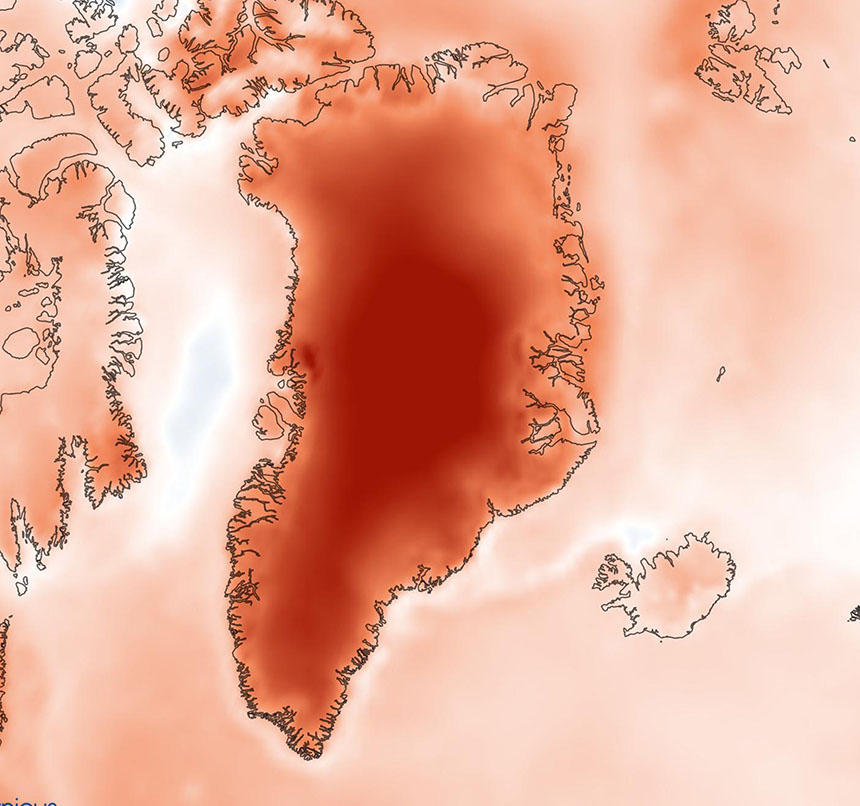
Greenland is getting warmer, in more ways than one. Source: Wikimedia Commons. Click here for high-resolution version.


After what Trump just did in Venezuela, and after the unspeakably vile and repulsive Stephen Miller said that the U.S. has the right to take Greenland, it suddenly appears that the Trump White House might actually do something as stupid as to try and seize Greenland.

Politico has an interesting piece this morning: How Trump gets Greenland in 4 easy steps. It starts with a political move: propagandizing the 57,000 people who live in Greenland to declare independence from Denmark. That could be doable, because the people of Greenland like the idea of independence. But the second step would be much more difficult: getting the people who live in Greenland to become part of the United States. That’s not what they want. They want independence. Step 4 in the Politico scenario is a military invasion of Greenland.

Politico says that step 1, Trump’s propaganda campaign aimed at the population of Greenland, started as soon as Trump got back into the White House.

The Politico scenario looks all too plausible, almost as though Politico based the piece on sources inside the White House.

I have not seen a single story so far on what would happen next if the U.S. actually does seize Greenland. That there would be retaliation is obvious. Members of the NATO countries would immediately impose sanctions on the U.S.

I asked ChatGPT 5.2 to help me game out how the world would retaliate and who would join the opposition.

We should expect: Coordinated tariffs on U.S. exports, suspension of existing trade agreements, deliberate exclusion of U.S. corporations from trade negotiations, licensing delays or export controls on high-end products that the U.S. sells abroad, regulatory retaliation against U.S. banks and corporations doing business abroad, restrictions on investments in the U.S., non-renewal of existing contracts, suspension of intelligence sharing.

Who would join Europe in retaliation: Canada, Japan, South Korea, New Zealand, Australia. Other countries might retaliate in milder or more cautious ways: India, Brazil, Mexico, other Latin American democracies.

Russia and China are wild cards.

This economic retaliation would cause an immediate financial shock. The market would sell off. Investment would be frozen. Interest rates would rise. Unemployment would rise.

The longer the sanctions continued, the worse the damage would become as the world economy builds supply lines that work around the U.S. The damage would start immediately, but readjustment inside the U.S. would be slow. Eventually a point of irreversibility would be reached.

To quote ChatGPT: The world can pull away from the U.S. almost overnight; the U.S. can only rebuild trust and integration slowly, if at all.

Suddenly we are describing a world in which the economic chaos and hostilities set the stage for the kind of counter-retaliations and miscalculations that would set the stage for World War III.

We can cling to such hopes as the idea that Trump is only trying to distract from the Epstein files. I have no idea. We might hope that Congress would see the danger and do something. But until there is a new Congress on January 3, 2027, that seems unlikely.

Wherever we are and whatever our circumstances, we’re all exposed to the folly of a Trump move against Greenland. We Americans would not be the first foolish population in history to be brought to ruin by madmen. We’ve always thought that it can’t happen here. I think we instantly knew after the November 2024 election that things would get worse before they get better. But now it seems that things could get much, much worse, and that unless these madmen can be stopped it will be a long, long time before things will ever get better.

There’s another very important thing that we will need to game out if things break bad around Greenland. That’s the American domestic situation. If the American economy goes into a tailspin, who will Trump blame? Scapegoats will be required, and those scapegoats must always be people who are within reach so that they can be slapped around. Would the Trump White House try to soothe the turmoil? Of course not. They’d do everything possible to inflame it. We don’t need to ask ChatGPT where that would lead.

Privilege (and the lack of it)


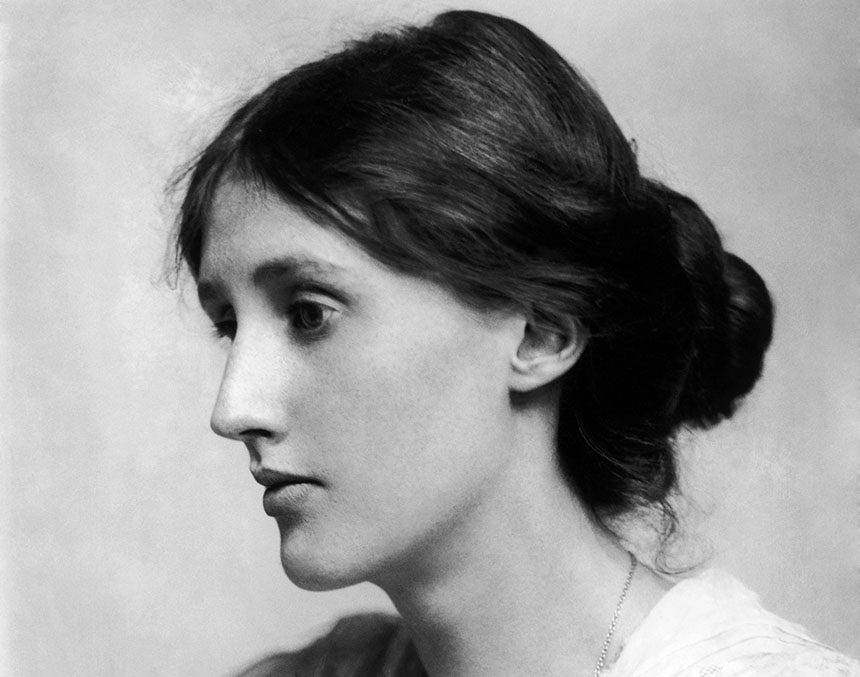
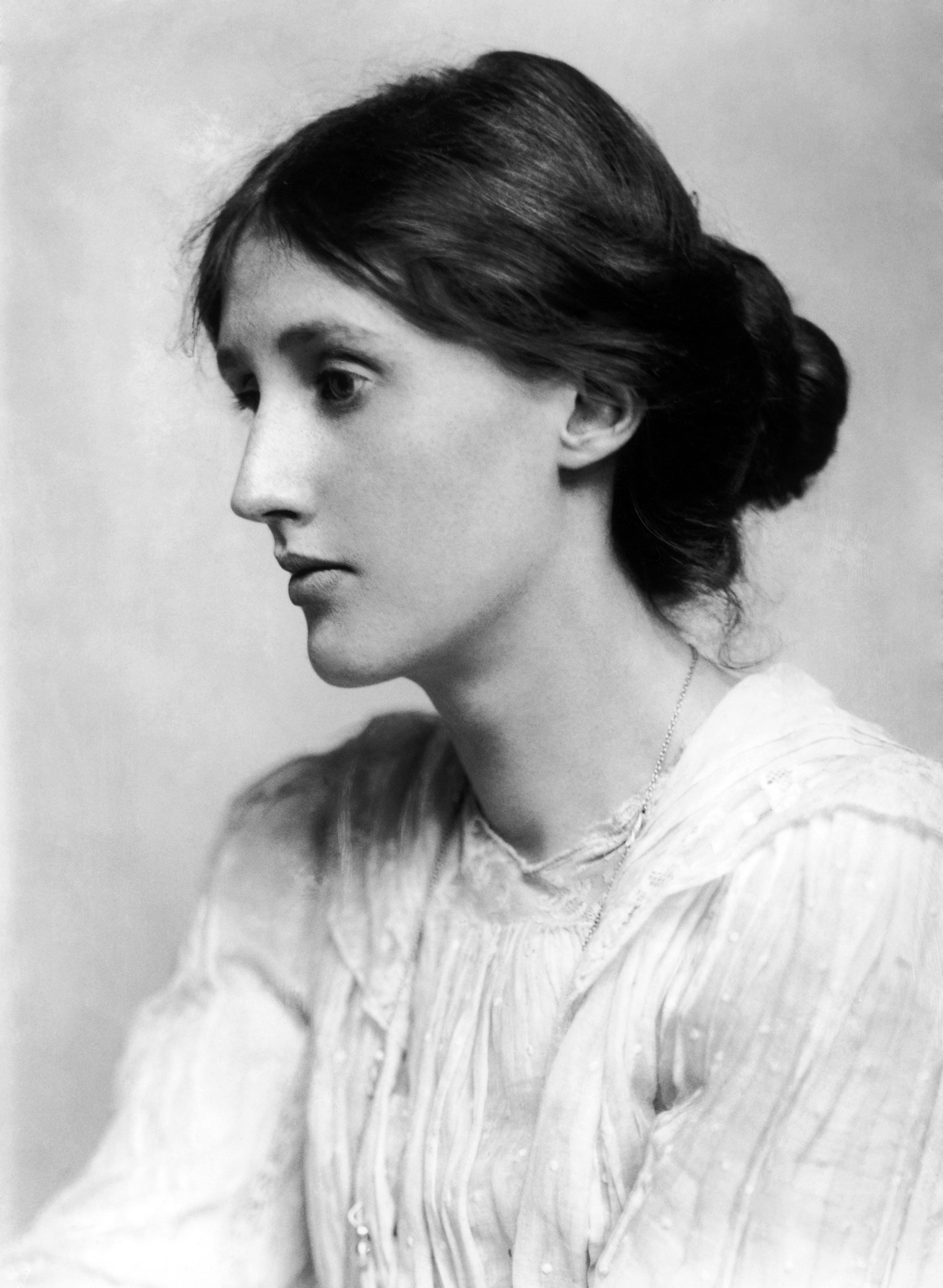
Virginia Woolf. Portrait by George Charles Beresford, 1902. Source: Wikimedia Commons. Click here for high-resolution version.


We live in an era in which privilege and wealth are squandered on obscene levels of consumption and on domination and destruction — of institutions, of norms of justice and fairness, of ecosystems, of all the fragile things that we all hold in common. Things have not always been that way. Once upon a time, privilege could be used to build and sustain a shared culture, not to strip-mine it or to burn it all down, to strengthen institutions rather than to reduce them to instruments of profit and power.

What happened?

Watching the 2022 film “Benediction” left me very curious about the life of English poet Siegfried Sassoon (1886-1967). That curiosity led me to a long biography of Sassoon (526 pages) by Jean Moorcroft Wilson published in 2003. I had expected that this book would become more a reference than something to read cover to cover, because the biography is a who’s who of an important period in English literature.

That’s the period of the Bloomsbury Group — Virginia Woolf, E.M. Forster, John Maynard Keynes. Even more important (to me) than the Bloomsbury Group were the Inklings, of which J.R.R. Tolkien and C.S. Lewis were core members.

I find that I have continued to work my way through this biography of Siegfried Sassoon because so much of what’s intriguing is how these privileged people, who didn’t have to work, used their time. It was very different from how privileged people use their time today. Back then, privilege could be used to buy time, learning, and the freedom to take intellectual and moral risks.

Yes, much of that time was used for a constant, and sometimes exhausting, stream of socializing, some of it superficial. But it also meant that they met a great many people, and sometimes lasting friendships developed — Virginia Woolf and Lytton Strachey, E.M. Forster and Roger Fry, Siegfried Sassoon and Robert Graves, T.S. Eliot and Ezra Pound, Ernest Hemingway and F. Scott Fitzgerald, Gertrude Stein and Alice B. Toklas, William Faulkner and Sherwood Anderson, J.R.R. Tolkien and C.S. Lewis. That kind of time and friendship did not exist in a vacuum. It was protected and made possible by institutions, especially the universities.

Another factor that stands out is how the privileged today and the privileged then used the great universities. Today the privileged use the universities to leverage their privilege to gain more money and more power — finance, law, and tech. Back then, two universities in particular — Oxford and Cambridge — were like engines that converted privilege into culture. Today, degrees in the humanities are at risk of going extinct, while universities are increasingly pushed toward creating wealth.

These failures amplify one another.

At the same time as the privileged few have become cultural toxins rather than cultural creators, the gap between the haves and the have-nots has grown ever greater. Back then, a D.H. Lawrence, who was the son of a coal miner, could find a path to recognition through hard-won education and patronage. Today, millions of families can’t afford to feed their children, let alone educate them or give them the time and the tools to develop their human potential. While the privileged run wild, the unprivileged never have much chance of coming to understand the causes of their condition or learning how to work together to do something about it. Nor do the privileged want them to understand the causes of their condition or to learn how to work together to do something about it.

For all their anger and discontent, the writers and artists of the early twentieth century still imagined better worlds, whereas our own moment seems preoccupied with just avoiding catastrophe. Dystopias make good literature (and movies) today, and for good reason.

I ask myself where the connections are between privilege (and the lack of it) and creating dystopias versus creating a better world. The only idea I can come up with is that the wrong people are running the world to suit themselves, while the rest of us are just trying to get by.

Yes, the writers of the early 20th century were privileged. But they also were builders, and they were on the top layer of their society. They foreshadowed and helped shape the precious few decades of human progress after World War II. Today’s elites are not cultural builders because the systems that reward them no longer value the things that an E.M. Forster, a John Maynard Keynes, or a J.R.R. Tolkien valued.

Privilege once made world-building possible. It was possible to very much like those privileged, world-building artists. Today, the privileged are all about owning the world and making the world better only for themselves. And they don’t have to care whether we like them.

R-r-r-r rumbledethumps


Rumbledethumps. Click here for high-resolution version.

Just as I was thinking about what to cook on a bleak midwinter day, a friend who lives in the south of France (who is Danish but shares my appreciation for British cultures) sent me a link to a YouTube video about making rumbledethumps. So I made rumbledethumps.

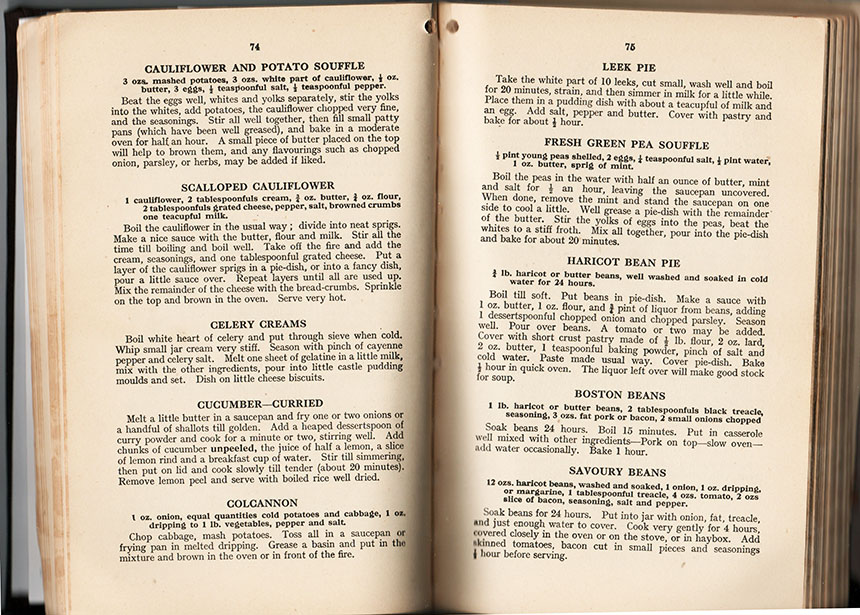
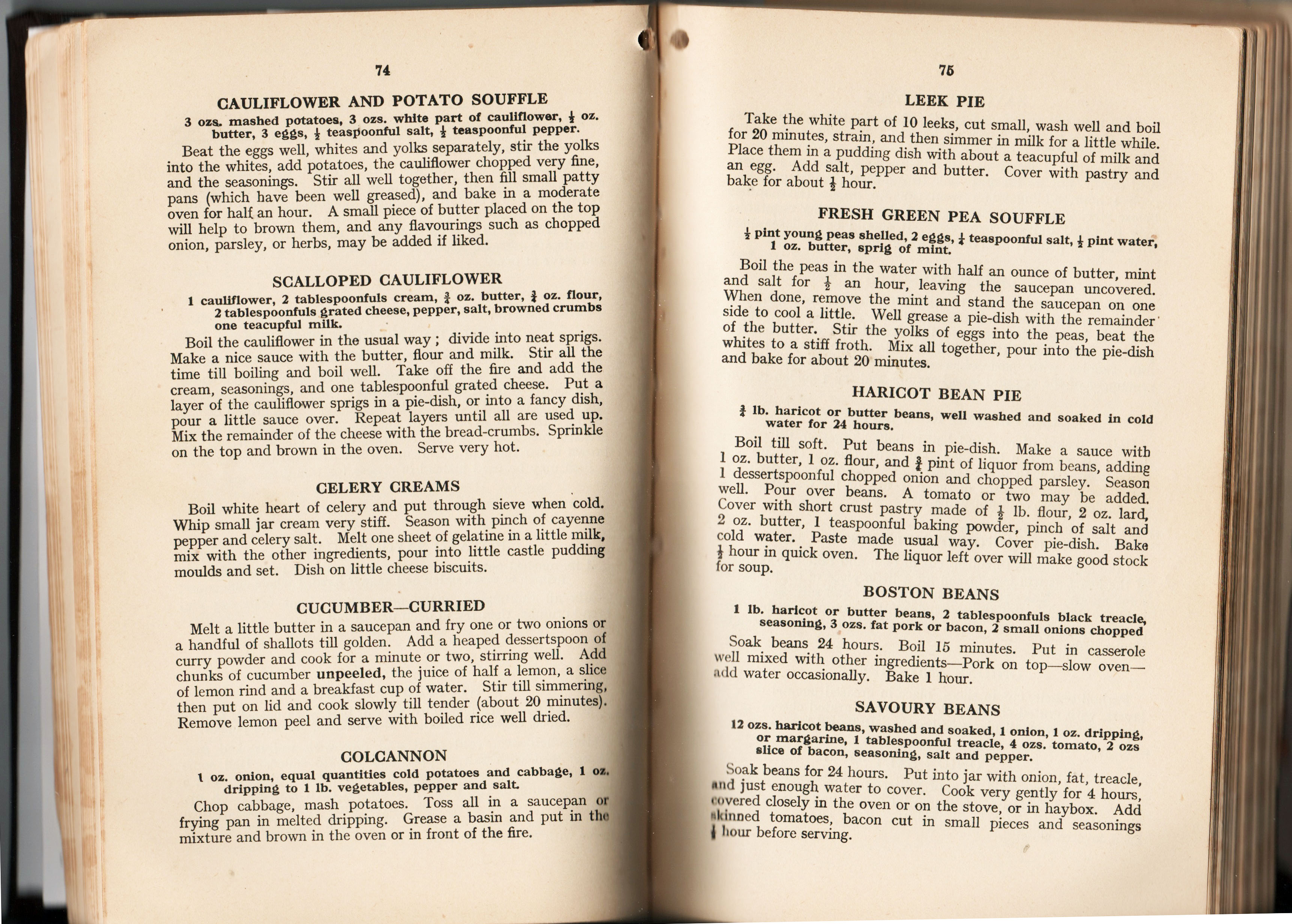
I have only two Scottish cookbooks. One, The Scottish Women’s Rural Institutes Cookery Book, sixth edition, 1948, does not mention rumbledethumps, but it does include a short recipe for making colcannon, which I believe is considered to be the Irish version of rumbledethumps. My other Scottish cookbook, The Scottish Cookery Book, 1956, includes a short reference to rumbledethumps among the potato recipes My guess is that rumbledethumps is so simple and so basic that no one really needs a recipe.


⬆︎ The Scottish Women’s Rural Institutes Cookery Book. Click here for high resolution version.


⬆︎ The Scottish Cookery Book. Click here for high resolution version.

I looked at a number of online recipes for rumbledethumps. Some sauté the cabbage along with the onions to precook it. Other recipes boil the cabbage. I boiled my cabbage to cut down on calories. But I suspect that much of the savoriness of rumbledethumps comes from lots of butter (or drippings) and salt. I used only a little butter and made up for it with olive oil. But in these old recipes, there really is just no substitute for butter (and lots of it), or drippings (and lots of it).

⬇︎ In the video, the cook pronounces the th in rumbledethumps as though it is a t. This puzzles me. ChatGPT says that TH-stopping is a normal feature of Scots. If so, I’ve never noticed it. Notice that he also rolls his r’s sometimes.

I wonder if I could make bubble and squeak from the leftover rumbledethumps.


Ink forever!


Click here for high-resolution version.

Keeping fountain pens in working order makes me realize how much time our ancestors must have spent maintaining their writing instruments. Monks, I believe, used pens made of feathers, reed, or bone. Fountain pens came along in the 1700s. But keeping them in working order still would have been a regular chore.

Eventually just rinsing the fountain pen’s parts aren’t enough to get the ink to flow again. The pen needs to be soaked to get the dried ink out.

The Epstein files

If you try to zoom out and consider the Epstein files from the planetary level, what do you see?

What I see is a global ultra-rich ruling class like nothing the world has ever seen before. The French Revolution was just a tempest in a teapot by comparison — one small country, with power so fragile that they all lost their heads in a few short years.

Oxfam says that the global top 1 percent possess more wealth than 95 percent of the world’s population. How did that happen? And it’s not just money and property that they own — it’s power, and entire governments. It’s probably safe to say that the top 1 percent also own more power than 95 percent of the world’s population.

No doubt they get away with 95 percent of their crimes. They’re used to that. They count on it. The Epstein files are a test of whether they can get away with crimes (and the cover-up of those crimes) that are so abominable that even the deplorables — who normally admire right-wing power — aren’t willing to ignore it.

The other thing is that, for all their money and power, they are pathetic, greasy, ugly little worms who buy young bodies to help enable their denial that they’re old and utterly undesirable, and that, without their money and power, they have less going for them than most of the homeless people living on the streets of San Francisco.

This is the story of our times, and the ball is in our court. How long will 1 percent of the global population be able to treat the rest of us like property? No guillotines would be needed. Just tax them to death.

The right-wing rage machine is sputtering


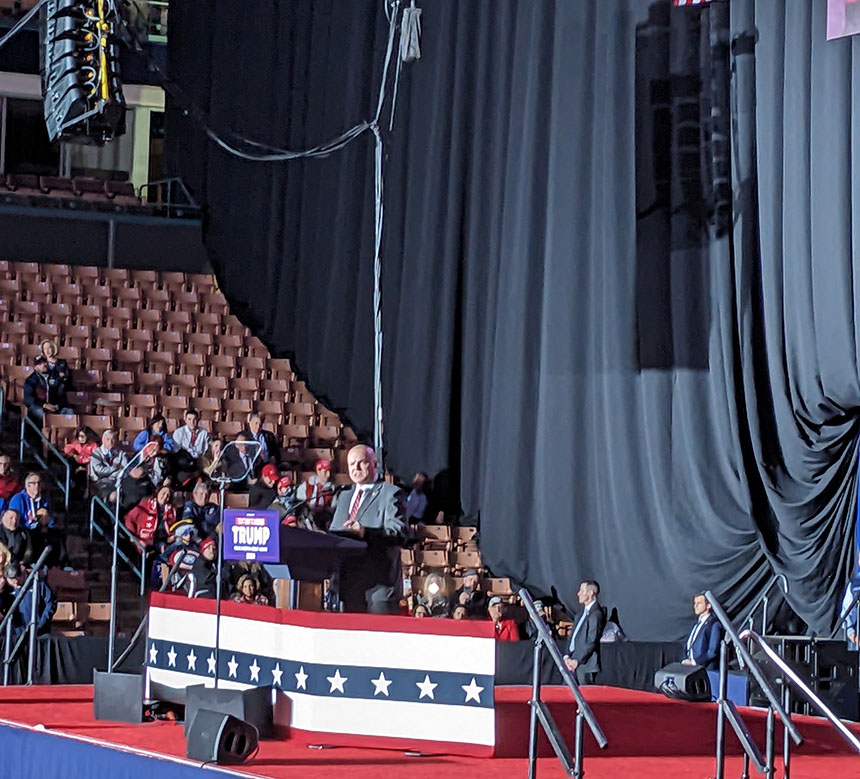
Trump rally, Manchester, New Hampshire, January 2024. Source: Wikimedia Commons.


The fuel that sustains MAGA is right-wing rage. When right-wing propaganda can’t deliver enough rage, Trump’s popularity and approval ratings drop. Fox News viewers in the age 25 to 54 bracket were down 61 percent in November 2025 versus November 2024.

The job of the right-wing media is to constantly fuel the rage and demonization that it directs at anyone who stands in the way of the right-wing agenda. No ugliness is too ugly, and no lie is too great, if it generates rage. The corrupt moral nature of right-wing rage is such that it now even teaches that empathy is morally dangerous. That is, empathy for friends and family is virtuous. But empathy toward the wider world, because it leads to concerns about equality, fairness, and equal justice, is the very moral snare that liberals fall into. And liberals, of course, are evil.

But liberals are now out of power. Generating right-wing rage was easy when there were liberals with power who could be demonized — Barack Obama, Hillary Clinton, Joe Biden. But a movement built on manufactured partisan rage runs out of fuel when the enemy disappears from view.

Some blame “outrage fatigue.” I don’t think that’s it. MAGA types are energized by rage rather than tired by it. Rather, this is a serious propaganda problem. If Democrats are powerless, then whom is the movement fighting? If Republicans control government, then why is life not magically improving? If Trump is president again, then why aren’t we great again? Without Democrats to blame, the rage machine becomes an ouroboros — a snake eating its own tail in search of the emotional intensity that its propaganda can no longer produce. The movement is starting to fragment as leaders who are addicted to rage and the politics of rage inevitably turn on each other.

Trump’s decline in approval ratings is partly emotional. Trump no longer provides the catharsis that MAGA types felt during the fuck-your-feelings and liberal-tears days. Trump is yesterday’s rage, warmed over, feeble, and increasingly unappealing.

None of this bodes well for MAGA’s future. But Republicans continue to have an enormous amount of power, and they will not hesitate to use it. They have two kinds of options. They can try to stay in power illegally with most of the country against them. Or they can smash a lot of furniture in an attempt to generate new themes of hysteria, rage, and fear that they hope will help them. They probably will do both.