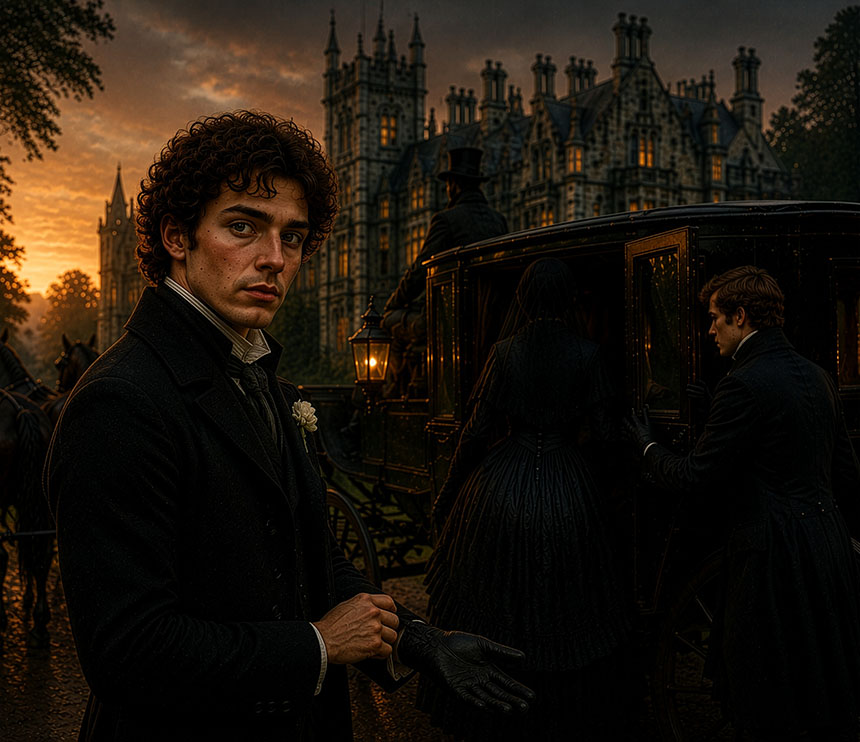
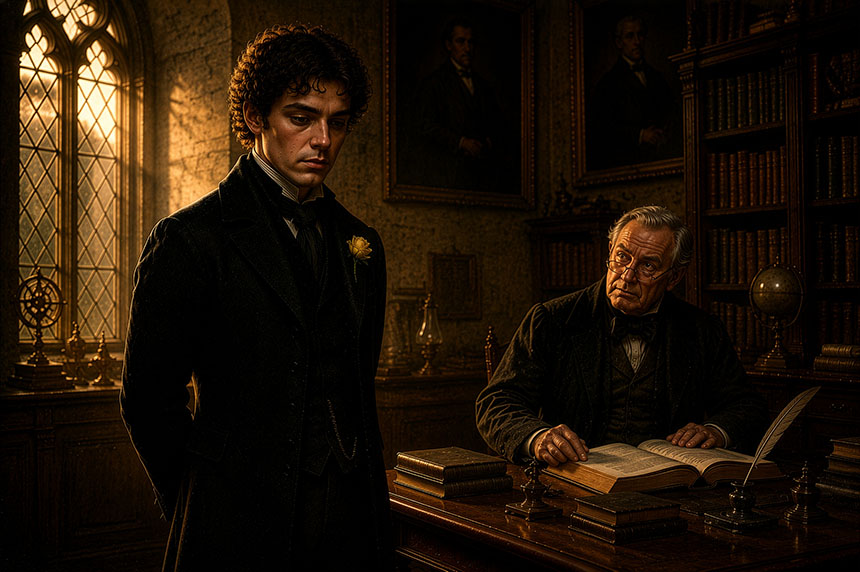
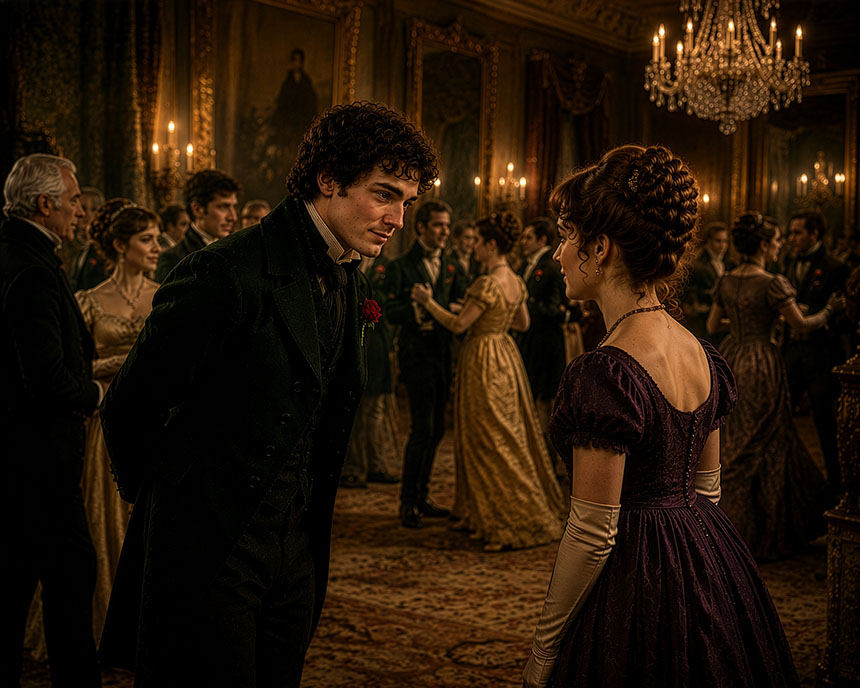
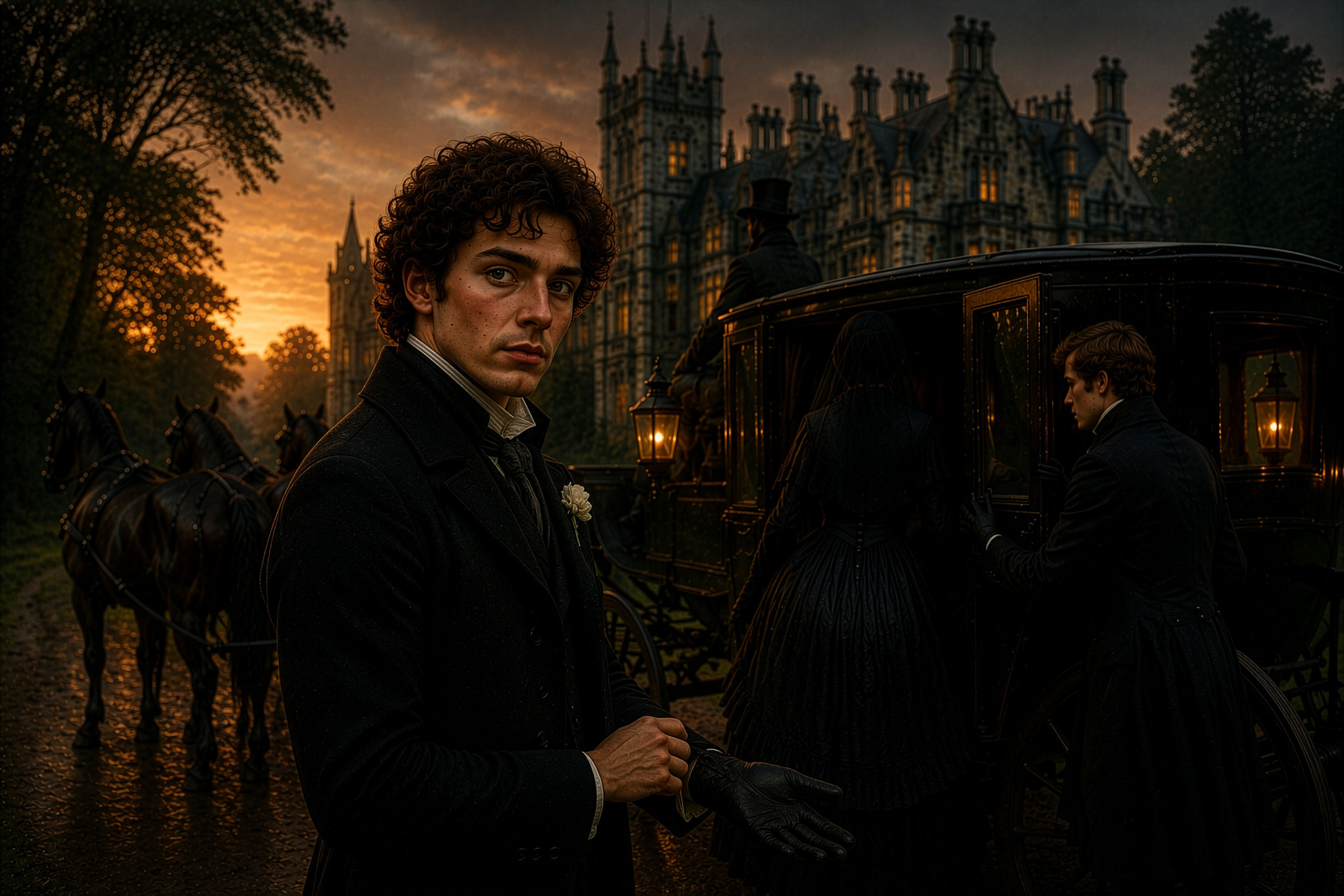
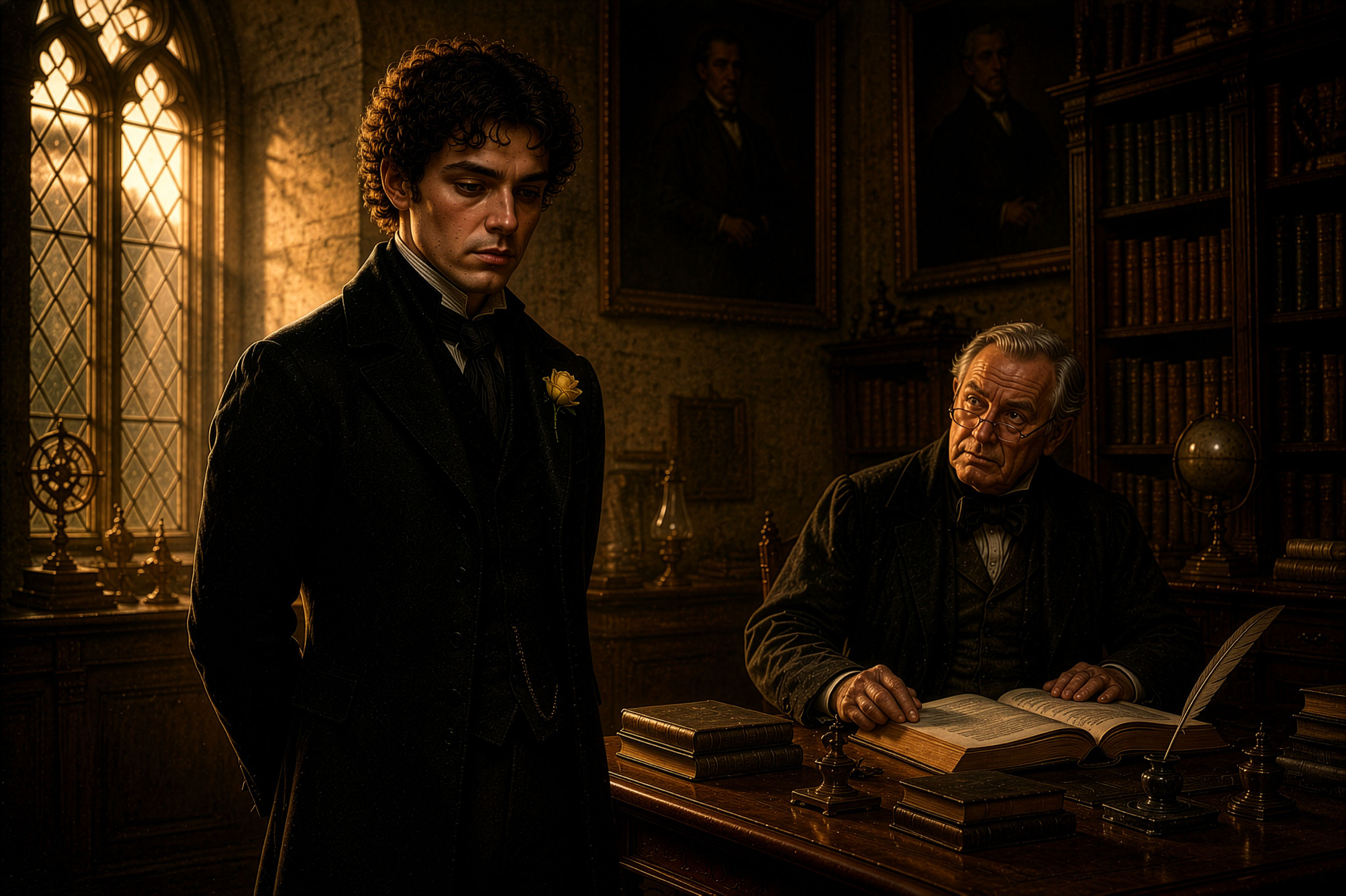
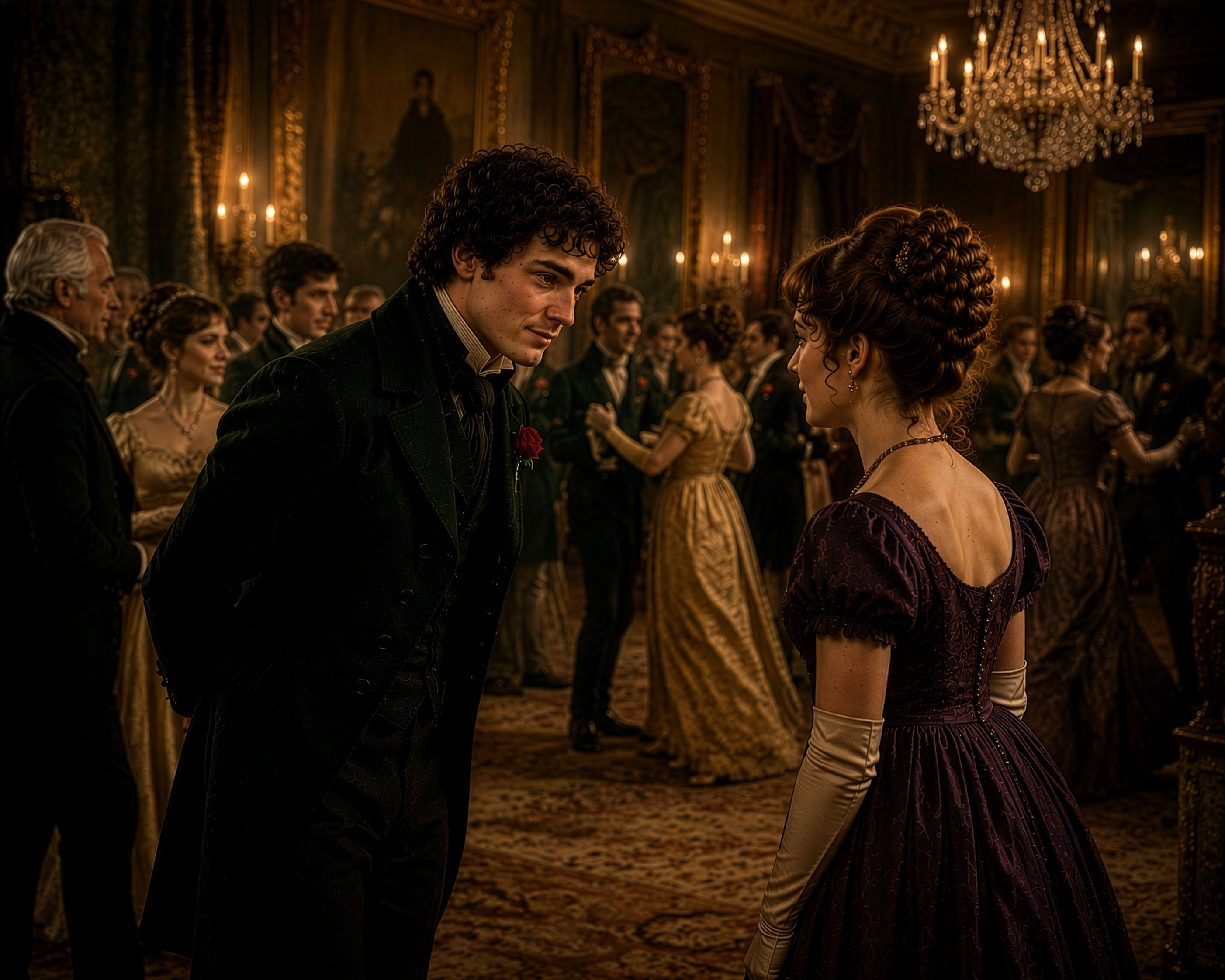
Reginald at Grypherwast Hall. Images by GPT 5.5 based on my imagination of scenes from the novel. Click here for high-resolution version.
Reginald Dalton. John Gibson Lockhart, William Blackwood, Edinburgh, 1823. Three volumes, 1,028 pages.
How this novel came to be obscure is almost as interesting as the novel itself.
John Gibson Lockhart was the son-in-law of Sir Walter Scott. Lockhart was by no means an obscure writer. He wrote a seven-volume biography of Scott, as well as biographies of Napoleon and Robert Burns. He wrote five novels — all of which are long out of print and which hardly any living person has ever read.
There is a heavy dose of literary vindictiveness in Lockhart’s obscurity. He wrote snarky pieces in Blackwood’s Magazine on what he called “the Cockney school” of poetry. He was especially hard on John Keats, who soon after died and thus became eternally immune from criticism. Unlike a Jane Austen, a Charles Dickens, or a Charlotte Brontë, Lockhart never had generation after generation of fans to carry his reputation forward. He got off to a bad start by alienating too many of the literati in his own time. Reginald Dalton has been out of print since 1825. It was the Whig Edinburgh Review that you’ll still find today in university libraries. Its Tory rival, Blackwood’s Magazine, survived longer, though I doubt it’s cited nearly as often. It was Blackwood, of course, that published Reginald Dalton.
I hope I haven’t frightened any fellow liberals away from reading this novel. The Tories of that time were elitists, no doubt. But they were fully on board with the Enlightenment.
Perhaps another reason that Lockhart has been neglected is that, unlike more popular 19th Century writers, he was not a social critic. Rather, he was a Tory in a literary world of Whigs. No doubt he was a bit of a snob. But Reginald Dalton is almost certainly an accurate depiction of social life in some circles at that era — particularly Oxford, but also London, Edinburgh, and rural Lancashire. Come to think of it, Lockhart’s Oxford is not always the nicest of places, though it’s always picturesque, and the food and drink must have been some of the best in England.
To my judgment, it’s a brilliant novel with a great plot, excellent dialogue, and very cinematic scenes. In many ways, it’s a Jane Austen with a male protagonist — a humble vicar’s son who has been cheated out of his proper inheritance, Grypherwast Hall. Reginald Dalton is sometimes called the first Oxford novel. Reginald gets into a lot of trouble at Oxford, trouble that he often enough makes for himself but which also is the work of the novel’s villains.
The novel’s long and complex sentences, the Scots dialogue, and the untranslated Latin, French, and Greek are a challenge to modern readers the same way Sir Walter Scott’s novels are a challenge to modern readers. But, with some patience, it’s all surmountable, and very rewarding. The good characters are endearing, and the villains very human. The Wikipedia article calls the novel a comedy. That only shows how little anyone knows this novel anymore. There are some funny scenes in which a carriage collides with a turnip cart, and a London dinner party which erupts into pandemonium when an heiress is discovered to have eloped. But Reginald Dalton is not a comedy. I hope that someone at the BBC discovers this novel and sees what a fine mini-series it would make. All the right ingredients are there.
My micro press, Acorn Abbey Books, is working on a new edition of Reginald Dalton using text recovered from the 1823 first edition. I hope to have that book in print by July. The book’s length, and the challenge of recovering text from a 200-year-old book, have taken some time.
Hi David
Will you be updating to modern English in your translation? Just curious.
It takes a lot to read old English books – which I have tried a few times to no avail.
Regards
Henry
Hi Henry … I’m afraid not. I’ve aimed for 100 percent fidelity to the 1823 first edition.