Spring fever

R-spring-fever
Picking up rocks in the garden

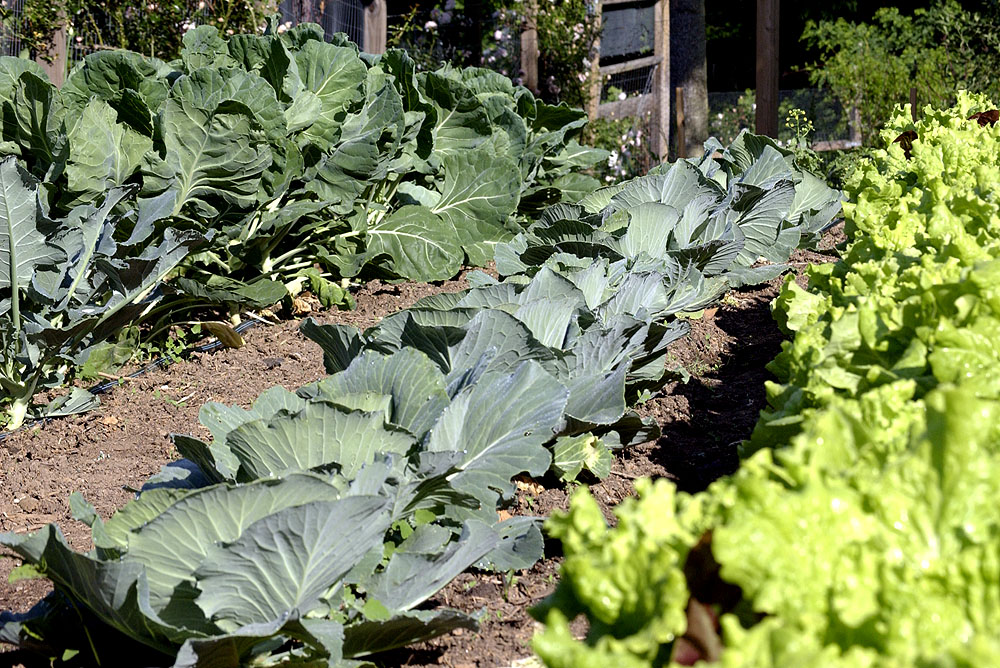
Winter’s back is broken. The temperature today reached 68 degrees. The daffodil shoots are a couple of inches high. While I have been recovering from minor surgery, Ken has a serious case of spring fever. This morning he washed all the windows, inside and out. Then we measured for an extension of the chicken fence into the woods, to give the chickens more scratching space and more summer shade. Ken wrote up a list of spring chores, including seeding and fertilizing the yard and orchard, mulching, and getting the spring garden planted. We’re a little late with pruning the apple trees. That needs to be done this week. The seeds for the spring garden have been ordered.

It was a harsh winter. Several times the temperature dropped as low as 4F. Most winters, the grass retains a strong tinge of green, but this winter everything went brown. The current generation of chickens (there are six of them) are the fiercest scratchers we’ve ever seen. They were damaging the turf in the orchard, so we allowed them only in the garden for most of the winter, where they could do no permanent harm to dormant growing things other than the garden’s cover crop of winter rye. Between the cold and the constant digging of the chickens, not a single sprout of the winter rye in the garden seems to have survived.

One couldn’t possibly have too much pasture for chickens. When growing conditions for grass are good, the grass can stay ahead of the chickens. But the girls can make a big mess of things in the winter. Luckily our chickens can be restricted either to the orchard or to the garden, with the chicken house in the middle. That saved the turf in the orchard this winter. The plan now is to add several hundred square feet of fenced area inside the woods.

When you’re committed to your chickens, the labor never ends. Partly this is because chickens become part of the family. And partly it’s because, once you become accustomed to home-laid eggs from properly pastured hens, there is no going back. No matter how much you’re willing to spend on eggs at places like Whole Foods, there is just no comparison.

Revisions done! Proofing again…

R-fugue-2nd-proof

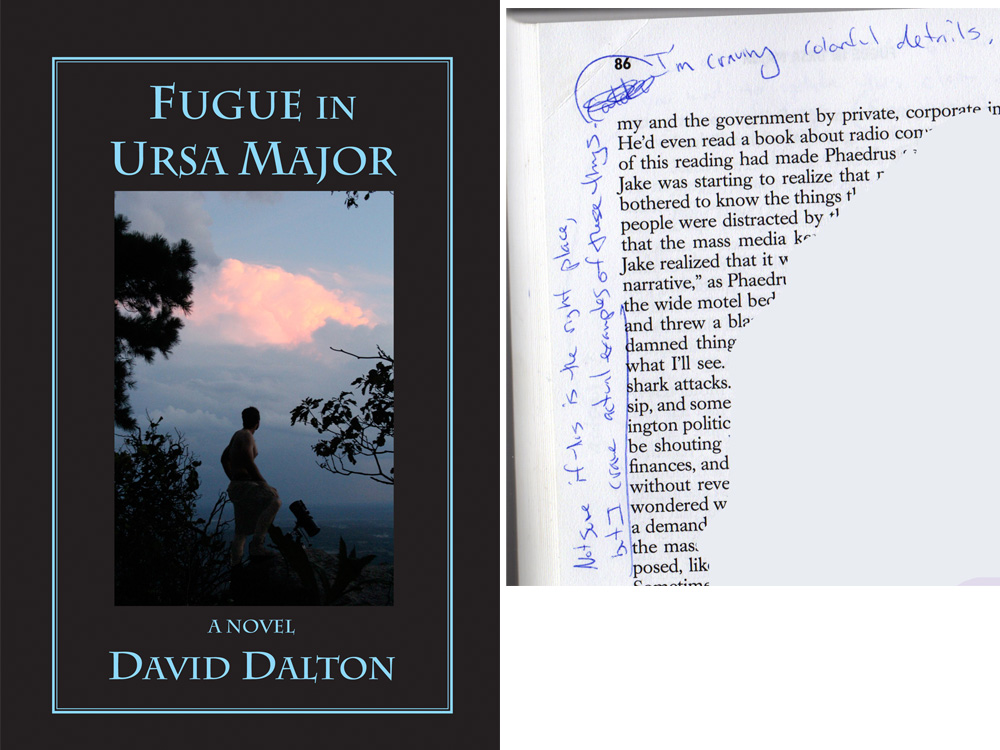
New proofs of Fugue in Ursa Major arrived today. This is the second proof set. Revisions after the first proof set were substantial, adding a couple of months to the production schedule.

However, I think the revisions have made it a much better book. Three chapters were completely rewritten. There are character and plot refinements throughout. To quicken the pace in the second half of the book, the revised version is almost 50 pages shorter. Still, at 300 pages and 94,000 words, it’s not exactly a short novel.

Ken Ilgunas gave me such good feedback on the first proofs that I asked the other first readers to stop reading and wait for the next revision. An author’s first readers are absolutely critical to the creative process. It requires experienced readers who can be good judges of the kind of story the author wants to tell. They mustn’t mince words when giving feedback. It can be like a kick in the stomach.

Fugue in Ursa Major is a pretty smart book, if I do say so myself, so smart first readers were a requirement. Though a lot of things happen in Fugue in Ursa Major, it’s not really intended to be action-packed science fiction. The book has strong contemplative, historical, and speculative elements that emerge during conversations between the two main characters, Jake and Phaedrus. Hopefully, Fugue in Ursa Major will be a brisk ride. But the heart of the book is in the lives of the characters. If Fugue in Ursa Major attracts enough readership, there will be a sequel. At the end of Book One, Jake and Phaedrus are just getting started with the world-changing task that has landed in their laps.

If all goes according to plan, the book should go on sale in March. There will be a trade paperback version, a Kindle version, and an Apple iBook (ePub) version.

Welcome back, Mrs. Fox?

fox-1

When I first saw this fox this morning, she was sitting in the yard right below an upstairs window. By the time I grabbed the camera, she had headed into the woods. The photo was taken from the upstairs window. Two summers ago, a fox raised two pups at the edge of the woods right behind the house. I hope she’s back. They never harmed the chickens. We had a deal.

Sappho

sapho
Le Coucher de Sappho by Marc-Charles-Gabriel Gleyre

I have been besotted with the ancient Greeks of late, working my way through the magisterial The Greeks and Greek Love: A Bold New Exploration of the Ancient World, by James Davidson. The book is almost 800 pages long, in small type, so it’s a long haul. But I have had more fun with this book than any book I’ve read in months. Davidson is an Oxford-trained historian, but he writes with wit and humor. His approach is anything but dry. And rather than merely throwing out his analysis with a haughty academic attitude of take it or leave it, Davidson takes us into the texts. He lets us see for ourselves the basis of his interpretation of Greek history. We meet hundreds of characters from all over the Greek empire. He retells hundreds of stories from classical Greece. By the end of the book, you feel as though you’ve been on vacation in ancient Greece, and you’ve picked up a surprising amount of Greek vocabulary.

Thanks to Davidson, I also have discovered the poetry of Sappho. Right away I saw that she was the Greek Edna St. Vincent Millay. Here’s a fragment, translation by A.E. Housman:

The weeping Pleiads wester,
And the moon is under seas;
From bourn to bourn of midnight
Far sighs the rainy breeze:
It sighs from a lost country
To a land I have not known;
The weeping Pleiads wester,
And I lie down alone.

The rainy Pleiads wester,
Orion plunges prone;
The stroke of midnight ceases,
And I lie down alone.
The rainy Pleiads wester
And seek beyond the sea
The head that I shall dream of,
And ’twill not dream of me.

What is sad is that very little of Sappho’s poetry remains. She was born around 600 B.C., but most of her work survived until Roman times. Then Sappho’s work was at the mercy of the Christians. It seems there were book-burnings. The church was redefining love according to its own brutally prudish theology, so these ancient ideas had to go. But it was not only an active purging of the literary record by the church. It also was neglect of those documents that survived and found their way into monastery libraries during the Dark Ages. Davidson tells us how this neglect probably happened:

“Time and again, a manuscript of Sappho’s songs or of Strabo or of Archimedes, one of only two or three copies in the world, or one of only one, was allowed to rot in the book box, while the scribe spent his precious hours making yet another copy of the painfully awful Greek prose of the evangelists. Or worse, the priceless thousand-year-old text was systematically erased and overwritten to make a private copy of the more polished pieties of some bestselling Christian sermonizer.”

It’s a pity that the sermons weren’t burned instead.

E-sappho-fragments
Fragments of a Sappho poem discovered and published in the 20th Century

Don’t let them deter you: connect the dots

R-conspiracy-cover

I am in the thick of revisions in Fugue in Ursa Major. A couple of days ago I was working through a section in which the story’s young hero is trying to figure out what the hell is going on in the world. He sees some strange things, but he doesn’t know what it means. He realizes that if he paid attention only to official sources of information, or to our crappy media, he’d never know what’s really going on. So he tries to study up on the science of intelligence analysis and connect some dots.

In this section of the book, I went on for several pages with my own ideas about acting as our own spies and how we might go about doing this. I included a pretty bitter indictment of the failures of our media and the swamp of propaganda and distraction in which we all must operate.

Months after I wrote this section of the book, I got a copy of the recent book Conspiracy Theory in America by Lance deHaven-Smith. My own thinking and my own critique of our contemporary information environment are so much like deHaven-Smith’s that you might think I cribbed those ideas from deHaven’s book. But I didn’t.

Here’s a quote from the jacket copy of deHaven’s book:

Conspiracy Theory in America investigates how the Founders’ hard-nosed realism about the likelihood of elite political misconduct — articulated in the Declaration of Independence — has been replaced by today’s blanket condemnation of conspiracy beliefs as ludicrous by definition. Lance deHaven-Smith reveals that the term “conspiracy theory” entered the American lexicon of political speech to deflect criticism of the Warren Commission and traces it back to a CIA propaganda campaign to discredit doubters of the commission’s report. He asks tough questions and connects the dots among five decades’ worth of suspicious events. … Sure to spark intense debate about the truthfulness and trustworthiness of our government, Conspiracy Theory in America offers a powerful reminder that a suspicious, even radically suspicious, attitude toward government is crucial to maintaining our democracy.

Now the reaction of a smart person to this proposition might go something like this: OK, but how do you distinguish between the crazies and their crazy conspiracy theories and the process of diligently trying to connect the dots?

I think the answer to that is pretty easy. Crazy people aren’t trying to understand what’s really going on in the world. Far from it. Rather, they have an ideological agenda, and they’re trying to make the real world conform to the craziness inside their own heads. Often this is religious craziness. Almost always it’s some kind of ideological craziness. And the crazy kind of people aren’t being diligent and scientific at all. They’re dishonest, stupid, and credulous.

But we aren’t like that are we?

Writing Fugue in Ursa Major required quite a lot of research. Though the story begins in the here and now, I have a lot to say about the past and how the world came to be the way it is today. In particular, I’m concerned with the history of classical Greece, the rise and fall of Rome, and the beginning of the Dark Ages. I’m no scholar, but this kind of research actually is a lot of fun to do. When, in the novel, my characters talk about how the world used to be, I want their thinking to be plausible and academically defensible. For that reason, I don’t mess around much with popular histories. I read the academic stuff. So, when you read Fugue in Ursa Major, you may wonder at times, “Was it really like that back then?” And my response would be, “To the best of our knowledge, yes it was.”


Conspiracy Theory in America, by Lance deHaven-Smith. The University of Texas Press, 2013. 260 pages.

Drug store lunch counter

A-lunch-counter

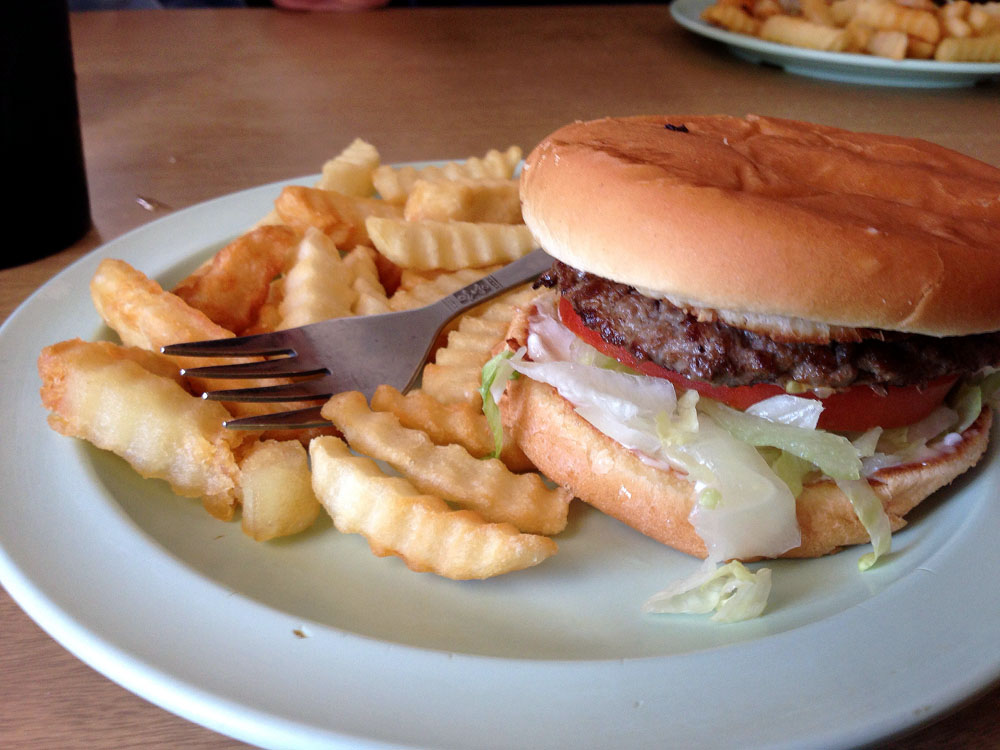
I thought that all the old-fashioned drug store lunch counters had closed long ago. But I discovered today that there’s one in Walnut Cove at Hick’s Pharmacy. It’s called the Red Rooster. I asked one of the women who works there why there is no sign out front. She said there is — the red rooster logo. I guess all the locals knew that. And now that I know, I guess that makes me a local too. As far as I know, Hick’s Pharmacy is locally owned and not part of a chain. So that’s where I’ll do business hereafter.

Today’s lunch special was pinto beans, slaw, and corn bread for $4.50. I had it with onions.

A-red-rooster

Fugue in Ursa Major: delayed by revisions

revisions-computer

In retrospect, I was way too optimistic in thinking that Fugue in Ursa Major would be ready to go on sale last month. The feedback I got from some of my first readers was very good and very intense. That left me with a good bit of thinking to do. Still, progress is being made, and I’ll have a new estimate on a new publication date as soon as possible.

Rocking chair rehab

A-rehab-4

I apologize for going so long without posting. I’ll blame it on the weather — first freezing cold, with some water problems, followed by heavy rain. January has been dreary so far.

But today was fairly nice, and Ken got started on a project that I’m happy to see come up in the queue: the rehabilitation of the rocking chairs. I bought the chairs as a gift for my mother some years ago, and she gave them back to me when I moved back to North Carolina. The chairs are classics, made by the P & P Chair Company, the original maker of the Kennedy Rocking Chair. You can still buy these chairs, and they’re very pricey. Mine have been sitting on the side porch for five years, and the weathering had taken its toll.

I did not like the original finish on these chairs. It was that plastic-skin finish that everything seems to have these days. The finish does not soak into the wood, and over time it peels off in tiny flakes, leaving the wood unprotected.

Ken’s first step was to sand the chairs. That left the chairs with a silvery-gray patina that is quite beautiful. The next step will be to apply a new finish. We’ve chosen a deck stain, because it’s the kind of finish that goes on thin and soaks into the wood. And of course it’s a finish designed for protecting wood that is exposed to the weather. I’m hoping that it will protect the chairs better than the original finish.

And whose knows. After the finish is dry, the chairs may come indoors and sit by the fireplace for the rest of the winter. Life is hard for porch chairs.

In the photos below, the new finish has not yet been applied.

A-rehab-1

A-rehab-2

A-rehab-3

kennedy-in-rocker

Rainfall for 2013: 69.2 inches

rain-gauge-1
The abbey has a new rain gauge accurate to 1/100th of an inch

Some parts of North Carolina have set records for rainfall this year. Acorn Abbey’s gauge has recorded 69.2 inches.

The breakdown by month:

January: 10.15
February: 3.8
March: 3.75
April: 5.4
May: 5.1
June: 8.9
July: 11.825
August: 5.85
September: 1.7
October: 1.35
November: 4.875
December: 6.6

The normal rainfall here is about 44 inches per year, so this has been an exceptional year. I’m thinking that a pattern is emerging for this area — that in years in which La Niña is not active, rainfall is generous and may well be trending upward, as is predicted in most models of climate change for this area. In La Niña years — curse La Niña! — all bets are off. La Niña summers have been wretchedly hot and dry.

rye-grass-1
The winter rye in the garden got a poor start because September and October were unusually dry. But it’s coming along and should make the chickens very happy this winter.