Dreaming of a local economy

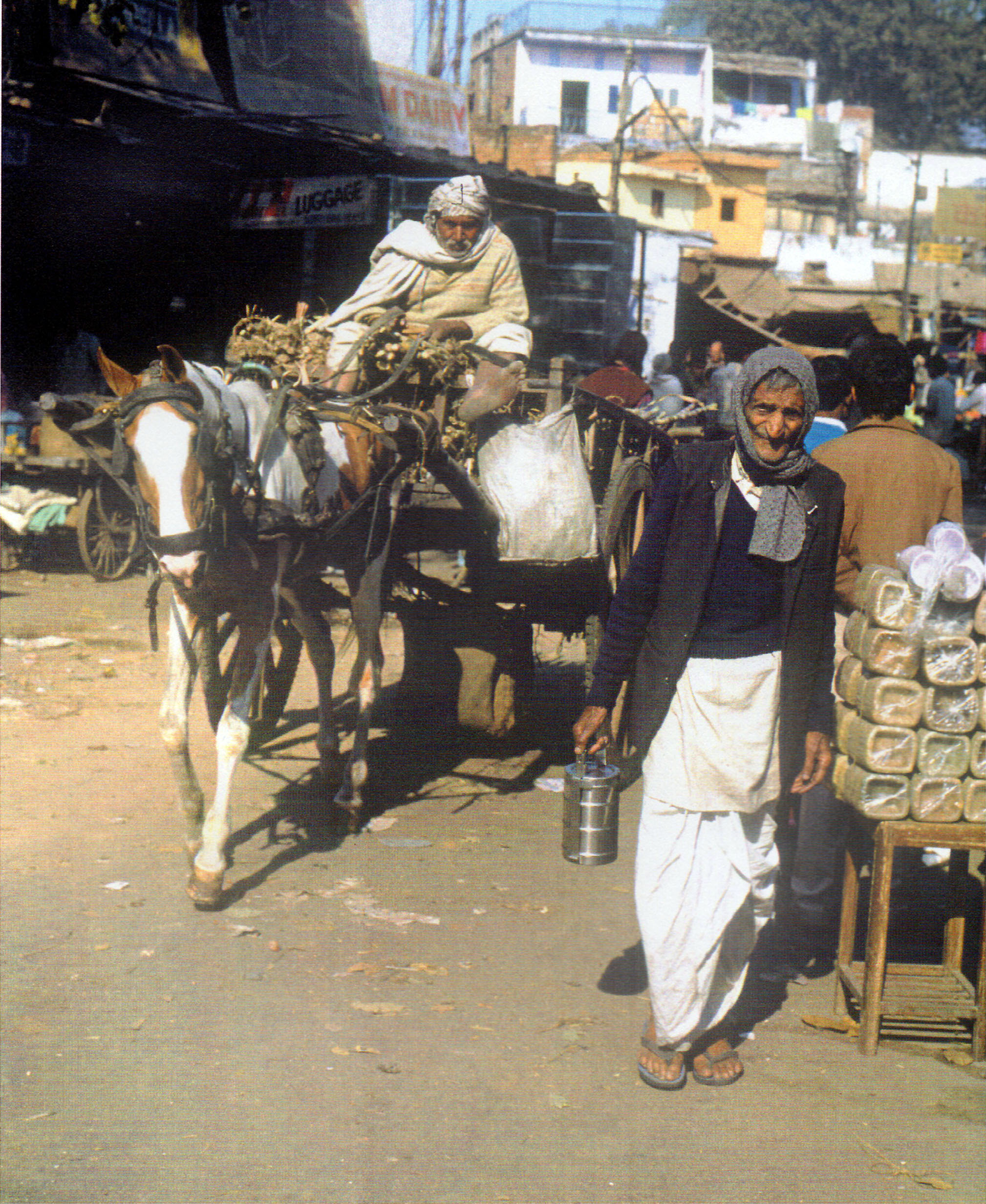
Recently, while rummaging in an old cedar chest that was being moved to the attic for storage, I came across my photographs from a trip to India in December 1994. The photo above particularly catches my eye. I took the photo in the Main Bazaar of Delhi’s Paharganj district (which is just across from the train station and a short tuk-tuk ride from Connaught Place). It’s interesting to look at what the photo says about India’s economy (which I suspect hasn’t changed all that much since 1994).

Notice how skinny the horse is. Animals don’t have very good lives in India. Look at the horse’s harness. It’s well used, but it appears to be of good quality. Look at the wagon. It has big wheels and rides high. It must have been built for bad roads, roads that probably are very muddy in monsoon season. It could be firewood on the wagon, but it also could be roots that are used for some purpose — maybe seasoning, or medicine. I tend to doubt that it’s firewood because it’s all so small. There is no shortage of big trees for firewood, even around Delhi. Notice that the man’s feet are bare. My guess would be that the man driving the cart has driven the cart into Delhi from some nearby rural area, for the purpose of selling these roots. Notice the bags hanging on the wagon. I have no idea what’s in them. Though the man is poor, he owns a horse and wagon. For a person of his caste, that’s probably a big deal.

Now look at the man carrying the stainless steel cylinder. What do you suppose is in the container? I’d guess milk, or maybe oil, but of course I don’t really know. The man is wearing a white apron. I’d guess that he is a vendor in the marketplace, that he sells food, and that the cylinder contains one of the ingredients that he uses to make whatever food he cooks and sells in the bazaar. [Update: See comments. A reader has identified the container as a tiffin.]

Notice the table in the far right of the photo with the bags of merchandise stacked on it. If you buy food in the marketplace, you see what those things are for. They’re little plates, and they’re made from leaves that are somehow pressed into bowl shape, using some sort of low-tech manufacturing process. My guess would be that it’s done with steam and some sort of press.

You can buy all the necessities of life in New Delhi’s Main Bazaar. It has been 25 years since I was in Delhi. At the time, there was no sign of any corporate presence in the bazaar. It was all local enterprise. It’s a beautiful economy, actually. It’s a subsistence economy, but you can buy everything you need to live. For the sellers, it’s a livelihood. It’s all local. I don’t remember even seeing any trucks in the market. It was mostly human and animal traffic.

All markets in all places surely pass through this level of development. When, do you suppose, did we leave that behind here in the United States? Clearly, in 18th Century America, our markets operated at that level. Here, for example, is an article on market days in colonial Williamsburg. My guess is that, even in the 19th Century, we Americans were moving more toward a store-based, merchant-based economy, with fewer people meeting for market days to trade directly with each other. And, of course, by the time automobiles came into the picture, it was all over.

When I was a child in the 1950s, the rural countryside was dotted with country stores. They largely sold commercial brands, brought to the store by distributors’ trucks. Many of these old storefronts, mostly abandoned now, are still standing, though a few have managed to stay in business.

There has been a major new change in the last 15 or so years, though, brought to us by corporations and globalization. First it was Walmart that started bringing cheap Chinese imports to rural Americans. But now the dollar stores are cutting into Walmart’s business. The dollar stores (for example, Dollar General) are now all over the rural countryside the way the old country stores used to be. The dollar stores, ugly as sin, sell everyday items that cut down on trips to Walmart. I confess I sometimes go to Dollar General stores, when I need something like cat litter or cleaning supplies. Watching people check out is terrifying to me. Many people, obviously, buy their groceries there. They feed their families on food bought at Dollar General. Everything is processed, and there is no fresh food at all. It’s all about carbs and meat and sugar water.

So, who has the advanced economy? My answer would be India, by far! Just think about it. Americans who, relatively speaking, are as poor and low-caste as the man driving the cart in the Delhi bazaar now drive their trucks and beat-up old cars to Dollar Generals, where they exchange the money they got from their degrading corporate jobs for cheap foodstuffs shipped in from the global economy, much of it from China, where it was produced by peasants brought to the city by corporations to work degrading corporate jobs. Corporations do all this, and what enables it is the cheap fossil fuel that makes it economically feasible to ship that stuff halfway around the world. Whereas in the Delhi market, the shipping is limited to the range that a horse and cart can manage.

The poor Americans who work the degrading jobs and who spend half their paychecks at Dollar General (and the other half on cars and gas — Trump voters) seem to never question the insanity of how it all works. They are an incurious and passive lot, as willing to get their religion and politics from dumb-ass country preachers as to get their bread and milk and sugar water at Dollar General. It’s only we liberals who question this corporatization and globalization and who dream of local markets. It’s only we liberals who are horrified at how the Republican Party is doing everything possible to hand everything over for further corporatization, including education. It’s only we liberals to whom the word corporate and corporatized are ugly words. As for the Trump voters, they don’t know what hit them, and they probably never will. They get slave wages for their degrading corporate jobs, and they scrape by, handing their entire income back to corporations for bad food, sugar water, cigarettes, trucks, and gasoline. The country folk could grow their own vegetables, but they don’t. They don’t eat vegetables anymore. They prefer the stuff from Dollar General, which is exactly how the corporations want it.

It’s interesting to analyze my own budget to try to come up with a rough index of how dependent on corporations I am. I’m plenty dependent — we all are. I don’t have a mortgage, or any debt, so the financial corporations don’t get anything out me. In fact, I actually make money off my bank by using a “rewards” card for purchases. I drive a 16-year-old Jeep (though I drive it very little — it’s the abbey’s beast of burden) and a leased Smart car. Because I don’t drive much, and because the car gets about 48 miles to the gallon, the oil companies don’t get much out of me. My total transportation and beast-of-burden cost is significantly less than what Trump voters pay just for their cigarettes. Though property taxes and homeowners insurance are a significant chunk of my budget, most of the money that I pay out to corporations goes for food. Whole Foods gets most of that. Still, most of what we liberals eat comes from smaller farms and smaller companies such as Arrowhead Mills, Hain Celestial, Spectrum, or Eden Organic. I buy only California wines and olive oil. I do not do business with the big agricultural monopolies.

I live in an agricultural county in which, even a hundred years ago, subsistence farming was the rule. The county has not changed all that much (except for the cars and Dollar Generals). The land is sparsely populated, with a sustainable land-to-people ratio. The fields and pastures are still here. Many of the barns are still standing. We could easily provide most of our food, but we don’t. It was in no way necessary for us to turn our basic needs over to global corporations. Why did we do it, while the local fields lie fallow, and the people who could be working the fields are unemployed? Would they really rather fry chicken at Bojangles than grow beans and corn? How I would love to drive a horse and wagon to Danbury once a week to trade with my neighbors! Why don’t we do that anymore? Is there any way to get back to that? I’m a liberal. I dream. If you think about it, my dream is a conservative dream about a past that was better and that we ought to return to. But our politics is as insane as our economy, and so my anti-corporate dream is seen as radical and liberal. Further corporatization is seen as conservative. Go figure.
Local milk!

milk

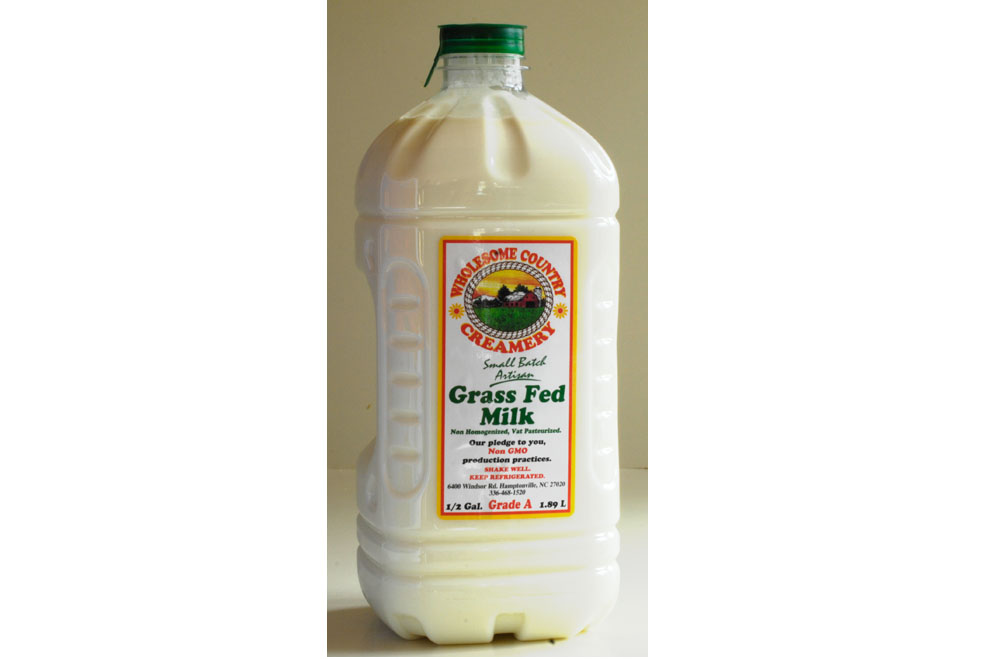
While in the Winston-Salem Whole Foods on Monday, I was pleased to see milk from a local dairy in the dairy case. It’s grass-fed milk, and the dairy is Wholesome Country Creamery in Hamptonville. Hamptonville is in the Yadkin Valley not far from where I grew up.

Not since I was in San Francisco have I been able to buy milk from a local dairy. That milk came from the Strauss Family Creamery in Marin County.

The Winston-Salem Journal did a story last year on Wholesome Country Creamery, which I did not see at the time. It’s an Amish dairy, and the creamery grows all its own feed. The dairy also uses a lower-temperature pasteurization process.

I’m old enough, and my rural roots are deep enough, that I remember when relatives, including my grandmothers, used to keep cows. That’s important, because I remember what milk should taste like, and I will never forget. My grandmother no longer had a cow after the early 1950s, but a few of the neighbors kept cows up until the early 1960s, and we used to buy milk from them.

It’s pricey, but I could get used to local grass-fed milk.

Farms and farmland: What are the trends?

barneys
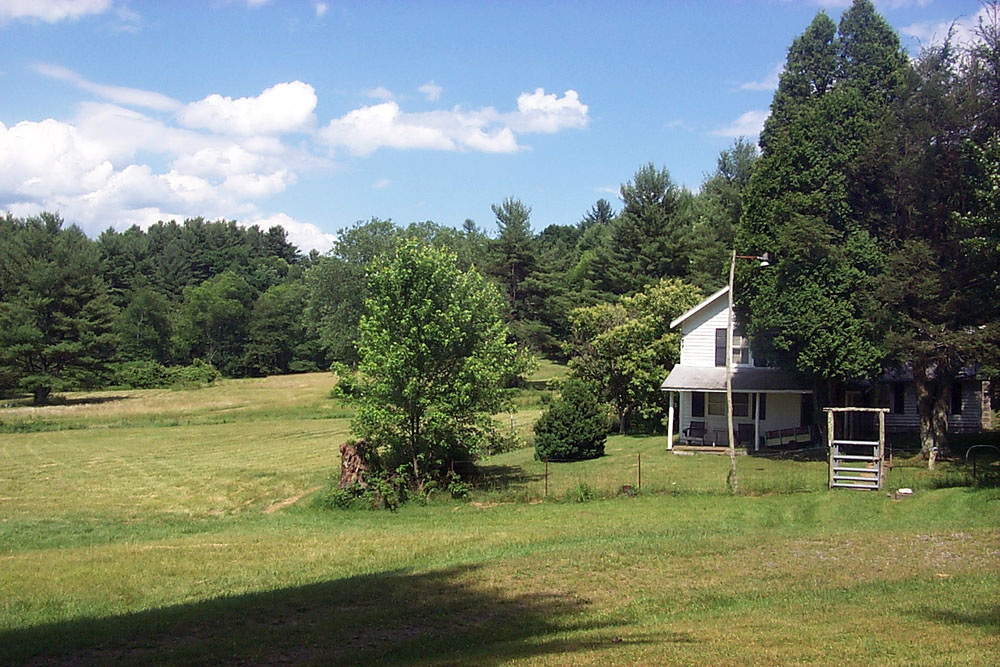
This is the farm of my great uncle Barney Dalton in Laurel Fork, Virginia. Barney was born in 1876 and died in 1972, but his farm is still owned by his heirs, who work hard to keep it looking like it looked 75 years ago.


A story in this morning’s Winston-Salem Journal (by my friend Meghann Evans) reports that Forsyth County, North Carolina, is working on a plan to preserve farmland. I’m all for it, though for Forsyth County it would seem that the plan is a little late. Though Winston-Salem and Forsyth County have not grown as fast as Raleigh and Charlotte, developers have been buying up farmland and turning it into suburbs for decades. It has been more than 25 years since I lived in Forsyth County, but decades of uncontrolled suburbanization is one reason why I would never be able to live in such a place anymore.

Meghann’s story about Forsyth County got me wondering about the trends in farmland.

Just a couple of weeks ago, actually, I was at a Stokes County Arts Council event and saw a friend who is co-owner of Stokes County’s largest real estate company. “How’s business?” I asked her. “Have property values gotten back up to the pre-crash peak?”

She said that farms are selling very well but that homes are still a bit of a drag.

I’m going to guess that one of the reasons that Forsyth County can even afford to talk about preserving farmland is that farmland is more valuable than it used to be. Developers can no longer buy up farmland dirt cheap and turn it into suburban gold. Driving through a place like Forsyth County, evidence of this change is easy to see. Suburban housing is still being built, but the housing is much more dense than it used to be. That is, new suburbs don’t sprawl as much as they used to because the land is not as cheap. Houses are much closer together. Much of the new housing consists of multi-story, multi-family units.

Worldwide, farmland is increasingly seen as a good longterm investment. Much of the investment in farmland is coming from corporations. In fact, here in Stokes County, one of the biggest land transactions in the past couple of years involved 1,000 acres of farmland in the Dan River bottomlands. The buyer was a corporate outfit from Greensboro. I still don’t know what they plan to do with the land.

One surprising new trend is that agricultural degrees are in great demand, and there aren’t enough graduates to fill the available jobs. Just this year, the U.S. Department of Agriculture reported that 60,000 high-skilled jobs in agriculture are expected each year but that there are only about 35,000 graduates available to fill the jobs.

In a news release earlier this year, Agriculture Secretary Tom Vilsack said, “There is incredible opportunity for highly-skilled jobs in agriculture. Those receiving degrees can expect to have ample career opportunities. Not only will they be likely to get well-paying jobs upon graduation, they will also have the satisfaction of working in a field that addresses some of the world’s most pressing challenges. These jobs will only become more important as we continue to develop solutions to feed more than 9 billion people by 2050.”

Though the corporatization of farmland ownership is disturbing, I nevertheless see it as an encouraging trend that farmland is becoming too valuable to be trashed by housing developers out to make a quick buck. For a young person trying to figure out what to do in college these days, I’d suggest horticulture with a minor in English. Wouldn’t that improve the world?

Lily (the abbey cat) gets nervous if her food bowl gets low and she can see the bottom of the bowl. She nags me until I fill it, and then she feels secure again. I feel the same way when I’m in places that are too densely populated, too dry, or otherwise too dead to support an exuberant population of living things. I need trees, rain, streams, good dirt, my own water from a well, an orchard, a garden spot, and some chickens. If the deer, voles, raccoons, possums, rabbits and even snakes rush in to live off my spot of land, then I’m flattered. At least I’ve got something for them to take.

Normally I’m at odds with trends. But the trend toward valuing and wanting to be near farmland is a trend I’m glad to see.

farmland
Nearby farmland

garden
The abbey garden in a good year

What’s next around here?

stokes-convention-1-s

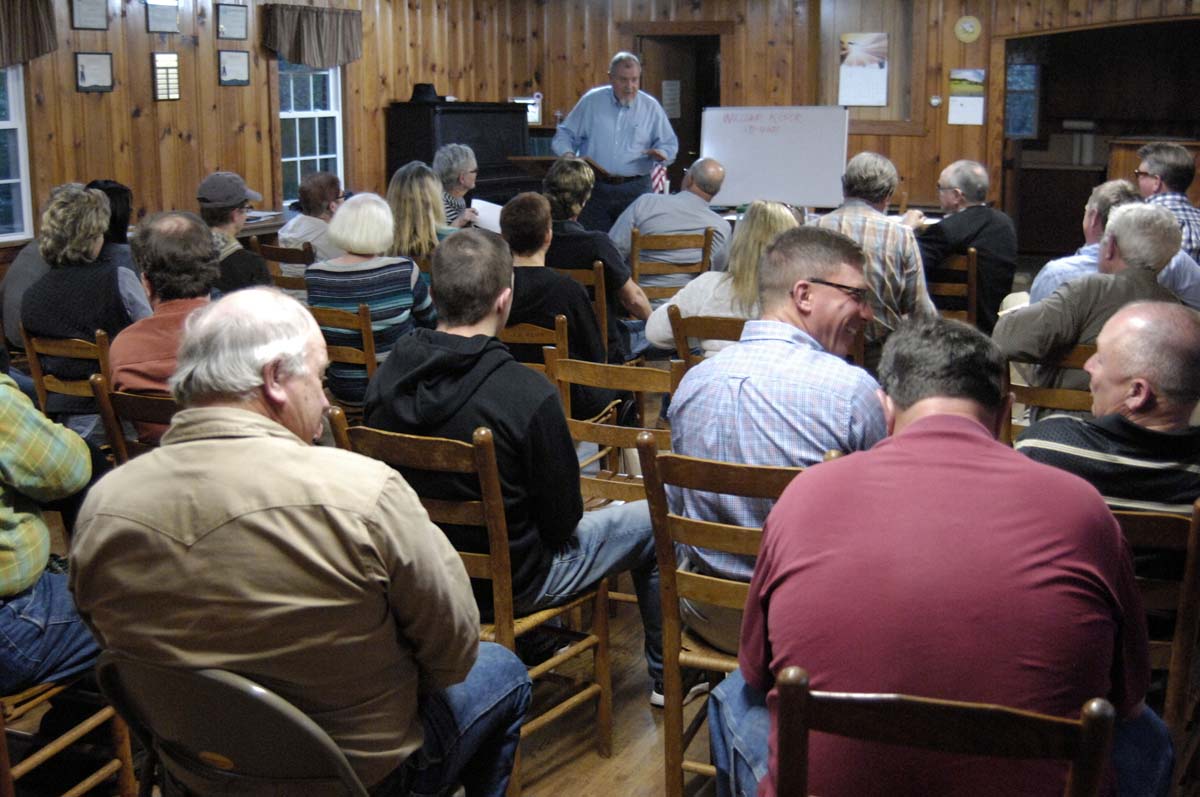
The county convention of the Stokes County Democratic Party, April 21


In July, this blog will be eight years old. Soon I’ll reach the 1,000th post. Any blog that has been around this long is bound to go through changes and fallow periods. But I’m not going away. I’m just trying to get clear on what comes next.

One of the things I’ve had to figure out is just how much involvement I want to have in local politics. I learned during last fall’s political campaign just how exhausting local politics can be, especially when you lose. It took all winter to recover from the burnout. It’s tempting to stay hidden in the woods. I also think that local politics doesn’t make very good blog material, except insofar as the political drama here in Stokes County echoes what’s happening in other places.

I have rolled up my sleeves and decided to stay involved in local politics. Earlier this week, at the county convention of the Stokes County Democratic Party, I was elected county chairman for a two-year term. I also will continue to be involved with No Fracking in Stokes.

Rural counties like this one are in trouble. We are losing population. Our young people leave us because of the lack of jobs and lack of anything to do. Increasingly, jobs don’t pay living wages. Our social services and health departments are overwhelmed. Our schools are begging for help. Even worse here in Stokes County, it is thought that some frackable gas reserves might exist in our river basin, the Dan River basin. Conservatives and progressives have very different views on what needs to be done. Conservatives think that fracking is economic development. As a progressive, I can’t think of a quicker way to ruin and impoverish our county than to let fracking in. Our other assets, such as our state park (the most popular park in the state), our river, and our unspoiled rural beauty, have far greater economic value, economic value that would be ruined by fracking. But conservatives are suspicious of tourism, because it invites people into the county who will never vote Republican.

Conservatives want to fiddle while Rome burns and measure their performance by how low the tax rate is. The burning political issue in this county at the moment (other than a county budget that is not going to balance without a tax increase) is whether emblazoning “In God We Trust” on the side of the county courthouse requires that the county similarly emblazon “In Reason We Trust.” This comes on the heels of a drawn-out and divisive fight in the town of King about flying the Christian flag at a veterans’ memorial. It led to a lawsuit, which conservatives predictably lost. Conservatives somehow convince themselves that symbolic and sentimental issues like these are the things that matter most and around which our futures turn. Meanwhile, Republicans in Raleigh are busy selling off the state to the highest bidder. A test well to look for frackable gas is going to be drilled soon in the little Stokes County town of Walnut Cove. Our own state tax dollars will be paying for the drilling.

Our work is cut out for us.

commissioners-s

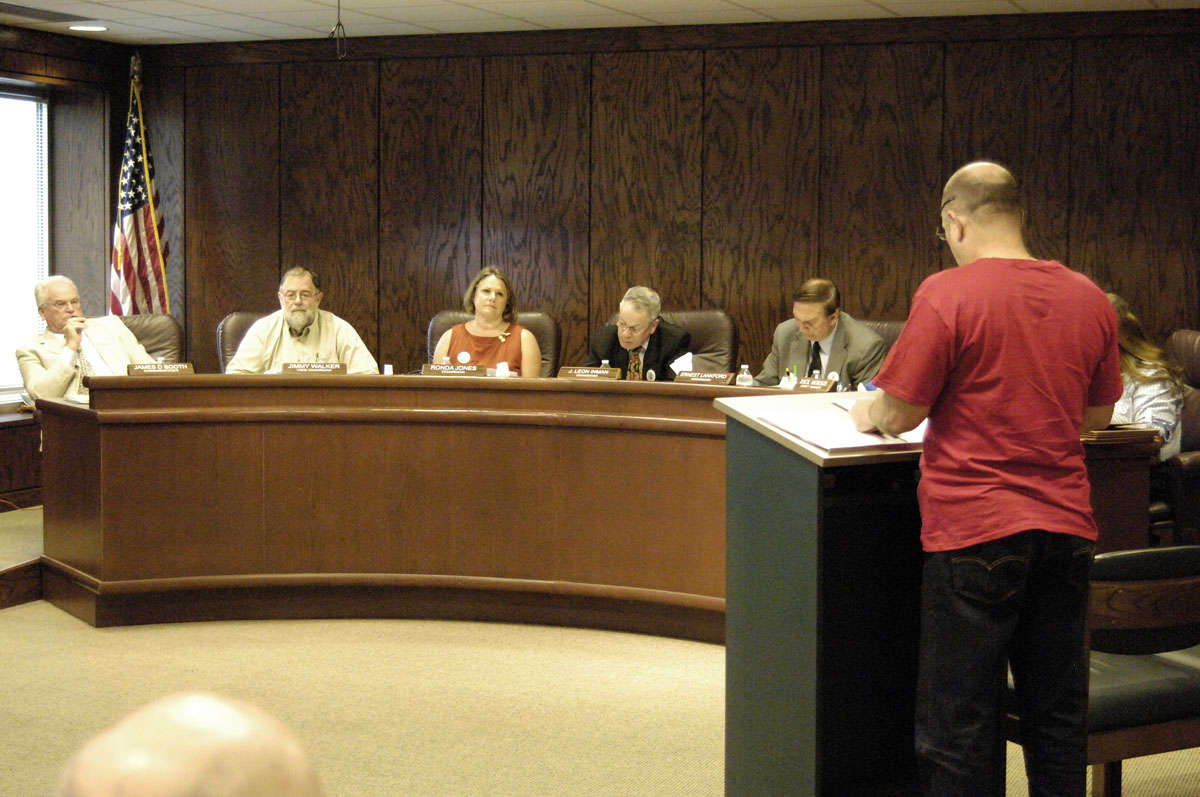
An all-Republican board of county commissioners hears about “In Reason We Trust.”

The garden kicks in

A-garden-supper-1

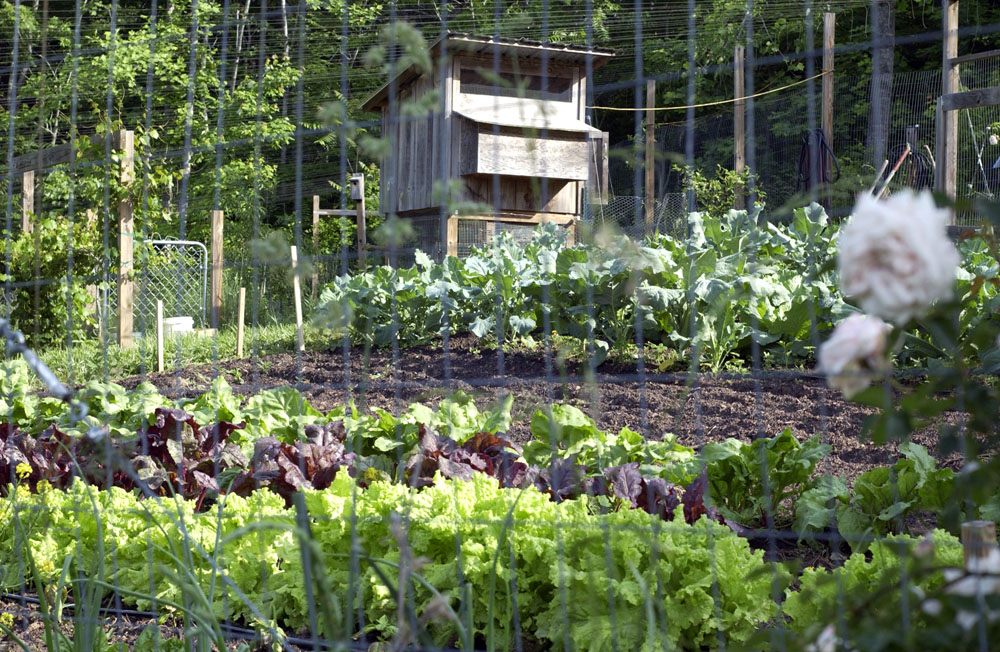
The abbey is far from self-sufficient in food, a fact made clear by expenditures at Whole Foods. But each year when the garden kicks in, there begins a time, lasting for several months, in which the abbey is pretty much self-sufficient in produce. Eggs too are an important part of the equation. Eggs from the abbey’s expert hens provide up to 20 percent of our protein year-round.

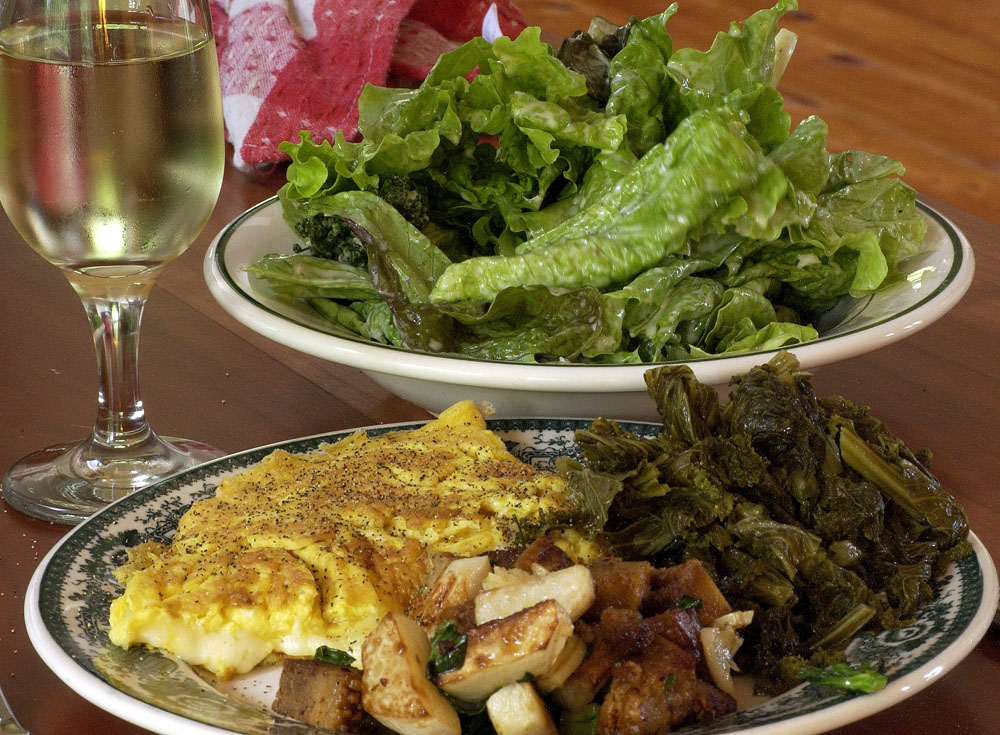
So the season is beginning in which suppers at the abbey largely consist of food grown here. Yesterday’s supper (above) was omelette, a salad of lettuce and broccoli with homemade garlic-Roquefort dressing, turnip and mustard greens, and a side-dish medley of seared turnips, baby bok choi, and some leftovers. All the produce except the garlic came from the garden — garden to table in about an hour.

On the next trip to Whole Foods, I’ll buy very little produce — a significant savings. Instead, Ken will slave in the garden.

A-garden-supper-2
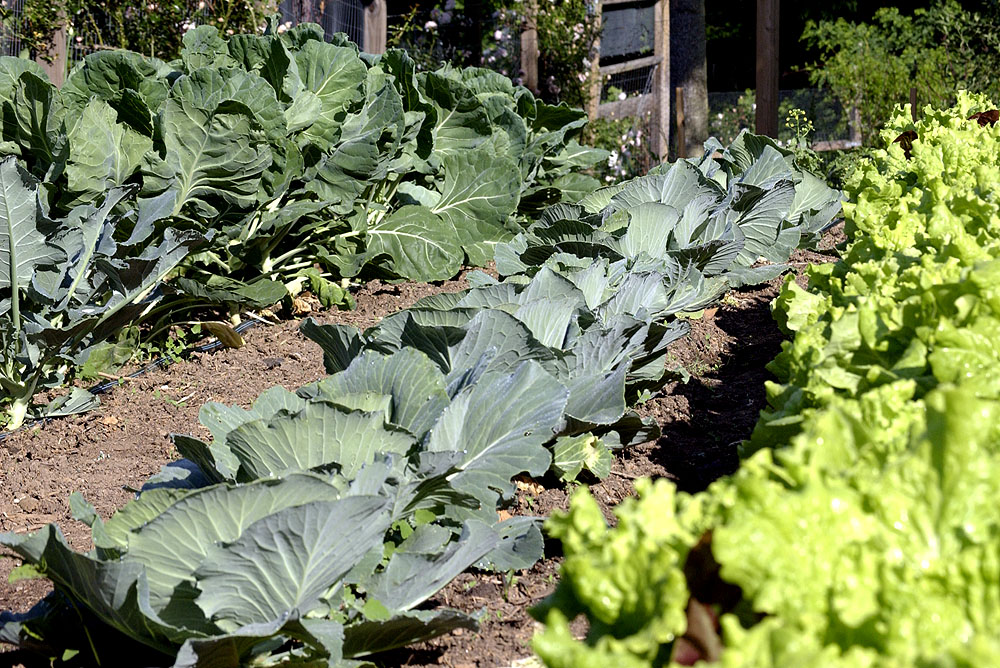
Lettuce, cabbage, and brussels sprouts

A-garden-supper-3
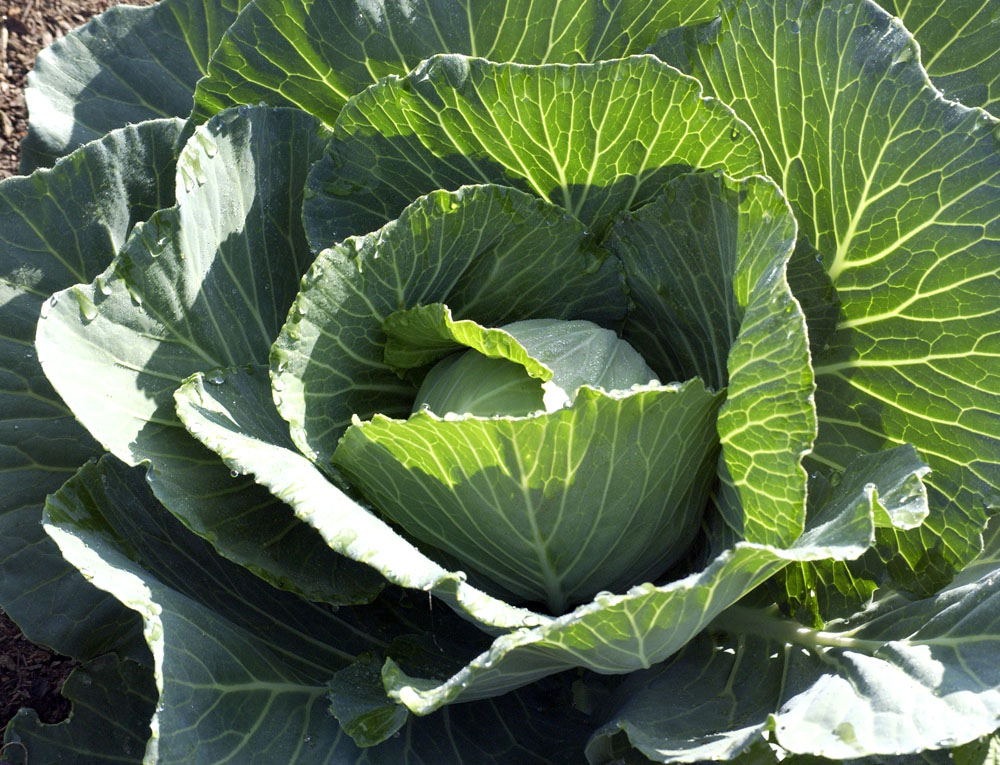
A young cabbage

A-garden-supper-4
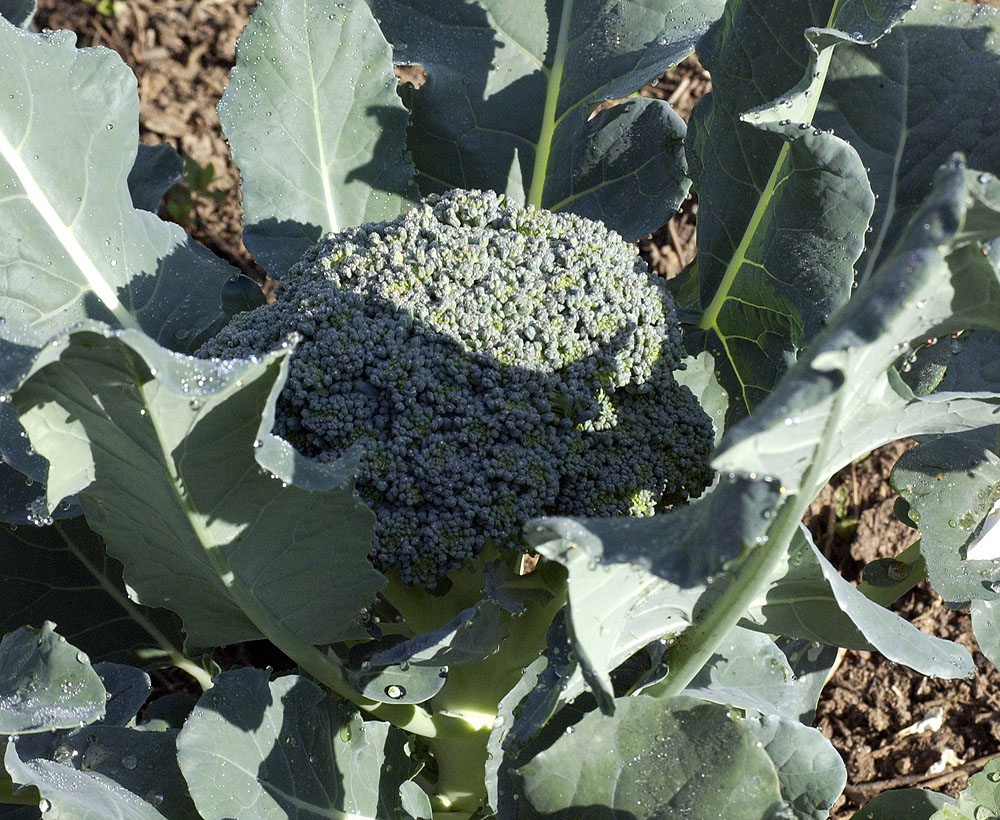
Some of the finest broccoli this year I’ve ever seen

A-garden-supper-5

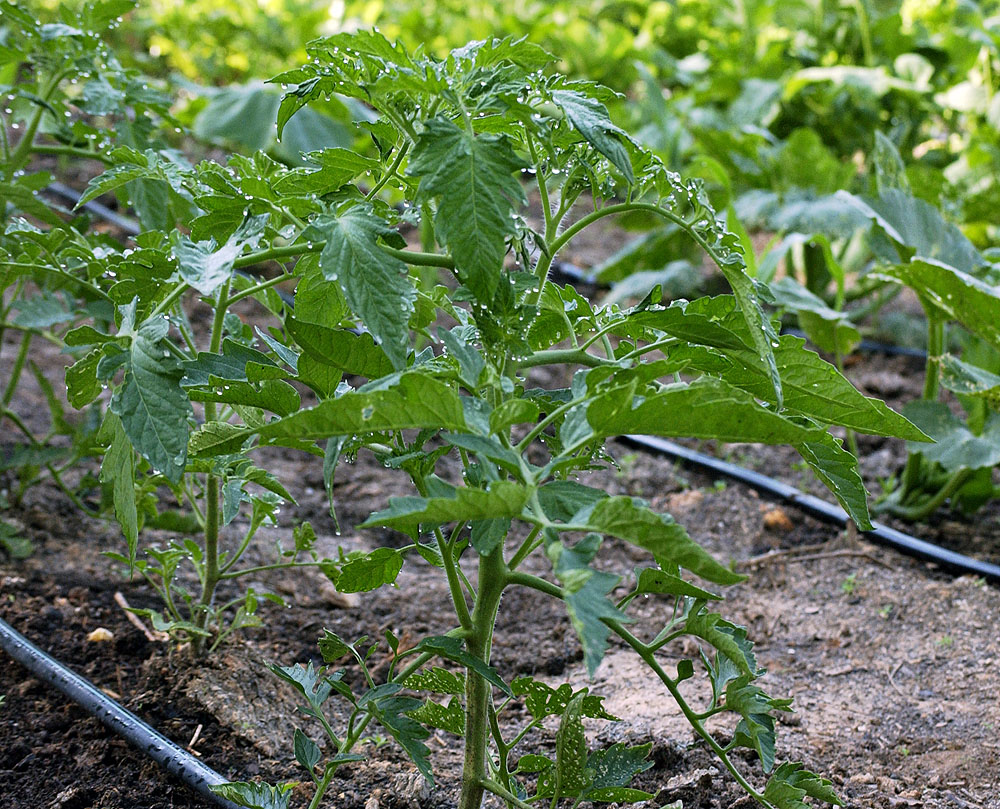
Above, a young tomato. For those not familiar with the Carolina foothills, the soil here is mostly red. Over the past five years, the garden has had literally tons of compost and other organic materials added. Building the soil and feeding the worms is a years-long process, and the process is now well along here. I’ve never seen such rapid growth in the garden. No doubt the insect pests will get worse as the weather gets hotter, but so far the garden has been almost bug free.

A-garden-supper-6
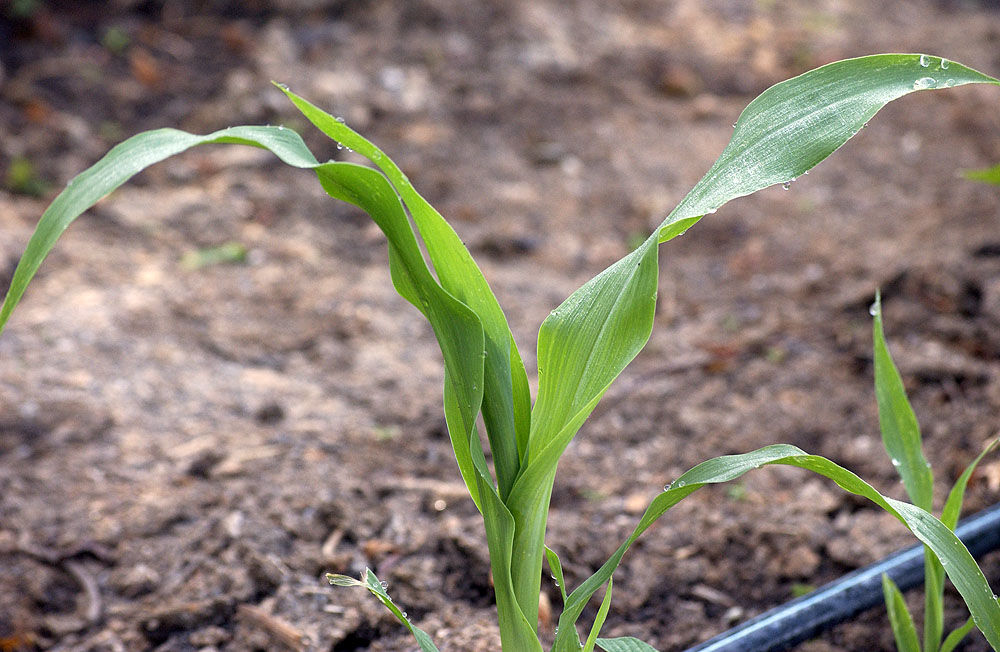
Young corn

A-garden-supper-7
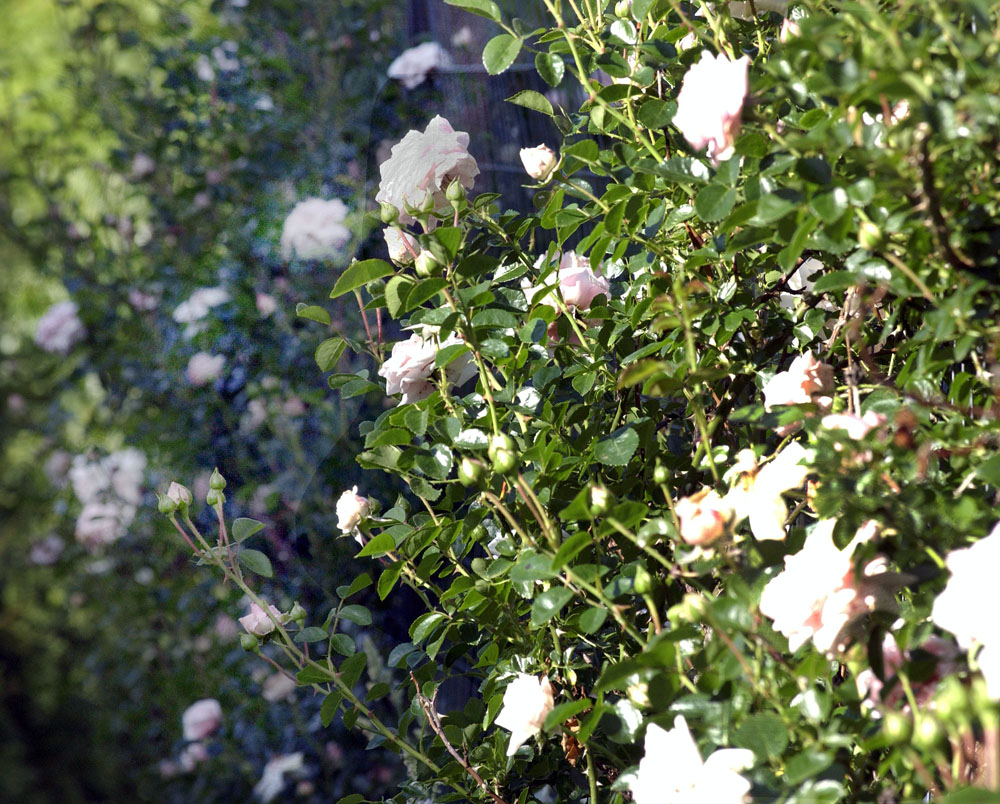
We have walls and walls of heirloom roses on the garden fence and elsewhere.

A-garden-supper-8
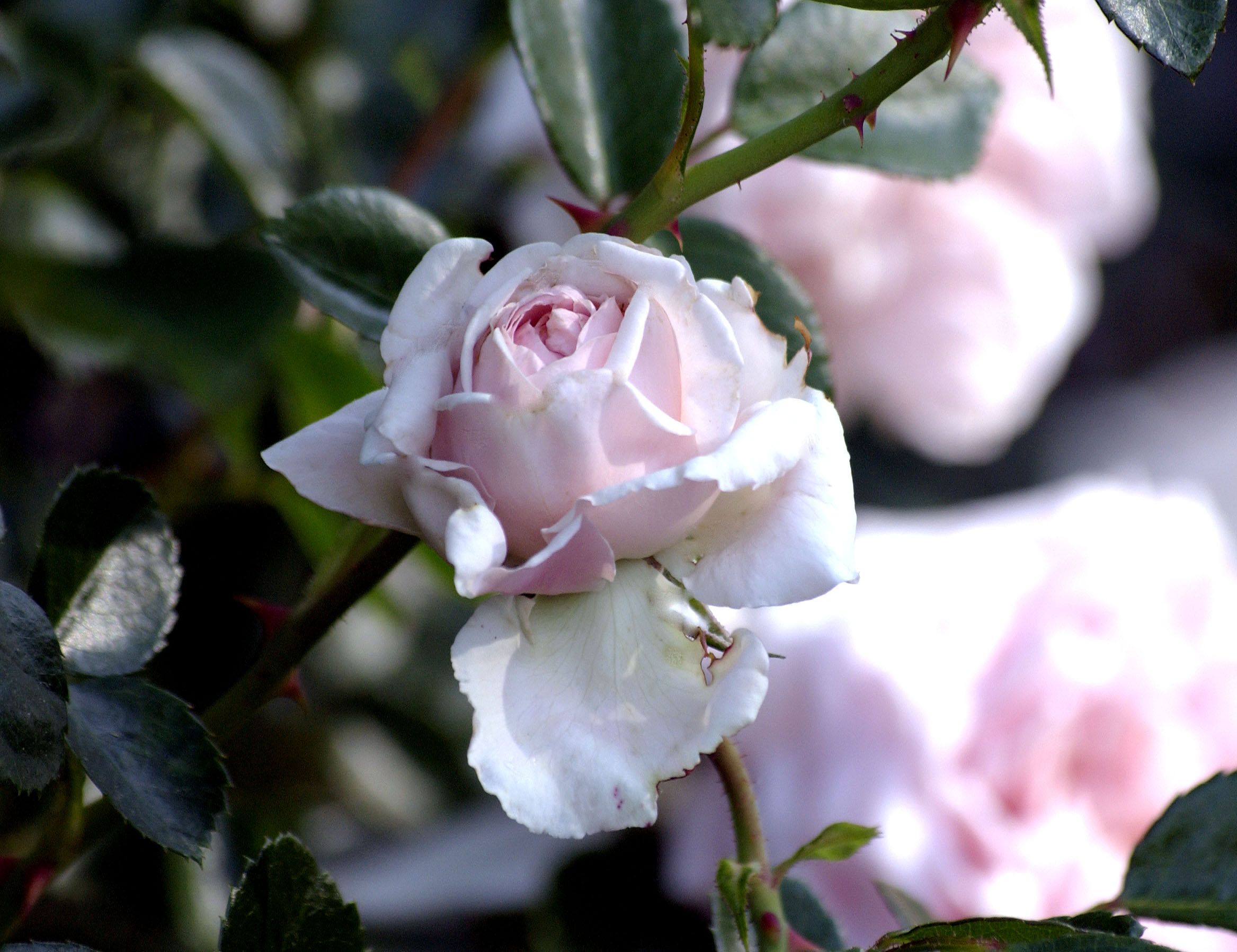
A rose on the garden fence

Rainfall for 2013: 69.2 inches

rain-gauge-1
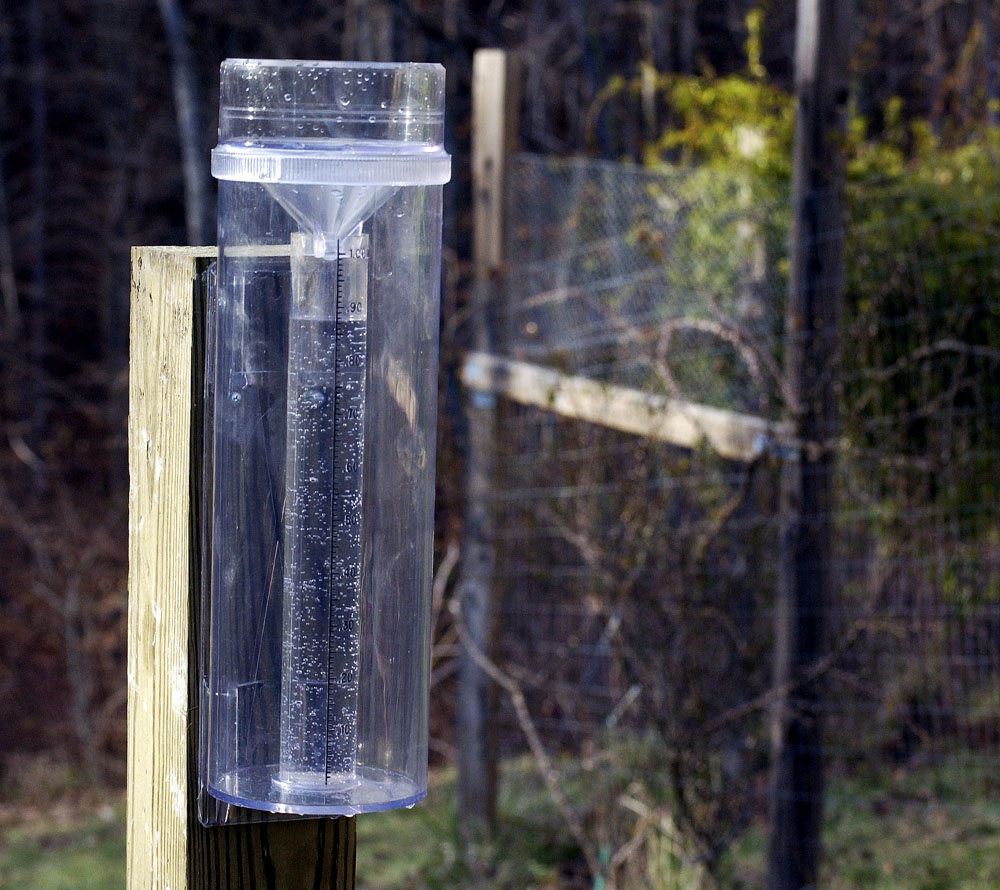
The abbey has a new rain gauge accurate to 1/100th of an inch

Some parts of North Carolina have set records for rainfall this year. Acorn Abbey’s gauge has recorded 69.2 inches.

The breakdown by month:

January: 10.15
February: 3.8
March: 3.75
April: 5.4
May: 5.1
June: 8.9
July: 11.825
August: 5.85
September: 1.7
October: 1.35
November: 4.875
December: 6.6

The normal rainfall here is about 44 inches per year, so this has been an exceptional year. I’m thinking that a pattern is emerging for this area — that in years in which La Niña is not active, rainfall is generous and may well be trending upward, as is predicted in most models of climate change for this area. In La Niña years — curse La Niña! — all bets are off. La Niña summers have been wretchedly hot and dry.

rye-grass-1
The winter rye in the garden got a poor start because September and October were unusually dry. But it’s coming along and should make the chickens very happy this winter.

Halloween work day

compost-1

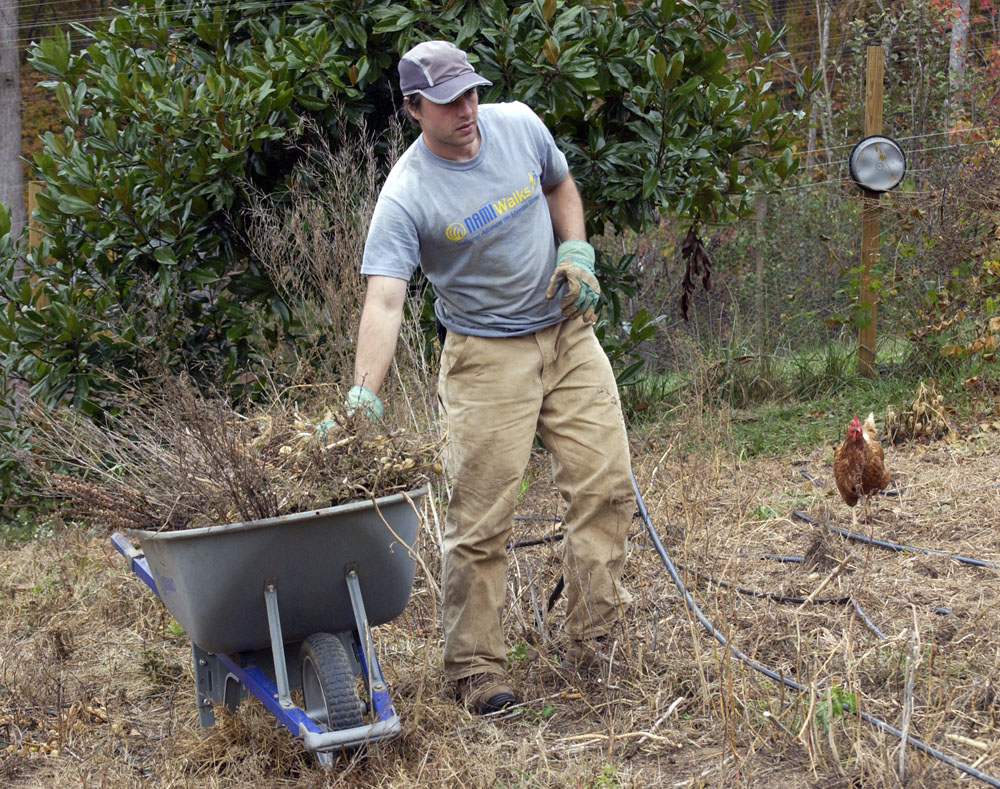
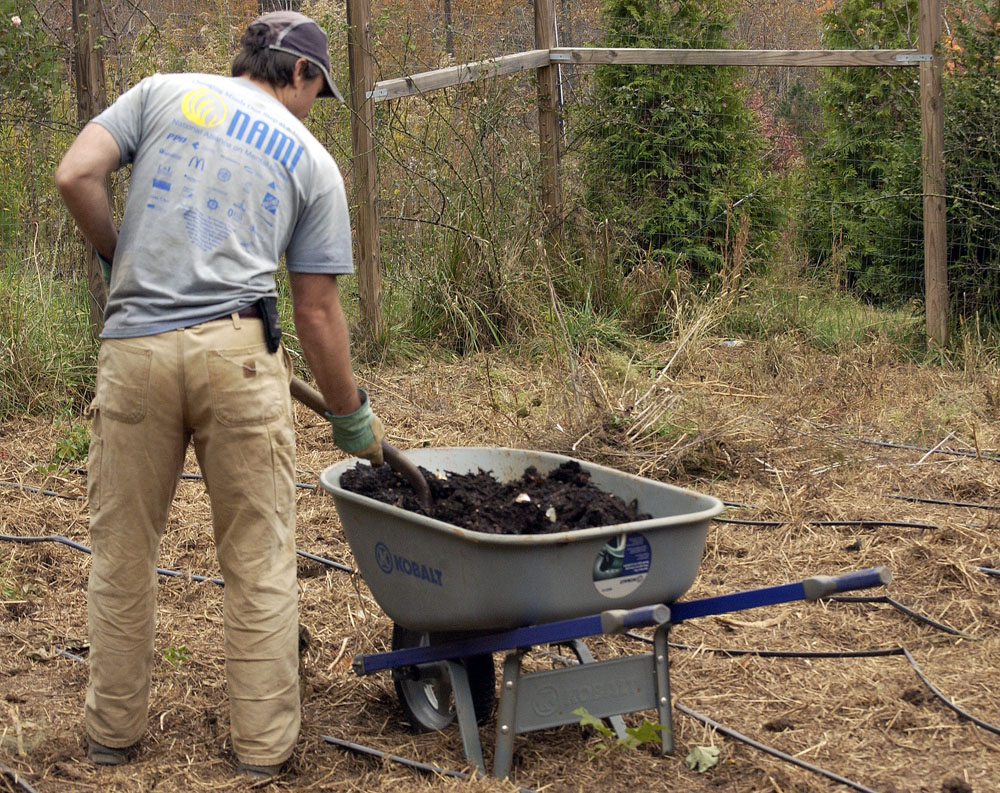
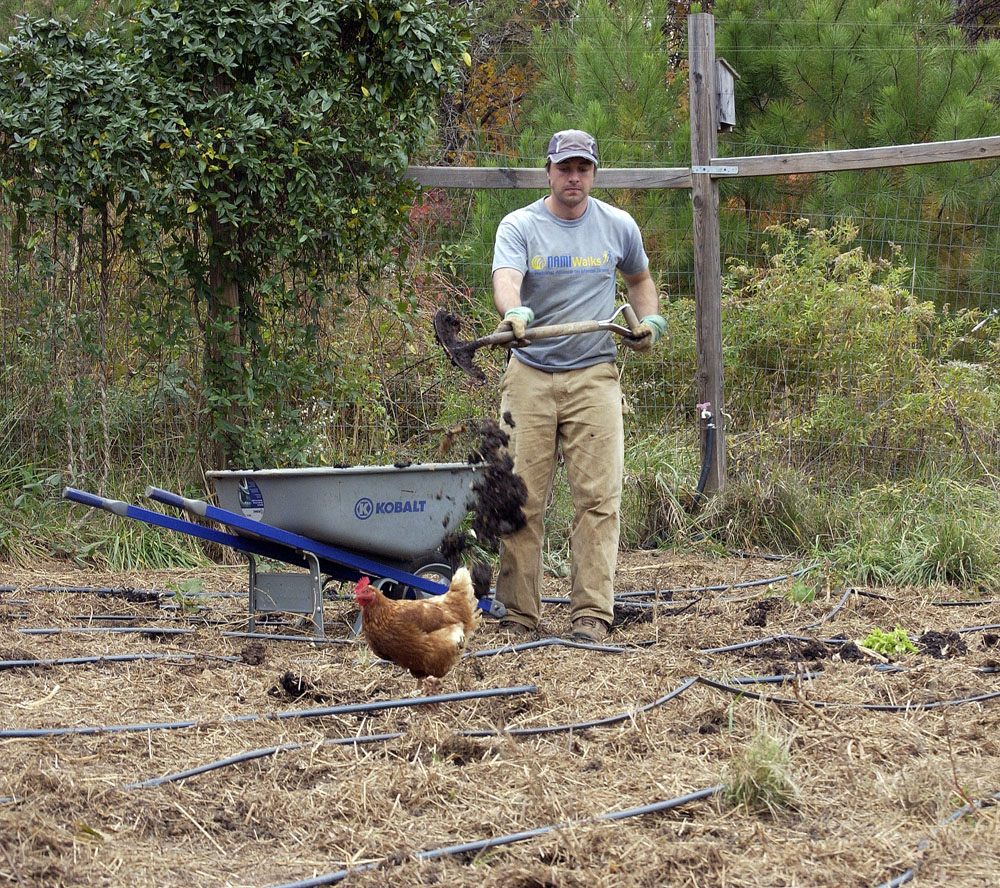
Ken has done a lot of traveling and has had a number of public appearances to prepare for, so there hasn’t been a lot of time for farm work this fall. But this week he has started catching up. First step: clean the litter out of the garden. Second step: throw on some compost. Next: Till the garden, plant winter rye, and wait for rain. Not only is a crop of winter rye good for the garden, it also provides winter greens for the chickens.

compost-1a

compost-2

compost-3
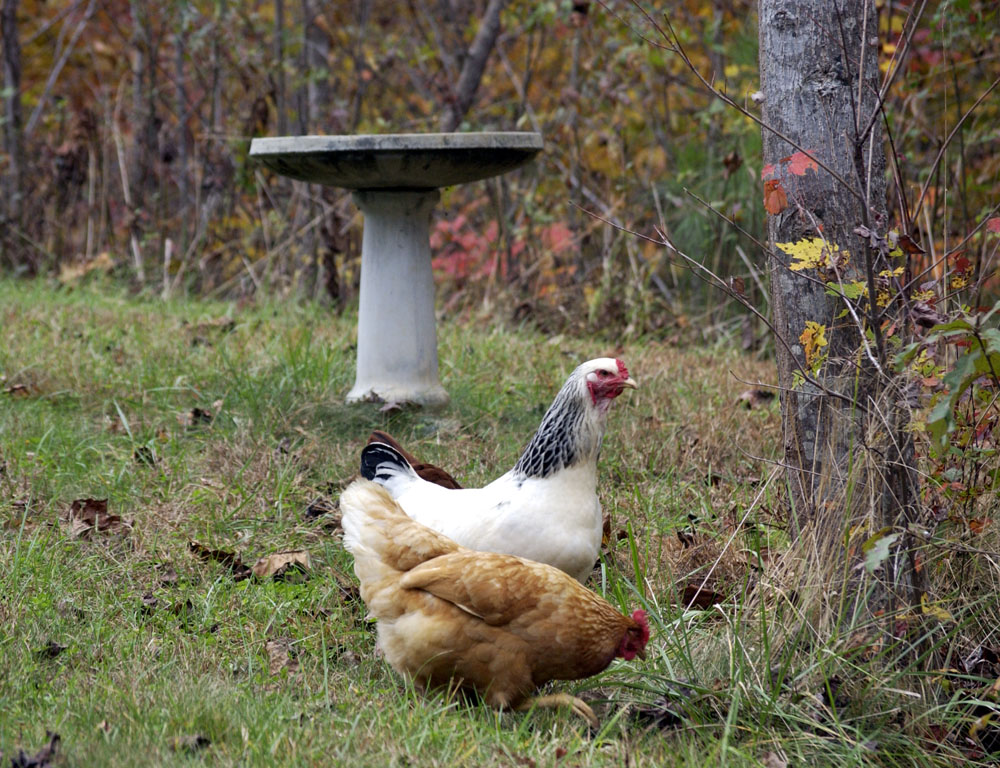
Ken lets the chickens out to roam when he’s outside working and can keep an eye on them. The abbey has six chickens at present.

compost-4
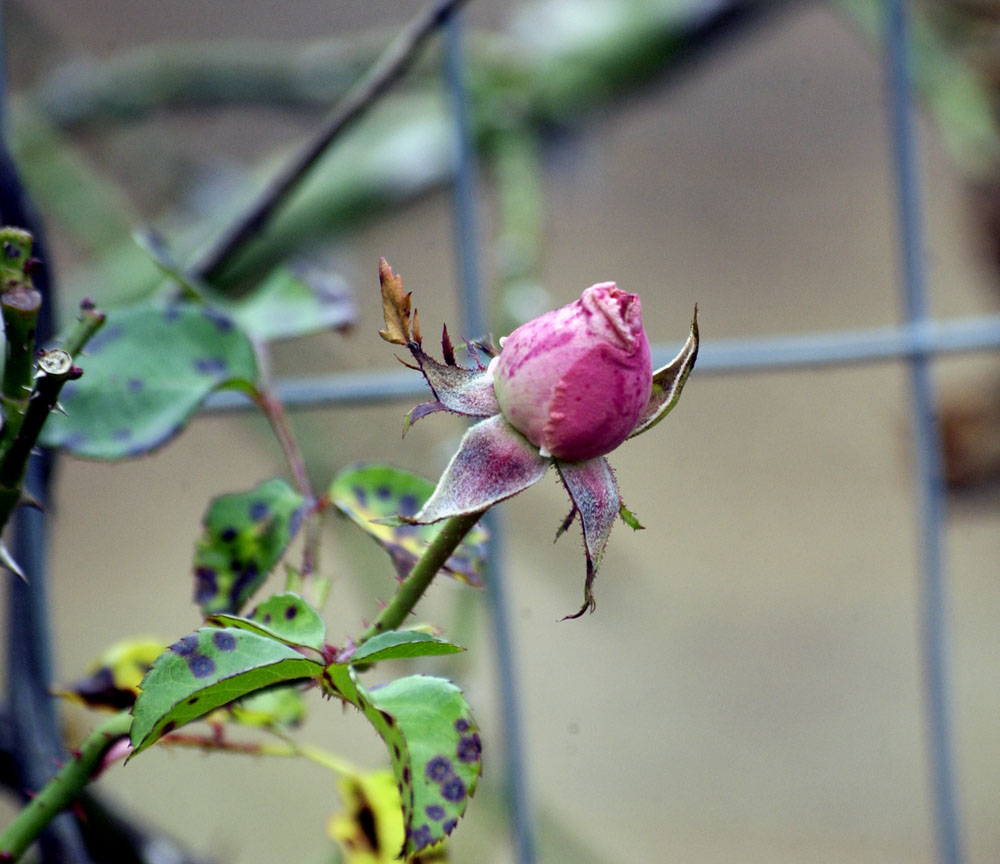
A late, shabby rosebud

compost-5
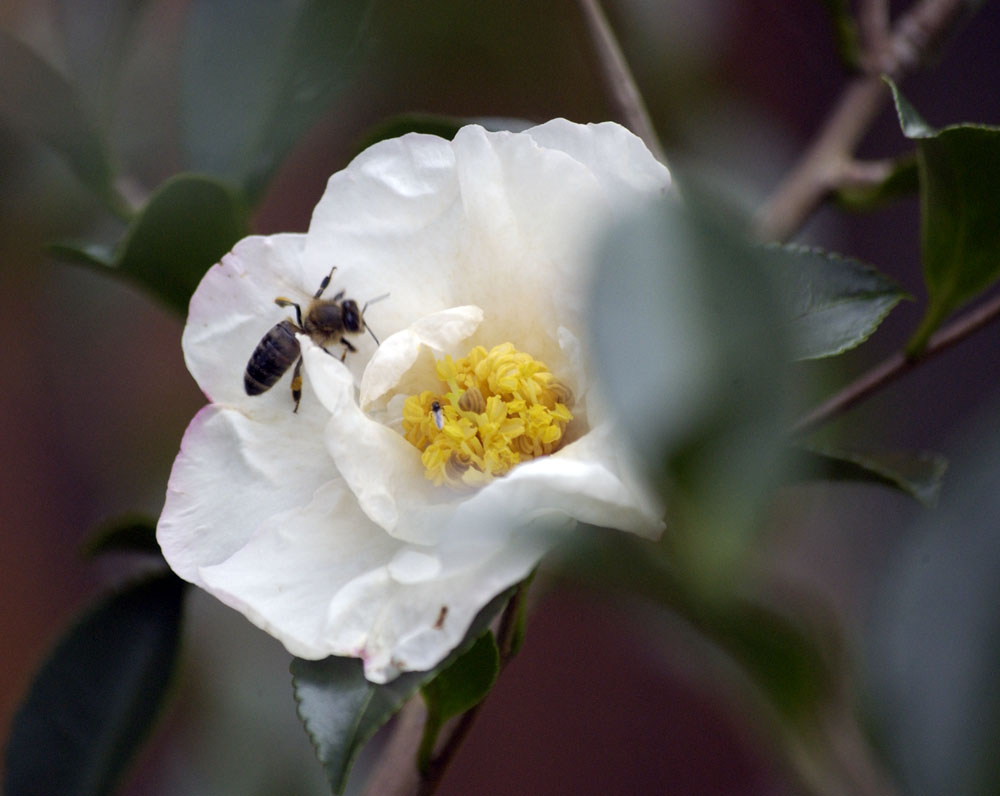
Late bees working a camellia blossom

The 2013 garden, off and running

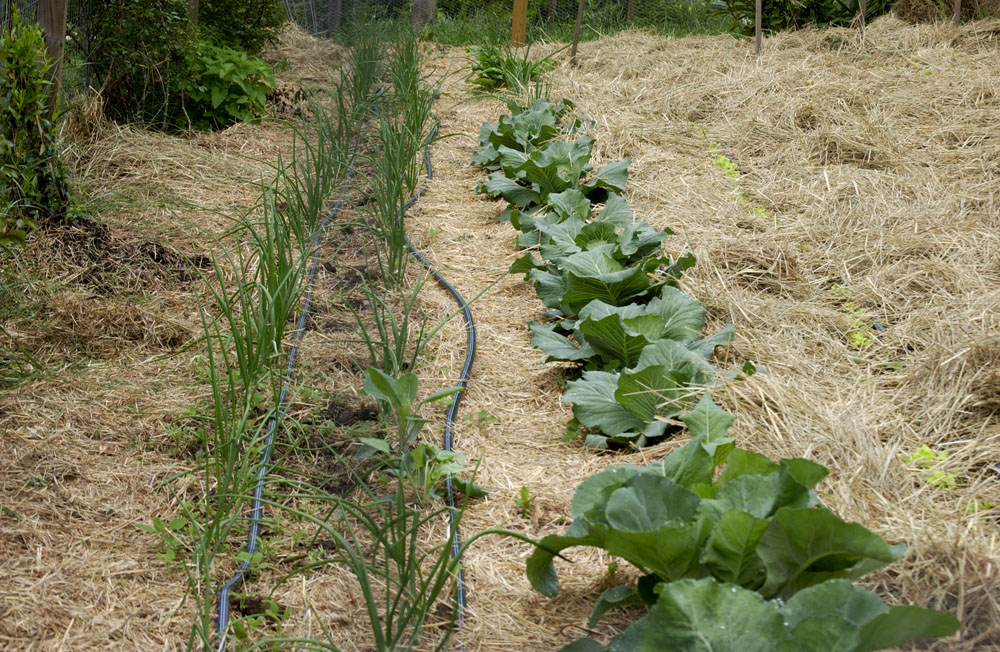
March and April were cold. Spring is about three weeks late this year. Not only that, but the long-range forecast shows below-average temperatures through mid-May, with above-average rainfall. This will do no harm to the spring crops. Cabbage, lettuce, onions, etc., love cool, wet weather. I’m a bit concerned, though, that these early crops will mature so late that we’ll be behind getting the summer crops started — tomatoes, squash, etc. We’ll do everything we can to rush the spring crops to maturity. The irrigation system is in place, though it has been very little needed so far.

This year, we’re mulching heavily, hoping that it will conserve moisture and keep down the weeds. Back in 2011, I recommended a book: Gardening When It Counts: Growing Food in Hard Times, by Steve Solomon. In retrospect, though this book contains lots of good information on water frugality, it steered me wrong in some ways. The author is of the opinion that, if you live in an area with enough rainfall to support deciduous forests, then you can garden without irrigation. He also does not think that mulching is very important. I strongly disagree with him. With summer weather like the weather we’ve had here for the past five years, I am strongly of the opinion that having a reliable garden without irrigation just is not possible. Even when there is rainfall, as summer temperatures rise daily to 95 and above, such rainfall as we get is rapidly dried up, and heat stress and water stress become severe. Mulch, I’m hoping, will help keep the soil cooler and conserve water. As a bonus, the hay we’re using as mulch will decompose into the soil, helping to feed the worms.

Ken has worked like a dog in the garden this year. Sometimes when I look out the window from the comfort of the kitchen and see him working so hard, I feel guilty. But Mark Bittman, writing in the New York Times, has reminded me of a very important principle: a garden without a kitchen (and someone slaving in that kitchen) is useless. Every well tended and productive garden must have a kitchen running at full tilt, with someone working in that kitchen who understands what to do with the stuff coming from the garden. We’ve got that process down. Here at the abbey, the garden and the kitchen are a smoothly functioning unit.


Cabbage and onions


Young lettuce. I hope we’re as covered up with lettuce this year as we were last year. I felt as though I spent half the day every day last spring washing lettuce.


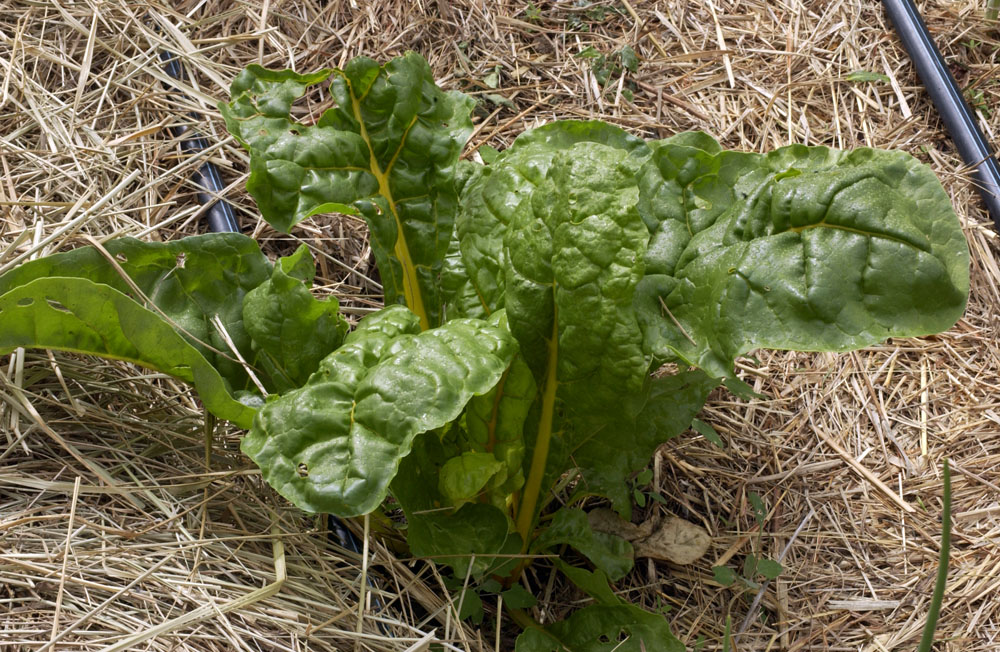
Chard


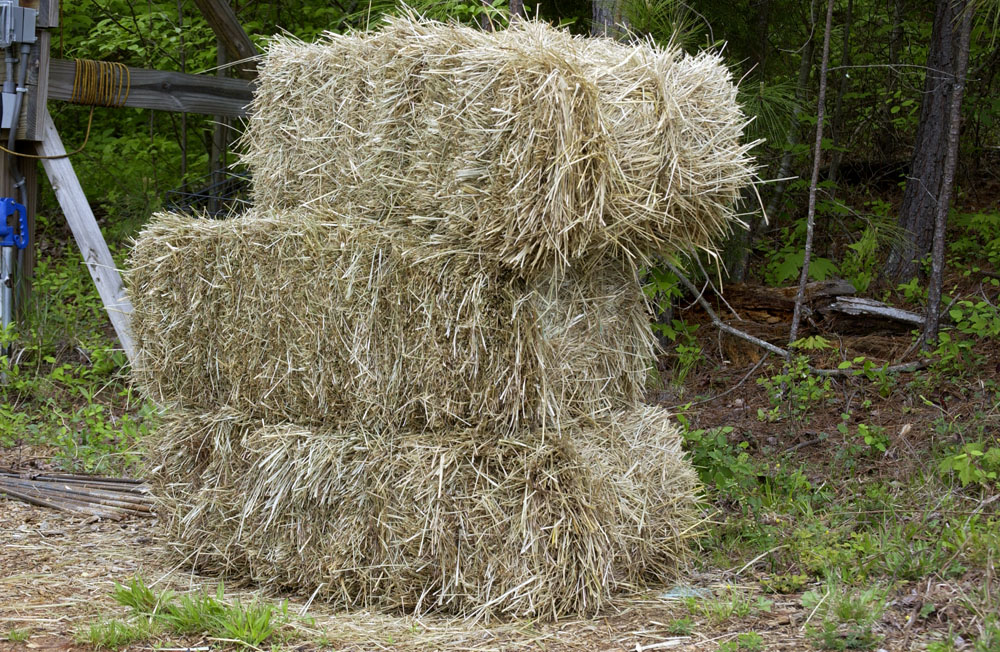
Hay for mulching. We’ve bought it from a farmer near Sandy Ridge for as low as $2 a bale.


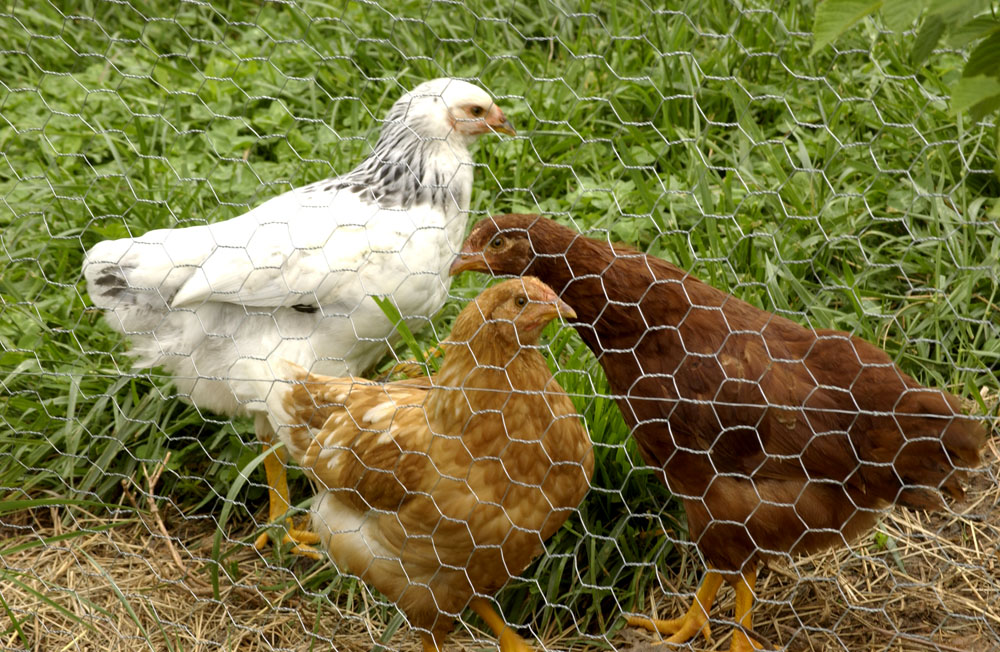
Marilyn, Bridget, and Sophia, the 2013 spring chickens. They’re thriving, and their voices are starting to change into hen sounds rather than cheeps. The abbey now has seven chickens.


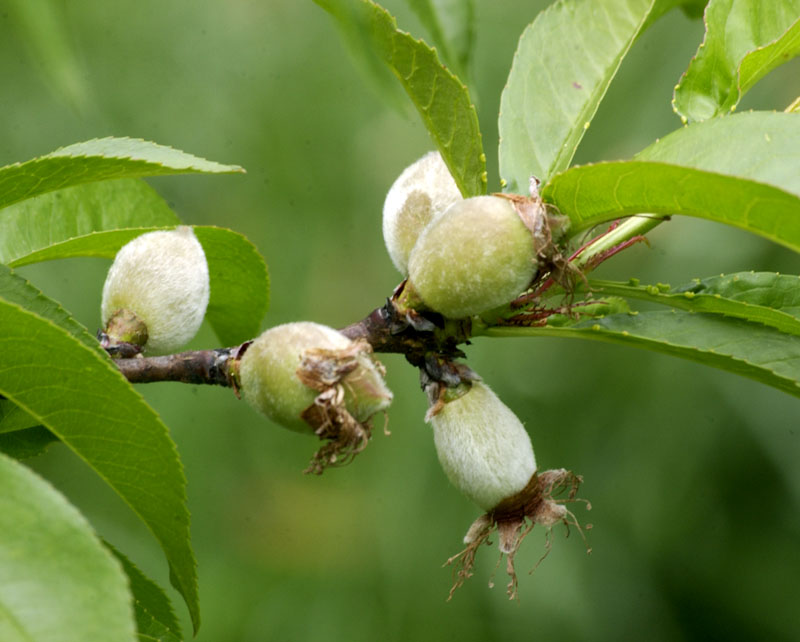
Tiny peaches


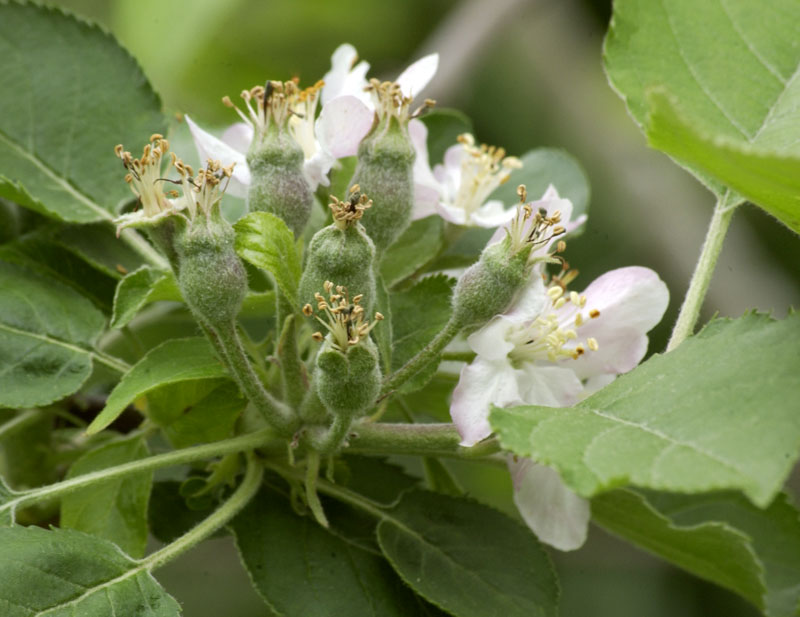
Tiny apples. This is the apple trees’ fifth spring. This year, for the first time, they’ve prolifically set baby apples. I’m hoping for a real apple crop this year.


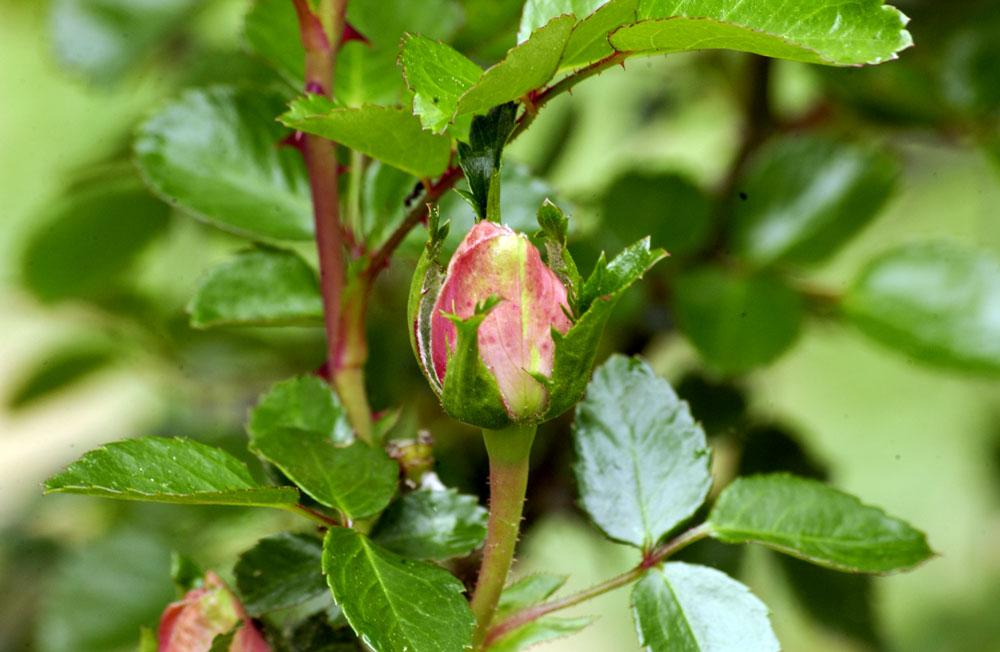
The first rose will happen soon …


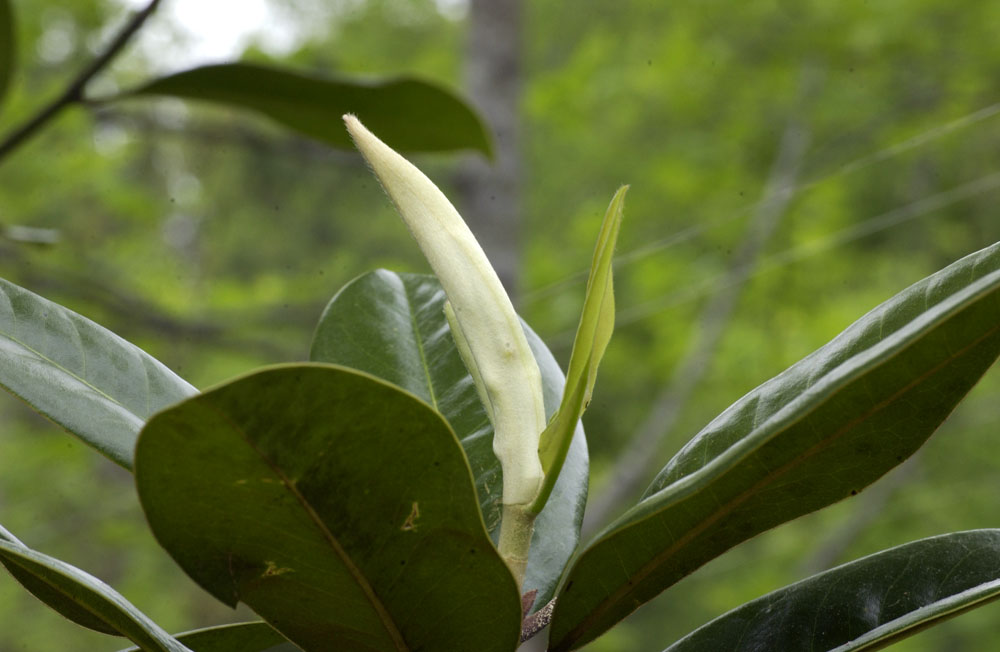
… as will the first magnolia blossom.