When retro is way better


That was my telephone number in San Francisco for many years. I apologize to whoever has that number now.


A little Googling shows that the first cell phones became available in March 1984. I admit that I was fascinated and aspired to own one. It was not until 1995, though, that I first acquired a cell phone. That was when I went to work for the San Francisco Examiner, and they assigned me a phone as a 24/7 tether to the office.

The cell phones of the 1990s actually were quite good, though they were big and heavy. As long as you had a decent signal, the voice quality was as good as land lines. Then cellular service started going digital. We were promised that digital would be much better than analog, but that was a lie. By 2008, cellular providers no longer had to support analog phones. They dropped analog service in no time.

The end of analog service in 2008 was an ugly landmark in the history of the telephone. Voice quality dropped appallingly, as cellular carriers “compressed” the audio in order to be able to support more customers. A telephone conversation became an ordeal.

But another ugly landmark had occurred in 2007. That was when the first iPhone went on the market. The iPhone looked nothing like a telephone. It was flat — an absurdly unsuitable shape for a telephone. The reason it was flat, of course, was because the screen had become the most important thing. Even the old flip phones, which people now make fun of, were better telephones, because they had a bit of curve in them and accorded at least a little attention to the location of the human mouth and ear.

Telephones have fascinated me since I was a child. One’s telephone was one of the most loved objects in the house. In those days, it was the only two-way connection to the outside world. We actually used our telephones to have long talks with our friends in those days, and we enjoyed it. But by 2010, I had come to hate telephones. I wasn’t the only one. I hated them when they rang. I especially hated it when other people’s telephones rang. I hated telephones when I had to talk on them. I hated listening to other people talking on their phones, which was almost impossible to avoid in public places until (what an improvement) texting became more prevalent.

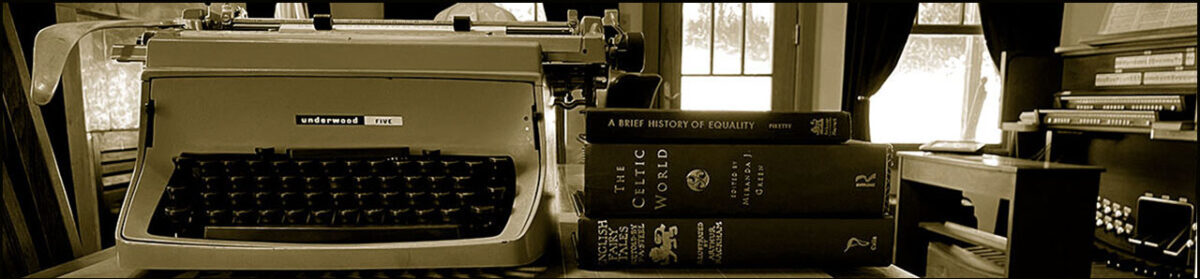
The red phone in the photo was my land line during my years in San Francisco. I love that phone, and I’ll never part with it. Was there ever a design better than the old telephones made by the Bell System and Western Electric? Young people today have probably never talked on such a phone. I will never forget them.

But for years my red telephone went unused. I experimented with services such as Verizon’s fixed cellular service, back around 2018, but that worked very poorly, because Verizon signals were so weak in rural areas.

But rural cellular service here has gradually gotten better. With a T-Mobile hot spot in my attic, I actually can get a data signal strong enough to be able to use cellular over WIFI, which, at least where I am, gives better voice quality than a direct cell phone connection. And I found a device that allows me to dedicate one of my cell phones to sitting on a shelf and imitating a land line, with my old red telephone connected to it.

The device is called a “Cell2Jack.” It costs $39 on Amazon. You can plug an old telephone into it. If your house has telephone wiring, you can connect the Cell2Jack to your house wiring. The device uses Bluetooth to become a telephone client of your cell phone. When I first bought the Cell2Jack, I wasn’t satisfied with its audio quality. But after a firmware update, plus T-Mobile’s recent improvements, the device works remarkably well. Not only can I use my old Bell System phone on those occasions when I can’t avoid a dreaded phone call. I actually can hear without straining my ear and my brain to try to understand the person (or robot) on the other end of the line.

As for talking on a flat, slippery device with a screen, I’d rather be beaten.


⬆︎ Some designs are just too perfect to ever give up.

Bread casserole with veggies, cheese, and walnuts


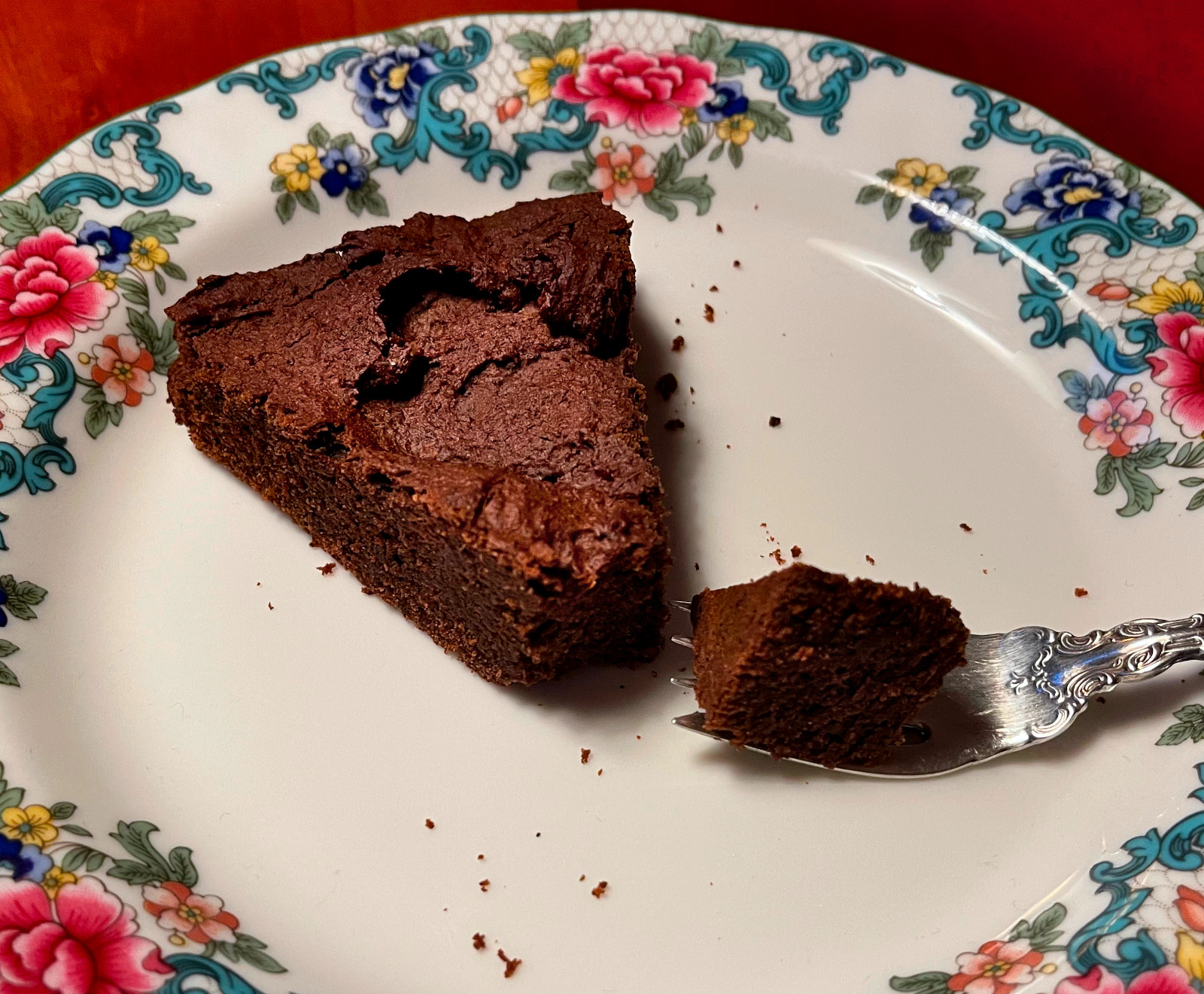
Bread casserole doesn’t sound very nutritious or low-ish carb. But it can be.

I used a food processor to coarsely chop the bread. Then, also in the food processor, I minced onion, parsley, spinach, celery, and an apple. The cheese, grated, is part cheddar and part Gruyère. The walnuts are partly pieces and partly halves. I did not add any liquid, though I wish I had used two or more apples instead of one. I moistened it with olive oil. It’s seasoned with sage and rosemary. The darker and heavier the bread the better. This was my barley-whole wheat bread, which was two days old.

It occurred to me that I could make a very good dessert-style bread pudding with minced apples and the same kind of bread, seasoned with cinnamon. I’ll do that next time I have two-day-old barley bread.


I grind hulled barley and wheat berries to make my own flour for this bread. It’s half barley, half wheat, plus water, salt, and yeast. I make this bread fairly often because the guilt factor is low. I’m always amazed at what a tasty grain barley is. For flour, I use hulled barley as opposed to pearl barley.

Now fully in the public domain: Sherlock Holmes


Illustration from the December 1892 issue of Strand Magazine

Each year on January 1, copyrights that are 95 years old expire. It was 95 years ago, in 1927, when the last Sherlock Holmes stories were published. (Copyright laws vary by country. In the U.S., copyrights expire after 95 years.)

Those who profit from copyrights will attempt all sorts of novel legal arguments to keep the profits going. Think Mickey Mouse and Beatrix Potter, as well as Sherlock Holmes. Duke University’s Center for the Study of the Public Domain is one of the few institutions that track the public interest in copyright laws. Here is a link to their post on Public Domain Day 2023, with a list of some of the books, movies, and songs that are in the public domain as of today.

Roald Dahl’s Matilda the Musical


If you still have a gloomy taste in your mouth from The Banshees of Inisherin, then here’s the perfect antidote: Roald Dahl’s Matilda the Musical.

We had recently been discussing Jane Eyre here, and I couldn’t get Jane Eyre out of my mind as I watched this. But Jane Eyre, of course, is not exactly a musical, whereas Matilda will probably become a classic. It’s a romp, with superb performances, excellent music, and brilliant singing and dancing. How does Britain produce so many talented children? Emma Thompson is so scary that I actually wonder if Matilda should have a PG rating.

Matilda can be streamed on Netflix.

Are you ready for power failure?


⬆︎ My solar panels can produce, at most, a modest 150 watts of power. That’s enough to keep some deep-discharge batteries charged at all times. The solar power also is a supplement to my small generator.


Clearly the risks to the power grid are growing. This is true not just in the United States. Just two days ago, France issued a warning about winter power failure. Whether in summer or winter, power grids can become overloaded (and, these days, often do). For some strange reason, right-wing terrorists seem to be targeting the power grid. The vulnerability of the power grid to cyber-hacking is well known, though no doubt too little has been done about it. Even solar events such as coronal mass ejections could shut down the power grid and damage major components of the grid that would be very difficult to replace.

Being prepared is not necessarily just a matter of comfort and convenience. In some cases, lives depend on it. Everyone needs a plan. In rural areas such as where I live, short power outages (three or four hours) happen many times a year. I’ve never been through an outage that lasted for days, but that’s always possible.

Getting equipped with backup sources of power and heat is not necessarily something that must be done all at once. Being prepared is expensive. And not only are the things you need expensive to buy, they require maintenance, or they won’t work when you need them. Here at the abbey, I’ve gradually built up my ability to weather longer and longer power failures. Each power failure is a kind of test that lets me figure out what my next priority for improvement should be.

The first big question is: Would your heating system operate with the power down? Few systems would these days. I have a heat pump, which is of course all electric. For backup, I have a propane fireplace and a tank that holds 200 gallons of propane. The fireplace provides a helpful amount of heat, but it can’t compare with the house’s main heating system. Kerosene heaters make me nervous. But if you’re careful with them, they can be a safe source of emergency heat.

How would you cook if the power went out? Here at the abbey, though I can boil water in small quantities on generator power, my emergency solution is to cook outdoors using propane. The gas grill, also propane, is always available.

Refrigeration is a biggy. That’s a problem that can be solved only with electricity. My solution at present for refrigeration uses two battery-powered power inverters. The 1000-watt unit can run the refrigerator for five hours or more. I have two such units, so that one can be recharged from the generator while the other is powering the refrigerator.

Lighting is not a big deal. Flashlights and candles are a given, with better light sources if you have the power. You’ll also need to think about water. Even if your water is city water (as opposed to a well, which I have here), frozen pipes could be a problem in extreme cold, especially if the power is out.

For me, communication is a major issue. Cell phones aren’t enough. I also need to be able to keep my computer and WIFI running in a power failure. How I do that is shown in the photographs below. And because I’m an amateur radio operator, I also need to keep all my radios running, if they’re needed. Amateur radio operators are always about community service if a disaster strikes, not only for communication with the outside world but also for providing a means of staying in touch with one’s neighbors.


⬆︎ This small inverter generator is enough to power my refrigerator, computer, radios, and some lighting. I am wary of larger generators that cannot produce pure sine wave power.


⬆︎ You can’t have too many batteries. These batteries are kept charged by the solar panels. On the right is a power inverter that attaches to the batteries. The inverter can produce standard 115-volt house current as pure sine waves. The inverter also can charge USB devices. My solar power goes into my garage, not to the house. And speaking of the garage, that’s my Jeep on the left. It, too, is a nice thing to have for winter emergencies.


⬆︎ The front panel of the power inverter, with its three USB outlets as well as house current. These days, keeping USB devices such as phones charged is a high priority.


⬆︎ Fortunately, inverters like this made in China are fairly affordable. If you’re not clear on the difference between “modified sine wave” inverters and “pure sine wave” inverters, I’d recommend reading up on that. Pure sine wave inverters are more expensive, but I would not want to run electronics or expensive items such as refrigerators on dirty power.


⬆︎ These two devices contain batteries. Their output is house current and USB. They are expensive. I use these devices mainly to keep my refrigerator running — a high priority that I deem worth the expense. One can be charging while the other is powering the refrigerator. Both can be charged from my solar panels, but charging from the generator is much easier as long as the generator is running.


⬆︎ Maybe someday we’ll be able to live without gas-powered engines. But, until then, you’ve got to have fuel. I never store gasoline, kerosene, or propane indoors, and I insist on the safest possible containers.


⬆︎ Propane for emergency cooking, outdoors. I also have a propane grill.


⬆︎ Kerosene heaters scare me. But they don’t scare me as much as a cold house when it’s 5F outdoors, which happened as recently as last week.


⬆︎ This uninterruptible power supply can keep my computer running for hours. But when the power goes out, I get the generator out of the basement and put it in a safe place outside the basement door. I plug the cord from the generator into a receptacle in the basement that terminates at the red outlet that you can see in the wall behind the UPS. When I built my house, I installed the wiring for that. This is a heavy commercial UPS that I’ve had for years. Its batteries have to be replaced every five years or so.


⬆︎ My radios run on battery power at all times. The batteries are kept charged by the trickle charger in the photo below. In a power failure, by moving a plug, I can keep the batteries charged with the generator.


⬆︎ The trickle charger that keeps the radio batteries at full charge.


⬆︎ I sometimes joke with my neighbors that, in a catastrophe, one reason why they should keep feeding me in spite of my age is that they can count on me for communications during a catastrophe. I have had an extra-class amateur radio license for years, and I take very seriously the responsibility to provide emergency communications for the people around me, not only long-distance communications but also local communications using handhelds, of which I have a great many.


Cigar boxes for storage


At least around here, tobacco and “vape” stores seem to be everywhere these days. Normally I would have no reason for going inside of one. But I’ve been picking up my Amazon packages at an Amazon “hub counter” so that trucks don’t have to drive down my unpaved road. The nearest hub counter is a tobacco shop at Madison.

The tobacco shop has a little room that they call the humidor room. That’s where all the cigars are stored. When the cigar boxes are empty, they stack them on the floor and sell them for $5 each. Many of them are quite decently made, of wood. Those are the ones I buy. They’re fantastic for storing all the small items that otherwise would be clutter. They stack nicely. They’re also probably collectible.

The Banshees of Inisherin


I should have known better. When Rotten Tomatoes shows high critic ratings (97 percent in this case) but much lower audience ratings (76 percent), that’s a red flag for me. I almost always agree with the audience.

Why would a filmmaker waste a superb cast and beautiful settings on a meaningless and depressing story that is not worth telling? I’ll answer my own question: It’s because critics are bored. They fall for well-made films with nihilistic themes that can cut through their jaded hides. Critics are rarely in it for the story. They’re in it for the filmmaking.

As long as made-for-critics films like this scoop up the awards, filmmakers will keep making them. What a waste.

New trains!


The Washington Post has a story about yesterday’s announcement by Amtrak describing the $5 billion worth of new trains that Amtrak is buying. The trains will be named Amtrak Airo, and they’re beautiful.

Yes, the trains will be made in America — Sacramento — though the company is German. Transportation secretary Pete Buttigieg is not mentioned in the story, but I suspect that he, and the Biden administration, had more than a little to do with this.

It was interesting to read some of the comments on this article. Train lovers are pointing out that the United States is still far, far behind other countries in its train infrastructure, not least because of the poor condition of our tracks. In Europe, everybody loves trains, and everybody rides them. In the U.S., liberals have never seen a train they didn’t love, and Republicans have never seen a train they didn’t hate. I wonder: Don’t Republicans ever travel abroad and ride the trains?

The recent railway strike that almost happened helped expose just how much fixing our railway system needs, both for freight and for passengers. About 30 years of successive Democratic transportation secretaries might do it.

My last Walter Scott post for a while, I promise


I had high hopes for The Bride of Lammermoor, the sixth novel by Sir Walter Scott that I have read. But it let me down. Though there was some fine Scottish gothic atmosphere — seaside castles, witches, and violent storms — the story really came down to little more than youthful folly and parental cruelty ending in pathos. I use the word pathos in a literary sense, as distinguished from tragedy. In pathos, unlike tragedy, there are no teachable moments in the calamity with which the story ends. There is only meaningless sadness. I was going to lower my estimation of Sir Walter Scott as a writer until I thought of Shakespeare’s Romeo and Juliet, which also came down to little more than youthful folly and parental cruelty ending in pathos. It’s entirely possible that readers in the early 19th Century would have found some teachable moments, perhaps in the wrongness of older generations trying to control the emotional lives of young people.

The Bride of Lammermoor was published in 1819, so it’s just over 200 years old. A friend asked me if I thought that Scott’s novels, and the social issues he raises, are as relevant today as those of, say, Jane Austen. I would say definitely not. But even so, Scott does not deserve to be completely forgotten. I may, in years to come, return to Walter Scott, but for now I think my curiosity about his novels is satisfied. If anyone is considering reading Scott, of the novels I have read I would recommend The Heart of Mid-Lothian.

I have moved on to something completely different. I rarely read bestsellers, but I’ve just started Babel: Or the Necessity of Violence: An Arcane History of the Oxford Translators’ Revolution. It’s a new novel by R.F. Kuang. When I learned that the novel is about linguists and that it is set in London and Oxford, I bought it immediately.


I bought an 1869 edition of Lammermoor, published in New York.


All trans children should be so lucky


The above is a three-minute Christmas ad by J&B scotch. It leaves kind-hearted people in tears and probably leaves authoritarians in a state of rage.


We are surrounded by people whose intellect and moral sensibility are so meagre and so perverted that they actually believe that they know the mind of God. Even worse, as they undertake to instruct the rest of us, with their God this and God that, they believe that they have a heavenly mandate to police those who, being different, rub up against their notions about how God meant for people to be.

For example, the New York Times has a story this morning about nationwide efforts by right-wing Christian operatives to ban books about gender and sexuality. Nothing riles them like gender and sexuality. The story is “A Fast-Growing Network of Conservative Groups Is Fueling a Surge in Book Bans.” Having lost the war against gay marriage, they still can’t let go. The new war is against non-conforming young people and their families. Acceptance and support are defined as abuse.

This mission to control human sexuality was brought to us two thousand years ago by the church — the same church that today continues to try to cover up its own sexual crimes against our young people. For example:

Southern Baptist leaders release a previously secret list of accused sexual abusers. Most of those who were abused were children. This is the same church that, in 1995, finally got around to apologizing for supporting slavery.

Thousands raped and abused in Catholic schools in Ireland. Children again. That story is from 2009, but, as cover-ups by the churches continue to fall apart, new cases are coming to light. For example: Irish police investigate abuse claims against elite Spiritan schools. “Spiritan” is a new name for an order that formerly was named the Holy Ghost order. Children again.

Pope seeks forgiveness for sexual abuse at Canadian residential schools. Children again.

That an institution with a long criminal record of abusing children still, in its blindness, tries to instruct and police the rest of us in the name of protecting children is mind boggling. Church people are merely twisting the ongoing authoritarian abuse of children into a new disguise. Having lived in San Francisco for 18 years, where many trans people go seeking acceptance and refuge, I have known many trans people. It is tragic that, even though people who cannot fulfill expected gender roles are, and always have been, born at all times in all places, they are still driven out of their families and communities. Something like 40 percent of such young people have attempted suicide. It’s sad not just for them. It’s sad for the rest of us, too. There is so much we can learn, if we get to know them.

I wonder if the J&B video will change any minds.