
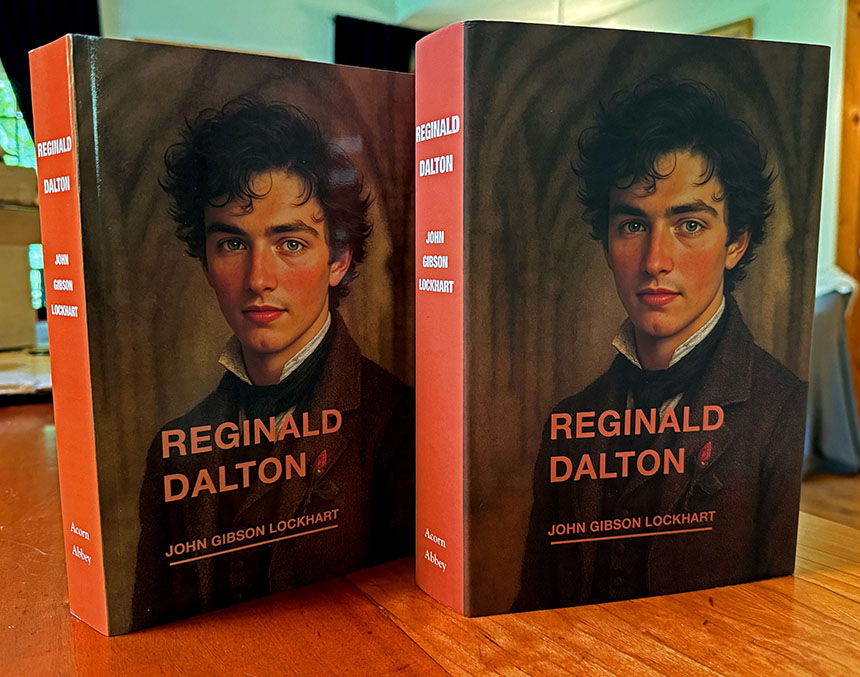
Hardback (right) and paperback. Click here for high-resolution version.
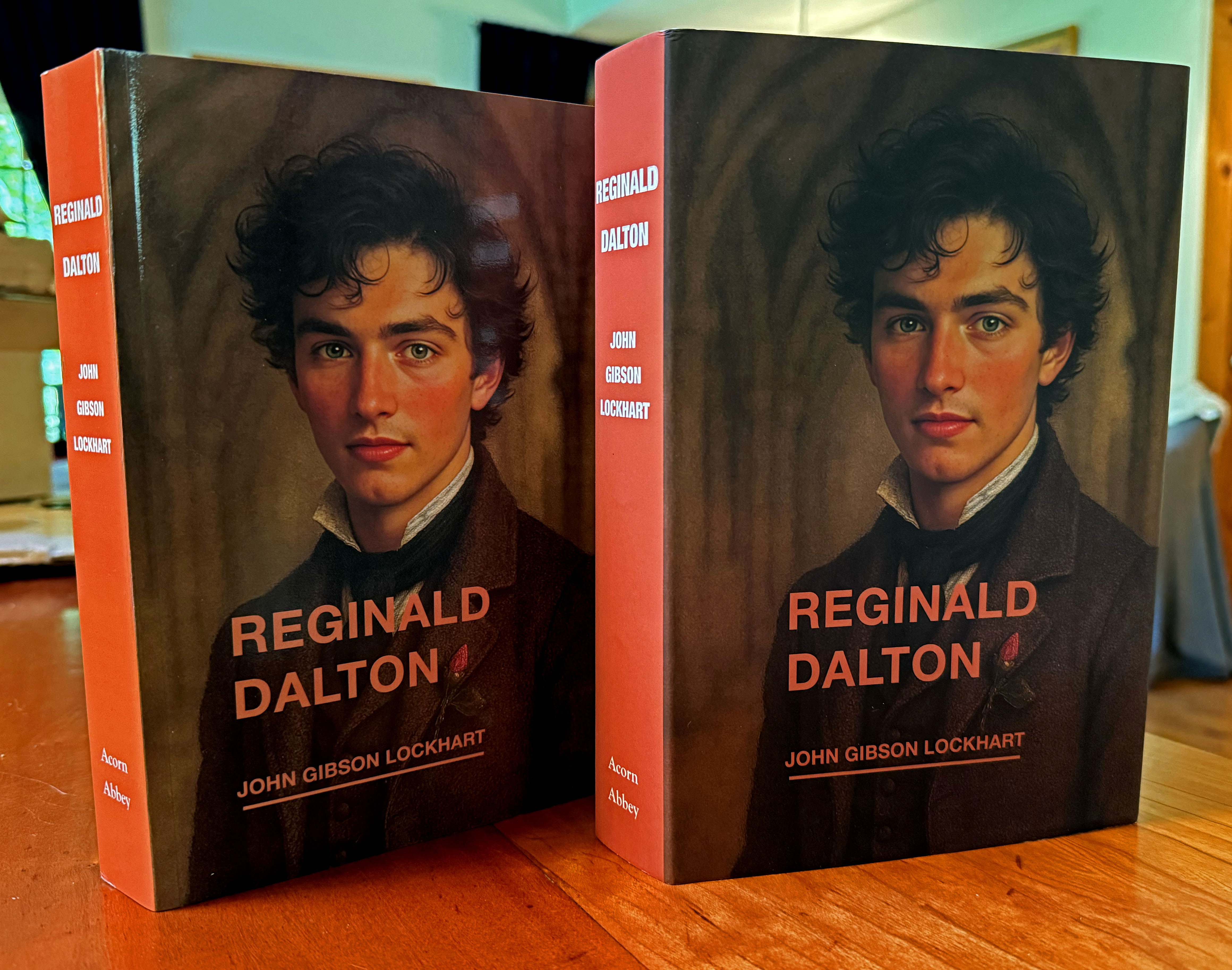
Reginald Dalton, John Gibson Lockhart.
Acorn Abbey Books. 598 pages.
Release date August 15, 2026.
Hardback ISBN:       978-1-949450-05-7 US $34.99 ; UK £32.99
Paperback ISBN:      978-1-949450-06-4 US $19.99 ; UK £19.99
Digital ISBN:        978-1-949450-07-1 US $ 7.99 ; UK £ 6.99
Acorn Abbey’s new edition of Reginald Dalton will go on sale on August 15. This is one reason why I haven’t posted very often lately. I’ve been busy launching these books.
You have to hold the books in your hands to feel what superb editions they are. They’re hefty volumes at 598 pages. Many hours of work went into recovering the text of the 1823 first edition using optical character recognition, then proofing the text against the 1823 edition for accuracy. The typography is modern but was inspired by the 1823 edition.
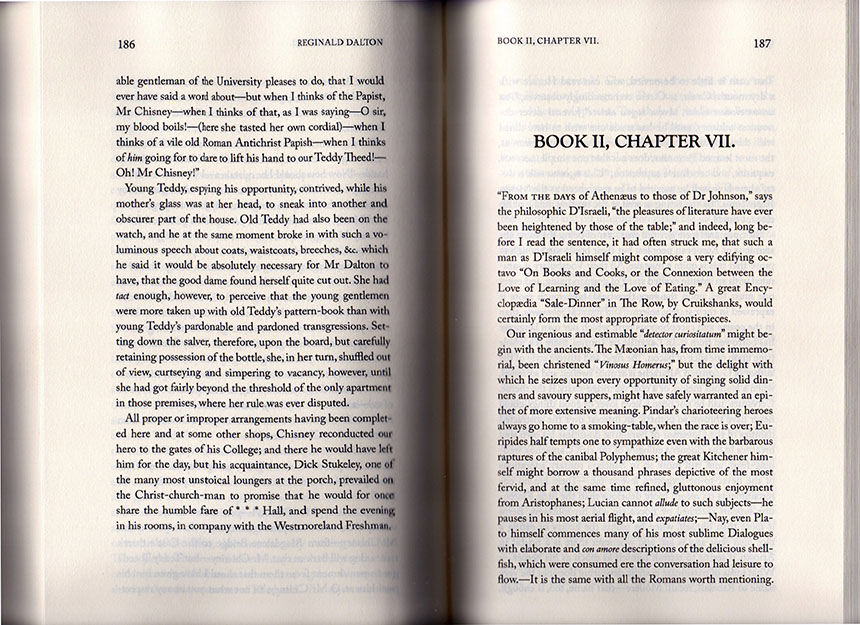
⬆︎ Two pages of the new edition. Click here for high-resolution version.
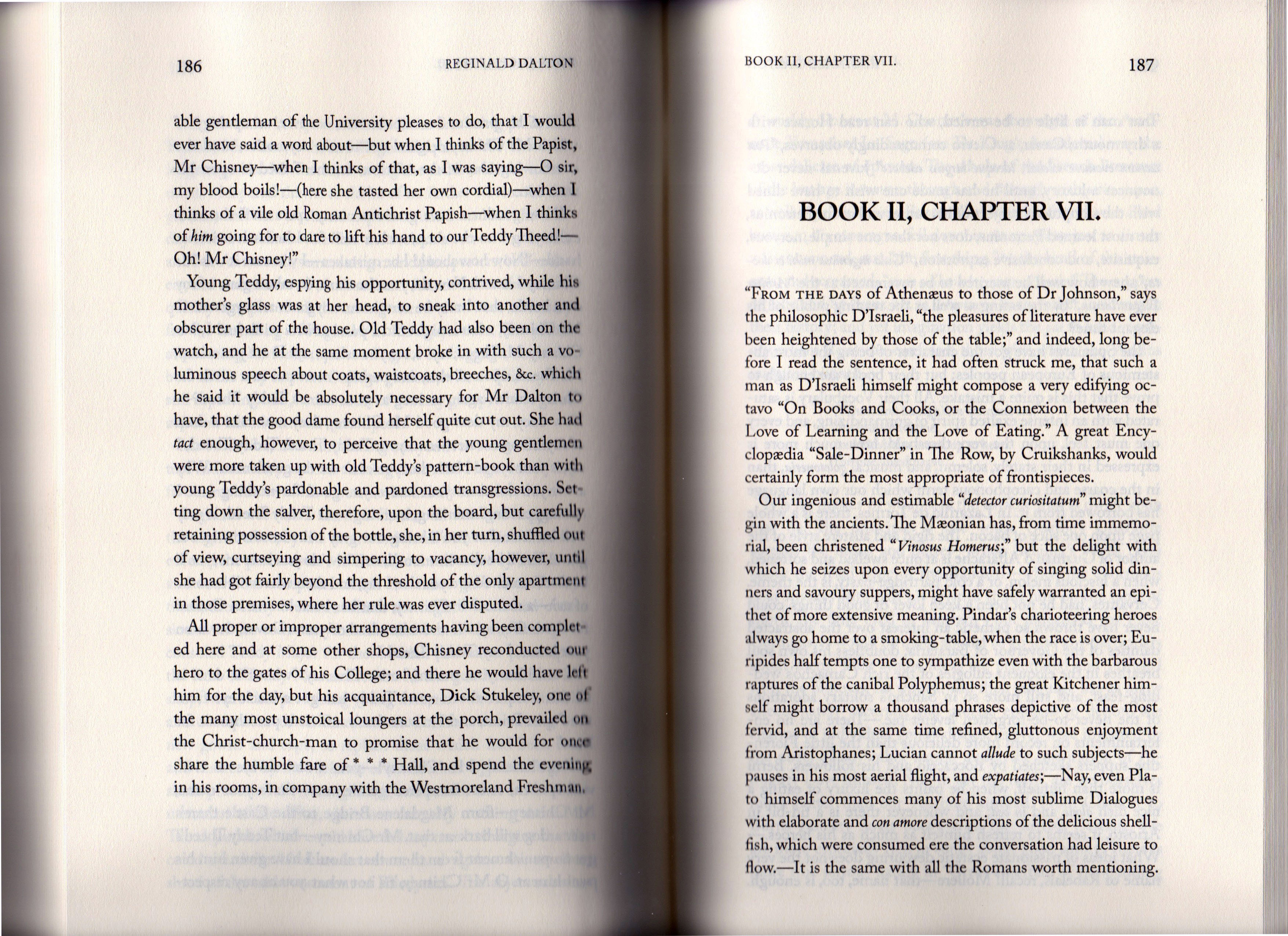
Lockhart
John Gibson Lockhart (1794-1854) was the son-in-law of Sir Walter Scott. Lockhart also wrote a seven-volume biography of Scott, as well as three other novels.
Lockhart died at Abbotsford, Sir Walter Scott’s home. (Scott died in 1832.) In fact it was the descendants of Lockhart and Scott’s daughter Sophia who eventually came to own Abbotsford. Scott’s oldest son inherited Abbotsford when Scott died, but he had no heirs. So the ownership of Abbotsford passed to Scott’s grandchildren by Sophia and John Gibson Lockhart. Today Abbotsford is owned by a trust.
There have been some fascimile versions of this novel, but that’s awkward given that the novel was originally published in three volumes totaling more than a thousand pages. Why this novel was out of print for so long, and why it became so obscure despite its merits, are interesting questions. My theory is that Lockhart made too many literary enemies during his lifetime, and that that turned into a literary grudge that persisted throughout the 19th century. Edinburgh was a hotbed of literary activity. There was a literary war between the Edinburgh Review, which was a Whig literary magazine, and Blackwood’s Magazine, which was its Tory counterpart. Lockhart wrote for Blackwood’s. His caustic articles there generated a lot of outrage, in particular Lockhart’s criticism of “the Cockney poets,” a category in which Lockhart included the much-loved John Keats.
It seems that Lockhart rather frequently embarrassed his father-in-law, and several references to Lockhart’s literary scrapes are found in Scott’s letters. This, for example, is from a letter to his daughter written in 1820: “I had yesterday a very kind letter from Lockhart who takes in good part the advice I ventured to give him about withdrawing from the personal skirmishes of the Magazine which in his new and dignified character of a married man and Wilson having become a professor would not do so well as formerly.”
In a letter in written in 1818, Scott refers to a literary scrape involving Lockhart, a friend of Lockhart’s, and Leigh Hunt (a notorious literary brawler): “…[S]o these wars must be decided by ink not by blood. I did acquaint these gentlemen that when first they set this heavy stone a rolling ’twould fall upon themselves.”
⬆︎ Click here for high-resolution version.
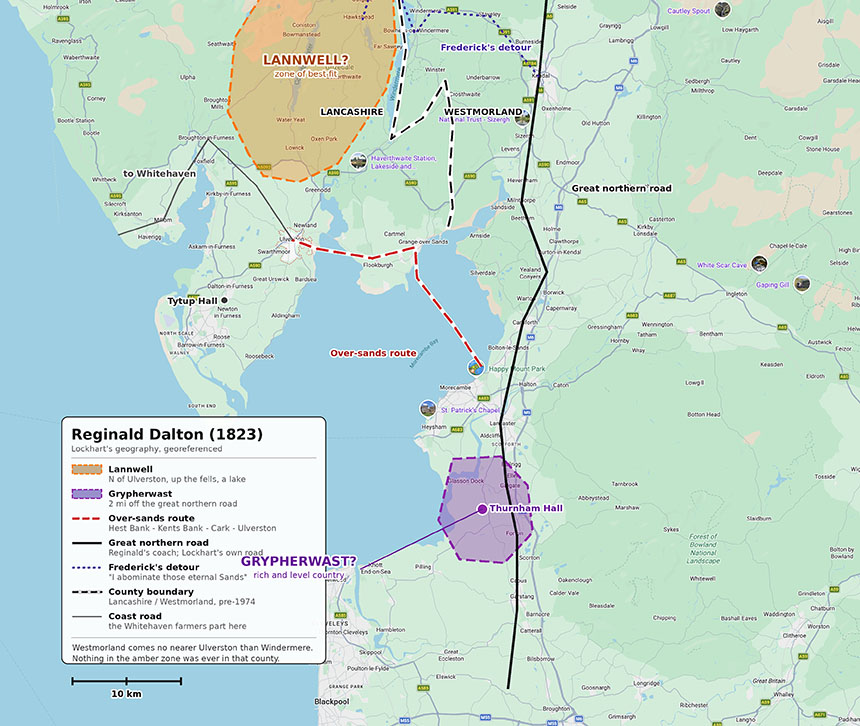
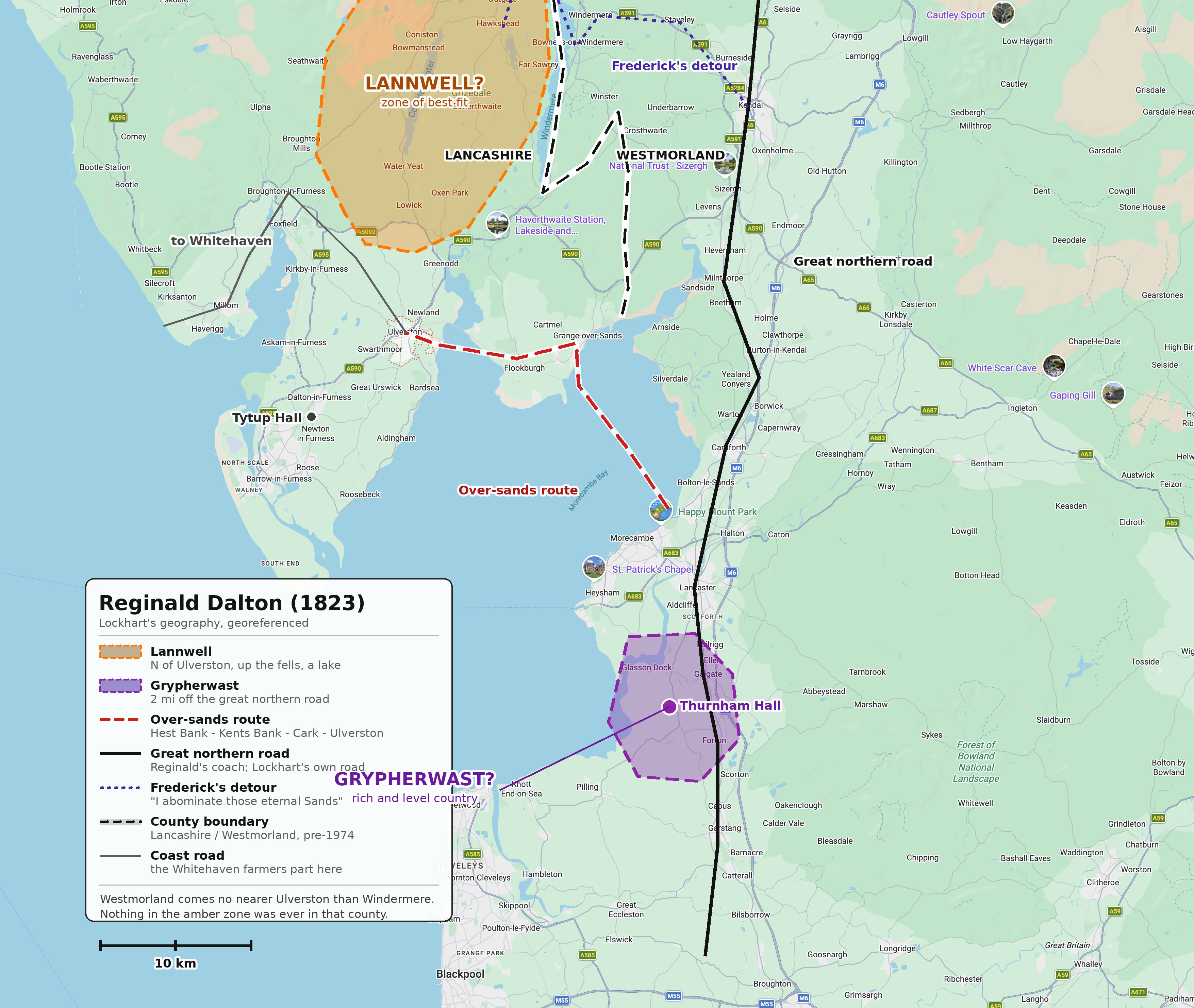
I asked an AI, Claude, to check all the references in the novel to places and terrain and to try to locate keys settings as accurately as possible. Claude drew this map. It’s northwestern England, the Furness Peninsula and Morecambe Bay near Lancaster.
The English Daltons
Most of Reginald Dalton takes place in Oxford, with scenes in London as well as in Scotland. But Reginald grew up in a parsonage in northwestern England. Because my own surname is Dalton, I am very curious about why Lockhart chose that surname. Lockhart had to have known that the Furness Peninsula is where the English Daltons were (and still are) concentrated. In Scott’s The Heart of Mid-Lothian, there is a character in northern England named Mrs Dalton, who is housekeeper to a bishop. It is very tempting to suppose that both Scott and Lockhart knew some of the English Daltons, but I cannot find any evidence of that by searching Scott’s letters or a biography of Lockhart. We do know, though, that Lockhart traveled through this area on his way from Scotland to Oxford.
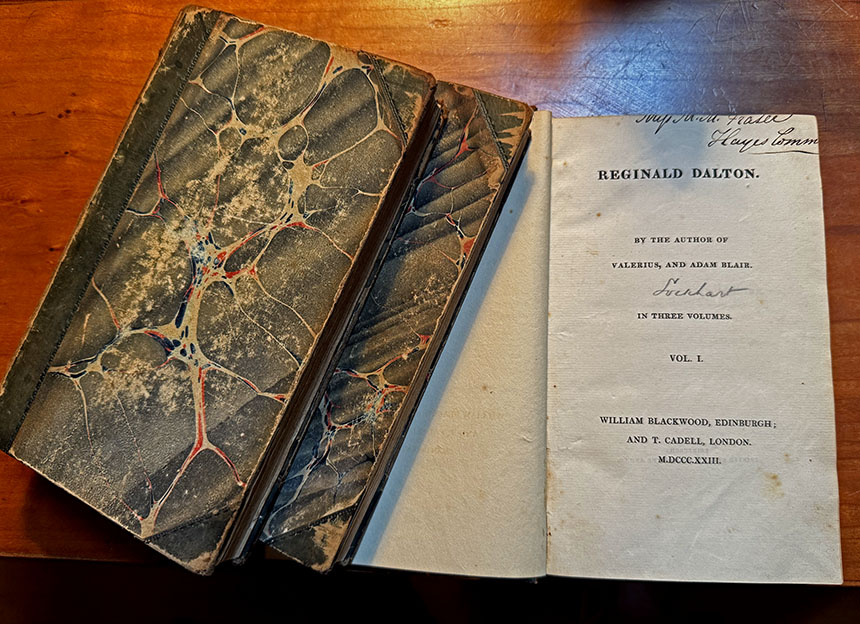
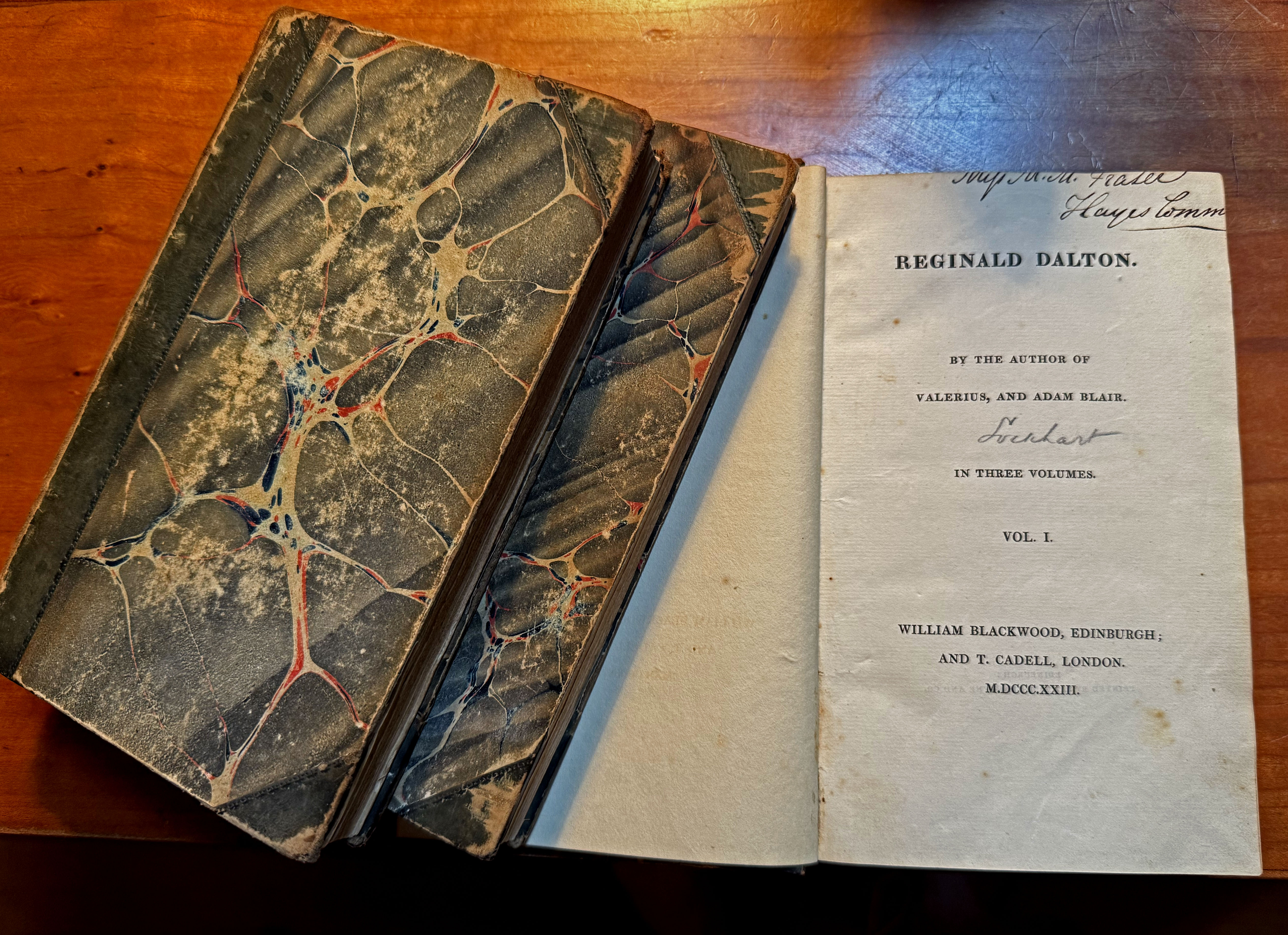
⬆︎ My copy of the first edition, which I used for proofing. Click here for high-resolution version.
The Oxford novel
Reginald Dalton is often called the first Oxford novel. Lockhart was precocious, and he entered Balliol College, Oxford, when he was only 14. He read French, Italian, Spanish, and German. On a trip to the continent in 1817, when he was only 23 or 24 years old, he visited Goethe at Weimar.
Though Lockhart was abrasive in Blackwood’s Magazine, there is none of that in Reginald Dalton. There are many funny scenes, and Reginald is a very sweet and earnest young man, though he allows himself (for a while) to be led astray by another young Oxfordian who turns out to be neither sweet nor earnest.
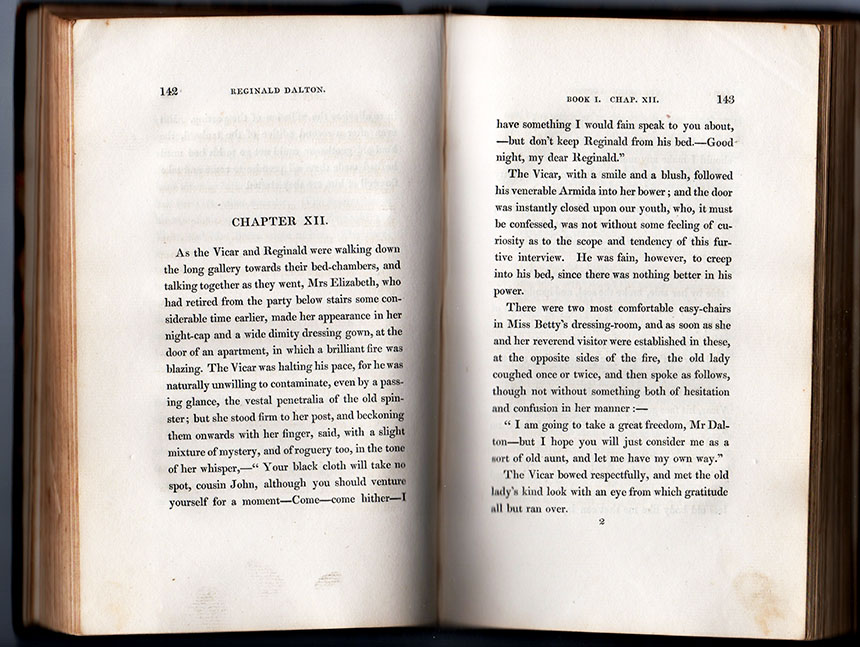
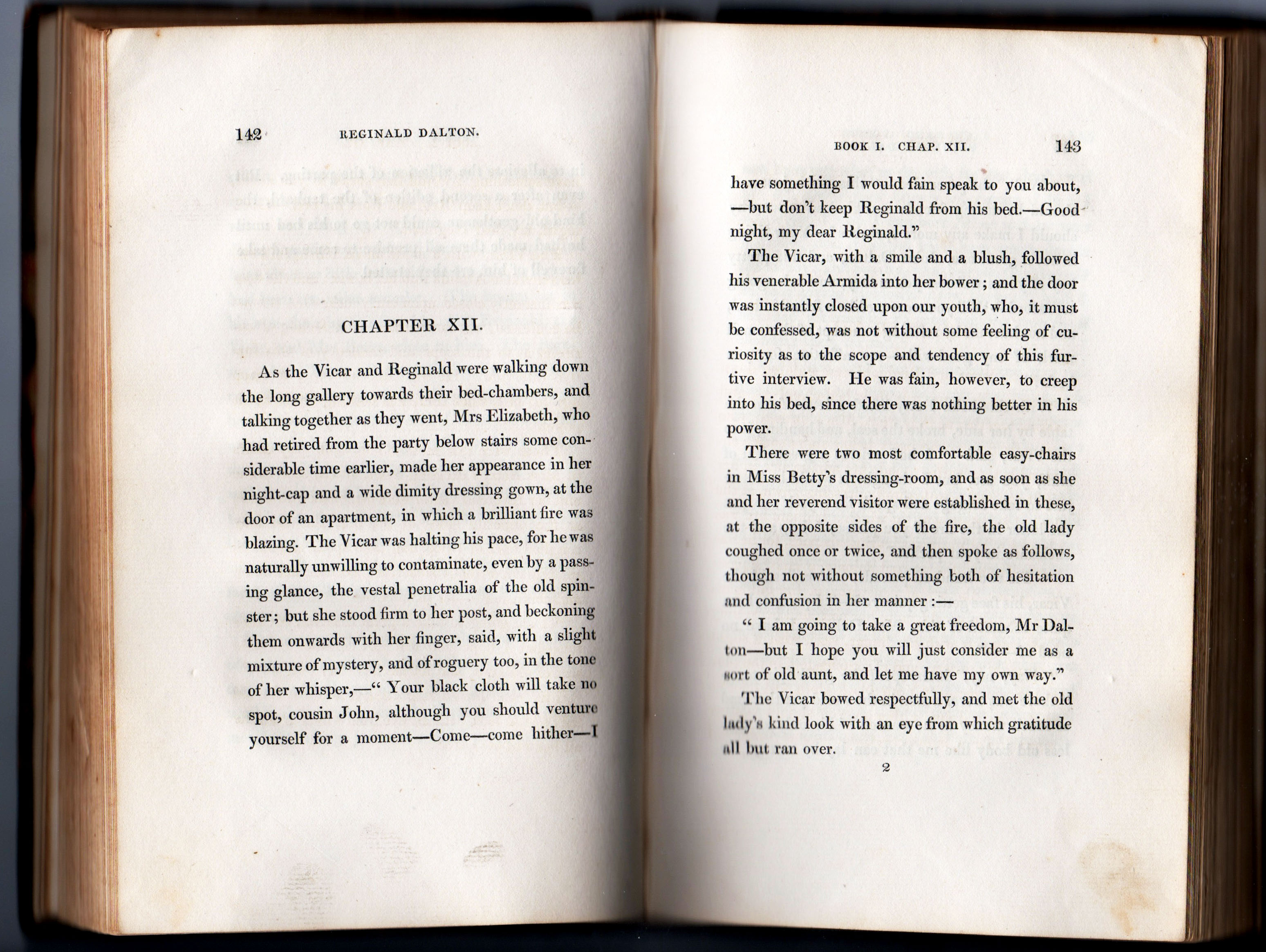
⬆︎ Two pages from the 1823 first edition. Click here for high-resolution version.
Edinburgh University Press
Edinburgh University Press has an ongoing project called The Edinburgh Critical Edition of the Works of John Gibson Lockhart. Edinburgh has already published a critical edition of two of Lockhart’s novels, edited by Thomas C. Richardson. An Edinburgh edition of Reginald Dalton is in the works, edited by Caroline McCracken-Flesher. I don’t know when that academic edition is to be published. I was aware of it, certainly, when I brought out the Acorn Abbey edition. But Acorn Abbey’s edition of Reginald Dalton is a reader’s edition, at a reasonable cost, whereas the Edinburgh edition will be an annotated edition that probably will cost at least $130.
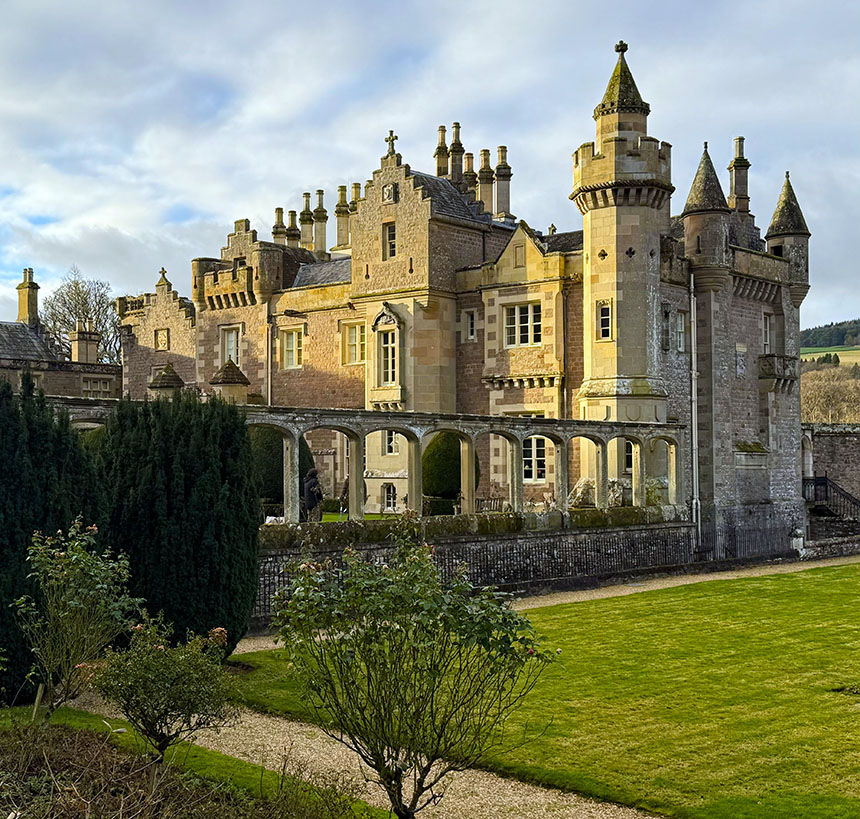
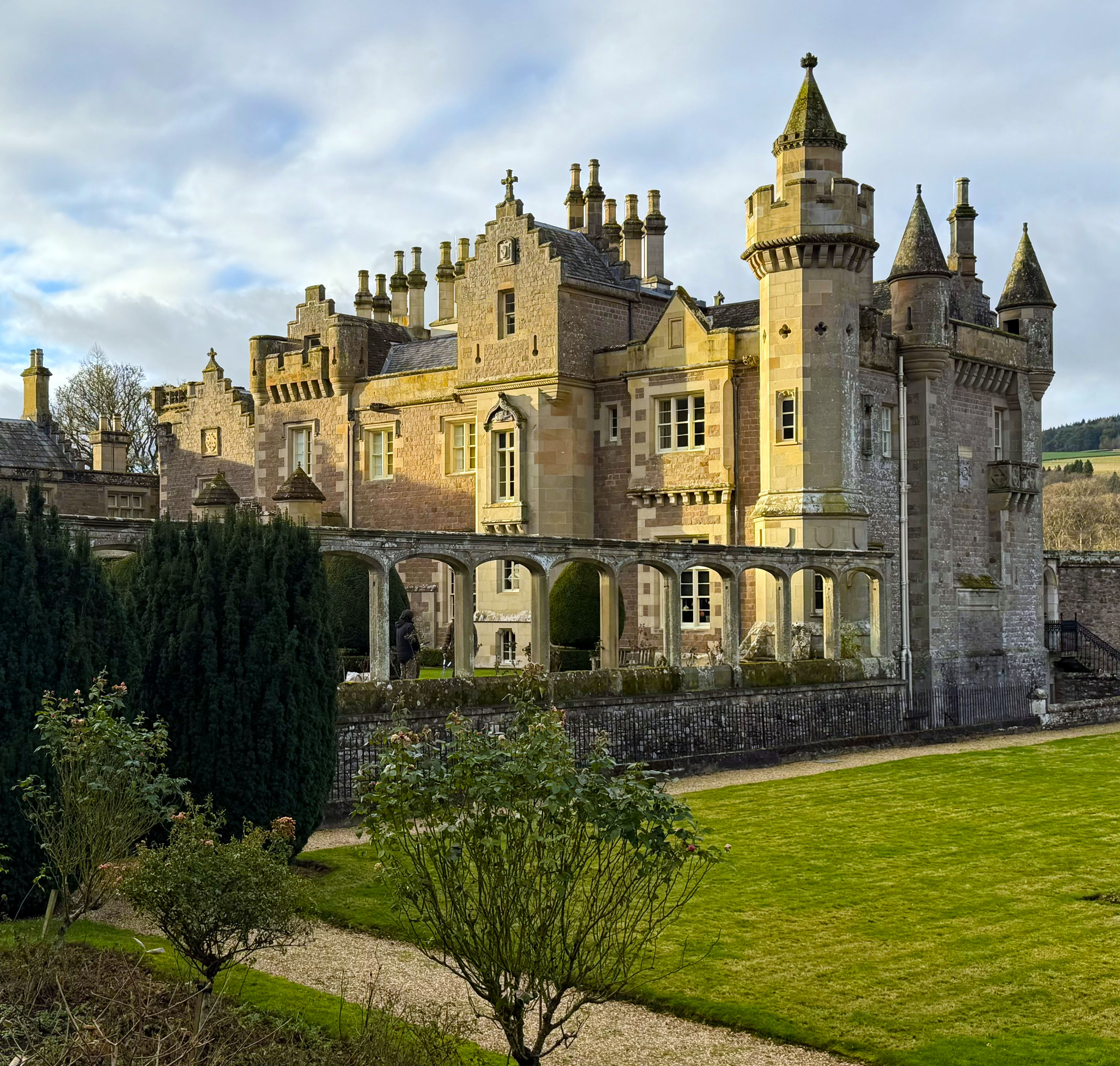
⬆︎ Abbotsford, from my visit there in November of 2024. Click here for high-resolution version.
We’re due for a Scott-Lockhart revival
Academics have not forgotten Sir Walter Scott and John Gibson Lockhart. The reading public have, and that includes the reading public in Scotland. I have often said that if my favorite Scott novel, The Heart of Mid-Lothian, was made into a movie, we would instantly have a Scott revival.
These novels are 200 years old, and, yes, they demand a lot from modern readers. One factor that puts readers off Scott, I think, is that the most frequently recommended Scott novel is Ivanhoe. I strongly disagree. Ivanhoe is the last Scott novel that one should read. The story is familiar, and it’s lacking in the warmth that is found in, say, The Heart of Mid-Lothian and The Antiquary.
And besides. Who doesn’t love Scotland.
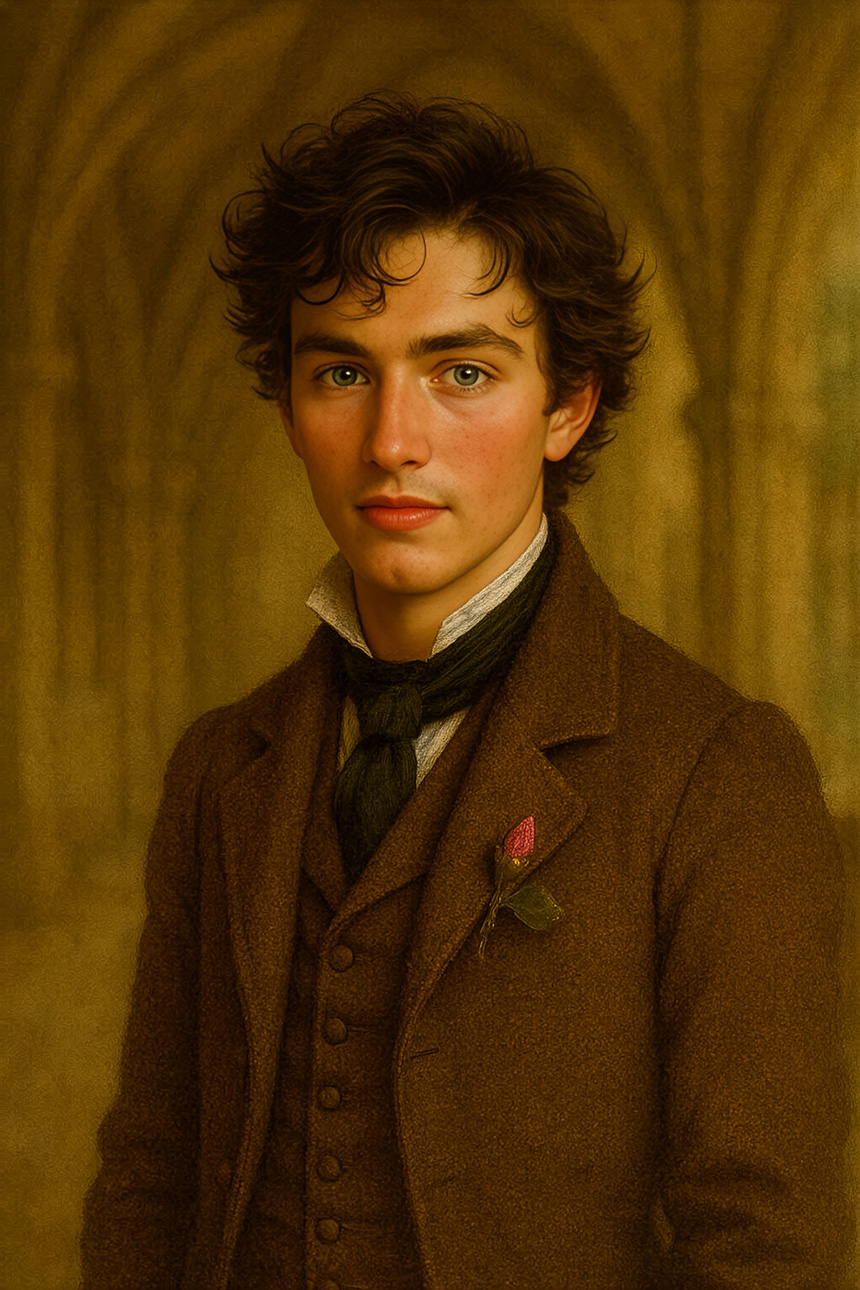
⬆︎ Click here for high-resolution version.
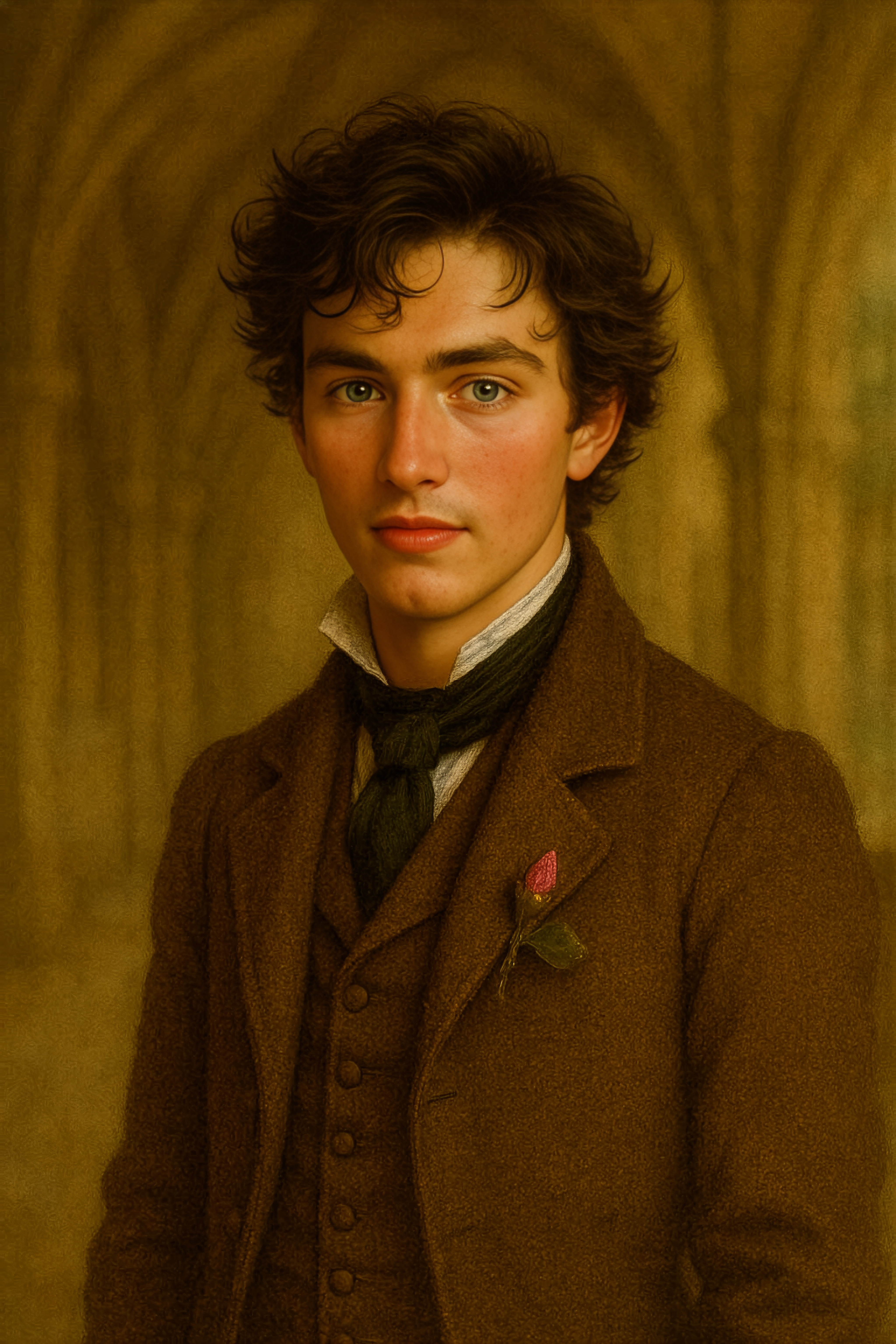
Reginald
“He was naturally very handsome, and this, too, in a somewhat uncommon style of handsomeness, considering his race and his country; for though his eyes were of that clear, grave blue, which is seldom seen but in the north, the general cast of his countenance, both as to features and complexion, was rather what a painter would have called Italian. A profusion of dark chesnut curls lay on his forehead, the dancing blood of seventeen was in his cheek, and his lip, just beginning to be shaded with down, had that firm juvenile richness, which so rarely survives a single season of debauchery, or even of dissipation. His figure was light and nervous, and there was even a certain elegance about its motions, although Reginald had never had one single lesson in fencing, and I believe only about a dozen in dancing…”