
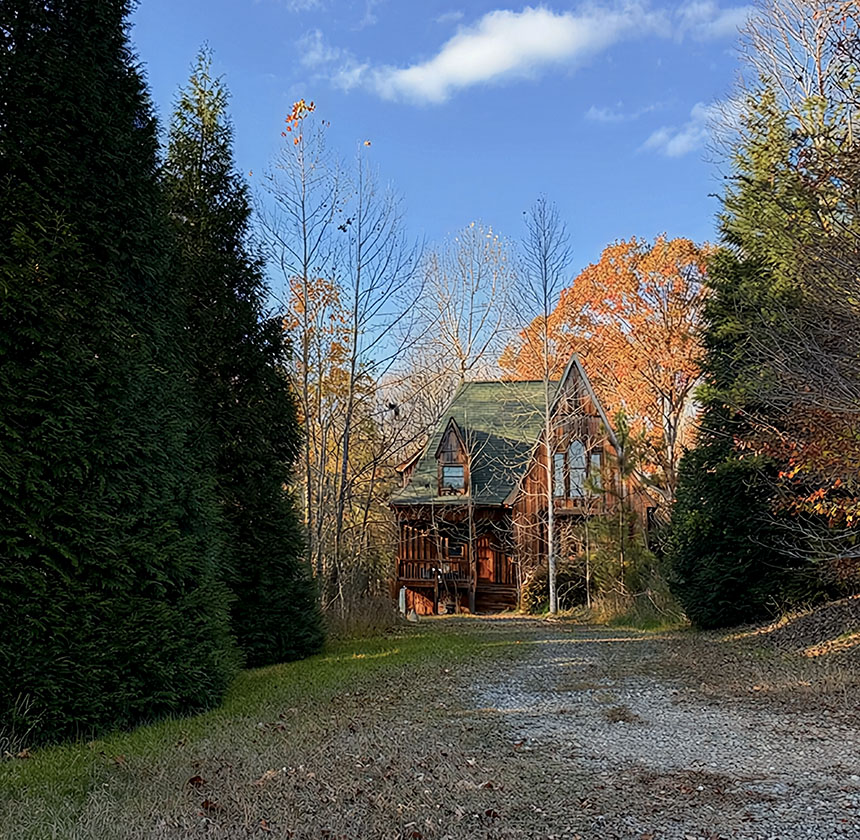
The poplars and maples have lost their leaves, so the arbor vitae trees are now even more dominant at Acorn Abbey. Click here for high-resolution version.
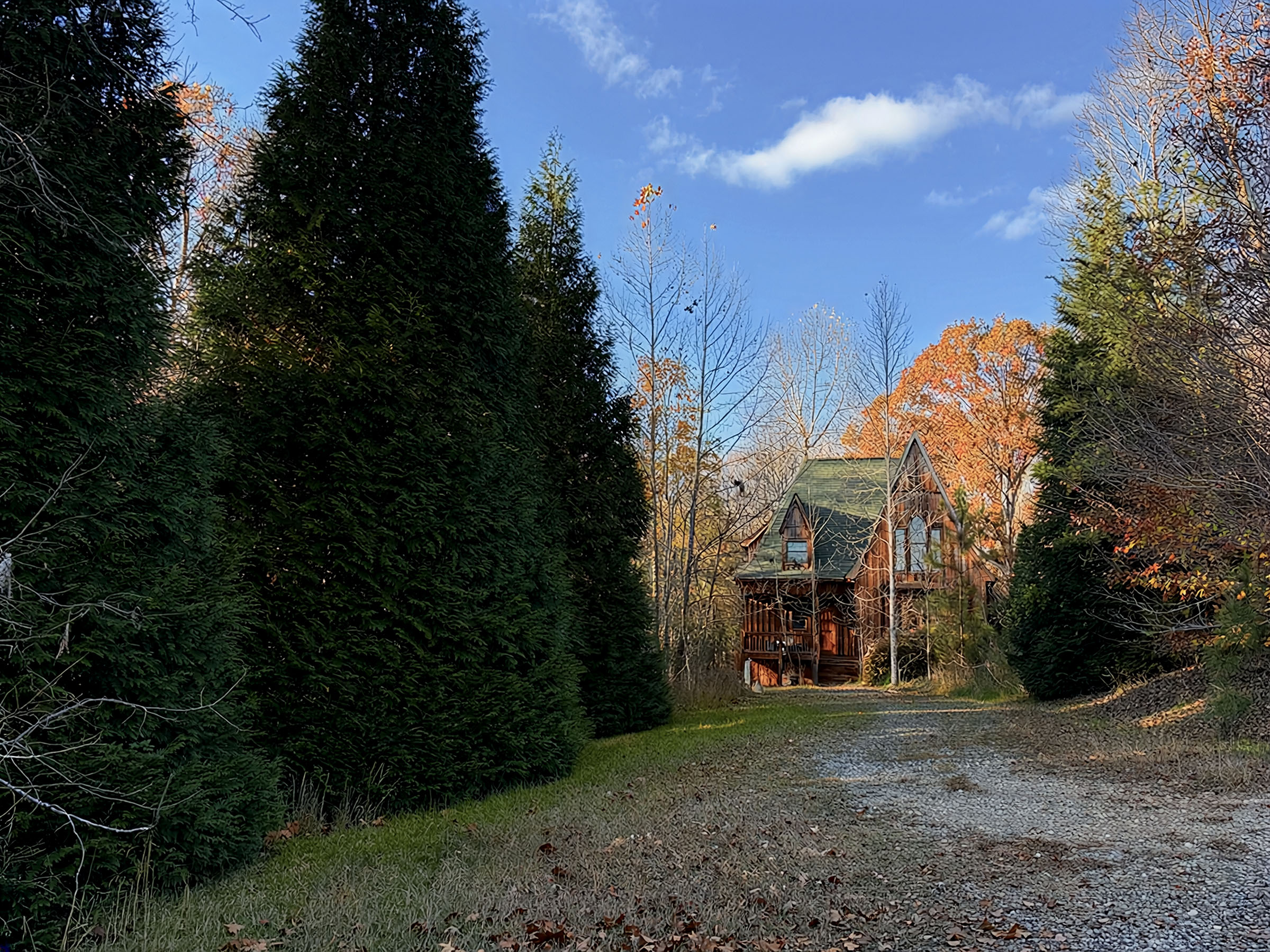
Eighteen years ago, before I started building the abbey, I had cleared an acre of elderly and rather ugly pine trees for the house, the yard, the orchard, and the garden. It was an acre of bare red dirt then, and the sight of it made me feel sick. I rushed in to plant things. Among my first plantings were the five arbor vitae trees that border the driveway. The new trees were about four feet tall.
Now they are about thirty feet tall. Over the years, I planted more of them, placed so as to surround the house with trees. In retrospect, I now wish that I had made a curving driveway to block the one angle from which the house is not shielded by trees.
There are two types of evergreen trees that to me are magical — arbor vitae trees and magnolia grandiflora. Some people cut the lower limbs of magnolias. To me, that’s a crime. Magnolia trees should grow all the way to the ground. In an ancient magnolia tree that has grown huge, there is a hidden world inside the tree just waiting to be discovered by children.
But the birds! Arbor vitae trees are bird hotels. If I stand in the yard at dusk, all the arbor vitae trees will be chirping. The birds aren’t visible, though. They’re inside the trees, bedding down. At dawn, the arbor vitaes start chirping again.
I am pretty sure that part of what infected me with the romance of arbor vitae trees was reading years ago that Edna St. Vincent Millay planted arbor vitae trees at Steepletop, her home at Austerlitz, New York. Austerlitz is just across the Massachusetts border from Lenox, Stockbridge, and Tanglewood. It’s the Berkshires area, one of the most beautiful parts of the United States (and a place where I spent a summer many years ago).
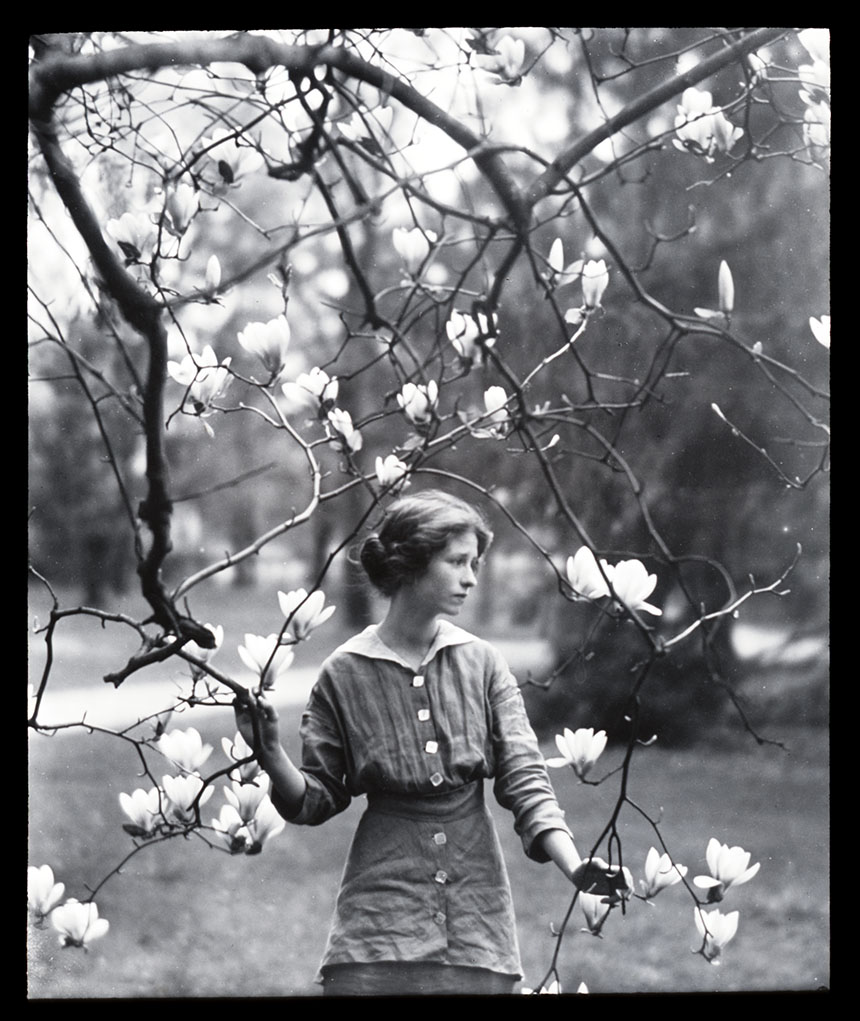
Arnold Genthe’s famous portrait of Millay. The tree is a deciduous magnolia. Source: Library of Congress via Wikimedia Commons.
Steepletop today?
I tried to find information on whether there are still arbor vitae trees at Steepletop. Steepletop now belongs to a trust, and it’s open to the public. It’s one of the few places in the U.S. to which I wouldn’t mind a pilgrimage.
The arbor vitae trees of Millay’s lifetime would be a hundred years old now, old for arbor vitae trees, though I hope mine live that long. I believe the Millay Society has preserved some of the trunks of the old arbor vitaes kind of as monuments, but as far as I know they have not planted new arbor vitae trees at Steepletop.
Poets and writers of the past often leave behind astonishing homes. I’m thinking of Walter Scott’s Abbotsford, Carl Sandburg’s Connemara, and William Cullen Bryant’s Homestead, all of which I have seen. There must be many other poets’ homes begging to be visited.
Deer season
Deer hunting season recently started here. One of my neighbors who owns land at my borders looks after the local deer herd. Most of the deer have names. Everyone around here knows about White Girl, the younger of two white deer in the herd (though not everyone has even seen her).
With my land and the neighbors’ land put together, the deer herd has a large area, all woods and streams, where they are safe. I’ve noticed lately that, at dusk when the birds are bedding down in the arbor vitaes, White Girl and her daughter are hanging out in my front yard, where they know they are safe and out of sight of any poachers foolish enough to come around. Deer like places where they can hide, such as the laurel trees up on the ridge above my house.
My neighbor patrols the woods on his ATV, always on the lookout for poachers. He caught two poachers trying to hunt at night a year or so ago. Hunting deer at night is very illegal here. He says “the girls,” as he calls them, know where they are safe.
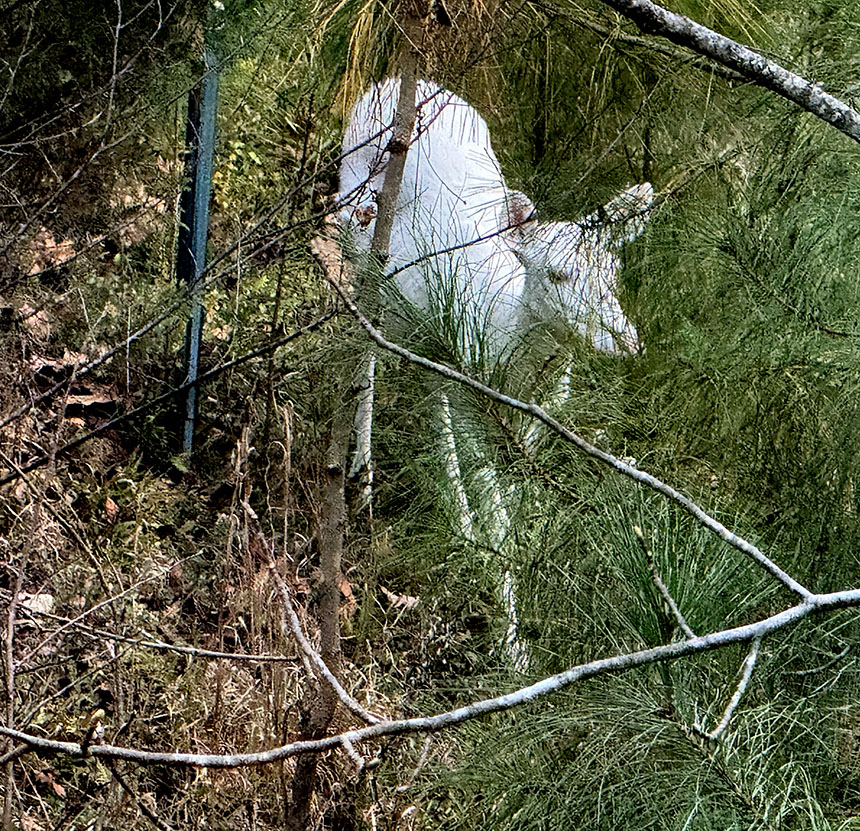
White Girl, hiding in my shaggy front yard a few nights ago. Her daughter was with her.
J.S. Bach, Schafe können sicher weiden, Sheep May Safely Graze